
Post Clearance Audit PCA Data Analysis for Selection

- Slides: 44
Post Clearance Audit (PCA) Data Analysis for Selection and Execution of Audits Knowledge Academy Compliance And Facilitation Track 19 -23 June 2017
Objective of this Session Participants understand: 1. 2. 3. 4. 5. 6. 7. Background WCO PCA Concepts PCA Selection Strategies Targeting Methods Audit Approaches Types of Audits WCO PCA Tools and Instruments
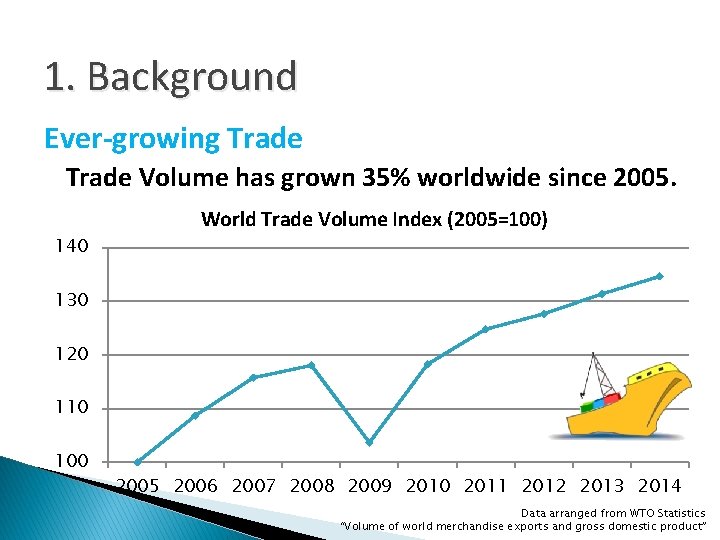
1. Background Ever-growing Trade Volume has grown 35% worldwide since 2005. World Trade Volume Index (2005=100) 140 130 120 110 100 2005 2006 2007 2008 2009 2010 2011 2012 2013 2014 Data arranged from WTO Statistics “Volume of world merchandise exports and gross domestic product”
What does Customs do, to tackle the influx of cargo while the Customs resources are limited?
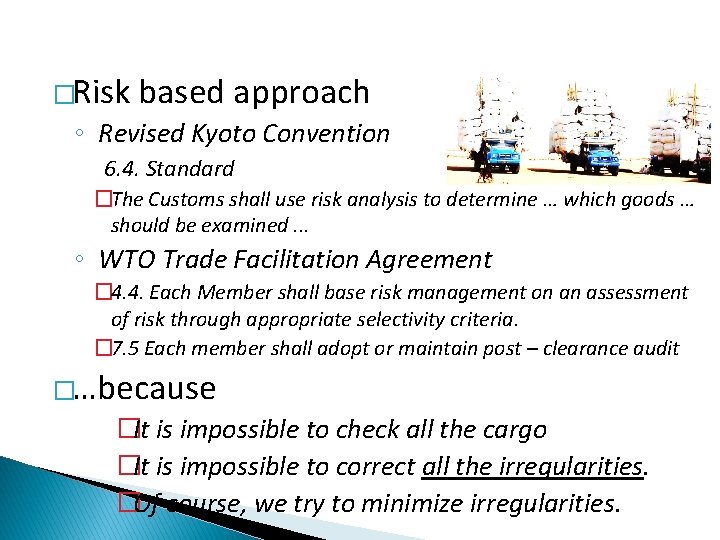
�Risk based approach ◦ Revised Kyoto Convention 6. 4. Standard �The Customs shall use risk analysis to determine … which goods … should be examined. . . ◦ WTO Trade Facilitation Agreement � 4. 4. Each Member shall base risk management on an assessment of risk through appropriate selectivity criteria. � 7. 5 Each member shall adopt or maintain post – clearance audit �…because �It is impossible to check all the cargo �It is impossible to correct all the irregularities. �Of course, we try to minimize irregularities.
What is written in the article Establish PCA � With a view to expediting the release of goods, � each Member shall adopt or maintain post-clearance audit � to ensure compliance with customs and other related laws and regulations. Article 7. 5. 1
What is written in the article Using Risk Management Member shall select a person or a consignment for post-clearance audit in a risk-based manner, � which may include appropriate selectivity criteria. Article 7. 5. 2 � Each shall, wherever practicable, use the result of post-clearance audit in applying risk management. � Members Article 7. 5. 4
What is written in the article In a transparent manner � Each Member shall conduct post- clearance audits in a transparent manner. � Where the person is involved in the audit process and conclusive results have been achieved the Member shall, without delay, notify the person whose record is audited of the results, the person's rights and obligations, and the reasons for the results. Article 7. 5. 2 (cont. )
What is written in the article For future actions. � The information obtained in post-clearance audit may be used in further administrative or judicial proceedings. Article 7. 5. 3
What is the characteristic of importers in your country? You might say … ü ü They don’t like Customs! They are usually good and honest. ü ü How can you accept the risk?
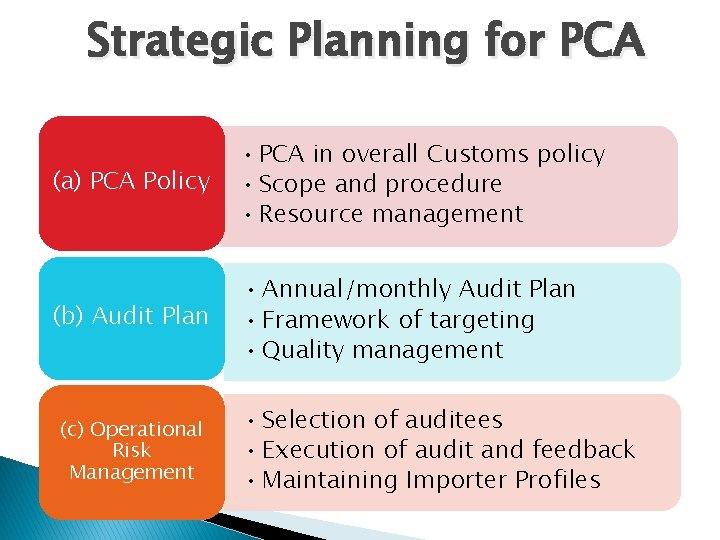
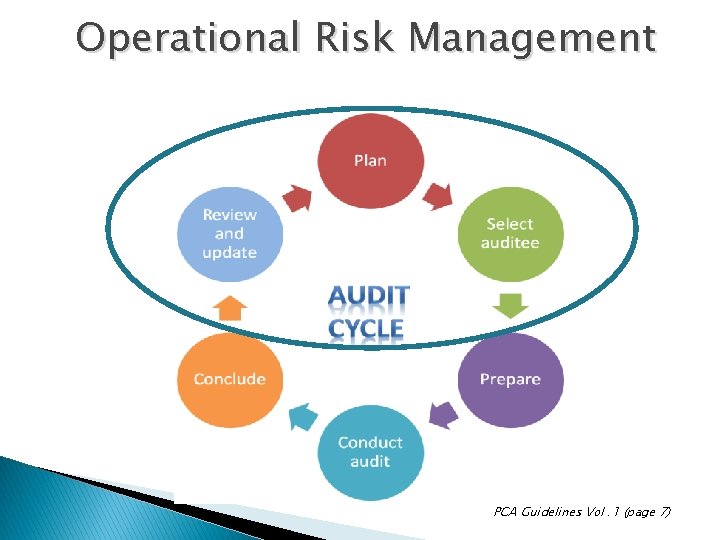
Strategic Planning for PCA (a) PCA Policy • PCA in overall Customs policy • Scope and procedure • Resource management (b) Audit Plan • Annual/monthly Audit Plan • Framework of targeting • Quality management (c) Operational Risk Management • Selection of auditees • Execution of audit and feedback • Maintaining Importer Profiles
Operational Risk Management PCA Guidelines Vol. 1 (page 7)
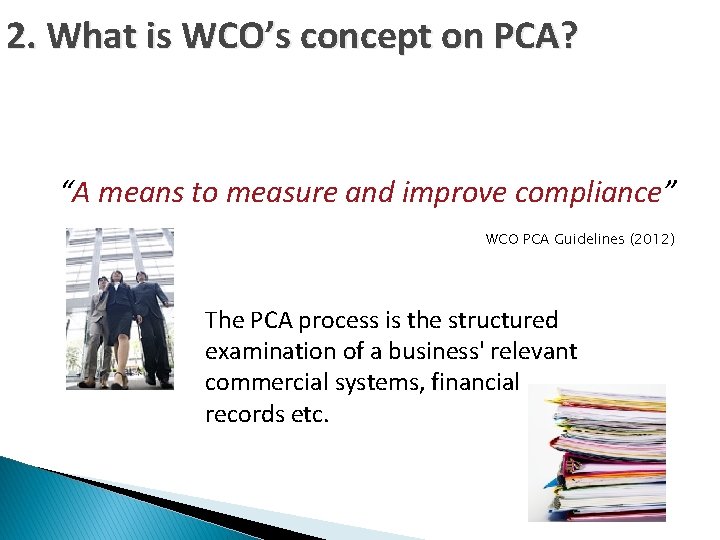
2. What is WCO’s concept on PCA? “A means to measure and improve compliance” WCO PCA Guidelines (2012) The PCA process is the structured examination of a business' relevant commercial systems, financial records etc.
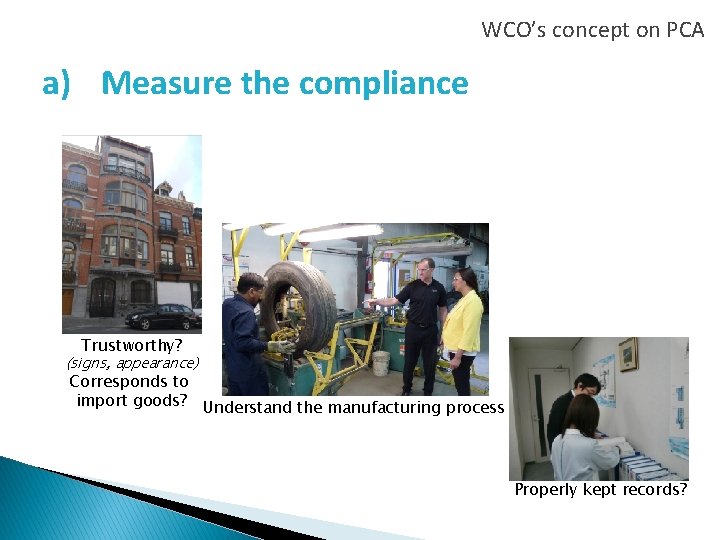
WCO’s concept on PCA a) Measure the compliance Trustworthy? (signs, appearance) Corresponds to import goods? Understand the manufacturing process Properly kept records?
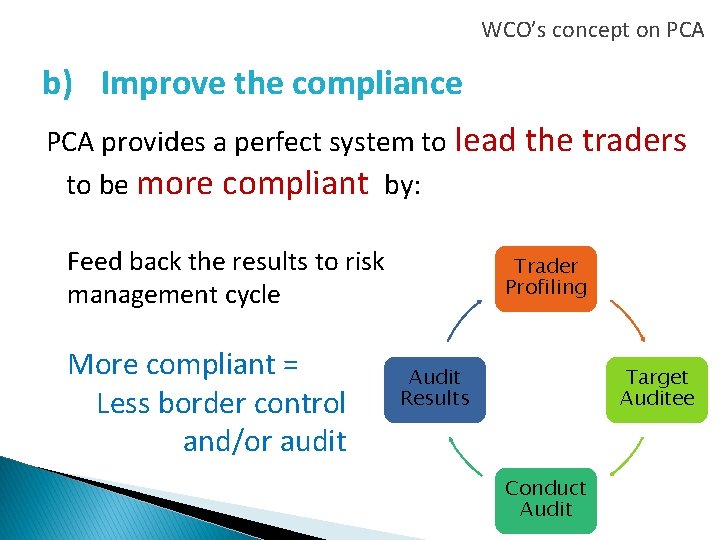
WCO’s concept on PCA b) Improve the compliance PCA provides a perfect system to lead the traders to be more compliant by: Feed back the results to risk management cycle More compliant = Less border control and/or audit Trader Profiling Audit Results Target Auditee Conduct Audit
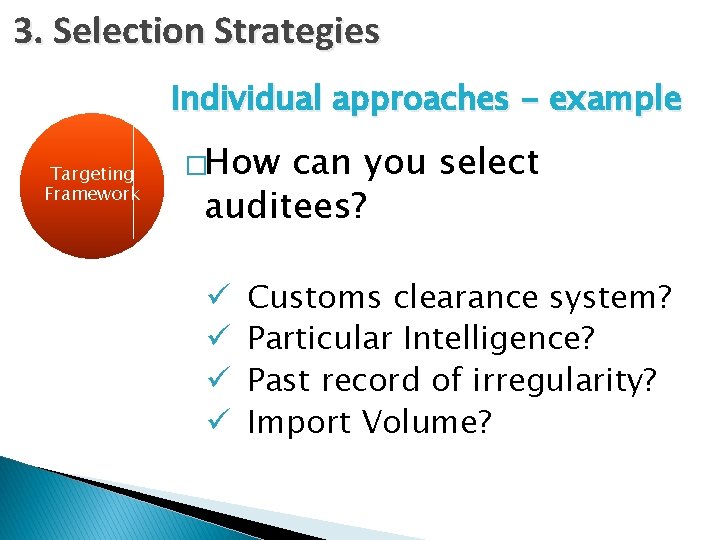
3. Selection Strategies Individual approaches - example Targeting Framework �How can you select auditees? ü ü Customs clearance system? Particular Intelligence? Past record of irregularity? Import Volume?
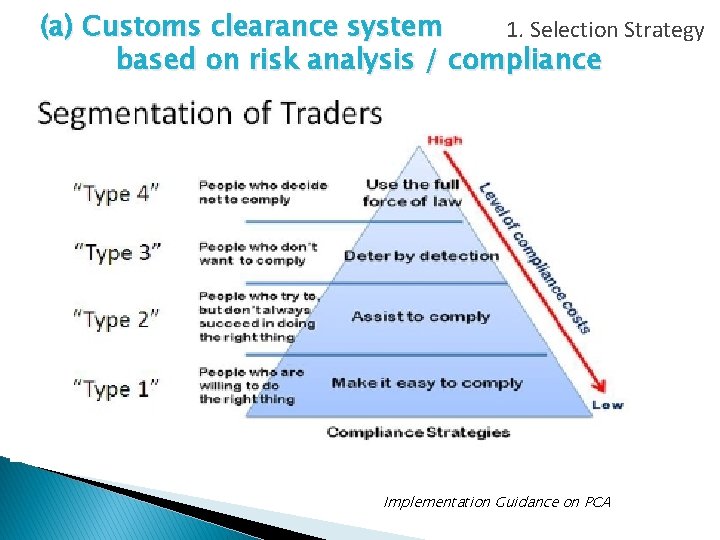
(a) Customs clearance system 1. Selection Strategy based on risk analysis / compliance Implementation Guidance on PCA
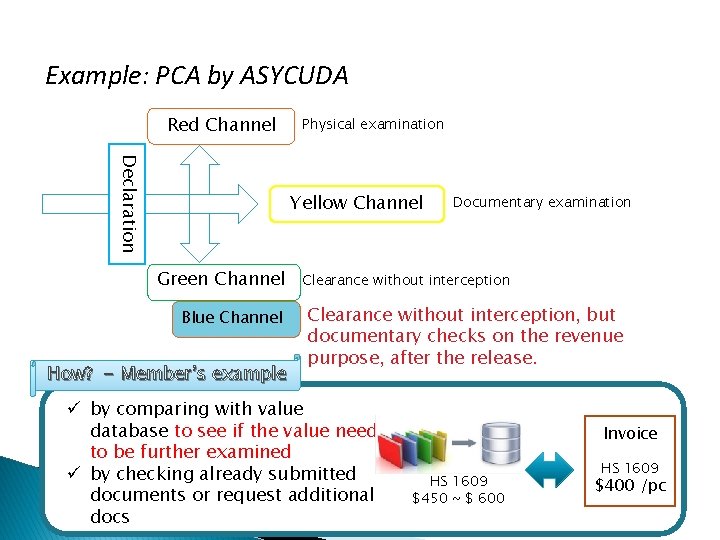
Example: PCA by ASYCUDA Red Channel Physical examination Declaration Yellow Channel Green Channel Blue Channel How? - Member’s example Documentary examination Clearance without interception, but documentary checks on the revenue purpose, after the release. ü by comparing with value database to see if the value need Invoice to be further examined HS 1609 ü by checking already submitted HS 1609 $400 /pc Selectivity Criteria are additional encouraged to$450 be defined by PCA team documents or request ~ $ 600 docs
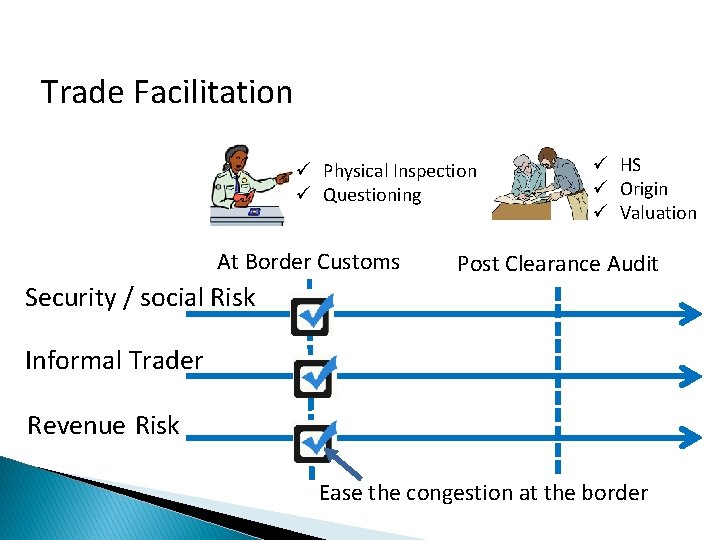
Trade Facilitation ü Physical Inspection ü Questioning At Border Customs ü HS ü Origin ü Valuation Post Clearance Audit Security / social Risk Informal Trader Revenue Risk Ease the congestion at the border
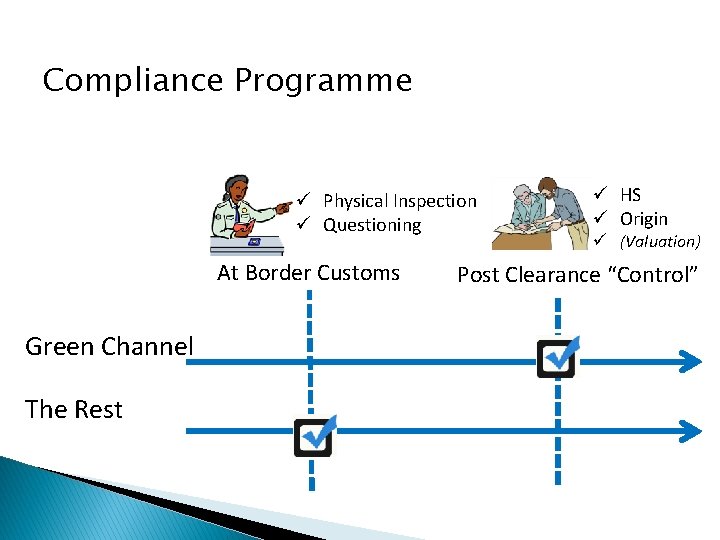
Compliance Programme ü Physical Inspection ü Questioning At Border Customs Green Channel The Rest ü HS ü Origin ü (Valuation) Post Clearance “Control”
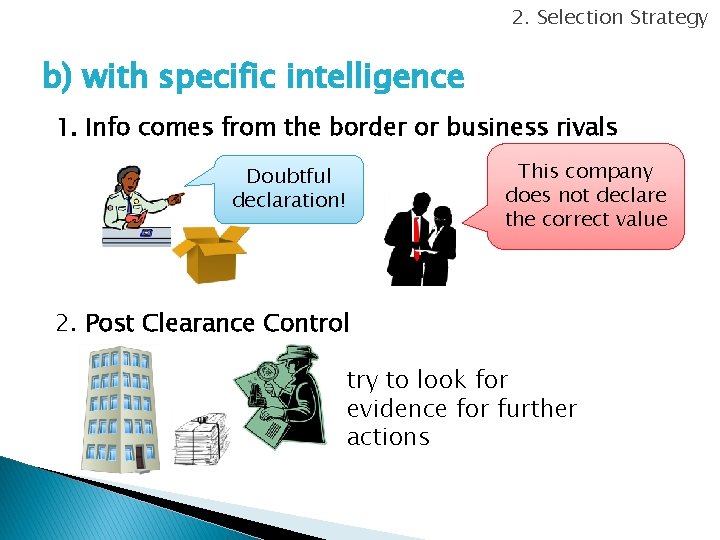
2. Selection Strategy b) with specific intelligence 1. Info comes from the border or business rivals This company does not declare the correct value Doubtful declaration! 2. Post Clearance Control try to look for evidence for further actions
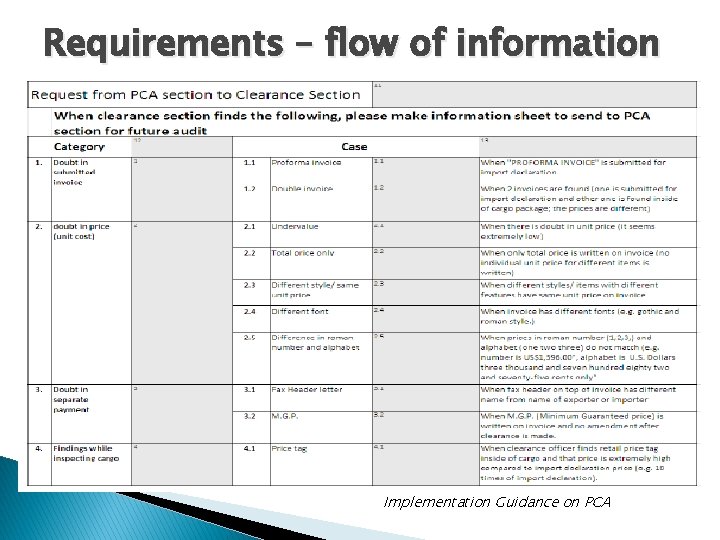
Requirements – flow of information Implementation Guidance on PCA
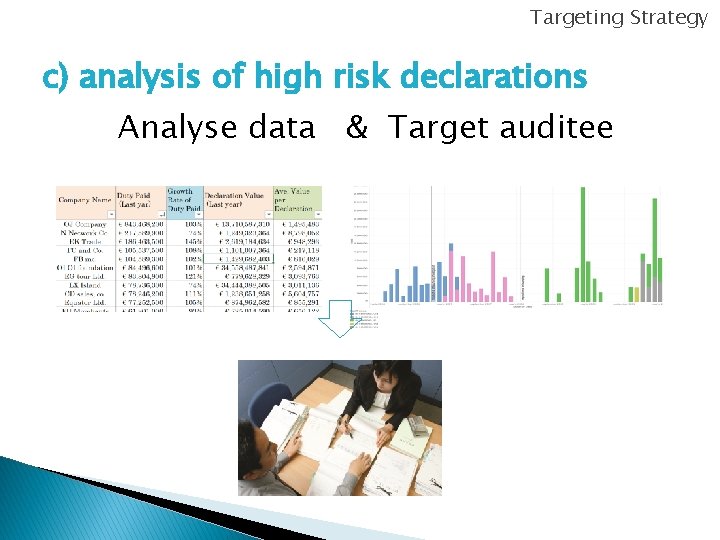
Targeting Strategy c) analysis of high risk declarations Analyse data & Target auditee
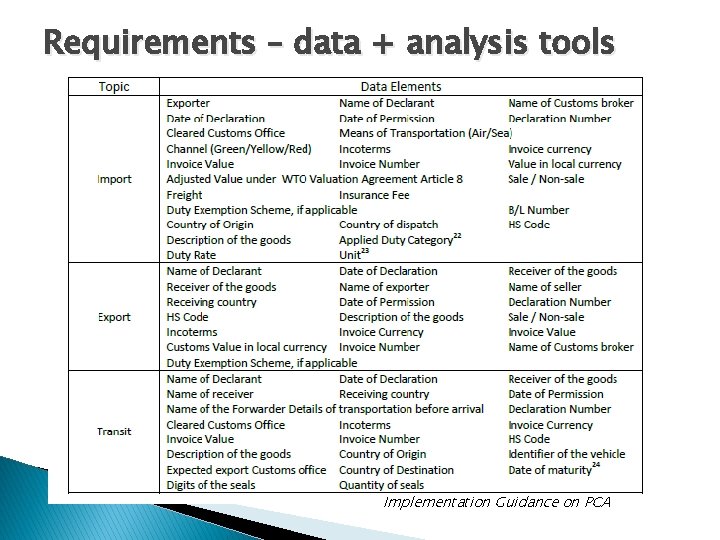
Requirements – data + analysis tools Implementation Guidance on PCA
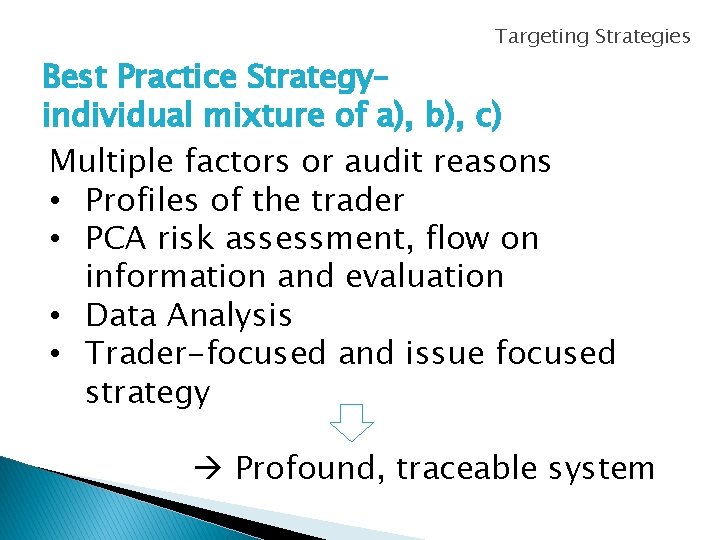
Targeting Strategies Best Practice Strategy– individual mixture of a), b), c) Multiple factors or audit reasons • Profiles of the trader • PCA risk assessment, flow on information and evaluation • Data Analysis • Trader-focused and issue focused strategy Profound, traceable system
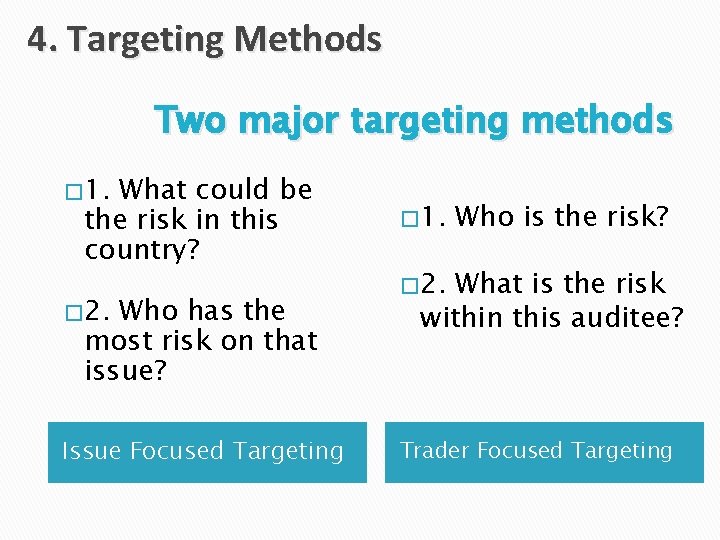
4. Targeting Methods Two major targeting methods � 1. What could be the risk in this country? � 2. Who has the most risk on that issue? Issue Focused Targeting � 1. Who is the risk? � 2. What is the risk within this auditee? Trader Focused Targeting
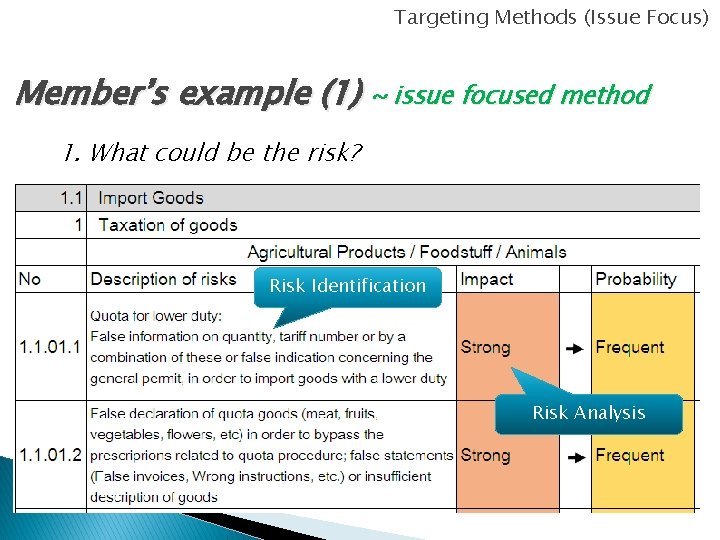
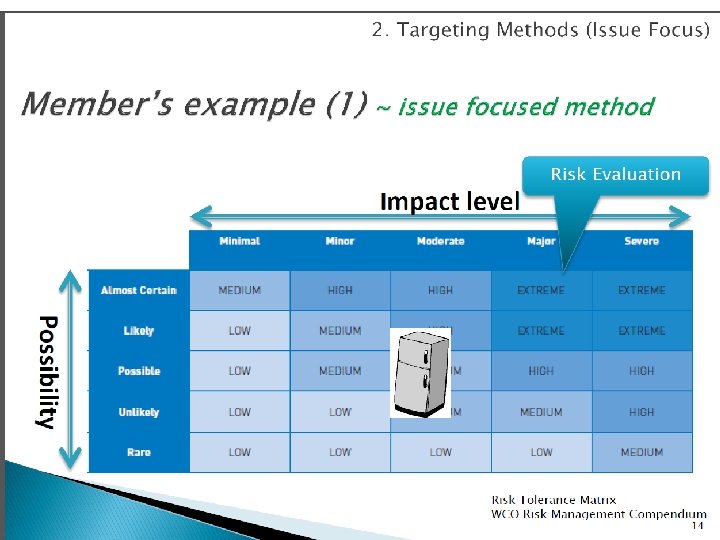
Targeting Methods (Issue Focus) Member’s example (1) ~ issue focused method 1. What could be the risk? Risk Identification Risk Analysis
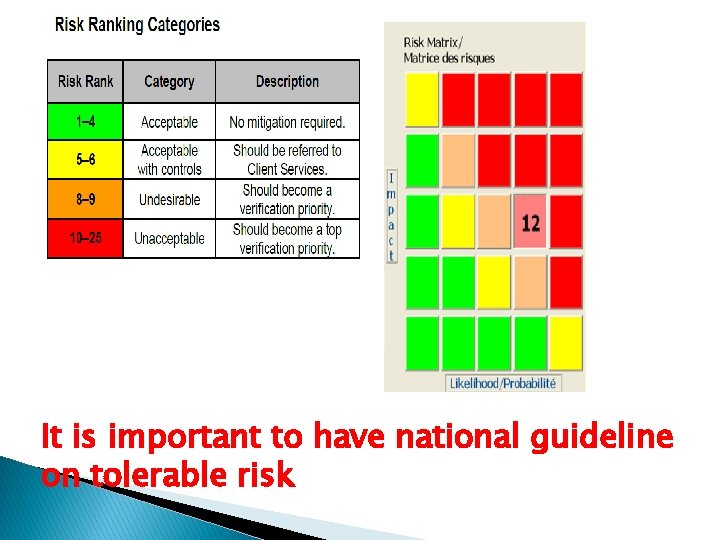
It is important to have national guideline on tolerable risk
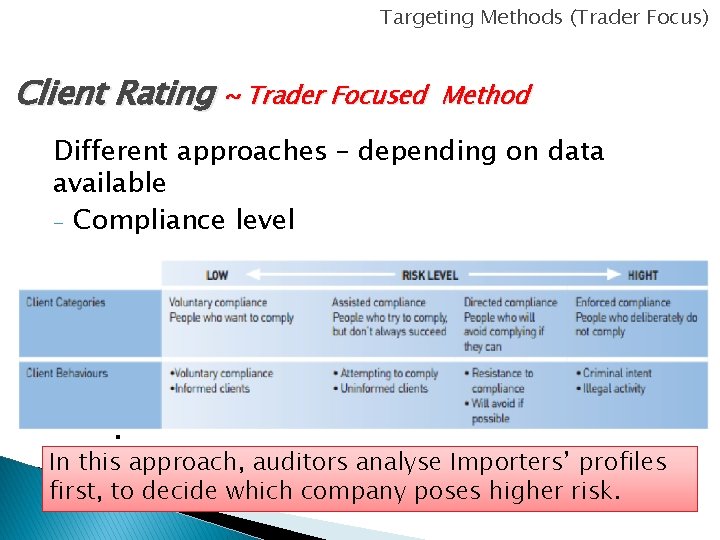
Targeting Methods (Trader Focus) Client Rating ~ Trader Focused Method Different approaches – depending on data available - Compliance level . . . In this approach, auditors analyse Importers’ profiles first, to decide which company poses higher risk.
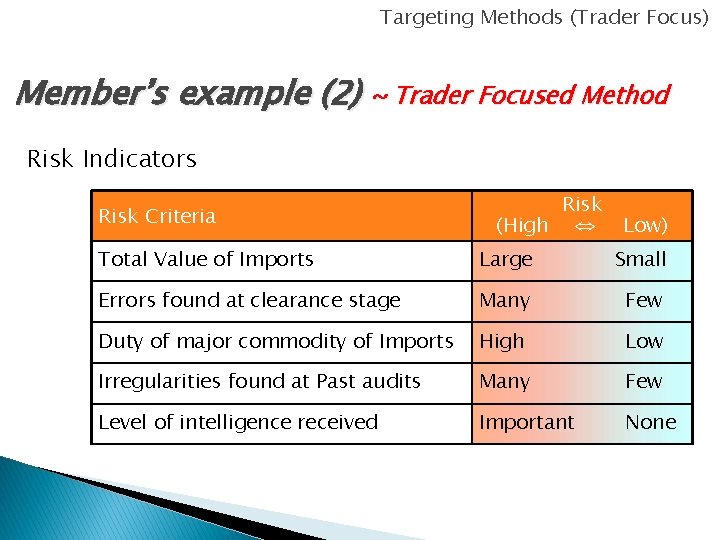
Targeting Methods (Trader Focus) Member’s example (2) ~ Trader Focused Method Risk Indicators Risk Criteria Risk (High ⇔ Low) Total Value of Imports Large Small Errors found at clearance stage Many Few Duty of major commodity of Imports High Low Irregularities found at Past audits Many Few Level of intelligence received Important None
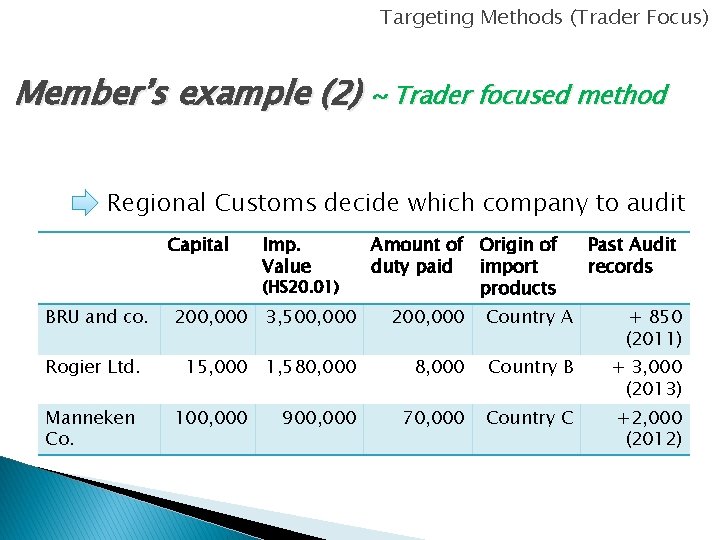
Targeting Methods (Trader Focus) Member’s example (2) ~ Trader focused method Regional Customs decide which company to audit Capital Imp. Value (HS 20. 01) BRU and co. Rogier Ltd. Manneken Co. Amount of Origin of duty paid import products Past Audit records 200, 000 3, 500, 000 200, 000 Country A + 850 (2011) 15, 000 1, 580, 000 8, 000 Country B + 3, 000 (2013) 70, 000 Country C +2, 000 (2012) 100, 000 900, 000
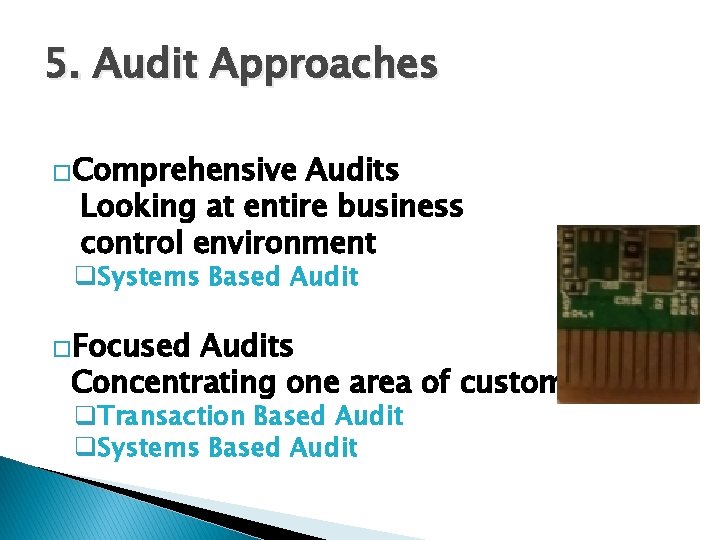
5. Audit Approaches �Comprehensive Audits Looking at entire business control environment q. Systems Based Audit �Focused Audits Concentrating one area of customs q. Transaction Based Audit q. Systems Based Audit
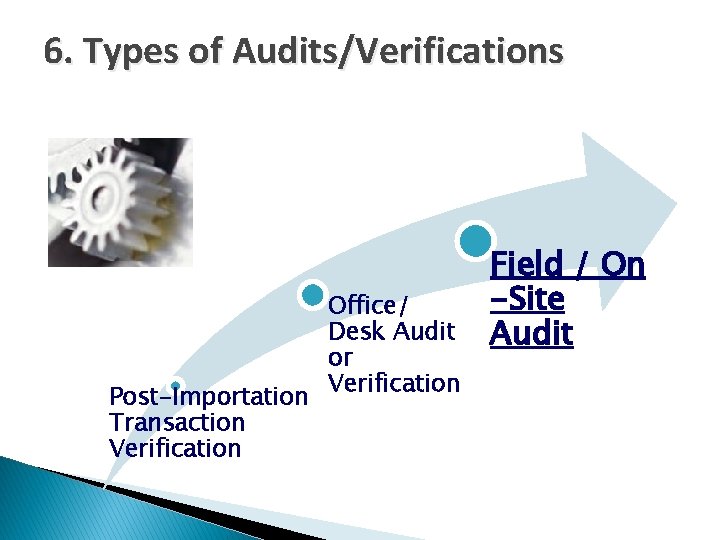
6. Types of Audits/Verifications Post-Importation Transaction Verification Office/ Desk Audit or Verification Field / On -Site Audit
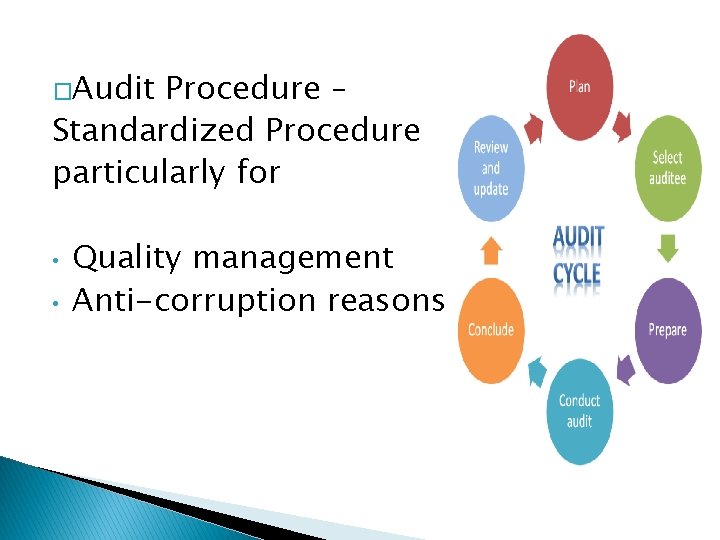
�Audit Procedure – Standardized Procedure particularly for • • Quality management Anti-corruption reasons
7. WCO’s Tools and Instruments � PCA Guidelines � Diagnostic Tools �Implementation Guidelines �Audit Typology – How to Audit
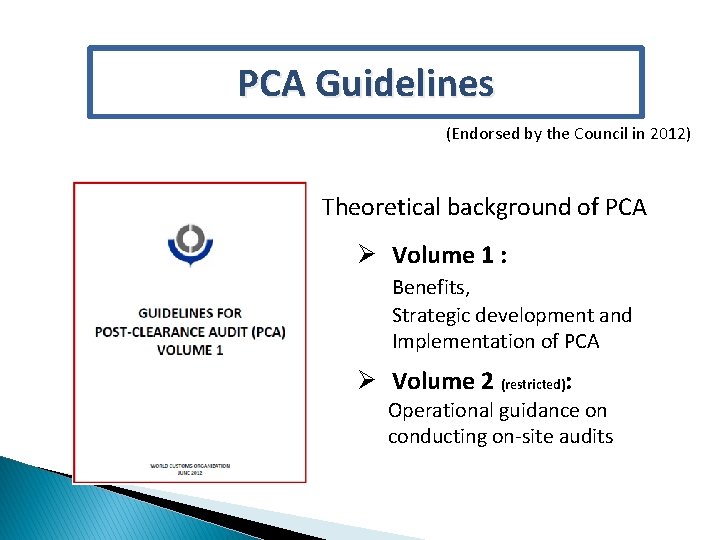
PCA Guidelines (Endorsed by the Council in 2012) Theoretical background of PCA Ø Volume 1 : Benefits, Strategic development and Implementation of PCA Ø Volume 2 (restricted): Operational guidance on conducting on-site audits
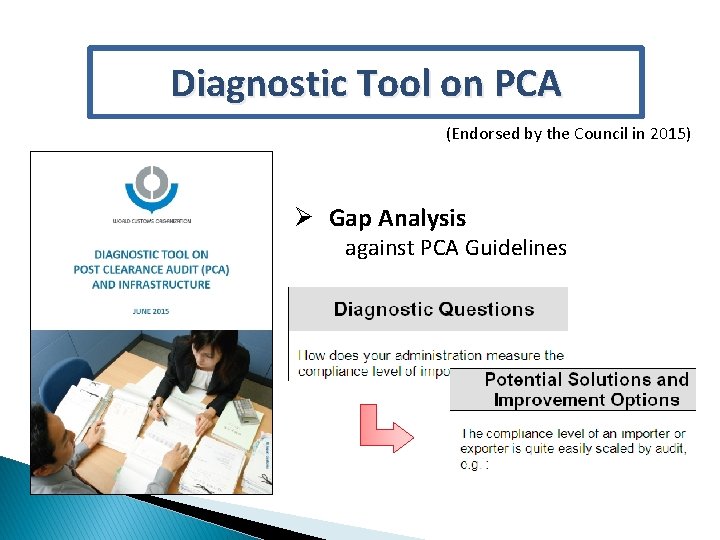
Diagnostic Tool on PCA (Endorsed by the Council in 2015) Ø Gap Analysis against PCA Guidelines
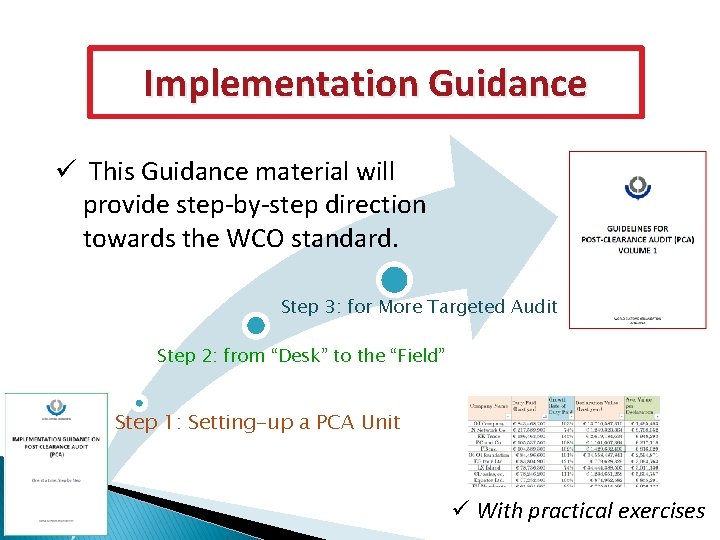
Implementation Guidance ü This Guidance material will provide step-by-step direction towards the WCO standard. Step 3: for More Targeted Audit Step 2: from “Desk” to the “Field” Step 1: Setting-up a PCA Unit ü With practical exercises
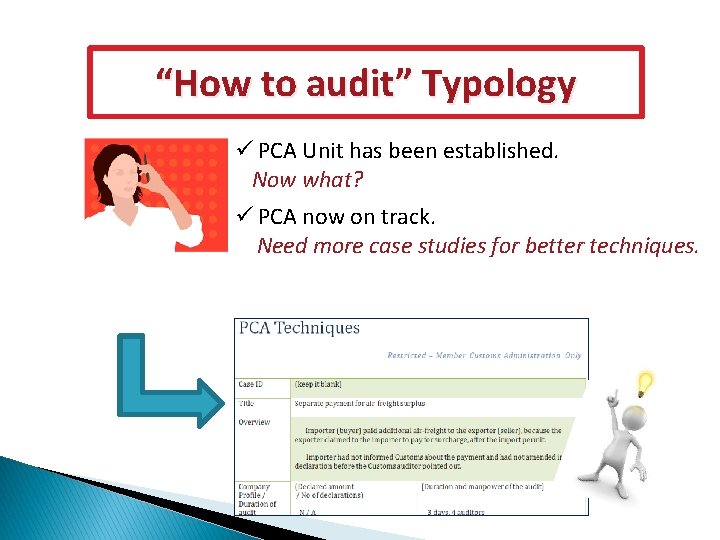
“How to audit” Typology ü PCA Unit has been established. Now what? ü PCA now on track. Need more case studies for better techniques.
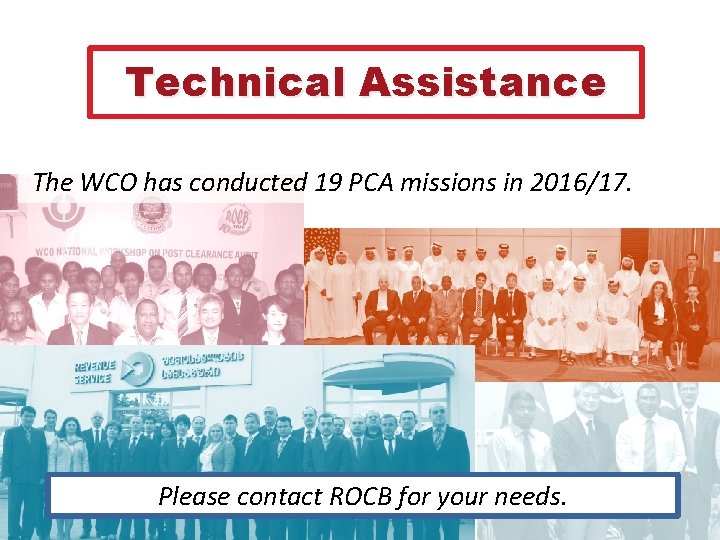
Technical Assistance The WCO has conducted 19 PCA missions in 2016/17. Please contact ROCB for your needs.
! n i a Ag What is PCA? “A means to measure and improve compliance” WCO PCA Guidelines (2012) Try to educate traders, if you worry about the leakage of revenue!
Thank you for your attention!