
Possible Impact of VDSL on Stations Operating in
Possible Impact of VDSL on Stations Operating in the Amateur Radio Service Ed Hare, W 1 RFI ARRL Laboratory Manager 225 Main St Newington, CT 06111 w 1 rfi@arrl. org 860 -594 -0318
Part 15 • • Absolute Maximum Limits Unintentional Emitters Non-interference Manufacturer responsible for FCC authorization and maximum limits • Operator responsible for harmful interference • Both are important to mitigate possible harmful interference
Unintentional Emitter Emissions • • Radiated emissions above 30 MHz Conducted emissions below 30 MHz Good engineering practice Carrier-current devices must meet intentional emissions limits – 3 installations • Meeting the intentional emissions limits on HF is good engineering practice
Intentional Radiator Radiated Emissions Limits - HF • Sec 15. 209 • 1. 705 -30. 0 MHz – 30 u. V/m at 30 meters • This should protect users of the spectrum against interference, yes?
No! • If the absolute emissions limits were set to offer unconditional protection to all radio services, the permitted levels would be unworkably low • Amateur Radio Service, by design, uses very sensitive equipment and weak signals • The “legal limit” will result in a strong signal to nearby Amateur HF installations • On 3. 5 MHz, a half-wave dipole placed in a 30 u. V/m field will receive a – 86. 4 d. BW signal (338 microvolts across 50 ohms) • To hams, this is S 9+16 d. B – clearly harmful interference to typical amateur communications! • Harmful interference at even greater distances than the compliance distance is likely • The absolute limits are not enough to prevent interference to nearby receivers
Harmful Interference • The repeated disruption of radio communications • Merely hearing a signal is NOT harmful interference • 30 u. V/m at 30 m works somewhat well for discrete signals • If from broadband device, however, will interfere with entire band(s)! • 30 u. V/m works somewhat well for isolated sources • If from VDSL, interference potential exists for occur for entire length of wiring in areas where VDSL is deployed!
A Case History – Wireless Modem Jacks • Carrier-current devices that use residential electrical wiring to couple modem signals between a computer and a remote telephone connection • Phonex model PX-421 designed to operate on 3. 53 MHz • These were purchased in volume by TCI Cable and installed in conjuction with their digital cable systems • Widespread S 9++ levels signals and harmful interference • Phonex responded promptly, redesigned product • TCI, now AT&T still in midst of system-wide recall! • Costs?
What Can Be Expected from VDSL? • Better scenario than power lines and electrical wiring • Phone system reasonably well balanced at audio • At HF? 20 d. B to 30 d. B balance typical?
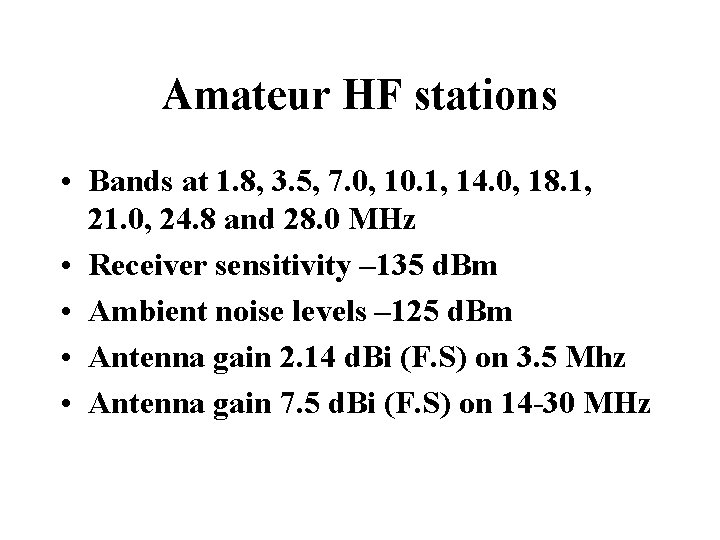
Amateur HF stations • Bands at 1. 8, 3. 5, 7. 0, 10. 1, 14. 0, 18. 1, 21. 0, 24. 8 and 28. 0 MHz • Receiver sensitivity – 135 d. Bm • Ambient noise levels – 125 d. Bm • Antenna gain 2. 14 d. Bi (F. S) on 3. 5 Mhz • Antenna gain 7. 5 d. Bi (F. S) on 14 -30 MHz
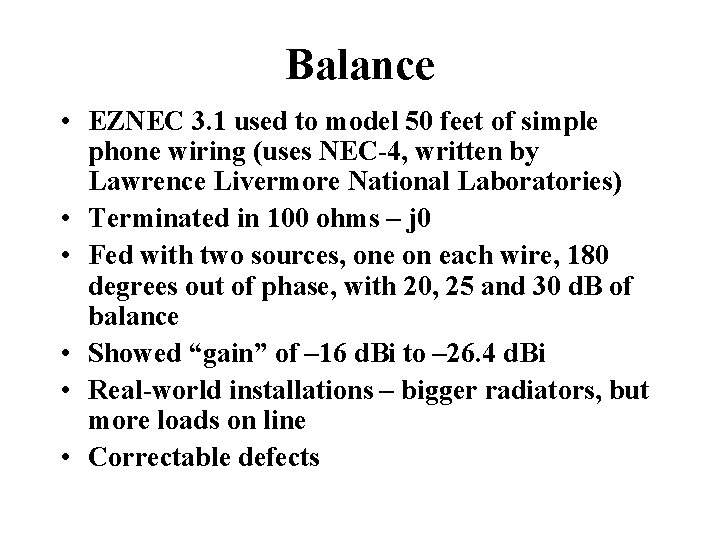
Balance • EZNEC 3. 1 used to model 50 feet of simple phone wiring (uses NEC-4, written by Lawrence Livermore National Laboratories) • Terminated in 100 ohms – j 0 • Fed with two sources, one on each wire, 180 degrees out of phase, with 20, 25 and 30 d. B of balance • Showed “gain” of – 16 d. Bi to – 26. 4 d. Bi • Real-world installations – bigger radiators, but more loads on line • Correctable defects
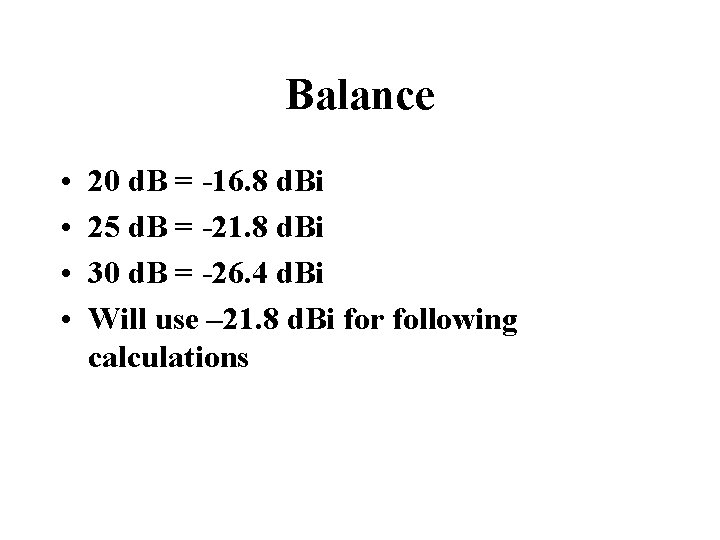
Balance • • 20 d. B = -16. 8 d. Bi 25 d. B = -21. 8 d. Bi 30 d. B = -26. 4 d. Bi Will use – 21. 8 d. Bi for following calculations
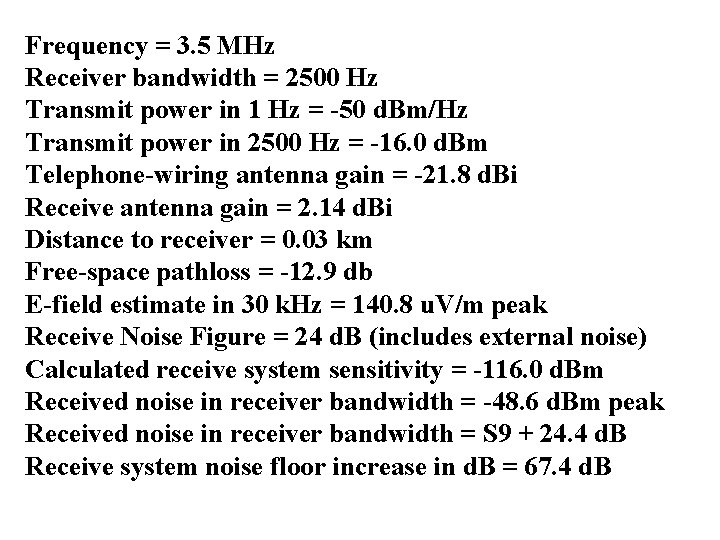
Frequency = 3. 5 MHz Receiver bandwidth = 2500 Hz Transmit power in 1 Hz = -50 d. Bm/Hz Transmit power in 2500 Hz = -16. 0 d. Bm Telephone-wiring antenna gain = -21. 8 d. Bi Receive antenna gain = 2. 14 d. Bi Distance to receiver = 0. 03 km Free-space pathloss = -12. 9 db E-field estimate in 30 k. Hz = 140. 8 u. V/m peak Receive Noise Figure = 24 d. B (includes external noise) Calculated receive system sensitivity = -116. 0 d. Bm Received noise in receiver bandwidth = -48. 6 d. Bm peak Received noise in receiver bandwidth = S 9 + 24. 4 d. B Receive system noise floor increase in d. B = 67. 4 d. B
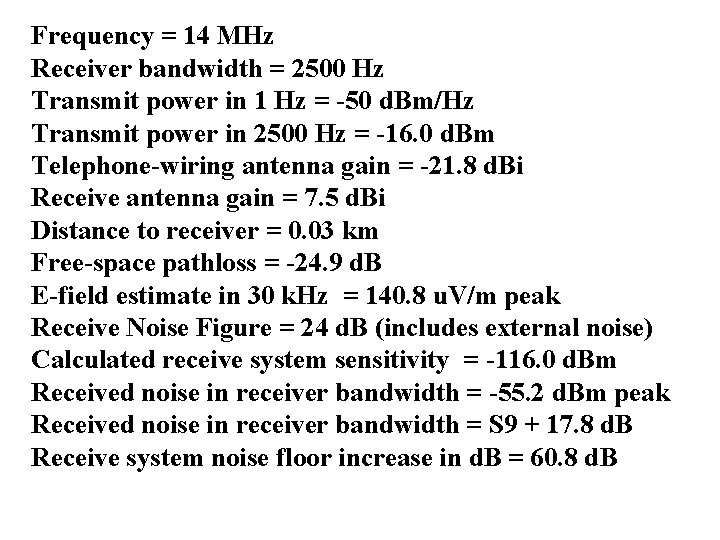
Frequency = 14 MHz Receiver bandwidth = 2500 Hz Transmit power in 1 Hz = -50 d. Bm/Hz Transmit power in 2500 Hz = -16. 0 d. Bm Telephone-wiring antenna gain = -21. 8 d. Bi Receive antenna gain = 7. 5 d. Bi Distance to receiver = 0. 03 km Free-space pathloss = -24. 9 d. B E-field estimate in 30 k. Hz = 140. 8 u. V/m peak Receive Noise Figure = 24 d. B (includes external noise) Calculated receive system sensitivity = -116. 0 d. Bm Received noise in receiver bandwidth = -55. 2 d. Bm peak Received noise in receiver bandwidth = S 9 + 17. 8 d. B Receive system noise floor increase in d. B = 60. 8 d. B
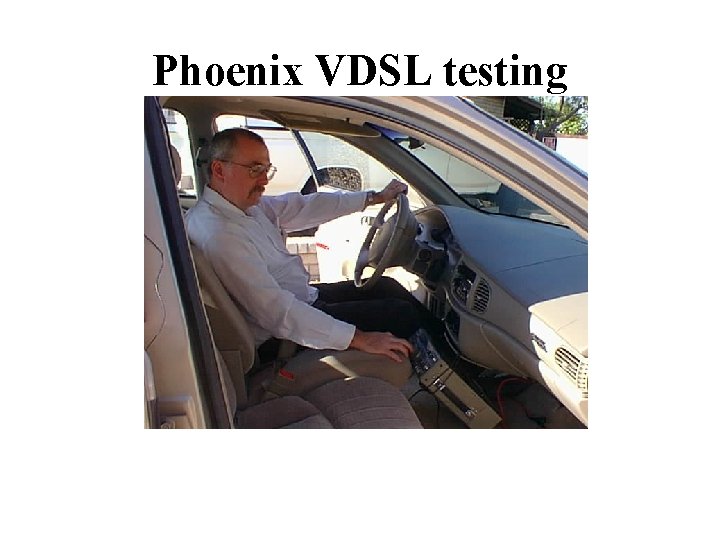
Phoenix VDSL testing
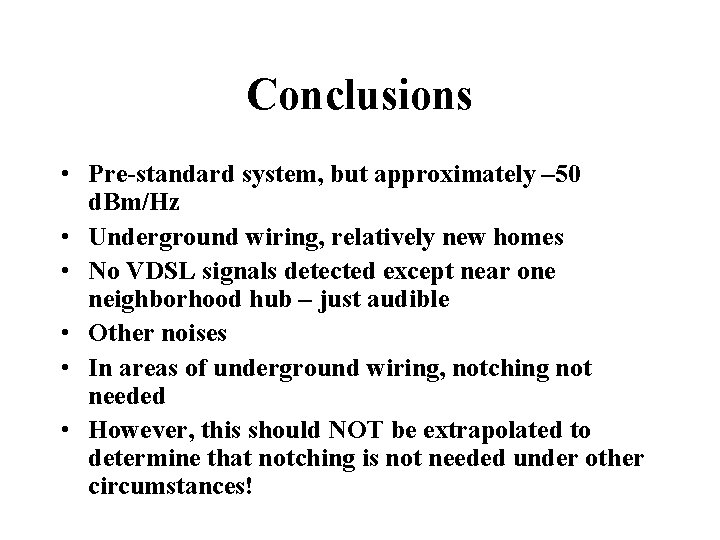
Conclusions • Pre-standard system, but approximately – 50 d. Bm/Hz • Underground wiring, relatively new homes • No VDSL signals detected except near one neighborhood hub – just audible • Other noises • In areas of underground wiring, notching not needed • However, this should NOT be extrapolated to determine that notching is not needed under other circumstances!
HPNA
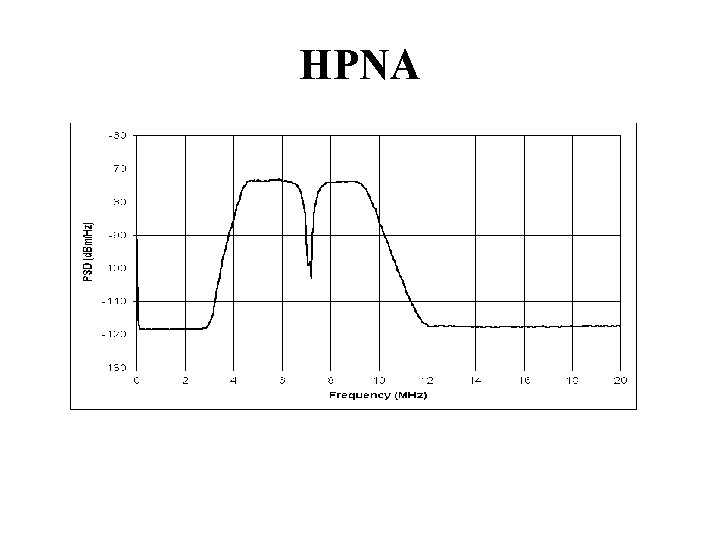
HPNA
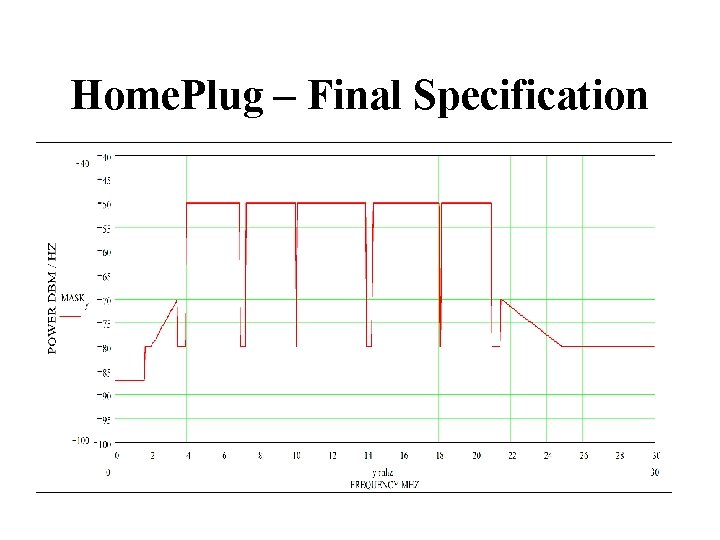
Home. Plug – Final Specification
Industry Measurements of Interference Potential? • In general, industry has not made measurements of interference to other services • Such measurements, made by Amateur Radio in other, similar disciplines show interference potential • In all cases where industry groups have conducted joint studies with ARRL, they have chosen to include spectral masks in their industry standards or specifications • To date, no widespread interference from protected products
What is Needed? • Based on modeling and calculations, -50 d. Bm/Hz will probably result in harmful interference with overhead wiring and older homes • Amateur Radio vs other services? • These models not exact, but demonstrate clearly the need for further study • ARRL wants to participate in field studies, especially any near New England, but I will travel!
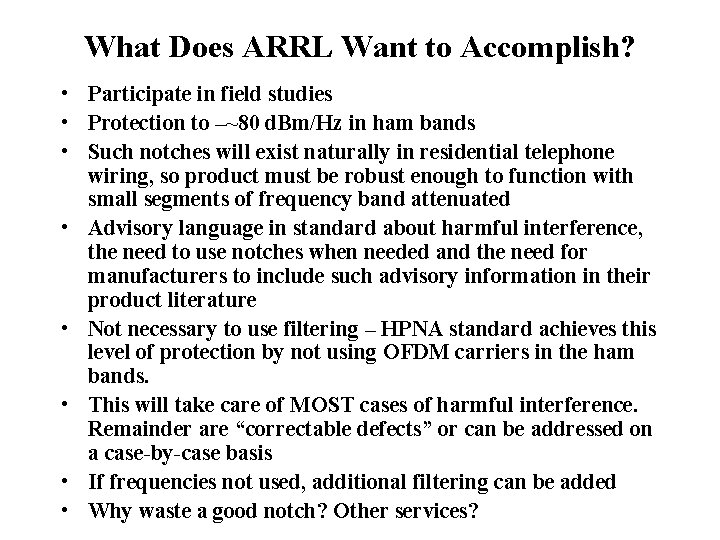
What Does ARRL Want to Accomplish? • Participate in field studies • Protection to –~80 d. Bm/Hz in ham bands • Such notches will exist naturally in residential telephone wiring, so product must be robust enough to function with small segments of frequency band attenuated • Advisory language in standard about harmful interference, the need to use notches when needed and the need for manufacturers to include such advisory information in their product literature • Not necessary to use filtering – HPNA standard achieves this level of protection by not using OFDM carriers in the ham bands. • This will take care of MOST cases of harmful interference. Remainder are “correctable defects” or can be addressed on a case-by-case basis • If frequencies not used, additional filtering can be added • Why waste a good notch? Other services?
More Information Ed Hare, W 1 RFI ARRL Laboratory Manager 225 Main St Newington, CT 06111 w 1 rfi@arrl. org 860 -594 -0318 • http: //www. arrl. org/~ehare/rfi/vdsl. html • http: //www. arrl. org/tis/info/part 15. html

- Slides: 23