
Positivistic versus Naturalistic Inquiry changing the way we
- Slides: 12
Positivistic versus Naturalistic Inquiry: changing the way we think and investigate by Dennis Ondrejka, Ph. D. • This is a 100 year old debate • Is often correlated to research methodology • Is a philosophy on the way we think about human phenomenon & research • Can be integrated within methodology, but philosophically they are very different • Is the foundation for how we design research
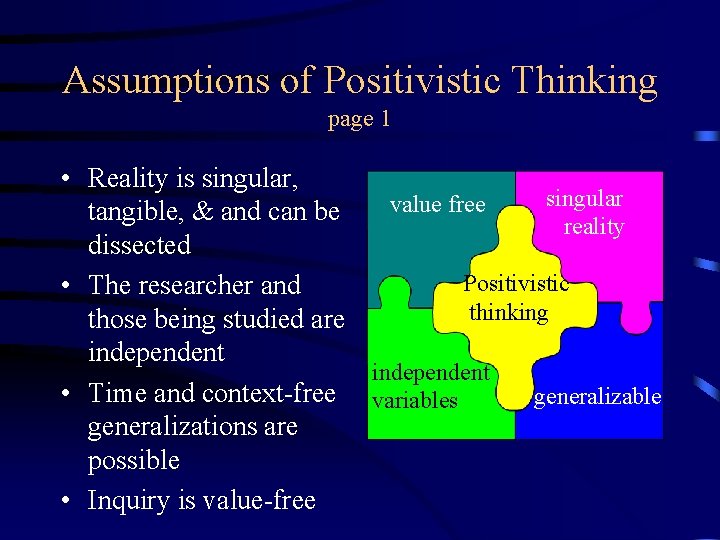
Assumptions of Positivistic Thinking page 1 • Reality is singular, singular value free tangible, & and can be reality dissected Positivistic • The researcher and thinking those being studied are independent • Time and context-free variables generalizable generalizations are possible • Inquiry is value-free
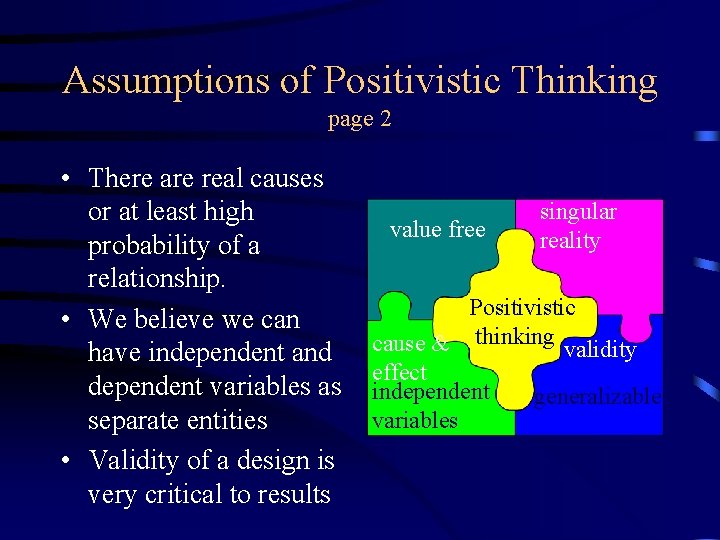
Assumptions of Positivistic Thinking page 2 • There are real causes or at least high probability of a relationship. • We believe we can have independent and dependent variables as separate entities • Validity of a design is very critical to results value free singular reality Positivistic cause & thinking validity effect independent generalizable variables
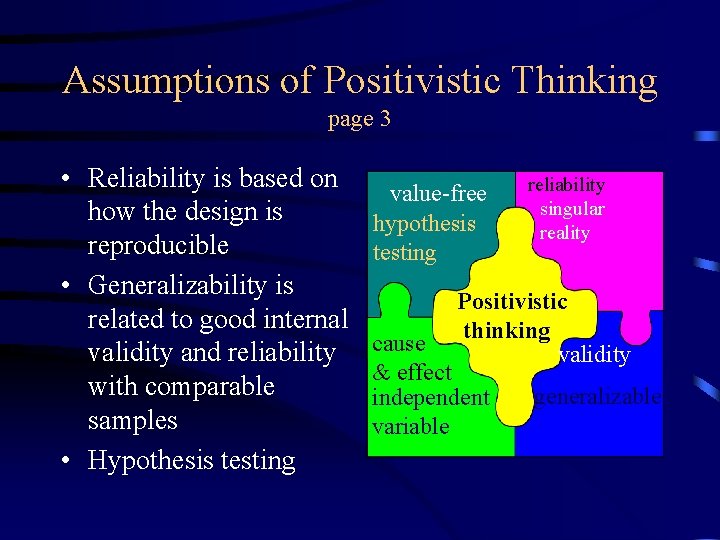
Assumptions of Positivistic Thinking page 3 • Reliability is based on how the design is reproducible • Generalizability is related to good internal validity and reliability with comparable samples • Hypothesis testing value-free hypothesis testing reliability singular reality Positivistic thinking validity cause & effect independent variable generalizable
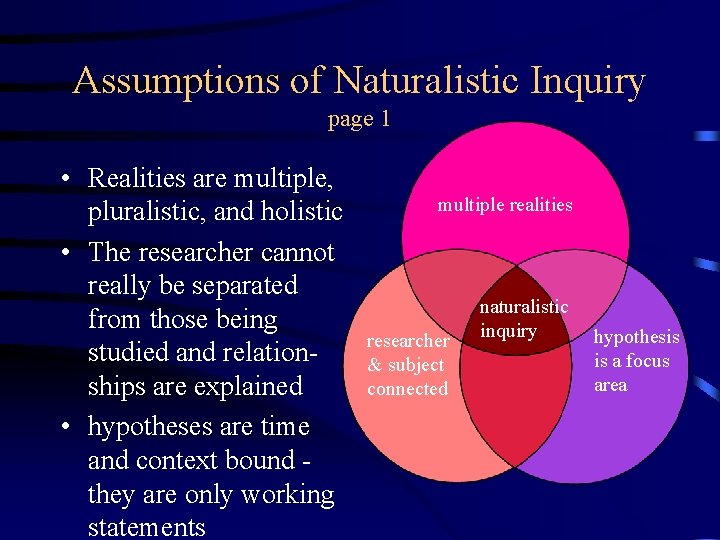
Assumptions of Naturalistic Inquiry page 1 • Realities are multiple, pluralistic, and holistic • The researcher cannot really be separated from those being studied and relationships are explained • hypotheses are time and context bound they are only working statements multiple realities researcher & subject connected naturalistic inquiry hypothesis is a focus area
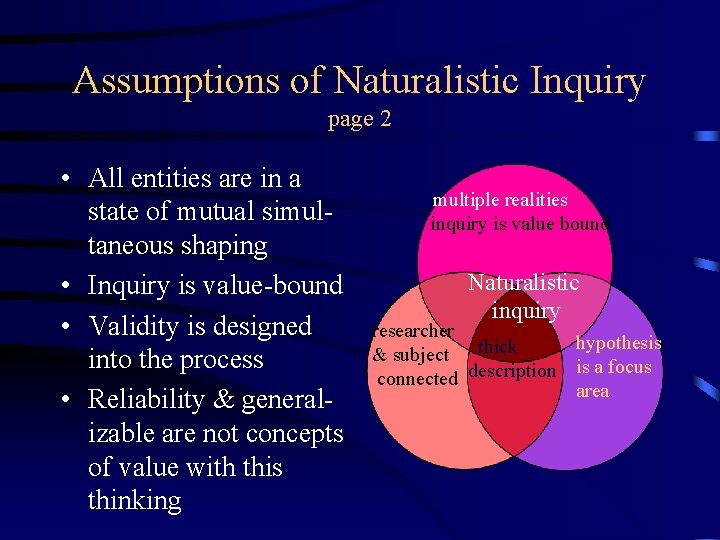
Assumptions of Naturalistic Inquiry page 2 • All entities are in a state of mutual simultaneous shaping • Inquiry is value-bound • Validity is designed into the process • Reliability & generalizable are not concepts of value with this thinking multiple realities inquiry is value bound Naturalistic inquiry researcher hypothesis & subject thick is a focus connected description area
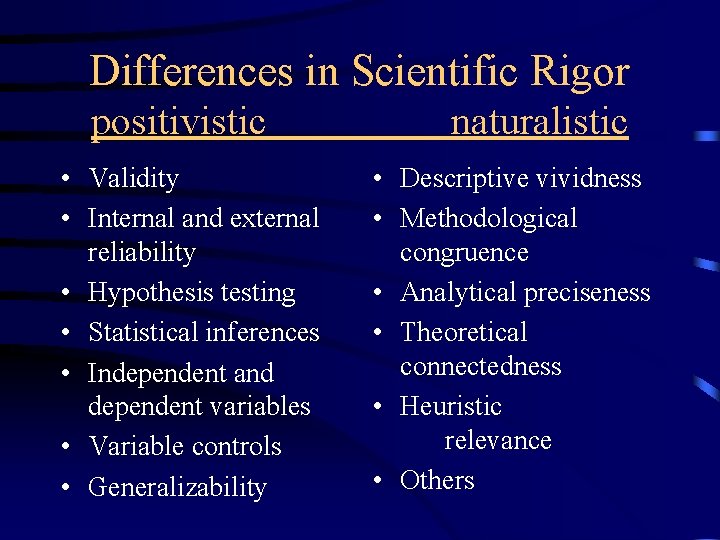
Differences in Scientific Rigor positivistic • Validity • Internal and external reliability • Hypothesis testing • Statistical inferences • Independent and dependent variables • Variable controls • Generalizability naturalistic • Descriptive vividness • Methodological congruence • Analytical preciseness • Theoretical connectedness • Heuristic relevance • Others
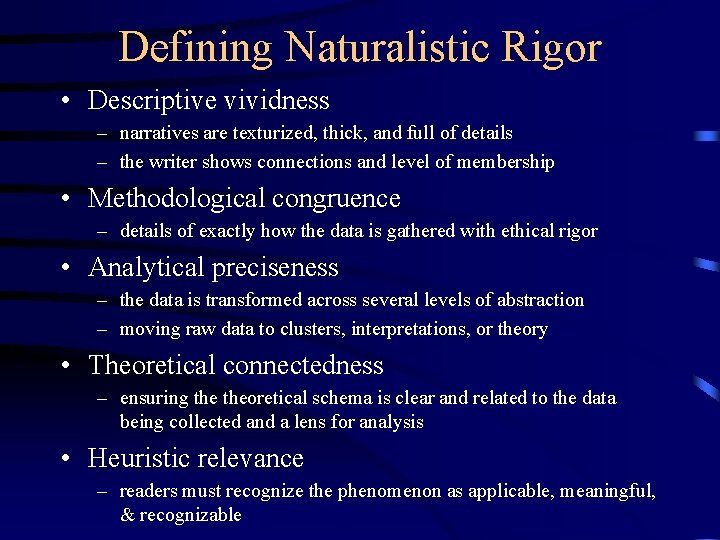
Defining Naturalistic Rigor • Descriptive vividness – narratives are texturized, thick, and full of details – the writer shows connections and level of membership • Methodological congruence – details of exactly how the data is gathered with ethical rigor • Analytical preciseness – the data is transformed across several levels of abstraction – moving raw data to clusters, interpretations, or theory • Theoretical connectedness – ensuring theoretical schema is clear and related to the data being collected and a lens for analysis • Heuristic relevance – readers must recognize the phenomenon as applicable, meaningful, & recognizable
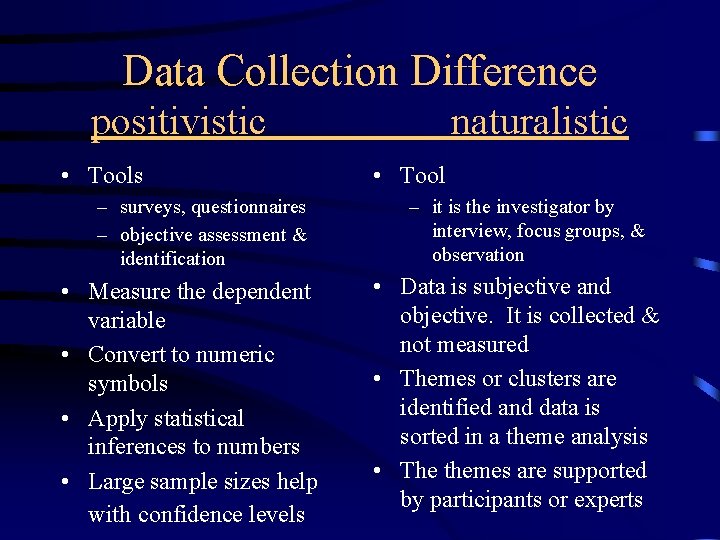
Data Collection Difference positivistic • Tools – surveys, questionnaires – objective assessment & identification • Measure the dependent variable • Convert to numeric symbols • Apply statistical inferences to numbers • Large sample sizes help with confidence levels naturalistic • Tool – it is the investigator by interview, focus groups, & observation • Data is subjective and objective. It is collected & not measured • Themes or clusters are identified and data is sorted in a theme analysis • The themes are supported by participants or experts
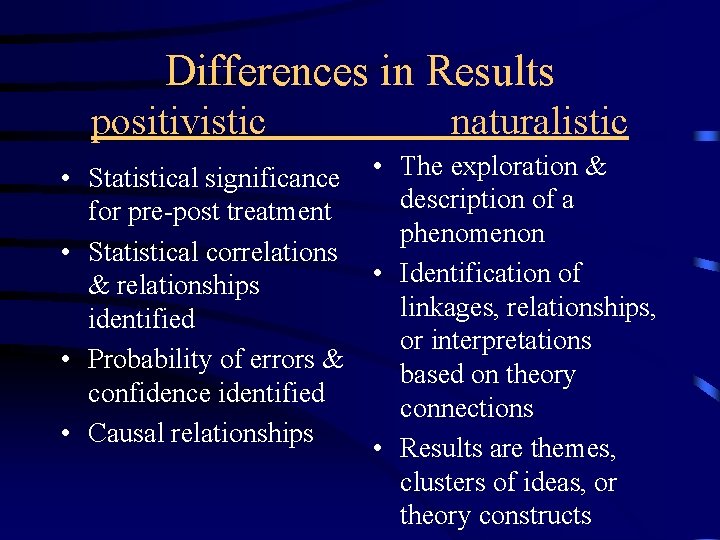
Differences in Results positivistic • Statistical significance for pre-post treatment • Statistical correlations & relationships identified • Probability of errors & confidence identified • Causal relationships naturalistic • The exploration & description of a phenomenon • Identification of linkages, relationships, or interpretations based on theory connections • Results are themes, clusters of ideas, or theory constructs
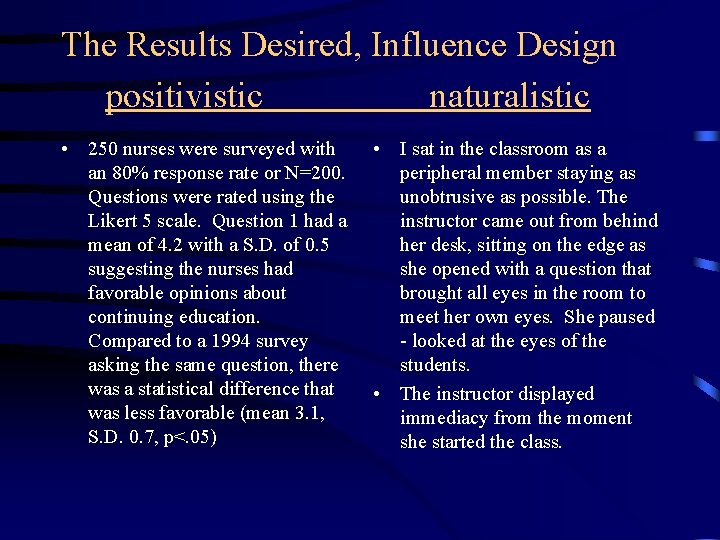
The Results Desired, Influence Design positivistic naturalistic • 250 nurses were surveyed with an 80% response rate or N=200. Questions were rated using the Likert 5 scale. Question 1 had a mean of 4. 2 with a S. D. of 0. 5 suggesting the nurses had favorable opinions about continuing education. Compared to a 1994 survey asking the same question, there was a statistical difference that was less favorable (mean 3. 1, S. D. 0. 7, p<. 05) • I sat in the classroom as a peripheral member staying as unobtrusive as possible. The instructor came out from behind her desk, sitting on the edge as she opened with a question that brought all eyes in the room to meet her own eyes. She paused - looked at the eyes of the students. • The instructor displayed immediacy from the moment she started the class.
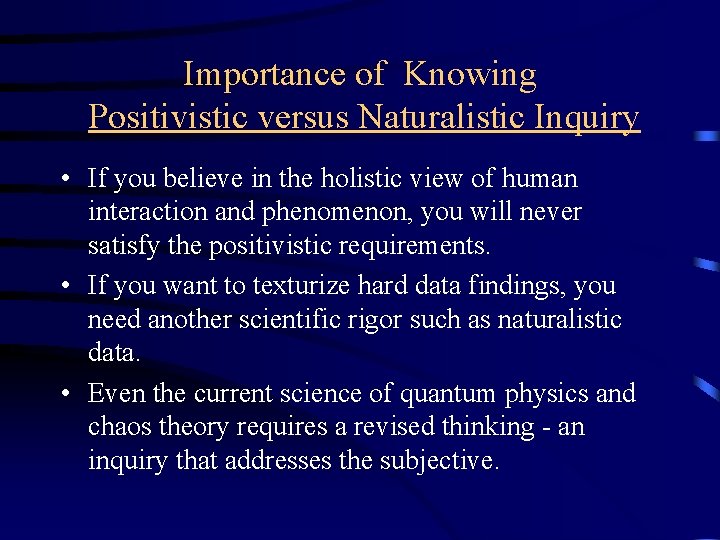
Importance of Knowing Positivistic versus Naturalistic Inquiry • If you believe in the holistic view of human interaction and phenomenon, you will never satisfy the positivistic requirements. • If you want to texturize hard data findings, you need another scientific rigor such as naturalistic data. • Even the current science of quantum physics and chaos theory requires a revised thinking - an inquiry that addresses the subjective.