
Positive School Discipline Institute A TraumaInformed Approach to








- Slides: 41
Positive School Discipline Institute A Trauma-Informed Approach to School Discipline CHILDREN’S POLICY AND LAW INITIATIVE OF INDIANA
Mission Statement “CPLI advocates for systemic changes for children so that programs, policies, and practices are developmentally appropriate, equitably administered and fair, and provide the necessary support for a child’s successful transition into adulthood”.
Nation Juvenile Justice Network CPLI is one of 53 organizations in 43 states that belong to the National Juvenile Justice Network. The National Juvenile Justice Network (NJJN) leads a movement of state-based juvenile justice reform organizations and alumni of its Youth Justice Leadership Institute to advocate for a fairer youth justice system that’s appropriate for youth and their families.
https: //www. youtube. com/watch? v=Kd. Dr_n. ZOIXc
Trauma-Informed School Impact In 2010 -2011, the implementation of the Trauma-Informed School model in a school in Washington State: ● Reduced school suspensions by 90% ● 5 fold increase in graduation rates ● Increased academic achievement ● Demonstrated student preparedness to successfully enter college and the workforce
Positive School Discipline Institute
Why Do We Need Positive School Discipline?
Indiana Suspension Rates For the 2012 -13 school year, the Equity Project at Indiana University reported: ● 1 in 10 students were suspended in Indiana. For African American Students, 1 in 5 students were suspended. ● 102, 030 Indiana students lost a total of 751, 366 instructional days due to exclusionary discipline practices - which include suspension and expulsion for attendance related matters, such as truancy, chronic absenteeism, and tardiness.
More Indiana Data ● 10. 4% of Indiana children have a parent who has served time in jail. ● 1 in 10 children live with an adult who has been diagnosed with a mental illness. ● In 2016 more than half of children removed from their home in DCS was due to drug and alcohol abuse. ● Nearly 1 of 5 Hoosier children are food insecure ● 1 in 5 Hoosier children live in poverty ● 2016 - 16, 143 Indiana public school students were identified as homeless or housing unstable. KIDS COUNT 2018 Data Book
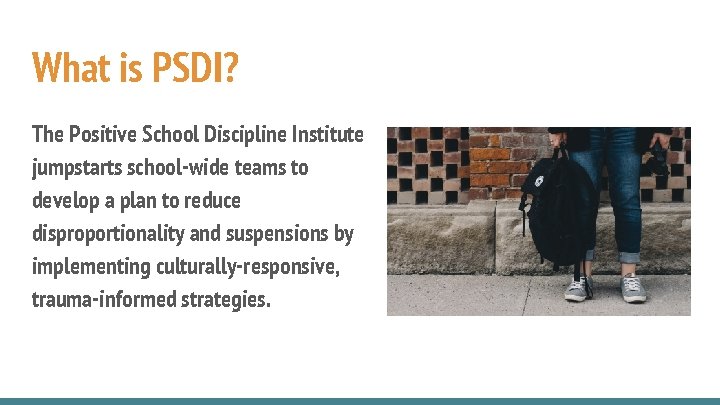
What is PSDI? The Positive School Discipline Institute jumpstarts school-wide teams to develop a plan to reduce disproportionality and suspensions by implementing culturally-responsive, trauma-informed strategies.
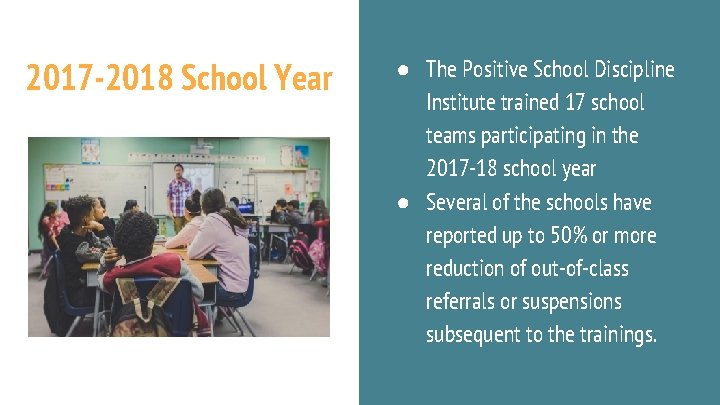
2017 -2018 School Year ● The Positive School Discipline Institute trained 17 school teams participating in the 2017 -18 school year ● Several of the schools have reported up to 50% or more reduction of out-of-class referrals or suspensions subsequent to the trainings.
PSDI Involves the Trauma-Informed School Model “In a trauma-informed school, the adults in the school community are prepared to recognize and respond to those who have been impacted by traumatic stress. Those adults include administrators, teachers, staff, parents, and law enforcement”. - Treatment and Adaptation Services Center
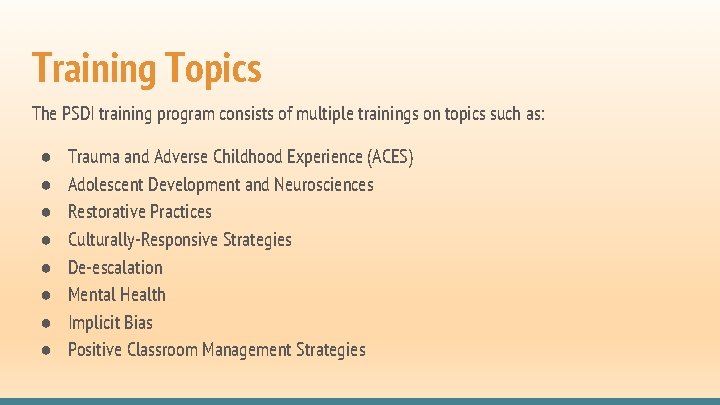
Training Topics The PSDI training program consists of multiple trainings on topics such as: ● ● ● ● Trauma and Adverse Childhood Experience (ACES) Adolescent Development and Neurosciences Restorative Practices Culturally-Responsive Strategies De-escalation Mental Health Implicit Bias Positive Classroom Management Strategies
Trauma-Informed Practices
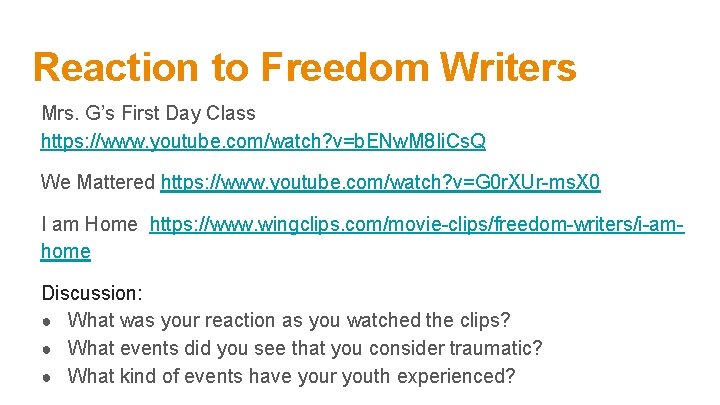
Reaction to Freedom Writers Mrs. G’s First Day Class https: //www. youtube. com/watch? v=b. ENw. M 8 Ii. Cs. Q We Mattered https: //www. youtube. com/watch? v=G 0 r. XUr-ms. X 0 I am Home https: //www. wingclips. com/movie-clips/freedom-writers/i-amhome Discussion: ● What was your reaction as you watched the clips? ● What events did you see that you consider traumatic? ● What kind of events have your youth experienced?
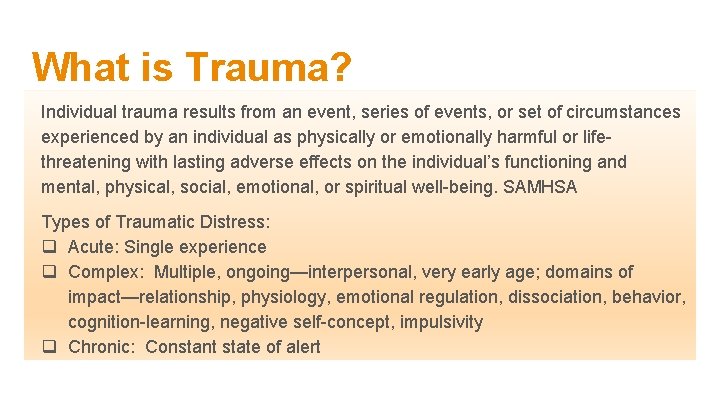
What is Trauma? Individual trauma results from an event, series of events, or set of circumstances experienced by an individual as physically or emotionally harmful or lifethreatening with lasting adverse effects on the individual’s functioning and mental, physical, social, emotional, or spiritual well-being. SAMHSA Types of Traumatic Distress: q Acute: Single experience q Complex: Multiple, ongoing—interpersonal, very early age; domains of impact—relationship, physiology, emotional regulation, dissociation, behavior, cognition-learning, negative self-concept, impulsivity q Chronic: Constant state of alert
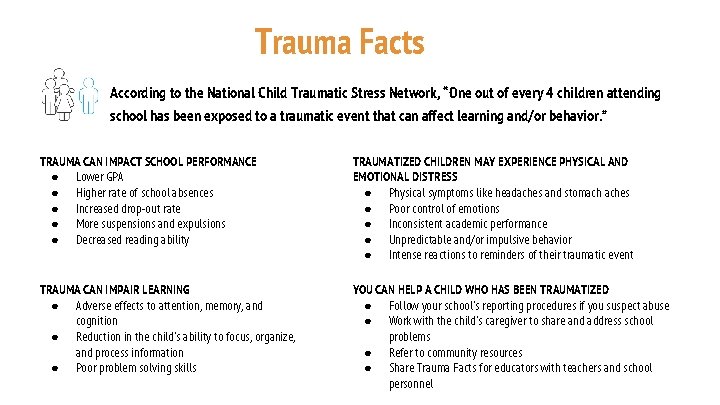
Trauma Facts According to the National Child Traumatic Stress Network, “One out of every 4 children attending school has been exposed to a traumatic event that can affect learning and/or behavior. ” TRAUMA CAN IMPACT SCHOOL PERFORMANCE ● Lower GPA ● Higher rate of school absences ● Increased drop-out rate ● More suspensions and expulsions ● Decreased reading ability TRAUMATIZED CHILDREN MAY EXPERIENCE PHYSICAL AND EMOTIONAL DISTRESS ● Physical symptoms like headaches and stomach aches ● Poor control of emotions ● Inconsistent academic performance ● Unpredictable and/or impulsive behavior ● Intense reactions to reminders of their traumatic event TRAUMA CAN IMPAIR LEARNING ● Adverse effects to attention, memory, and cognition ● Reduction in the child’s ability to focus, organize, and process information ● Poor problem solving skills YOU CAN HELP A CHILD WHO HAS BEEN TRAUMATIZED ● Follow your school’s reporting procedures if you suspect abuse ● Work with the child’s caregiver to share and address school problems ● Refer to community resources ● Share Trauma Facts for educators with teachers and school personnel
SAMHSA Three E’s: Events Experience Effect
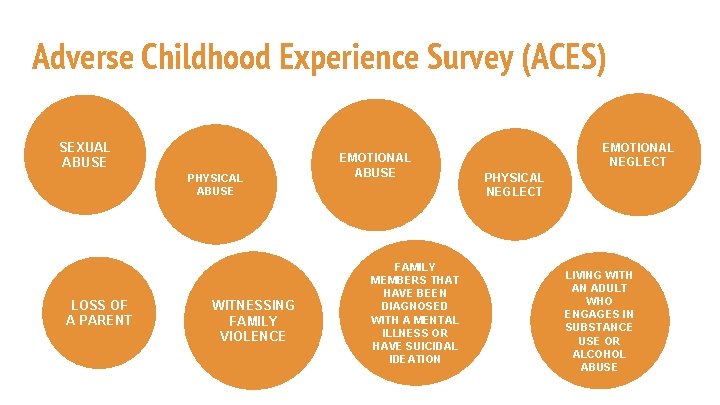
Adverse Childhood Experience Survey (ACES) SEXUAL ABUSE PHYSICAL ABUSE LOSS OF A PARENT WITNESSING FAMILY VIOLENCE EMOTIONAL ABUSE FAMILY MEMBERS THAT HAVE BEEN DIAGNOSED WITH A MENTAL ILLNESS OR HAVE SUICIDAL IDEATION EMOTIONAL NEGLECT PHYSICAL NEGLECT LIVING WITH AN ADULT WHO ENGAGES IN SUBSTANCE USE OR ALCOHOL ABUSE
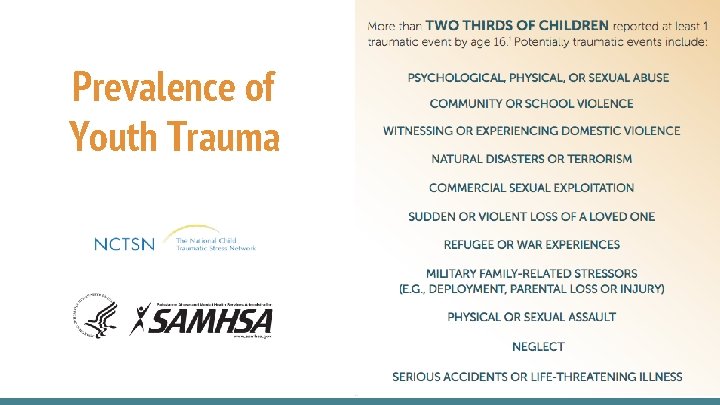
Prevalence of Youth Trauma
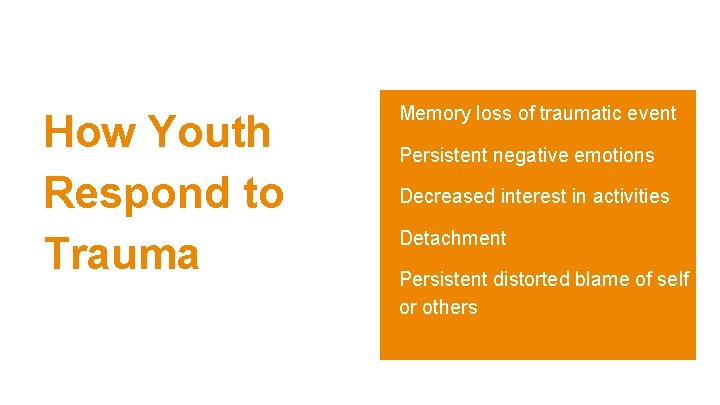
How Youth Respond to Trauma Memory loss of traumatic event Persistent negative emotions Decreased interest in activities Detachment Persistent distorted blame of self or others
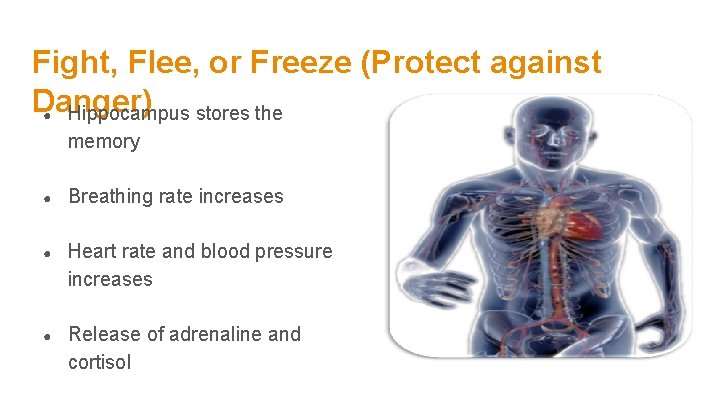
Fight, Flee, or Freeze (Protect against Danger) ● Hippocampus stores the memory ● Breathing rate increases ● Heart rate and blood pressure increases ● Release of adrenaline and cortisol
Trauma Reminders Things, events, activities, interactions, places, sensations and people that youth connect, consciously or unconsciously, with a traumatic event.
Impact of Youth Trauma
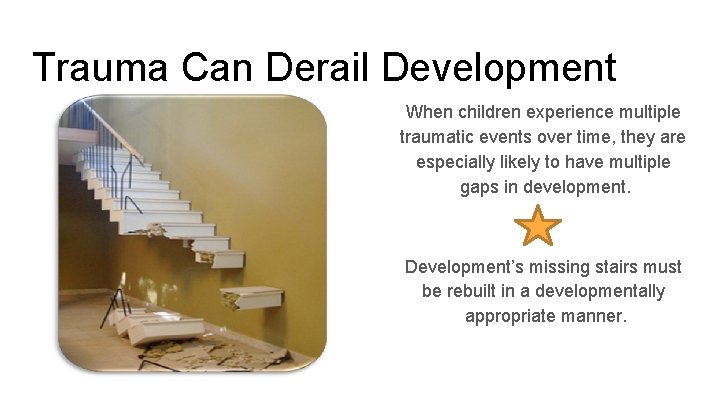
Trauma Can Derail Development When children experience multiple traumatic events over time, they are especially likely to have multiple gaps in development. Development’s missing stairs must be rebuilt in a developmentally appropriate manner.
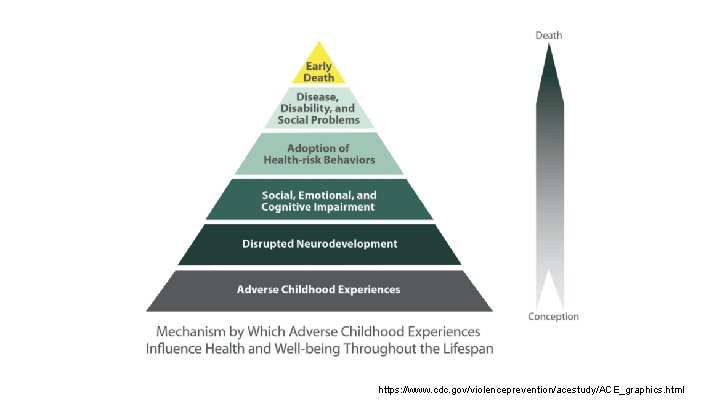
https: //www. cdc. gov/violenceprevention/acestudy/ACE_graphics. html
Enhancing Trauma-Informed Practices within Youth Settings
Strategies
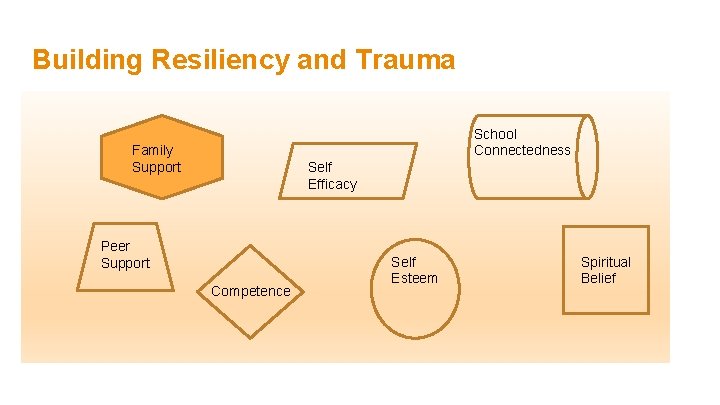
Building Resiliency and Trauma School Connectedness Family Support Self Efficacy Peer Support Competence Self Esteem Spiritual Belief
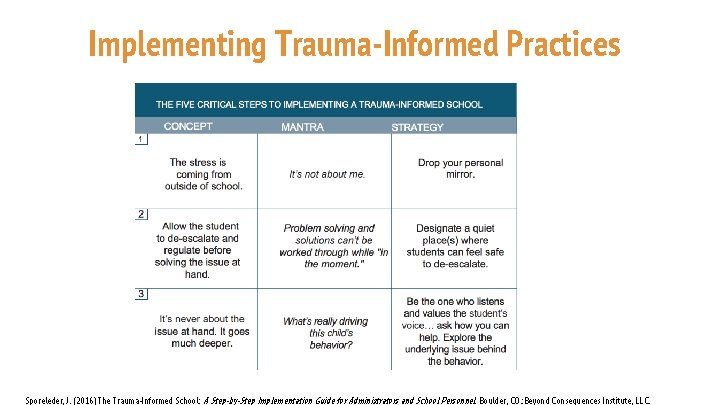
Implementing Trauma-Informed Practices Sporeleder, J. (2016) The Trauma-Informed School: A Step-by-Step Implementation Guide for Administrators and School Personnel. Boulder, CO. : Beyond Consequences Institute, LLC.
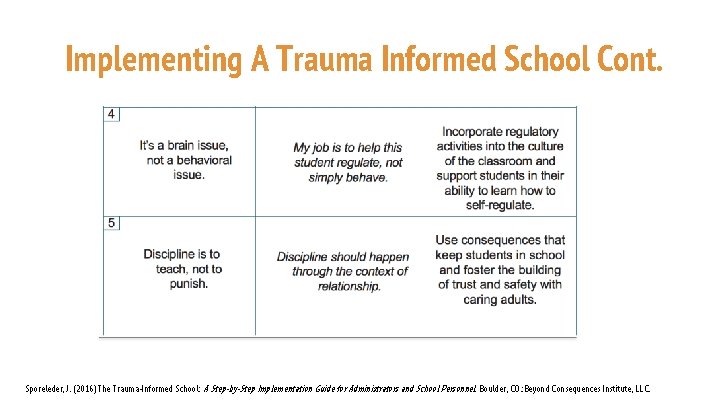
Implementing A Trauma Informed School Cont. Sporeleder, J. (2016) The Trauma-Informed School: A Step-by-Step Implementation Guide for Administrators and School Personnel. Boulder, CO. : Beyond Consequences Institute, LLC.
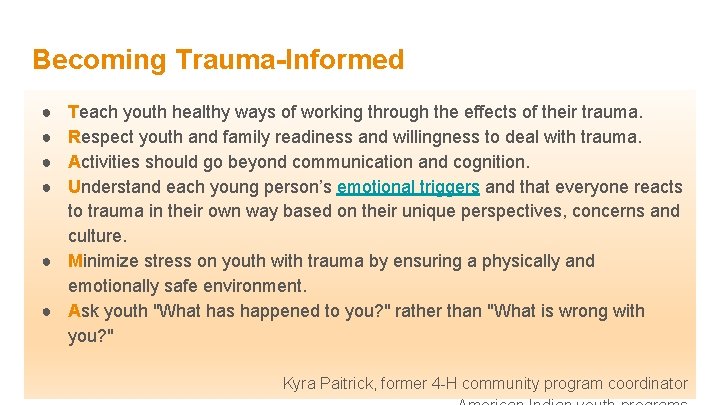
Becoming Trauma-Informed ● ● Teach youth healthy ways of working through the effects of their trauma. Respect youth and family readiness and willingness to deal with trauma. Activities should go beyond communication and cognition. Understand each young person’s emotional triggers and that everyone reacts to trauma in their own way based on their unique perspectives, concerns and culture. ● Minimize stress on youth with trauma by ensuring a physically and emotionally safe environment. ● Ask youth "What has happened to you? " rather than "What is wrong with you? " Kyra Paitrick, former 4 -H community program coordinator
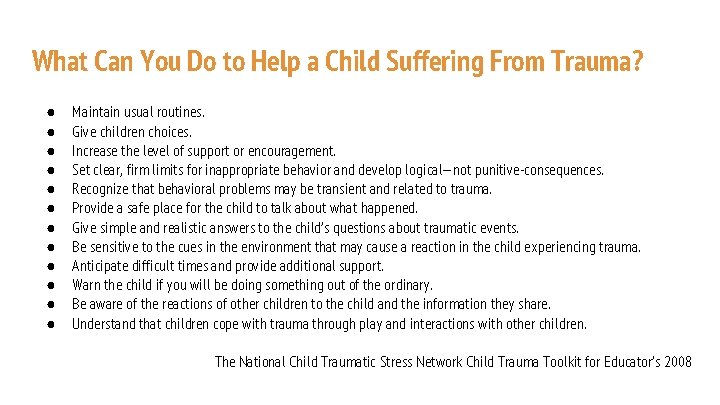
What Can You Do to Help a Child Suffering From Trauma? ● ● ● Maintain usual routines. Give children choices. Increase the level of support or encouragement. Set clear, firm limits for inappropriate behavior and develop logical—not punitive-consequences. Recognize that behavioral problems may be transient and related to trauma. Provide a safe place for the child to talk about what happened. Give simple and realistic answers to the child’s questions about traumatic events. Be sensitive to the cues in the environment that may cause a reaction in the child experiencing trauma. Anticipate difficult times and provide additional support. Warn the child if you will be doing something out of the ordinary. Be aware of the reactions of other children to the child and the information they share. Understand that children cope with trauma through play and interactions with other children. The National Child Traumatic Stress Network Child Trauma Toolkit for Educator’s 2008
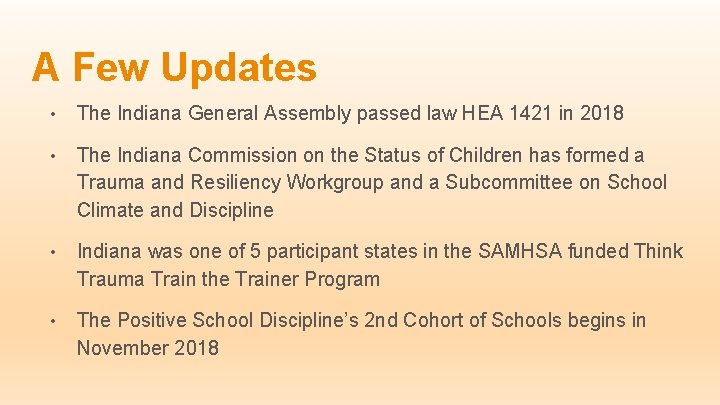
A Few Updates • The Indiana General Assembly passed law HEA 1421 in 2018 • The Indiana Commission on the Status of Children has formed a Trauma and Resiliency Workgroup and a Subcommittee on School Climate and Discipline • Indiana was one of 5 participant states in the SAMHSA funded Think Trauma Train the Trainer Program • The Positive School Discipline’s 2 nd Cohort of Schools begins in November 2018
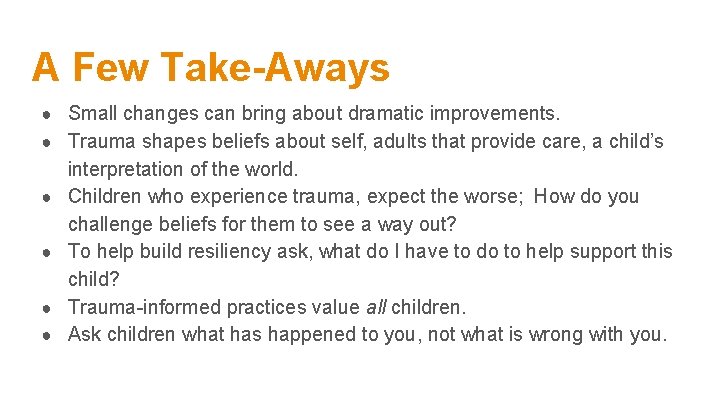
A Few Take-Aways ● Small changes can bring about dramatic improvements. ● Trauma shapes beliefs about self, adults that provide care, a child’s ● ● interpretation of the world. Children who experience trauma, expect the worse; How do you challenge beliefs for them to see a way out? To help build resiliency ask, what do I have to do to help support this child? Trauma-informed practices value all children. Ask children what has happened to you, not what is wrong with you.
Questions?
Contact Us Jau. Nae Hanger, J. D. – President Children’s Policy and Law Initiative Indiana Email: jhanger@wapleshanger. com Phone: (317) 201 -0591
Stay Connected Website: www. cpliofindiana. org Facebook: @CPLI. Indiana Twitter: cpliofindiana Instagram: CPLIof. Indiana
Resources Centers for Disease Control and Prevention (2016). Adverse Childhood Experiences: Presentation Graphics. https: //www. cdc. gov/violenceprevention/acestudy/ACE_graphics. html National Child Traumatic Stress Network (2017). www. NCTSN. org Sporeleder, J. (2016) The Trauma-Informed School: A Step-by-Step Implementation Guide for Administrators and School Personnel. Boulder, CO. : Beyond Consequences Institute, LLC. Substance Abuse and Mental Health Services Administration (2017). National Child Traumatic Stress Initiative: Understanding Child Trauma. https: //www. samhsa. gov/sites/default/files/programs_campaigns/nctsi-infographic. pdf The Annie E. Casey Foundation (2018). Kids Count Data Book: State Trends in Child Well Being. https: //www. aecf. org/resources/2018 -kids-count-data-book/ The National Council of Juvenile and Family Court Judges (2006). Adverse Childhood Experiences (ACES) Questionnaire: Finding Your Ace Score. https: //www. ncjfcj. org/sites/default/files/Finding%20 Your%20 ACE%20 Score. pdf The National Juvenile Justice Network (2011). http: //www. njjn. org/ Treatment and Service Adaptation Center (2018). What is a Trauma Informed School: Components of a Trauma Informed School. https: //traumaawareschools. org/trauma. In. Schools