
POSITIVE DISCIPLINE WHAT IS DISCIPLINE VALUE LINE ACTIVITY



- Slides: 36
POSITIVE DISCIPLINE WHAT IS DISCIPLINE?
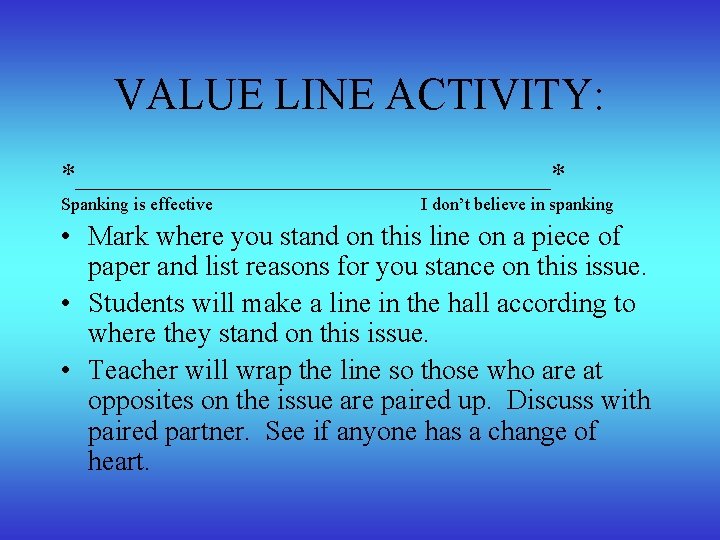
VALUE LINE ACTIVITY: *_________________* Spanking is effective I don’t believe in spanking • Mark where you stand on this line on a piece of paper and list reasons for you stance on this issue. • Students will make a line in the hall according to where they stand on this issue. • Teacher will wrap the line so those who are at opposites on the issue are paired up. Discuss with paired partner. See if anyone has a change of heart.
WHAT ABOUT SPANKING? • It is a physical assault on a child. • It teaches children to deal with life in a physical way. Can lead to child abuse. • • It teaches outer control, and only stops the behavior for a short time. Creates feelings of hatred and revenge.
DISCIPLINE “OK, here are your options: jump and discover the joy of flight, or don’t jump and I kick your butt out of the tree. What kind of parenting is this?
TYPES OF PARENTING: • AUTHORITARIAN: – External Control – Punishment – Order without freedom Creates rebellion or submission/dependence
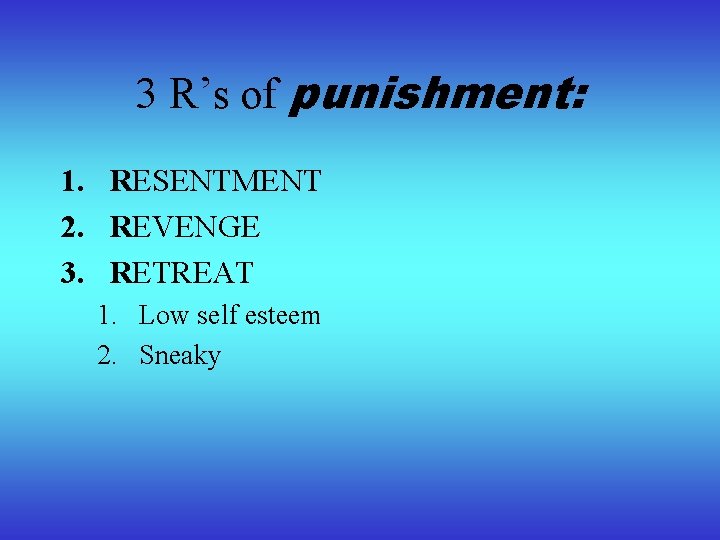
3 R’s of punishment: 1. RESENTMENT 2. REVENGE 3. RETREAT 1. Low self esteem 2. Sneaky
Where did we ever get the crazy idea that in order to make a child do better, first we have to make them feel worse.
Children do better when they feel better!
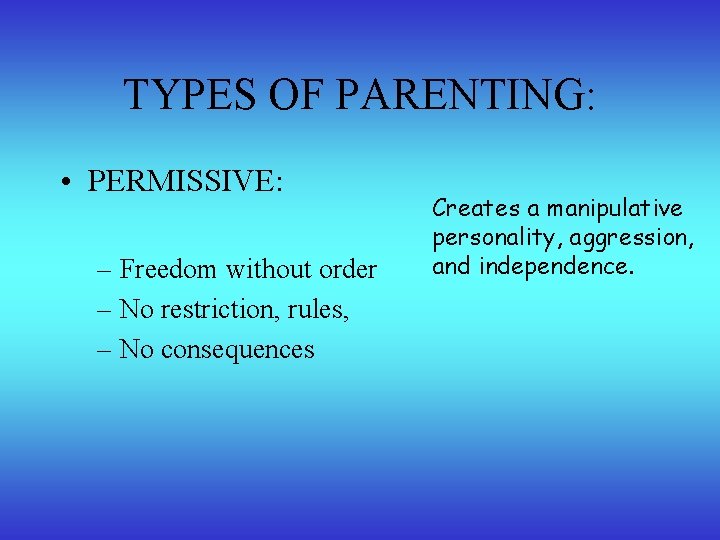
TYPES OF PARENTING: • PERMISSIVE: – Freedom without order – No restriction, rules, – No consequences Creates a manipulative personality, aggression, and independence.
TYPES OF PARENTING: • AUTHORITATIVE (Democratic): – Mutual Respect – Cooperation – Freedom with Order Creates a self disciplined child who is responsible for own actions.
WHY DO CHILDREN MISBEHAVE? • A misbehaving child is a discouraged child. Why?
MISBEHAVIOR: • Is based on a child’s mistaken interpretation of how to find BELONGING & SIGNIFICANCE!
4 GOALS OF MISTAKEN BEHAVIOR: 1. 2. 3. 4. Attention Power Revenge Give-up
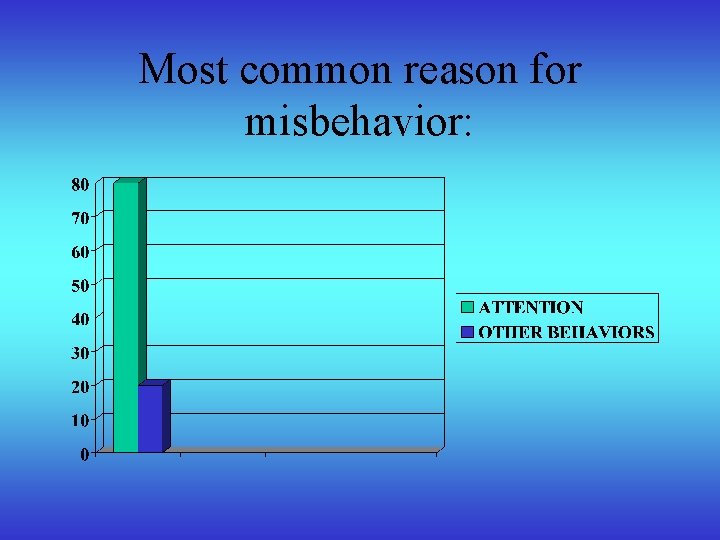
Most common reason for misbehavior:
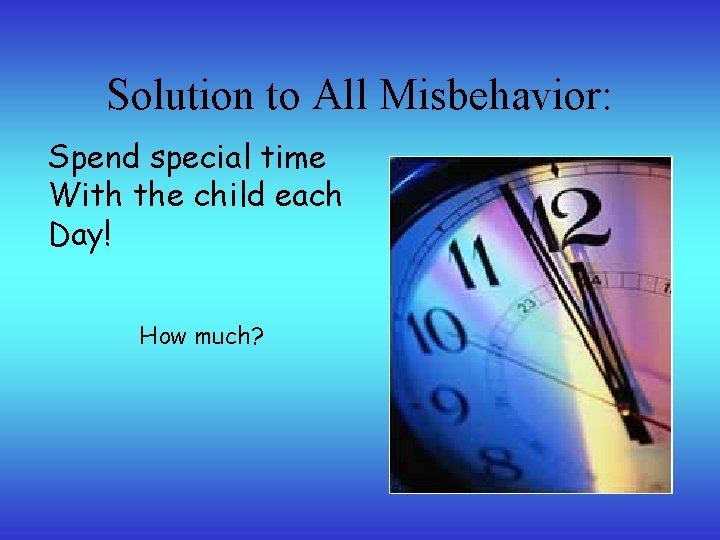
Solution to All Misbehavior: Spend special time With the child each Day! How much?
Solution to Attention Problems: • • • Ignore if possible Give attention when good Redirect Logical consequences Choices
Solution to Power Problems: • • • Withdraw Cool off, Problem solve together Win cooperation Act
4 Steps for Winning Cooperation: 1. Get into child’s world • Check it out 2. Show understanding 3. Share your feelings 4. Find a solution together
Solution to Revenge Problems: • • • Withdraw from revenge cycle Win child over Solve the problem Take away items they could destroy Apologize if needed
Solution to Inadequacy Problems: • • Avoid pity Encourage & train Create small successes Don’t give up
Believe that children are basically GOOD! • What do you see below? FLY
Make sure the message of LOVE always gets through:
TIMING: • It is impossible to solve problems at the time of CONFLICT!
LISTEN FIRST: • Children will listen to you after they feel listed to.
NATURAL & LOGICAL CONSEQUENCES: • NATURAL: Simply happen naturally – No coat = cold • LOGICAL: Are decided upon and imposed by parents or teachers
LOGICAL CONSEQUENCES: • One needs to be: – Firm – Calm – Positive toward child
3 R’S OF LOGICAL CONSEQUENCES: 1. RELATED 2. RESPECTFUL 3. RESONABLE
TIME OUT: An alternative to spanking. 1. Gives child time to calm down & time to think about the correct way to act. 2. Child is moved away from others – an effective consequence. Only use if child is out of control, hurting others or destroying things.
TIME OUT GUIDELINES: • Choose a location that is dull and away from others. • Use time out immediately after misbehavior occurs. • Length of time = 1 minute for each year of age. • Don’t’ talk to child until afterwards (Make sure they understand the “WHY”). • Reward good behavior after time out, as soon as they do something positive.
DISCIPLINE STEPS: 1. 2. 3. 4. 5. 6. Redirect Check it out Speak to the child about the problem Give choices Use logical or natural consequences Use time out if still out of control
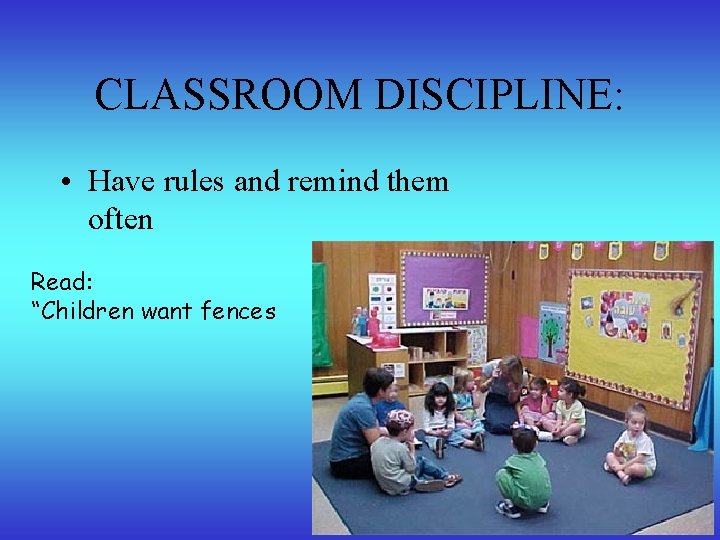
CLASSROOM DISCIPLINE: • Have rules and remind them often Read: “Children want fences
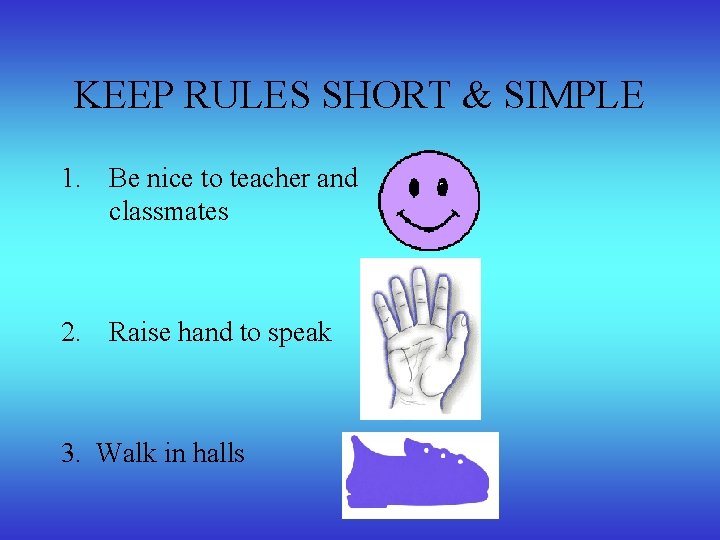
KEEP RULES SHORT & SIMPLE 1. Be nice to teacher and classmates 2. Raise hand to speak 3. Walk in halls
CLASSROOM DISCIPLINE cont’d • Be silent or whisper • Resist giving attention to the disruptor – “Someone is disturbing the class” • Move closer, place hand on shoulder • Involve them • Talk privately – “What can I do to get your help? ”
FORBIDDEN DISCIPLINE ACTIONS: • • • SPANKING SLAPPING HITTING SHAKING PULLING PINCHING • • • NO TEASING NO HUMILIATION NO INSULTS NO THREATENING NO FRIGHTENING NO LAUGHING AT Confirmed incidents will be grounds for immediate dismissal from a childcare job.
ALWAYS REMEMBER: • MISTAKES R WUNDERFULL OPPERTUNITEEZ 2 LERN! – Recognize your mistake – Reconcile “I’m sorry” – Resolve: Focus on solutions rather than blame.
YOU TEACH WHAT YOU ARE: • WHAT ARE YOU?