
Positive Behavior Support A SchoolWide Discipline Initiative Citizenship
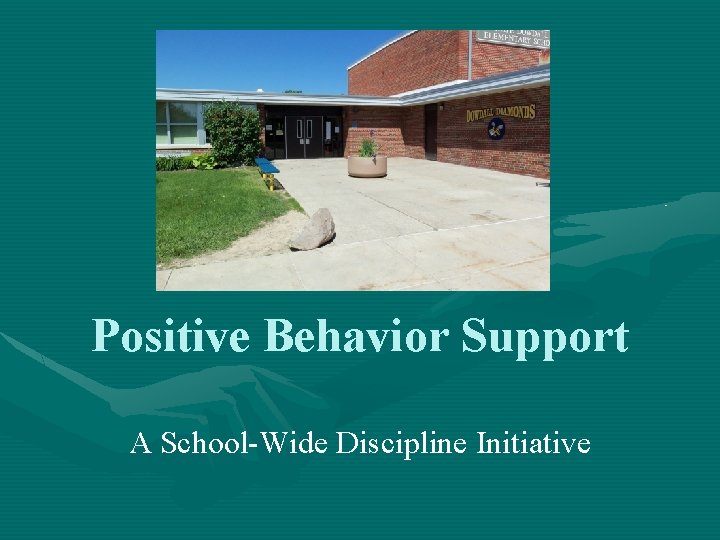
Positive Behavior Support A School-Wide Discipline Initiative

Citizenship • Democratic Values – Respect – Responsibility – Freedom – Pursuit of Happiness • Role of Discipline – Rights of all – Self-control – Self-worth

Why a program? • IDEA law mandating schools address discipline issues in a comprehensive program. • Address real needs of all students. • Impact safety and citizenship. • Create a school environment supporting learning. • Clear expectations for adults and students.
Michigan Policy In September 2006, the Michigan State Board of Education established that “it is the policy of the State Board of Education that each school district in Michigan implement a system of school-wide positive behavior support strategies. ” PBS is not an option: it’s a mandate!

Definition of PBS School-wide Positive Behavioral Interventions & Supports (PBIS) is a: • Proactive, team-based framework for creating and sustaining safe and effective schools. • Emphasis is placed on prevention of problem behavior, development of pro-social skills, and the use of data-based problem solving for addressing existing behavior concerns. • School-wide PBIS increases the capacity of schools to educate all students utilizing research -based school-wide, classroom, and individualized interventions.
Schools are discovering that PBIS: • Addresses the behavioral needs of all students. • Helps to create a positive school climate. • Promotes safe, responsible behavior. • Results in increased time for instruction and fewer disciplinary problems
How is PBS done? • A set of universal expectations for behavior, positively stated, are established for all students in all locations of the school. • These expectations generally promote core values such as – respect – responsibility – and safety • Interventions and strategies are implemented by ALL adults to teach and reinforce these expectations.
Implementation: • Explicitly teach specific student behaviors that demonstrate respect, responsibility, and safety in various locations in the school. • Positive reinforcement such as school or classroom acknowledgements are given to students following the PBS Code. • Predictable consequences for behavior infractions are delivered consistently by all staff in a professional manner throughout the entire school. • Consequences are not primarily punitive in nature; they are an opportunity for the student to learn from his or her mistakes and to accept responsibility for the choices that he or she made. • The consequences are provided on a continuum matched to the intensity of the misbehavior.
3 Tiered Approach • Tier 1 – School-wide program – Meets needs of 80% of students – Practiced consistently by all staff. • Tier 2 – Additional plan for 15% of students needing additional support – Mentoring/structuring/targeting specific to student • Tier 3 – High support for 5% of students who may need a specific behavior plan.
What does PBS look like at Dowdall Elementary? The “Be” Code! • Be Respectful • Be Responsible • Be Ready
Where? • • On the bus In the hall In bathrooms In the lunchroom At recess In the classrooms During Assemblies

Acknowledgements • • • Verbal acknowledgement Hornet cards (earn variety of rewards) Good citizenship for the month (several from each classroom) • Monthly grade level photo posted on PBS wall • End of year Awards ceremony
Consequences • Classroom processing with teacher. • PBS responsibility form and reflection given by the involved staff member • Responsibility Room – Time out – Written reflection and plan – Video or book to reinforce desirable behavior – Code of Conduct
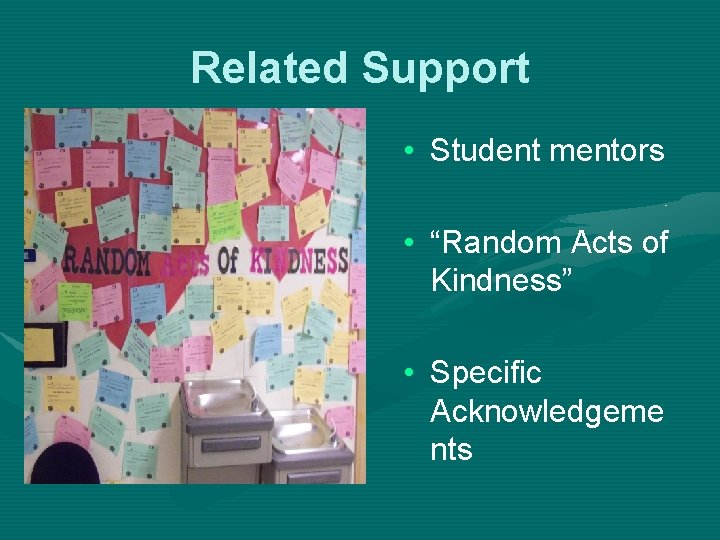
Related Support • Student mentors • “Random Acts of Kindness” • Specific Acknowledgeme nts
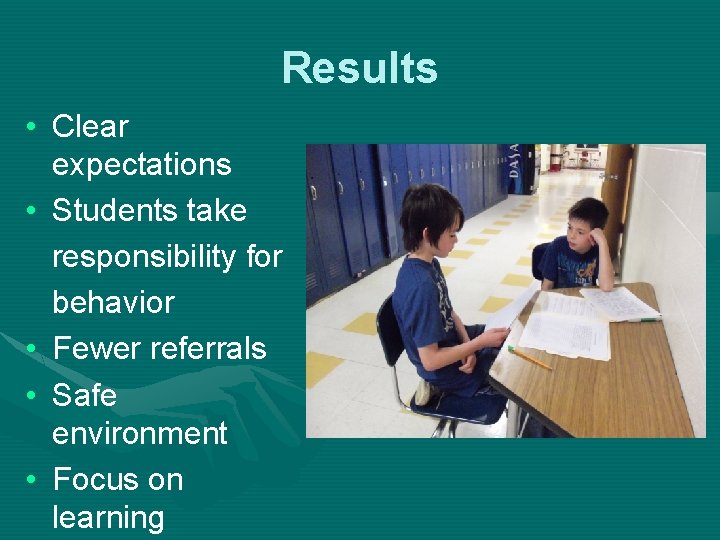
Results • Clear expectations • Students take responsibility for behavior • Fewer referrals • Safe environment • Focus on learning
How Support Staff Can Help • Remind students of the “Be” Code in positive words. • Keep all communication matter-of-fact and focused on desired behavior (no shaming) • Develop consistent acknowledgements • Get to know students’ strengths and challenges • Focus on the positive: acknowledge progress and success! • Give consequences rather than punishments to teach responsibility. • Use appropriate PBS forms. • Do not ignore unacceptable behavior: apply PBS plan. • Let staff know if something is not working.
It takes a village…
- Slides: 17