
Positive and negative impact of lifestyle choices Learning


- Slides: 11
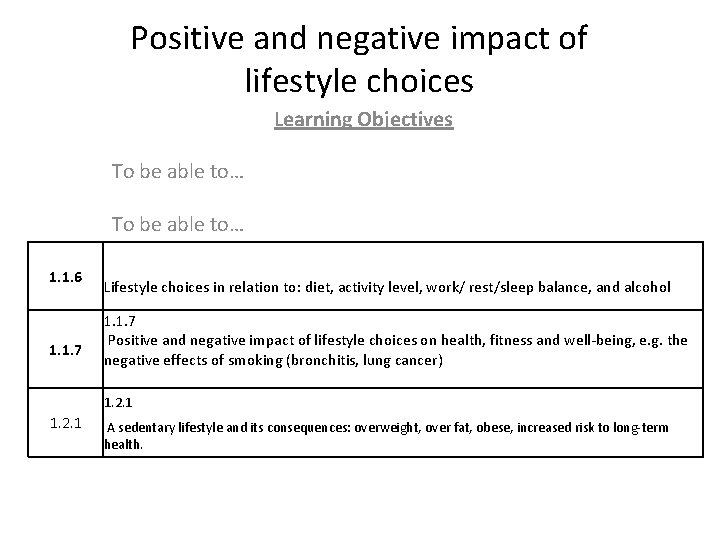
Positive and negative impact of lifestyle choices Learning Objectives To be able to… 1. 1. 6 1. 1. 7 Lifestyle choices in relation to: diet, activity level, work/ rest/sleep balance, and alcohol 1. 1. 7 Positive and negative impact of lifestyle choices on health, fitness and well-being, e. g. the negative effects of smoking (bronchitis, lung cancer) 1. 2. 1 A sedentary lifestyle and its consequences: overweight, over fat, obese, increased risk to long-term health.
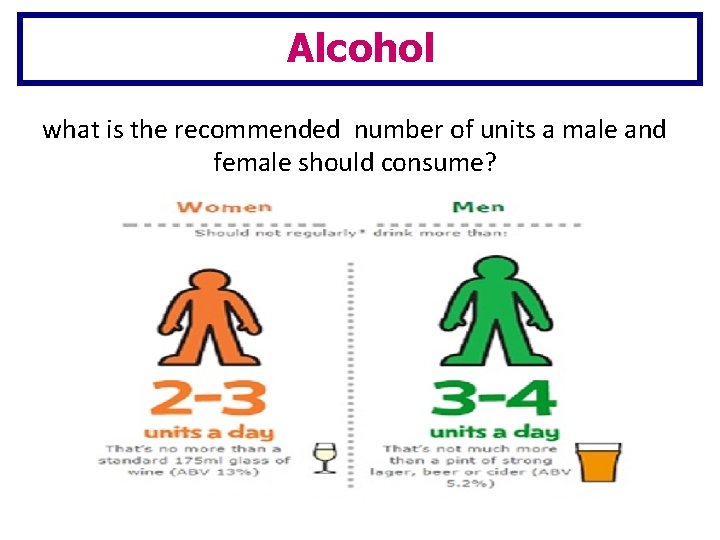
Alcohol what is the recommended number of units a male and female should consume?
Order & guess the amount of units in each drink (largest amount of units first)
Order & guess the amount of units in each drink (largest amount of units first) Pint Beer 3 units Can Beer 2 units Standard Glass of Wine 2. 1 Units Bottle Beer 1. 7 units Alcopop 1. 5 units Single shot 1 unit
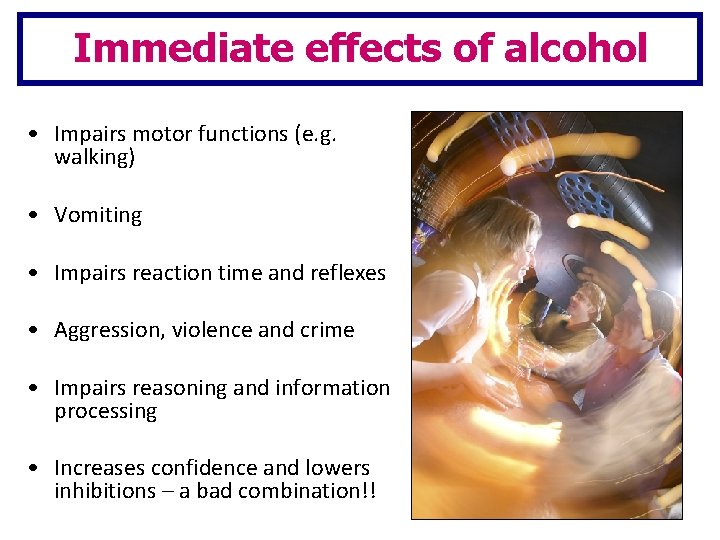
Immediate effects of alcohol • Impairs motor functions (e. g. walking) • Vomiting • Impairs reaction time and reflexes • Aggression, violence and crime • Impairs reasoning and information processing • Increases confidence and lowers inhibitions – a bad combination!!
Long-term effects of alcohol • Death – drinking is blamed for up to 33, 000 deaths a year– in the UK alone! • Increased weight • Cancer of the liver and/or bowel • High blood pressure • Heart failure
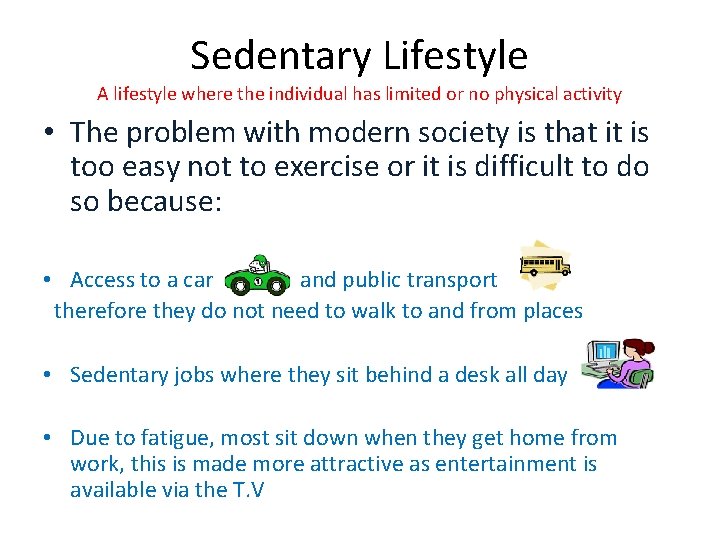
Sedentary Lifestyle A lifestyle where the individual has limited or no physical activity • The problem with modern society is that it is too easy not to exercise or it is difficult to do so because: • Access to a car and public transport therefore they do not need to walk to and from places • Sedentary jobs where they sit behind a desk all day • Due to fatigue, most sit down when they get home from work, this is made more attractive as entertainment is available via the T. V
Research into sedentary lifestyle • Researcher from Loughborough University and the University of Leicester collected data from almost 800, 000 people across the world and looked at the link between sitting down and the increase health risk. The research found that there was a greater risk of: v Diabetes v Cardiovascular disease v Increase risk of death from cardiovascular disease v Increased risk of death from any health issue Research recommends people stand for at least 2 hours a day. Sitting spells should be limited to 30 minutes. There should be an active break, which can be standing for a minute
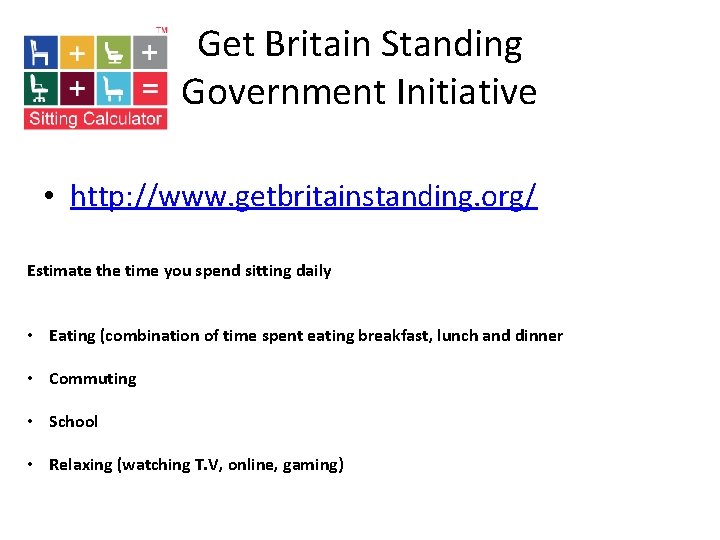
Get Britain Standing Government Initiative • http: //www. getbritainstanding. org/ Estimate the time you spend sitting daily • Eating (combination of time spent eating breakfast, lunch and dinner • Commuting • School • Relaxing (watching T. V, online, gaming)
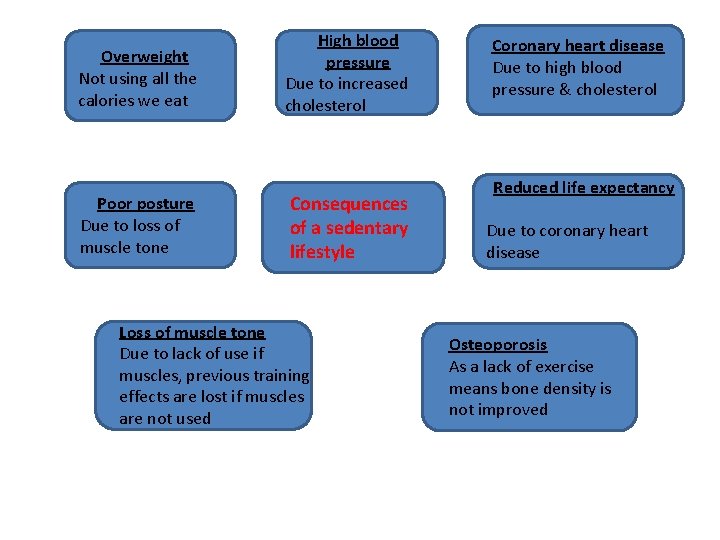
Overweight Not using all the calories we eat Poor posture Due to loss of muscle tone High blood pressure Due to increased cholesterol Consequences of a sedentary lifestyle Loss of muscle tone Due to lack of use if muscles, previous training effects are lost if muscles are not used Coronary heart disease Due to high blood pressure & cholesterol Reduced life expectancy Due to coronary heart disease Osteoporosis As a lack of exercise means bone density is not improved
Draw your brain Draw a big outline of your brain filling a whole page. Then, fill the outline with everything you have learnt during the lesson. Reminder of the objectives of the lesson: • Identifying negative lifestyle choices and affects • Identify what a sedentary lifestyle is and its consequences