
Positioning Elevation height measurements The principle of optical




- Slides: 37
Positioning. Elevation, height measurements. The principle of optical levelling. The structure of the surveyors’ level. Dr. Szabolcs RÓZSA
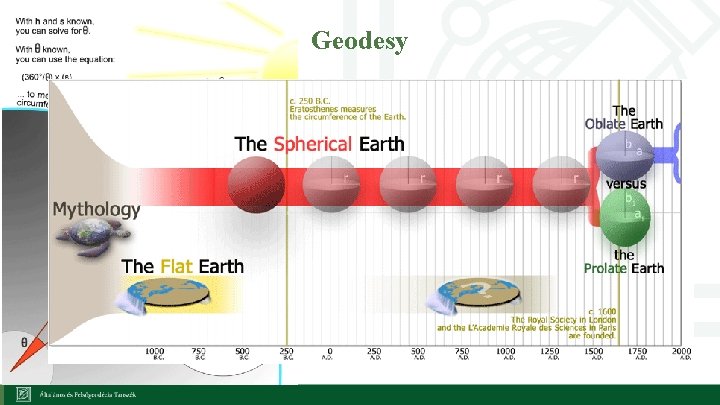
Surveying vs Geodesy: the determination of the shape and the size of the Earth and its gravity field. To provide the fundamentals of positioning (control networks, etc. )
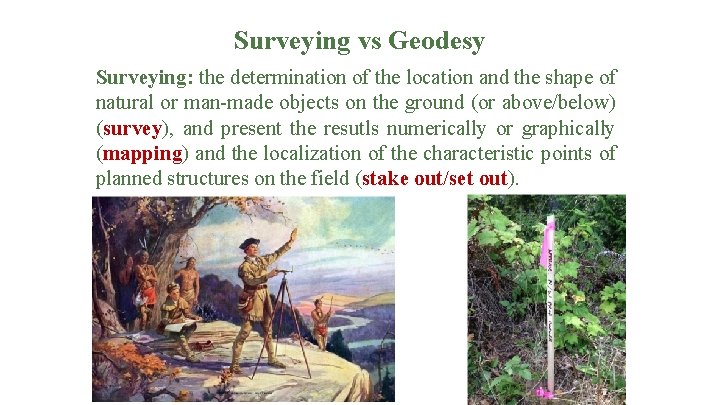
Surveying vs Geodesy Surveying: the determination of the location and the shape of natural or man-made objects on the ground (or above/below) (survey), and present the resutls numerically or graphically (mapping) and the localization of the characteristic points of planned structures on the field (stake out/set out).
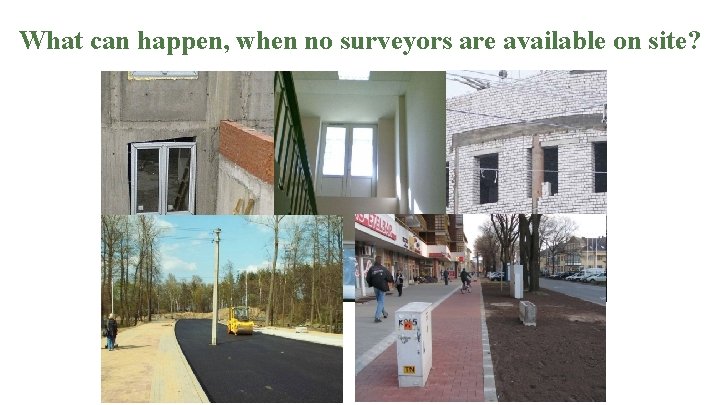
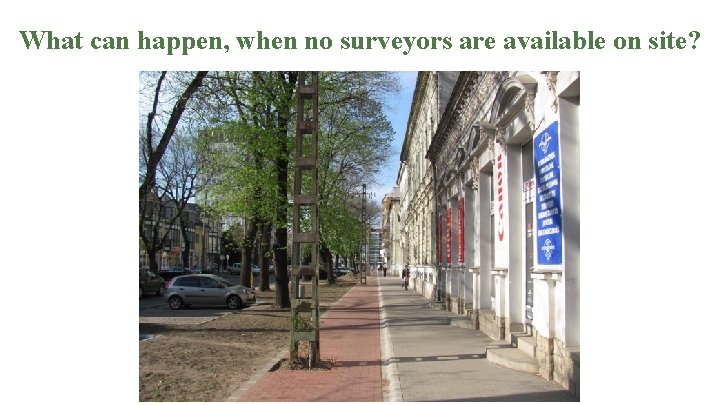
What can happen, when no surveyors are available on site?
What can happen, when no surveyors are available on site?
What will this course provide you? - You’ll start thinking as a civil engineer. - Knowledge on Land Surveying: - You’ll be able to carry out smaller surveying works. - You’ll be able to communicate your goals with the surveyor and you’ll understand his answers.
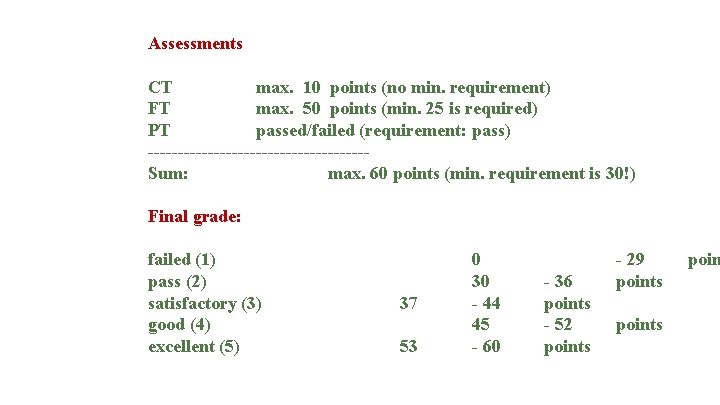
Assessments CT max. 10 points (no min. requirement) FT max. 50 points (min. 25 is required) PT passed/failed (requirement: pass) ------------------Sum: max. 60 points (min. requirement is 30!) Final grade: failed (1) pass (2) satisfactory (3) good (4) excellent (5) 37 53 0 30 - 44 45 - 60 - 36 points - 52 points - 29 points poin
Textbooks, notes 1. Bannister-Raymond-Baker: Surveying 2. Draft notes of the Lectures + slides http: //edu. epito. bme. hu 3. Electronic handouts for the practicals http: //edu. epito. bme. hu 4. Last, but not least: YOUR OWN NOTES TAKEN ON THE CLASSES!
Positioning. Elevation, height measurements. The principle of optical levelling. The structure of the surveyors’ level. Dr. Szabolcs RÓZSA
Surveying vs Geodesy: the determination of the shape and the size of the Earth and its gravity field. To provide the fundamentals of positioning (control networks, etc. ) Surveying: the determination of the location and the shape of natural or man-made objects on the ground (or above/below) (survey), and present the resutls numerically or graphically (mapping) and the localization of the characteristic points of planned structures on the field (stake out/set out).
Geodesy
Geodesy 1735
Geodesy
Geodesy
Geodesy
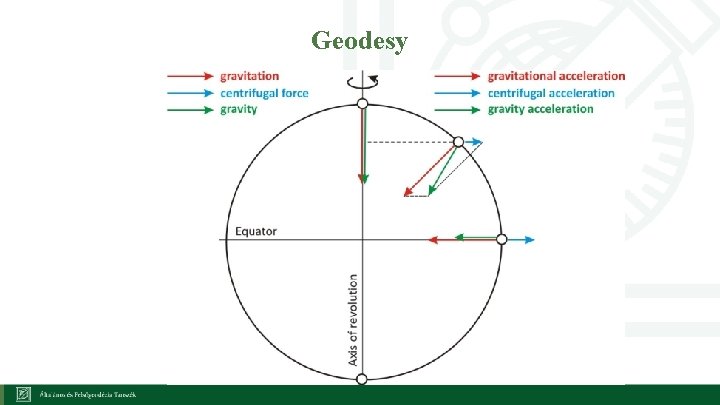
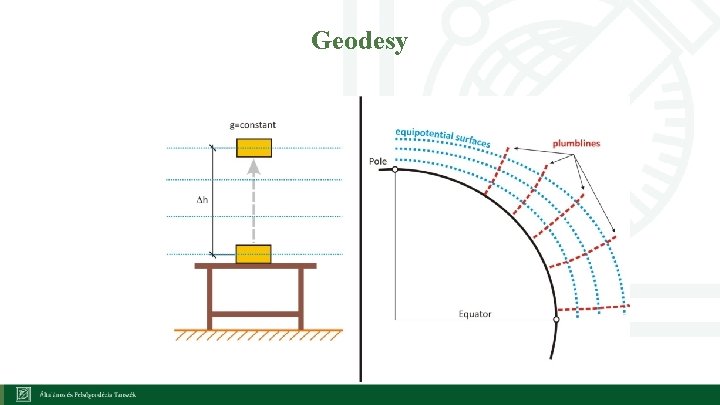
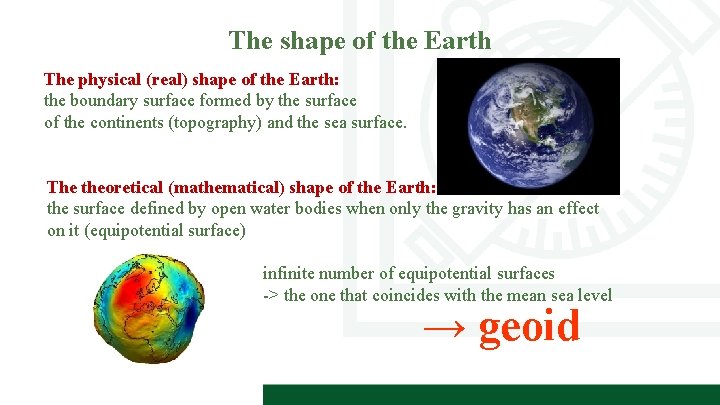
The shape of the Earth The physical (real) shape of the Earth: the boundary surface formed by the surface of the continents (topography) and the sea surface. The theoretical (mathematical) shape of the Earth: the surface defined by open water bodies when only the gravity has an effect on it (equipotential surface) infinite number of equipotential surfaces -> the one that coincides with the mean sea level → geoid
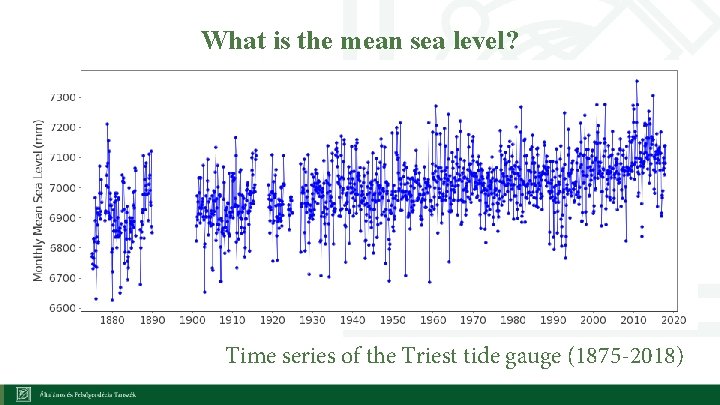
What is the mean sea level? Time series of the Triest tide gauge (1875 -2018)
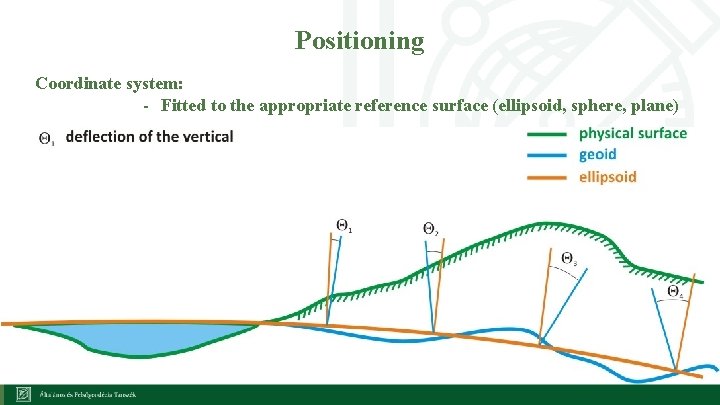
Positioning Coordinate system: - Fitted to the appropriate reference surface (ellipsoid, sphere, plane)
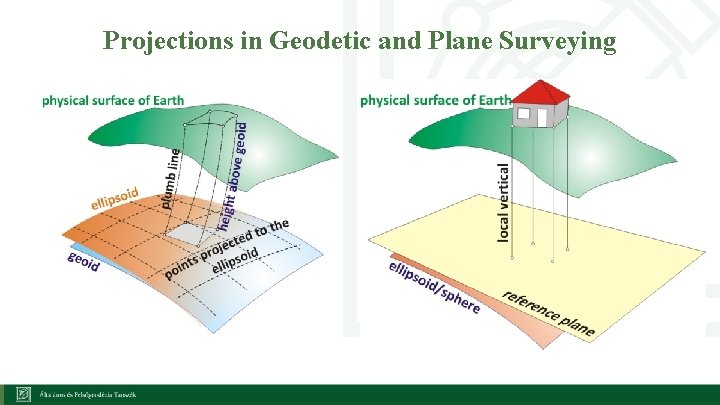
Projections in Geodetic and Plane Surveying
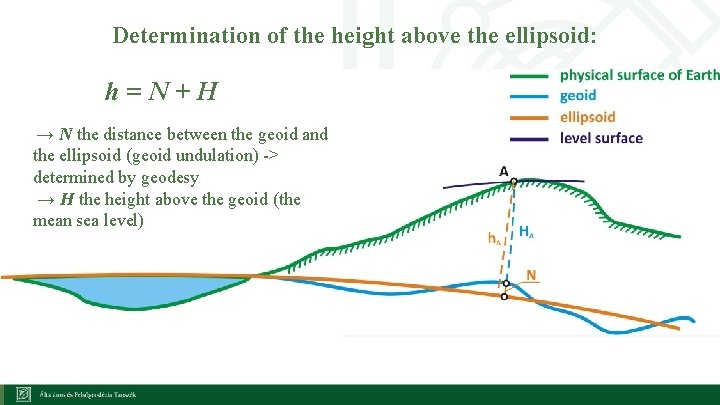
Determination of the height above the ellipsoid: h = N + H → N the distance between the geoid and the ellipsoid (geoid undulation) -> determined by geodesy → H the height above the geoid (the mean sea level)
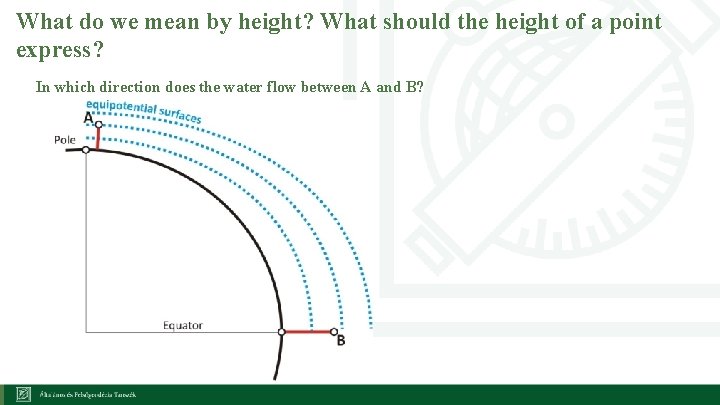
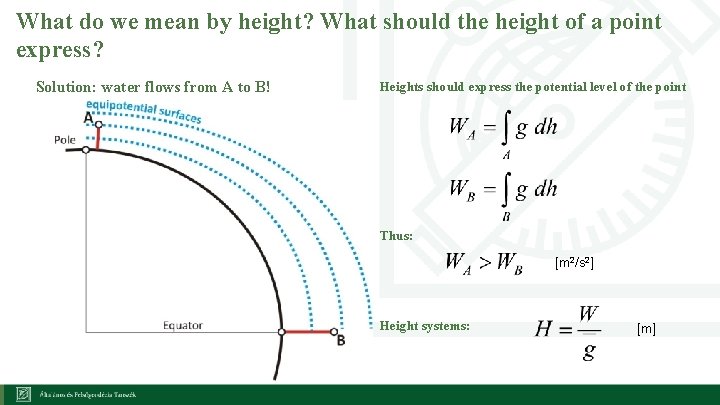
What do we mean by height? What should the height of a point express? In which direction does the water flow between A and B?
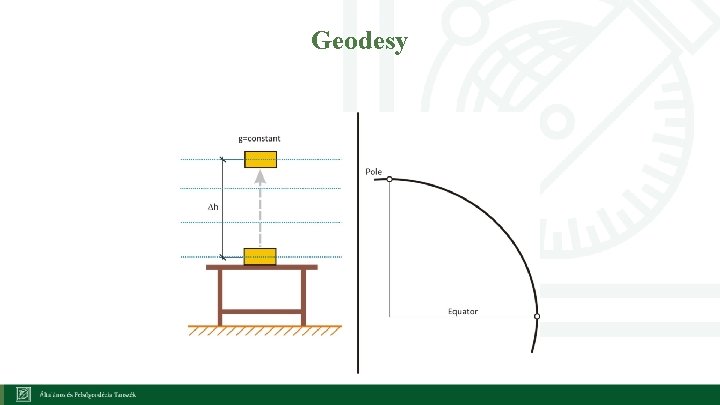
What do we mean by height? What should the height of a point express? Solution: water flows from A to B! Heights should express the potential level of the point Thus: [m 2/s 2] Height systems: [m]
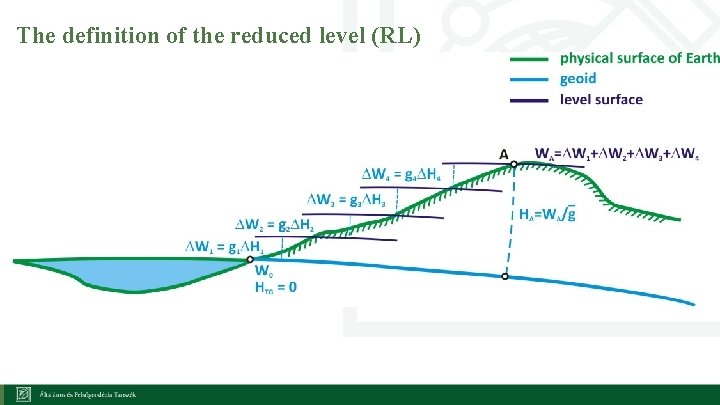
The definition of the reduced level (RL)
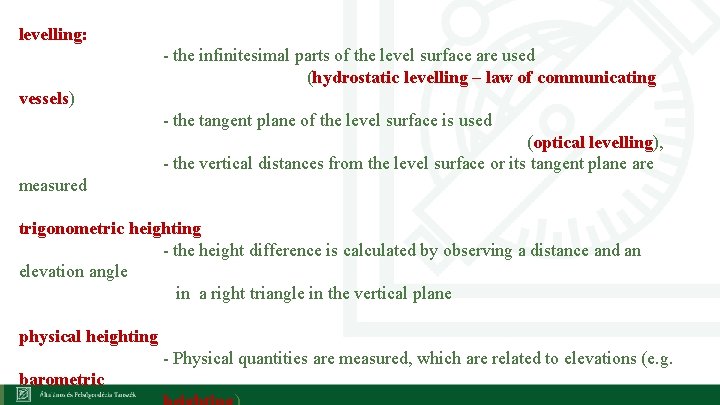
levelling: - the infinitesimal parts of the level surface are used (hydrostatic levelling – law of communicating vessels) - the tangent plane of the level surface is used (optical levelling), - the vertical distances from the level surface or its tangent plane are measured trigonometric heighting - the height difference is calculated by observing a distance and an elevation angle in a right triangle in the vertical plane physical heighting - Physical quantities are measured, which are related to elevations (e. g. barometric
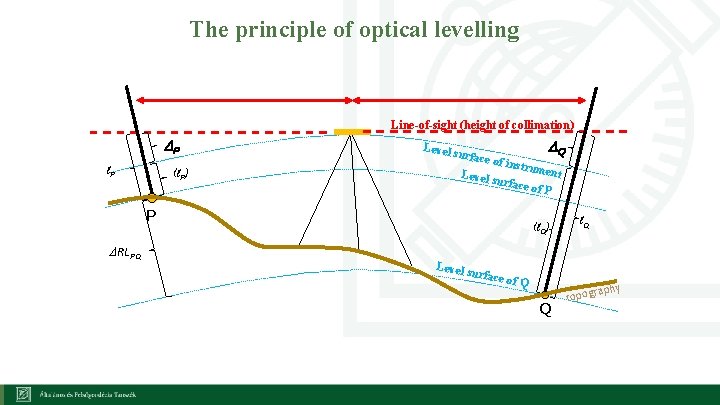
The principle of optical levelling Line-of-sight (height of collimation) DP l. P (l. P) Level s DQ urface of inst rumen t Level s urface of P P DRLPQ (l. Q) Level s urface o f Q l. Q aphy Q topogr
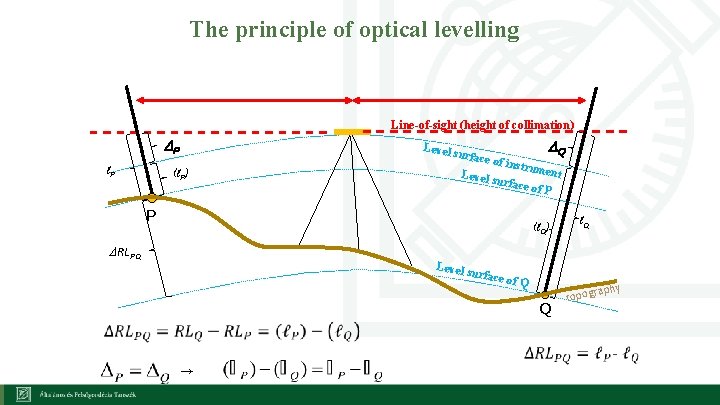
The principle of optical levelling Line-of-sight (height of collimation) DP l. P Level s (l. P) DQ urface of inst rumen t Level s urface of P P (l. Q) DRLPQ Level s urface o f Q aphy Q → l. Q topogr
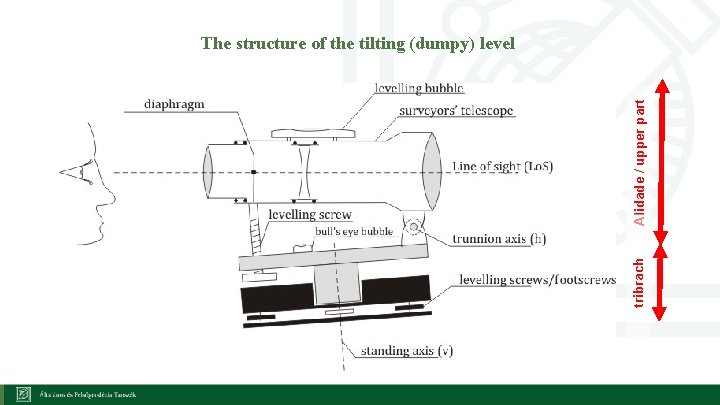
tribrach Alidade / upper part The structure of the tilting (dumpy) level
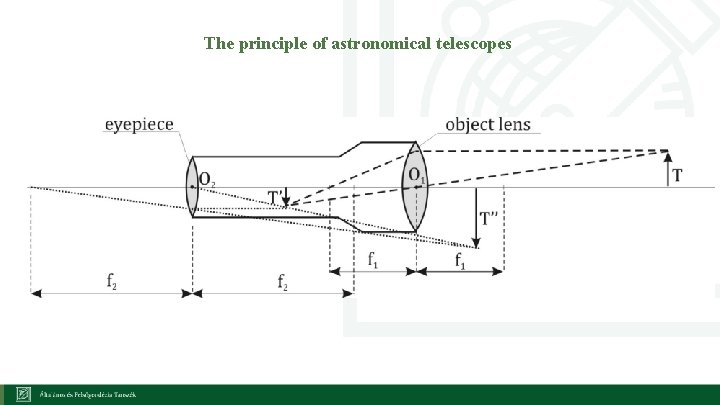
The principle of astronomical telescopes
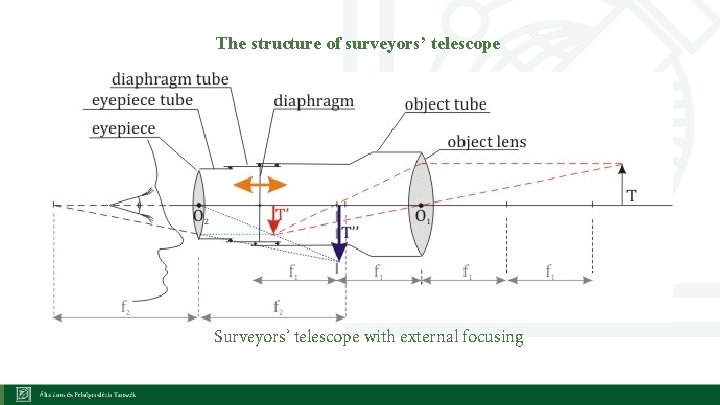
The structure of surveyors’ telescope Surveyors’ telescope with external focusing
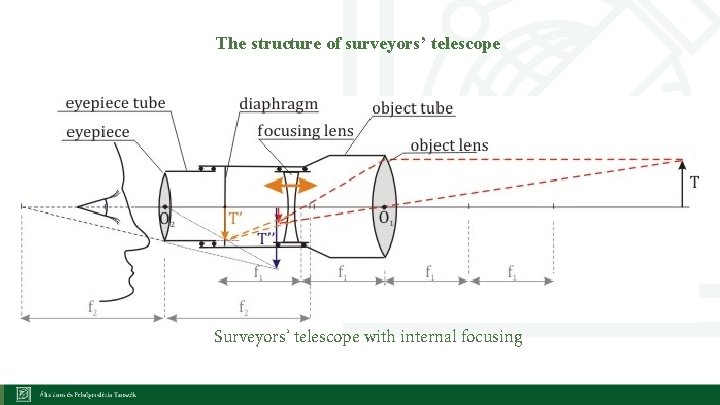
The structure of surveyors’ telescope Surveyors’ telescope with internal focusing
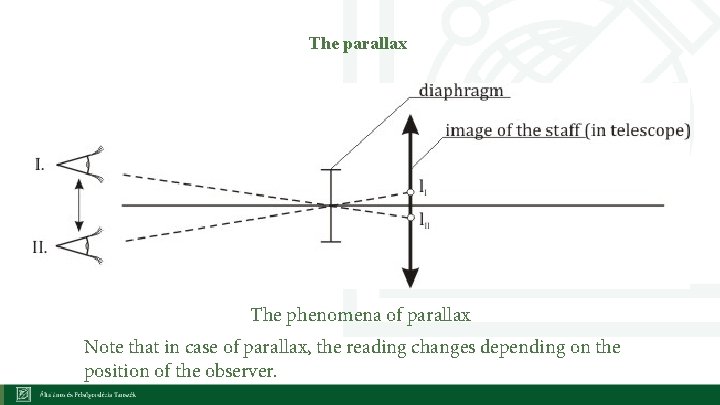
The parallax The phenomena of parallax Note that in case of parallax, the reading changes depending on the position of the observer.
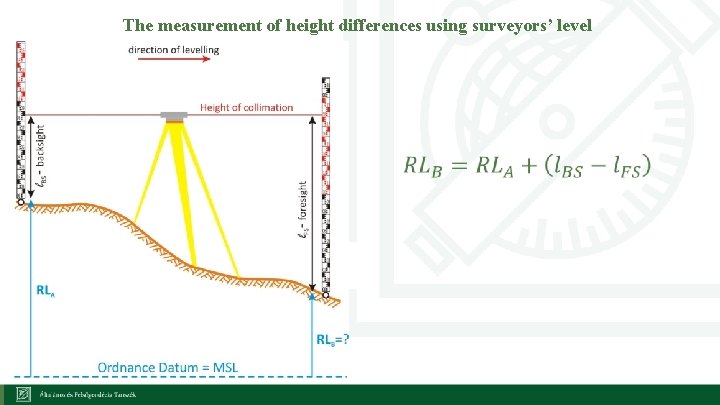
The measurement of height differences using surveyors’ level
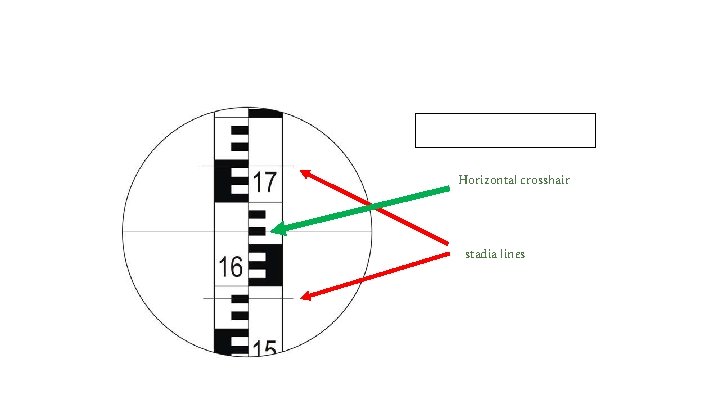
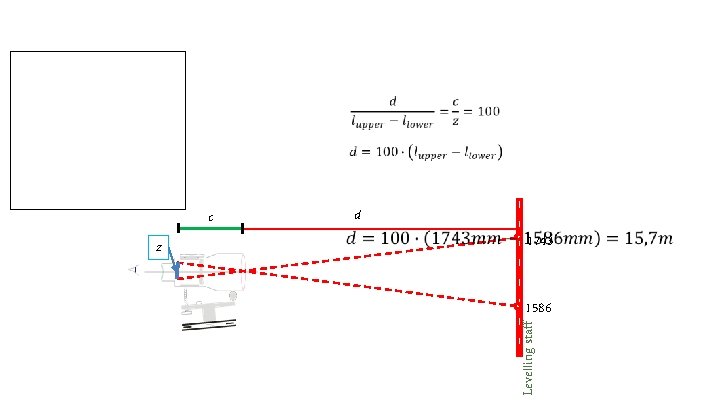
Horizontal crosshair stadia lines
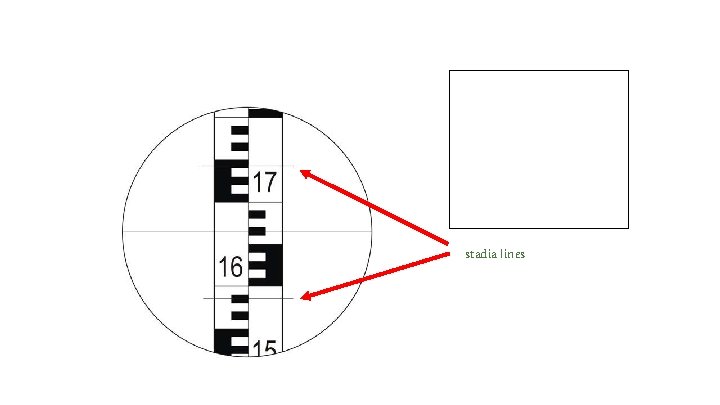
stadia lines
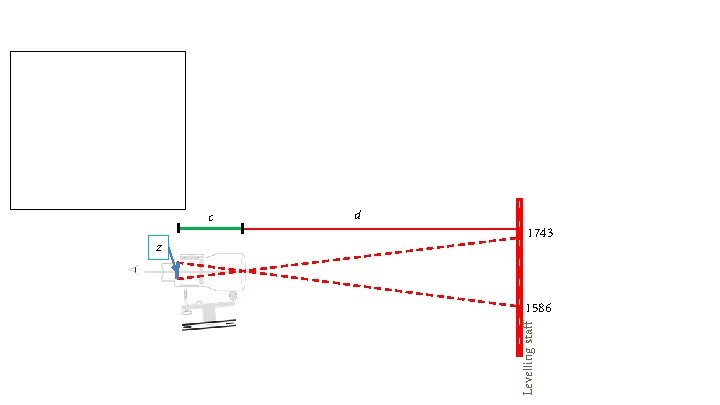
z d Levelling staff c 1743 1586
c z Levelling staff d 1743 1586