
Positional Astronomy Fundamental Astrophysics Movement of stars Celestial


- Slides: 67
Positional Astronomy Fundamental Astrophysics
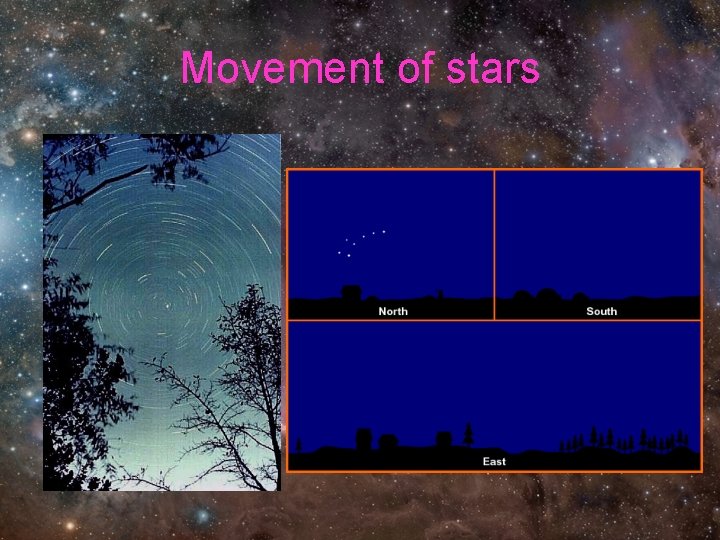
Movement of stars
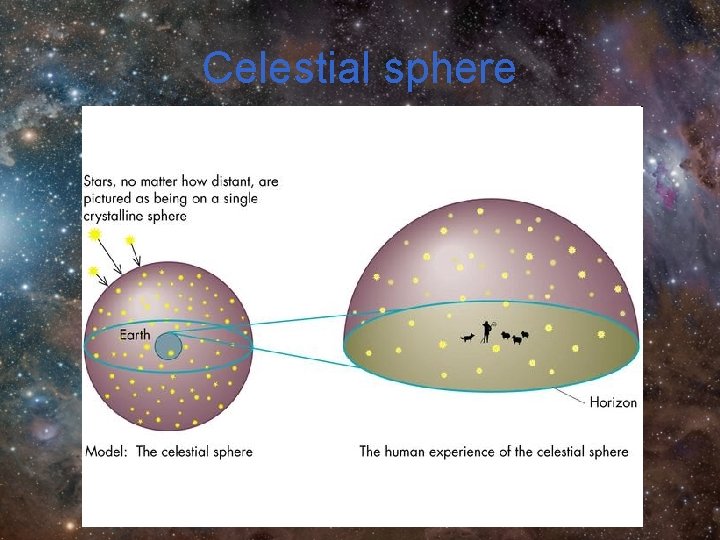
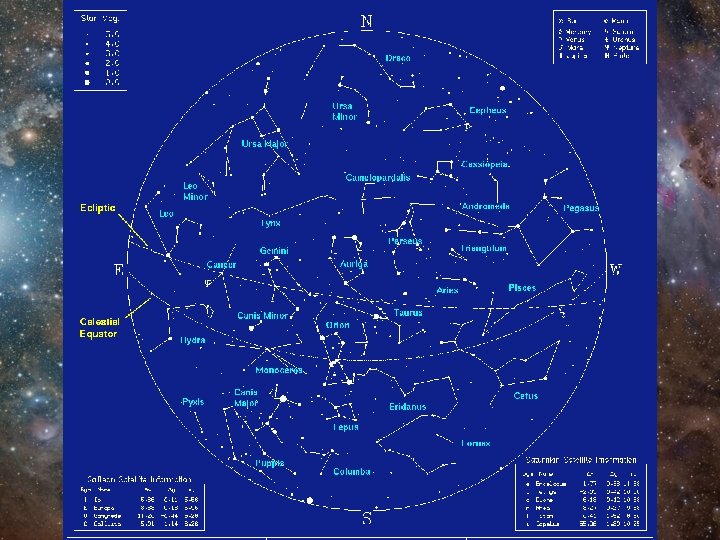
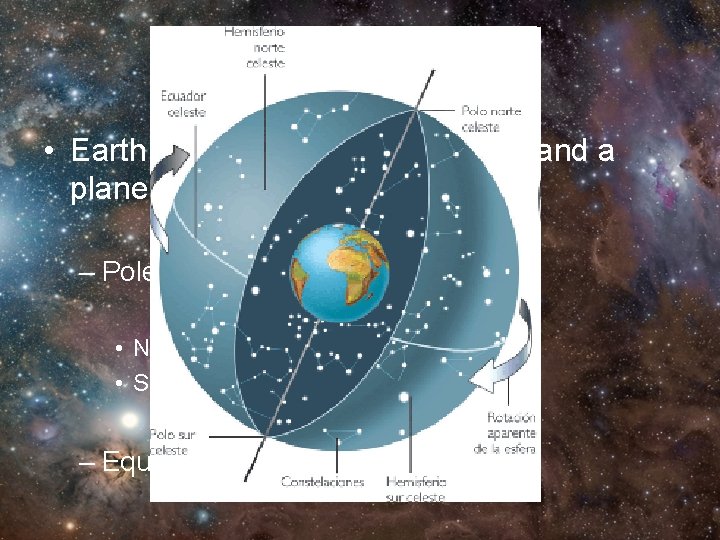
Celestial sphere
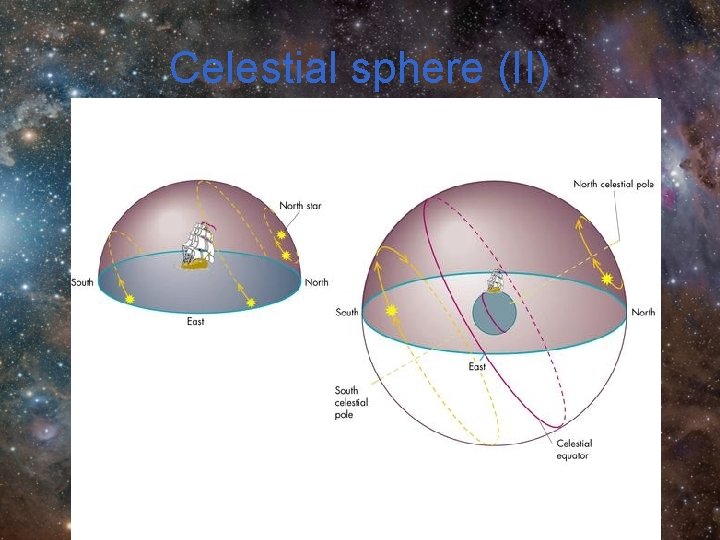
Celestial sphere (II)
Constellations • They are groups of stars which, from our earth perspective, seem to have some particular, more or less recognizable figure. • Some of them are thousands of years old, although they are culturally dependent. • In 1922 the IAU established the 88 present constellations with their boundaries.
Eath movements • Rotation Day • Revolution Year/Seasons • Precession • Nutation
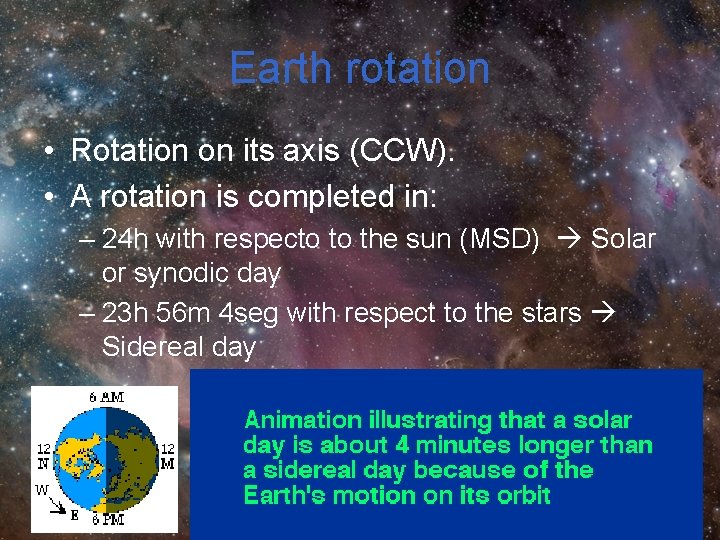
Earth rotation • Rotation on its axis (CCW). • A rotation is completed in: – 24 h with respecto to the sun (MSD) Solar or synodic day – 23 h 56 m 4 seg with respect to the stars Sidereal day
Solar and sidereal day • During a year (time for a revolution around the sun, P=365. 256363 dsol(s)) there is one extra sidereal day (over solar days). • This means: – P/dsid = P/dsol+1 dsid=0. 99727 dsol – dsid= 23 h 56 m 4. 1 s
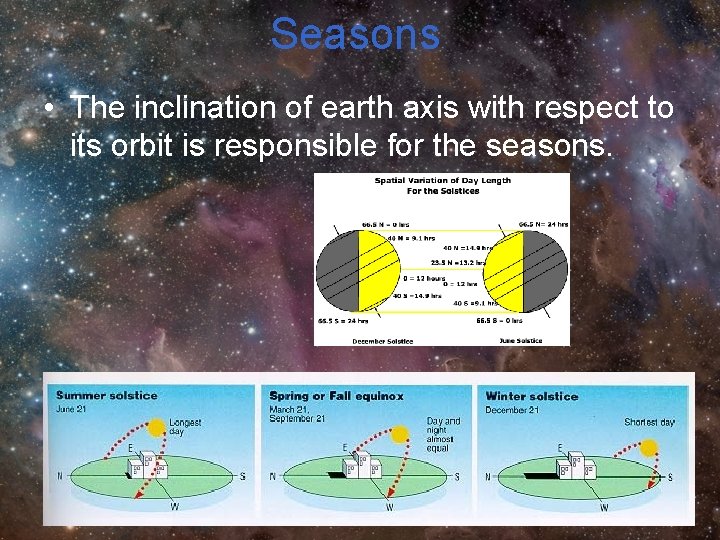
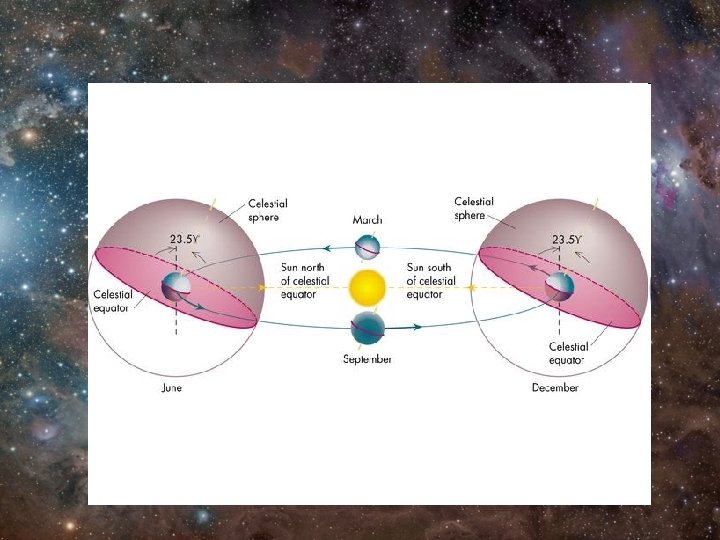
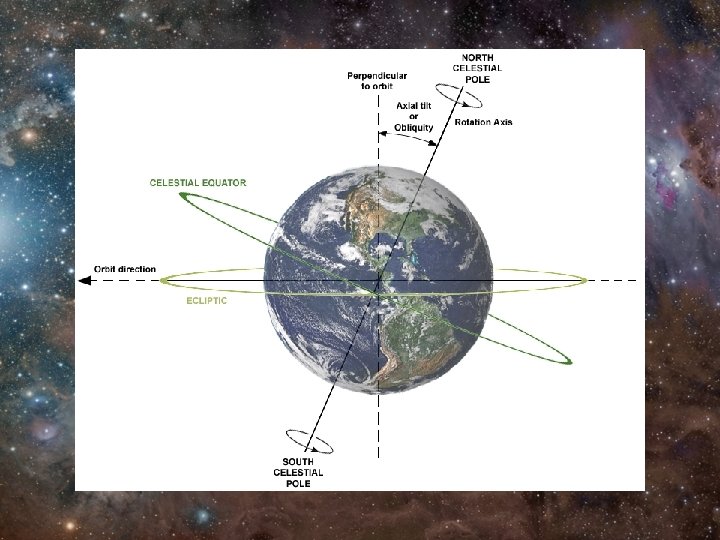
Seasons • The inclination of earth axis with respect to its orbit is responsible for the seasons.
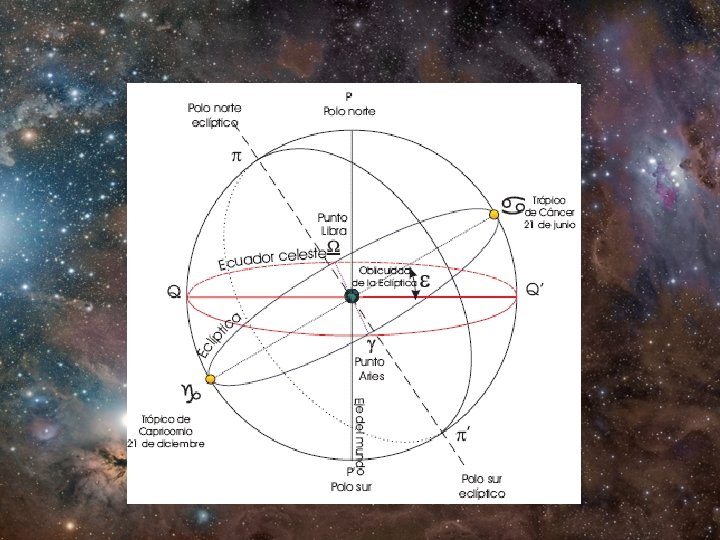
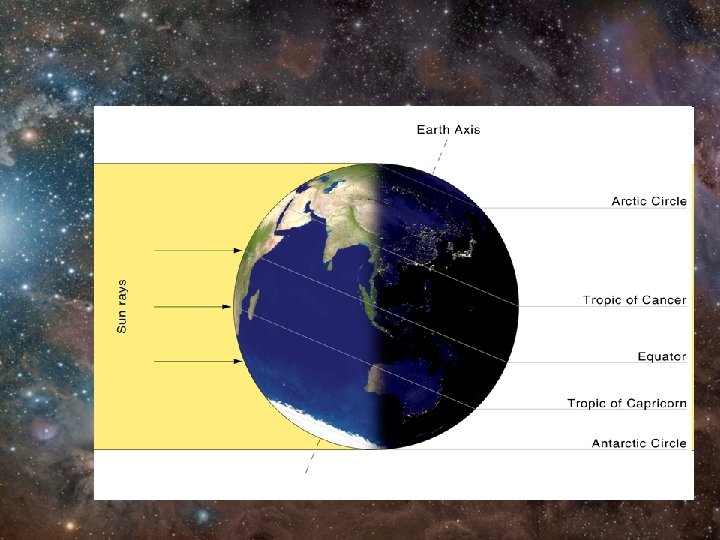
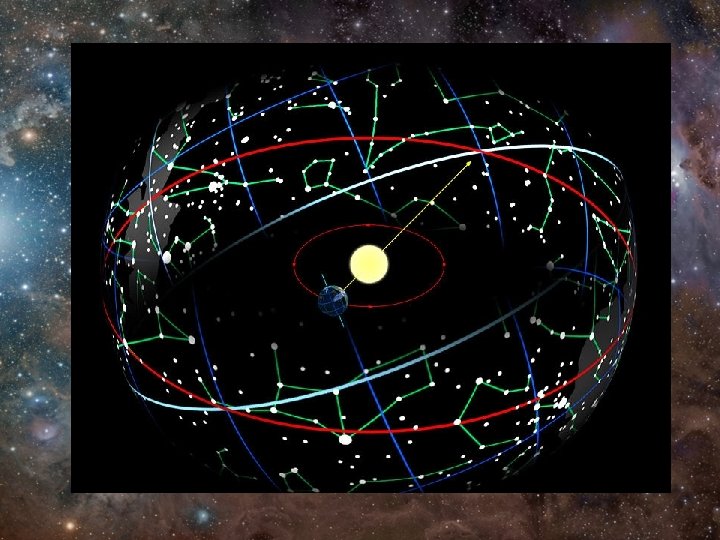
Movements of the sun as seen from earth • Throughout the year, the sun moves along a circle called the ecliptic. • Its largest distance to the equator takes place at the solstices, when its declination is ± 23º 27’. • The two celestial parallels at this declination (and the corresponding equivalents on earth) define the tropics: – Tropic of Cancer (N) – Tropic of Capricorn (S) • On earth, two more parallels, called polar circles are defined at the same angular distance from the earth poles (lat=66º 33’). Above (below) this latitude, the sun does not set or rise at least one day per year.
Twilight • Three different type of twilight: – Civil: The sun is 6º below horizon – Nautical: The sun is 12º below horizon – Astronomical: The sun is 18º below horizon • Twilight lasts longer at higher latitudes.
Equator and Poles • Earth rotation defines two points and a plane which are very important : – Poles: • North Pole • South Pole – Equator:
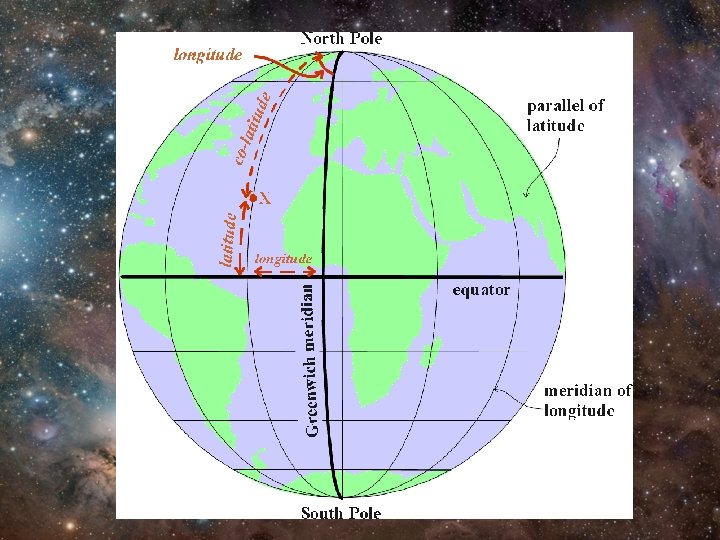
Terrestrial Coordinates • Earth rotation defines: – Poles: Intersection of rotation axis with earth surface. – Equator: Plane perpendicular to axis passing through earth’s center. • A set of “polar” coordinates are defined with respect to the equator: – Latitude: angle measured from the equator towards the poles: + if N and – if S. Measured in degrees. – Longitude: angle measured along the equator from an (arbitrary) origin Greenwich Meridian: + if E and – if W. Measured in º, ’ y ‘’. It can also be measured in time units using 1 h=15º.
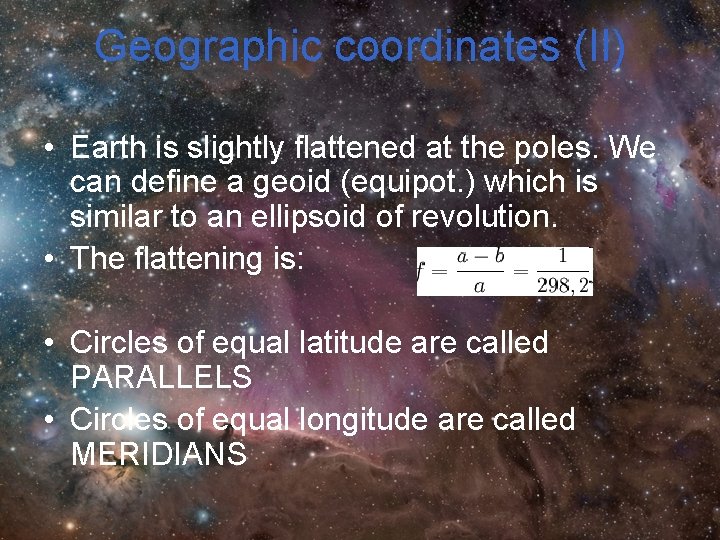
Geographic coordinates (II) • Earth is slightly flattened at the poles. We can define a geoid (equipot. ) which is similar to an ellipsoid of revolution. • The flattening is: • Circles of equal latitude are called PARALLELS • Circles of equal longitude are called MERIDIANS
Geographic Coordinates (III) • A “nautical mile” is defined as the length of 1 arcmin of longitude at the equator. • 1 nmi=1852 m (1 stat mile=1609. 344 m) • A cable is a tenth of a nmi=185. 2 m • El knot is a speed of 1 nmi/hour • At different latitude, 1 arcmin of longitude is shorter by a factor cosΦ. • To be able to determine longitude (specially at sea) was a very difficult astronomical problem which resisted great minds as Kepler, Galileo, Newton, etc. .
Earth revolution • Earth revolves around the sun in a period of one year. • The orbital plane is inclined 23º 27’ with respect to the equator Axis tilt or Obliquity of the ecliptic • The orbital plane defines a plane on the sky known as the Ecliptic. It is the path of the sun on the sky with respect to the stars. • The equator and the ecliptic intersect at two points called Nodes or equinoctial points – Vernal equinox. Ascending node or first point of Aries – Libra point, Autumn equinox or descending node.
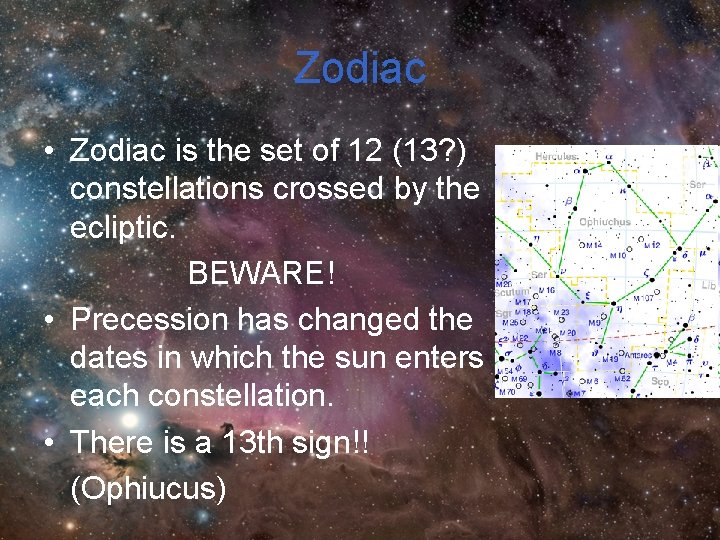
Zodiac • Zodiac is the set of 12 (13? ) constellations crossed by the ecliptic. BEWARE! • Precession has changed the dates in which the sun enters each constellation. • There is a 13 th sign!! (Ophiucus)
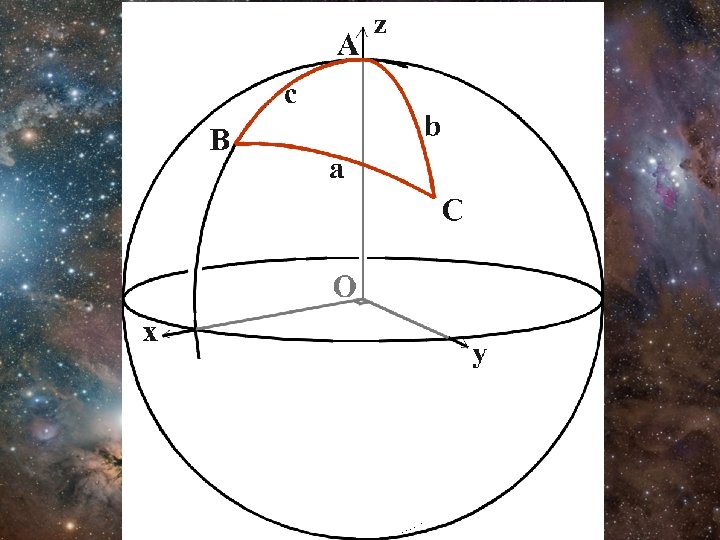
Spherical geometry On the surface of a sphere we can define: • Great circle: Is the intersection with a plane passing through the center of the sphere. • Spherical triangle is that formed by three arcs of great circle. • In an spherical triangle we have: A+B+C=180+E (E=Excess) • Laws of spherical trigonometry: – Sine rule – Cosine rule
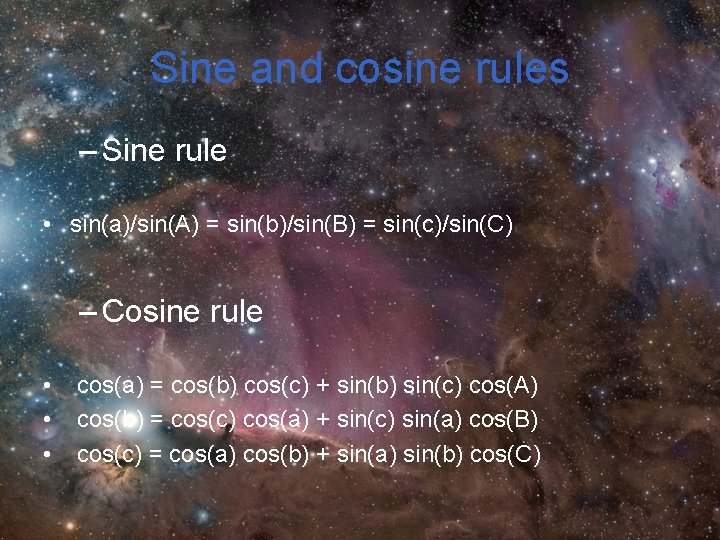
Sine and cosine rules – Sine rule • sin(a)/sin(A) = sin(b)/sin(B) = sin(c)/sin(C) – Cosine rule • • • cos(a) = cos(b) cos(c) + sin(b) sin(c) cos(A) cos(b) = cos(c) cos(a) + sin(c) sin(a) cos(B) cos(c) = cos(a) cos(b) + sin(a) sin(b) cos(C)
Astronomical coordinates • Depending on the plane used as reference there are several coordinate systems: – Horizontal coordinates – Equatorial coordinates – Ecliptic coordinates – Galactic coordinates • To transform coordinates we need to solve an spherical triangle.
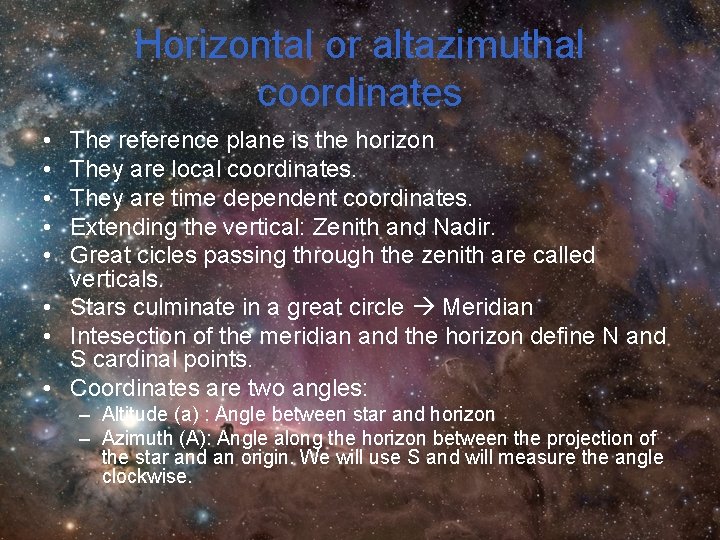
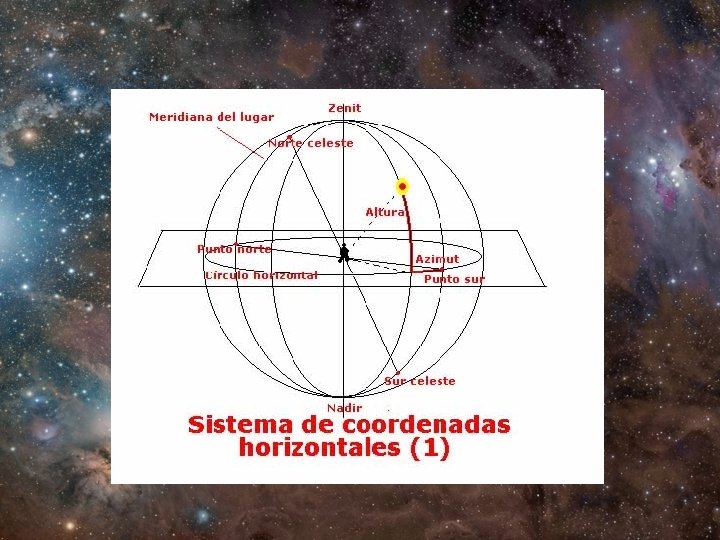
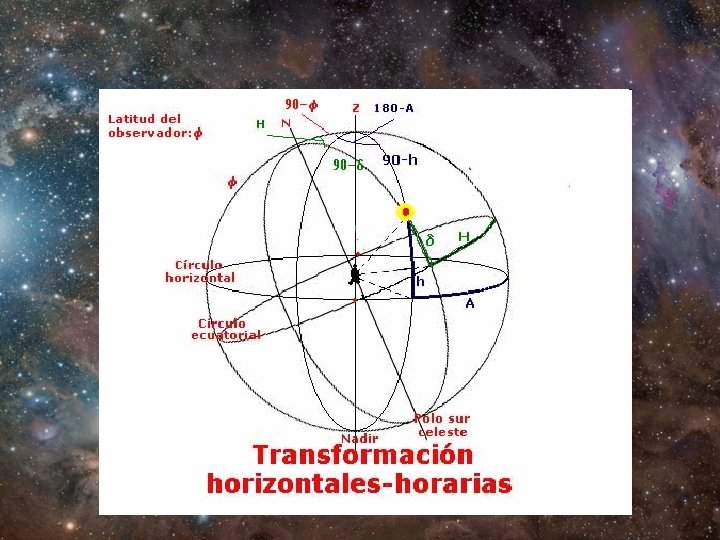
Horizontal or altazimuthal coordinates • • • The reference plane is the horizon They are local coordinates. They are time dependent coordinates. Extending the vertical: Zenith and Nadir. Great cicles passing through the zenith are called verticals. • Stars culminate in a great circle Meridian • Intesection of the meridian and the horizon define N and S cardinal points. • Coordinates are two angles: – Altitude (a) : Angle between star and horizon – Azimuth (A): Angle along the horizon between the projection of the star and an origin. We will use S and will measure the angle clockwise.
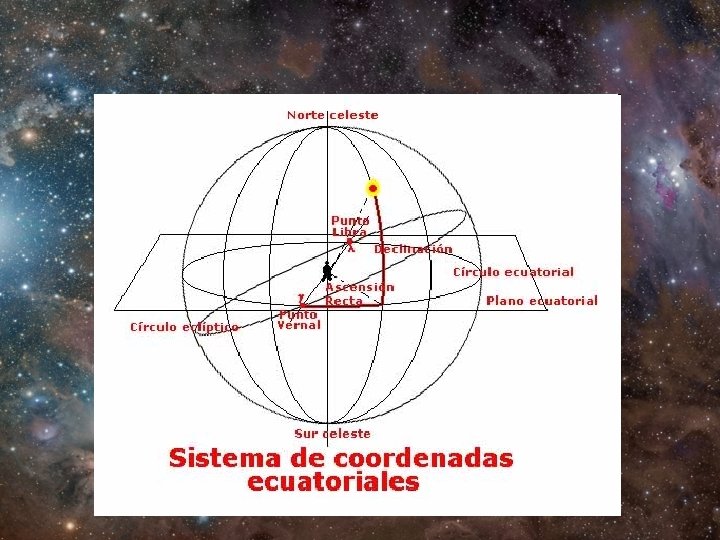
Equatorial coordinates • The reference plane is the equator. • They are non-local coordinates. • Coordinates of stars do not change with time (app) • The origin point on the equator is taken to be the spring equinox. • The coordinates are two angles: – Declination (δ) : Angle between the star and the equator (+ if N and – if S) – Right ascension (α) : Angle along the equator measured from the spring equinox in the counterclockwise direction.
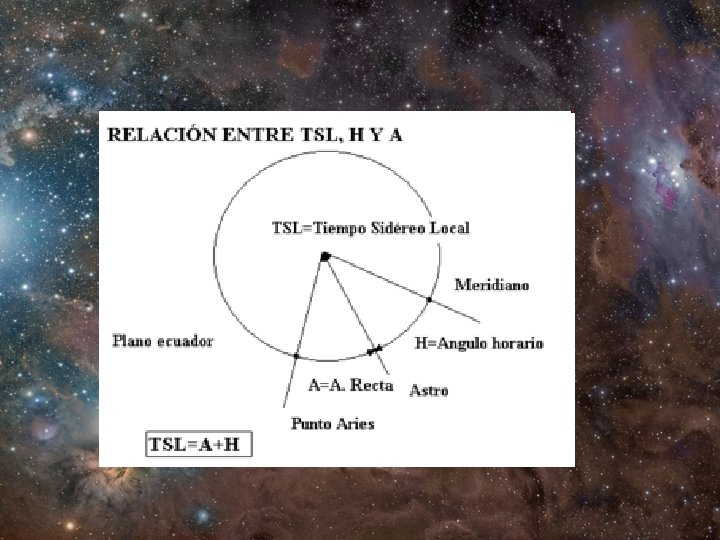
Hour angle, right ascension and sidereal time • The hour angle (H) is defined as the angle (along the equator in clockwise dir. ) between the projection of the star and the meridian. • Sidereal time (t) is defined as the hour angle of the equinoctial point. • Whith these definitions and the definition of the R. A (α) we have: t= α+H • A rough approximation of sidereal time can be calculated from solar time as: t=Ts+12+d*4/60 (where d is the number of days elapsed since the vernal equinox) • Usally: GMT -> JD -> GMST -> LST
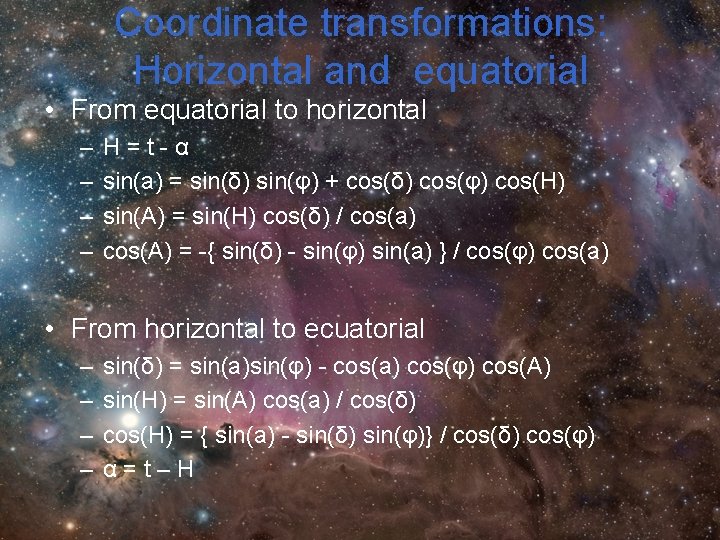
Coordinate transformations: Horizontal and equatorial • From equatorial to horizontal – – H=t-α sin(a) = sin(δ) sin(φ) + cos(δ) cos(φ) cos(H) sin(A) = sin(H) cos(δ) / cos(a) cos(A) = -{ sin(δ) - sin(φ) sin(a) } / cos(φ) cos(a) • From horizontal to ecuatorial – – sin(δ) = sin(a)sin(φ) - cos(a) cos(φ) cos(A) sin(H) = sin(A) cos(a) / cos(δ) cos(H) = { sin(a) - sin(δ) sin(φ)} / cos(δ) cos(φ) α=t–H
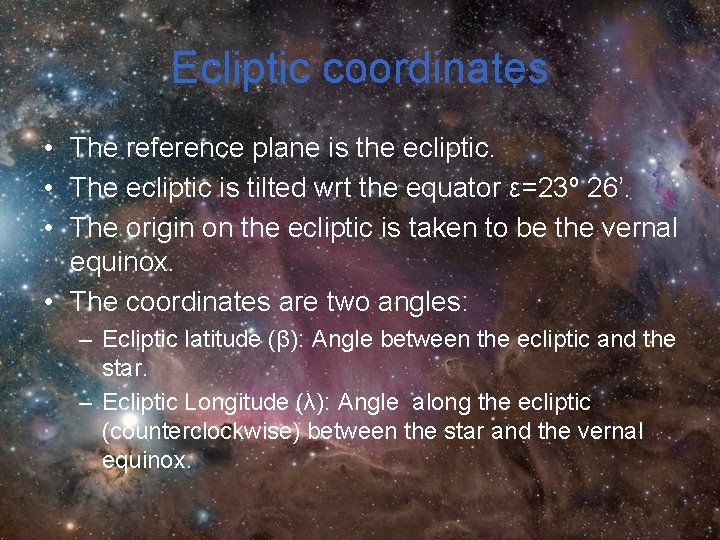
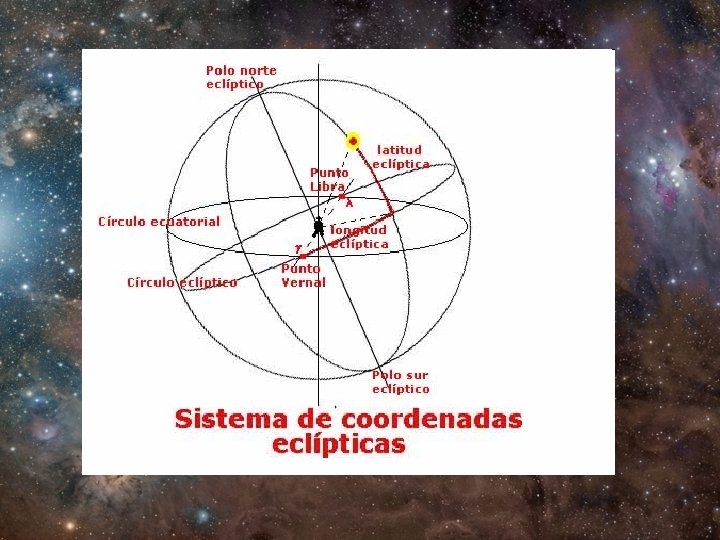
Ecliptic coordinates • The reference plane is the ecliptic. • The ecliptic is tilted wrt the equator ε=23º 26’. • The origin on the ecliptic is taken to be the vernal equinox. • The coordinates are two angles: – Ecliptic latitude (β): Angle between the ecliptic and the star. – Ecliptic Longitude (λ): Angle along the ecliptic (counterclockwise) between the star and the vernal equinox.
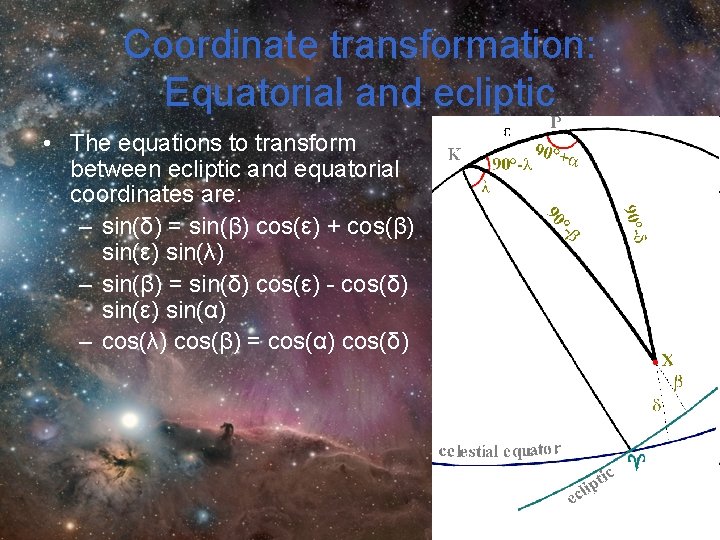
Coordinate transformation: Equatorial and ecliptic • The equations to transform between ecliptic and equatorial coordinates are: – sin(δ) = sin(β) cos(ε) + cos(β) sin(ε) sin(λ) – sin(β) = sin(δ) cos(ε) - cos(δ) sin(ε) sin(α) – cos(λ) cos(β) = cos(α) cos(δ)
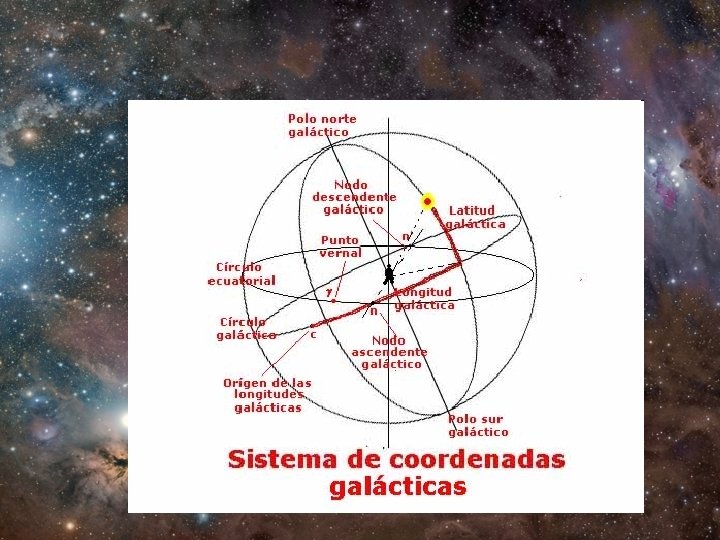
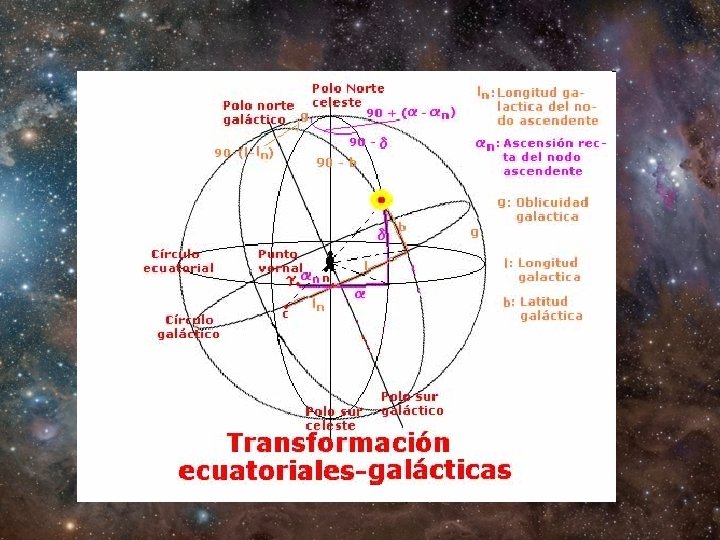
Galactic coordinates • The reference plane is the plane of the Milky Way. The direction of the galactic centre is used as origin for longitudes. • The galactic centre has eq. coordinates: – 17 h 45 m 37. 224 s − 28° 56′ 10. 23″ (J 2000) • El galactic north pole is: – 12 h 51 m 26. 28 s +27º 07’ 42’’ (J 2000) • The coordinates are two angles: – Galactic latitude (b): Angle between the plane of the Galaxy and the star. – Galactic longitude (l): Angle along the Galaxy plane between the galactic centre and the projection of the star on the plane (counterclockwise).
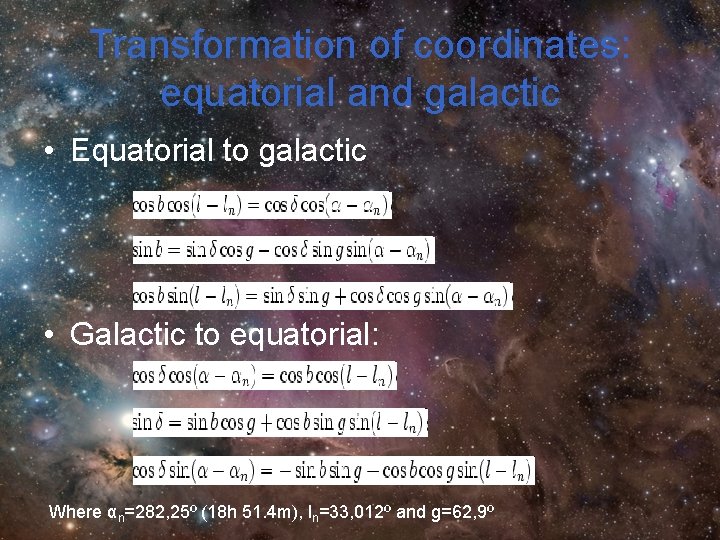
Transformation of coordinates: equatorial and galactic • Equatorial to galactic • Galactic to equatorial: Where αn=282, 25º (18 h 51. 4 m), ln=33, 012º and g=62, 9º
The sun and the measurement of time • As our lives are linked to the day/night cycle, we use the sun cycle as a reference to our daily measurement of time. • The sun’s hour angle (which defines True or apparent solar time) does not keep a uniform rate throughout the year for two reasons: – The sun is not (always) on the equator – Its speed wrt the stars is not uniform • It is convenient to have a time reference with constant rate Mean solar time is defined with the help of a fictitious mean sun (moving at uniform speed along the equator). • A Mean Solar Day lasts 86400 s (very approx).
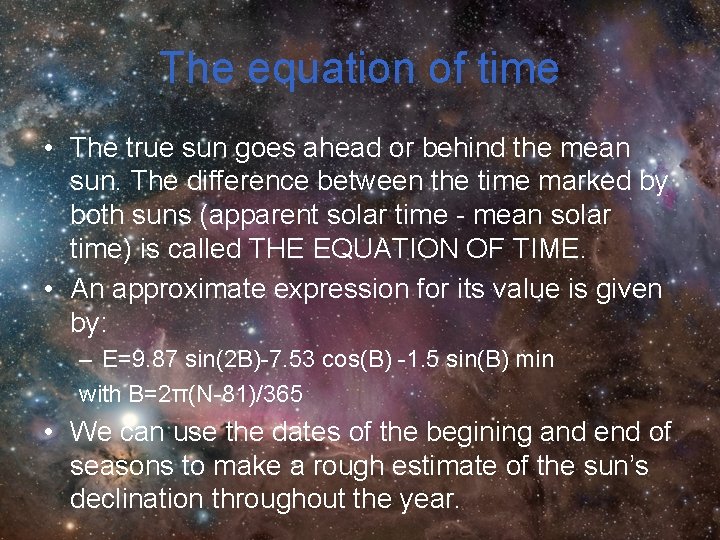
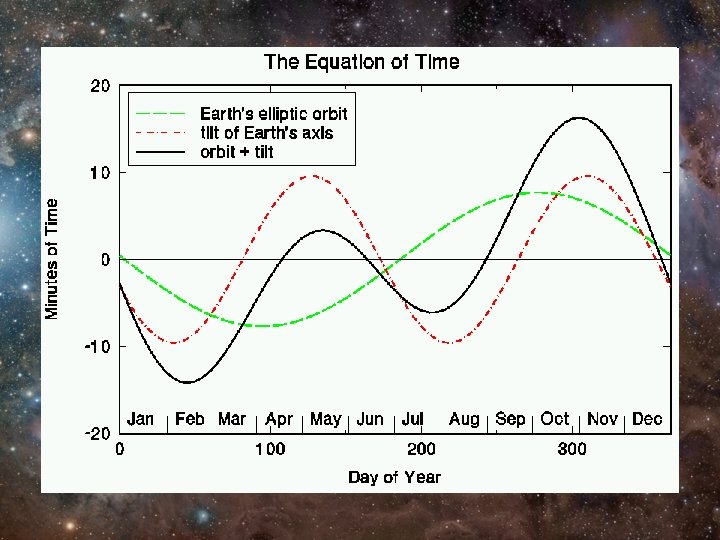
The equation of time • The true sun goes ahead or behind the mean sun. The difference between the time marked by both suns (apparent solar time - mean solar time) is called THE EQUATION OF TIME. • An approximate expression for its value is given by: – E=9. 87 sin(2 B)-7. 53 cos(B) -1. 5 sin(B) min with B=2π(N-81)/365 • We can use the dates of the begining and end of seasons to make a rough estimate of the sun’s declination throughout the year.
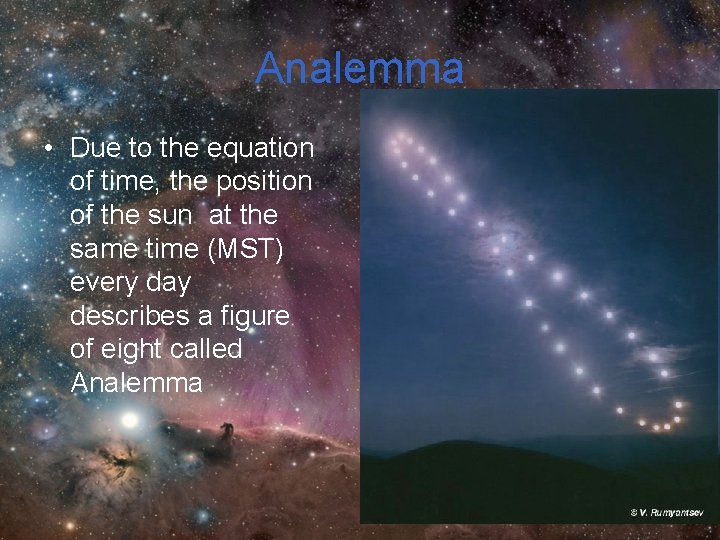
Analemma • Due to the equation of time, the position of the sun at the same time (MST) every day describes a figure of eight called Analemma
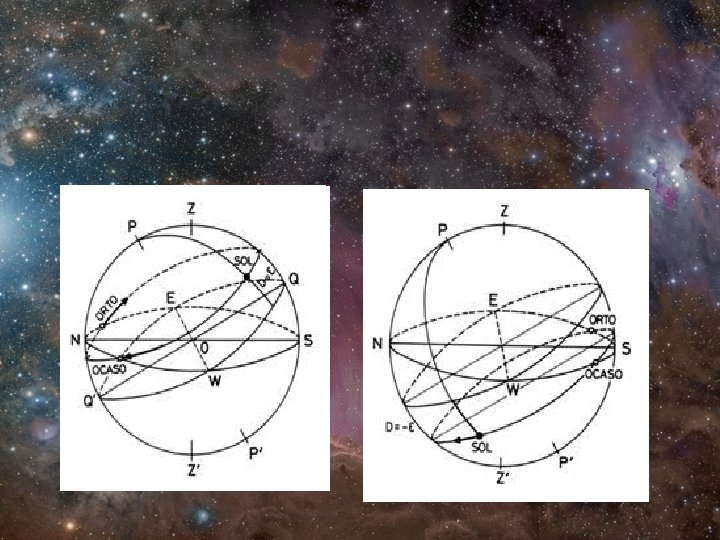
Sunset and sunrise • Sun rises and sets northwards in summer and southwards in winter: • The azimuth of sun at sunrise/sunset is: – Cos(A)=-sinδ/cosΦ • The length of day/night can be calculated using the hour angle at sunrise/sunset: – Cos(H)=-tan(δ) tan(Φ) • Taking into account atmospheric refraction and the size of the solar disk we should use a=-0. 50’ for sunset/sunrise.
Variations with latitude • At the equator, stars rise and set perpendicular to the horizon. • The inclination of the trajectories of stars near the horizon decreases with latitude. • At the poles, stars only change altitude if they change their declination. • Twilights are short in the equatorial region and longer for higher latitudes.
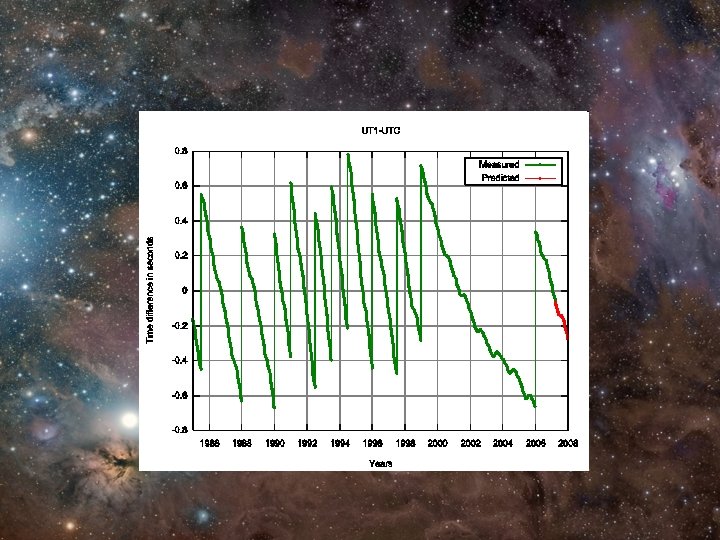
Time measurements • UT: Universal Time Mean Solar Time -> Greenwich meridian time (GMT) – UT 0: Astronomical without corrections for polar motion – UT 1: Corrected for polar motion (± 3 ms/day) – UTC: Uses a time scale based on IAT (atomic) but stays in phase with UT 1. If the difference increases over 0. 9 s a leap second is added at the end of june or december • IAT/TAI: Determined by atomic clocks
What can affect the direction in which we see a star? • Atmospheric refraction • Precession y nutation • Aberration of light • Movement of the stars PROPER MOTION • Movement of the solar system • Parallax
Atmospheric refraction • A star with a zenith angle z will be observed with zenith angle z’ due to atmospheric refraction. • The change in zenith angle is given by: R=(z-z’)=(n-1) tan(z’)=k tan(z’)~k tan(z) with k=59. 6 arcsec a 0ºC y 1 atm o k=16. 27’’P/(273+T(ºC))
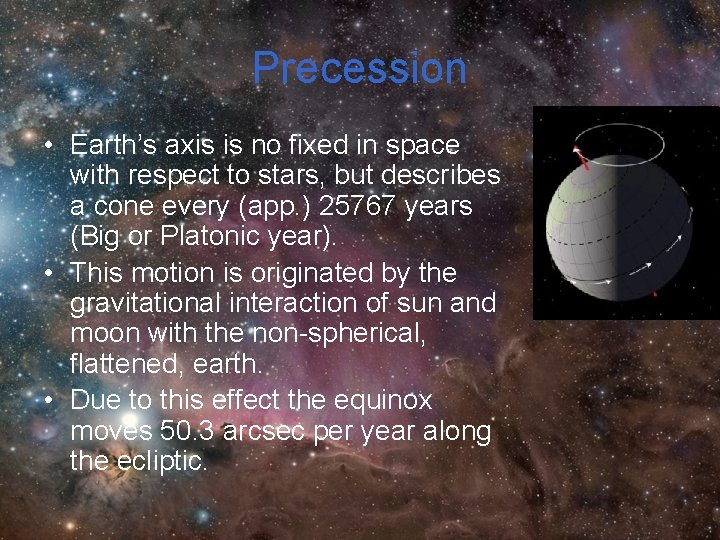
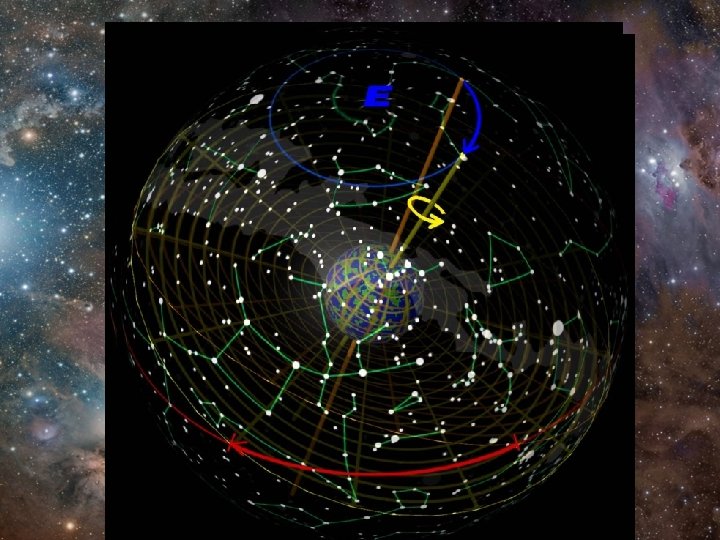
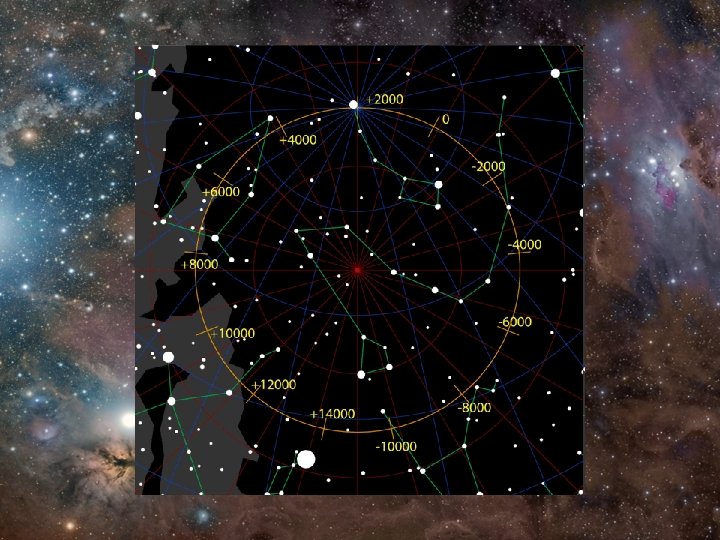
Precession • Earth’s axis is no fixed in space with respect to stars, but describes a cone every (app. ) 25767 years (Big or Platonic year). • This motion is originated by the gravitational interaction of sun and moon with the non-spherical, flattened, earth. • Due to this effect the equinox moves 50. 3 arcsec per year along the ecliptic.
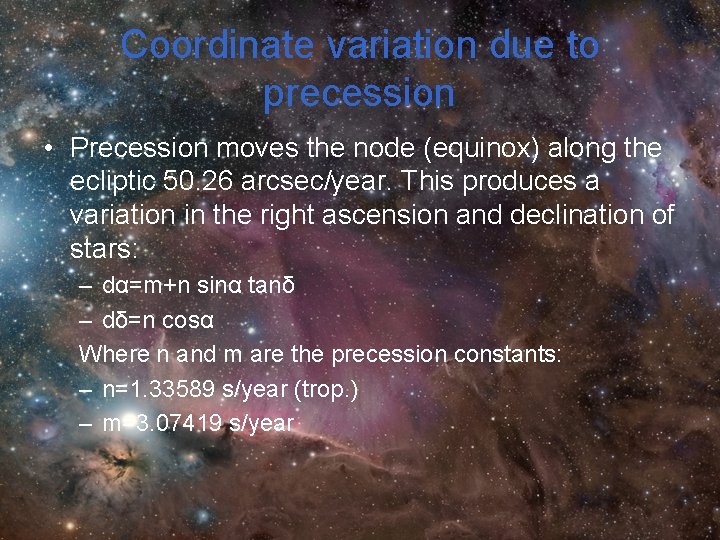
Coordinate variation due to precession • Precession moves the node (equinox) along the ecliptic 50. 26 arcsec/year. This produces a variation in the right ascension and declination of stars: – dα=m+n sinα tanδ – dδ=n cosα Where n and m are the precession constants: – n=1. 33589 s/year (trop. ) – m=3. 07419 s/year
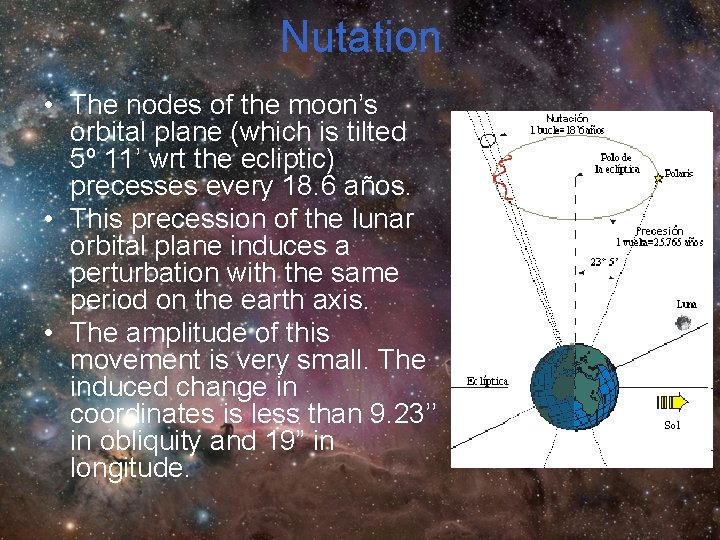
Nutation • The nodes of the moon’s orbital plane (which is tilted 5º 11’ wrt the ecliptic) precesses every 18. 6 años. • This precession of the lunar orbital plane induces a perturbation with the same period on the earth axis. • The amplitude of this movement is very small. The induced change in coordinates is less than 9. 23’’ in obliquity and 19” in longitude.
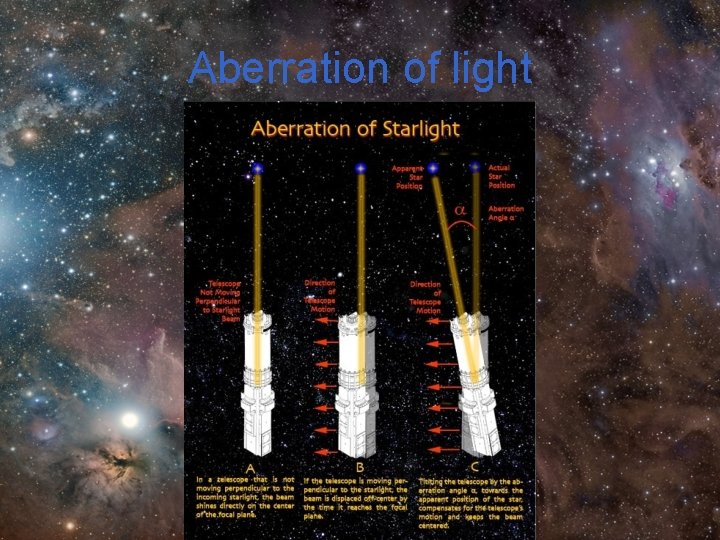
Aberration of light
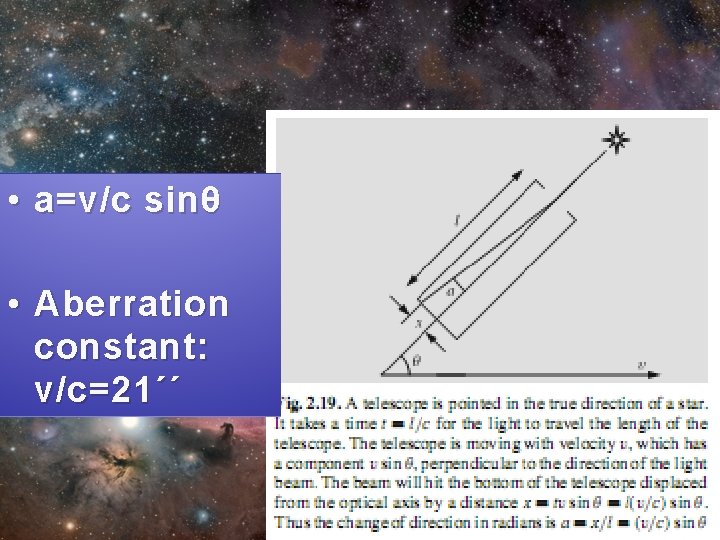
• a=v/c sin θ • Aberration constant: v/c=21 ´´
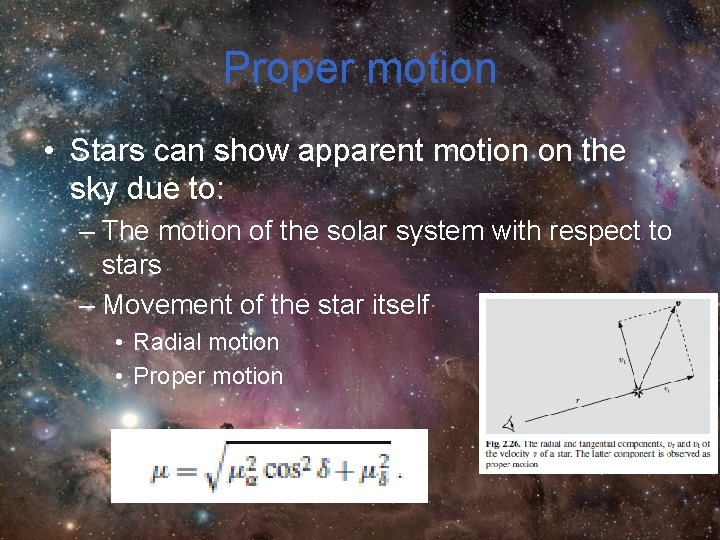
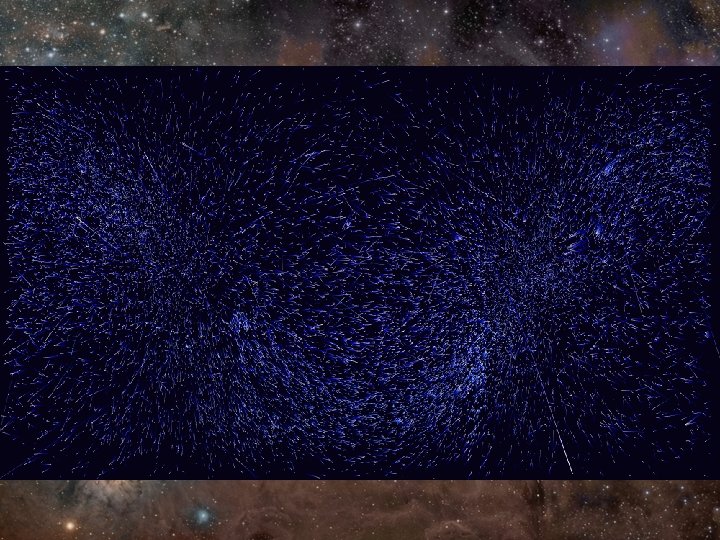
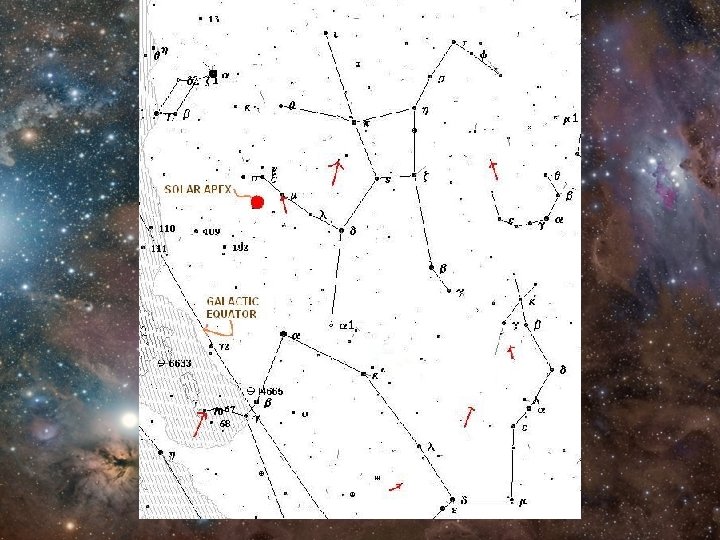
Proper motion • Stars can show apparent motion on the sky due to: – The motion of the solar system with respect to stars – Movement of the star itself • Radial motion • Proper motion
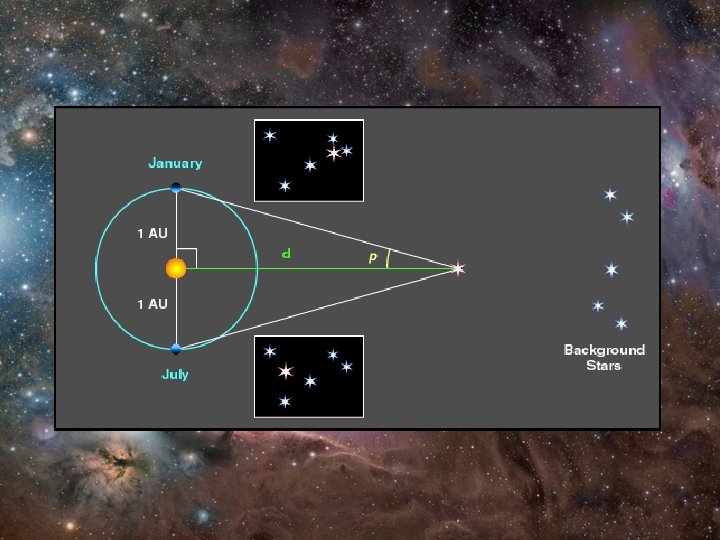
Parallax • Paralax is defined as half the angular change in the direction of an object when seen from two different points of view. • We can look at the object from to diametrally opposite locations at the equator (Daily or equatorial Parallax) • The longest distance we can use is that of two diametrally opposite points in the earth orbit (Anual parallax). • A length unit, the parsec (pc) is defined as the distance to an object with an anual paralax of 1 arcsec. • Measuring parallaxes is very difficult because: – – Huge distances involved Atmospheric refraction Aberration of light Proper motions, precession, nutation, etc. .