
POSITION CHANGES FREQUENCY AND DURATION The critical care


- Slides: 16
POSITION CHANGES : FREQUENCY AND DURATION
The critical care nurse plays a crucial role in the assessment, diagnosis, and management of patients with respiratory problems who develop hypoxemia. Position change is one of the general kinds of nursing actions during care of patients. Critically ill patients positioning maximizes ventilation to improve oxygenation which in turn would affect the individual’s ability to maintain an internal environment that allows normal cellular function
The importance of the effect of body position on ventilatory function and gas exchange has been appreciated Less information is available concerning the effect of position changes on gas exchange in human body Studies related to the adequate duration in each position and the frequency of turning patients for maximizing ventilation to improve systemic oxygenation has not been attempted
To determine the effect of position changes on oxygenation and respiratory mechanics in mechanically ventilated patients
position changes had a significant effect on oxygenation in mechanically ventilated patients
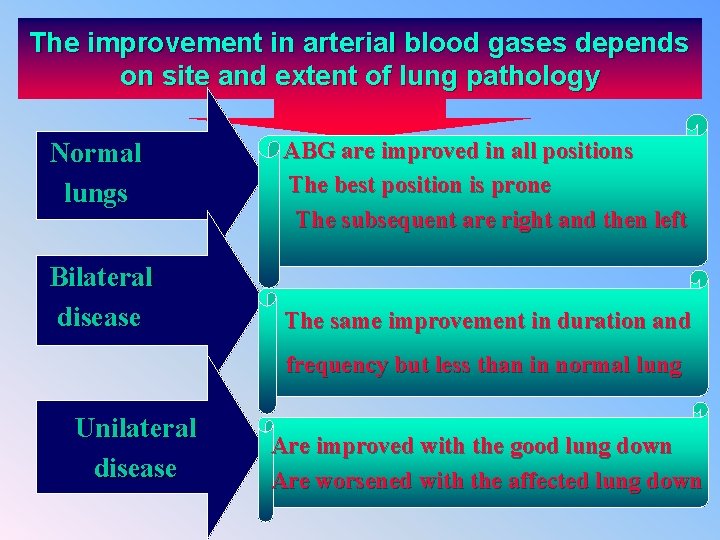
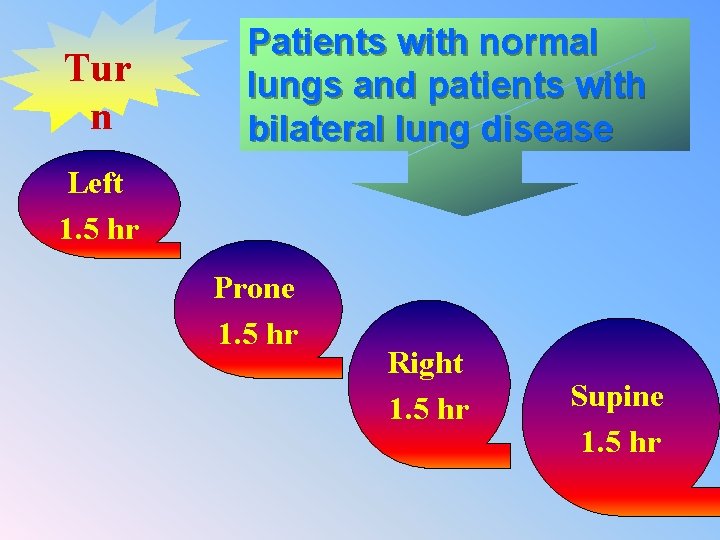
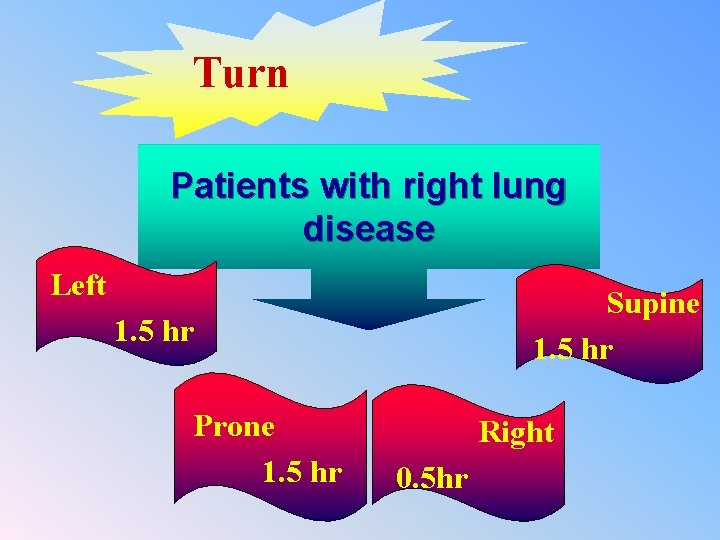
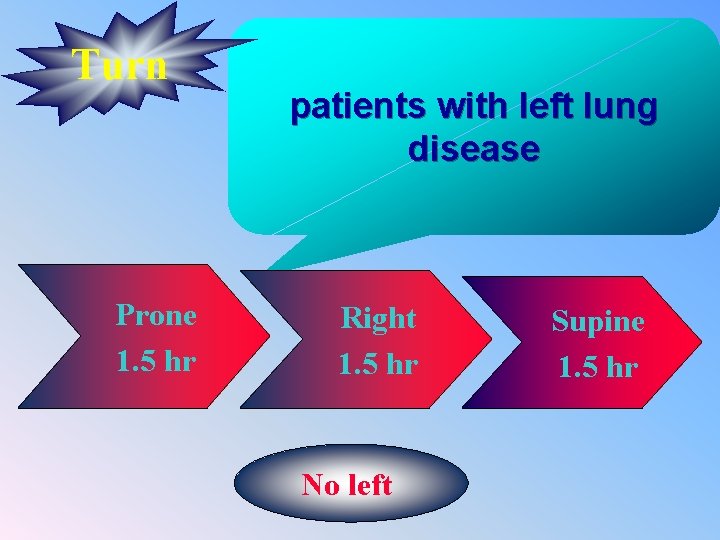
The improvement in arterial blood gases depends on site and extent of lung pathology Normal lungs Bilateral disease ABG are improved in all positions The best position is prone The subsequent are right and then left The same improvement in duration and frequency but less than in normal lung Unilateral disease Are improved with the good lung down Are worsened with the affected lung down
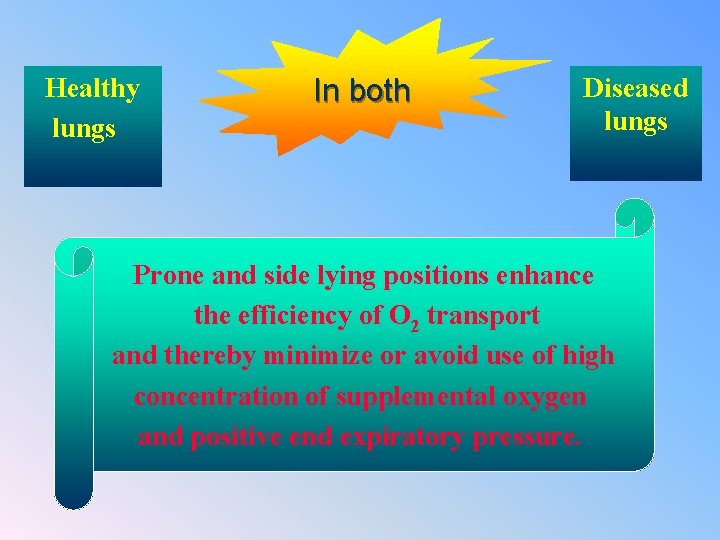
Healthy lungs In both Diseased lungs Prone and side lying positions enhance the efficiency of O 2 transport and thereby minimize or avoid use of high concentration of supplemental oxygen and positive end expiratory pressure.
For any critically ill patient body positioning is a 24 -hours concern
Tur n Patients with normal lungs and patients with bilateral lung disease Left 1. 5 hr Prone 1. 5 hr Right 1. 5 hr Supine 1. 5 hr
Turn Patients with right lung disease Left Supine 1. 5 hr Prone 1. 5 hr Right 0. 5 hr
Turn Prone 1. 5 hr patients with left lung disease Right 1. 5 hr No left Supine 1. 5 hr
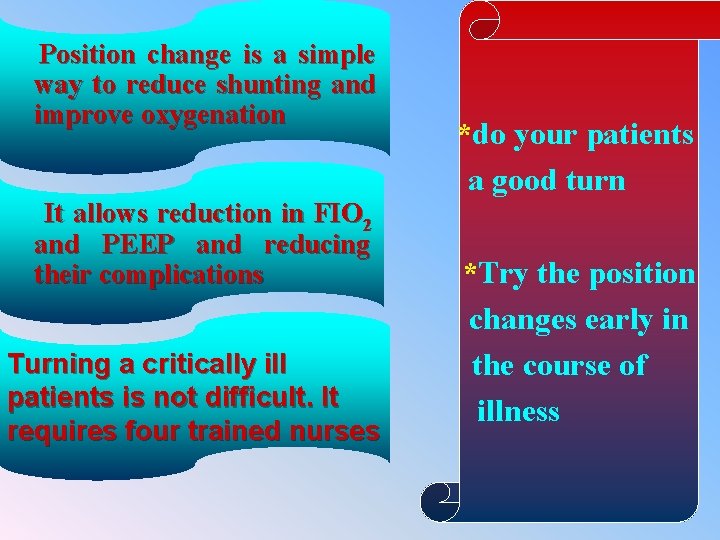
Position change is a simple way to reduce shunting and improve oxygenation It allows reduction in FIO 2 and PEEP and reducing their complications Turning a critically ill patients is not difficult. It requires four trained nurses *do your patients a good turn *Try the position changes early in the course of illness
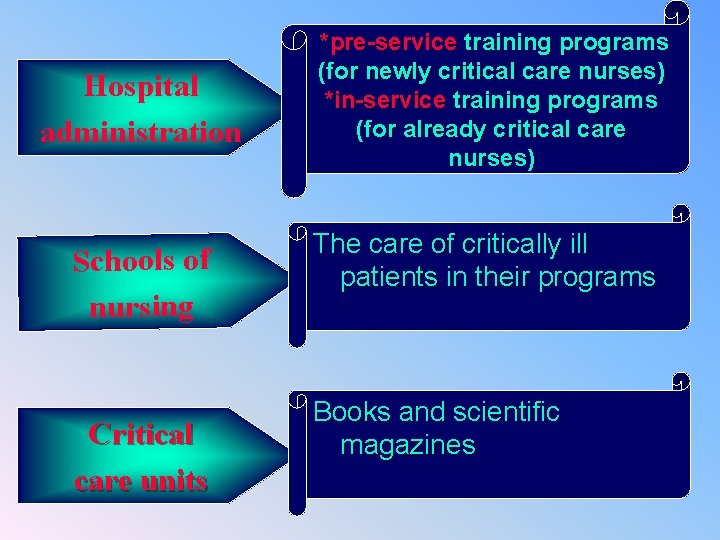
Hospital administration Schools of nursing Critical care units *pre-service training programs (for newly critical care nurses) *in-service training programs (for already critical care nurses) The care of critically ill patients in their programs Books and scientific magazines
Turn