
Pose 2 D geometrymsgsPose 2 D float 64
- Slides: 28
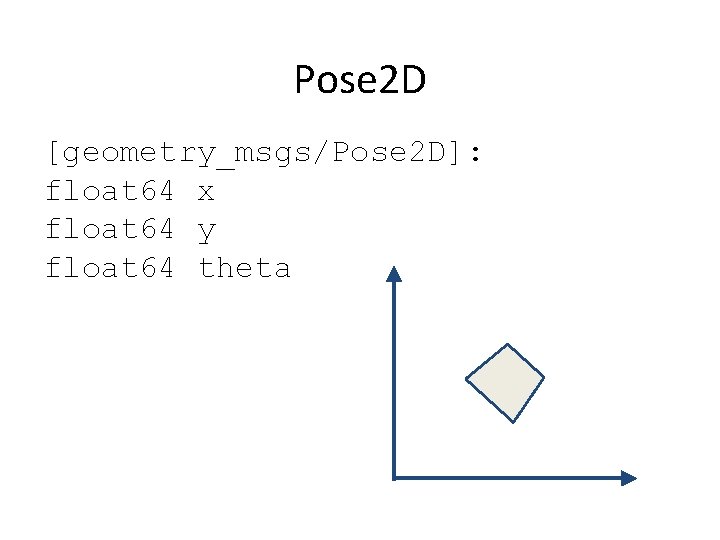
Pose 2 D [geometry_msgs/Pose 2 D]: float 64 x float 64 y float 64 theta
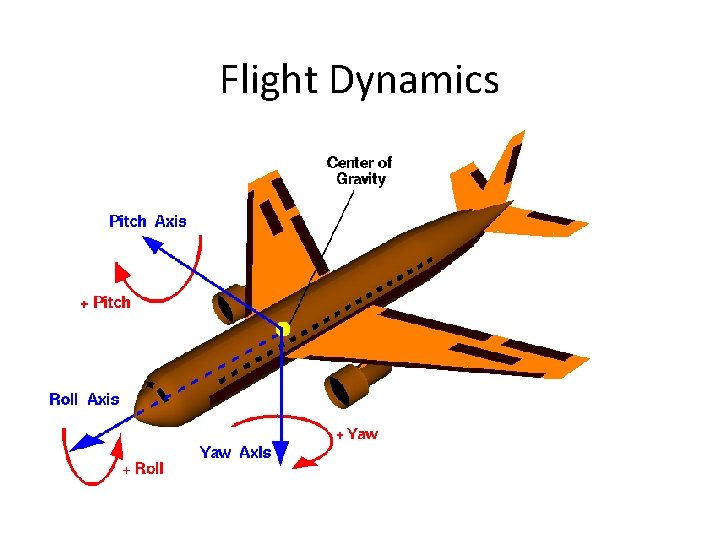
Flight Dynamics
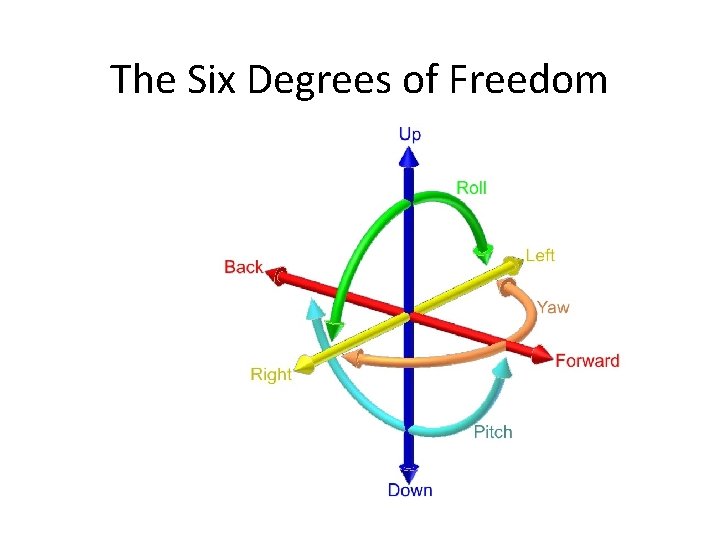
The Six Degrees of Freedom
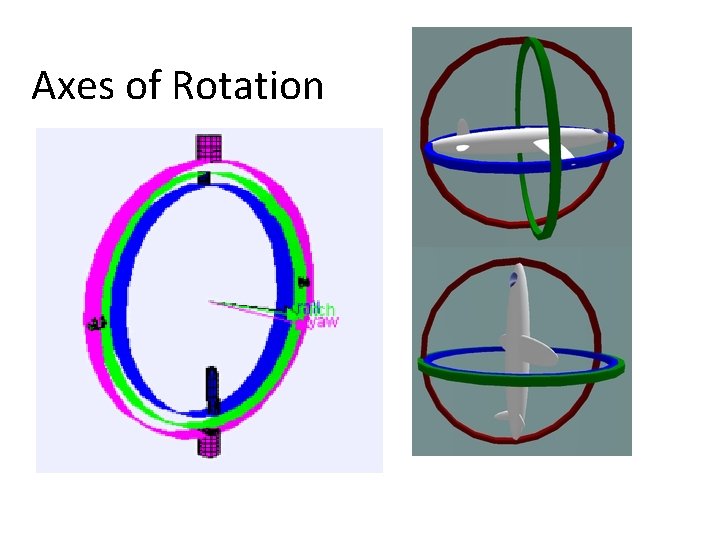
Axes of Rotation
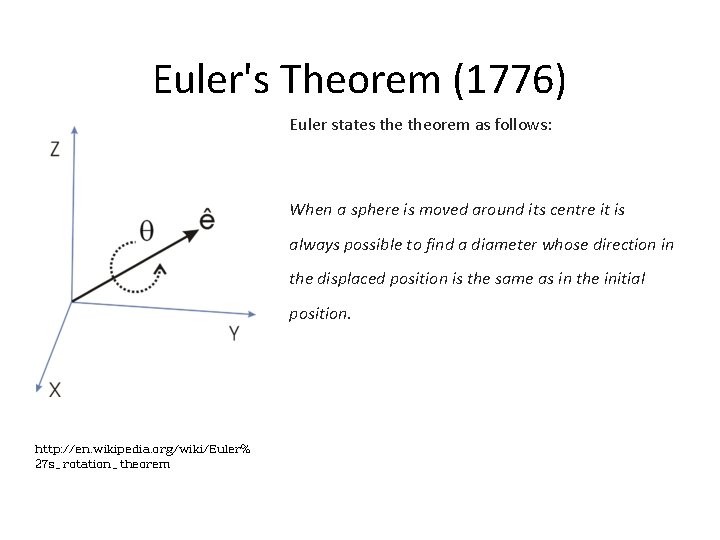
Euler's Theorem (1776) Euler states theorem as follows: When a sphere is moved around its centre it is always possible to find a diameter whose direction in the displaced position is the same as in the initial position. http: //en. wikipedia. org/wiki/Euler% 27 s_rotation_theorem
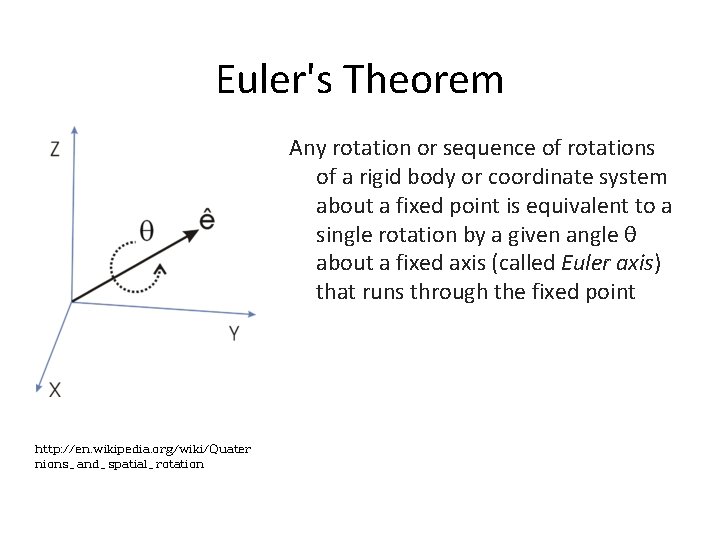
Euler's Theorem Any rotation or sequence of rotations of a rigid body or coordinate system about a fixed point is equivalent to a single rotation by a given angle θ about a fixed axis (called Euler axis) that runs through the fixed point http: //en. wikipedia. org/wiki/Quater nions_and_spatial_rotation
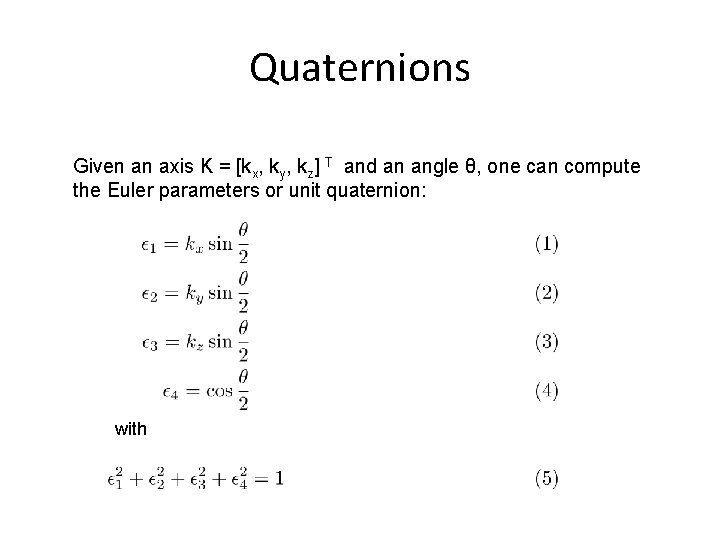
Quaternions Given an axis K = [kx, ky, kz] T and an angle θ, one can compute the Euler parameters or unit quaternion: with
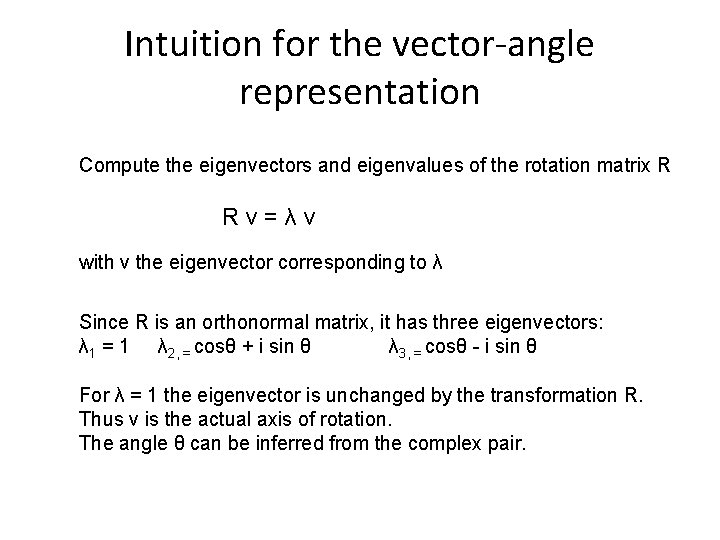
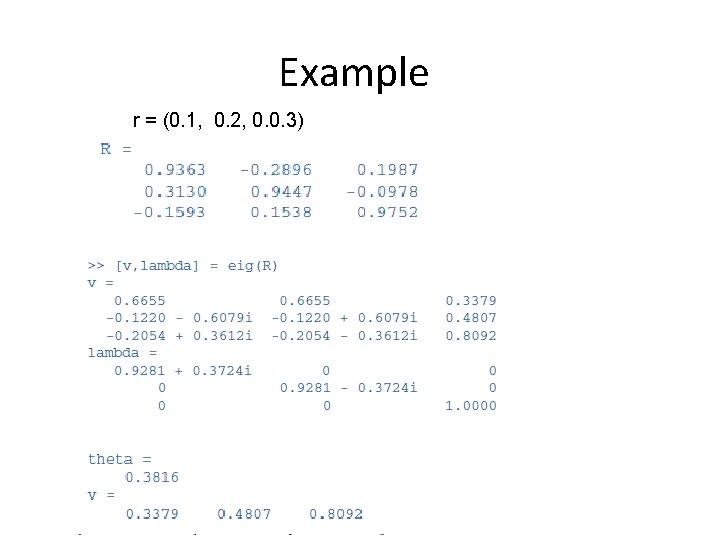
Intuition for the vector-angle representation Compute the eigenvectors and eigenvalues of the rotation matrix R Rv=λv with v the eigenvector corresponding to λ Since R is an orthonormal matrix, it has three eigenvectors: λ 1 = 1 λ 2, = cosθ + i sin θ λ 3, = cosθ - i sin θ For λ = 1 the eigenvector is unchanged by the transformation R. Thus v is the actual axis of rotation. The angle θ can be inferred from the complex pair.
Example r = (0. 1, 0. 2, 0. 0. 3)
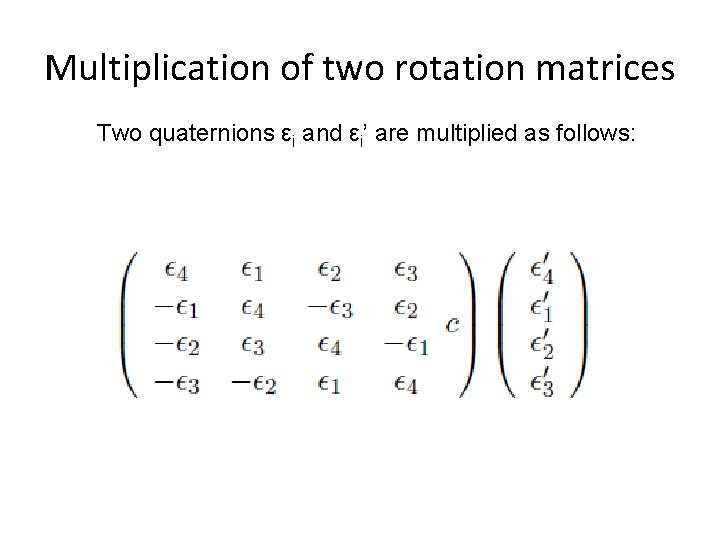
Multiplication of two rotation matrices Two quaternions εi and εi’ are multiplied as follows:
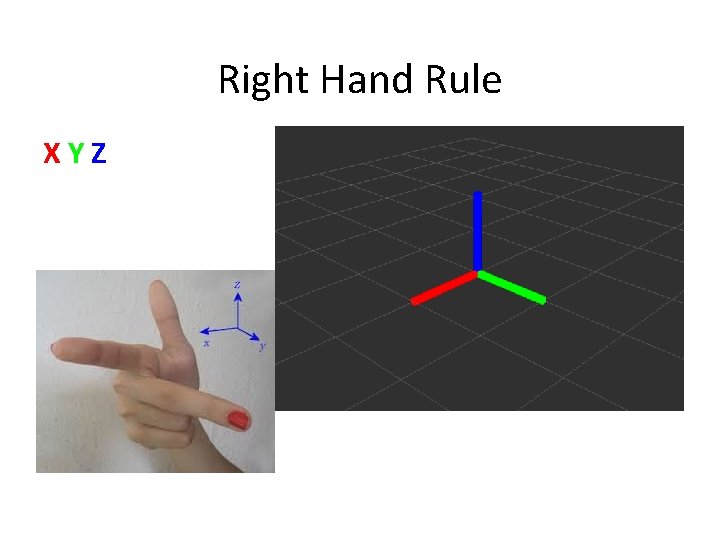
Right Hand Rule XYZ
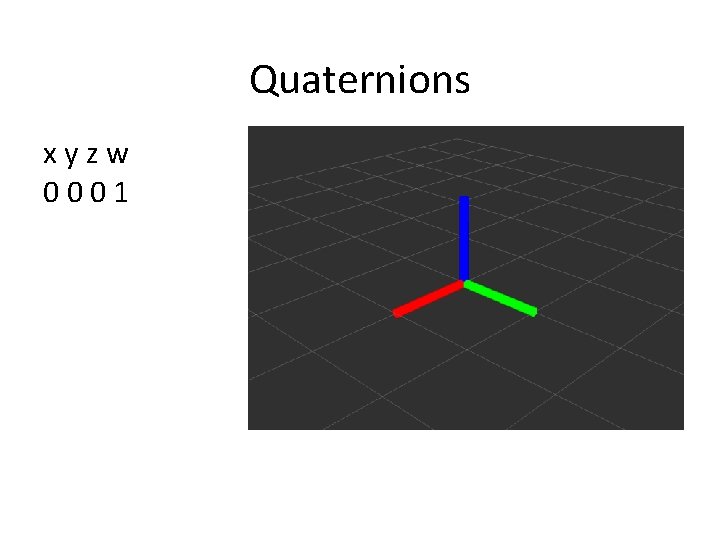
Quaternions xyzw 0001
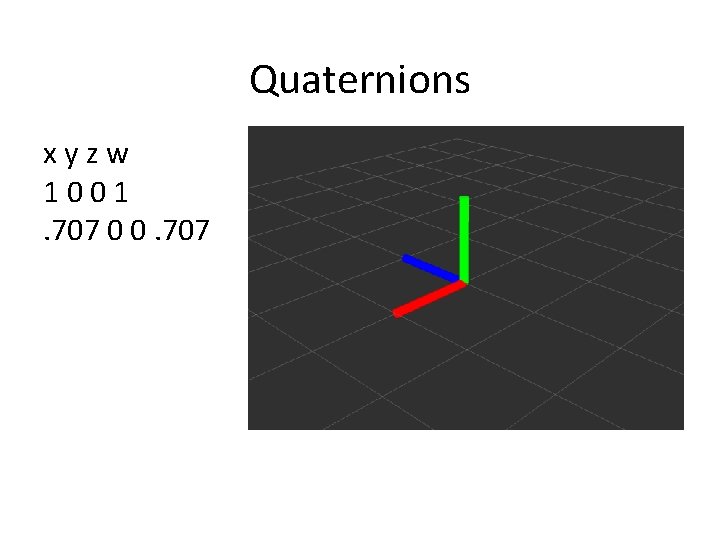
Quaternions xyzw 1001. 707 0 0. 707
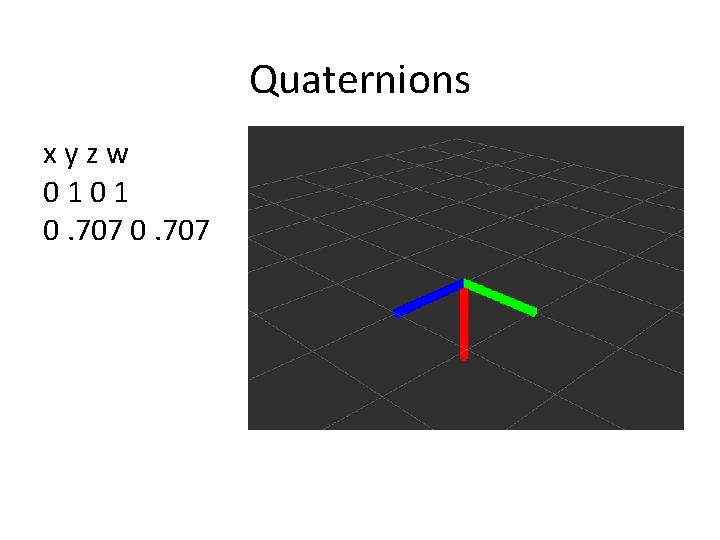
Quaternions xyzw 0101 0. 707
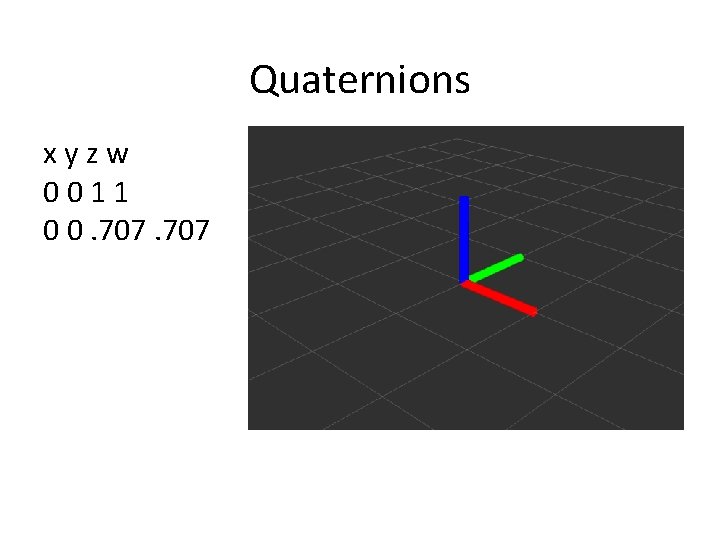
Quaternions xyzw 0011 0 0. 707
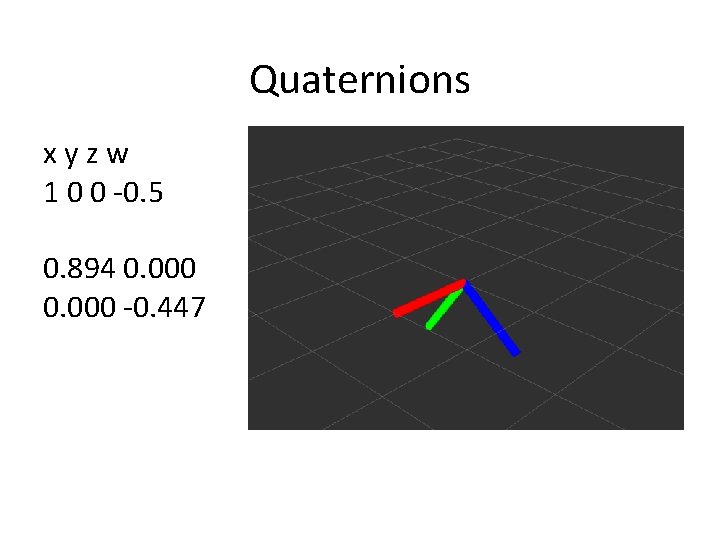
Quaternions xyzw 1 0 0 -0. 5 0. 894 0. 000 -0. 447
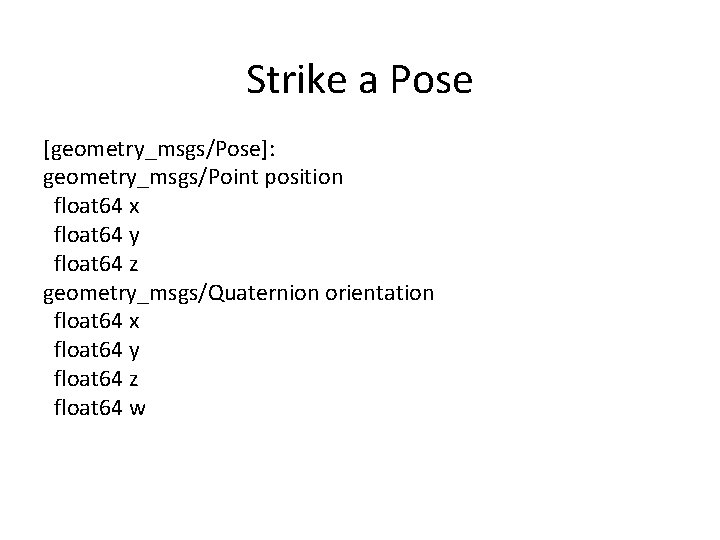
Strike a Pose [geometry_msgs/Pose]: geometry_msgs/Point position float 64 x float 64 y float 64 z geometry_msgs/Quaternion orientation float 64 x float 64 y float 64 z float 64 w
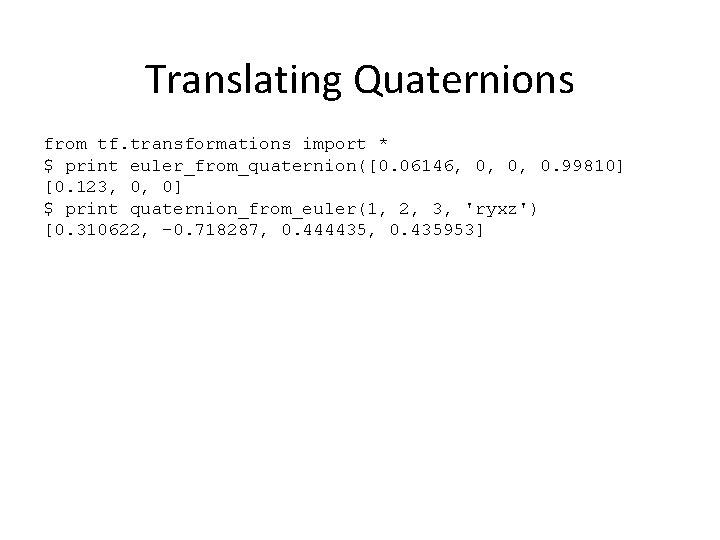
Translating Quaternions from tf. transformations import * $ print euler_from_quaternion([0. 06146, 0, 0, 0. 99810] [0. 123, 0, 0] $ print quaternion_from_euler(1, 2, 3, 'ryxz') [0. 310622, -0. 718287, 0. 444435, 0. 435953]
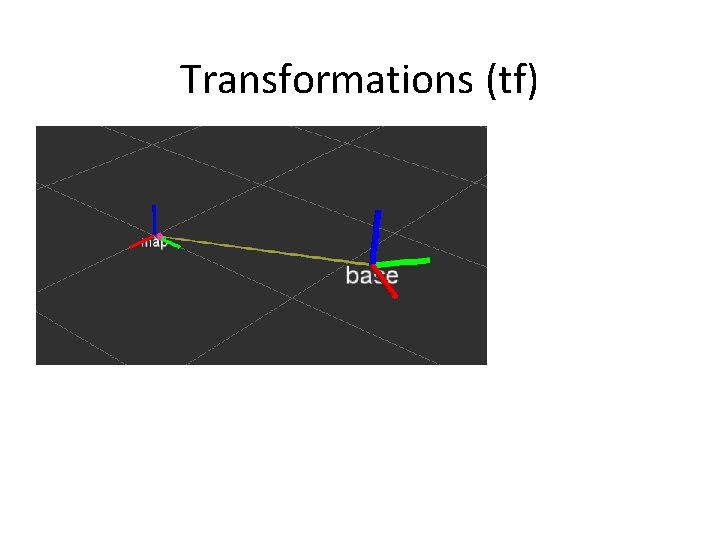
Transformations (tf)
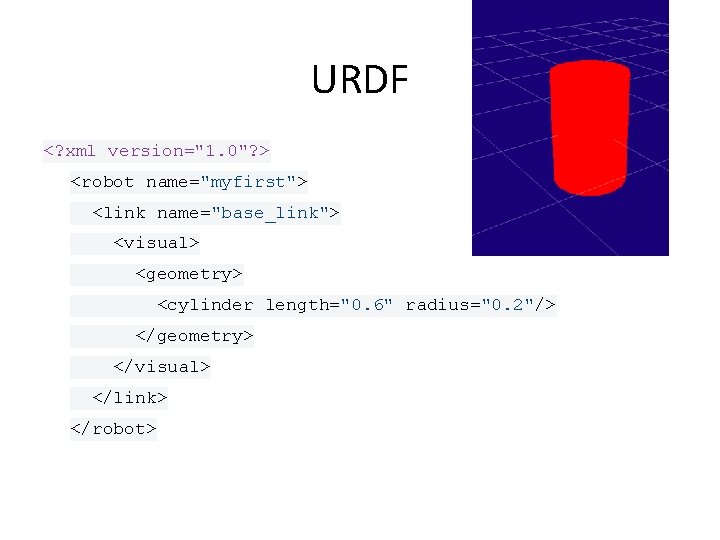
URDF <? xml version="1. 0"? > <robot name="myfirst"> <link name="base_link"> <visual> <geometry> <cylinder length="0. 6" radius="0. 2"/> </geometry> </visual> </link> </robot>
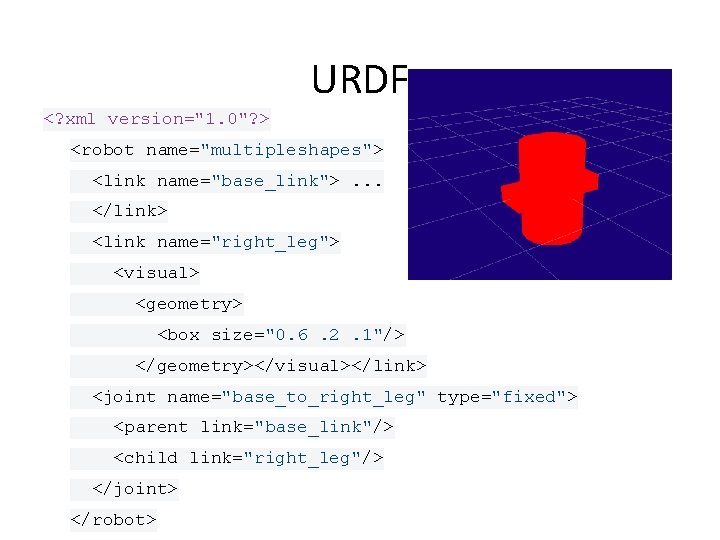
URDF <? xml version="1. 0"? > <robot name="multipleshapes"> <link name="base_link">. . . </link> <link name="right_leg"> <visual> <geometry> <box size="0. 6. 2. 1"/> </geometry></visual></link> <joint name="base_to_right_leg" type="fixed"> <parent link="base_link"/> <child link="right_leg"/> </joint> </robot>
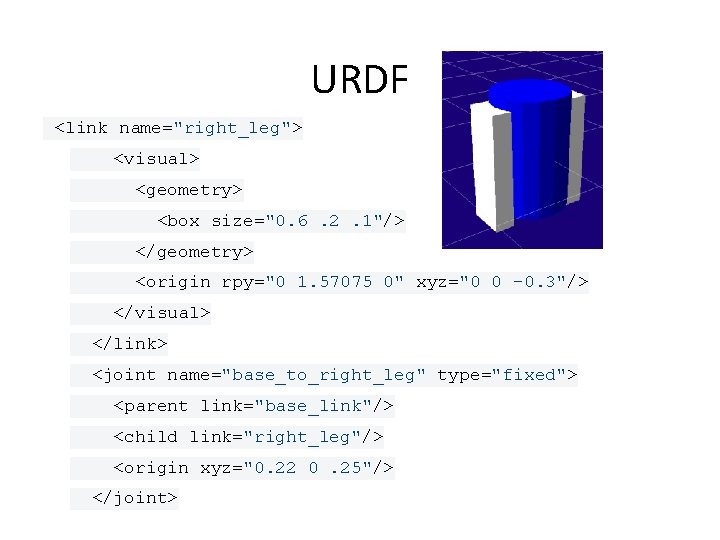
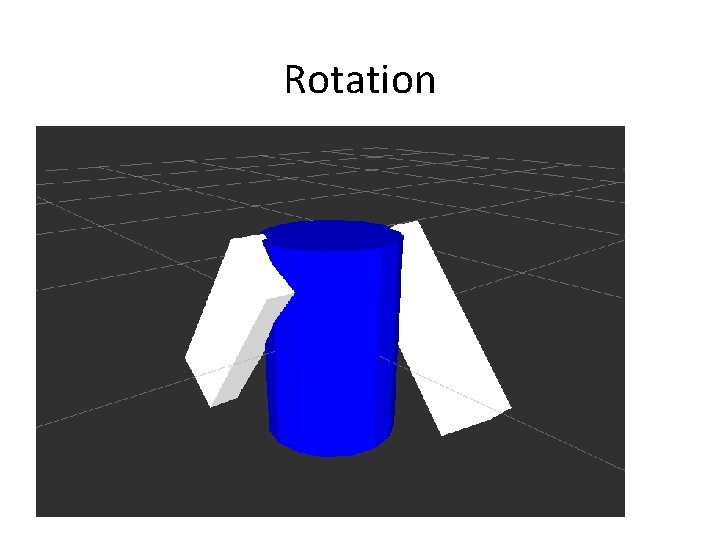
URDF <link name="right_leg"> <visual> <geometry> <box size="0. 6. 2. 1"/> </geometry> <origin rpy="0 1. 57075 0" xyz="0 0 -0. 3"/> </visual> </link> <joint name="base_to_right_leg" type="fixed"> <parent link="base_link"/> <child link="right_leg"/> <origin xyz="0. 22 0. 25"/> </joint>
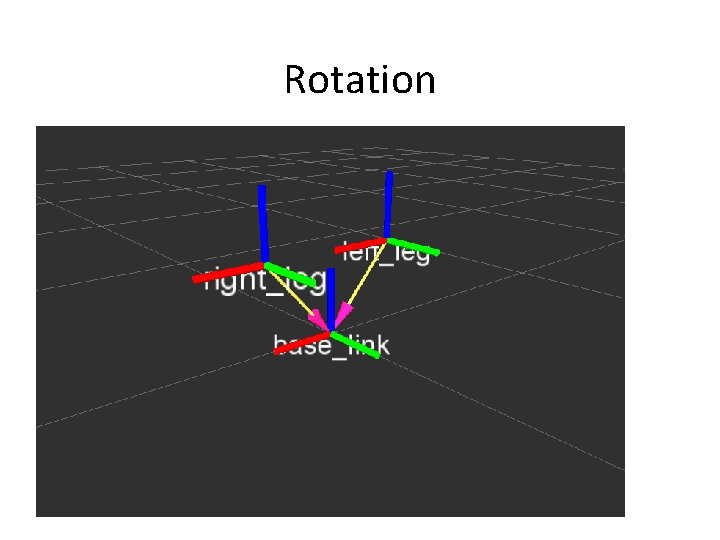
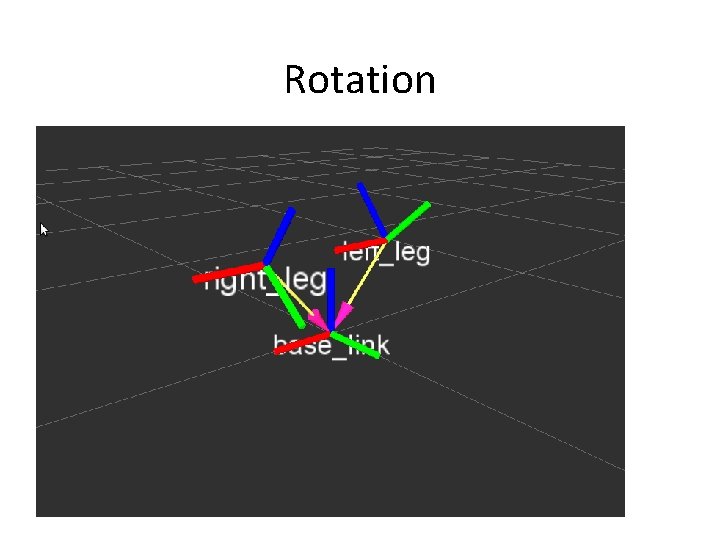
Rotation
Rotation
Rotation
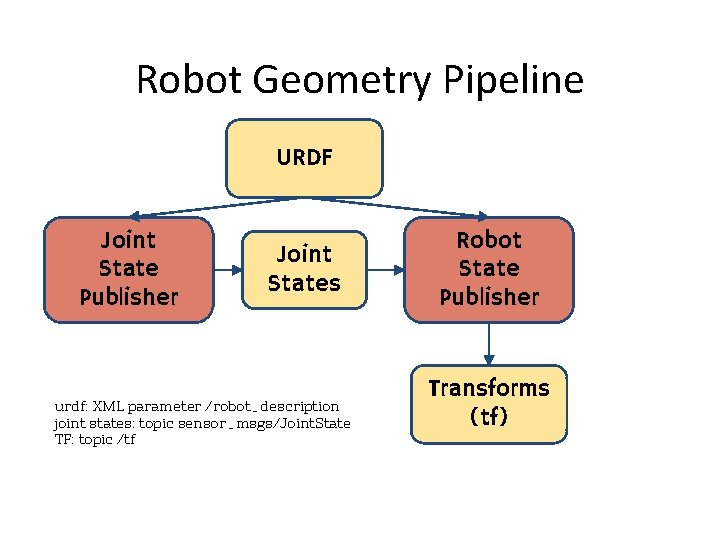
Robot Geometry Pipeline URDF Joint State Publisher Joint States urdf: XML parameter /robot_description joint states: topic sensor_msgs/Joint. State TF: topic /tf Robot State Publisher Transforms (tf)
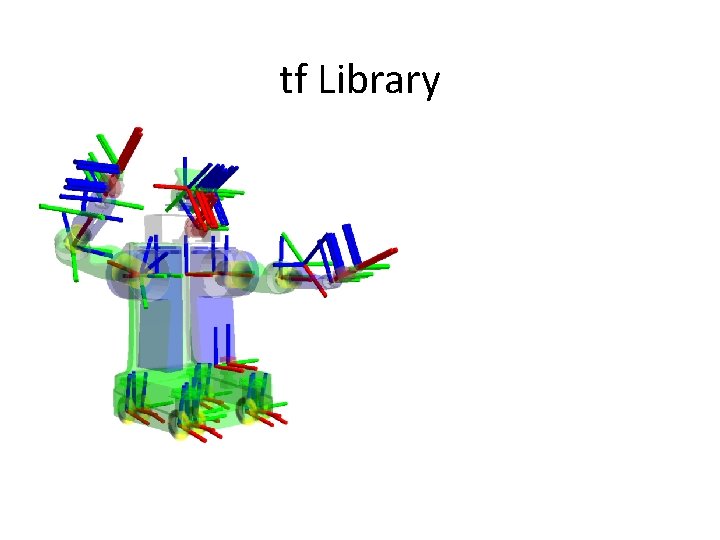
tf Library
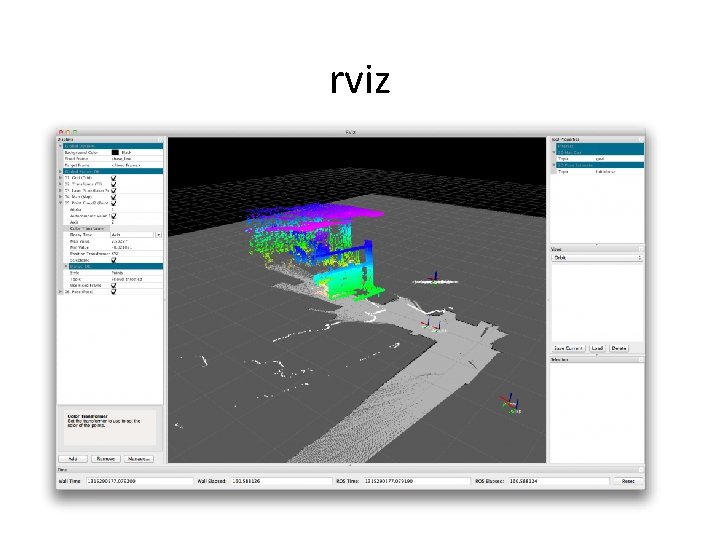
rviz