
Portugal and the Slave Trade Portugal was a
- Slides: 15
Portugal and the Slave Trade
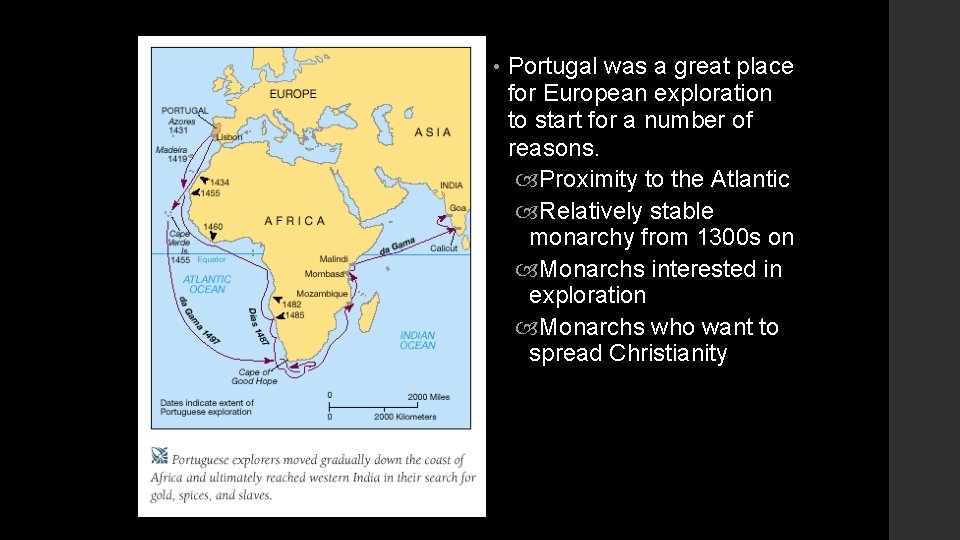
• Portugal was a great place for European exploration to start for a number of reasons. Proximity to the Atlantic Relatively stable monarchy from 1300 s on Monarchs interested in exploration Monarchs who want to spread Christianity
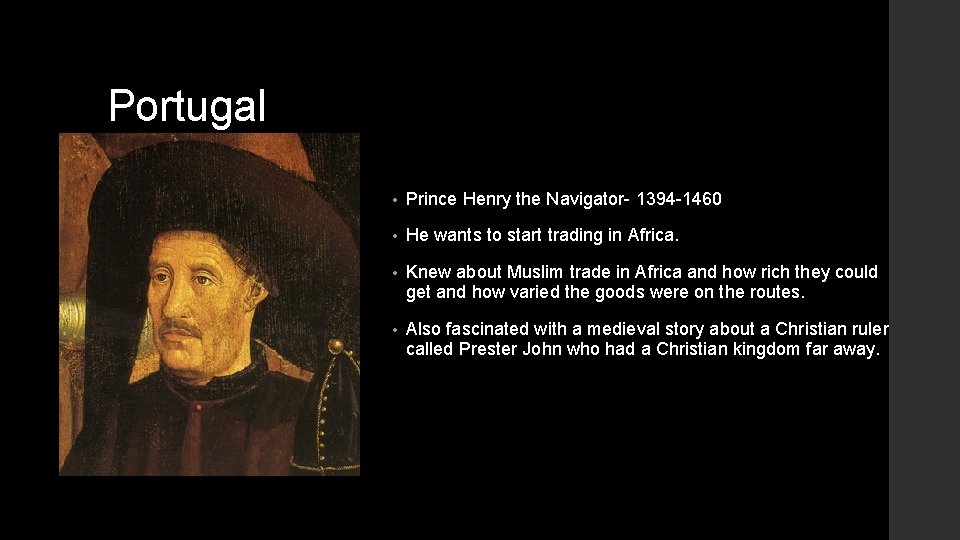
Portugal • Prince Henry the Navigator- 1394 -1460 • He wants to start trading in Africa. • Knew about Muslim trade in Africa and how rich they could get and how varied the goods were on the routes. • Also fascinated with a medieval story about a Christian ruler called Prester John who had a Christian kingdom far away.
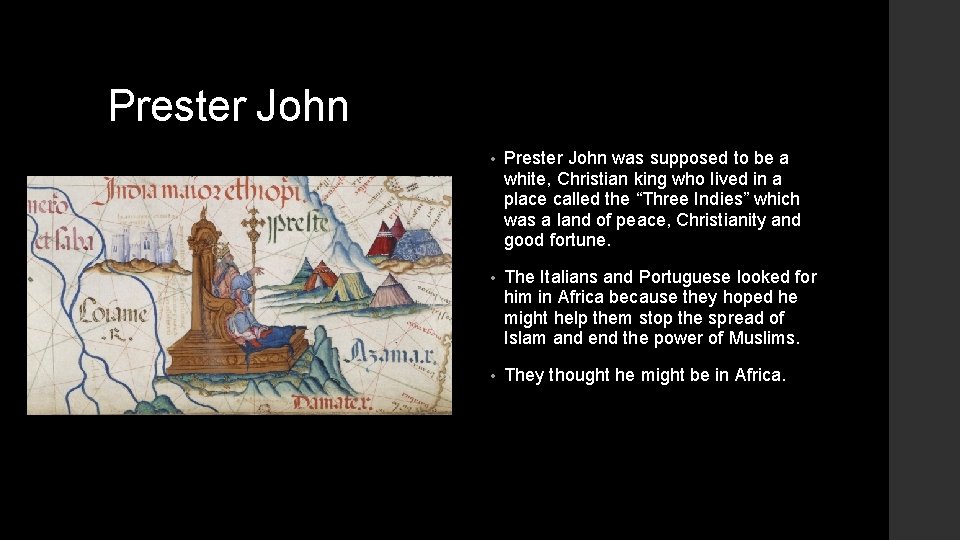
Prester John • Prester John was supposed to be a white, Christian king who lived in a place called the “Three Indies” which was a land of peace, Christianity and good fortune. • The Italians and Portuguese looked for him in Africa because they hoped he might help them stop the spread of Islam and end the power of Muslims. • They thought he might be in Africa.
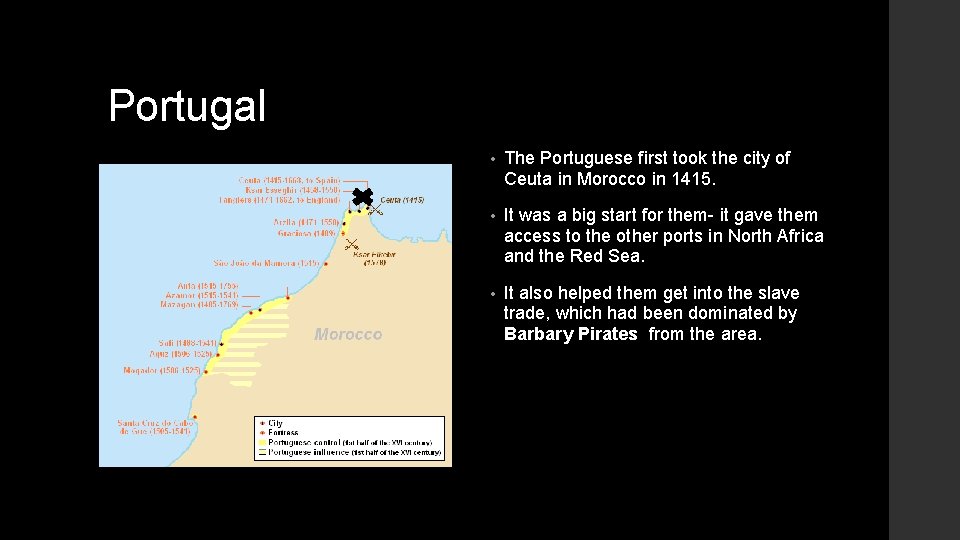
Portugal • The Portuguese first took the city of Ceuta in Morocco in 1415. • It was a big start for them- it gave them access to the other ports in North Africa and the Red Sea. • It also helped them get into the slave trade, which had been dominated by Barbary Pirates from the area.
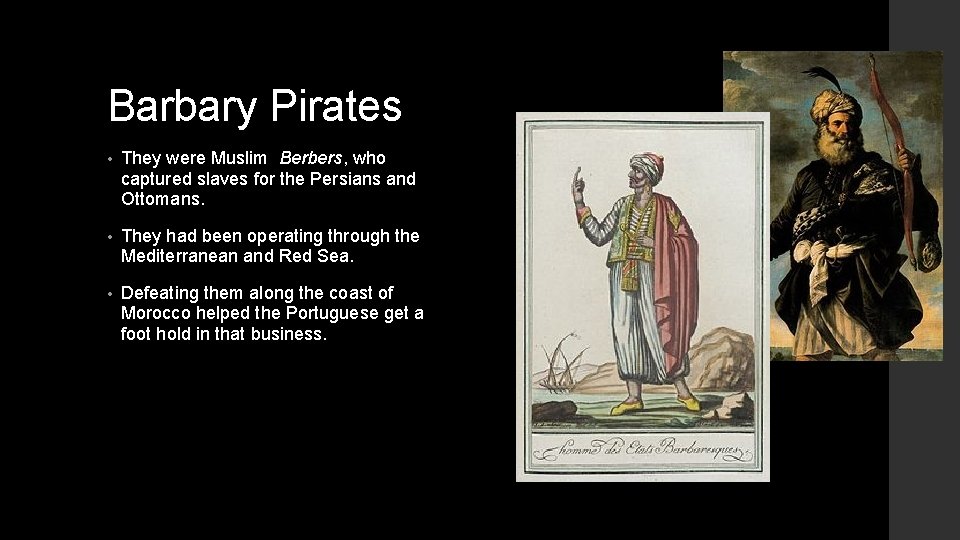
Barbary Pirates • They were Muslim Berbers, who captured slaves for the Persians and Ottomans. • They had been operating through the Mediterranean and Red Sea. • Defeating them along the coast of Morocco helped the Portuguese get a foot hold in that business.
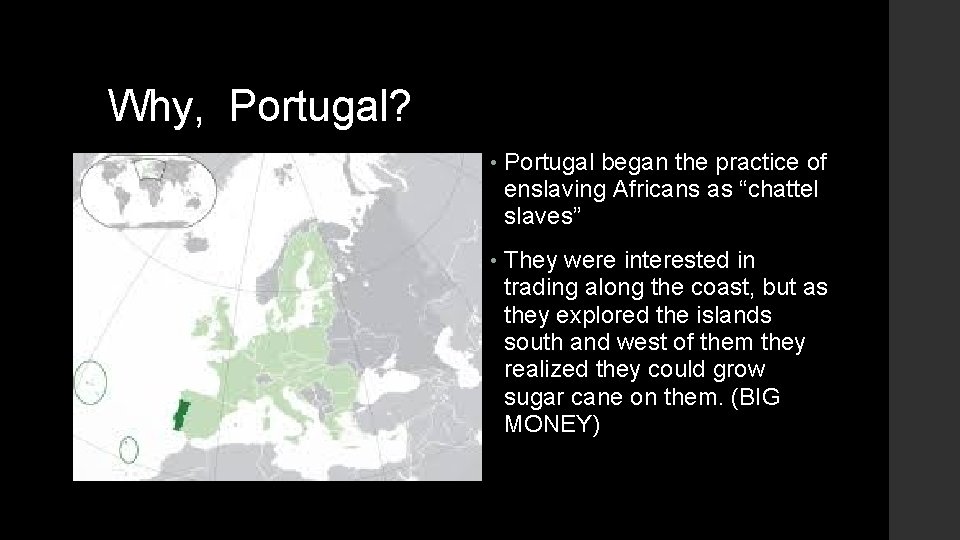
Why, Portugal? • Portugal began the practice of enslaving Africans as “chattel slaves” • They were interested in trading along the coast, but as they explored the islands south and west of them they realized they could grow sugar cane on them. (BIG MONEY)
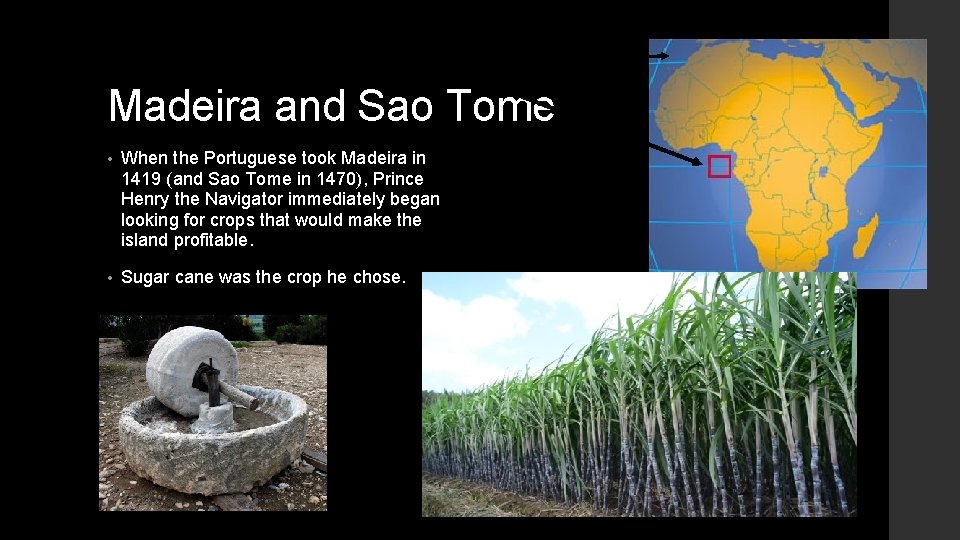
Madeira and Sao Tome • When the Portuguese took Madeira in 1419 (and Sao Tome in 1470), Prince Henry the Navigator immediately began looking for crops that would make the island profitable. • Sugar cane was the crop he chose.
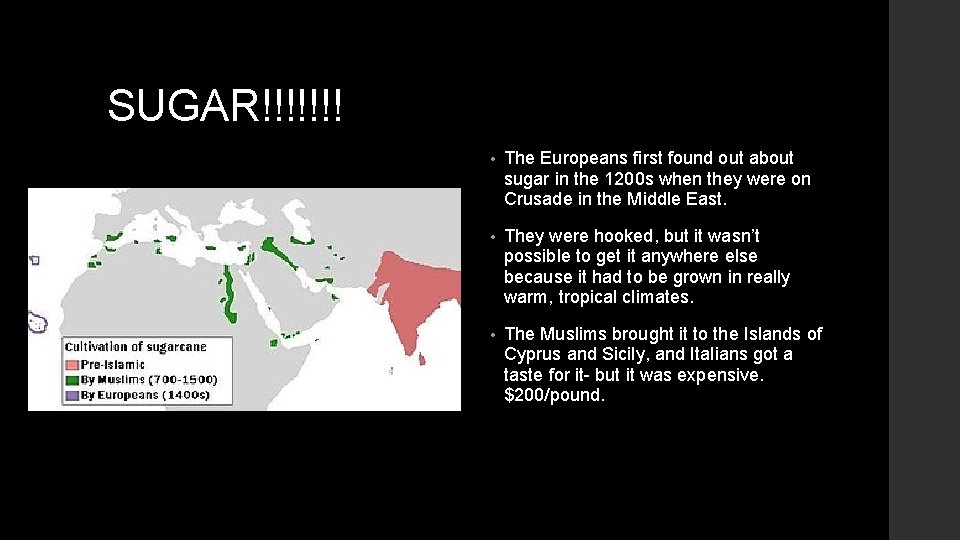
SUGAR!!!!!!! • The Europeans first found out about sugar in the 1200 s when they were on Crusade in the Middle East. • They were hooked, but it wasn’t possible to get it anywhere else because it had to be grown in really warm, tropical climates. • The Muslims brought it to the Islands of Cyprus and Sicily, and Italians got a taste for it- but it was expensive. $200/pound.
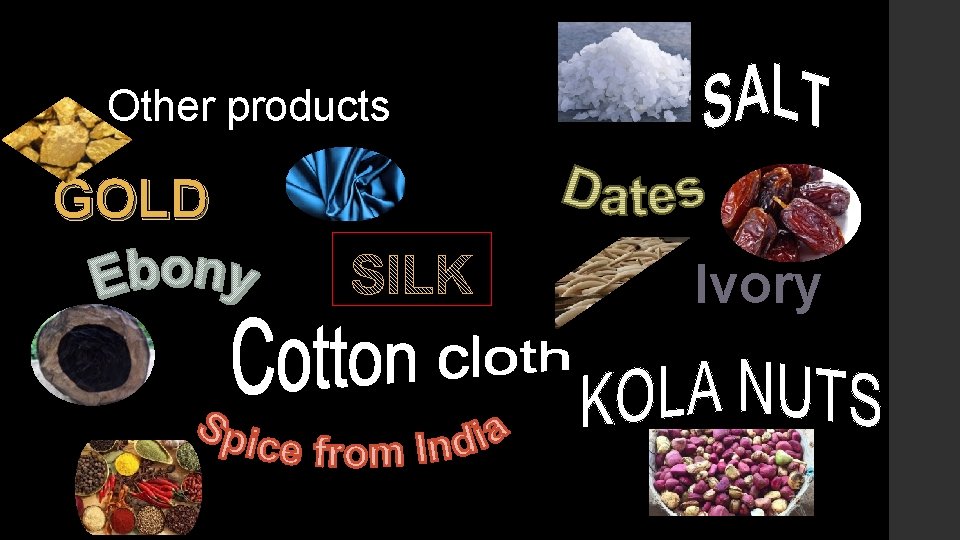
Other products GOLD Ivory
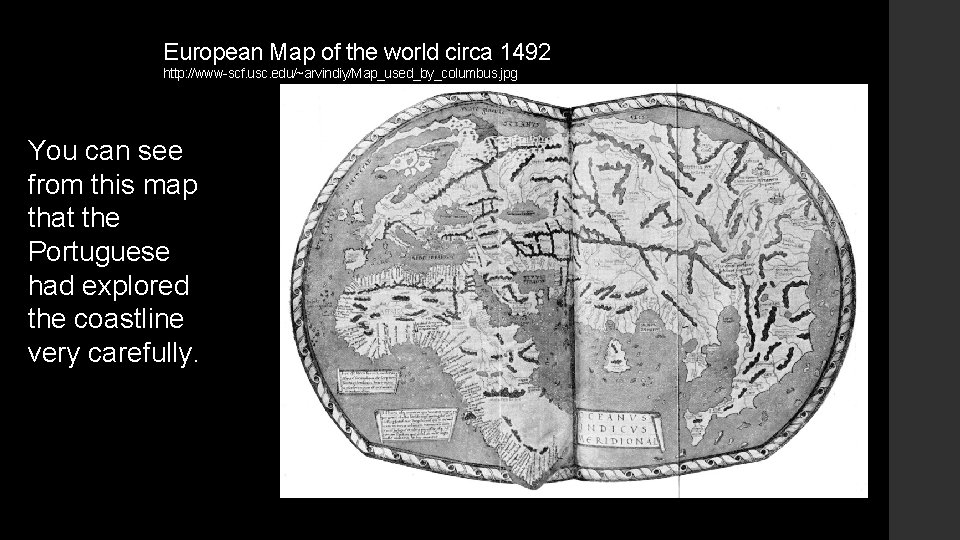
European Map of the world circa 1492 http: //www-scf. usc. edu/~arvindiy/Map_used_by_columbus. jpg You can see from this map that the Portuguese had explored the coastline very carefully.
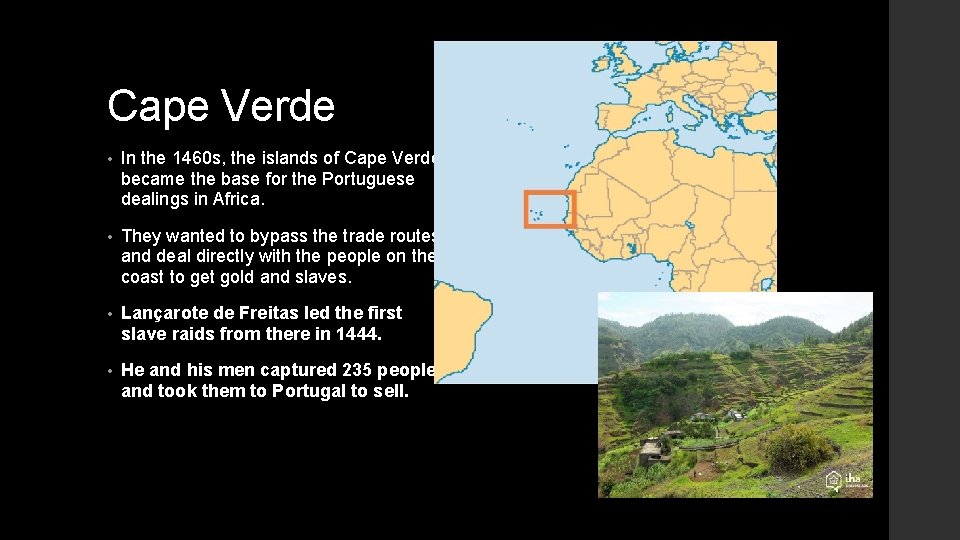
Cape Verde • In the 1460 s, the islands of Cape Verde became the base for the Portuguese dealings in Africa. • They wanted to bypass the trade routes and deal directly with the people on the coast to get gold and slaves. • Lançarote de Freitas led the first slave raids from there in 1444. • He and his men captured 235 people and took them to Portugal to sell.
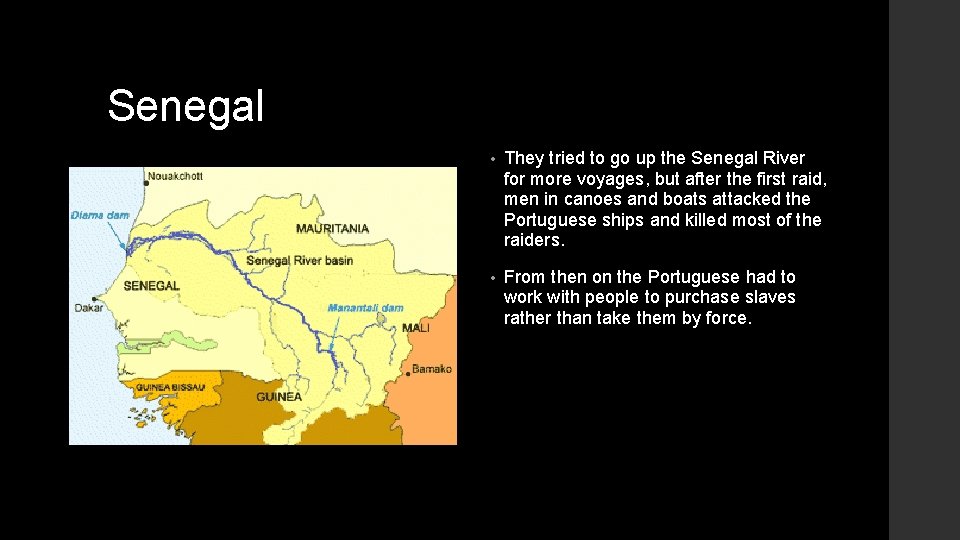
Senegal • They tried to go up the Senegal River for more voyages, but after the first raid, men in canoes and boats attacked the Portuguese ships and killed most of the raiders. • From then on the Portuguese had to work with people to purchase slaves rather than take them by force.
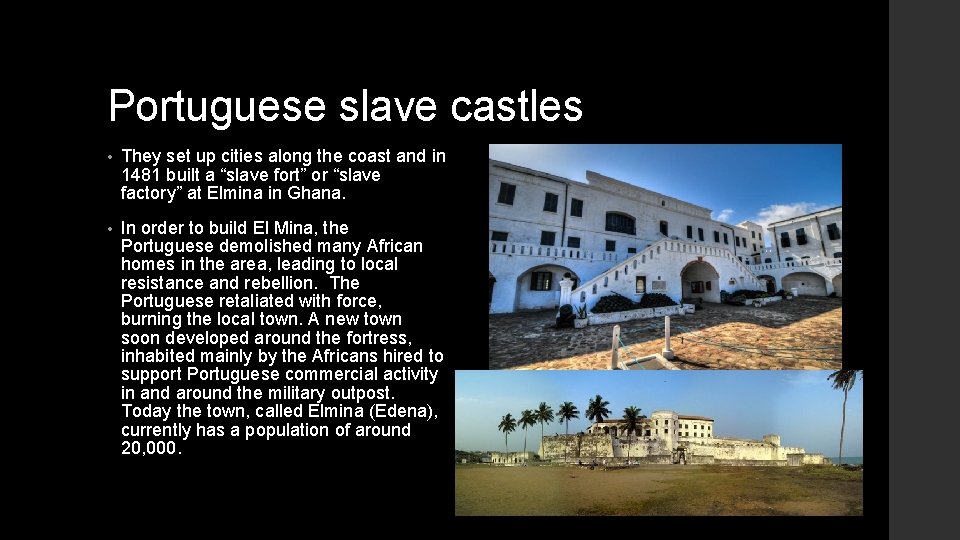
Portuguese slave castles • They set up cities along the coast and in 1481 built a “slave fort” or “slave factory” at Elmina in Ghana. • In order to build El Mina, the Portuguese demolished many African homes in the area, leading to local resistance and rebellion. The Portuguese retaliated with force, burning the local town. A new town soon developed around the fortress, inhabited mainly by the Africans hired to support Portuguese commercial activity in and around the military outpost. Today the town, called Elmina (Edena), currently has a population of around 20, 000.