
Porto Visiting Porto Visiting Porto Visiting Porto 2

- Slides: 33
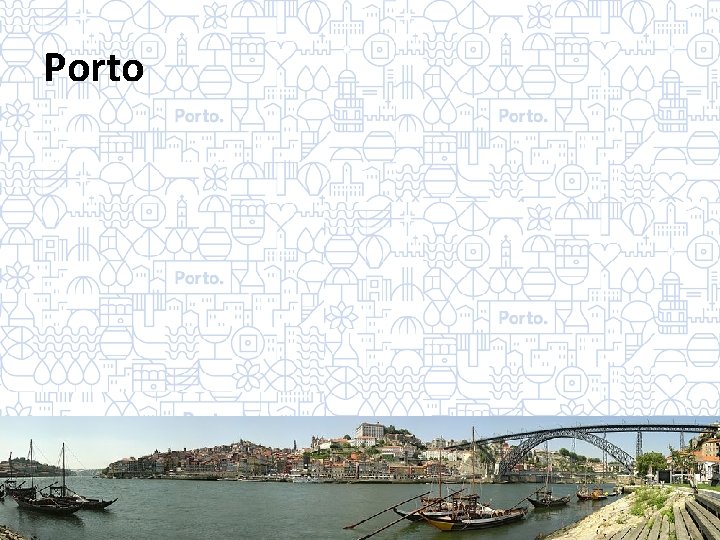
Porto
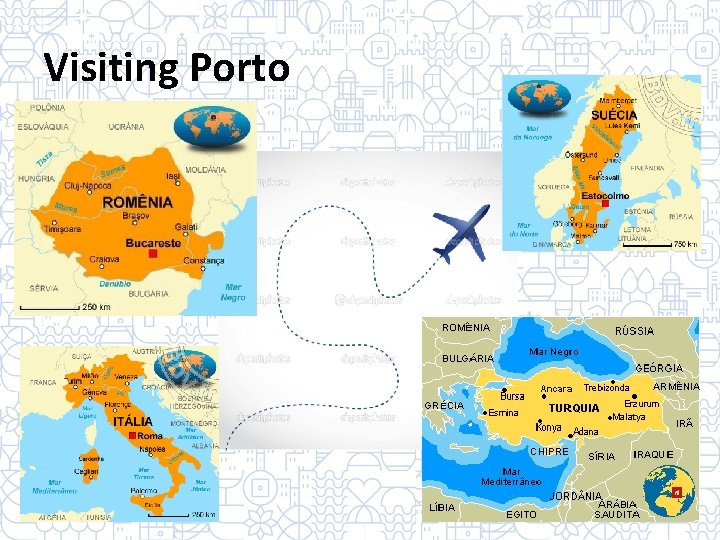
Visiting Porto
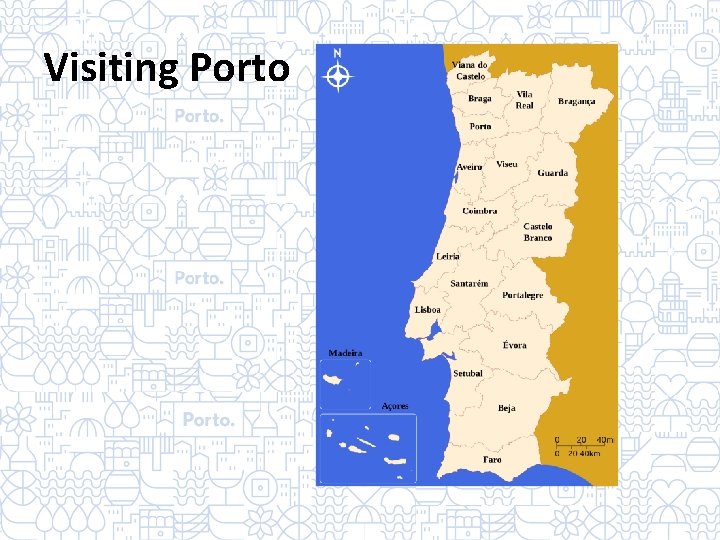
Visiting Porto
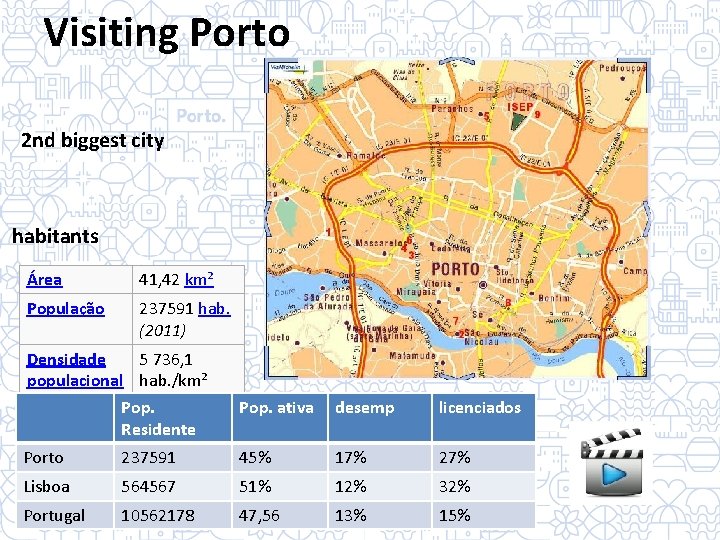
Visiting Porto 2 nd biggest city habitants Área 41, 42 km² População 237591 hab. (2011) Densidade 5 736, 1 populacional hab. /km² Pop. Residente Pop. ativa desemp licenciados Porto 237591 45% 17% 27% Lisboa 564567 51% 12% 32% Portugal 10562178 47, 56 13% 15%
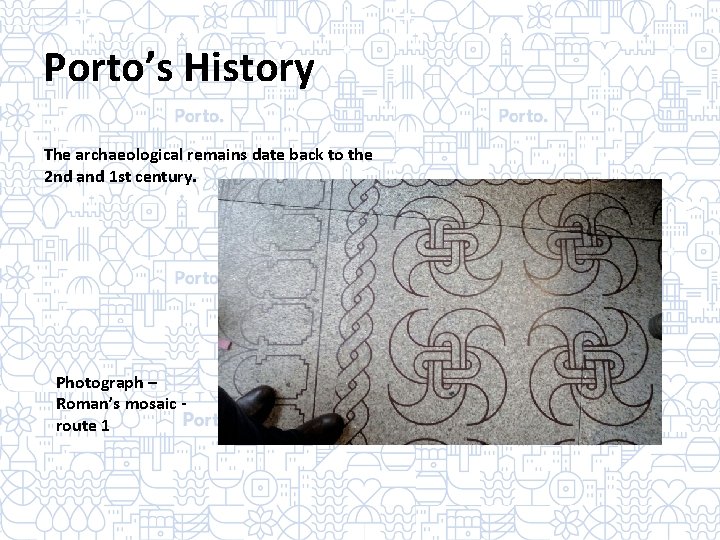
Porto’s History The archaeological remains date back to the 2 nd and 1 st century. Photograph – Roman’s mosaic route 1
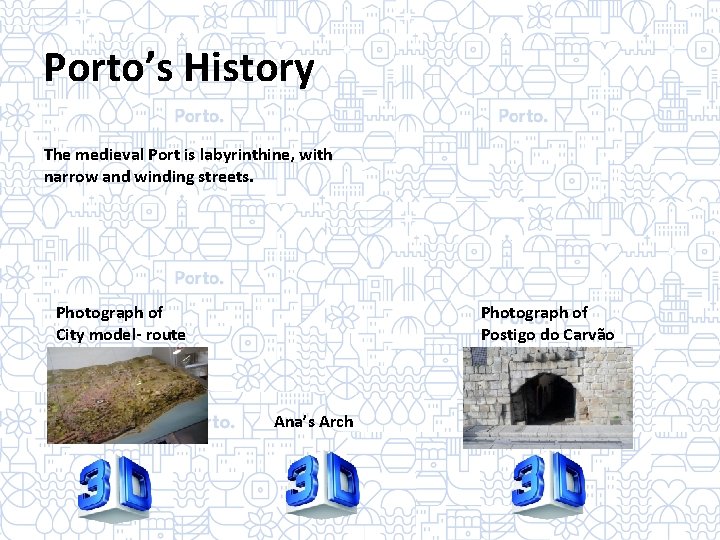
Porto’s History The medieval Port is labyrinthine, with narrow and winding streets. Photograph of City model- route 1 Photograph of Postigo do Carvão route 1 Ana’s Arch
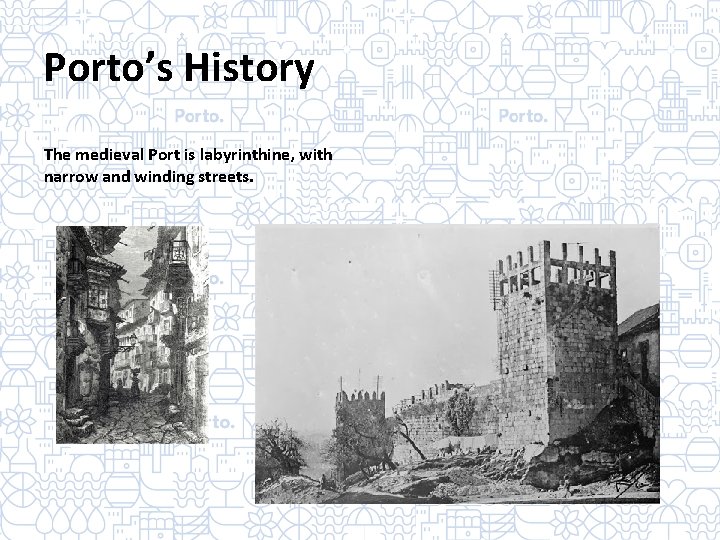
Porto’s History The medieval Port is labyrinthine, with narrow and winding streets.
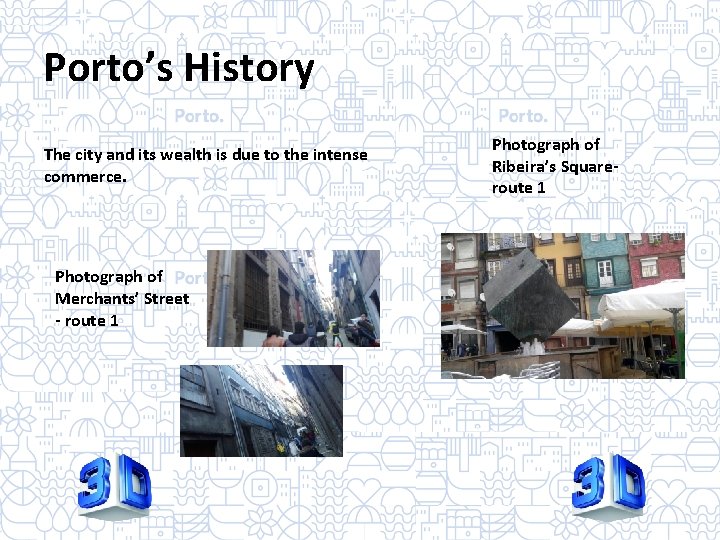
Porto’s History The city and its wealth is due to the intense commerce. Photograph of Merchants’ Street - route 1 Photograph of Ribeira’s Squareroute 1
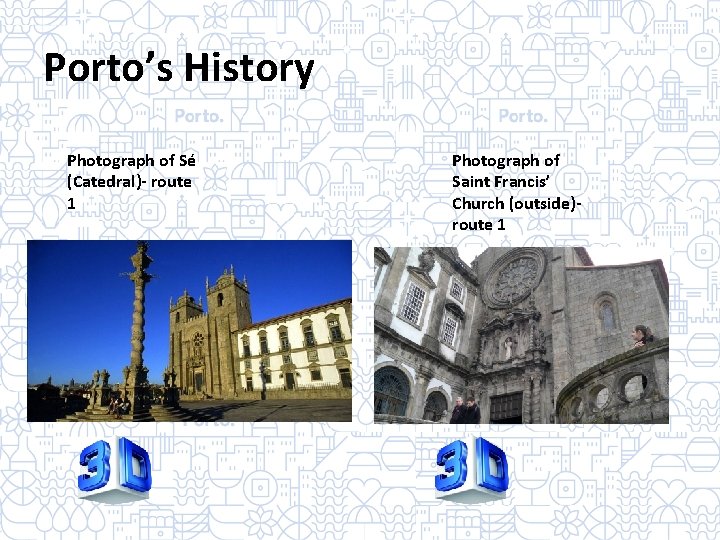
Porto’s History Photograph of Sé (Catedral)- route 1 Photograph of Saint Francis’ Church (outside)route 1
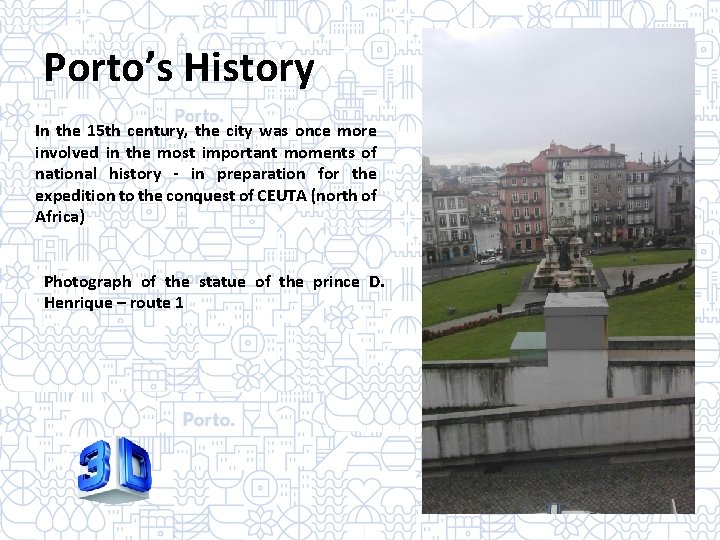
Porto’s History In the 15 th century, the city was once more involved in the most important moments of national history - in preparation for the expedition to the conquest of CEUTA (north of Africa) Photograph of the statue of the prince D. Henrique – route 1
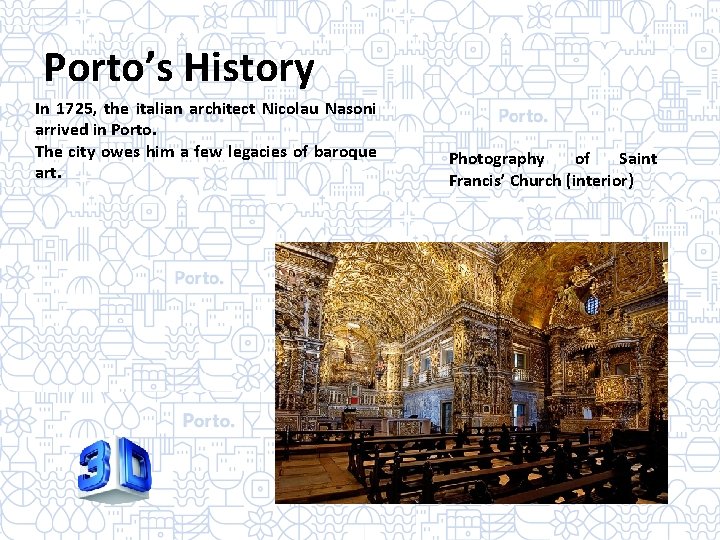
Porto’s History In 1725, the italian architect Nicolau Nasoni arrived in Porto. The city owes him a few legacies of baroque art. Photography of Saint Francis’ Church (interior)
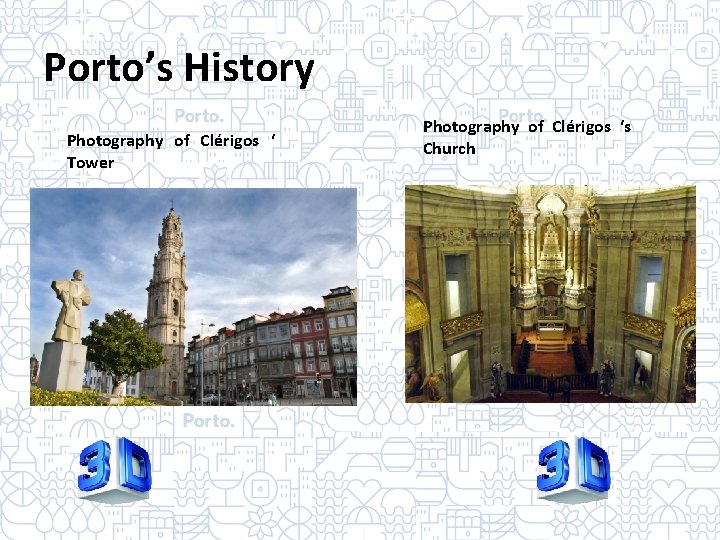
Porto’s History Photography of Clérigos ‘ Tower Photography of Clérigos ‘s Church
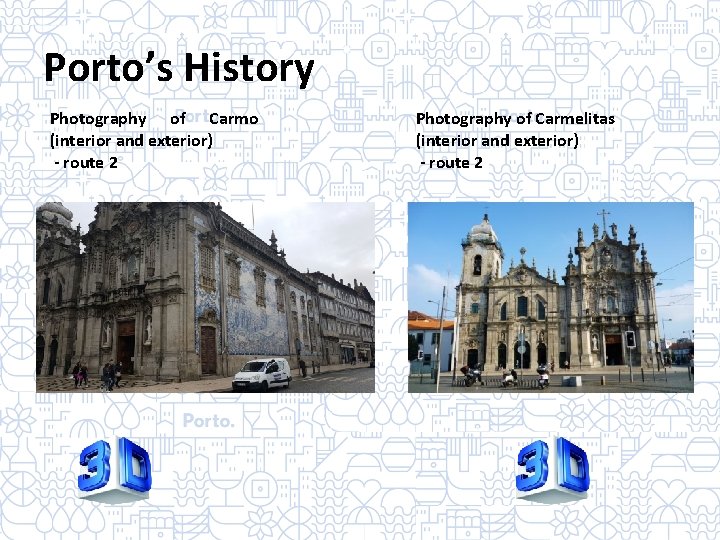
Porto’s History Photography of Carmo (interior and exterior) - route 2 Photography of Carmelitas (interior and exterior) - route 2
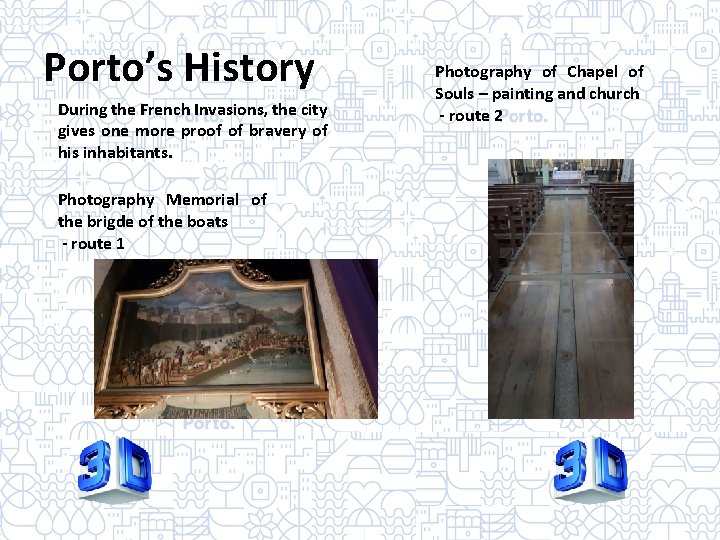
Porto’s History During the French Invasions, the city gives one more proof of bravery of his inhabitants. Photography Memorial of the brigde of the boats - route 1 Photography of Chapel of Souls – painting and church - route 2
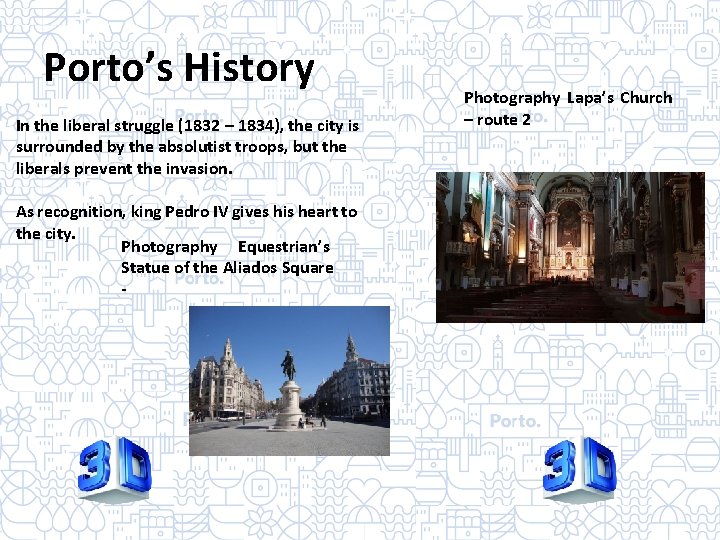
Porto’s History In the liberal struggle (1832 – 1834), the city is surrounded by the absolutist troops, but the liberals prevent the invasion. As recognition, king Pedro IV gives his heart to the city. Photography Equestrian’s Statue of the Aliados Square - Photography Lapa’s Church – route 2
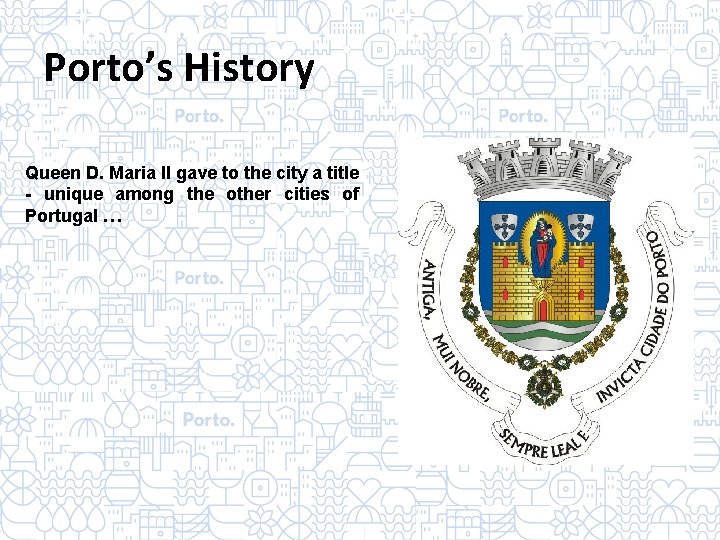
Porto’s History Queen D. Maria II gave to the city a title - unique among the other cities of Portugal …
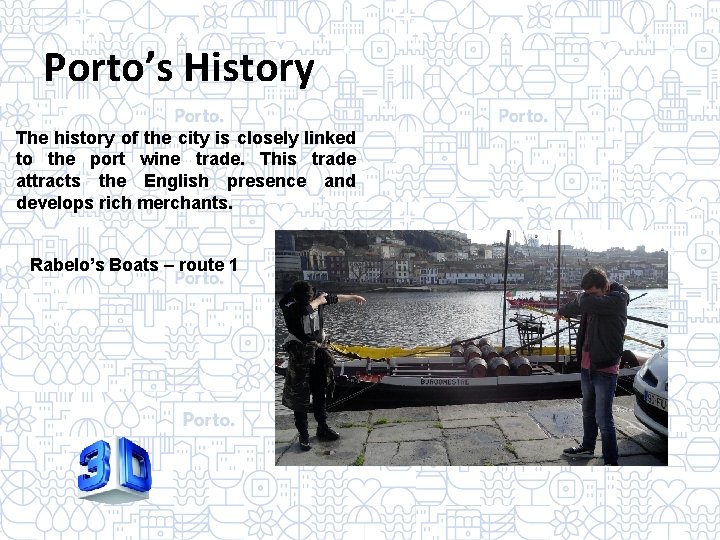
Porto’s History The history of the city is closely linked to the port wine trade. This trade attracts the English presence and develops rich merchants. Rabelo’s Boats – route 1
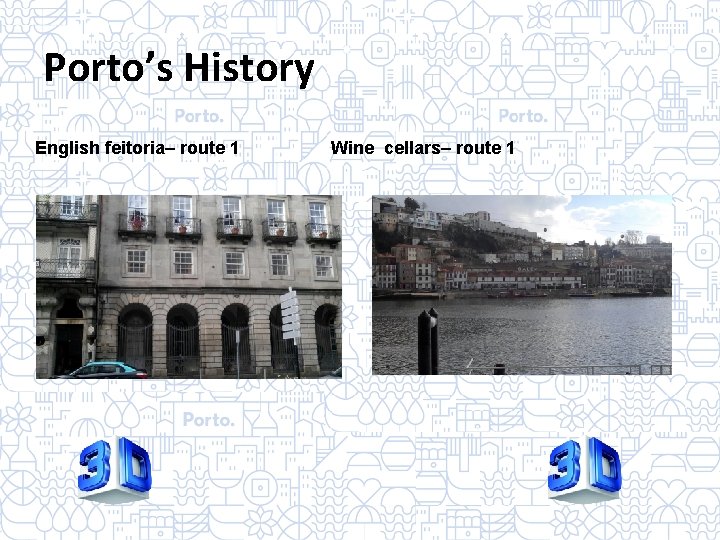
Porto’s History English feitoria– route 1 Wine cellars– route 1
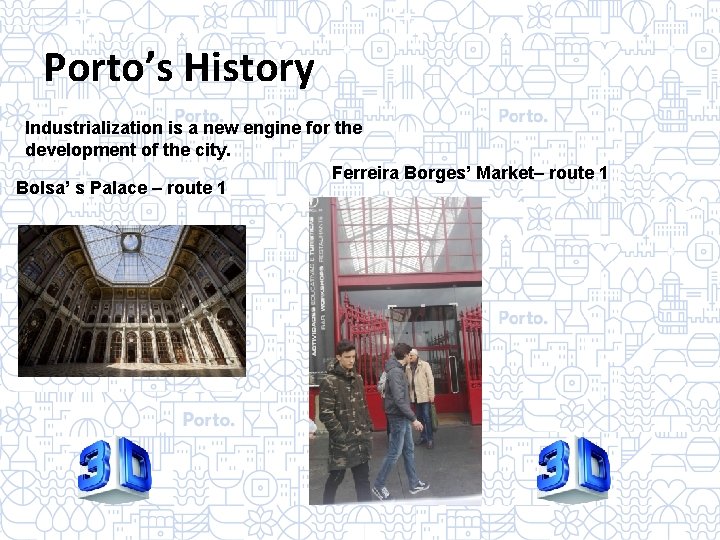
Porto’s History Industrialization is a new engine for the development of the city. Ferreira Borges’ Market– route 1 Bolsa’ s Palace – route 1
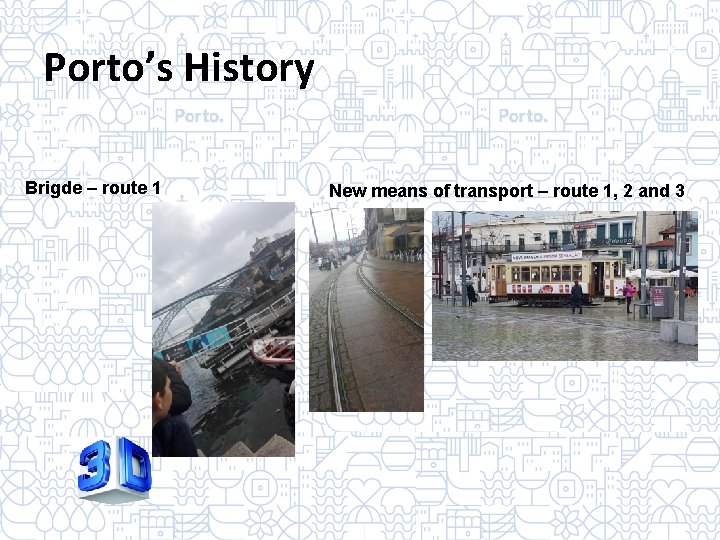
Porto’s History Brigde – route 1 New means of transport – route 1, 2 and 3
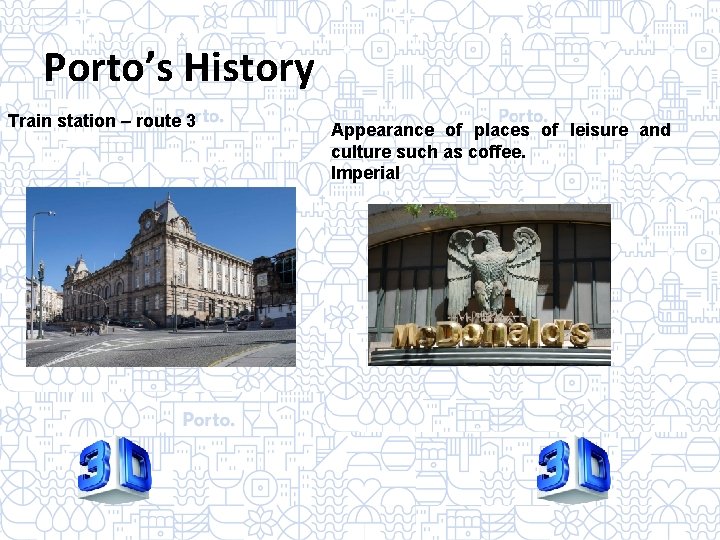
Porto’s History Train station – route 3 Appearance of places of leisure and culture such as coffee. Imperial
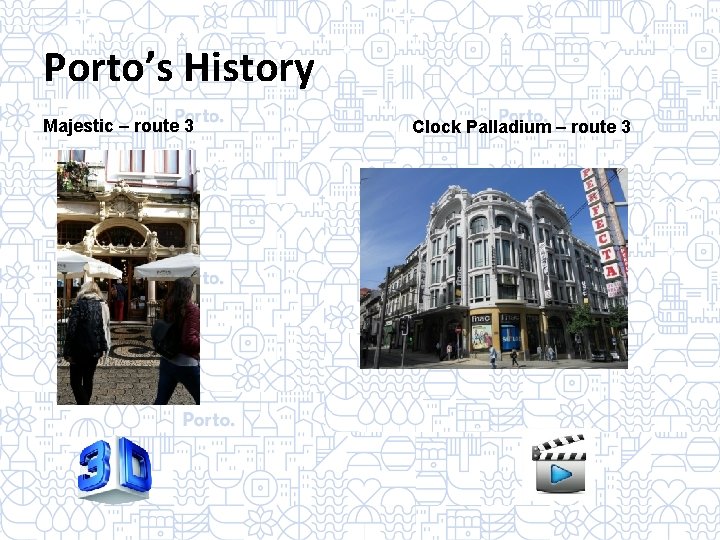
Porto’s History Majestic – route 3 Clock Palladium – route 3
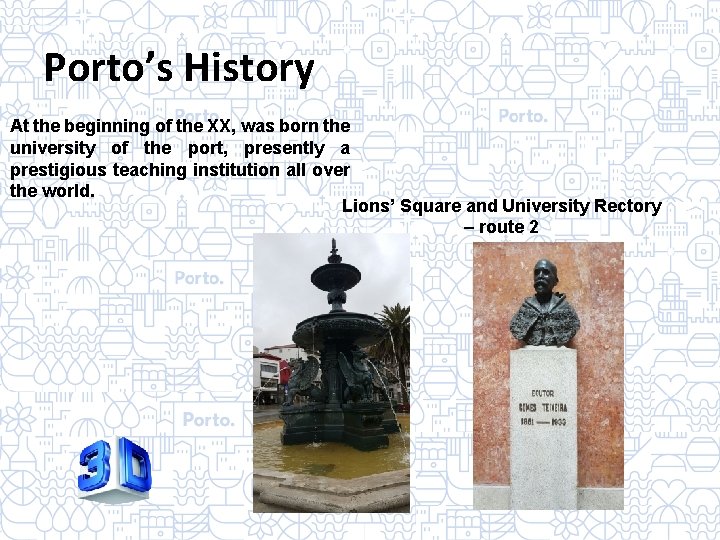
Porto’s History At the beginning of the XX, was born the university of the port, presently a prestigious teaching institution all over the world. Lions’ Square and University Rectory – route 2
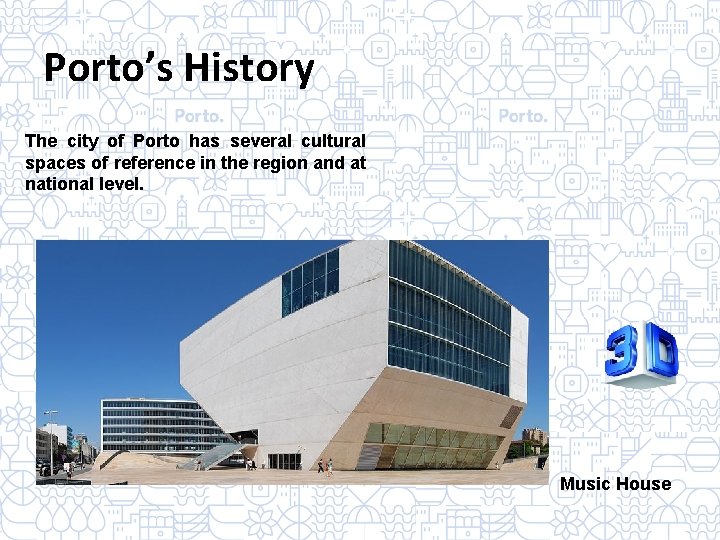
Porto’s History The city of Porto has several cultural spaces of reference in the region and at national level. Music House
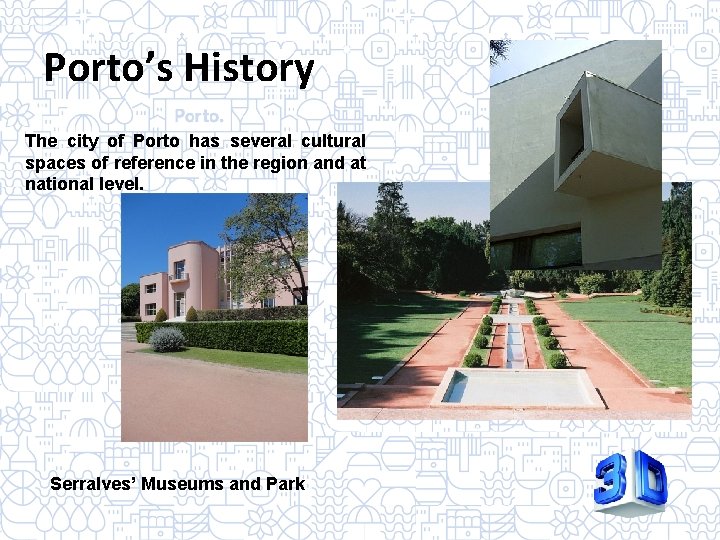
Porto’s History The city of Porto has several cultural spaces of reference in the region and at national level. Serralves’ Museums and Park
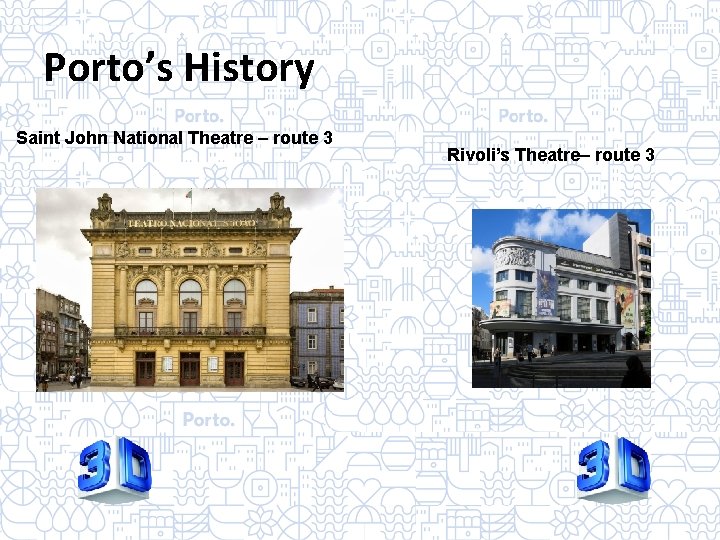
Porto’s History Saint John National Theatre – route 3 Rivoli’s Theatre– route 3
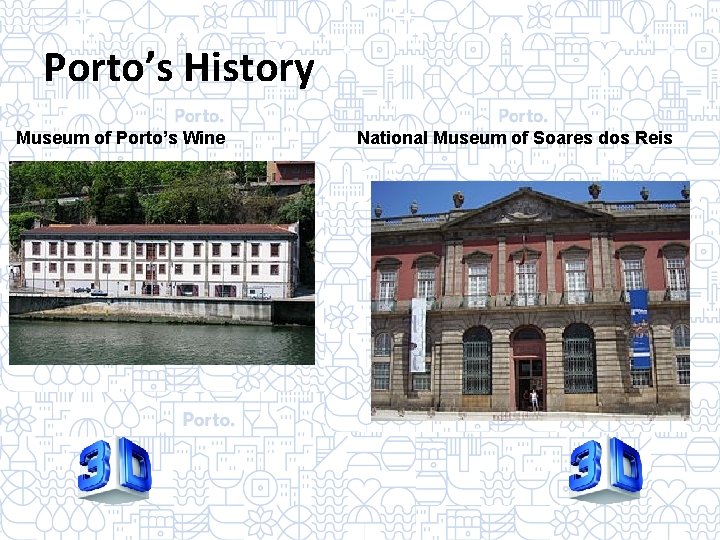
Porto’s History Museum of Porto’s Wine National Museum of Soares dos Reis
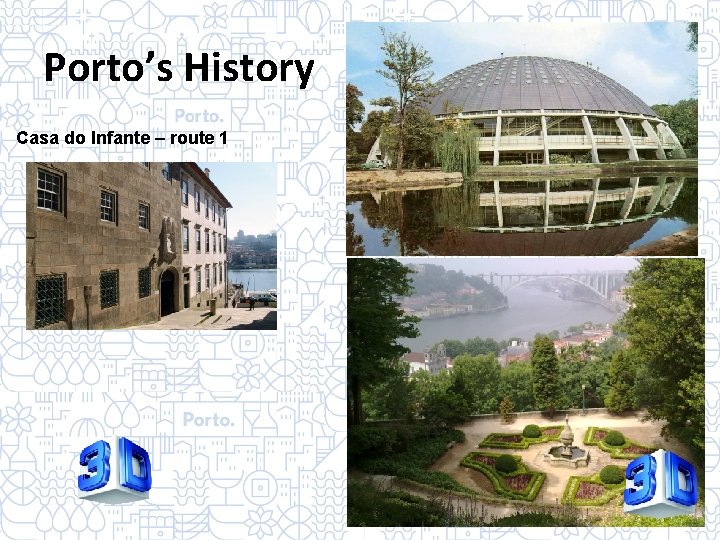
Porto’s History Casa do Infante – route 1 Palácio de Cristal
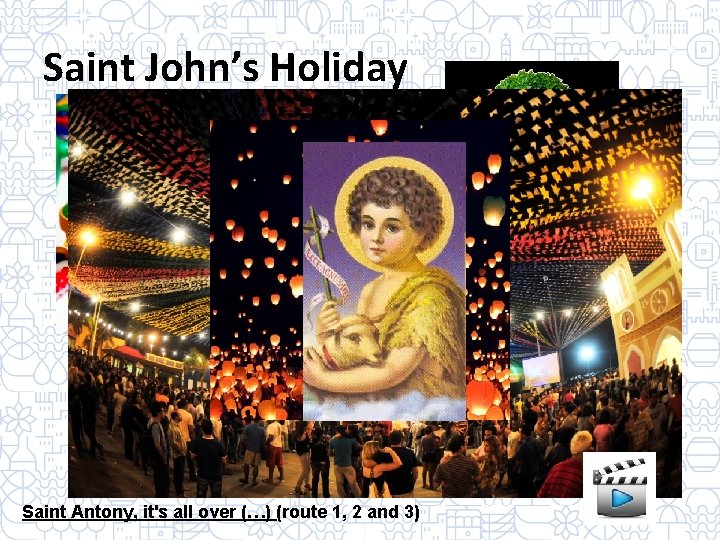
Saint John’s Holiday Saint Antony, it's all over (…) (route 1, 2 and 3)
Porto’s Footbal
Porto’s Gastronomy Typical dish: beans, sausages, guts (inestines) … (route 1, 2 and 3) Typical dish: bread, cheese, ham, sausage, hot sauce. . . (route 1, 2 and 3)
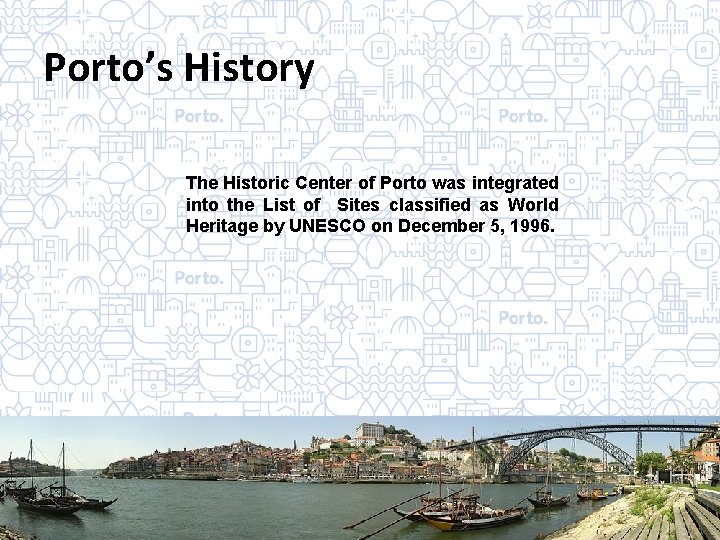
Porto’s History The Historic Center of Porto was integrated into the List of Sites classified as World Heritage by UNESCO on December 5, 1996.
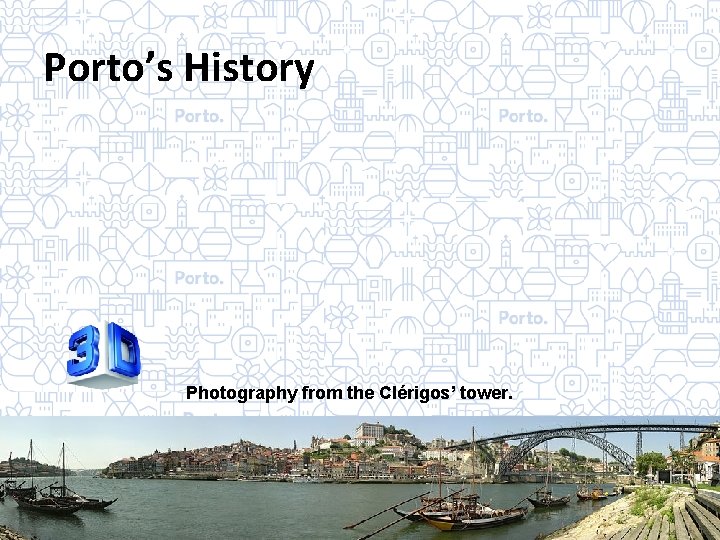
Porto’s History Photography from the Clérigos’ tower.