
Portable Ladders These materials have been developed based
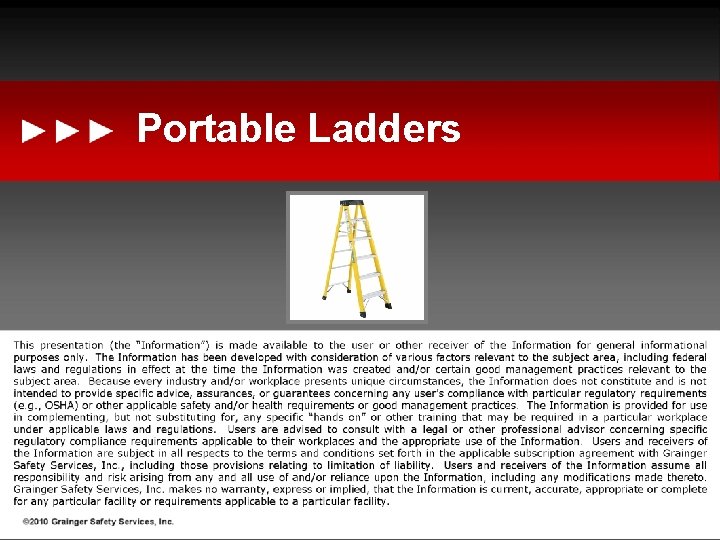
Portable Ladders ►►► These materials have been developed based on applicable federal laws and regulations in place at the time the materials were created. The program is being provided for educational and informational purposes only and does not constitute and is not intended to provide OSHA compliance certification, regulatory compliance, a substitute for any "hands on“ training required by applicable laws and regulations, or other legal or professional advice or services. By accessing the materials, you assume all responsibility and risk arising from the use of the content contained therein. © 2010 Grainger Safety Services, Inc.

Learning Objectives: ► Improve your knowledge of portable ladders ► Understand the requirements of the various OSHA standards ► Prepare to select, inspect, deploy, use, maintain, and store in a safe manner
Agenda: ► Portable ladder safety ► Types of portable ladders ► Care and use of portable ladders ► Your responsibilities

►Section 1 Overview of the Issue
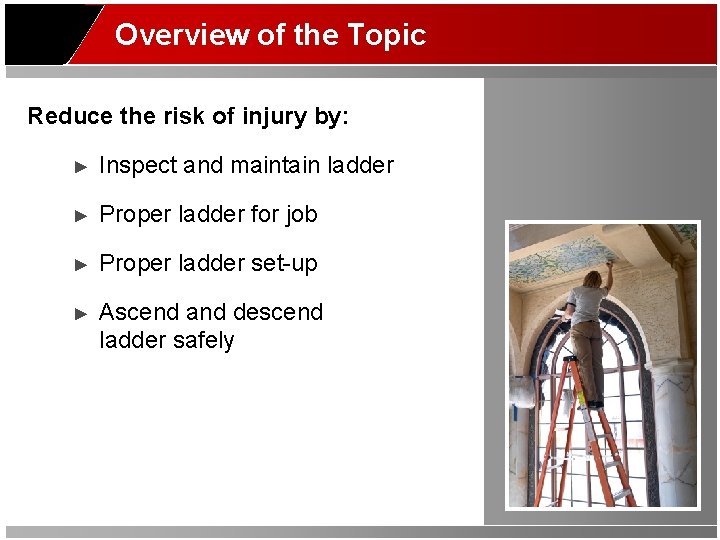
Overview of the Topic Reduce the risk of injury by: ► Inspect and maintain ladder ► Proper ladder for job ► Proper ladder set-up ► Ascend and descend ladder safely
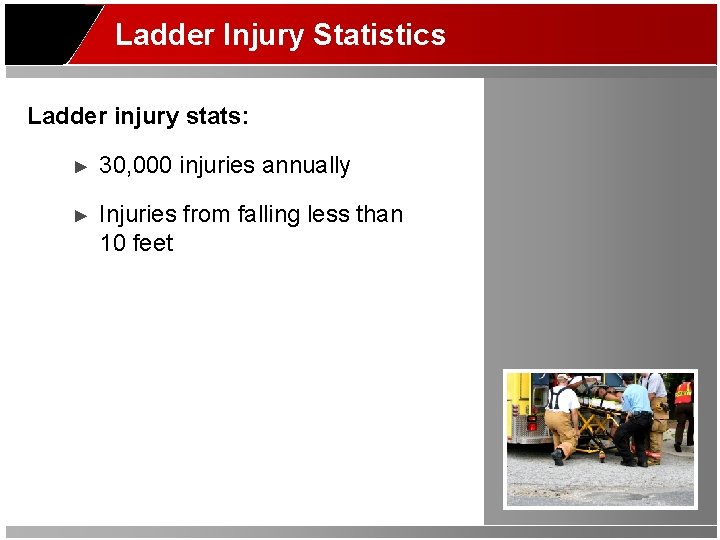
Ladder Injury Statistics Ladder injury stats: ► 30, 000 injuries annually ► Injuries from falling less than 10 feet
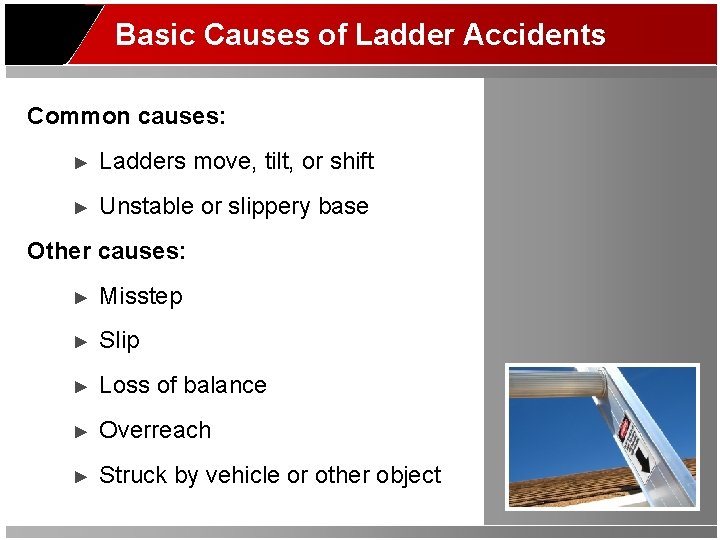
Basic Causes of Ladder Accidents Common causes: ► Ladders move, tilt, or shift ► Unstable or slippery base Other causes: ► Misstep ► Slip ► Loss of balance ► Overreach ► Struck by vehicle or other object

OSHA Regulations 29 (Code of Federal Regulations): ► 1910 - General Industry ► 1926 - Construction Industry
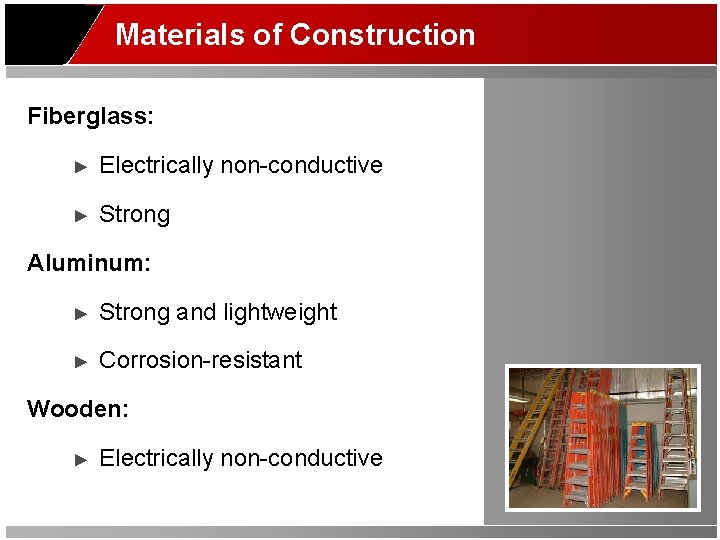
Materials of Construction Fiberglass: ► Electrically non-conductive ► Strong Aluminum: ► Strong and lightweight ► Corrosion-resistant Wooden: ► Electrically non-conductive
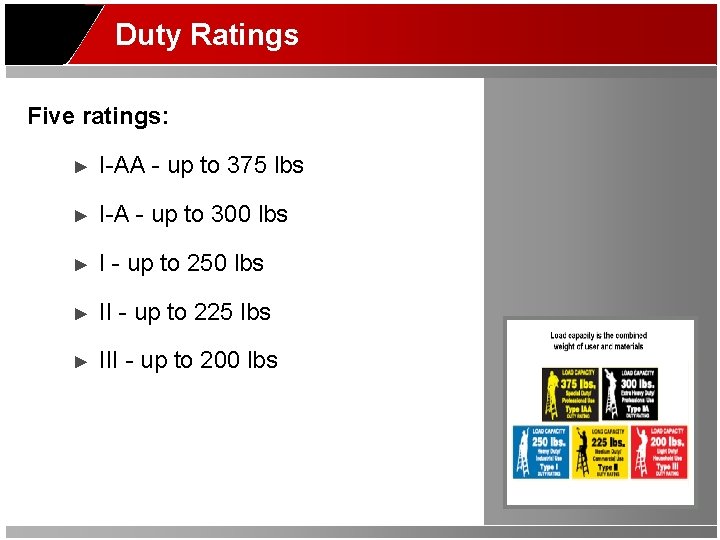
Duty Ratings Five ratings: ► I-AA - up to 375 lbs ► I-A - up to 300 lbs ► I - up to 250 lbs ► II - up to 225 lbs ► III - up to 200 lbs

►Section 2 Types of Portable Ladders
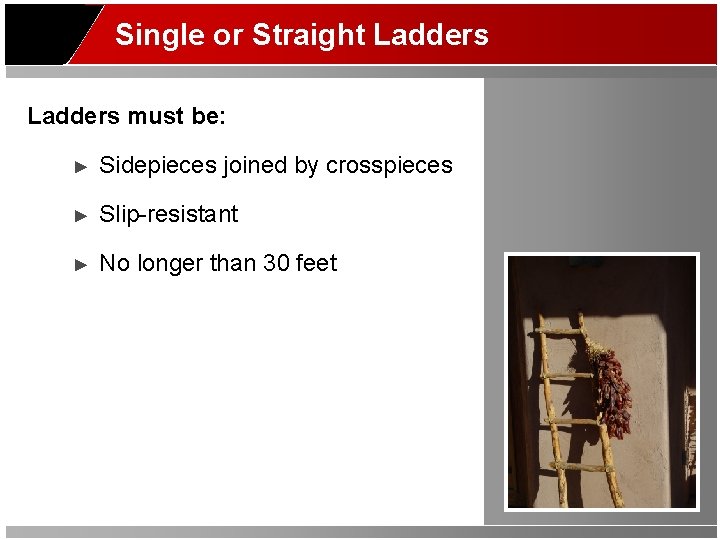
Single or Straight Ladders must be: ► Sidepieces joined by crosspieces ► Slip-resistant ► No longer than 30 feet
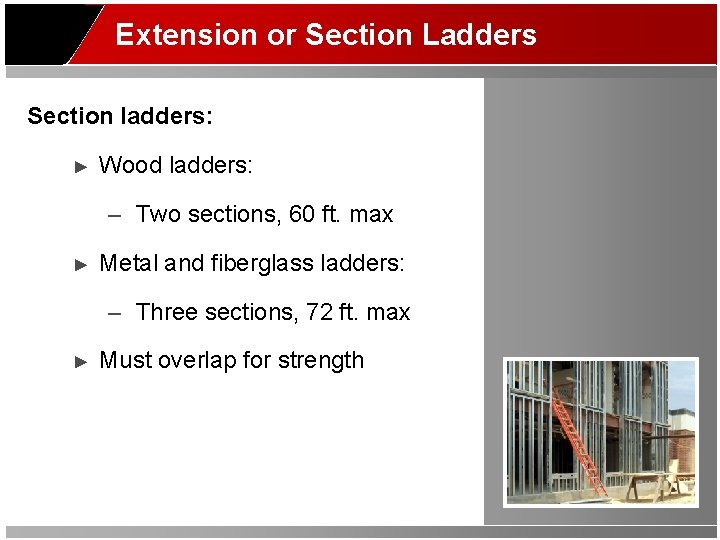
Extension or Section Ladders Section ladders: ► Wood ladders: – Two sections, 60 ft. max ► Metal and fiberglass ladders: – Three sections, 72 ft. max ► Must overlap for strength

Stepladders Three types of portable stepladders: ► Type I - Industrial stepladder, 3 to 20 ft. length, heavy duty ► Type II - Commercial stepladder, 3 to 12 ft. length, medium duty ► Type III - Household stepladder, 3 to 6 ft. length, light duty
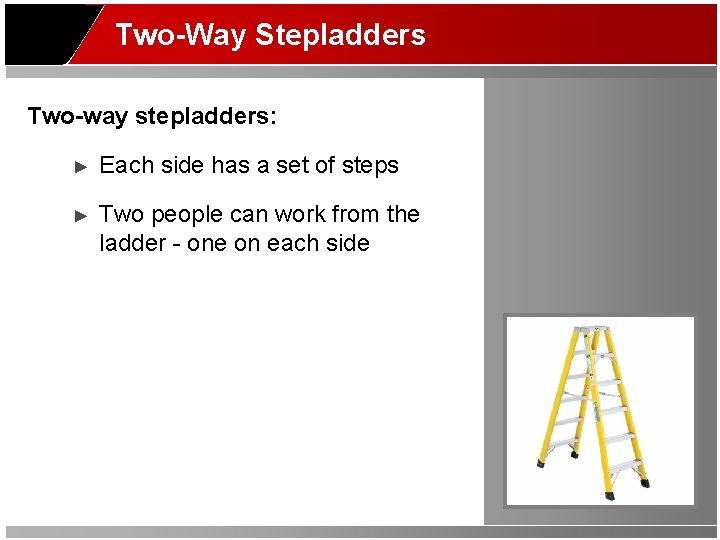
Two-Way Stepladders Two-way stepladders: ► Each side has a set of steps ► Two people can work from the ladder - one on each side
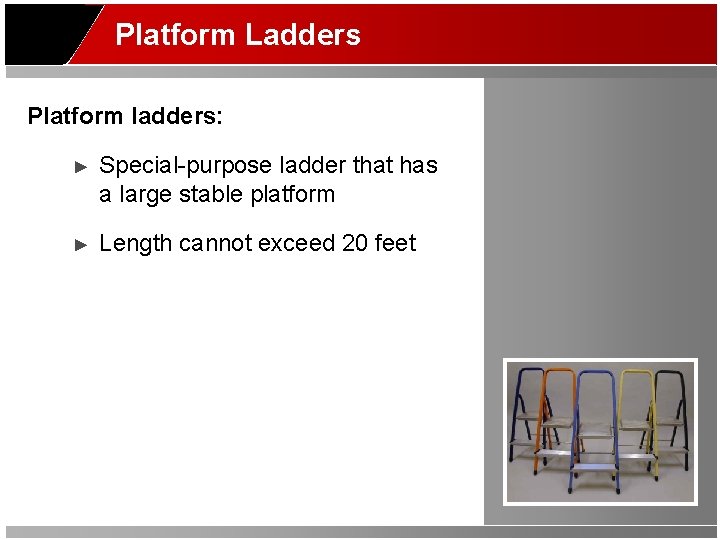
Platform Ladders Platform ladders: ► Special-purpose ladder that has a large stable platform ► Length cannot exceed 20 feet

Trestle Ladders Trestle ladders: ► Self-supporting, non-adjustable in length, two sections hinged at the top ► Extension trestle: adjustable in length, locks together Used for planks or staging: ► Rungs not intended as steps ► No longer than 20 feet
►Section 3 Care and Use of Portable Ladders
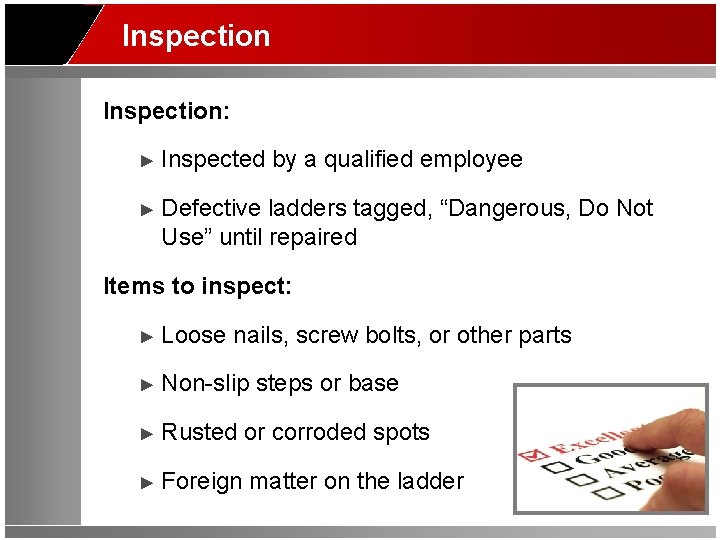
Inspection: ► Inspected by a qualified employee ► Defective ladders tagged, “Dangerous, Do Not Use” until repaired Items to inspect: ► Loose nails, screw bolts, or other parts ► Non-slip steps or base ► Rusted or corroded spots ► Foreign matter on the ladder
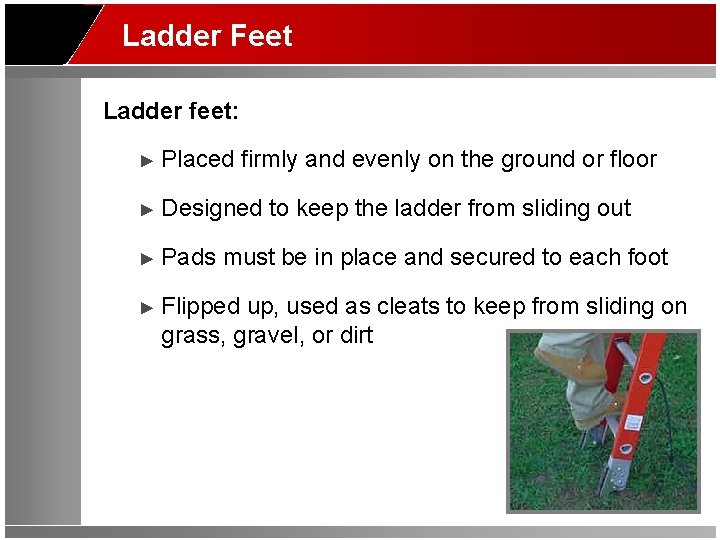
Ladder Feet Ladder feet: ► Placed firmly and evenly on the ground or floor ► Designed to keep the ladder from sliding out ► Pads must be in place and secured to each foot ► Flipped up, used as cleats to keep from sliding on grass, gravel, or dirt
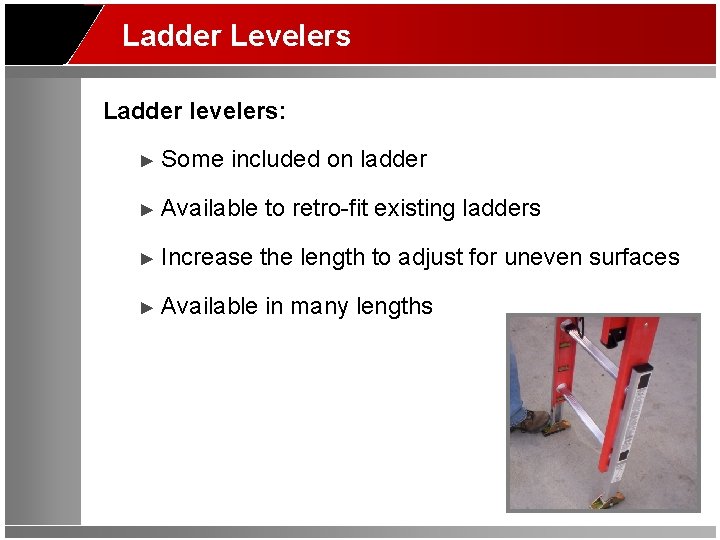
Ladder Levelers Ladder levelers: ► Some included on ladder ► Available to retro-fit existing ladders ► Increase the length to adjust for uneven surfaces ► Available in many lengths
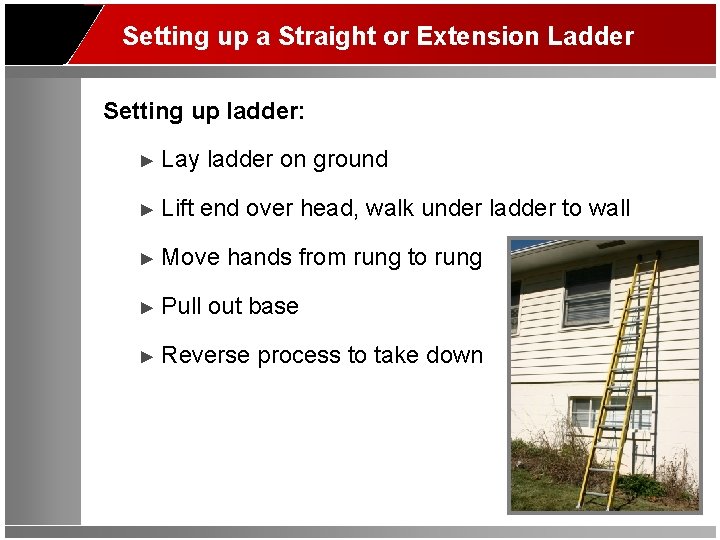
Setting up a Straight or Extension Ladder Setting up ladder: ► Lay ladder on ground ► Lift end over head, walk under ladder to wall ► Move hands from rung to rung ► Pull out base ► Reverse process to take down
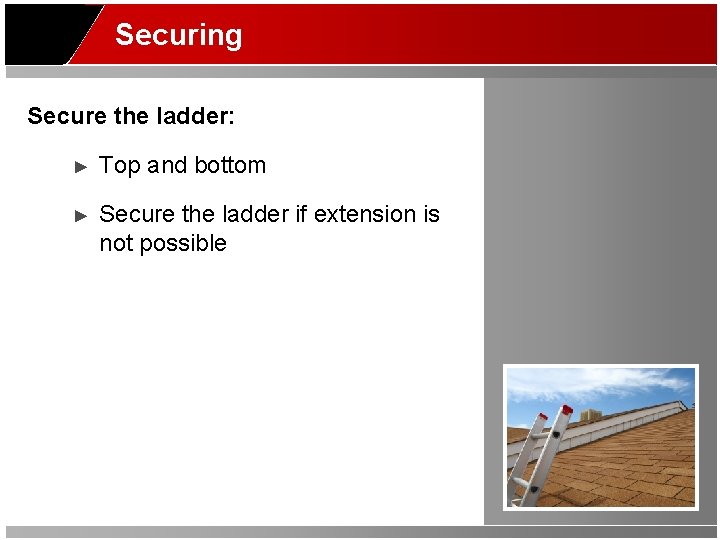
Securing Secure the ladder: ► Top and bottom ► Secure the ladder if extension is not possible
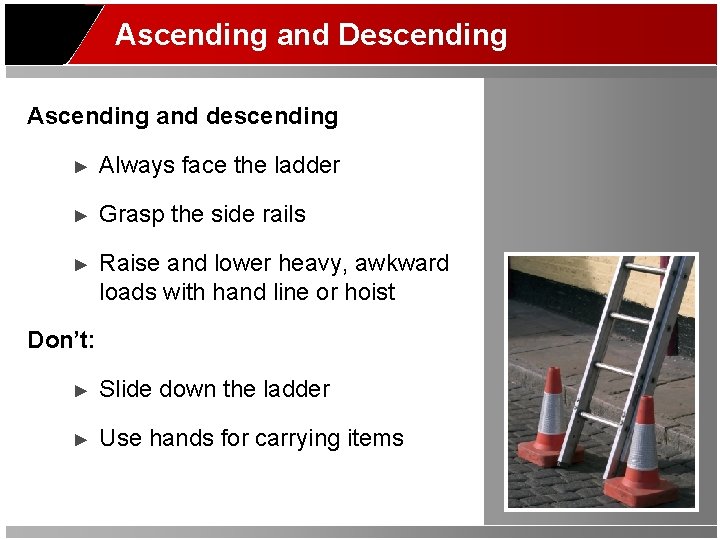
Ascending and Descending Ascending and descending ► Always face the ladder ► Grasp the side rails ► Raise and lower heavy, awkward loads with hand line or hoist Don’t: ► Slide down the ladder ► Use hands for carrying items
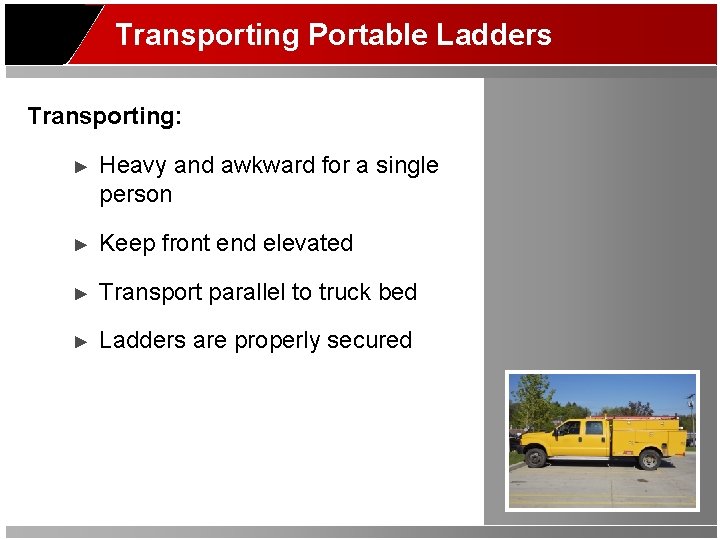
Transporting Portable Ladders Transporting: ► Heavy and awkward for a single person ► Keep front end elevated ► Transport parallel to truck bed ► Ladders are properly secured
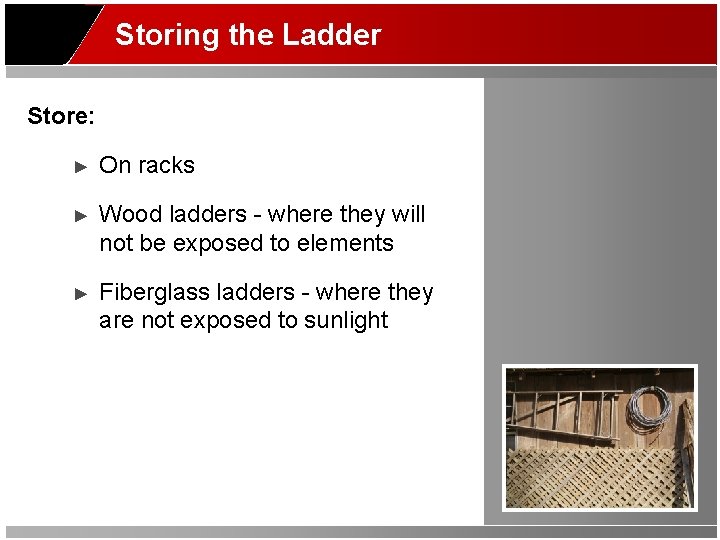
Storing the Ladder Store: ► On racks ► Wood ladders - where they will not be exposed to elements ► Fiberglass ladders - where they are not exposed to sunlight
Maintenance: ► Lubricate metal bearings and pulleys ► Replace worn ropes ► Never paint a wood ladder
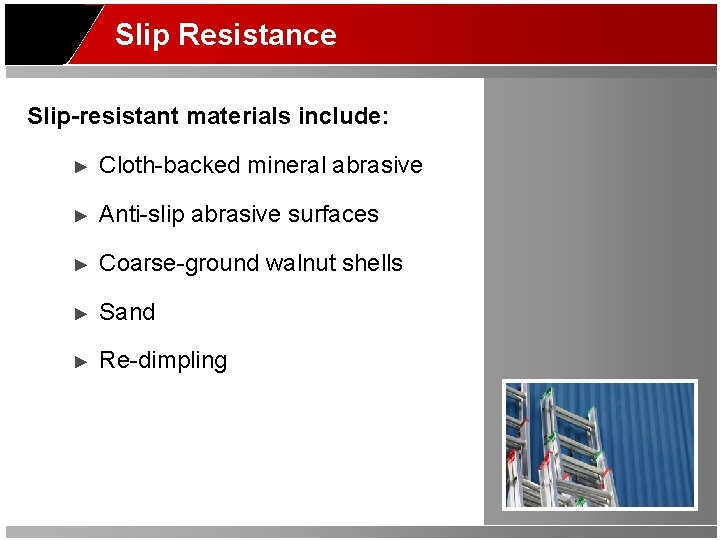
Slip Resistance Slip-resistant materials include: ► Cloth-backed mineral abrasive ► Anti-slip abrasive surfaces ► Coarse-ground walnut shells ► Sand ► Re-dimpling

►Section 4 Your Responsibilities
Your Responsibilities Your employers expects: ► Select the right ladder for the job ► Inspect the ladder ► Never leave unattended ► Transport carefully
Your Responsibilities: ► Place properly in accordance with your training ► Ascend and descend in the safest possible fashion ► Maintain and store properly for years of safe use
Additional Information Stairways and Ladders. U. S. Department of Labor, Occupational Safety and Health Administration. OSHA 3124. 1997 (Revised). Portable Ladders: Types, Use & Care. Oregon OSHA. http: //www. cbs. state. or. us/osha/pdf/pubs/30 83. pdf Preventing Electrocutions of Workers Using Portable Metal Ladders Near Overhead Power Lines. DHHS (NIOSH) Publication No. 89 -110. July 1989.
- Slides: 32