
PORTABLE CONSTRUCTION TOOL SAFETY TOOL HAZARDS Loss of

PORTABLE CONSTRUCTION TOOL SAFETY
TOOL HAZARDS Loss of eye/vision using striking tools without eye protection. Puncture wounds using a screwdriver with a loose handle which causes the hand to slip.

TOOL HAZARDS Severed fingers, tendons and arteries using a dull knife requires so much force that your hand may slip down the blade. Broken bones using the wrong hammer for the job and smashing a finger.
BASIC SAFETY RULES Perform regular maintenance Use right tool for the job Inspect all tools before use Use the right personal protective equipment (PPE) Report to your supervisor / teacher any unsafe tool.
BASIC SAFETY RULES Do not use defective tools Use tied-off containers to keep tools from falling off of molds or work platforms. Keep all cutting tools sharp. Carry all sharp tools in a sheath or holster. Return tools to their storage places after use.
BASIC SAFETY RULES Floors should be kept as clean and dry as possible to prevent accidental slips with or around dangerous tools. The greatest hazards posed by tools result from misuse and improper maintenance. Employees have the responsibility for properly using and maintaining tools.

BASIC SAFETY RULES Do not perform "make-shift" repairs to tools. Do not carry tools in your hand when climbing, or by the cord. Do not throw tools from one location to another, from one employee to another, from scaffolds or other elevated platforms.
BASIC SAFETY RULES Do not remove or bypass guards Keep tools away from aisle areas and other employees working in close proximity. Watch your hands and fingers. Keep your mind on your work.
BASIC SAFETY RULES Grip tools firmly. Operate according to the manufacturer's instructions. Never carry a tool by the cord or hose. Never yank the cord or the hose to disconnect it from the receptacle.
BASIC SAFETY RULES Disconnect tools when not in use, before servicing, and when changing accessories such as blades, bits and cutters. Ground all tools unless double insulated. Avoid dangerous environments. Do not use power tools in a damp, wet and/or explosive atmosphere -fumes, dust or flammable materials.
BASIC SAFETY RULES All observers should be kept at a safe distance away from the work area. Secure work with clamps or a vise, freeing both hands to operate the tool. Ground all tools unless double insulated.
BASIC SAFETY RULES Do not hold a finger on the switch button while carrying a plugged-in tool. Be sure to keep good footing and maintain good balance. The proper apparel should be worn. Loose clothing, or jewelry can become caught in moving parts.
BASIC SAFETY RULES Don't use an accessory or attachment unless the power tool manufacturer recommends its use on the product Keep cords and hoses away from heat, oil, and sharp edges.
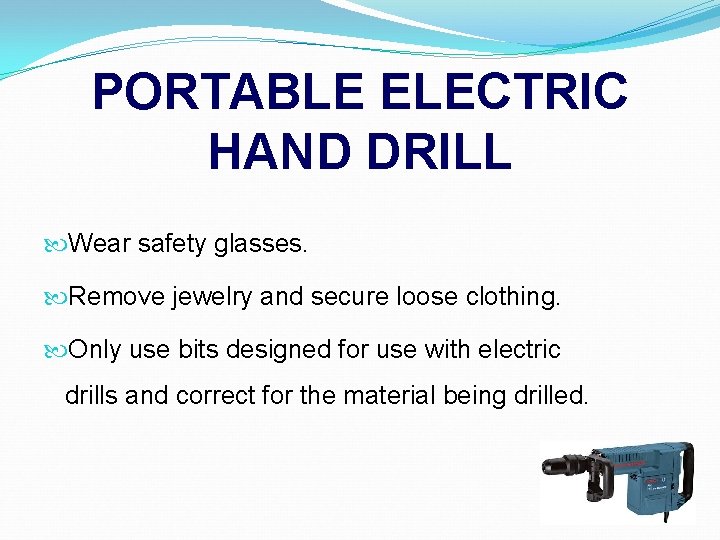
PORTABLE ELECTRIC HAND DRILL Wear safety glasses. Remove jewelry and secure loose clothing. Only use bits designed for use with electric drills and correct for the material being drilled.
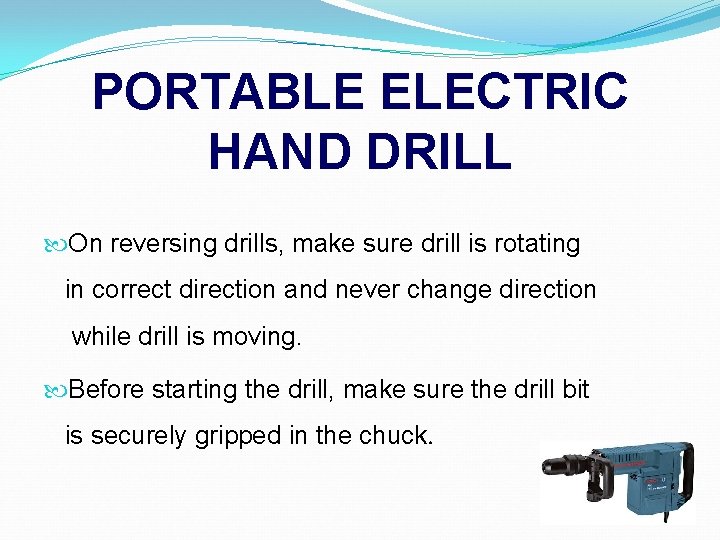
PORTABLE ELECTRIC HAND DRILL On reversing drills, make sure drill is rotating in correct direction and never change direction while drill is moving. Before starting the drill, make sure the drill bit is securely gripped in the chuck.
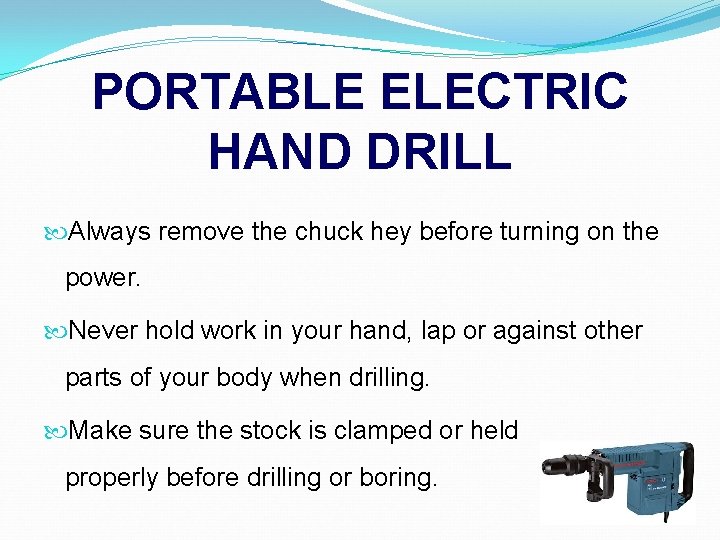
PORTABLE ELECTRIC HAND DRILL Always remove the chuck hey before turning on the power. Never hold work in your hand, lap or against other parts of your body when drilling. Make sure the stock is clamped or held properly before drilling or boring.
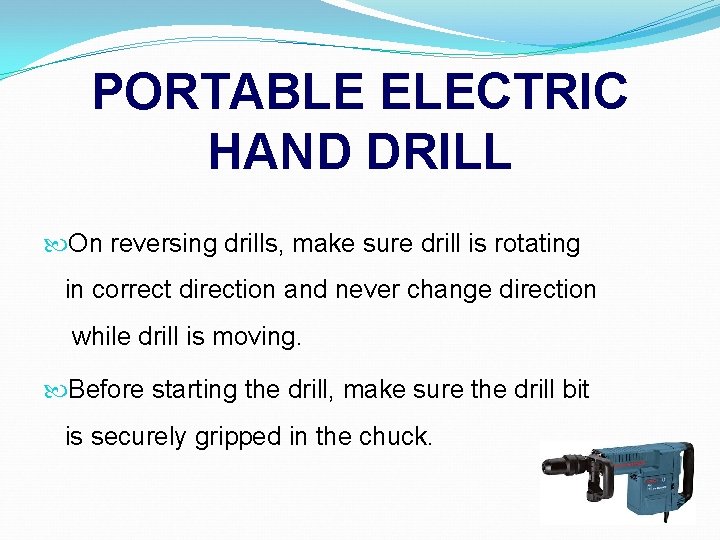
PORTABLE ELECTRIC HAND DRILL On reversing drills, make sure drill is rotating in correct direction and never change direction while drill is moving. Before starting the drill, make sure the drill bit is securely gripped in the chuck.
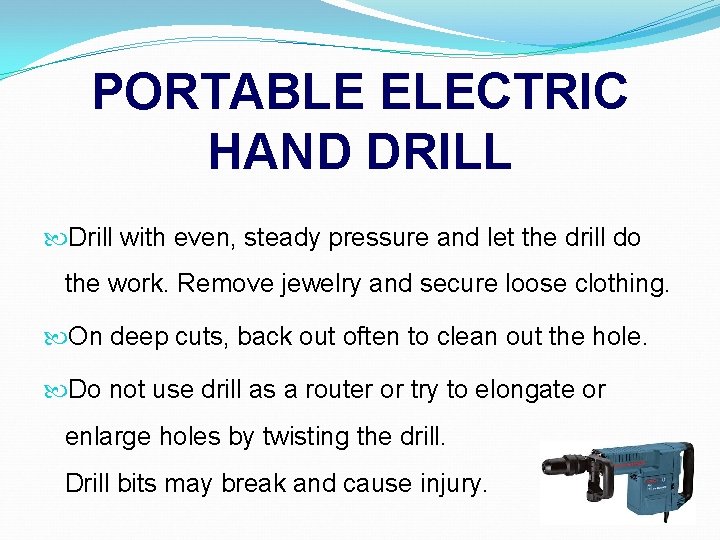
PORTABLE ELECTRIC HAND DRILL Drill with even, steady pressure and let the drill do the work. Remove jewelry and secure loose clothing. On deep cuts, back out often to clean out the hole. Do not use drill as a router or try to elongate or enlarge holes by twisting the drill. Drill bits may break and cause injury.
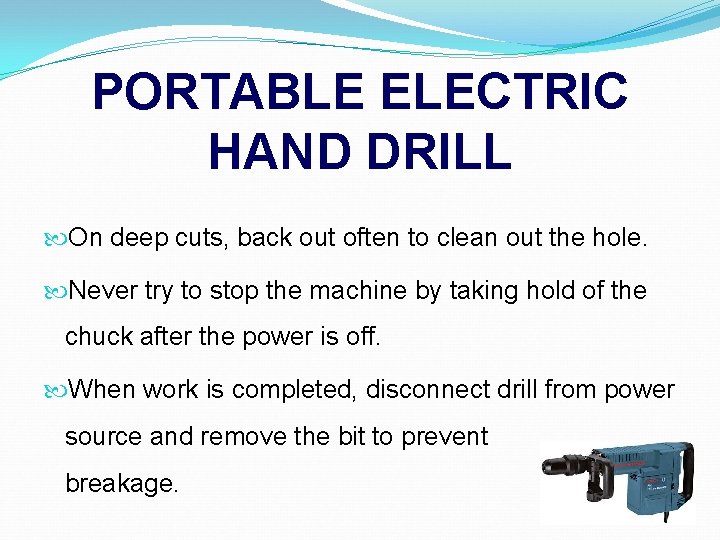
PORTABLE ELECTRIC HAND DRILL On deep cuts, back out often to clean out the hole. Never try to stop the machine by taking hold of the chuck after the power is off. When work is completed, disconnect drill from power source and remove the bit to prevent breakage.
PORTABLE CIRCULAR SAW Remove jewelry and confine loose clothing. Always wear safety glasses or face shield. Be sure that you are familiar with the correct ope ration of the saw before attempting to use it. Set blade only 6 mm deeper than the thickness of the material.
PORTABLE CIRCULAR SAW Be sure the automatic guard is free and retractable. Keep a firm grip on the saw at all times. Get a comfortable and safe position for entire cut before starting. Keep electric cords in the clear to avoid cutting.
PORTABLE CIRCULAR SAW Always use sharp blade and proper blade for job being done. Check stock for nails, screws, etc. , before cutting it. Allow saw to gain maximum speed before starting the cut. Always unplug the saw when changing blades.
PORTABLE CIRCULAR SAW Keep hands away from cutting area. Never reach underneath the material for any reason. Keep blade sharp. Dull blades may cause the saw to swerve or stall under pressure. Hold the guard back with the lever.
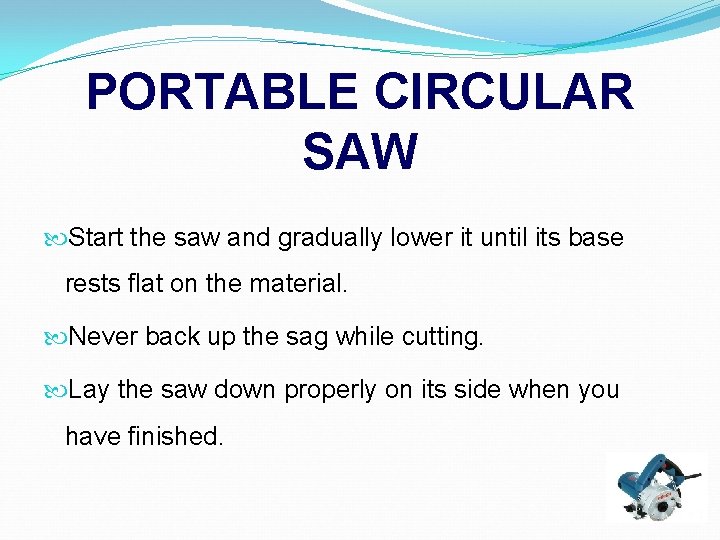
PORTABLE CIRCULAR SAW Start the saw and gradually lower it until its base rests flat on the material. Never back up the sag while cutting. Lay the saw down properly on its side when you have finished.

PLATE COMPACTOR Plate compactors are safe and simple to operate. However, there a number of considerations to keep operators and jobsites as safe as possible. It's important to pay close attention to the basics.

PLATE COMPACTOR Review and follow the manufacturer's operating guidelines for proper machine preparation and startup procedures. If renting, review these procedures with the rental store staff Do not operate plate compactors (gasoline-powered) inside a building that is not fully vented.
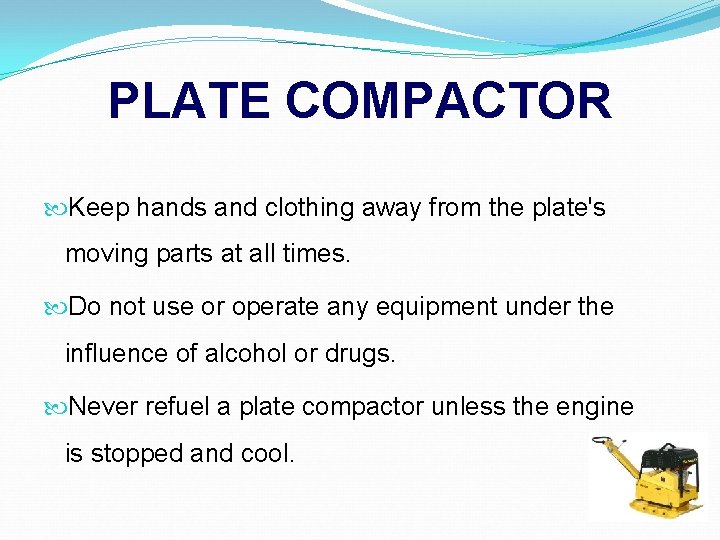
PLATE COMPACTOR Keep hands and clothing away from the plate's moving parts at all times. Do not use or operate any equipment under the influence of alcohol or drugs. Never refuel a plate compactor unless the engine is stopped and cool.
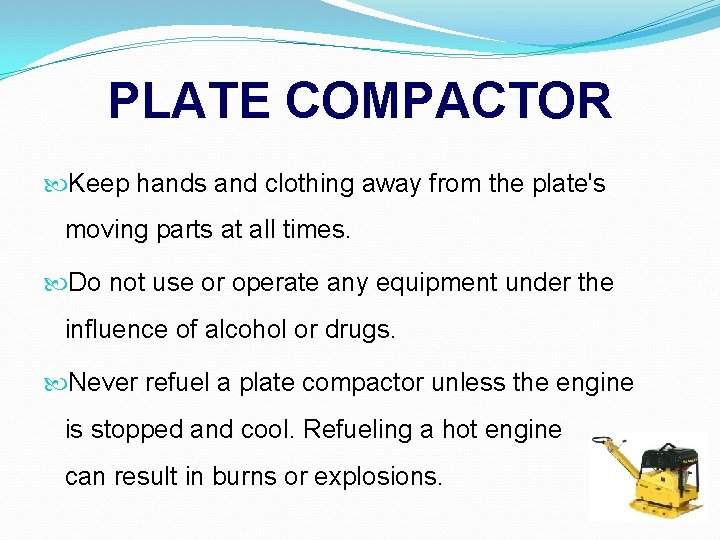
PLATE COMPACTOR Keep hands and clothing away from the plate's moving parts at all times. Do not use or operate any equipment under the influence of alcohol or drugs. Never refuel a plate compactor unless the engine is stopped and cool. Refueling a hot engine can result in burns or explosions.

PORTABLE CONCRETE MIXER Make sure all tools and other equipment are removed from the cement mixer prior to turning it on. The cement mixer should be rotating when filling or emptying the mixer.
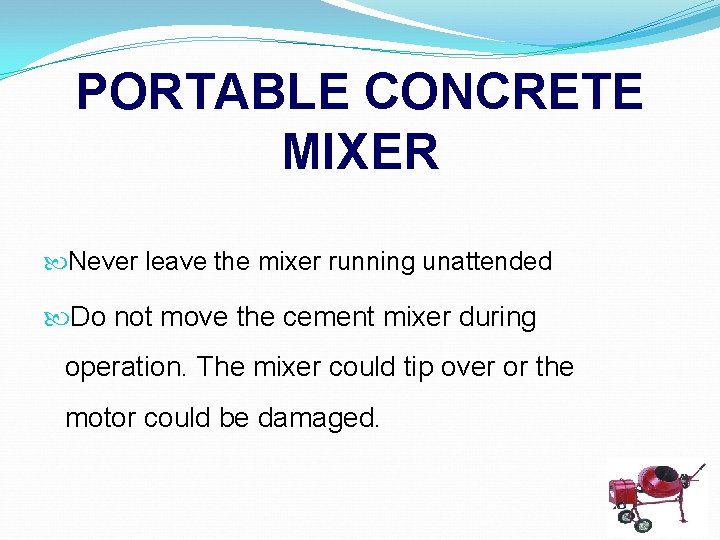
PORTABLE CONCRETE MIXER Never leave the mixer running unattended Do not move the cement mixer during operation. The mixer could tip over or the motor could be damaged.
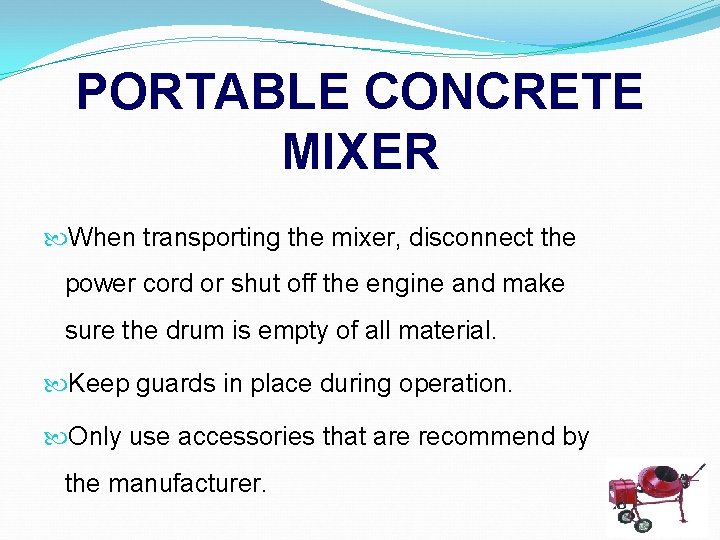
PORTABLE CONCRETE MIXER When transporting the mixer, disconnect the power cord or shut off the engine and make sure the drum is empty of all material. Keep guards in place during operation. Only use accessories that are recommend by the manufacturer.
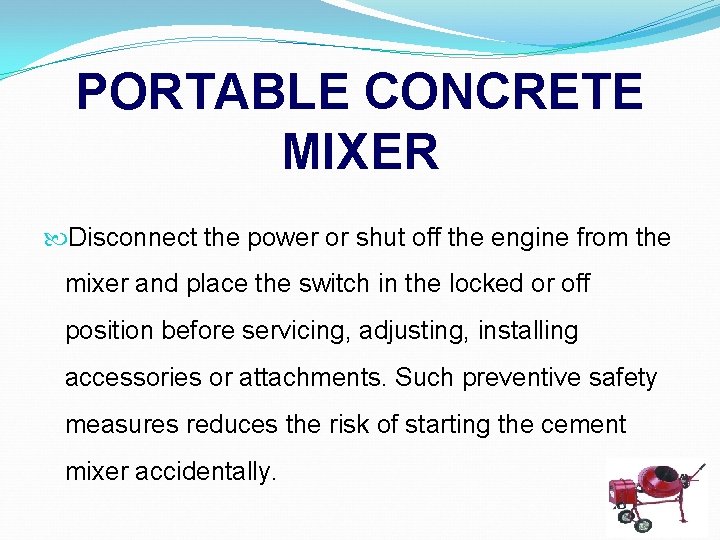
PORTABLE CONCRETE MIXER Disconnect the power or shut off the engine from the mixer and place the switch in the locked or off position before servicing, adjusting, installing accessories or attachments. Such preventive safety measures reduces the risk of starting the cement mixer accidentally.

PORTABLE CONCRETE MIXER Practice environmental pollution control procedures by cleaning the mixer in a designated area where concrete and rinse water can be contained so they do not pollute storm drains or surface water

PORTABLE CONCRETE MIXER Make sure all tools and other equipment are removed from the cement mixer prior to turning it on. The cement mixer should be rotating when filling or emptying the mixer.
SUMMARY Power tools are very common to any production facility. They can expose employees to multiple hazards if they are not maintained and used properly. It is critical that you know how to maintain, test and operate any power tool you intend to use.

THANK YOU
- Slides: 36