
Port of Huntington Tri State Collaborative Geographic Initiative
Port of Huntington – Tri. State Collaborative Geographic Initiative
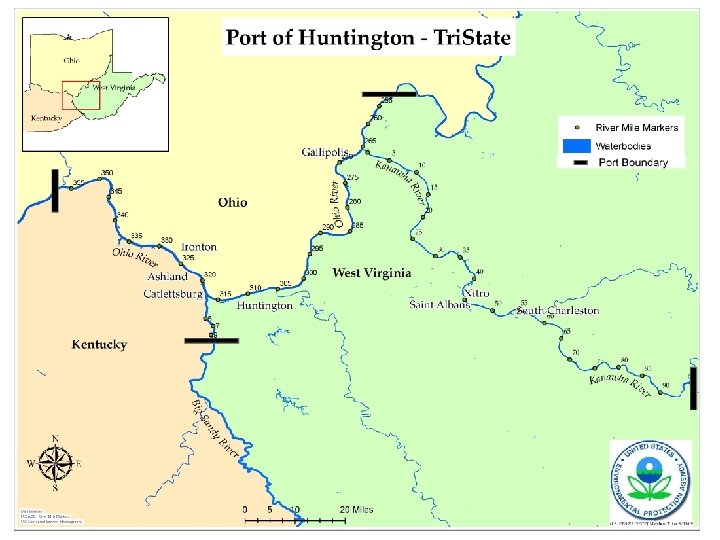
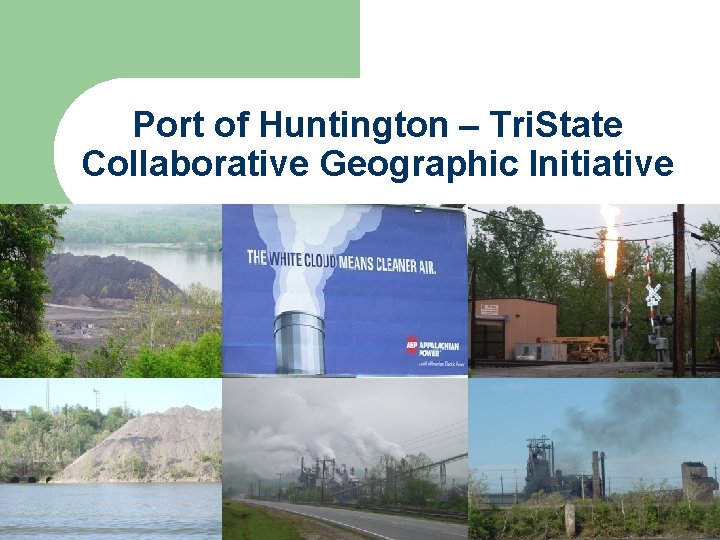
Huntington Tristate Background l l l Largest inland port 77 million tons of cargo annually. 60 % coal and 30 % petroleum/chemical products. No central authority or commission City of Huntington, WV – – “Unhealthiest U. S. City” by CDC in 2008 Nations worst outdoor air quality around schools by USA Today.
Project Goals/Objectives l l l Assess the environmental impact of Port Operations with respect to the following areas: Unloading Operations, Cradle to Grave Coal Processing and Barge Maintenance Operations, Community Impact (EJ and Schools), etc. Integrated Data Targeting Methodology: Pilot the layering of a variety of data sources including; EJ SEAT, Facility Data (OTIS Sector Analysis), GIS, to enhance enforcement results. Develop a Working Model for a Collaborative Geographic Strategy across regions and agencies
Current Project Partners l l U. S. EPA Region III, IV, V & NEIC U. S. Coast Guard – Marine Safety Unit Huntington l l Located in Barboursville, WV State Environmental Agencies (WV, OH, KY)
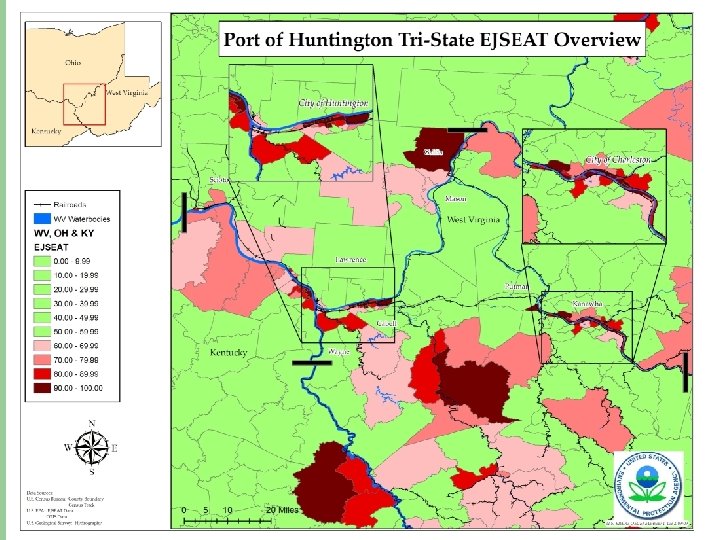
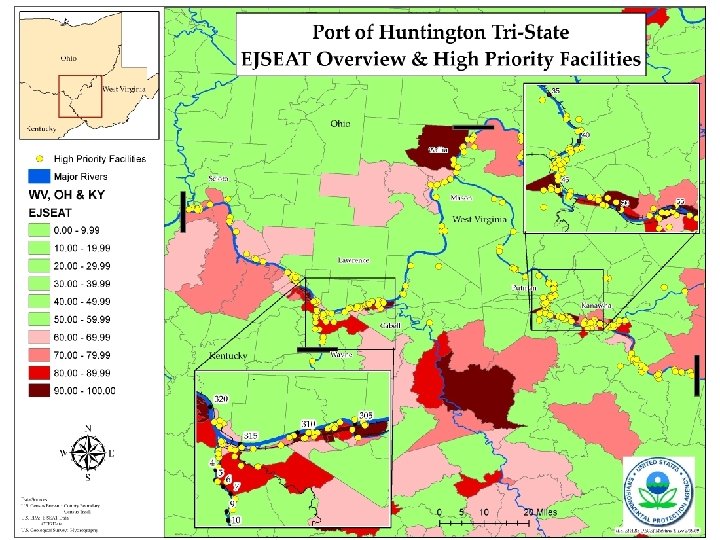
Geographic Based Targeting l Comprehensive Screening Approach – High Priority Stormwater Sectors l – – 20 different sectors including: Chemical and Allied Products, Glass Clay, Cement, Concrete, and Gypsum Products, Primary Metals, Coal Mines and Coal Mining-Related Facilities, Scrap Recycling Facilities Utilized OTIS (Multimedia Query) & Dun and Bradstreet to develop facility universe Google Earth (Proximity to Waterways)
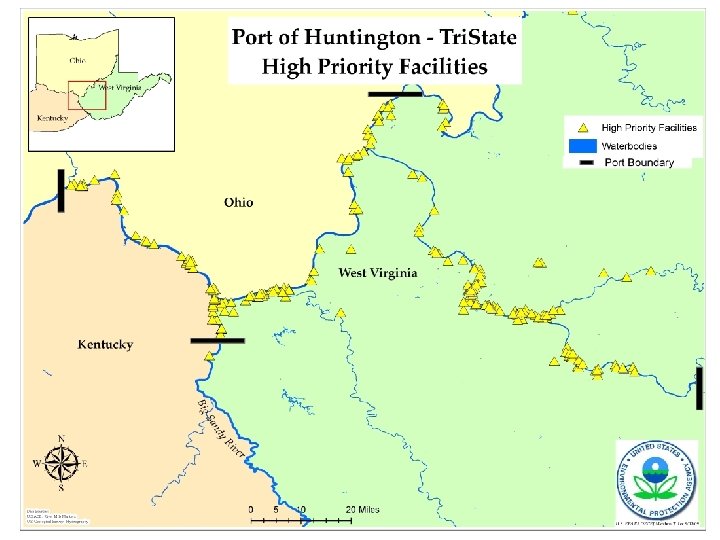
Geographic Based Targeting l Comprehensive Screening Approach – – NRC Spill Reports (EPCRA & CERCLA) School Locations Environmentally Sensitive Areas pursuant to CWA 311(b)(3) and 311(j) EJSEAT (Environmental Justice Strategic Enforcement Assessment Tool)
Pilot Recon Activities • Purpose – Identify illegal discharges/emissions – Refine Targets and Further Define Geographic Priority Areas • IR Camera, Sampling Capability, VE Reader • Enhance GIS Database
Pilot Recon Activities Joint Agency Exercise – River Team Component l 2 Defender Class – Response Boat-Small (RBS) – – Land Team Component l 3 Vehicles – l 3 U. S. EPA MM Inspectors, State Support Base Camp at U. S. Coast Guard Office in Barboursville, WV – l 4 U. S. Coast Guard Crew, 2 U. S. EPA MM Inspectors per boat 2 U. S. EPA Personnel (GIS & Data Management) Conducted April 27 – May 1, 2009
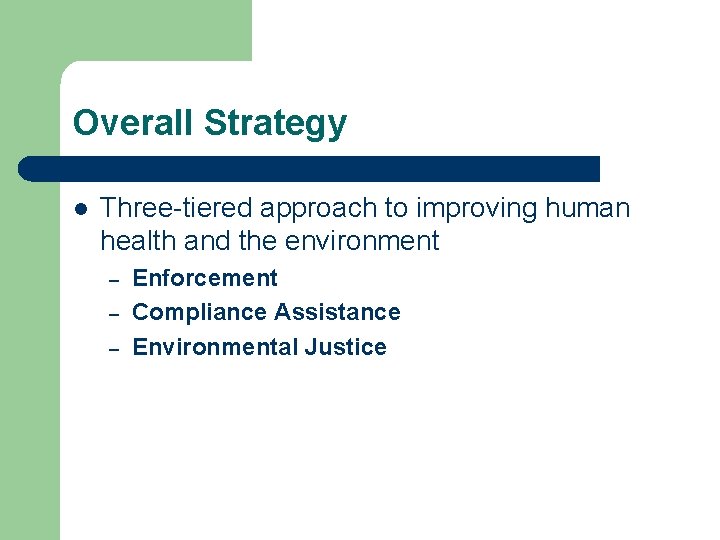
Overall Strategy l Three-tiered approach to improving human health and the environment – – – Enforcement Compliance Assistance Environmental Justice
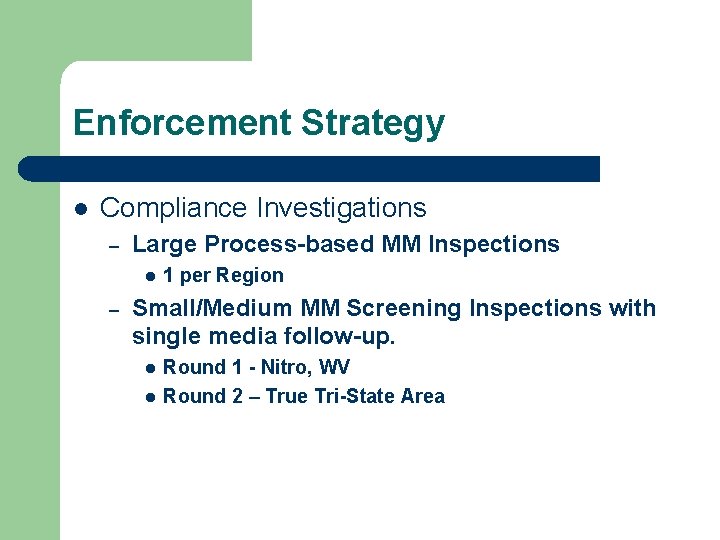
Enforcement Strategy l Compliance Investigations – Large Process-based MM Inspections l – 1 per Region Small/Medium MM Screening Inspections with single media follow-up. l l Round 1 - Nitro, WV Round 2 – True Tri-State Area
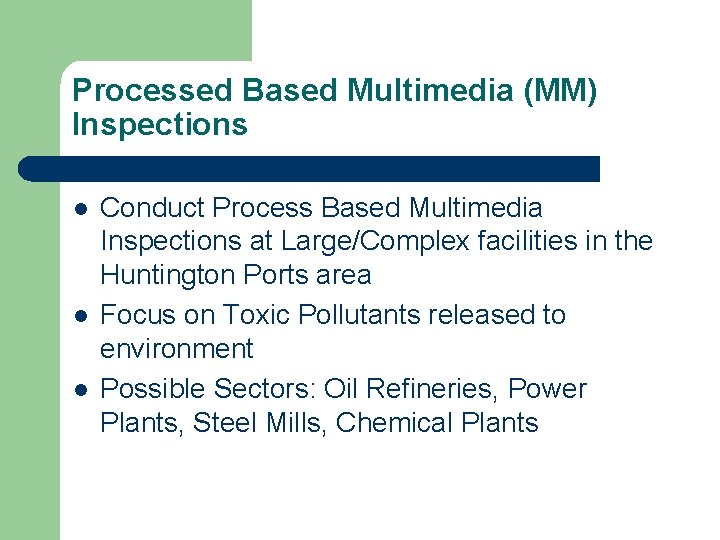
Processed Based Multimedia (MM) Inspections l l l Conduct Process Based Multimedia Inspections at Large/Complex facilities in the Huntington Ports area Focus on Toxic Pollutants released to environment Possible Sectors: Oil Refineries, Power Plants, Steel Mills, Chemical Plants
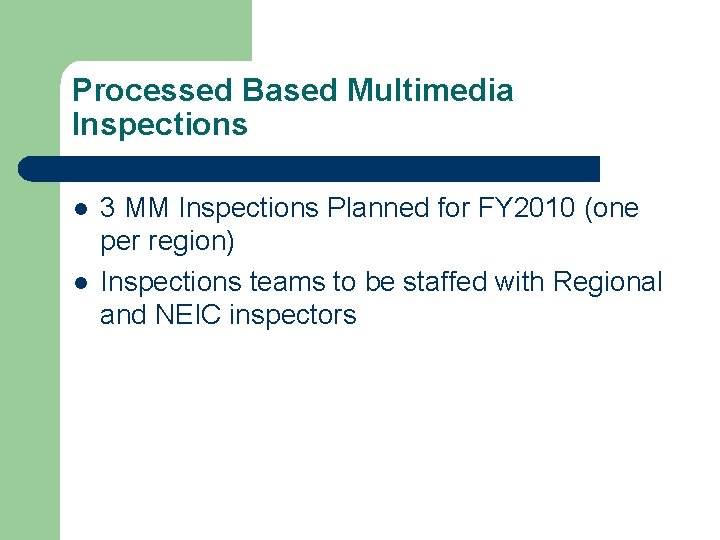
Processed Based Multimedia Inspections l l 3 MM Inspections Planned for FY 2010 (one per region) Inspections teams to be staffed with Regional and NEIC inspectors
MM Screening Inspections l l l Perform multimedia inspection sweeps in two areas to evaluate 10 -14 facilities during FY 2010 Inspections teams staffed with cross. Regional and NEIC inspectors Focus on Illegal wastewater discharges, storm water discharges, SPCC rules, waste handling air toxics and fugitive dust
Nitro, WV MM Screening Inspections l l l Performed MM inspection sweep in Nitro, WV on the week of November 2, 2009 MM Screening inspections performed at 11 facilities Sectors inspected included: scrap and recycling facilities: chemical manufacturing; centralized wastewater treatment facilities and transport company
Nitro Sweep Preliminary Findings l l l Storm Water Issues SPCC Issues Hazardous Waste Handling Issues CFC (Freon) Handling Issues TSCA PCB Issues
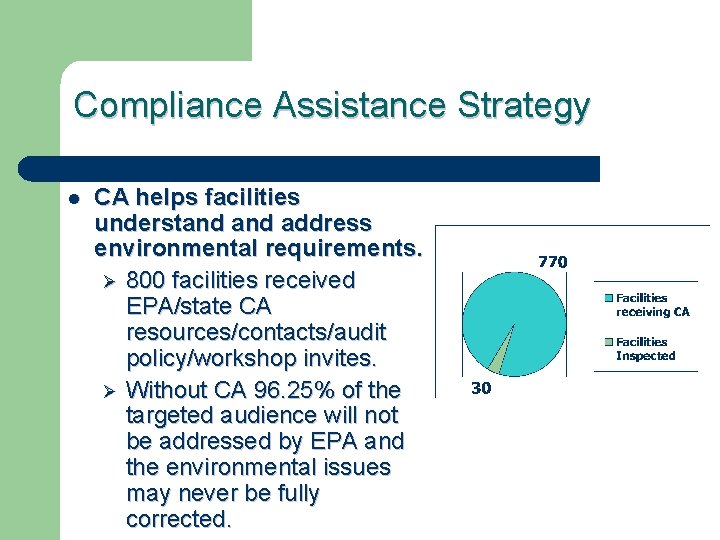
Compliance Assistance Strategy l CA helps facilities understand address environmental requirements. Ø 800 facilities received EPA/state CA resources/contacts/audit policy/workshop invites. Ø Without CA 96. 25% of the targeted audience will not be addressed by EPA and the environmental issues may never be fully corrected.
Targeted Sectors l l Wave #1 Coal Processing Shipbuilding and Repair Scrap/Recycling Facilities Auto Salvage Yard Port Terminals and Unloading Operations Stone, Clay, Glass, and Ready Mix Concrete Wave #2 Proximal Schools and Hospitals
EJ Strategy l l Localized Approach Public Outreach – – Environmental Bulletin Community Vision Meetings l – l EJ Resource Bulletin Community Capacity Building – l Determine their most pressing environmental concerns Information Sessions/Workshops Partner with relevant Stakeholders – Combine expertise and resources
- Slides: 22