
Porosity Permeability Capillarity Porosity The amount of space

Porosity, Permeability, Capillarity
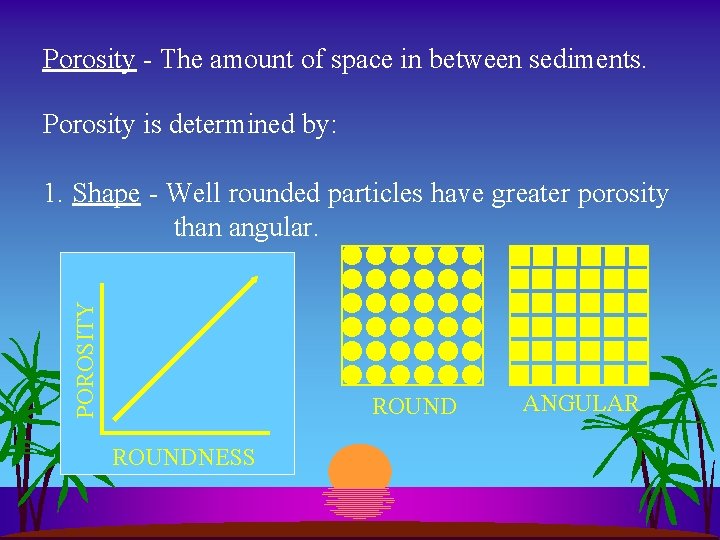
Porosity - The amount of space in between sediments. Porosity is determined by: POROSITY 1. Shape - Well rounded particles have greater porosity than angular. ROUNDNESS ANGULAR

POROSITY 2. PACKING- The more closely packed the particles the lower the porosity. PACKING UNPACKED
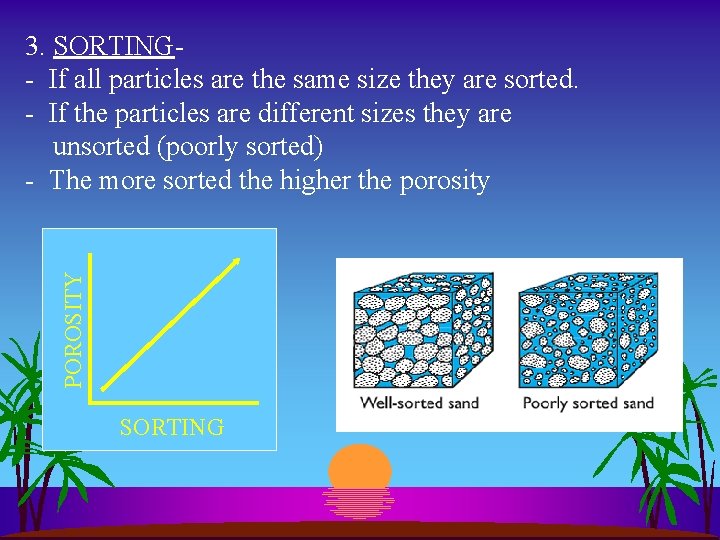
POROSITY 3. SORTING- If all particles are the same size they are sorted. - If the particles are different sizes they are unsorted (poorly sorted) - The more sorted the higher the porosity SORTING
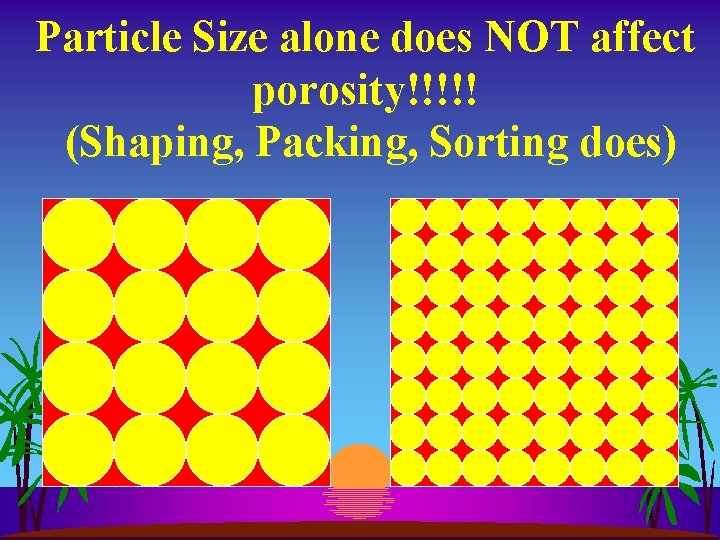
Particle Size alone does NOT affect porosity!!!!! (Shaping, Packing, Sorting does)
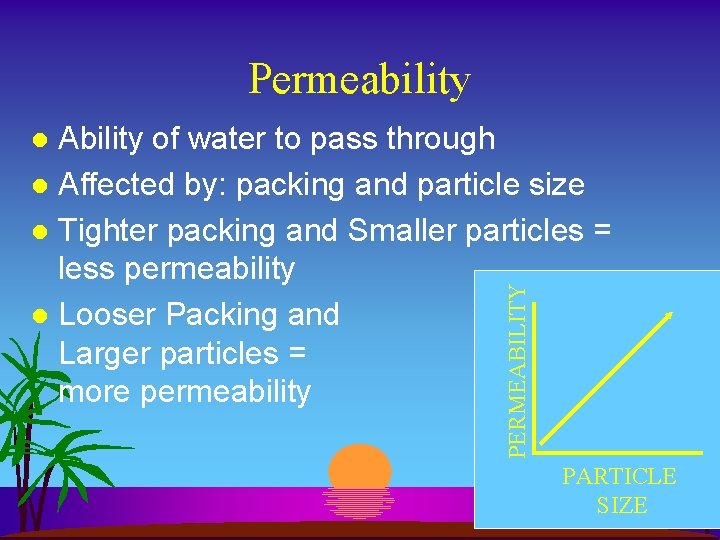
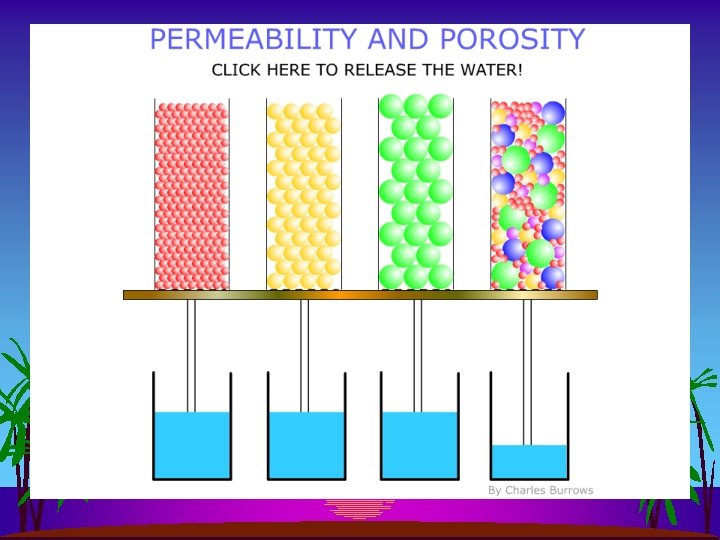
Permeability Ability of water to pass through l Affected by: packing and particle size l Tighter packing and Smaller particles = less permeability l Looser Packing and Larger particles = more permeability PERMEABILITY l PARTICLE SIZE
Other things about Permeability Rate – How fast a fluid can flow through a material Impermeability (not permeable) is due to: A. Tightly packing of particles B. Cementing of particles by clay C. Cementing of particles by ice
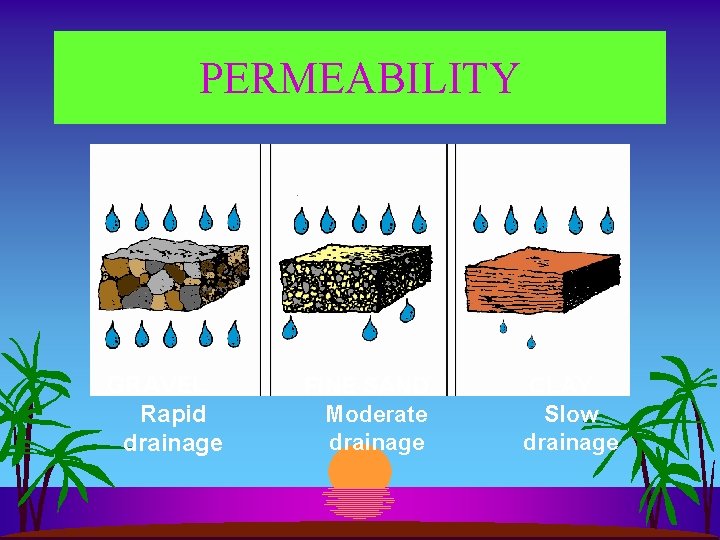
PERMEABILITY GRAVEL Rapid drainage FINE SAND Moderate drainage CLAY Slow drainage
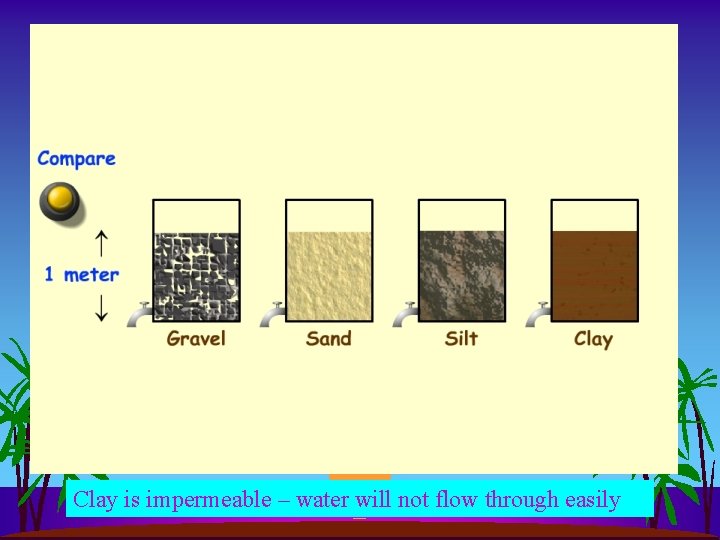
Clay is impermeable – water will not flow through easily
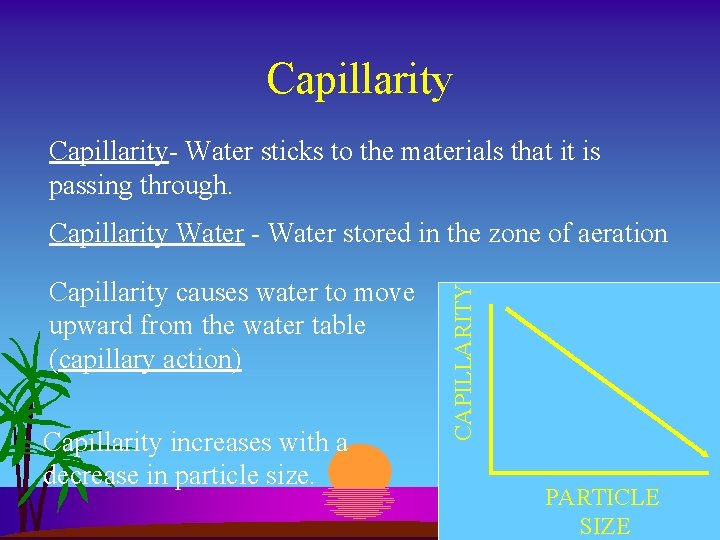
Capillarity- Water sticks to the materials that it is passing through. Capillarity causes water to move upward from the water table (capillary action) Capillarity increases with a decrease in particle size. CAPILLARITY Capillarity Water - Water stored in the zone of aeration PARTICLE SIZE
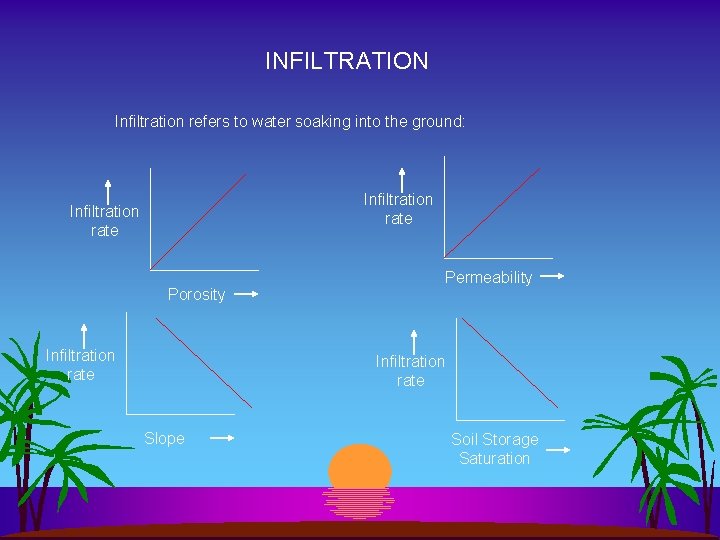
INFILTRATION Infiltration refers to water soaking into the ground: Infiltration rate Porosity Infiltration rate Permeability Infiltration rate Slope Soil Storage Saturation
- Slides: 12