
Porifera Simplest metazoan Cell level of organization Few
- Slides: 15
Porifera § Simplest metazoan § Cell level of organization – Few cell types – No true tissues § Feed on material suspended in water § Motile as larva - sessile as adult
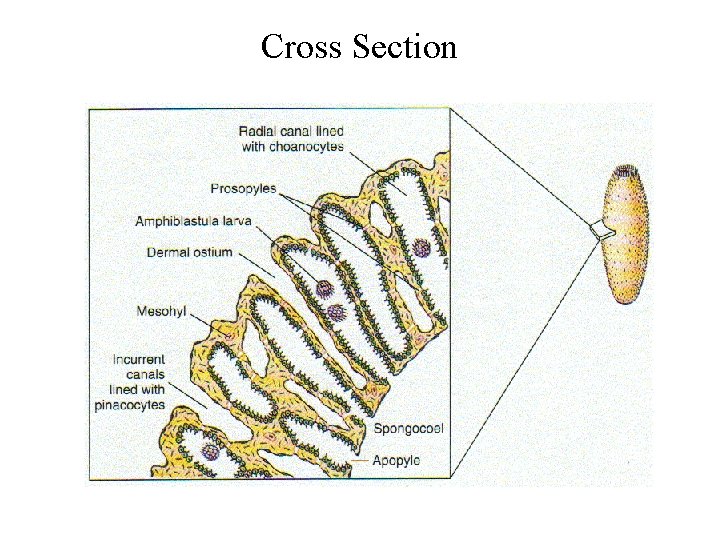
Pores § Ostia – Small pores – Water inlets – Multiple ostia lead to canal system § Osculum – Large pores – Water outlets – Certain forms have more than one
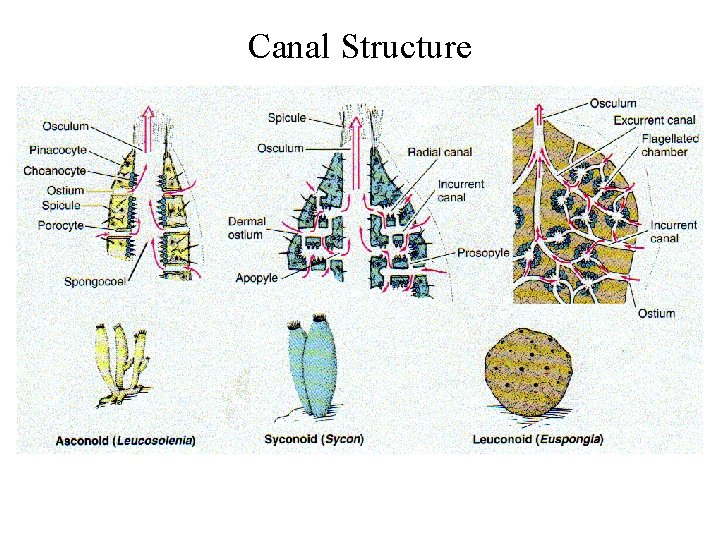
Canal Structure
Canal Structure Summary § Asconoid – Simple canals, low surface area – Flagellated spongocoel – Large osculum § Syconoid – Convoluted canals, high surface area – Flagellated canals – Large oculum § Leuconoid – – Meshwork of canals, high surface area Flagellated chambers Small osculum – often more than one Most efficient movement of water
Cross Section
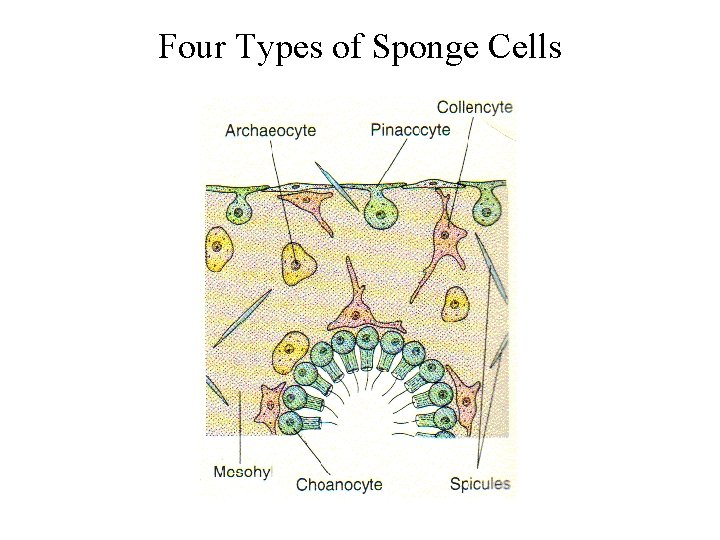
Four Types of Sponge Cells
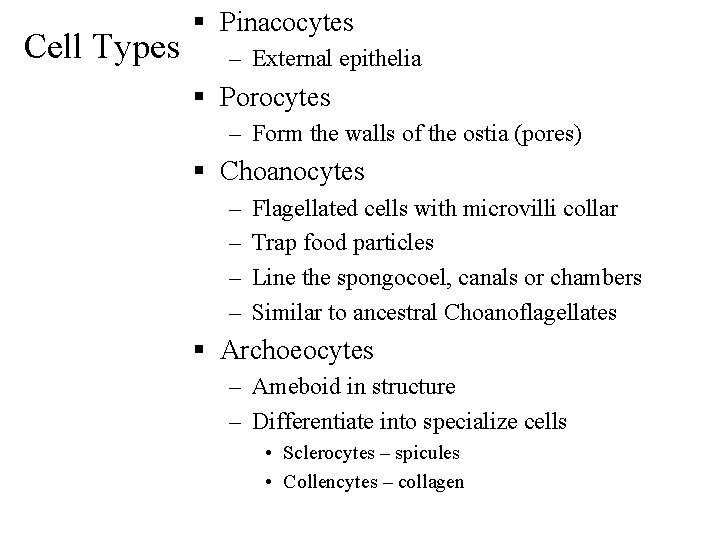
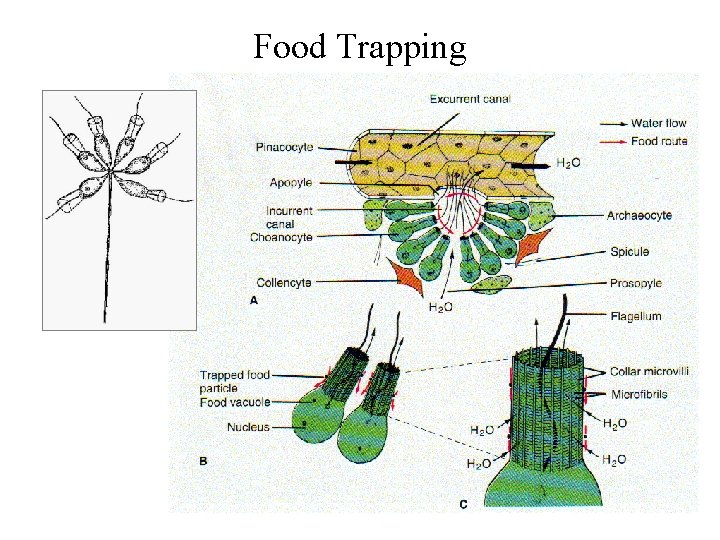
Cell Types § Pinacocytes – External epithelia § Porocytes – Form the walls of the ostia (pores) § Choanocytes – – Flagellated cells with microvilli collar Trap food particles Line the spongocoel, canals or chambers Similar to ancestral Choanoflagellates § Archoeocytes – Ameboid in structure – Differentiate into specialize cells • Sclerocytes – spicules • Collencytes – collagen
Food Trapping
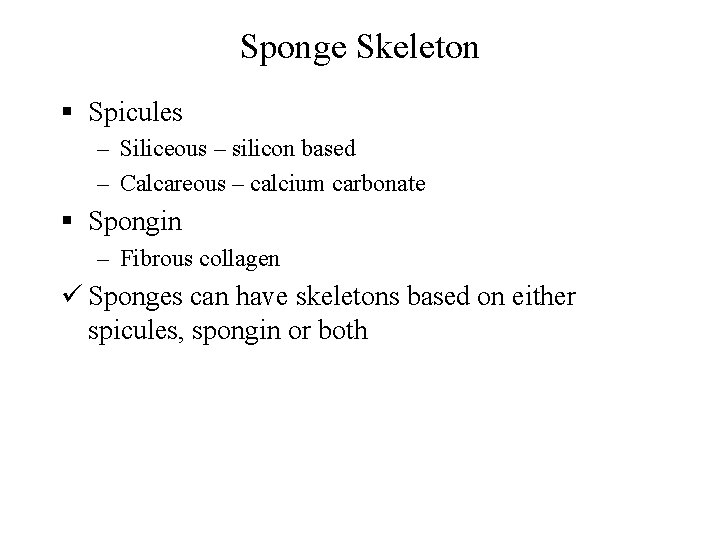
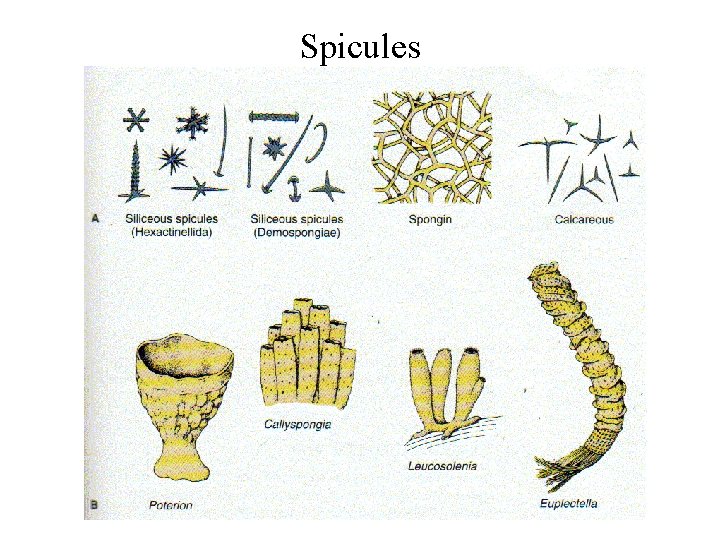
Sponge Skeleton § Spicules – Siliceous – silicon based – Calcareous – calcium carbonate § Spongin – Fibrous collagen ü Sponges can have skeletons based on either spicules, spongin or both
Spicules
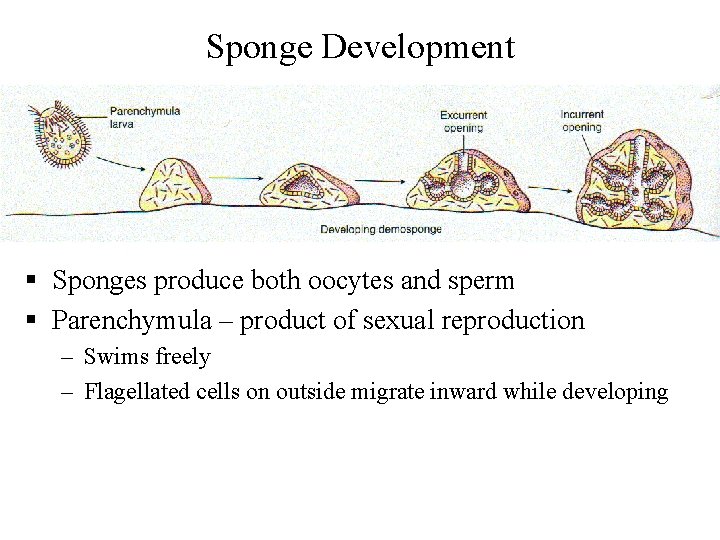
Sponge Development § Sponges produce both oocytes and sperm § Parenchymula – product of sexual reproduction – Swims freely – Flagellated cells on outside migrate inward while developing
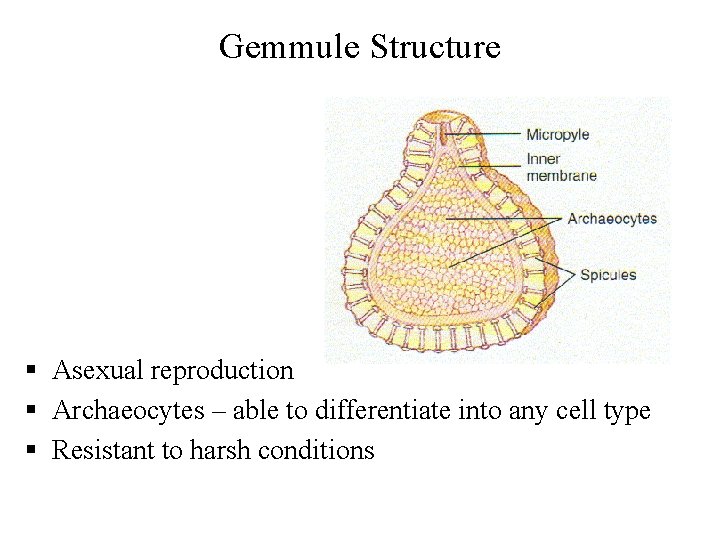
Gemmule Structure § Asexual reproduction § Archaeocytes – able to differentiate into any cell type § Resistant to harsh conditions
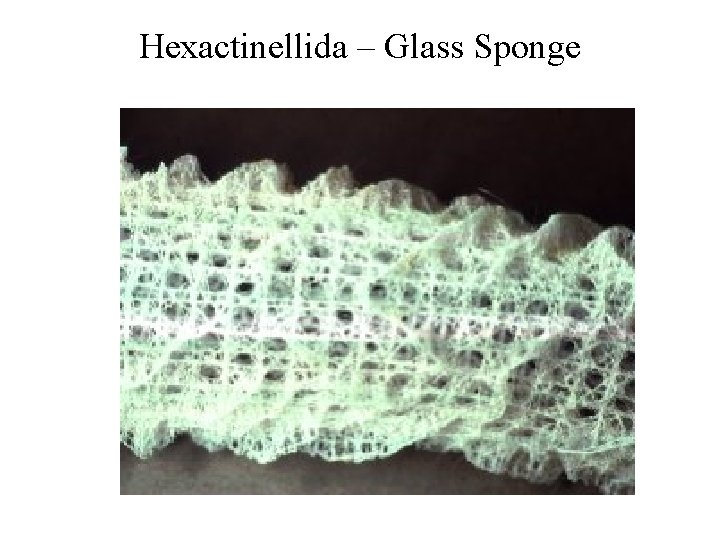
Hexactinellida – Glass Sponge
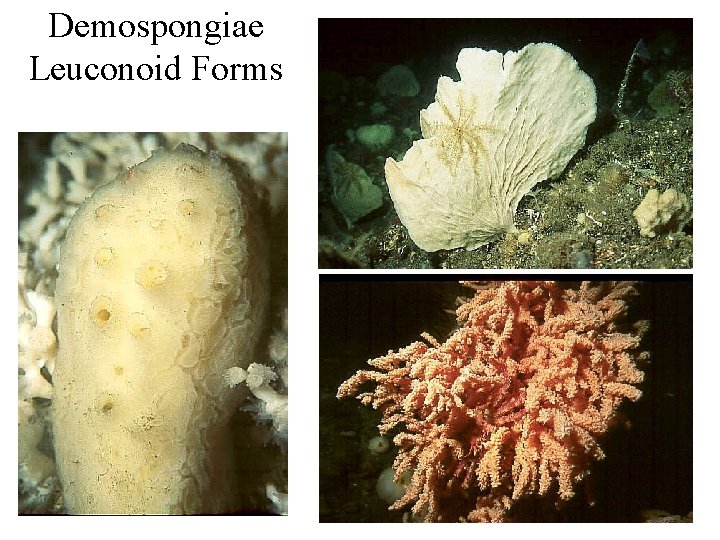
Demospongiae Leuconoid Forms
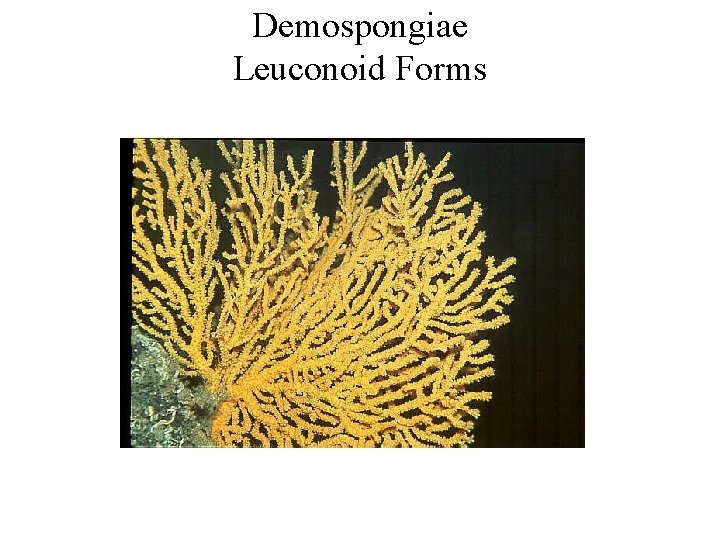
Demospongiae Leuconoid Forms