
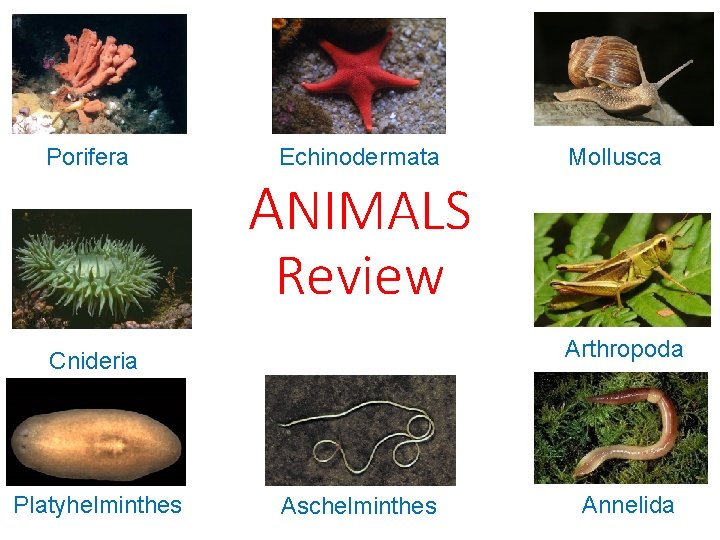
Porifera Echinodermata ANIMALS Mollusca Review Arthropoda Cnideria Platyhelminthes
- Slides: 16
Porifera Echinodermata ANIMALS Mollusca Review Arthropoda Cnideria Platyhelminthes Aschelminthes Annelida
Some things to remember • Linneaus Classification • Domains of life (Eukarya, Prokarya, Archae) • Kingdoms of Life (Animalia, Fungi, Eubacteria, Archea, Plantae, Protista) • Binomial nomenclature • Dichotomous Keys
TO BE AN ANIMAL - multicellular - heterotrophic - reproduce - ability to move
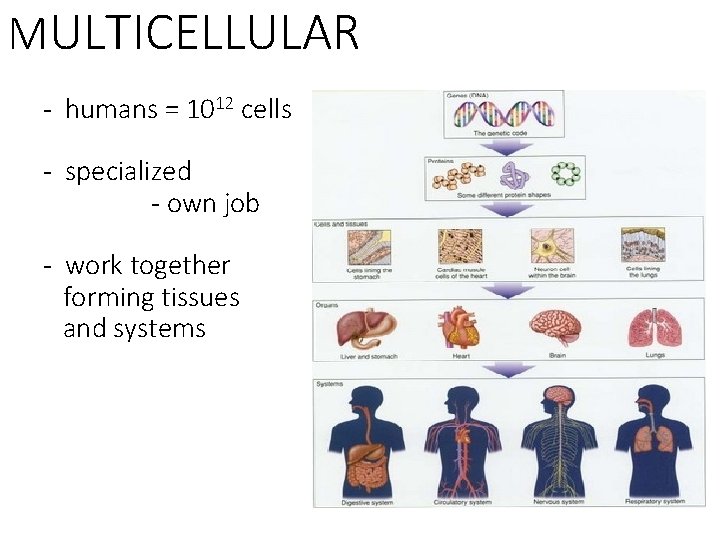
MULTICELLULAR - humans = 1012 cells - specialized - own job - work together forming tissues and systems
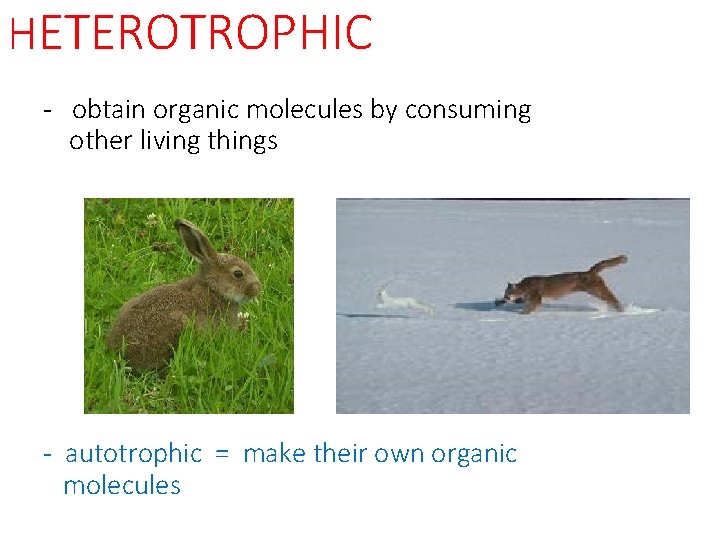
HETEROTROPHIC - obtain organic molecules by consuming other living things - autotrophic = make their own organic molecules
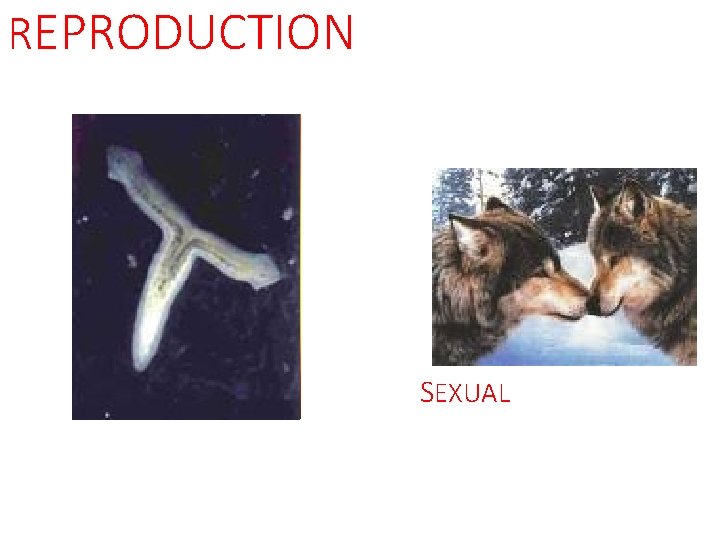
REPRODUCTION ASEXUAL
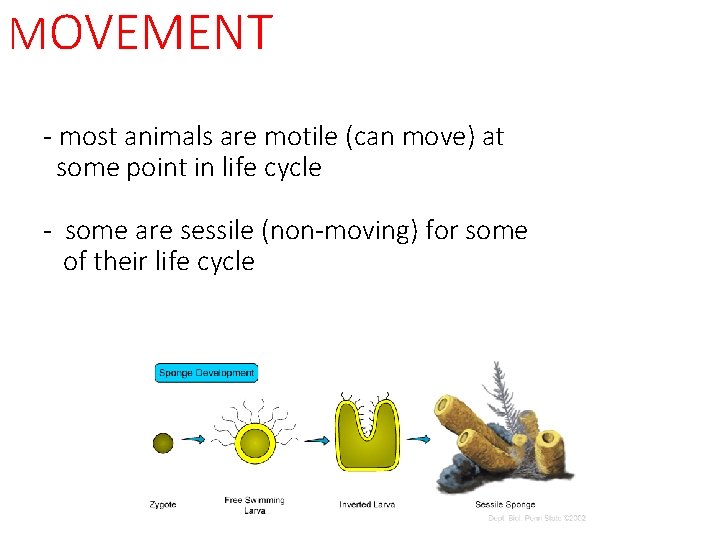
MOVEMENT - most animals are motile (can move) at some point in life cycle - some are sessile (non-moving) for some of their life cycle
EVOLUTION OF ANIMALS - common single prokaryotic cell ancestor - lived in sea - evolved into eukaryotic cells called protists - protists formed colonies - protists began to specialize within colonies (700 mya)
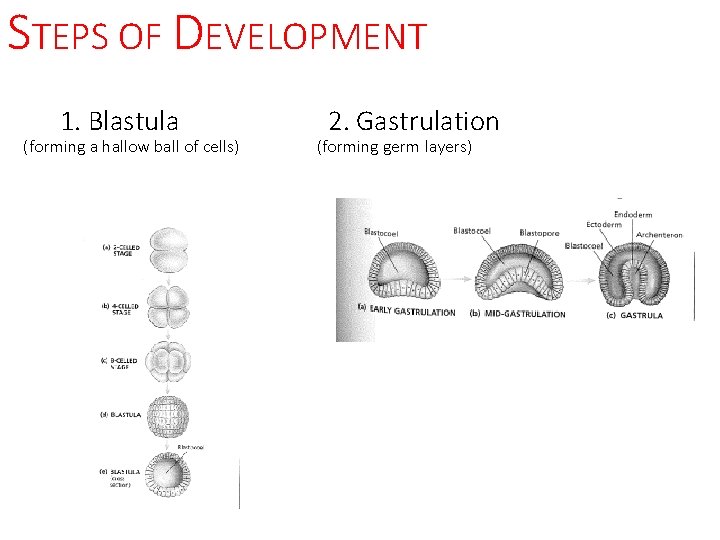
STEPS OF DEVELOPMENT 1. Blastula (forming a hallow ball of cells) 2. Gastrulation (forming germ layers)
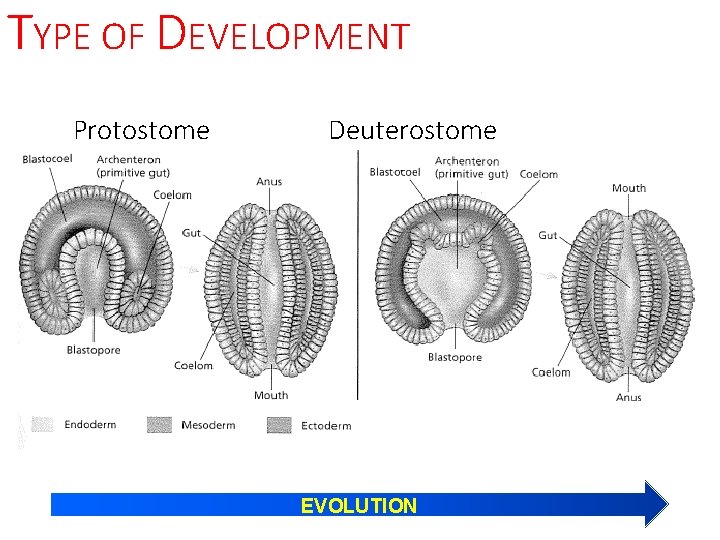
TYPE OF DEVELOPMENT Protostome Deuterostome EVOLUTION
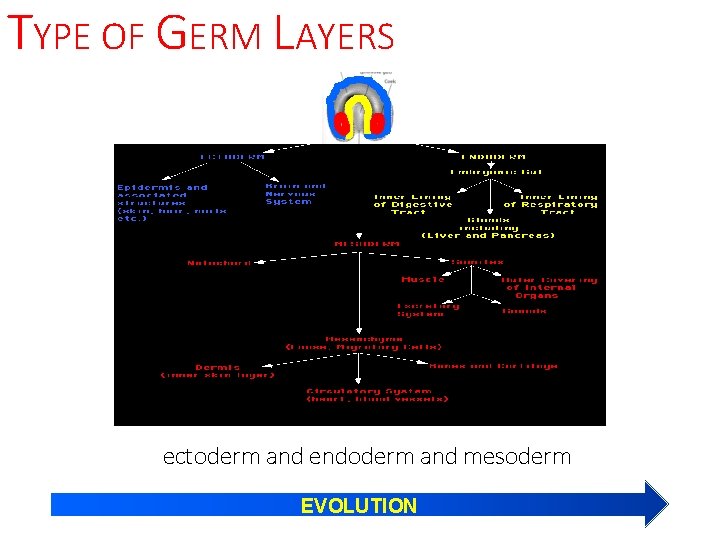
TYPE OF GERM LAYERS ectoderm and endoderm and mesoderm EVOLUTION
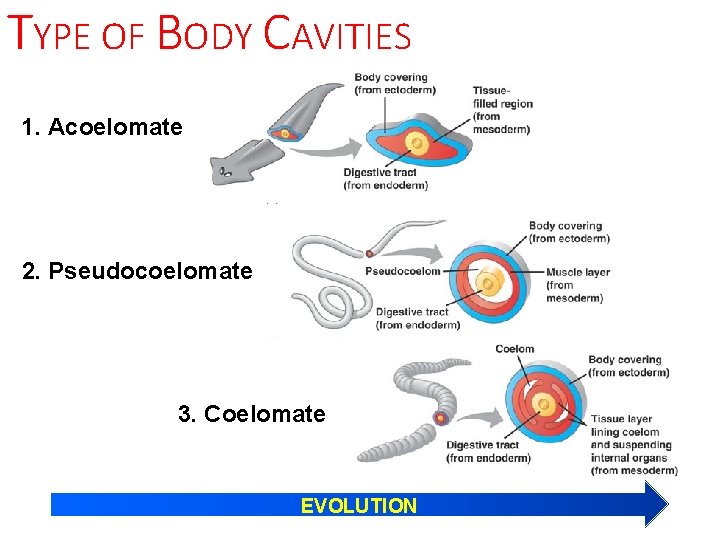
TYPE OF BODY CAVITIES 1. Acoelomate 2. Pseudocoelomate 3. Coelomate EVOLUTION
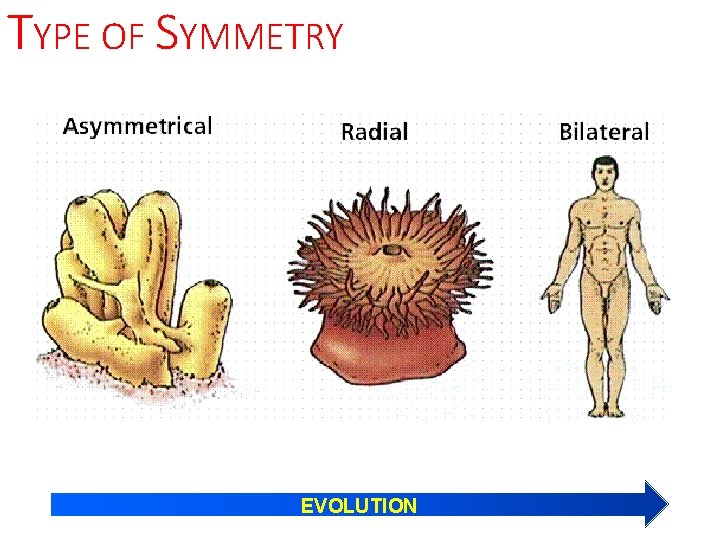
TYPE OF SYMMETRY EVOLUTION
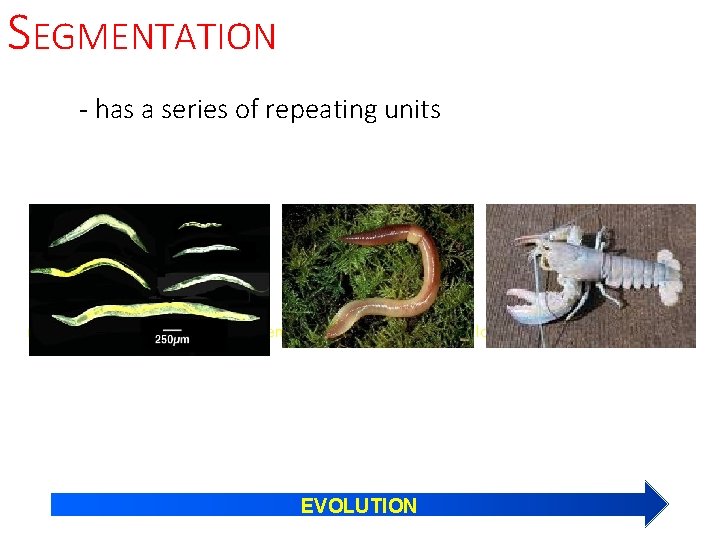
SEGMENTATION - has a series of repeating units non-segmented worms segmented worm segmented lobster EVOLUTION
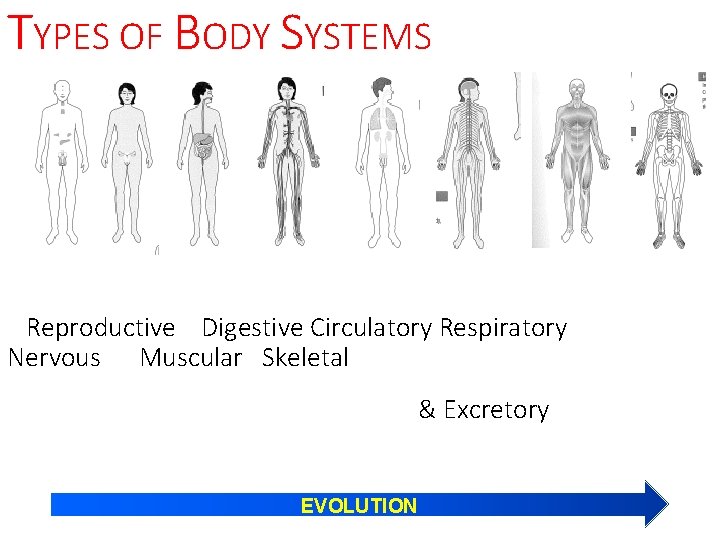
TYPES OF BODY SYSTEMS Reproductive Digestive Circulatory Respiratory Nervous Muscular Skeletal & Excretory EVOLUTION
Cnidaria and Porifera • How are they defined as Porifera and Cnidaria? • Tissues present • Symmetry • Body Systems • Label/Draw a Diagram of each • Distinguishing features • Functions of those features • Know the different classes (what seperates the different classes)