
Populations Communities Unit 1 Ecology is The scientific

- Slides: 25
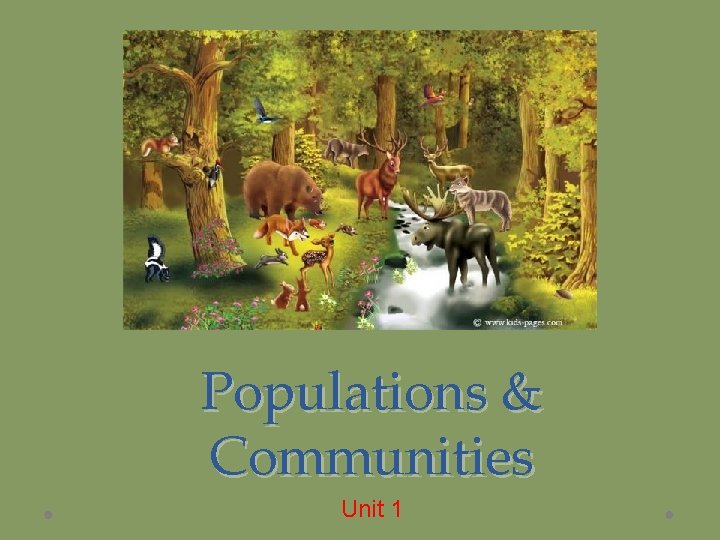
Populations & Communities Unit 1
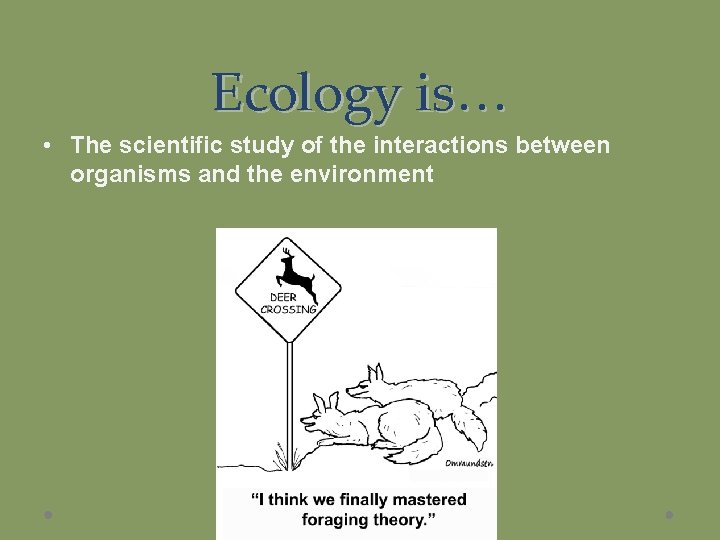
Ecology is… • The scientific study of the interactions between organisms and the environment
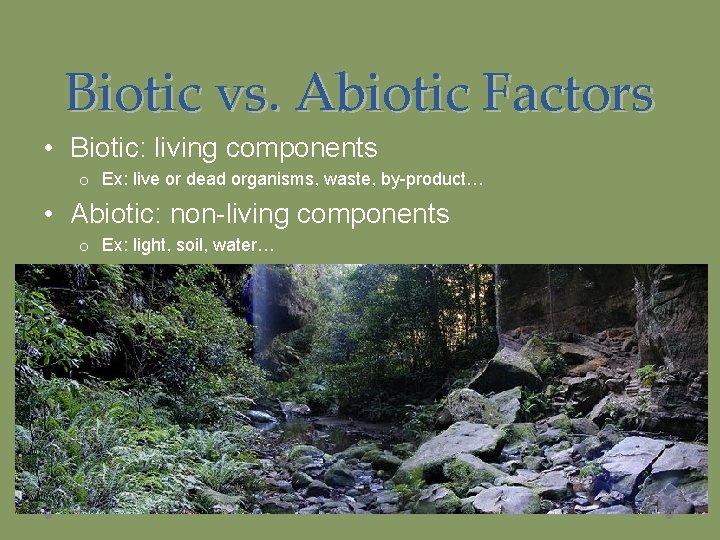
Biotic vs. Abiotic Factors • Biotic: living components o Ex: live or dead organisms, waste, by-product… • Abiotic: non-living components o Ex: light, soil, water…
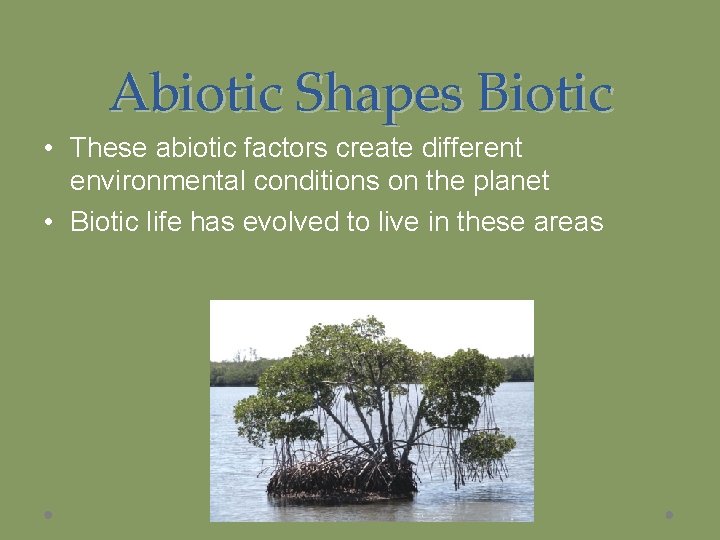
Abiotic Shapes Biotic • These abiotic factors create different environmental conditions on the planet • Biotic life has evolved to live in these areas
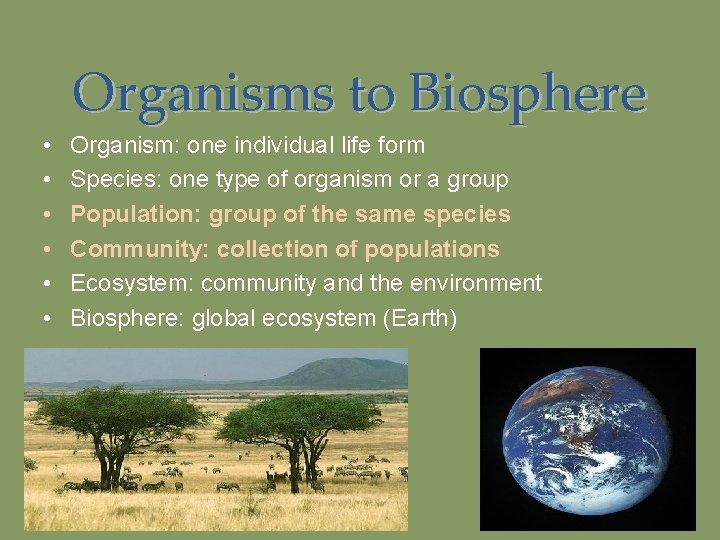
Organisms to Biosphere • • • Organism: one individual life form Species: one type of organism or a group Population: group of the same species Community: collection of populations Ecosystem: community and the environment Biosphere: global ecosystem (Earth)
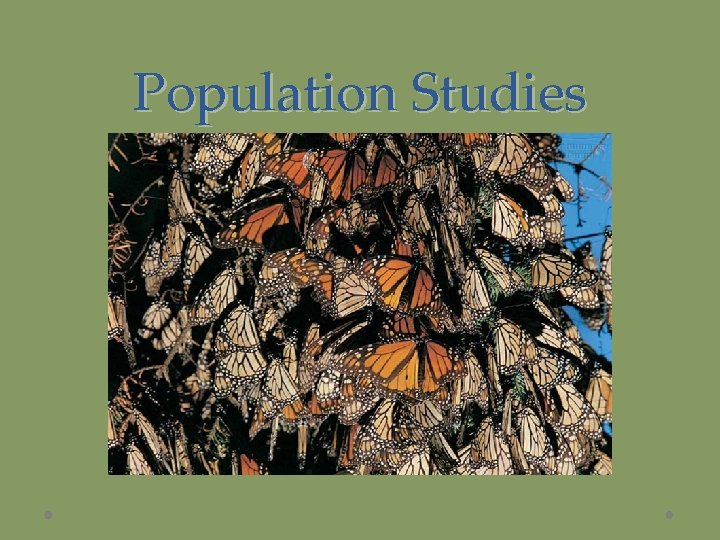
Population Studies
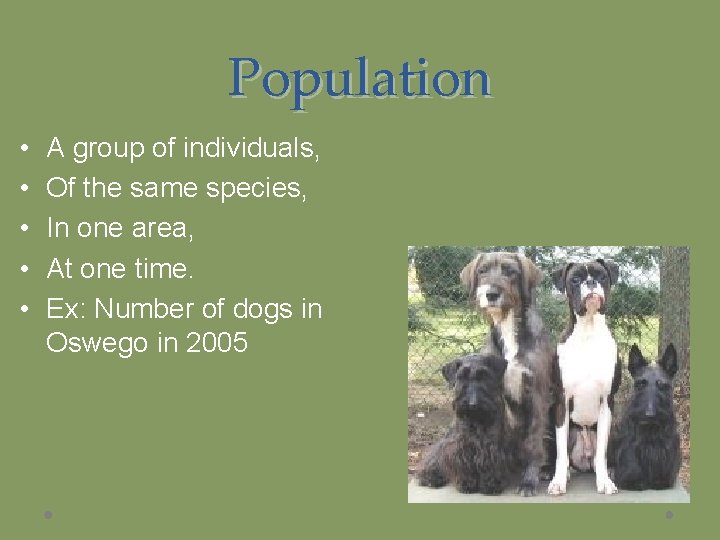
Population • • • A group of individuals, Of the same species, In one area, At one time. Ex: Number of dogs in Oswego in 2005
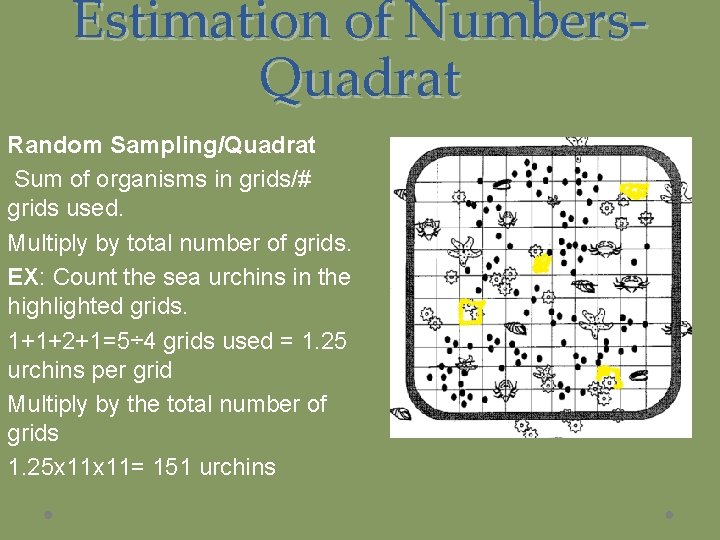
Estimation of Numbers. Quadrat Random Sampling/Quadrat Sum of organisms in grids/# grids used. Multiply by total number of grids. EX: Count the sea urchins in the highlighted grids. 1+1+2+1=5÷ 4 grids used = 1. 25 urchins per grid Multiply by the total number of grids 1. 25 x 11= 151 urchins
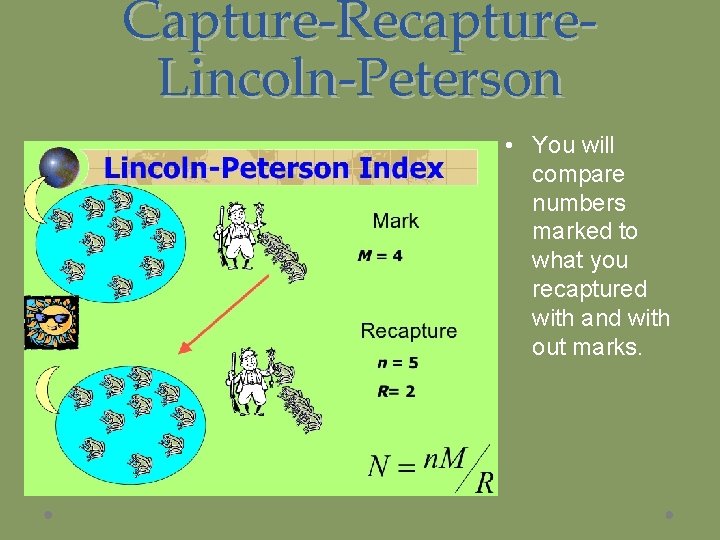
Capture-Recapture. Lincoln-Peterson • You will compare numbers marked to what you recaptured with and with out marks.
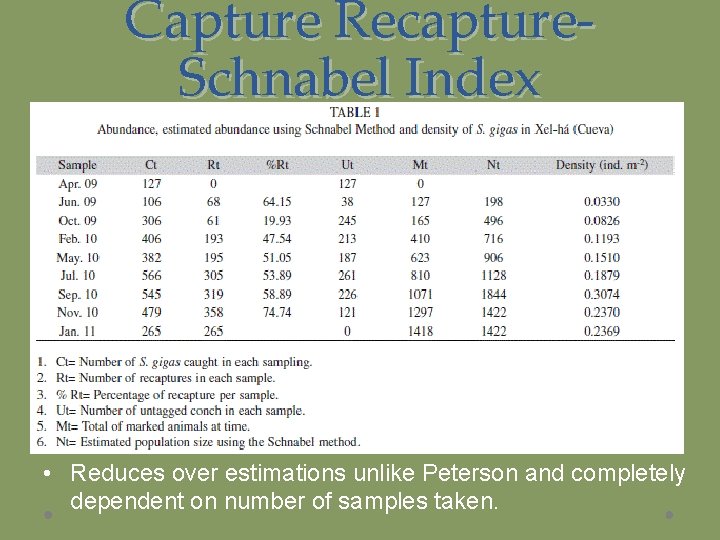
Capture Recapture. Schnabel Index • Reduces over estimations unlike Peterson and completely dependent on number of samples taken.
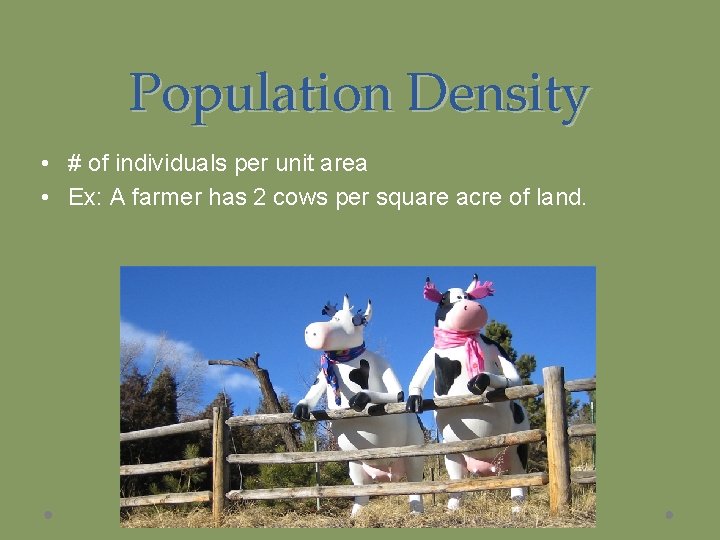
Population Density • # of individuals per unit area • Ex: A farmer has 2 cows per square acre of land.
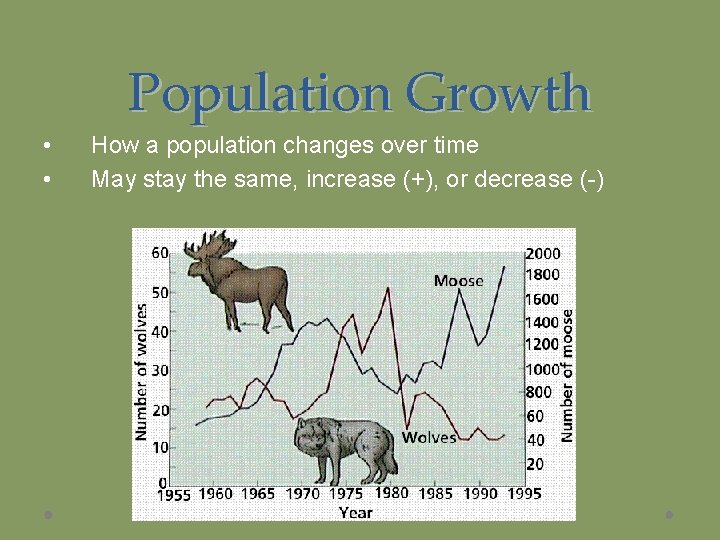
Population Growth • • How a population changes over time May stay the same, increase (+), or decrease (-)
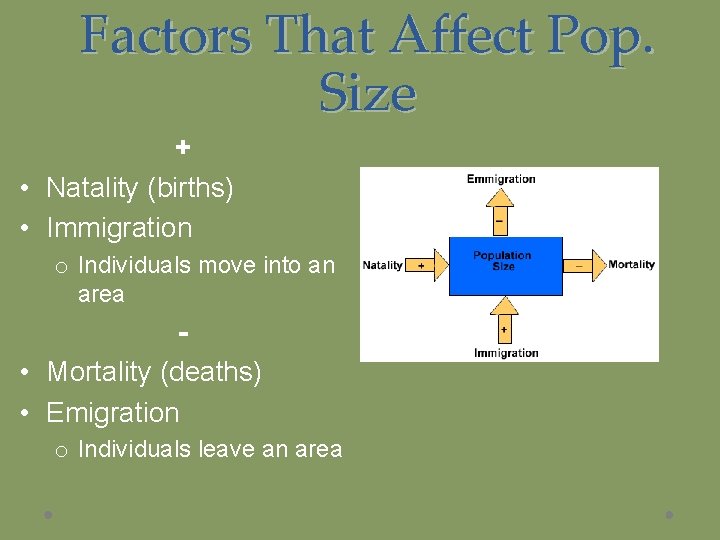
Factors That Affect Pop. Size + • Natality (births) • Immigration o Individuals move into an area • Mortality (deaths) • Emigration o Individuals leave an area
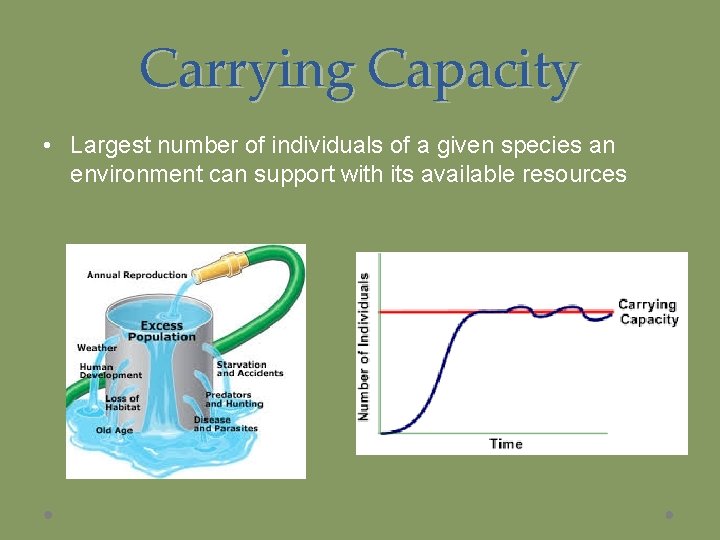
Carrying Capacity • Largest number of individuals of a given species an environment can support with its available resources
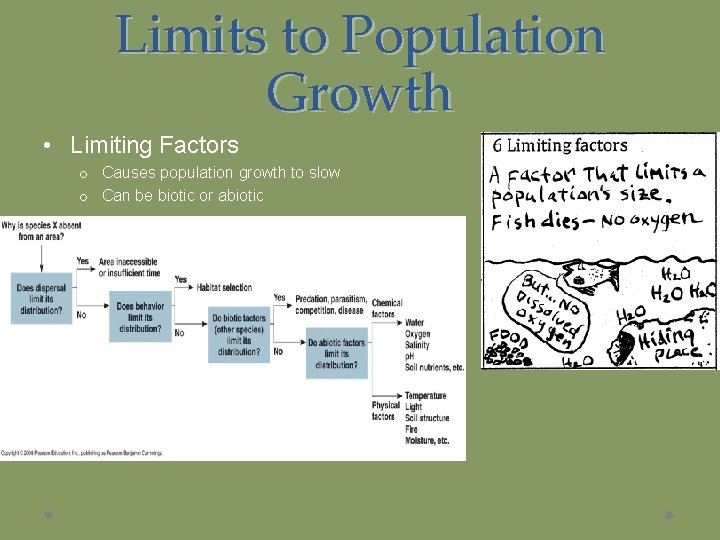
Limits to Population Growth • Limiting Factors o Causes population growth to slow o Can be biotic or abiotic
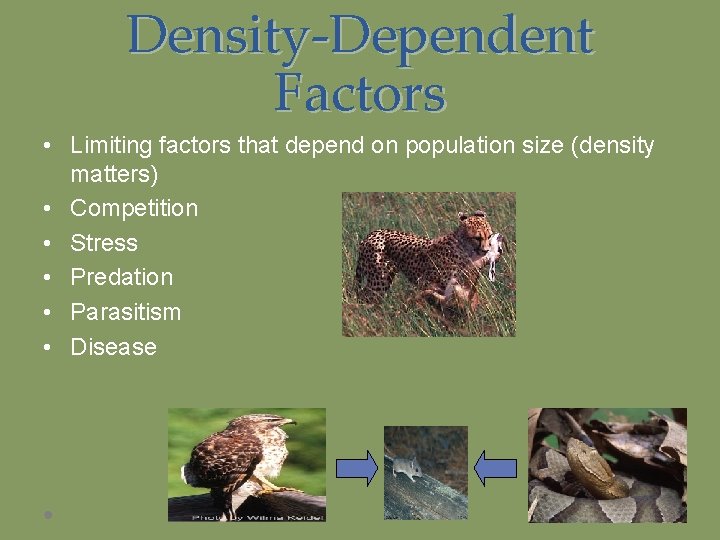
Density-Dependent Factors • Limiting factors that depend on population size (density matters) • Competition • Stress • Predation • Parasitism • Disease
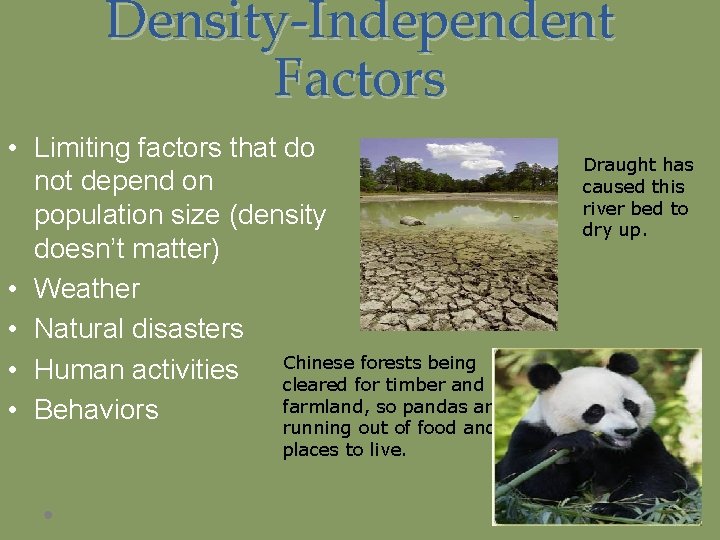
Density-Independent Factors • Limiting factors that do not depend on population size (density doesn’t matter) • Weather • Natural disasters Chinese forests being • Human activities cleared for timber and farmland, so pandas are • Behaviors running out of food and places to live. Draught has caused this river bed to dry up.
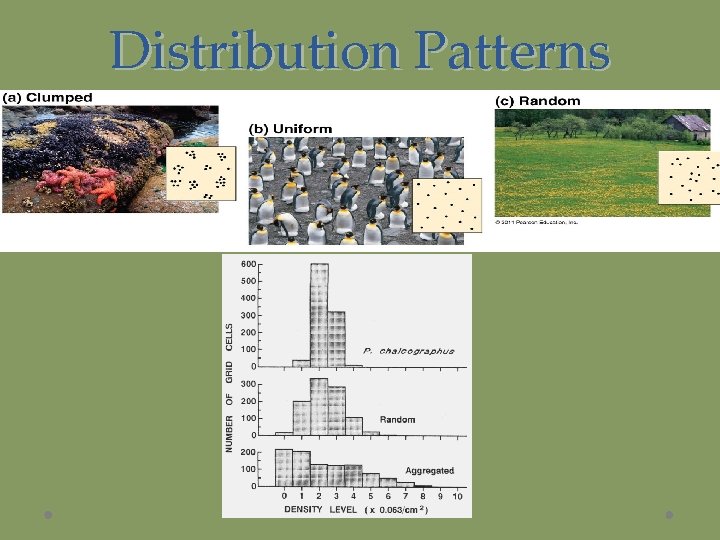
Distribution Patterns
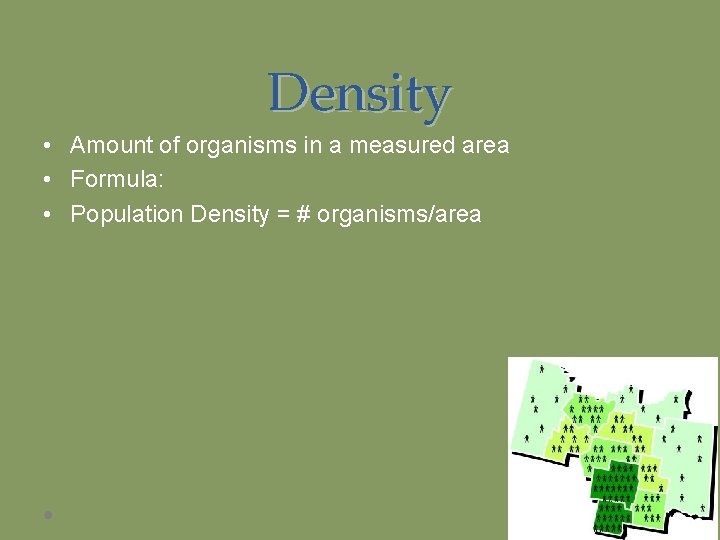
Density • Amount of organisms in a measured area • Formula: • Population Density = # organisms/area
Density Problems • EX: There are 7 squirrels counted in a 3 acre plot during the Spring of 2014. After a severely cold and snowy winter, there are only 3 in the spring of 2015. Density of 2014 7 squirrels/3 acres = 2. 3 squirrels per acre Desnity of 2015 3 squirrles/3 acres = 1. 0 squirrels per acre
Community Relationships
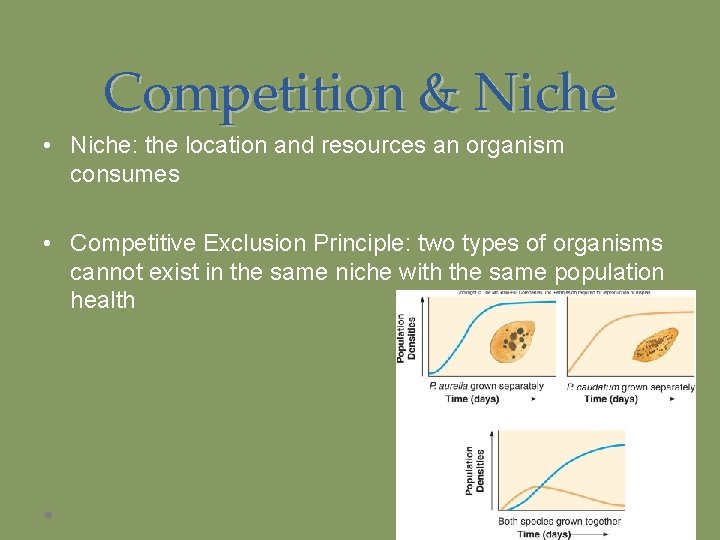
Competition & Niche • Niche: the location and resources an organism consumes • Competitive Exclusion Principle: two types of organisms cannot exist in the same niche with the same population health
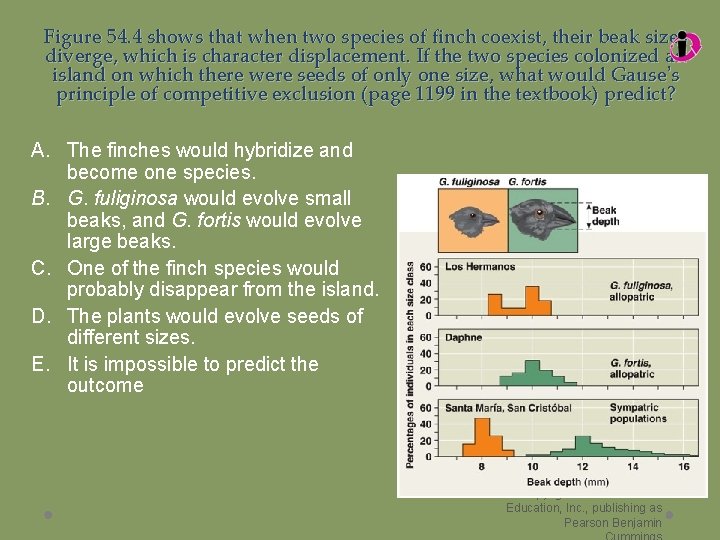
Figure 54. 4 shows that when two species of finch coexist, their beak sizes diverge, which is character displacement. If the two species colonized an island on which there were seeds of only one size, what would Gause’s principle of competitive exclusion (page 1199 in the textbook) predict? A. The finches would hybridize and become one species. B. G. fuliginosa would evolve small beaks, and G. fortis would evolve large beaks. C. One of the finch species would probably disappear from the island. D. The plants would evolve seeds of different sizes. E. It is impossible to predict the outcome Copyright © 2008 Pearson Education, Inc. , publishing as Pearson Benjamin
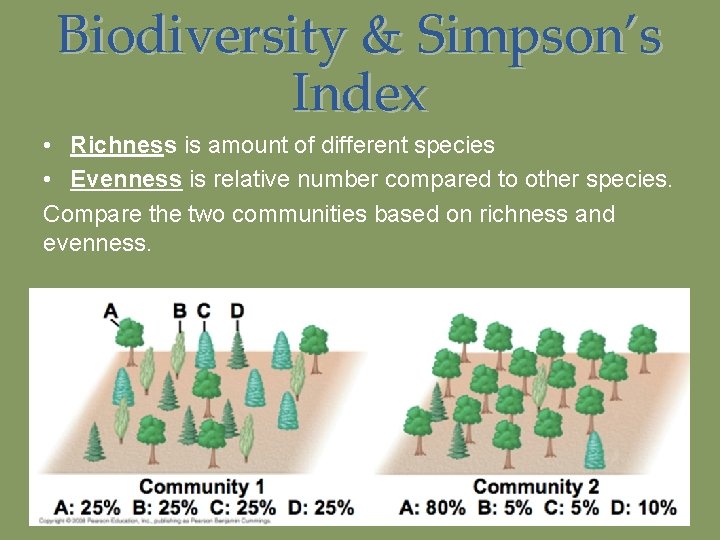
Biodiversity & Simpson’s Index • Richness is amount of different species • Evenness is relative number compared to other species. Compare the two communities based on richness and evenness.
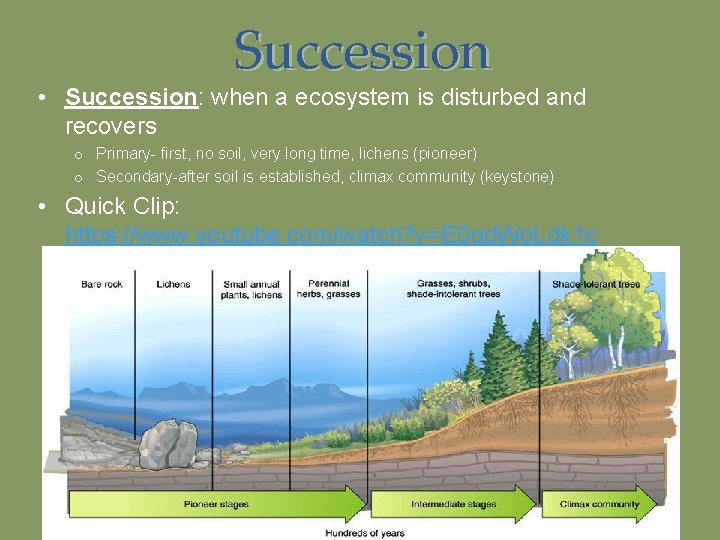
Succession • Succession: when a ecosystem is disturbed and recovers o Primary- first, no soil, very long time, lichens (pioneer) o Secondary-after soil is established, climax community (keystone) • Quick Clip: https: //www. youtube. com/watch? v=E 0 qd. Wo. Ldk 1 c