
PopulationFocused Prevention Plan Obesity Dua Siam APRN NPBC
Population-Focused Prevention Plan Obesity Dua Siam, APRN, NP-BC NUR-735 March 3, 2013
Definition Obesity: • Accumulation of lipids stored in adipose tissue results from diet high in calories and lifestyle of decreased physical activity • Excessive weight that can hinder health (De. Celle &Ingram, 2012)
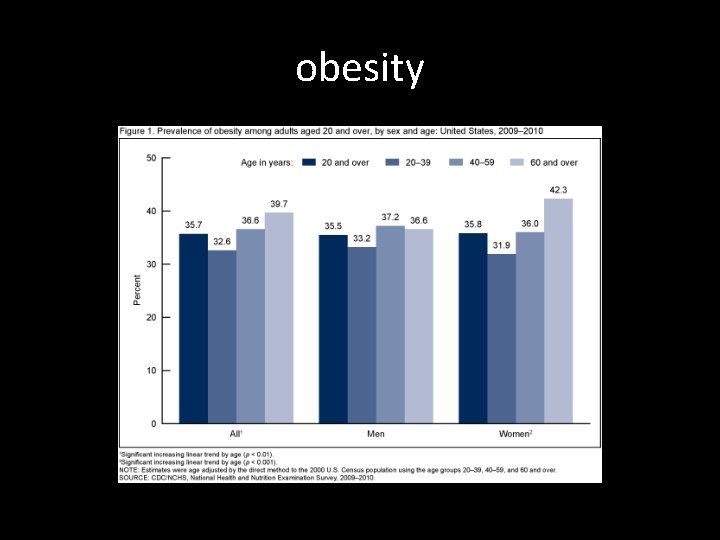
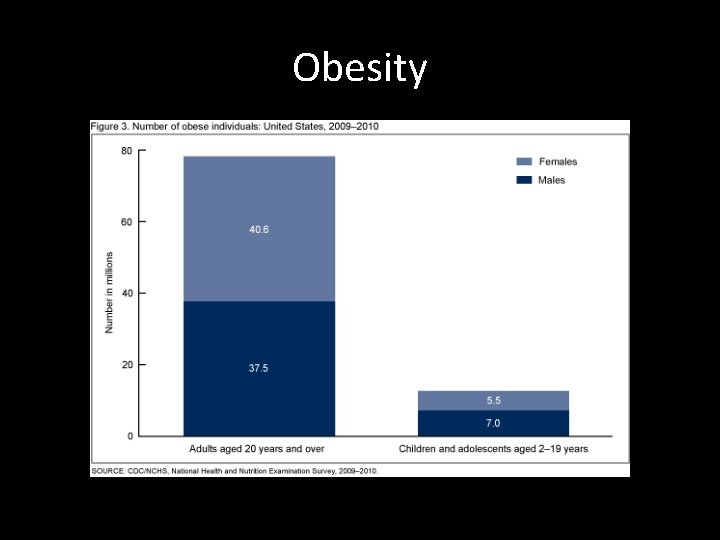
Obesity • Affects individuals irrespective of sex, age, race, or ethnicity (De. Celle & Ingram, 2012) • Physiologic effects (Todd, 2009) – Type 2 diabetes – Cardiovascular disease – Hypertension – Coronary heart disease
Obesity • Emotional & Psychological effect (Burke & Wang, 2011) • • • Altered Body image Hopelessness Helplessness Embarrassment Isolation Social stigmatization
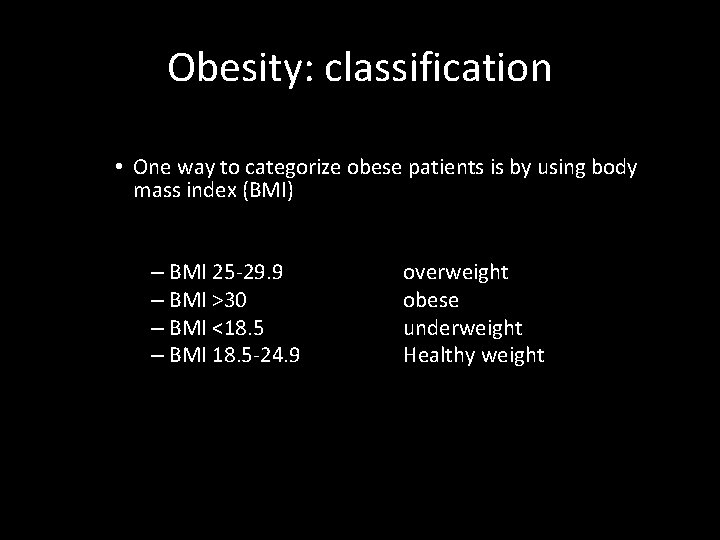
Obesity: classification • One way to categorize obese patients is by using body mass index (BMI) – BMI 25 -29. 9 – BMI >30 – BMI <18. 5 – BMI 18. 5 -24. 9 overweight obese underweight Healthy weight

Obesity: classification The Centers for Disease Control and Prevention (CDC) defined overweight in children (Kuczmarski et al. , 2000) using the growth charts: • 85 th-94 th overweight • exceeding 95 th obese.
obesity
Obesity
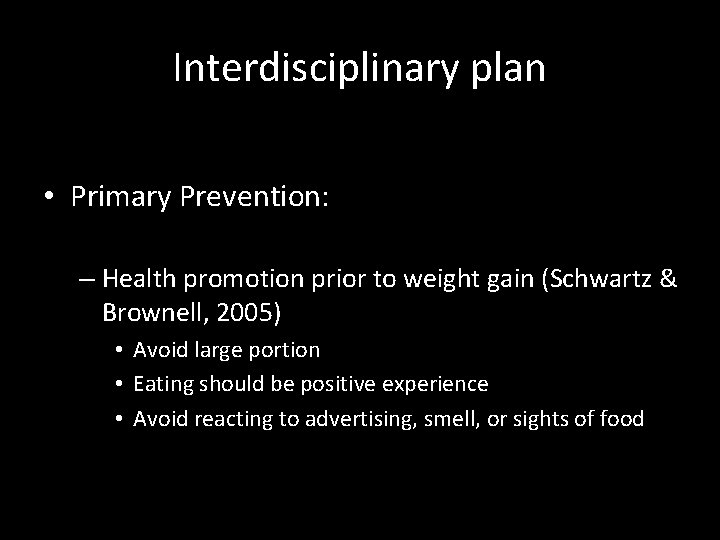
Interdisciplinary plan • Primary Prevention: – Health promotion prior to weight gain (Schwartz & Brownell, 2005) • Avoid large portion • Eating should be positive experience • Avoid reacting to advertising, smell, or sights of food
Secondary Prevention – Preventing further gain in those who are obese – Food environment’s influence on individual choices – Food consumption: the quality, quantity and frequency. – Educating on healthy eating
Tertiary Prevention Maintenance strategies to avoid weight gain • Behavioral intervention: – Identify barriers, skill set s for changing behavior – Decrease TV time, increase physical activity • Community campaign – Walking groups to encourage social support • Enhance access to physical activity – Partnership with local organizations such as the YMCA
Planning and Implementation • Community advocacy (Koplan et al. , 2005) include: – Local media campaign – Zoning limits – Nutrition labeling for fast food restaurants
Planning and Implementation • Promote healthy food choices • Supporting food cooperatives • Farmers markets • Fresh produce in grocery and convenience stores
Planning and Implementation – Health department • Emphasis on policy implementation. – Health care providers • Translate evidence based information on effective obesity reduction and prevention • practices into programs, policies, • environmental strategies.
Planning and Implementation – Teachers/Educators • Promote wellness, emphasize value of nutrition • Emphasize value of physical activity – Public officials • Pass legislation to create healthier environment to promote wellness – Community leaders: • Provide support and finance certain community projects to promote wellness campaigns
NP Competencies • Empowerment: – Empowering others through education • Delegation – Delegating tasks to members of the group based on their proficiency • Decision making: – Having the ability to make decisions based on input from stakeholders
Evaluation • Local surveys : – Proximity of full service grocery stores • Improved access • Consumption of healthy & affordable food – Number of fast food establishment • Decreased access to and consumption of low-nutrient food – Proximity of outdoor recreation venues • Reduced sedentary behaviors • Increased physical activity
Summary • Obesity is a public health concern both in the United states and worldwide (Hopkins, 2011). • To improve the prevention of obesity there is a need to change the environment to make it easier for people to chose a healthier lifestyle (Hindle, 2012). • Community nurses are well placed to promote healthy lifestyles , and an integrated family or community approach (Shoney, 2012).
References • Burke, LE. , Wang, J. (2011). Treatment Strategies for overweight and obesity. J Nurs Scholarsh. 43(4), 368 -375. • De. Celle, Gina. , Ingram, Racquel R. (2012). Managing an emerging health crises. Nursing Management, 43 (7), 26 -33. • Hindle, L. , & Mills, S. (2012). Obesity: Self-care and illness prevention. Practice Nursing, 23(3), 130 -134.
References • Hopkins, K. F. , De. Cristofaro, C. , & Elliott, L. (2011). How can primary care providers manage pediatric obesity in the real world? Journal of the American Academy of Nurse Practitioners, 23(6), 278 -288. doi: 10. 1111/j. 1745 -7599. 2011. 00614. x. • Koplan, J. P. , Liverman, C. T. , & Kraak, V. I. (Eds. ). (2005). Preventing childhood obesity: Health in the balance. Washington, DC: National Academies Press.
References • Kuczmarski, R. J. , Oden, C. L. , Grummer-Strawn, L. M. , Flegal, K. M. , Guo, S. S. , Wei, R. , et al. (2000). CDC growth charts: United States. Advance Data, 314, 1 -27. • Schwartz, M. B. , &Brownell, K. D. (2005). Public policy and obesity: The need to marry science with advocacy. Psychiatric Clinics of North America, 28, 235 -252.
References • Shoneye, C. (2012). Prevention and treatment of obesity in adults with learning disabilities. Learning Disability Practice, 15(3), 32 -37. • Todd, M. (2009). Managing chronic oedema in the moribdly obese patient. Br J Nurs. 18 (18), 1120 -1124.
- Slides: 22