
Population Studies PreAssessment 1 What is a population

- Slides: 23
Population Studies
Pre-Assessment: 1. What is a population? 2. What might influence population #’s (give 3 things)? 3. How many people are there on Earth? 4. Do you think that the human population can continue to grow forever? Why or why not?
o http: //video. nationalgeographic. com/vide o/player/specials/sitewide-redesign/ngm 7 billion. html
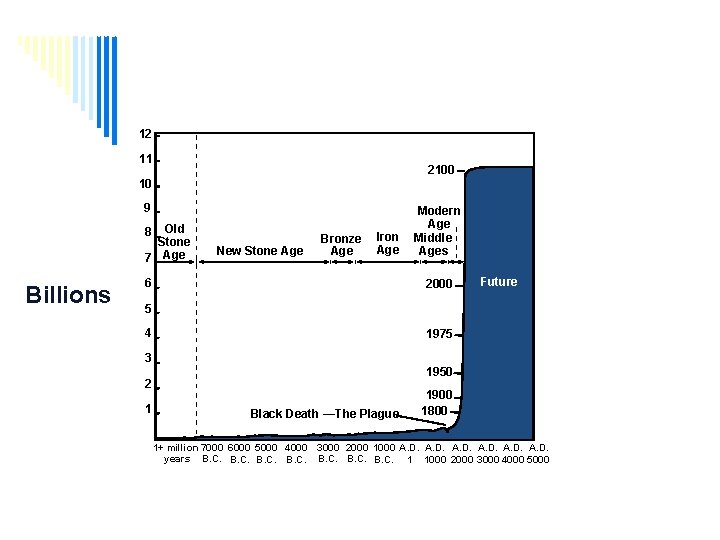
World Population Growth Through History 12 11 2100 10 9 Old Stone 7 Age 8 Billions New Stone Age Bronze Age Iron Age 6 Modern Age Middle Ages 2000 Future 5 4 1975 3 1950 2 1 Black Death —The Plague 1900 1800 1+ million 7000 6000 5000 4000 3000 2000 1000 A. D. years B. C. 1 1000 2000 3000 4000 5000 Source: Population Reference Bureau; and United Nations, World Population Projections to 2100 (1998).
AN ECOSYSTEM IS… o. All the populations and abiotic factors in an area. SO WHAT’S A POPULATION?
A population is…. a group of organisms of the SAME species living in a specific area What is a Species? organisms that are able to interbreed
POPULATION ECOLOGY o This is the study of how and why populations change and grow. o Ecologists try to identify the factors limiting population growth; understanding this helps predict future growth. o For populations to survive, many different factors must stay in balance.
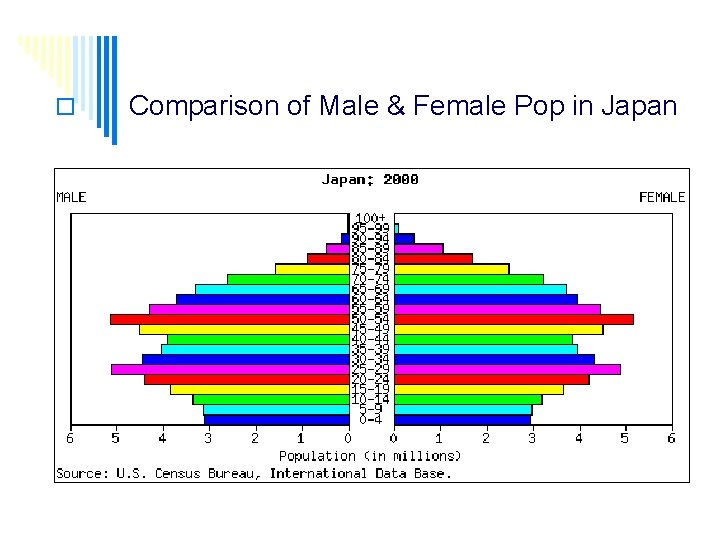
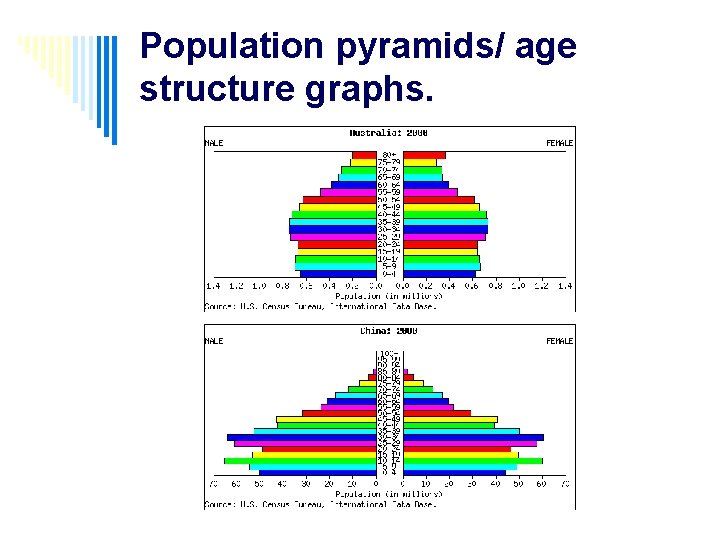
How do we show populations? o In a GRAPH!! o What are some factors to compare about populations? 1. Total number of individuals during any year 2. Number of women vs number of men 3. Number of individuals that are young, middle aged, or old HOW do we get all this info on 1 graph? ? ?
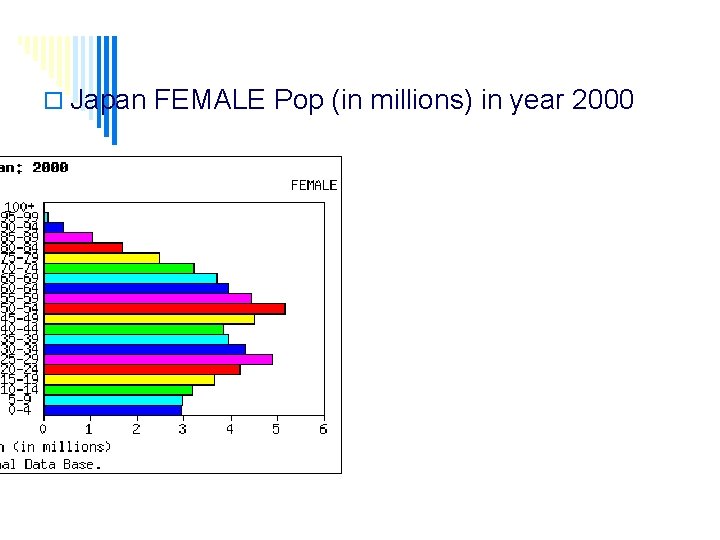
o Japan FEMALE Pop (in millions) in year 2000
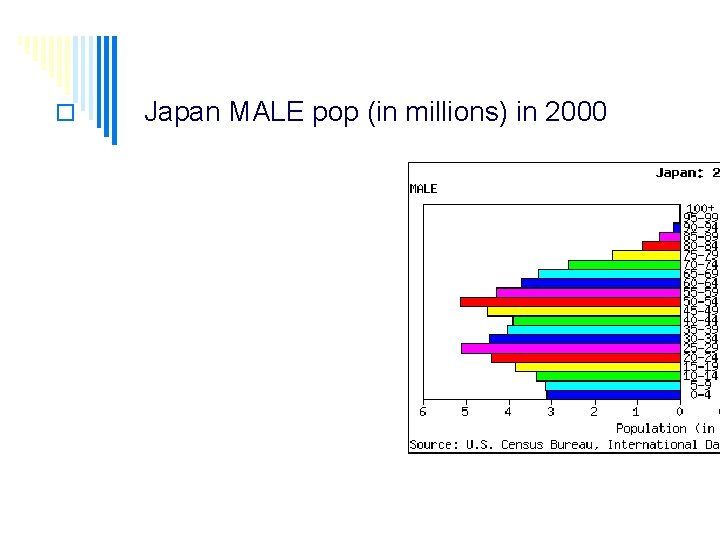
o Japan MALE pop (in millions) in 2000
o Comparison of Male & Female Pop in Japan
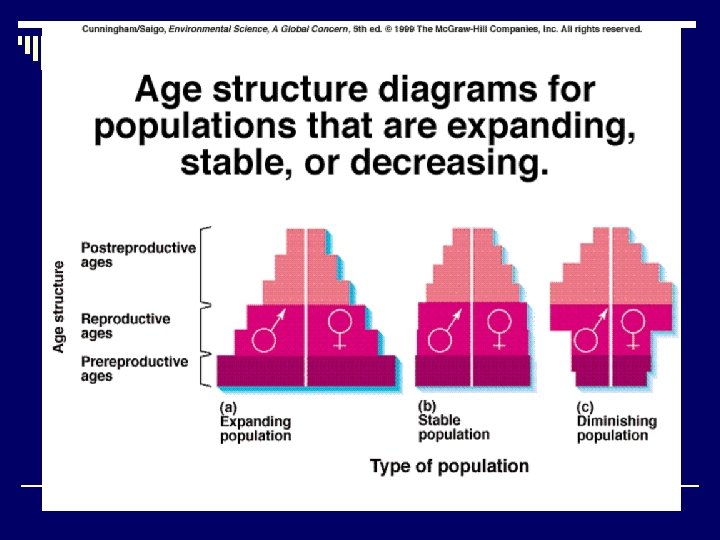
o Which parts of the population INCREASE the size of the population? o Which part of the poulation DECREASES the size of the population?
Population pyramids/ age structure graphs.
Limiting Factors for Populations o. Limiting Factors can affect the number of organisms (i. e. population of people, animal, or plants) in a region/country
Limiting Factors for Populations, cont. o. Limiting factors can be: n a. Density Dependent or n b. Density Independent o Density = number of individuals per unit of area (Ex. = 65 people per square mile)
Density Dependent Limiting Factors o Density dependent factors (factors affected by the number of people/animals /plants living in the particular area. ) n Amount of food available n Living space n Disease n Competition n Predation
Density Independent Limiting Factors o. Density independent factors (these have nothing to do with the number of people/ animals/plants living in a given area) n Weather n Seasonal cycles n Natural disasters n Human activities
Specific examples of Density Independent factors o Natural disasters Drought n Fire n Volcanic eruption n o Human activities Housing development n Road building n Farming n
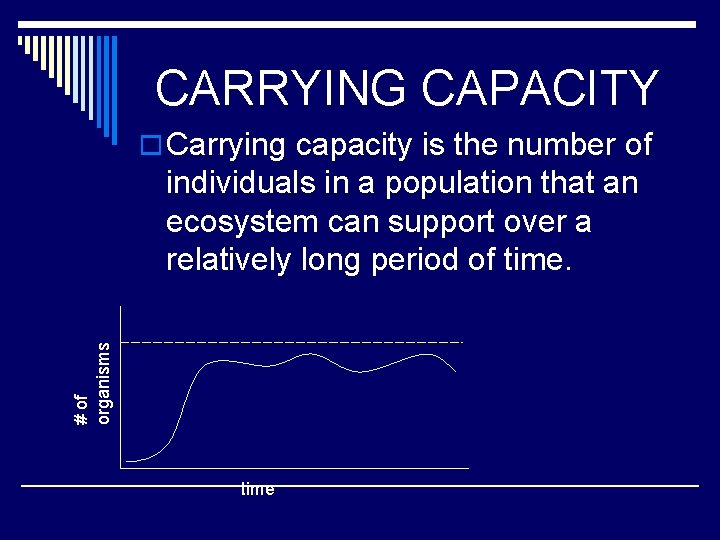
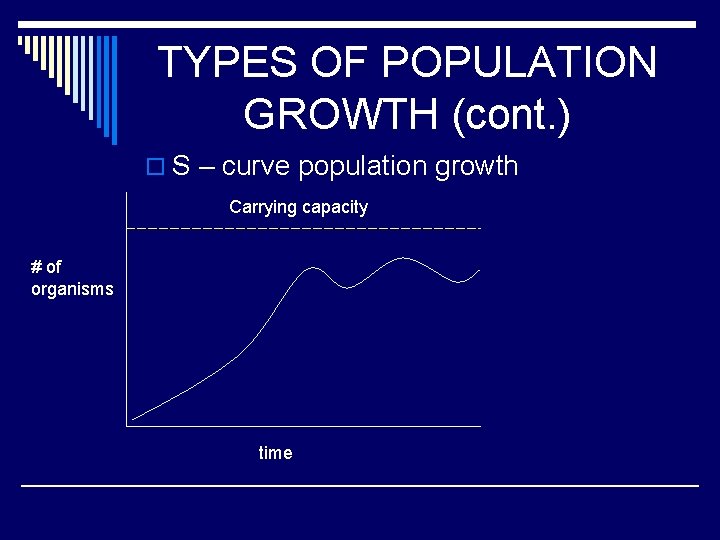
CARRYING CAPACITY o Carrying capacity is the number of # of organisms individuals in a population that an ecosystem can support over a relatively long period of time
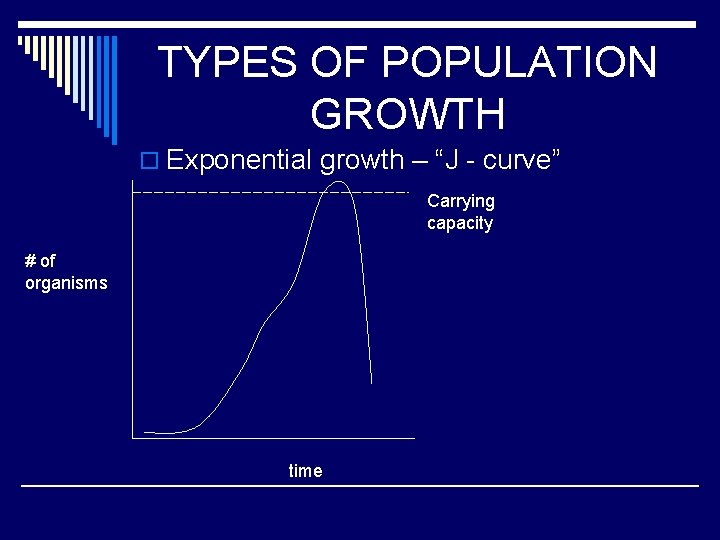
TYPES OF POPULATION GROWTH o Exponential growth – “J - curve” Carrying capacity # of organisms time
TYPES OF POPULATION GROWTH (cont. ) o S – curve population growth Carrying capacity # of organisms time
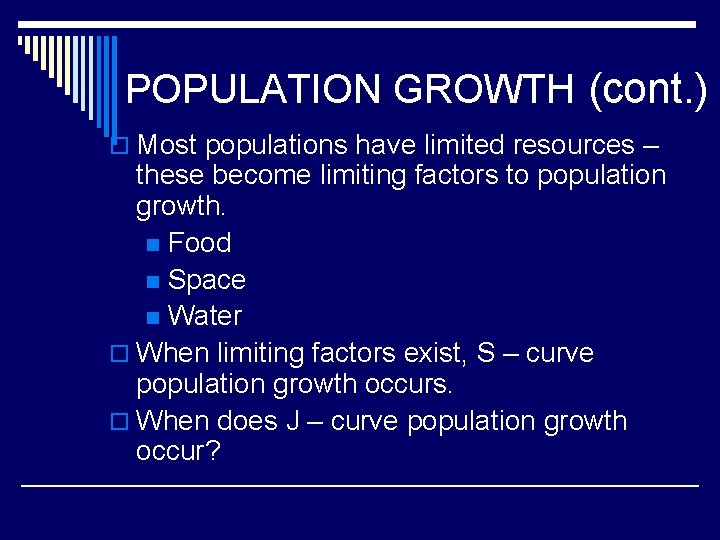
POPULATION GROWTH (cont. ) o Most populations have limited resources – these become limiting factors to population growth. n Food n Space n Water o When limiting factors exist, S – curve population growth occurs. o When does J – curve population growth occur?