
POPULATION STUDIES 4 POPULATION MOVEMENT GEOGRAPHY GRADE 10
- Slides: 21
POPULATION STUDIES 4 – POPULATION MOVEMENT GEOGRAPHY GRADE 10 © J. D. RICH 2020
WHAT ARE THE BIG ISSUES IN THIS UNIT? ◦ WHAT IS POPULATION MOVEMENT- Definition and types ◦ WHY MIGRATION HAPPENS– PUSH and PULL factors ◦ HOW MUCH HAPPENS, AND WHERE ◦ IMPACT OF MIGRATION– Who gets affected and what are the positive and negative effects ◦ MANAGING MIGRATION – Why, if, and how this could be done
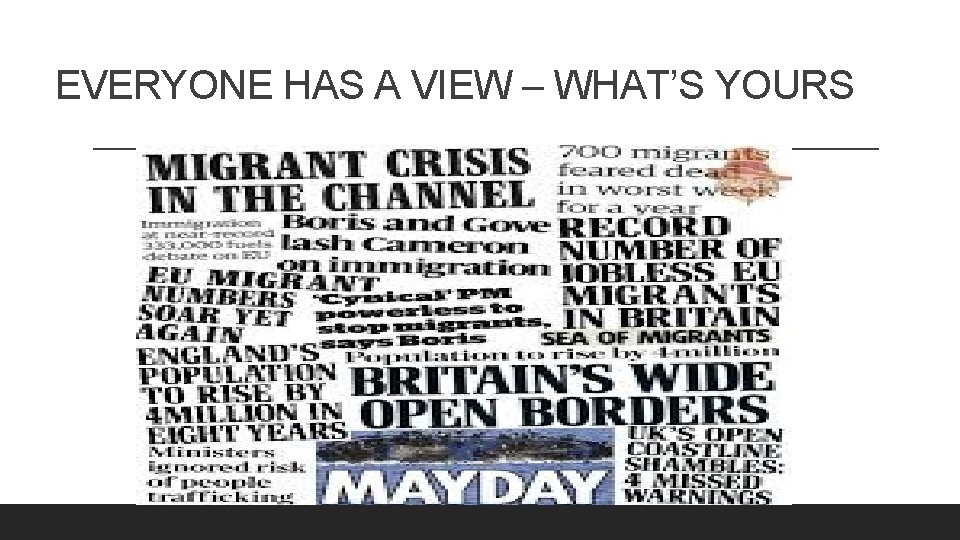
EVERYONE HAS A VIEW – WHAT’S YOURS
STOP AND THINK Before you go any further think about what you already know: 1. Why do think geographers and planners want to study population movement? 2. How would you define migration or population movement? 3. What do you think about people moving to other countries? 4. Why do people sometimes view migrants in a negative light? Post a few comments on the blog or be prepared to discuss these ideas in class.
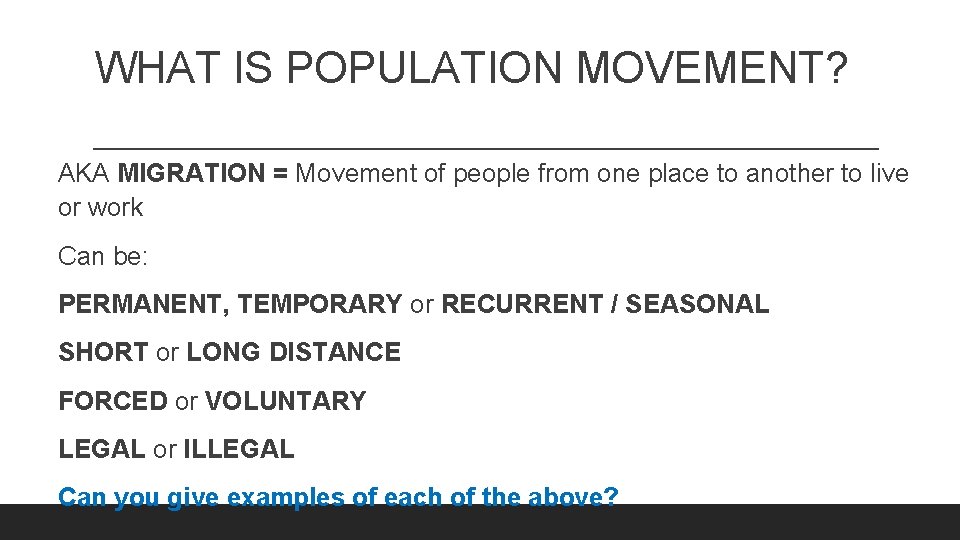
WHAT IS POPULATION MOVEMENT? AKA MIGRATION = Movement of people from one place to another to live or work Can be: PERMANENT, TEMPORARY or RECURRENT / SEASONAL SHORT or LONG DISTANCE FORCED or VOLUNTARY LEGAL or ILLEGAL Can you give examples of each of the above?
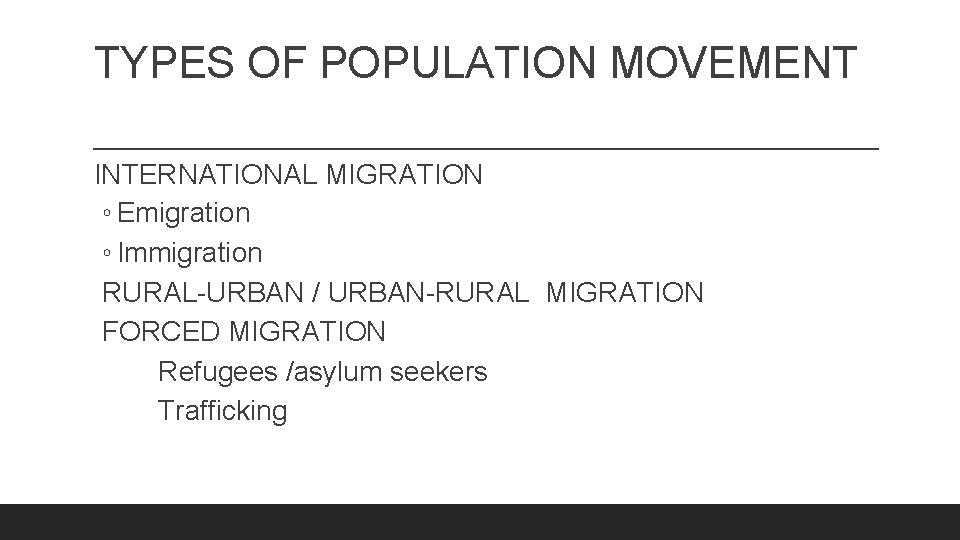
TYPES OF POPULATION MOVEMENT INTERNATIONAL MIGRATION ◦ Emigration ◦ Immigration RURAL-URBAN / URBAN-RURAL MIGRATION FORCED MIGRATION Refugees /asylum seekers Trafficking
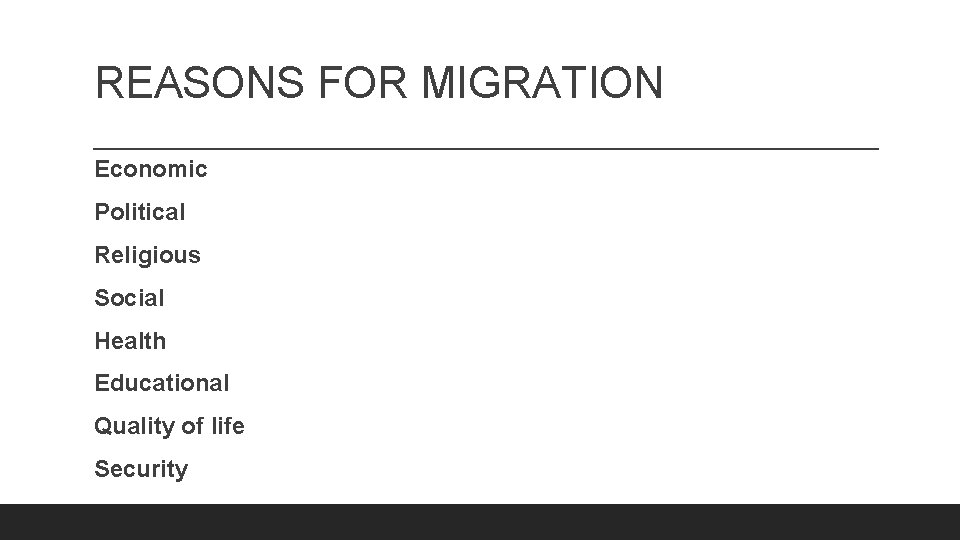
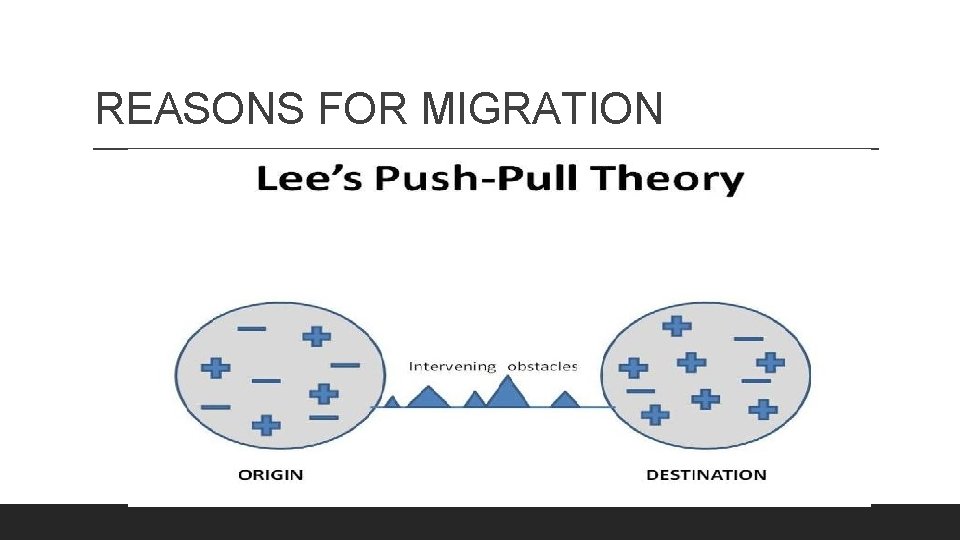
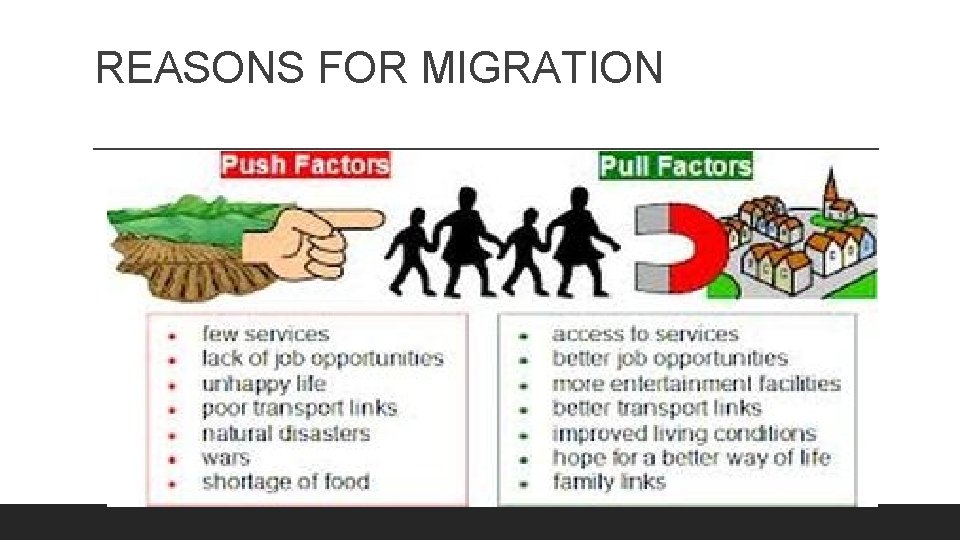
REASONS FOR MIGRATION Economic Political Religious Social Health Educational Quality of life Security
REASONS FOR MIGRATION
REASONS FOR MIGRATION
STOP AND THINK What “push” and “pull” factors played a role in the movement of the Ndebele under Mzilikazi during the Mfecane? Can Lee’s push-pull theory be used to explain the Great Trek? Think of two people you know of who have migrated and try to list some of the push and pull factors that shaped their decisions
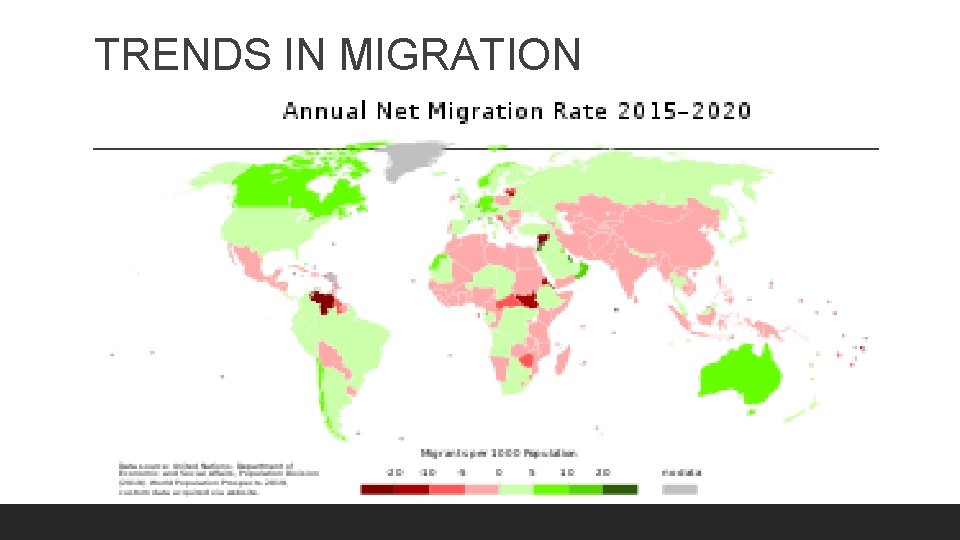
TRENDS IN MIGRATION
THINKING ABOUT TRENDS 1. In the previous slide Canada and Australia are very popular destinations and have more migrants entering than leaving. Can you think of reasons for this? 2. Somalia, Colombia and South Sudan are three of the countries that lose most migrants compared to those they gain? Why? 3. Germany has a higher net immigration than most other European countries. How do you think this may affect Germany if it continues for some time? 4. When countries actively recruit immigrants what are some of the characteristics they usually look for and why?
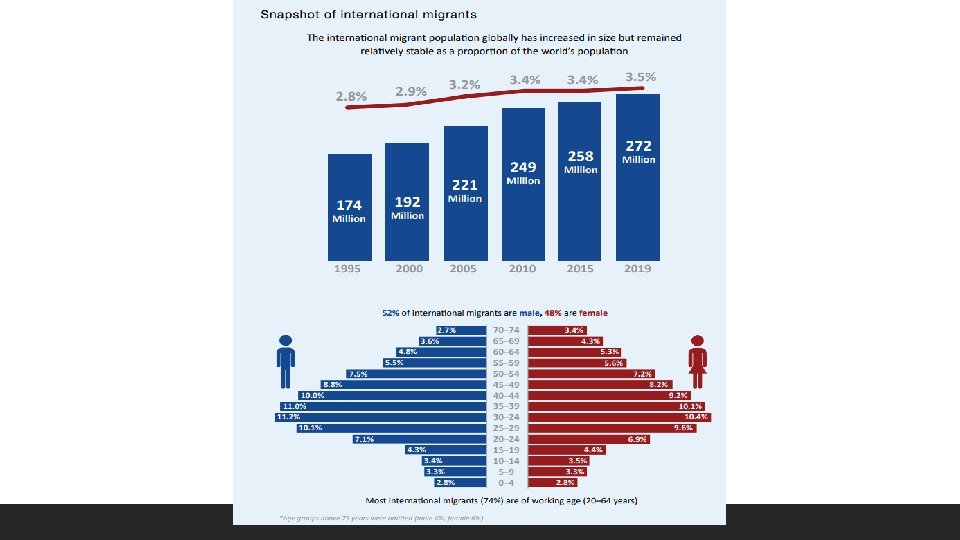
THINKING ABOUT TRENDS (2) 1. Can you suggest reasons why the percentage of the world’s population who are migrants has not changed much over time? 2. Comment on and suggest reasons for the shape of the population pyramid of migrants 3. What are some obstacles that discourage older people from migrating?
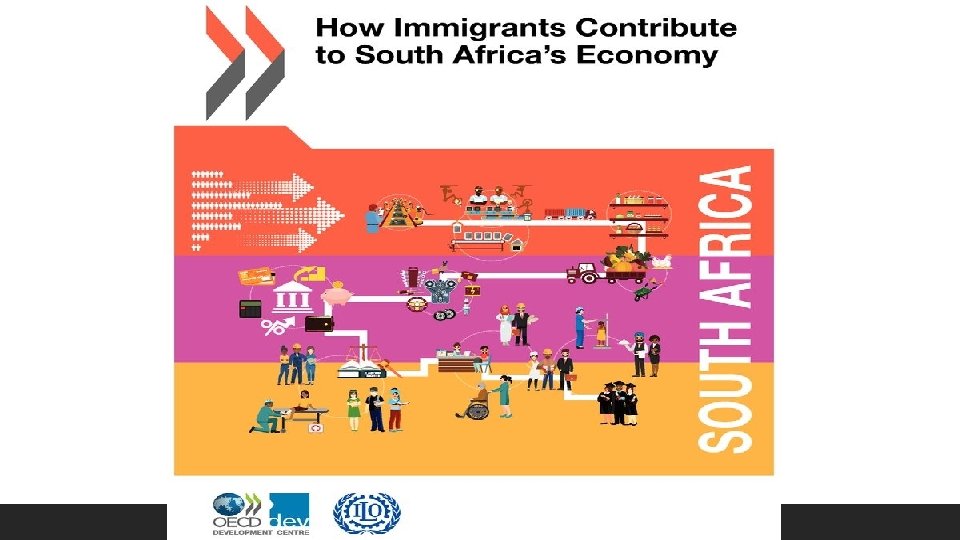
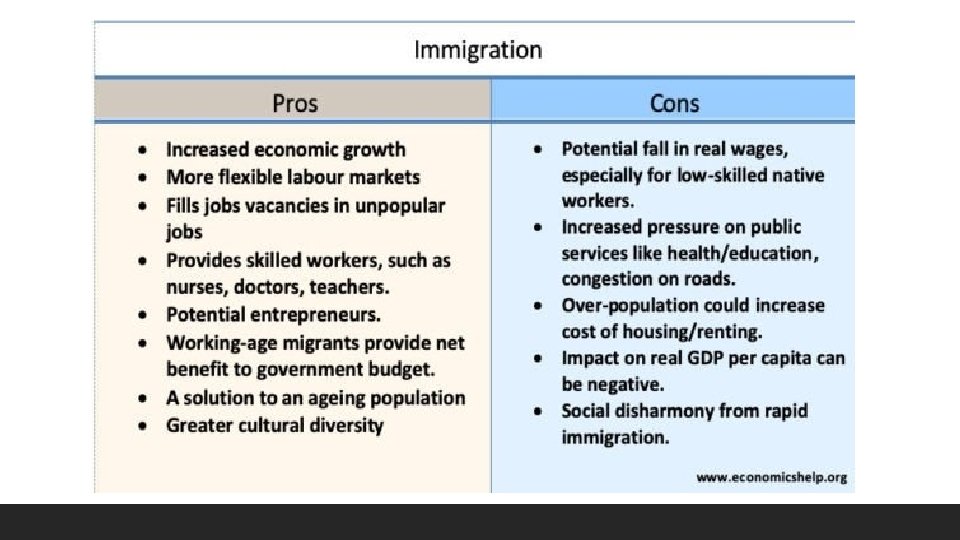
IMPACT OF MIGRATION 1. How do immigrants possibly add value to their new host country? 2. What possible threats do immigrants pose for their new host countries? 3. What do countries potentially lose when people emigate from them? 4. How do emigrants potentially benefit their original home countries? 5. When emigrants return to their home countries is this a positive or negative thing? Explain
MANAGING MIGRATION • Visas and passports • Border security • Points systems • Recruitment – incentives What do you think of something like a Schengen visa for SADC countries?
CHECKING WHAT I’VE LEARNED Am I able to: Define migration and distinguish different types of migration? Explain why and give examples of reasons for migration? Use a map or graph to discuss where migration occurs and who typically migrates? Show migration impacts on the population of a place? Explain options for managing migration?