
Population Structure Partitioning of Genetic Variation Bannertailed kangaroo
Population Structure Partitioning of Genetic Variation
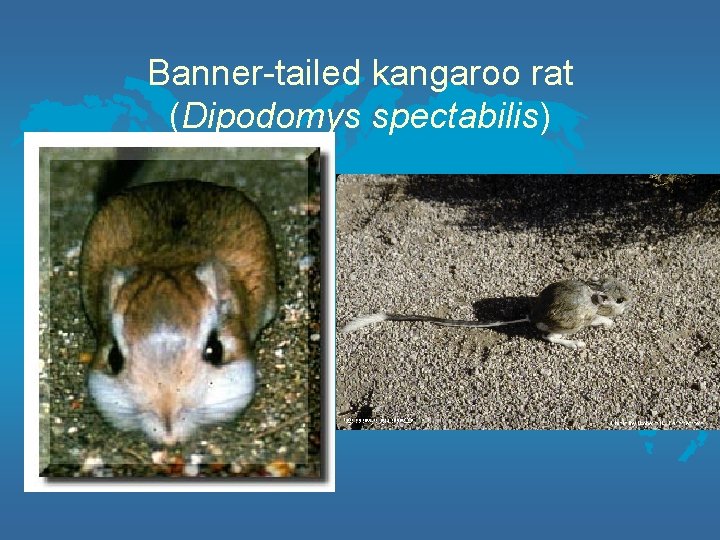
Banner-tailed kangaroo rat (Dipodomys spectabilis)
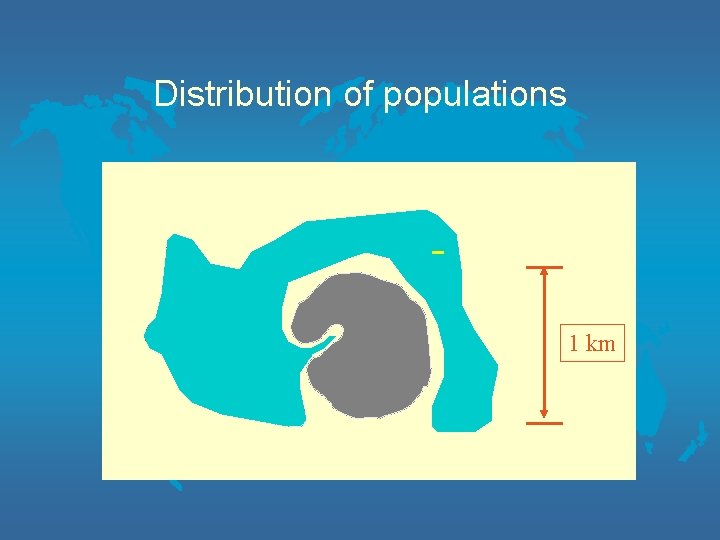
Distribution of populations SSW 1 km R 2
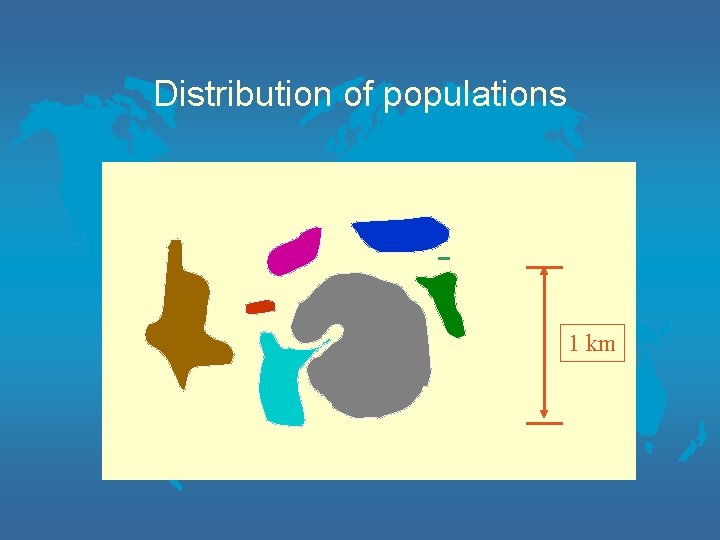
Distribution of populations 1 km
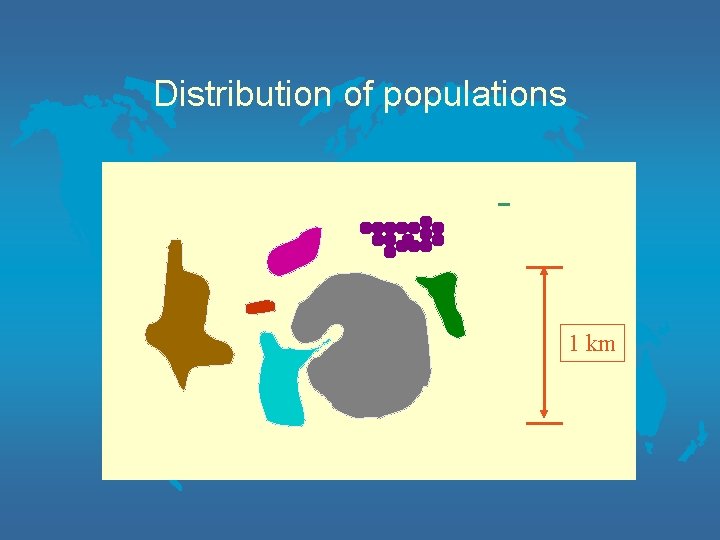
Distribution of populations 1 km
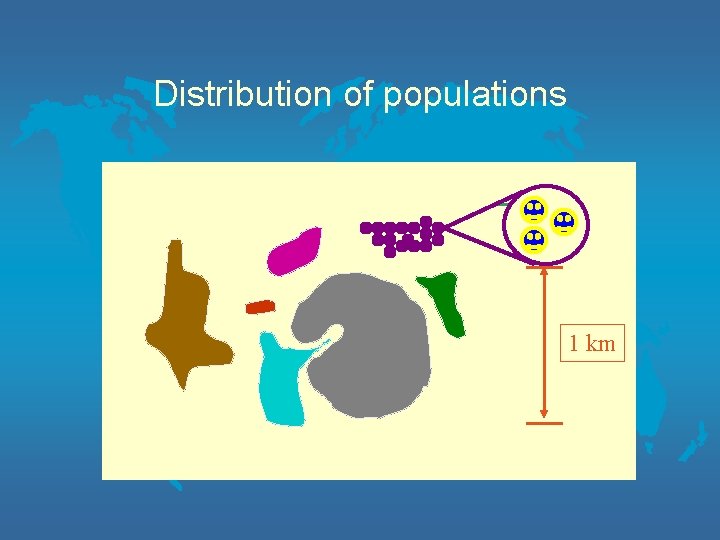
Distribution of populations 1 km
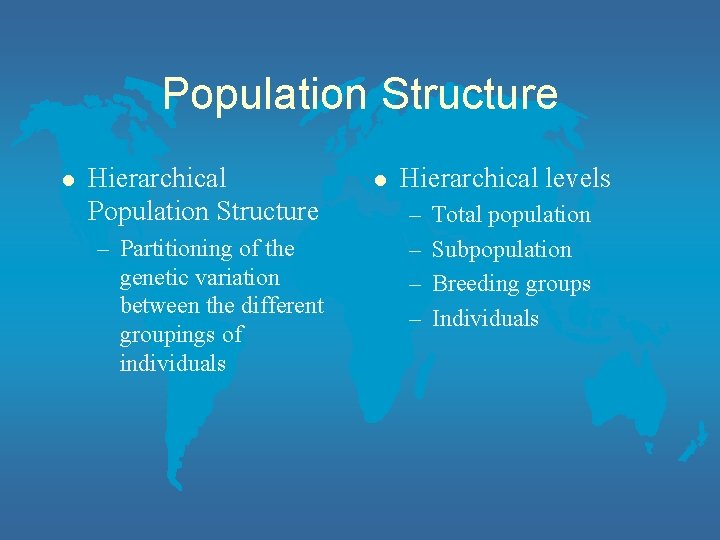
Population Structure l Hierarchical Population Structure – Partitioning of the genetic variation between the different groupings of individuals l Hierarchical levels – – Total population Subpopulation Breeding groups Individuals
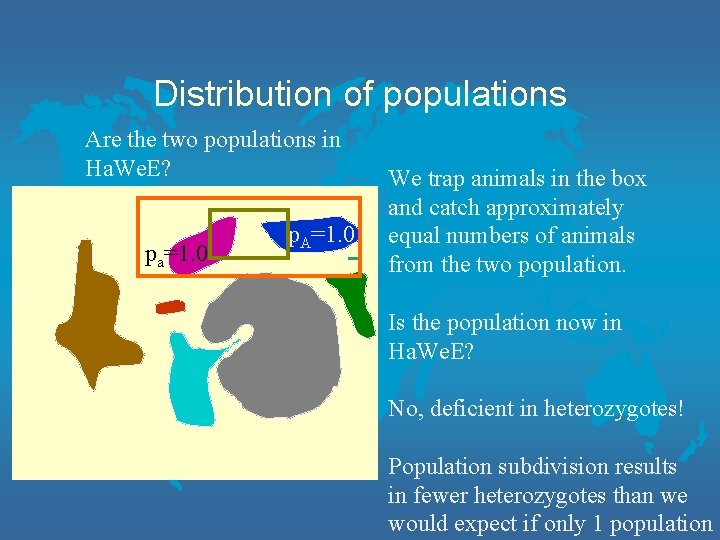
Distribution of populations Are the two populations in Ha. We. E? pa=1. 0 p. A=1. 0 We trap animals in the box and catch approximately equal numbers of animals from the two population. Is the population now in Ha. We. E? No, deficient in heterozygotes! Population subdivision results in fewer heterozygotes than we would expect if only 1 population
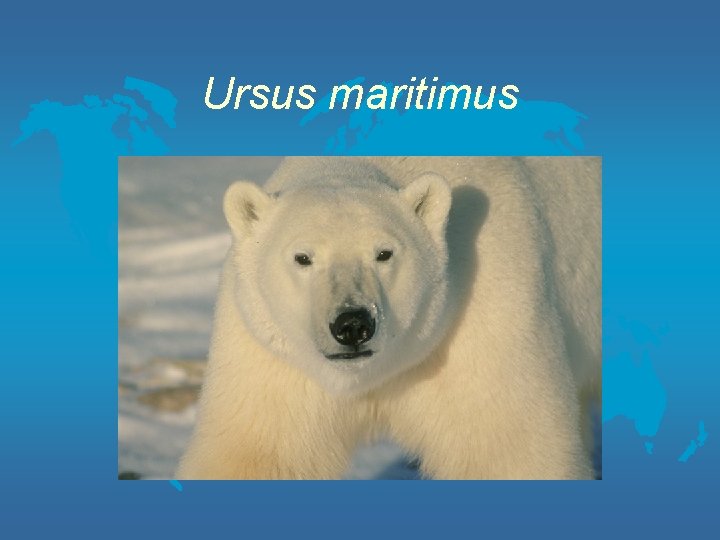
Ursus maritimus
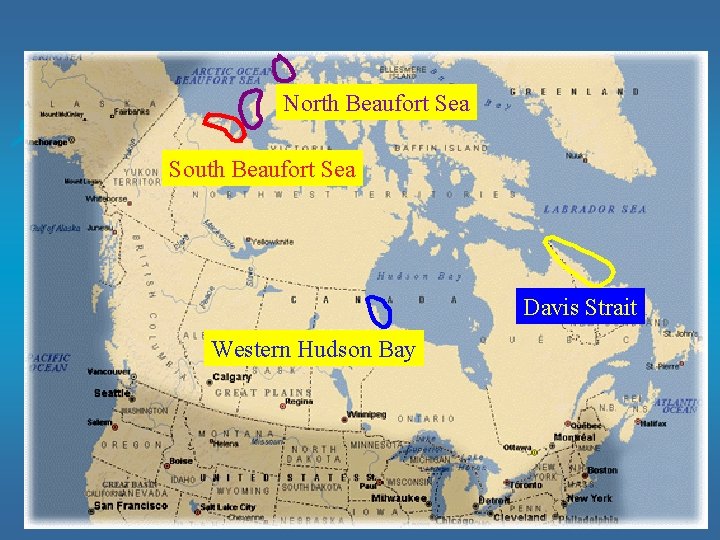
North Beaufort Sea South Beaufort Sea Davis Strait Western Hudson Bay
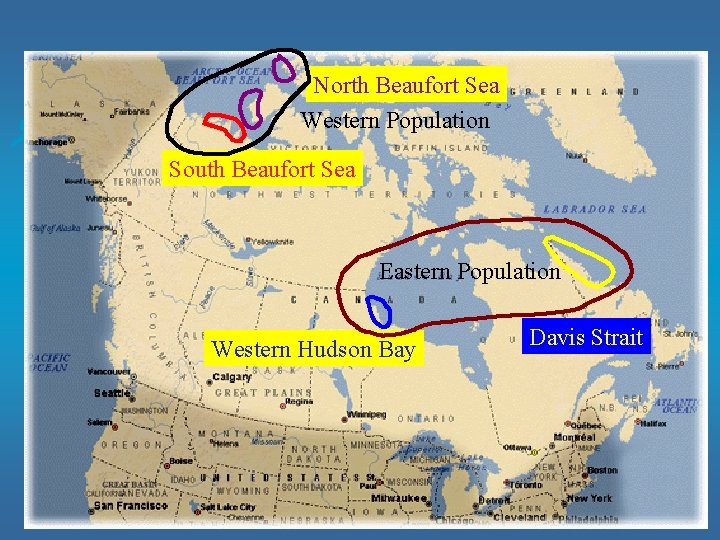
North Beaufort Sea Western Population South Beaufort Sea Eastern Population Western Hudson Bay Davis Strait
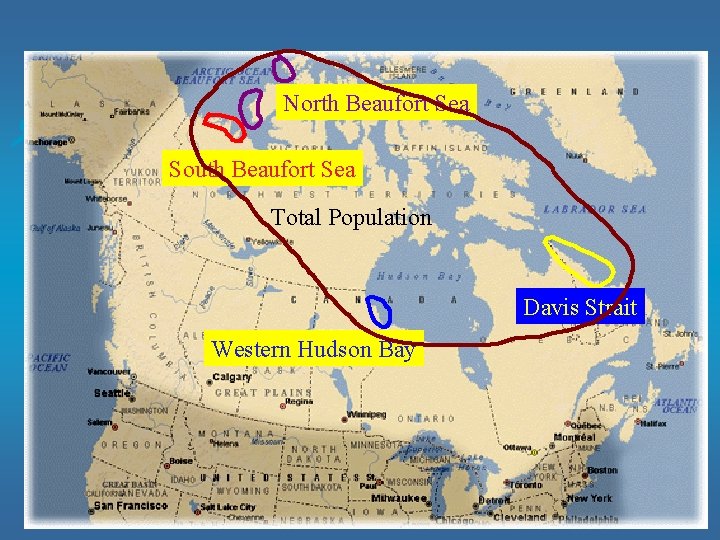
North Beaufort Sea South Beaufort Sea Total Population Davis Strait Western Hudson Bay
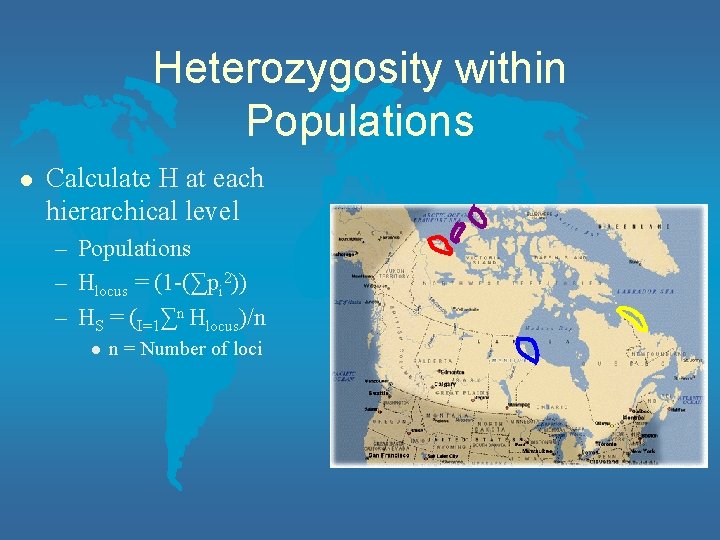
Heterozygosity within Populations l Calculate H at each hierarchical level – Populations – Hlocus = (1 -(∑pi 2)) – HS = (I=1∑n Hlocus)/n l n = Number of loci
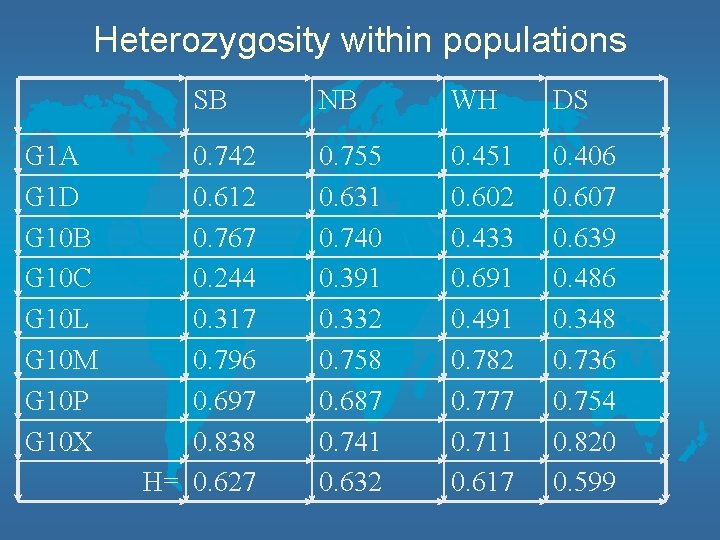
Heterozygosity within populations SB G 1 A G 1 D G 10 B G 10 C G 10 L G 10 M G 10 P G 10 X 0. 742 0. 612 0. 767 0. 244 0. 317 0. 796 0. 697 0. 838 H= 0. 627 NB WH DS 0. 755 0. 631 0. 740 0. 391 0. 332 0. 758 0. 687 0. 741 0. 632 0. 451 0. 602 0. 433 0. 691 0. 491 0. 782 0. 777 0. 711 0. 617 0. 406 0. 607 0. 639 0. 486 0. 348 0. 736 0. 754 0. 820 0. 599
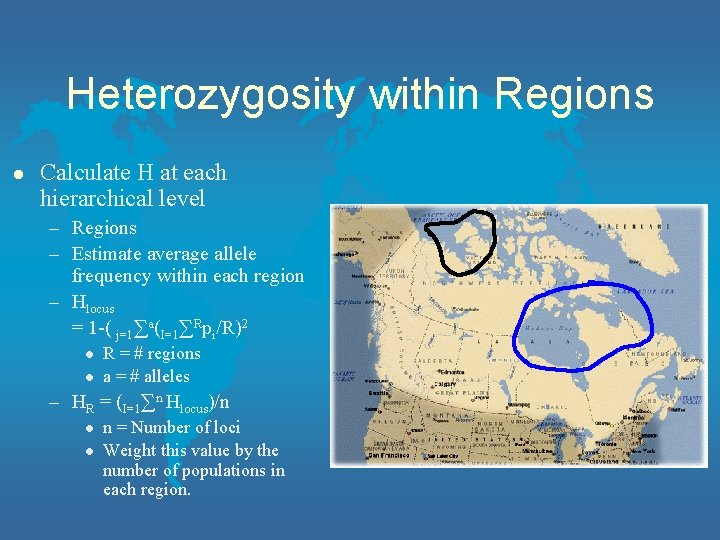
Heterozygosity within Regions l Calculate H at each hierarchical level – Regions – Estimate average allele frequency within each region – Hlocus = 1 -( j=1∑a(I=1∑Rpi/R)2 l l R = # regions a = # alleles – HR = (I=1∑n Hlocus)/n l l n = Number of loci Weight this value by the number of populations in each region.
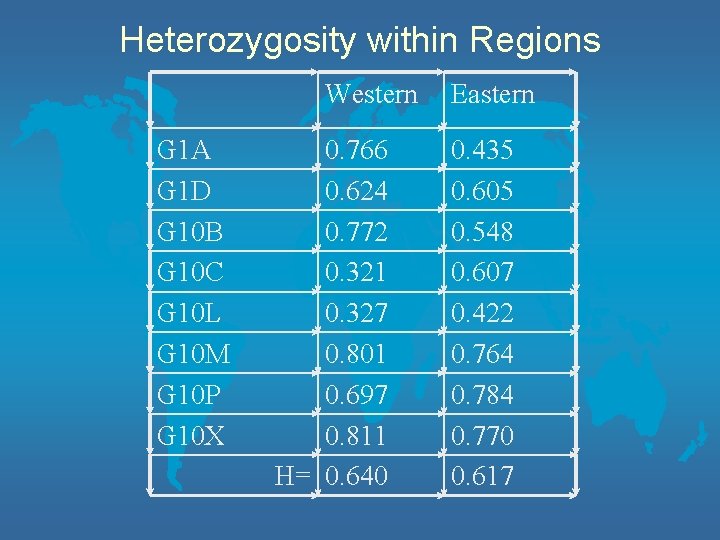
Heterozygosity within Regions Western G 1 A G 1 D G 10 B G 10 C G 10 L G 10 M G 10 P G 10 X 0. 766 0. 624 0. 772 0. 321 0. 327 0. 801 0. 697 0. 811 H= 0. 640 Eastern 0. 435 0. 605 0. 548 0. 607 0. 422 0. 764 0. 784 0. 770 0. 617
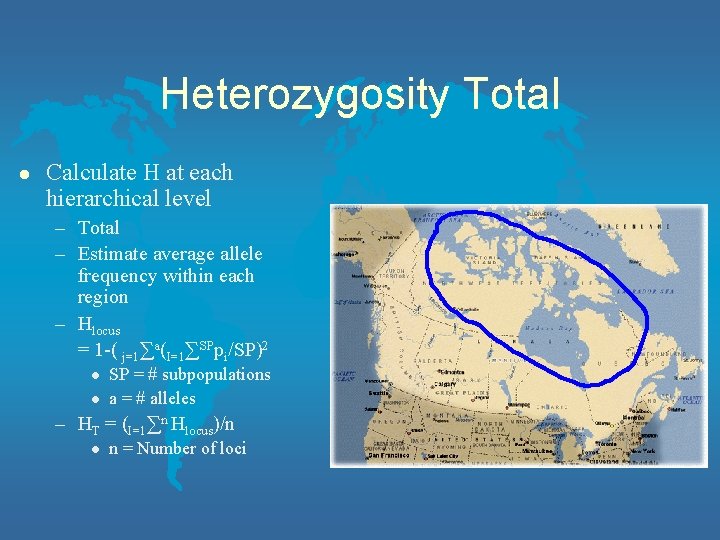
Heterozygosity Total l Calculate H at each hierarchical level – Total – Estimate average allele frequency within each region – Hlocus = 1 -( j=1∑a(I=1∑SPpi/SP)2 l l SP = # subpopulations a = # alleles – HT = (I=1∑n Hlocus)/n l n = Number of loci
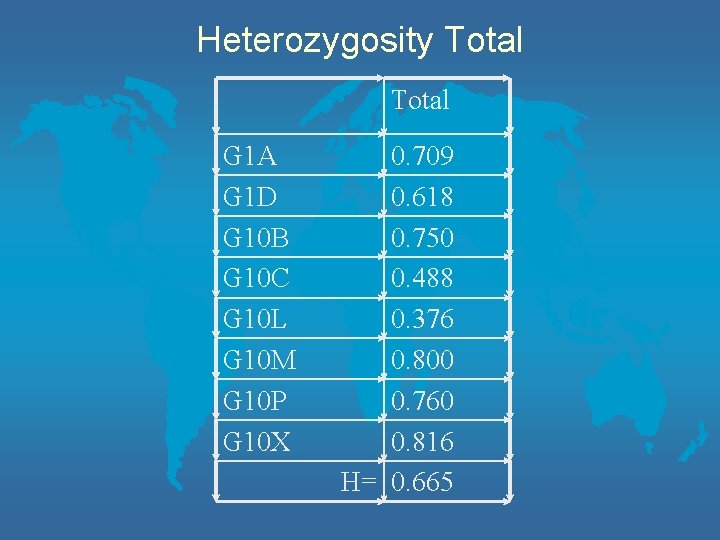
Heterozygosity Total G 1 A G 1 D G 10 B G 10 C G 10 L G 10 M G 10 P G 10 X 0. 709 0. 618 0. 750 0. 488 0. 376 0. 800 0. 760 0. 816 H= 0. 665
Comparison of Hexp at various levels
Who Cares? ? l Study of statistical differences among local populations is an important line of attack on the evolutionary problem. While such differences can only rarely represent first steps toward speciation in the sense of the splitting of the species, they are important for the evolution of the species as a whole. They provide a possible basis for intergroup selection of genetic systems, a process that provides a more effective mechanism for adaptive advance of the species as a whole than does the mass selection which is all that can occur under panmixia. Sewall Wright.
Translation l l l Population subdivision reduces population size. Reduced population size increases genetic drift which decreases genetic diversity or increases inbreeding Different populations will then diverge from each other with the possibility of speciation
Inbreeding l Inbreeding – Animals prefer to mate with individuals more closely related to them than a random individual – Decreases heterozygosity – Reduces genetic variation – Sexual Selection l Inbreeding – Animals mate at random but there a limited number of mates from which to choose due to population subdivision. – Decreases heterozygosity – Reduces genetic variation – Genetic Drift
Wright’s F-stats l Fixation Index (F) – Quantifies inbreeding due to population structure l Reduction in H due to structure – Estimates the reduction in H expected at one level of the hierarchy relative to another more inclusive level. – FSR - Decrease in H given that the regions are divided into subpopulations – FST - Decrease in H given the that the whole system is not panmictic. – FST = ? in panmictic population? – FST = ? in completely isolated populations?
Of the total genetic variation found in the 4 major polar bear populations only 7% is due to the subdivision of the population.
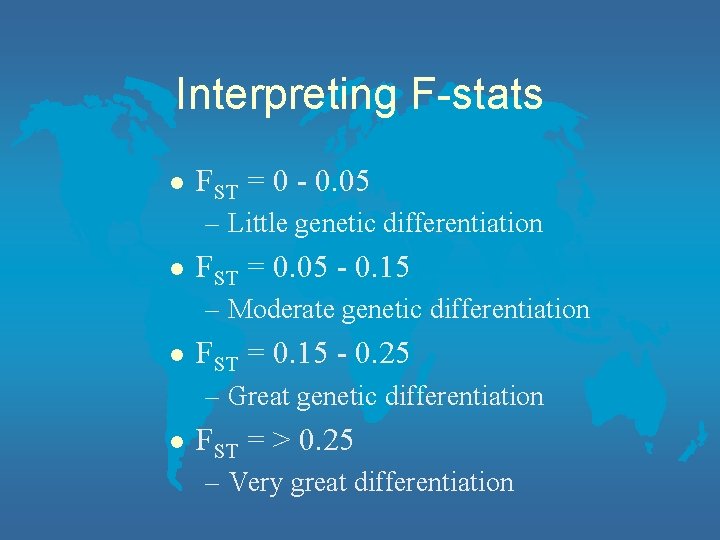
Interpreting F-stats l FST = 0 - 0. 05 – Little genetic differentiation l FST = 0. 05 - 0. 15 – Moderate genetic differentiation l FST = 0. 15 - 0. 25 – Great genetic differentiation l FST = > 0. 25 – Very great differentiation
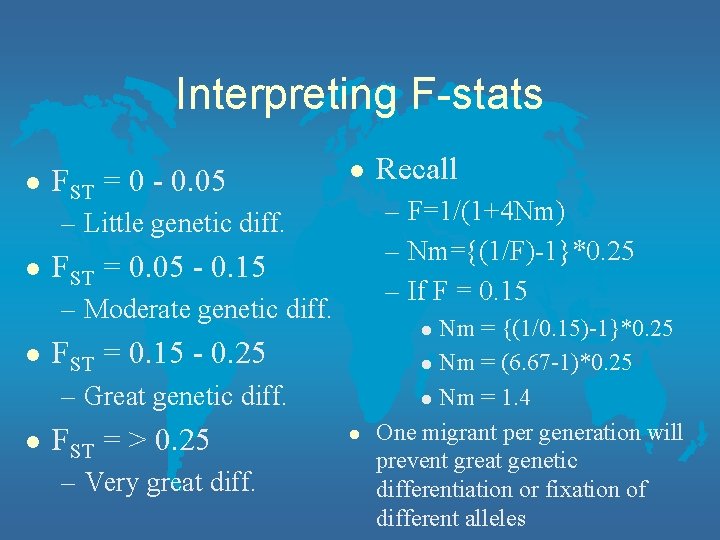
Interpreting F-stats l FST = 0 - 0. 05 l – F=1/(1+4 Nm) – Nm={(1/F)-1}*0. 25 – If F = 0. 15 – Little genetic diff. l FST = 0. 05 - 0. 15 – Moderate genetic diff. l FST = 0. 15 - 0. 25 FST = > 0. 25 – Very great diff. Nm = {(1/0. 15)-1}*0. 25 l Nm = (6. 67 -1)*0. 25 l Nm = 1. 4 One migrant per generation will prevent great genetic differentiation or fixation of different alleles l – Great genetic diff. l Recall l
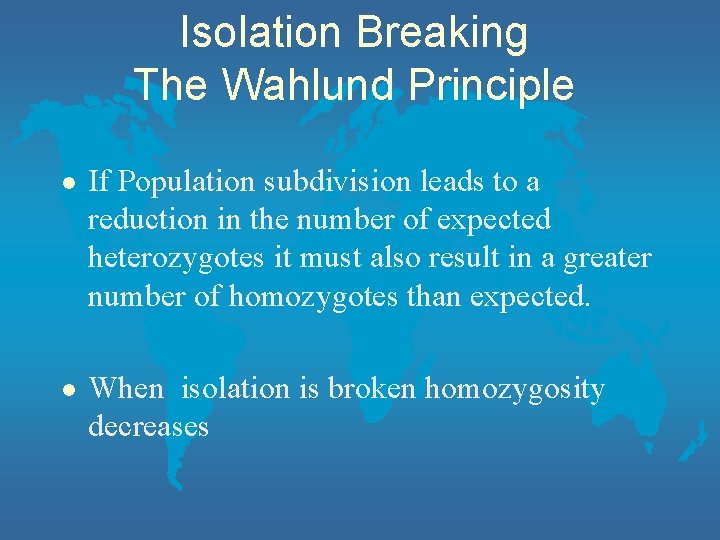
Isolation Breaking The Wahlund Principle l If Population subdivision leads to a reduction in the number of expected heterozygotes it must also result in a greater number of homozygotes than expected. l When isolation is broken homozygosity decreases
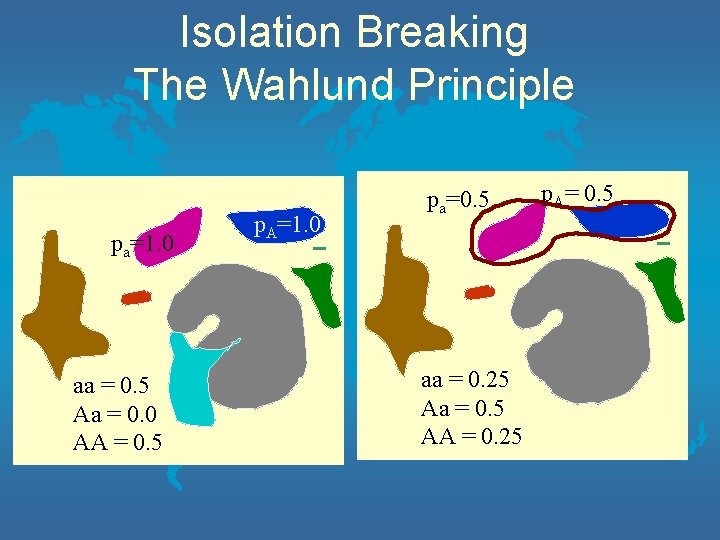
Isolation Breaking The Wahlund Principle pa=1. 0 aa = 0. 5 Aa = 0. 0 AA = 0. 5 p. A=1. 0 pa=0. 5 aa = 0. 25 Aa = 0. 5 AA = 0. 25 p. A= 0. 5
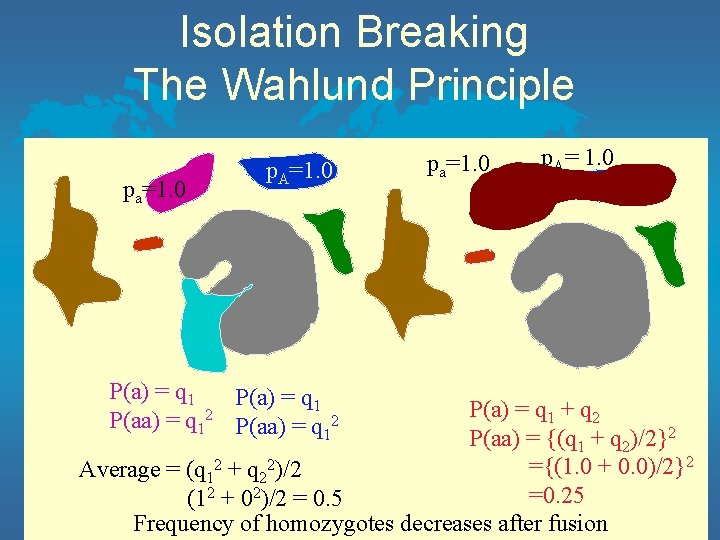
Isolation Breaking The Wahlund Principle pa=1. 0 p. A=1. 0 P(a) = q 1 P(aa) = q 12 pa=1. 0 p. A= 1. 0 P(a) = q 1 + q 2 P(aa) = {(q 1 + q 2)/2}2 ={(1. 0 + 0. 0)/2}2 Average = (q 12 + q 22)/2 =0. 25 (12 + 02)/2 = 0. 5 Frequency of homozygotes decreases after fusion
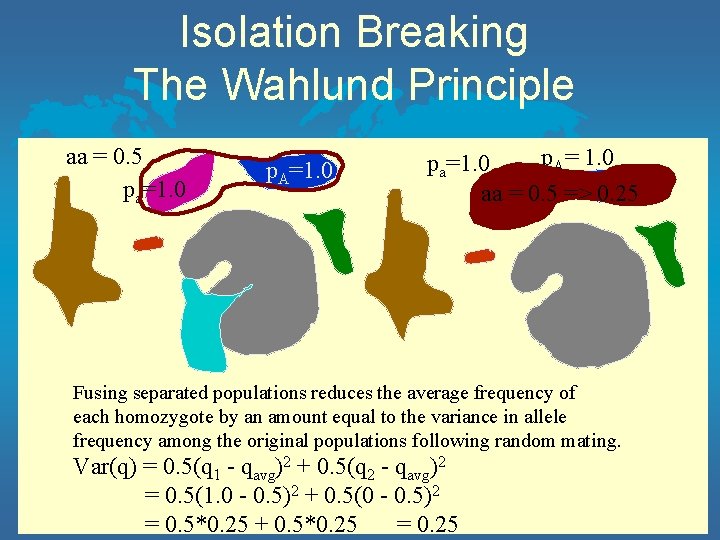
Isolation Breaking The Wahlund Principle aa = 0. 5 pa=1. 0 p. A= 1. 0 pa=1. 0 aa = 0. 5 => 0. 25 Fusing separated populations reduces the average frequency of each homozygote by an amount equal to the variance in allele frequency among the original populations following random mating. Var(q) = 0. 5(q 1 - qavg)2 + 0. 5(q 2 - qavg)2 = 0. 5(1. 0 - 0. 5)2 + 0. 5(0 - 0. 5)2 = 0. 5*0. 25 + 0. 5*0. 25 = 0. 25
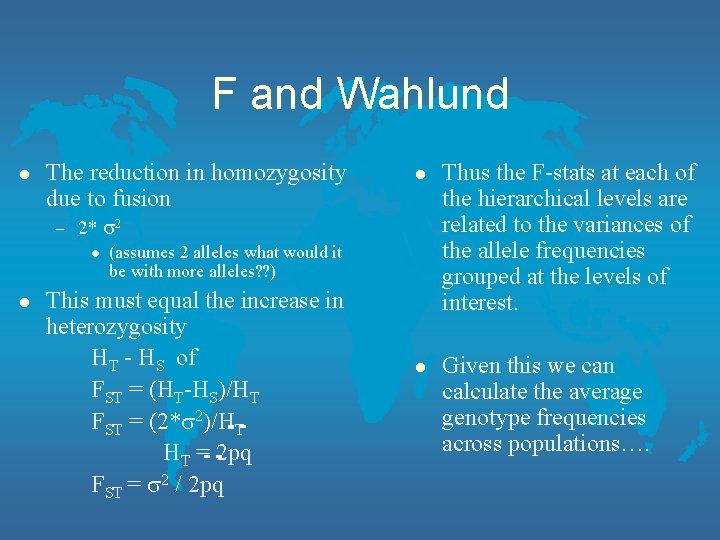
F and Wahlund l The reduction in homozygosity due to fusion l Thus the F-stats at each of the hierarchical levels are related to the variances of the allele frequencies grouped at the levels of interest. l Given this we can calculate the average genotype frequencies across populations…. – 2* 2 l l (assumes 2 alleles what would it be with more alleles? ? ) This must equal the increase in heterozygosity HT - HS of FST = (HT-HS)/HT FST = (2* 2)/HT HT = 2 pq FST = 2 / 2 pq
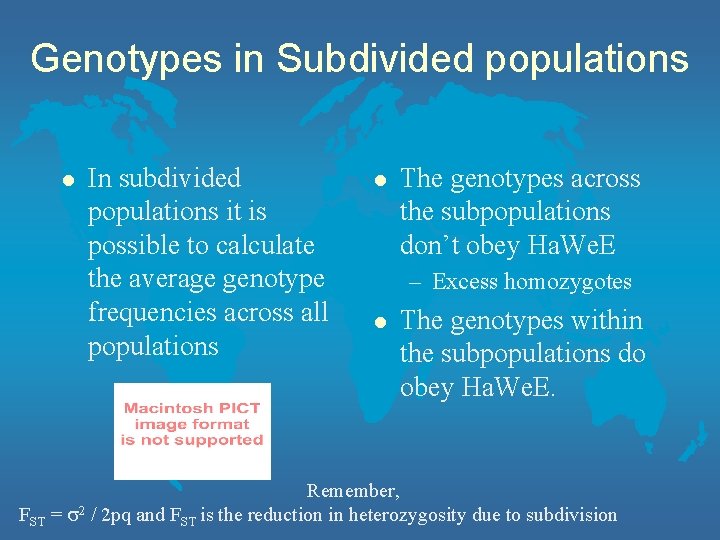
Genotypes in Subdivided populations l In subdivided populations it is possible to calculate the average genotype frequencies across all populations l The genotypes across the subpopulations don’t obey Ha. We. E – Excess homozygotes l The genotypes within the subpopulations do obey Ha. We. E. Remember, FST = 2 / 2 pq and FST is the reduction in heterozygosity due to subdivision
The other Inbreeding l Selective mating between close relatives – The effect of inbreeding is to reduce the heterozygosity of a population – Defined as, “F - The proportionate reduction in heterozygosity relative to random mating”. l l Analagous to our population subdivision but it is within a subpopulation F = (HO - HI)/HO – HO = 2 pq Why? l HI = HO-HOF =HO(1 -F) =2 pq(1 -F)
Inbreeding l l In inbreed populations it is possible to calculate the expected genotype frequencies in an analagous fashion to subdivision The genotypes don’t obey Ha. We. E – Deficiency of heterozygotes = 2 pq. F l These are allocated equally amongst the two homozygotes because each heterozygote as an “A” and an “a” Remember, F is the reduction in heterozygosity due to inbreeding
- Slides: 34