
Population Pyramids How we observe and document population
Population Pyramids How we observe and document population trends
![Population Pyramids… … are illustrations divided into [male] and [female] columns that show the](http://slidetodoc.com/presentation_image_h2/8f0838f6894c0d457be7b8e22c94ea84/image-2.jpg "Population Pyramids… … are illustrations divided into [male] and [female] columns that show the")
Population Pyramids… … are illustrations divided into [male] and [female] columns that show the distribution of ascending age groups in a selected population
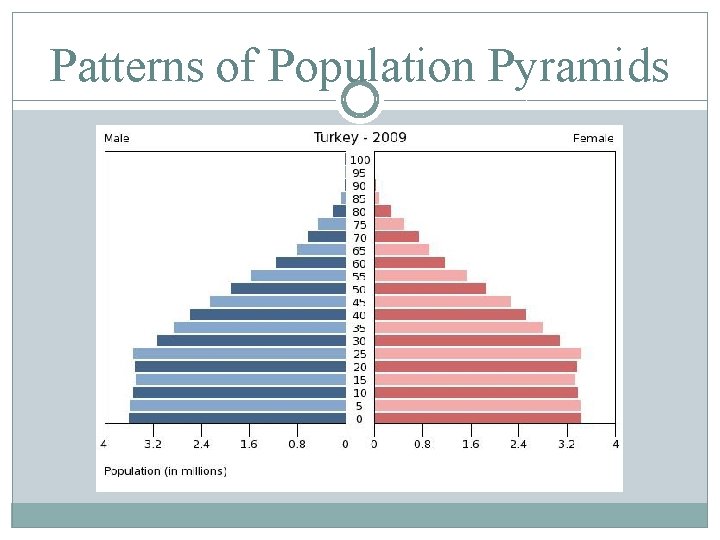
Patterns of Population Pyramids
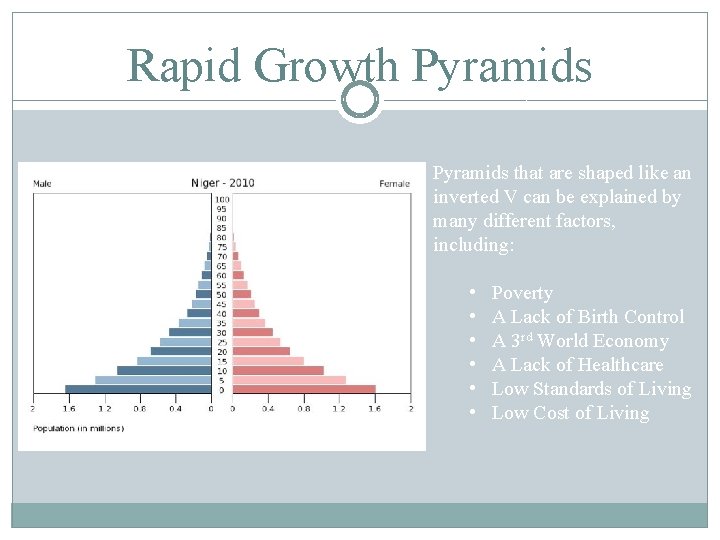
Rapid Growth Pyramids that are shaped like an inverted V can be explained by many different factors, including: • • • Poverty A Lack of Birth Control A 3 rd World Economy A Lack of Healthcare Low Standards of Living Low Cost of Living
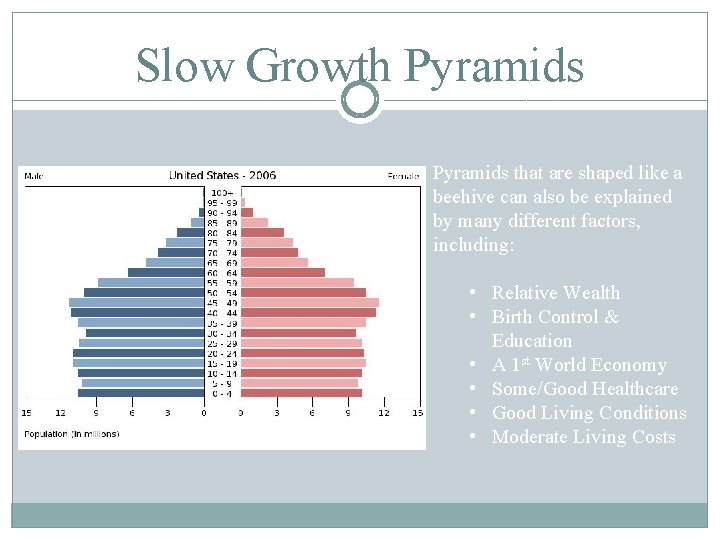
Slow Growth Pyramids that are shaped like a beehive can also be explained by many different factors, including: • Relative Wealth • Birth Control & Education • A 1 st World Economy • Some/Good Healthcare • Good Living Conditions • Moderate Living Costs
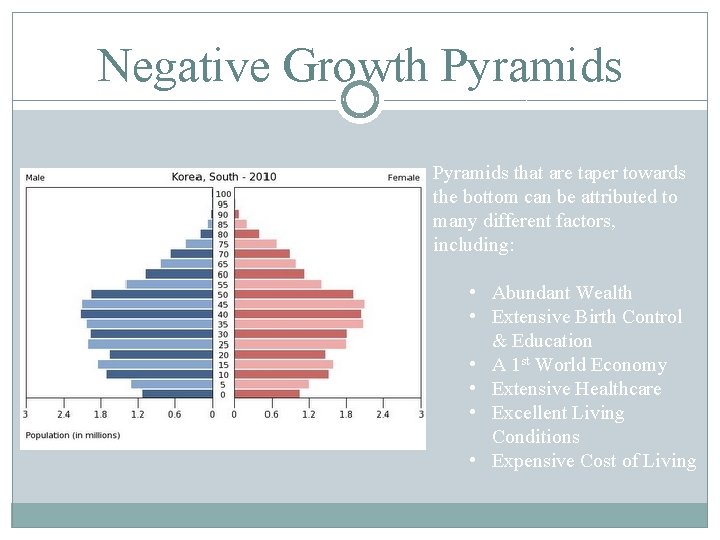
Negative Growth Pyramids that are taper towards the bottom can be attributed to many different factors, including: • Abundant Wealth • Extensive Birth Control & Education • A 1 st World Economy • Extensive Healthcare • Excellent Living Conditions • Expensive Cost of Living
Creating a Population Pyramid 1. 2. 3. 4. 5. 6. Take your Age-Sex Data Table and observe the population of Country A: 6, 420, 792 Now look at the number of Males from the age of 0 -4: 479, 894 / 6, 420, 792 =. 0747, or 7. 5% You multiply the product by 100 to achieve a percentage, then round up to the nearest half. Now take your Age-Sex Graph and draw a vertical line between 7 and 8 (7. 5%) in the bottom left bracket (Males 0 -4). Color the area from this line to the centerline blue to represent the percentage of the population which are males from the ages of 0 to 4. When you duplicate this process for the other side, use a pink or red color to represent females from the ages of 0 to 4. Continue repeating steps 1 through 5 all the way to the 100+ bracket using the data from your Age-Sex Data Table.
- Slides: 7