
Population Principles Chapter 3 1 Population Characteristics Population




- Slides: 32
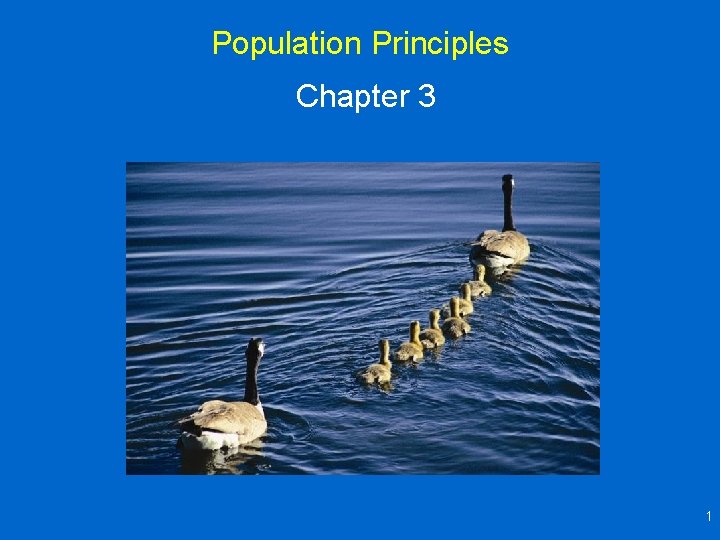
Population Principles Chapter 3 1
• Population Characteristics Population - Group of individuals of the same species inhabiting the same area simultaneously. (6. 4 Billion – 2004) – Natality and Mortality v Natality ________________________________ Ø Birth Rate (Humans Born / 1, 000) – Mortality _________________ v Death Rate (Humans Died / 1, 000) 2
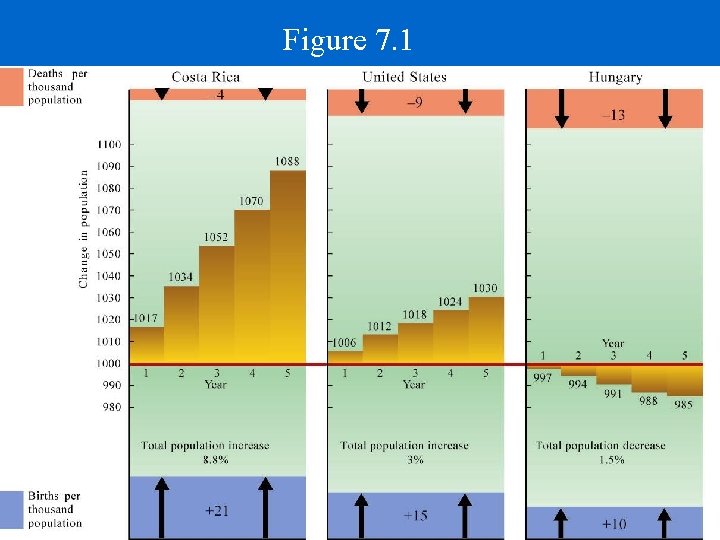
Figure 7. 1 3
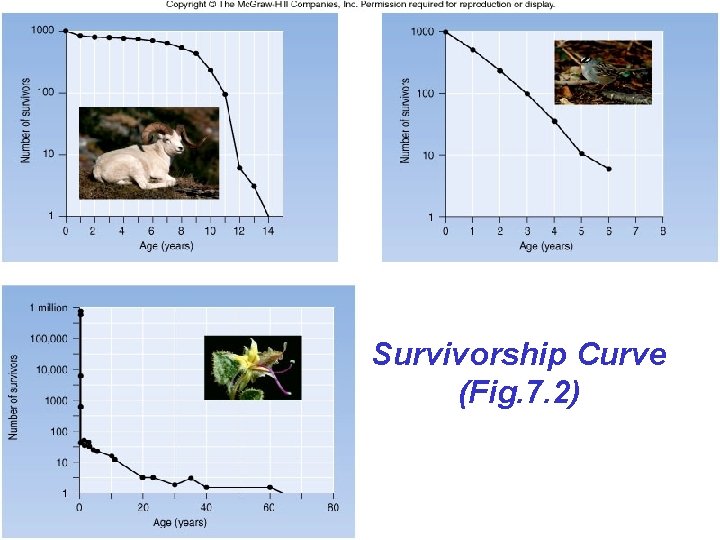
Population Characteristics • Population Growth Rate __________________. Often expressed as a percentage of the total population. (Geometrically – Population)(Arithmetically – Food Supply) • Survivorship Curve - Shows proportion of individuals likely to survive to each age. – High mortality in young. – Mortality equitable among age classes. – Mortality high only in old age. 4
Survivorship Curve (Fig. 7. 2) 5
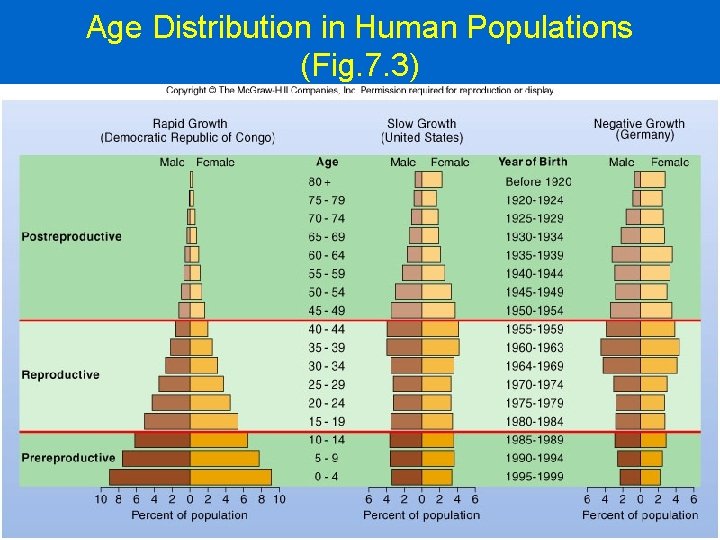
• Sex Ratio and Age Distribution Sex Ratio - Age Distribution – Sex Ratio _________________. v Females determine the number of offspring produced in sexually reproducing populations. – Age Distribution _________________. v Greatly influences population growth rate. 6
Age Distribution in Human Populations (Fig. 7. 3) 7
Population Density and Spatial Distribution • Population Density ___________________________________. – High population may lead to increased competition for resources. v Dispersal - Movement of individuals from densely populated locations to new areas. Ø Emigration - Movement from an area. Ø Immigration - Movement into an area. 8
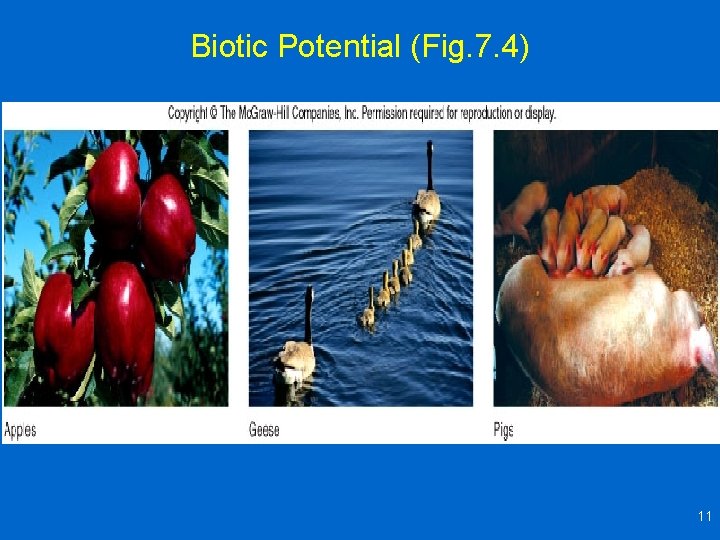
Population Growth Curve • Biotic Potential ___________________________________ – Generally, biotic potential is much above replacement level. v Natural tendency for increase. Ø All living populations follow an exponential growth curve. 9
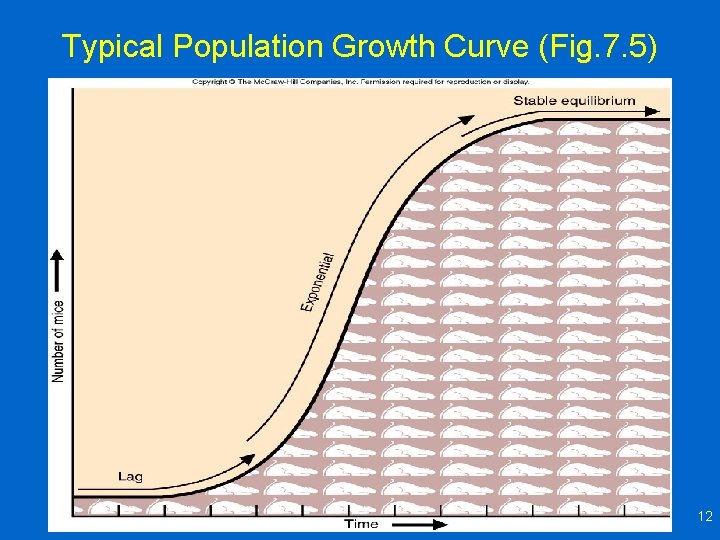
Exponential Growth Curve • • • Lag Phase __________________. Exponential Growth Phase (Log Phase)___________________________________. *Currently* Stable Equilibrium Phase ___________________________________ 10
Biotic Potential (Fig. 7. 4) 11
Typical Population Growth Curve (Fig. 7. 5) 12
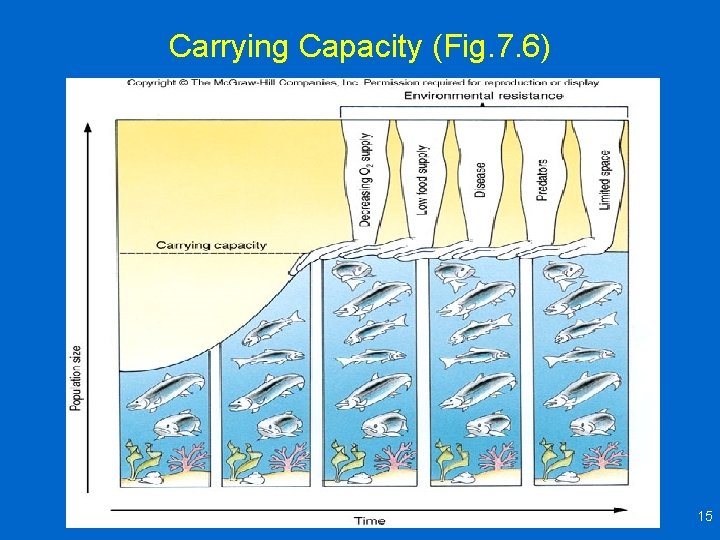
Carrying Capacity • Carrying Capacity ___________________________________. 13
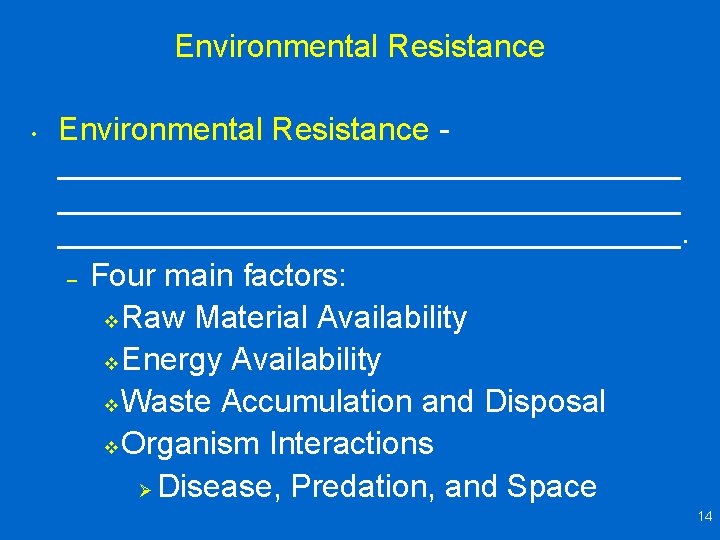
Environmental Resistance • Environmental Resistance ___________________________________. – Four main factors: v Raw Material Availability v Energy Availability v Waste Accumulation and Disposal v Organism Interactions Ø Disease, Predation, and Space 14
Carrying Capacity (Fig. 7. 6) 15
Bacterial Growth Curve (Fig. 7. 7) 16
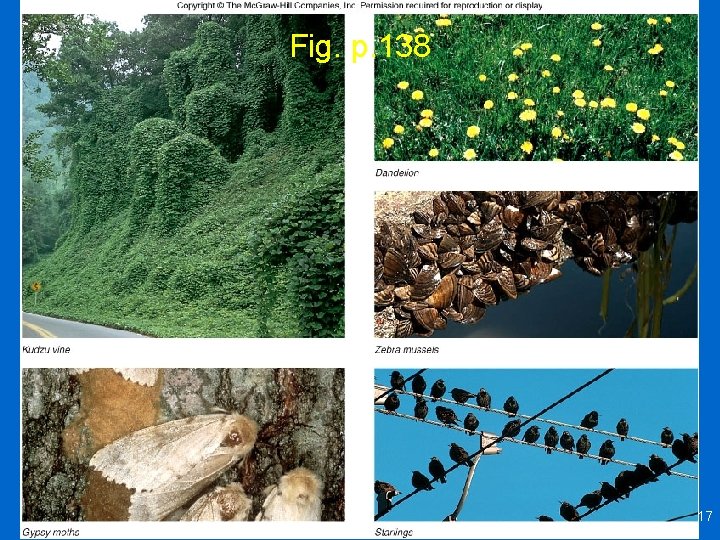
Fig. p. 138 17
Reproductive Strategies and Population Fluctuations • Not all species reach a stable carrying capacity. – Species can be broadly lumped into two categories: v K-strategists v r-strategists 18
K - Strategists • • Large organisms Long-lived Produce few offspring Provide substantial parental care Populations typically stabilize at a carrying capacity. Usually occupy relatively stable environments. Reproductive strategy is to invest in a few, quality offspring. 19
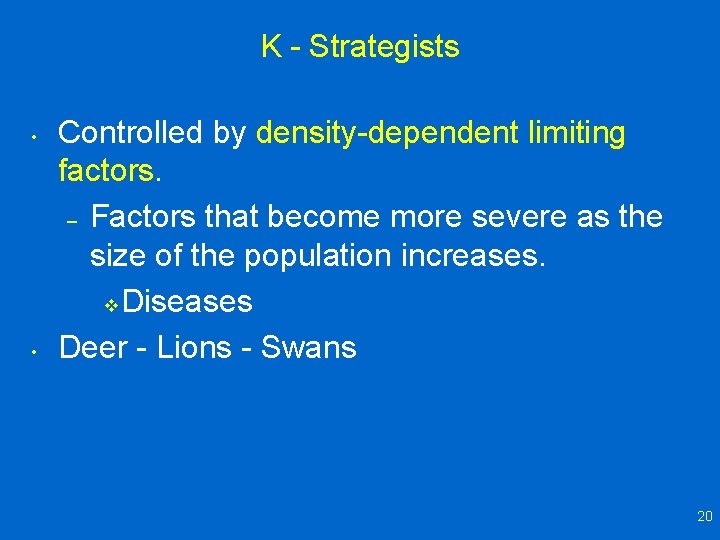
K - Strategists • • Controlled by density-dependent limiting factors. – Factors that become more severe as the size of the population increases. v Diseases Deer - Lions - Swans 20
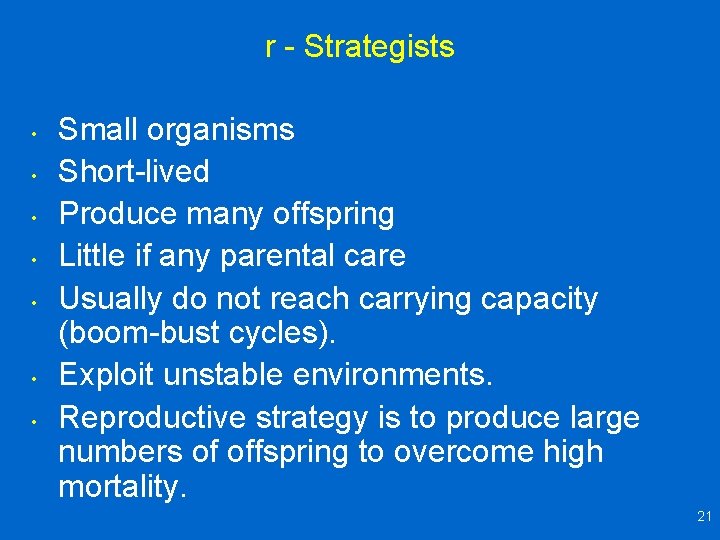
r - Strategists • • Small organisms Short-lived Produce many offspring Little if any parental care Usually do not reach carrying capacity (boom-bust cycles). Exploit unstable environments. Reproductive strategy is to produce large numbers of offspring to overcome high mortality. 21
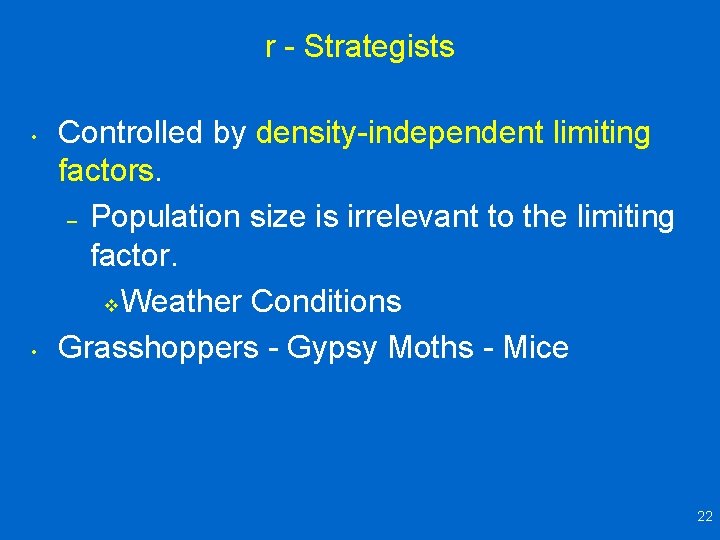
r - Strategists • • Controlled by density-independent limiting factors. – Population size is irrelevant to the limiting factor. v Weather Conditions Grasshoppers - Gypsy Moths - Mice 22
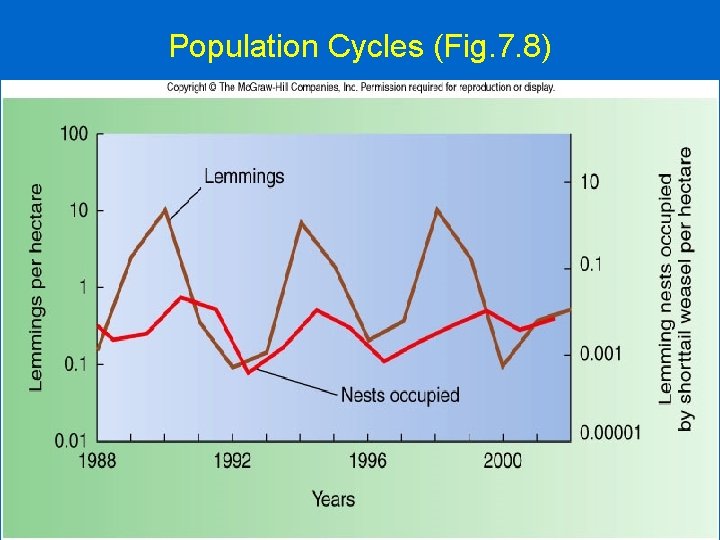
Population Cycles (Fig. 7. 8) 23
Human Population Growth • Major reason for increasing human population growth rate is__________________________________ _ 24
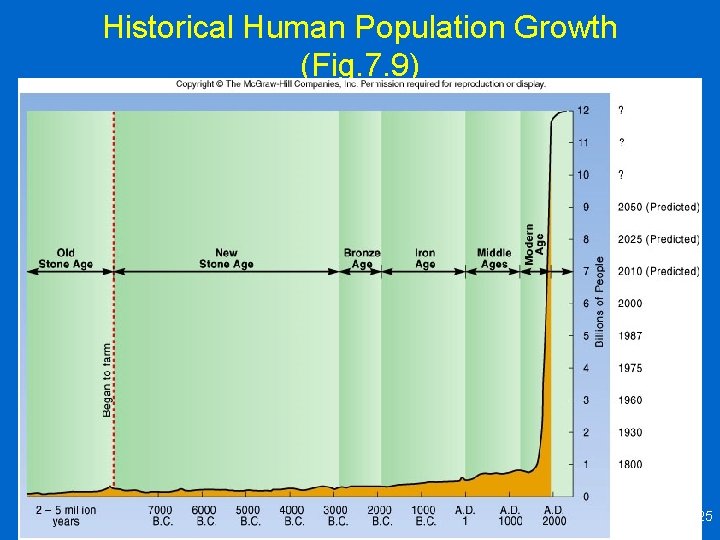
Historical Human Population Growth (Fig. 7. 9) 25
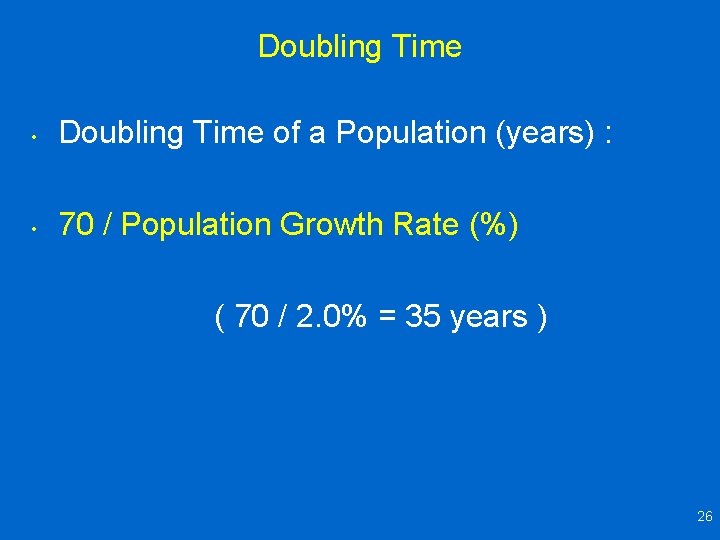
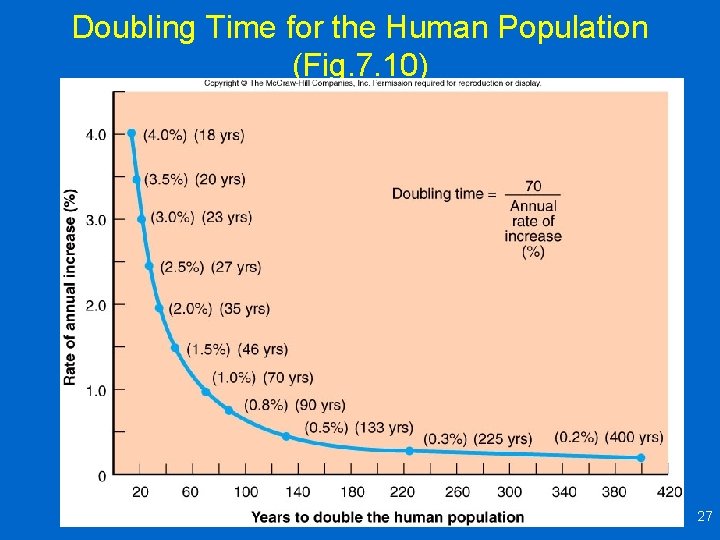
Doubling Time • Doubling Time of a Population (years) : • 70 / Population Growth Rate (%) ( 70 / 2. 0% = 35 years ) 26
Doubling Time for the Human Population (Fig. 7. 10) 27
Human Population Growth • Interactions Affecting Carrying Capacity – Available Raw Materials – Available Energy – Waste Disposal – Interaction With Other Organisms 28
Social Factors Influence Human Population • Humans are social animals who have freedom of choice. – People make decisions based on history, social situations, ethical and religious beliefs, and personal desires. v Biggest obstacles to controlling human population are not biological, but are the province of philosophers, theologians, politicians, and sociologists. 29
Ultimate Size Limitation • • If the world continues to grow at current rate, population _____________. Human population subject to same biological constraints as other species. – Human population will ultimately reach a carrying capacity and stabilize. v Disagreement about exact size and primary limiting factors. 30
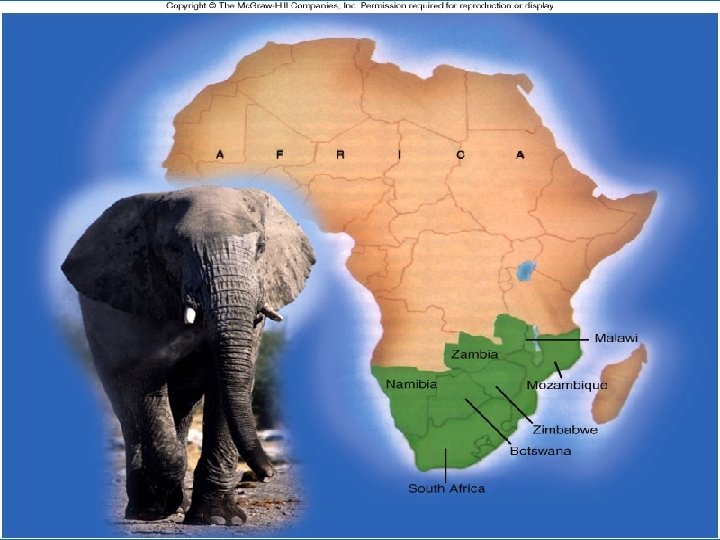
Elephant Trade 31
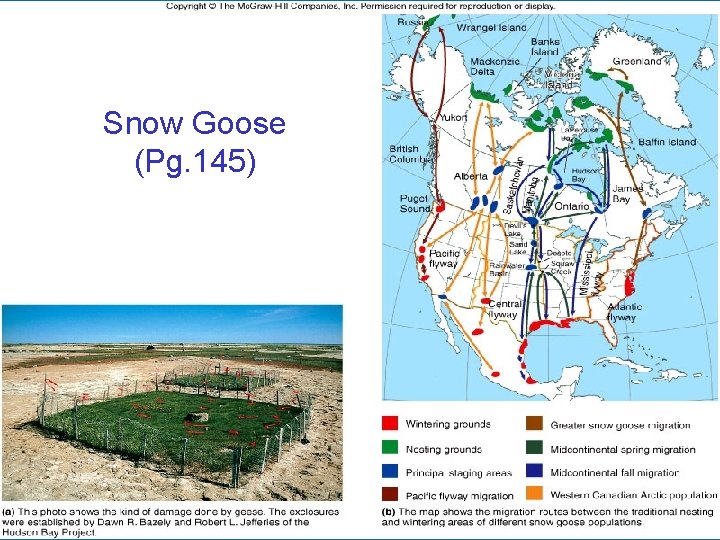
Snow Goose (Pg. 145) 32