
Population Patterns Chapter 3 Section 2 Population Growth






- Slides: 44
Population Patterns Chapter 3 -Section 2
Population Growth
How fast has the world’s population grown?
1800 - not 1 billion people 1920 - 2 billion people 1974 - 4 billion people 1999 - 6 billion people Why has our population grown so quickly over the past 200 years?
2 major reasons for the rapid population growth: death rate birth rate
What is death rate?
Death rate is the number of people out of every 1, 000 who die in a year.
How does death rate effect population growth?
Why are fewer people dying?
Most places in the world have better healthcare and living conditions. This allows for people to live longer lives, resulting in fewer deaths.
Another reason is increased birthrate in some areas of the world. What is birthrate?
Birthrate is the number of children born each year for every 1, 000 people.
In some countries high birthrates combined with low death rates are causing the population to increase rapidly.
What are some challenges we face with a rapidly growing population?
Challenges to population growth: increased amount of food increased use of resources and strain on economy
On all continents, except for Africa, countries have been able to adapt to providing food for an increasing population. Many people suffer from famine (lack of food) in Africa.
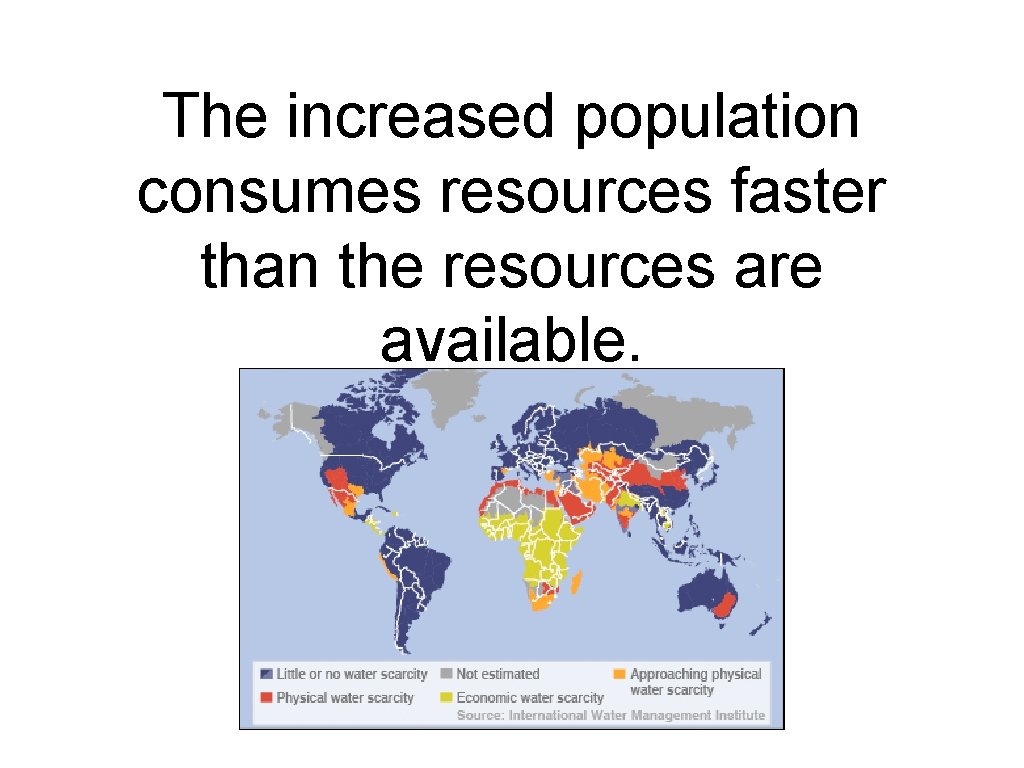
The increased population consumes resources faster than the resources are available.
An increasing population requires more jobs.
Where People Live
Most of the population lives on a very small portion of the world.
How much of the earth is land?
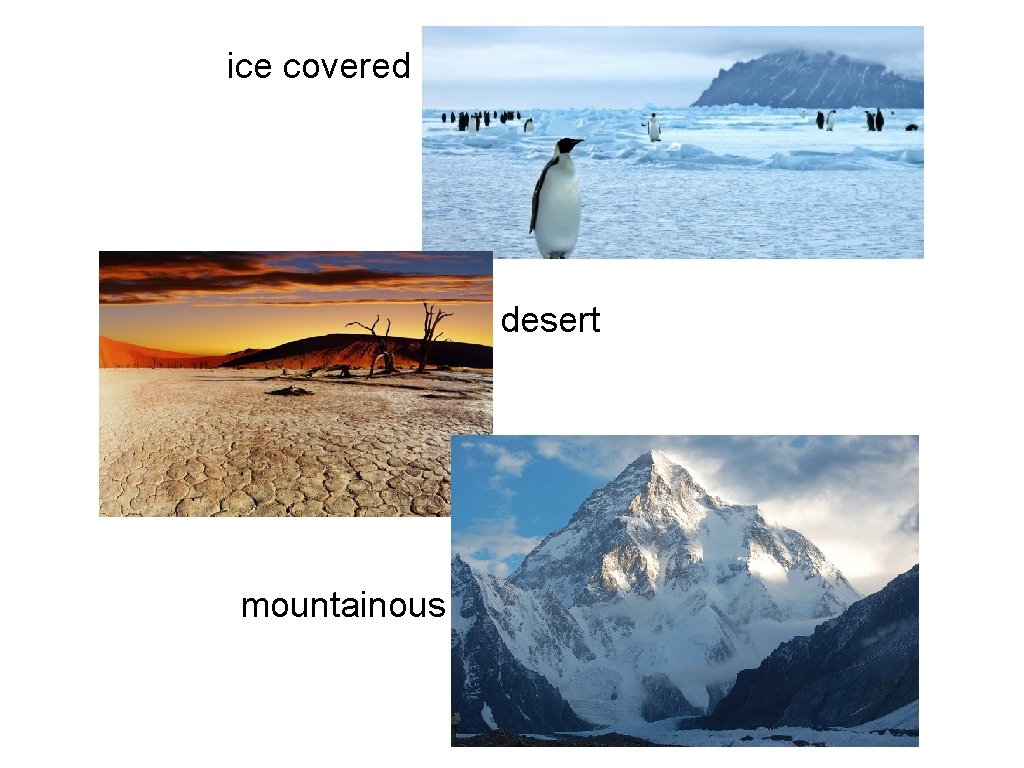
Of the 30% of the earth that is land, only 1/2 is usable land for humans. What do you think would make a land unusable to humans?
ice covered desert mountainous
Population is not spread evenly amongst the usable land. People live close to abundant amounts of water, farmable land, and pleasant climate.
In the past people have moved close to areas with plentiful resources - iron ore, coal, etc.
What is population density?
Population density is the average number of people living in a square mile or kilometer.
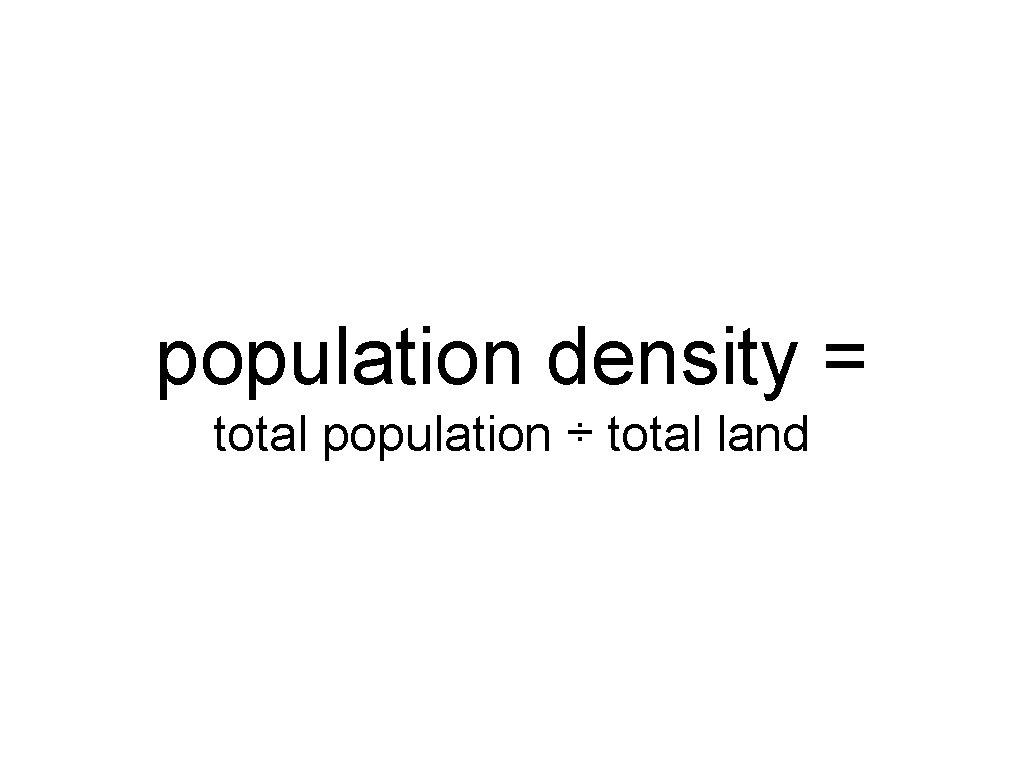
population density = total population ÷ total land
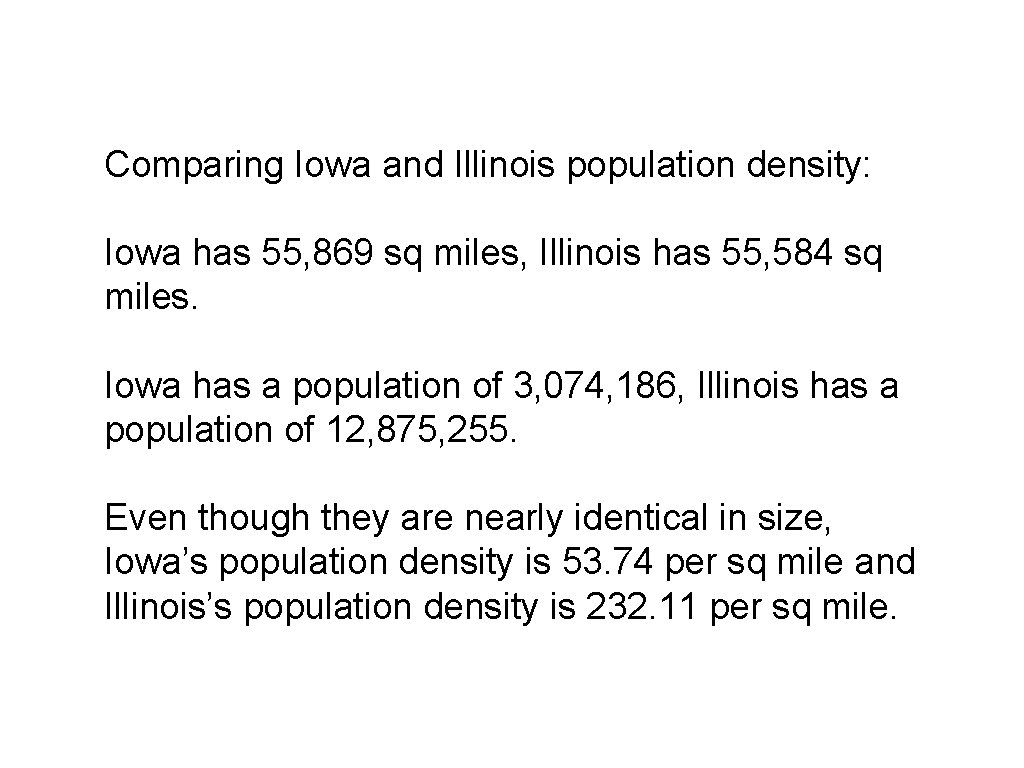
Comparing Iowa and Illinois population density: Iowa has 55, 869 sq miles, Illinois has 55, 584 sq miles. Iowa has a population of 3, 074, 186, Illinois has a population of 12, 875, 255. Even though they are nearly identical in size, Iowa’s population density is 53. 74 per sq mile and Illinois’s population density is 232. 11 per sq mile.
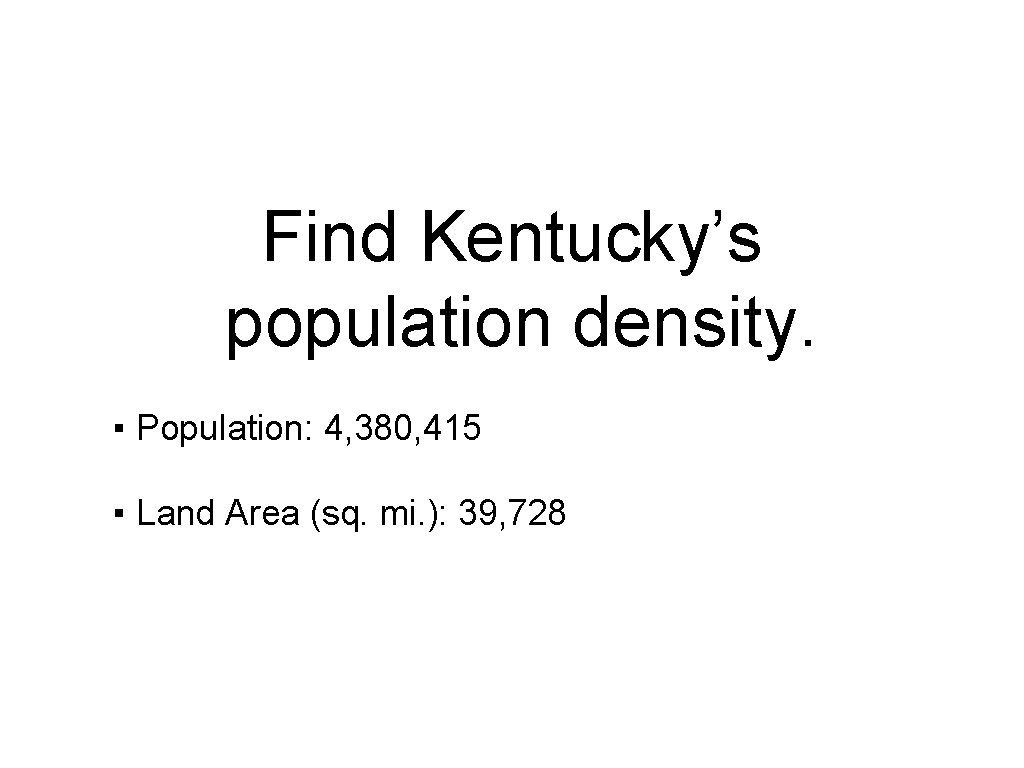
Find Kentucky’s population density. ▪ Population: 4, 380, 415 ▪ Land Area (sq. mi. ): 39, 728
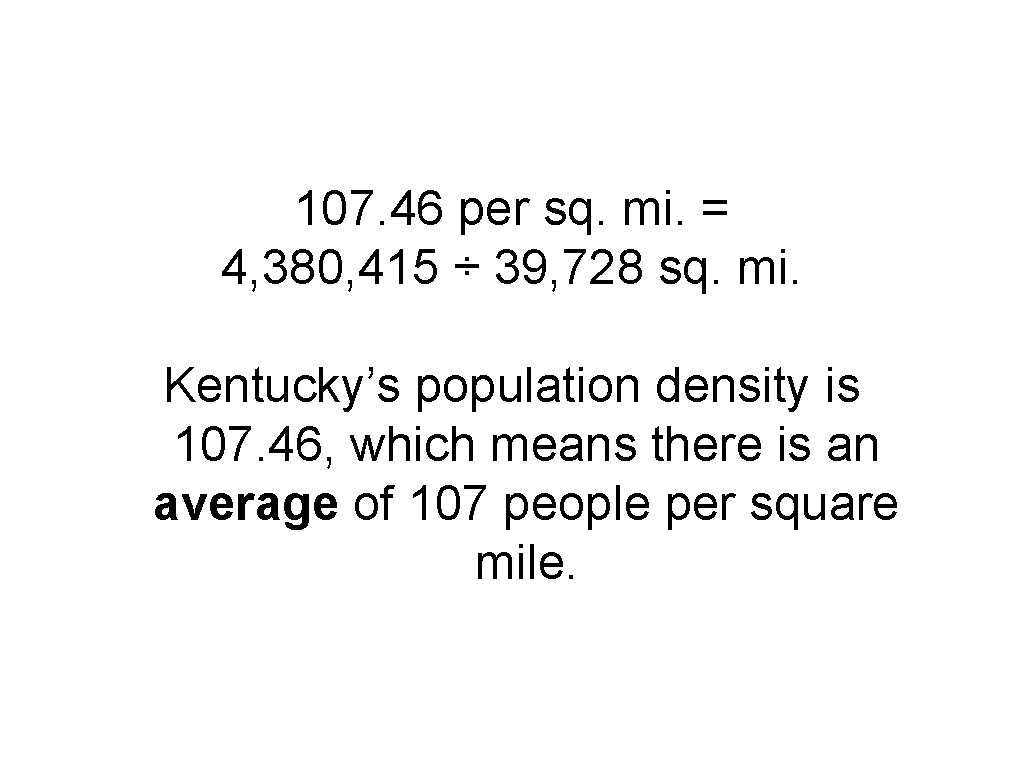
107. 46 per sq. mi. = 4, 380, 415 ÷ 39, 728 sq. mi. Kentucky’s population density is 107. 46, which means there is an average of 107 people per square mile.
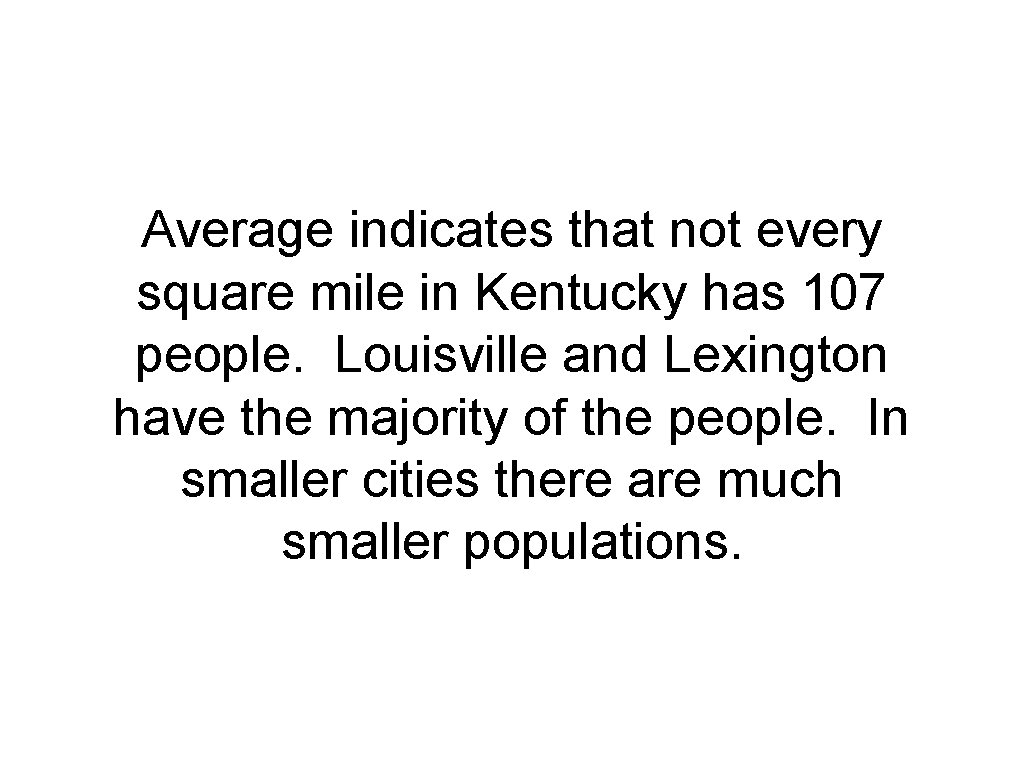
Average indicates that not every square mile in Kentucky has 107 people. Louisville and Lexington have the majority of the people. In smaller cities there are much smaller populations.
Go to zipatlas. com on your i. Pad. Type in the search bar: Kentucky population density by city
Population Movement
What is urbanization?
Urbanization is where people are moving from villages and farms to cities in large numbers.
Why do people move to cities?
People are moving to cities to find jobs in manufacturing and service.
1/2 of the world’s population lives in cities
What is urban sprawl?
Urban sprawl is where the boundaries of cities continue to expand outward because of the increasing population in cities.
What is emigrate?
Emigrate is when people leave the country they were born in and move to another country. Emigrants - in their homeland Immigrants - in their new country
Many people are forced to leave their country for various reasons war, political unrest, shortage of food. These people are called refugees, they leave to escape whatever is occurring.