
Population Notes And Human Population Trends n Population

- Slides: 23
Population Notes And Human Population Trends
n Population- group of similar individuals (species) living in one area – The size of a population will change over time
Population Determiners n n Natality (+)- birth rate Mortality (-)- death rate - both of these are rates within a pop. in a community Immigration (+)- the arrival of individuals into a community from somewhere else Emigration (-)- the departure of indiv from a community
Open v. Closed Populations n n Open population- a pop. (or community) where immigration and emigration occur freely; ex- the state NC Closed Population- a pop. in which individuals are not allowed to leave and enter freely. This is usually due to some physical barrier; ex- Galapagos Islands
Example (do not copy) n An open population of Elk in the Comanche River Basin of Wyoming has a natality rate of 12. 4 elk/year and a mortality rate of 10. 6 elk/yr. This population of elk emigrates to a hanging valley to forage for vegetation in the winter. At this time, a herd of 9 elk immigrates into the Comanche River Basin population from the Shoshone River Basin elk population.
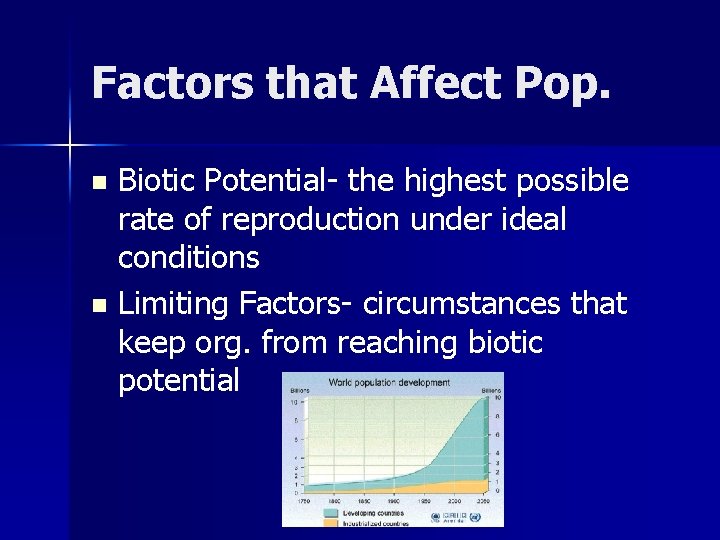
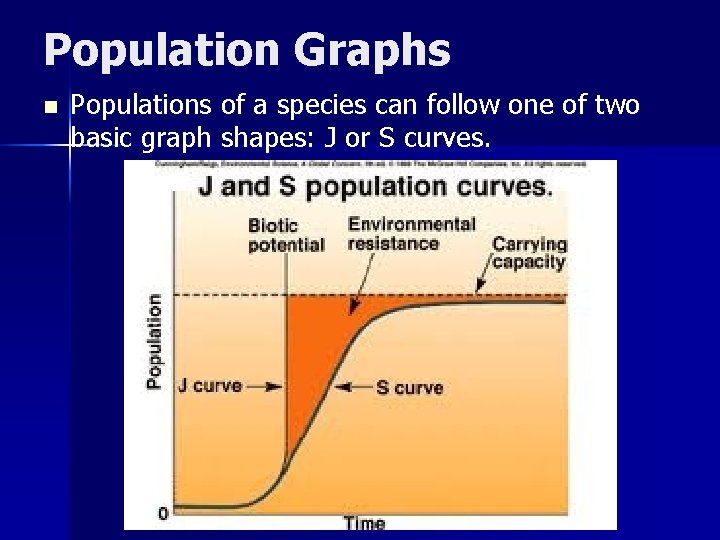
Factors that Affect Pop. Biotic Potential- the highest possible rate of reproduction under ideal conditions n Limiting Factors- circumstances that keep org. from reaching biotic potential n
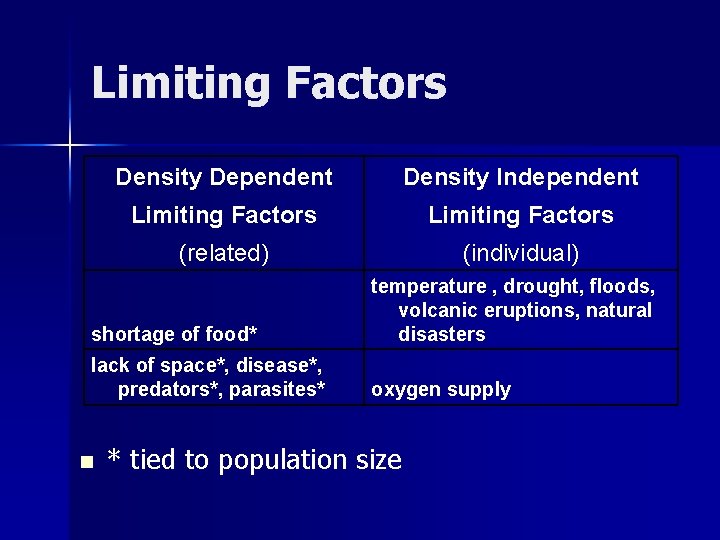
Limiting Factors Density Dependent Density Independent Limiting Factors (related) (individual) shortage of food* temperature , drought, floods, volcanic eruptions, natural disasters lack of space*, disease*, predators*, parasites* oxygen supply n * tied to population size
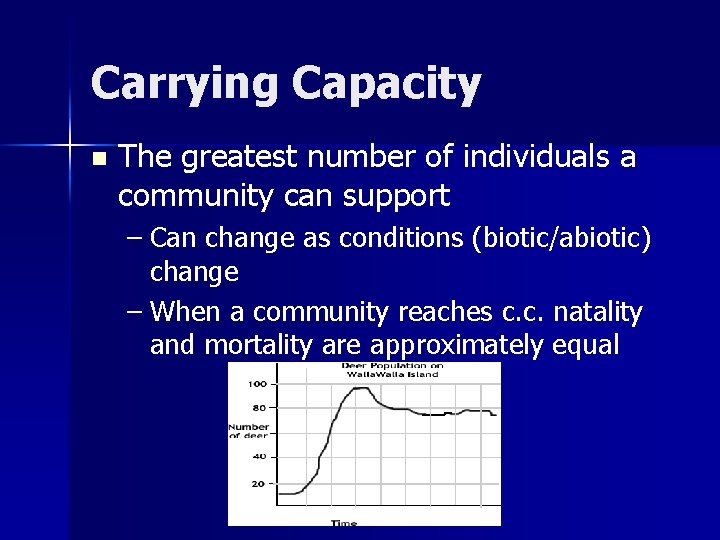
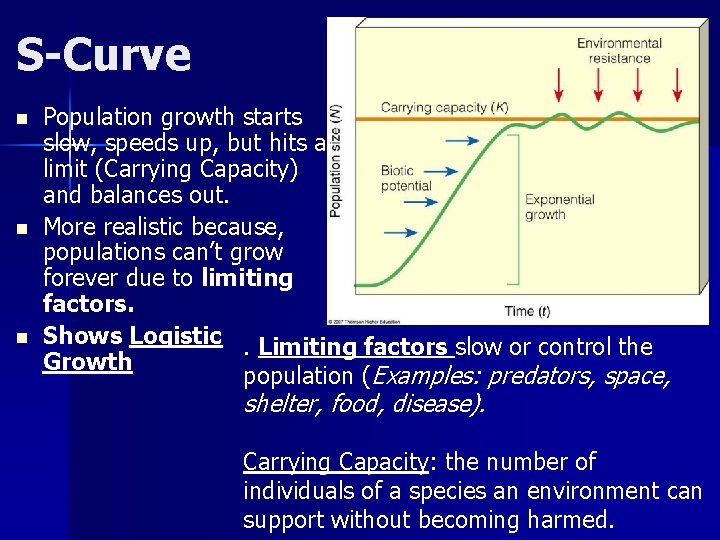
Carrying Capacity n The greatest number of individuals a community can support – Can change as conditions (biotic/abiotic) change – When a community reaches c. c. natality and mortality are approximately equal
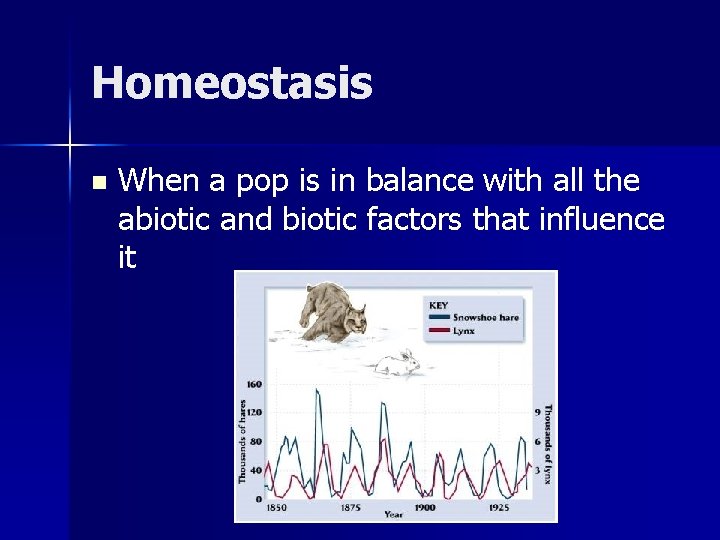
Homeostasis n When a pop is in balance with all the abiotic and biotic factors that influence it
Population Graphs n Populations of a species can follow one of two basic graph shapes: J or S curves.
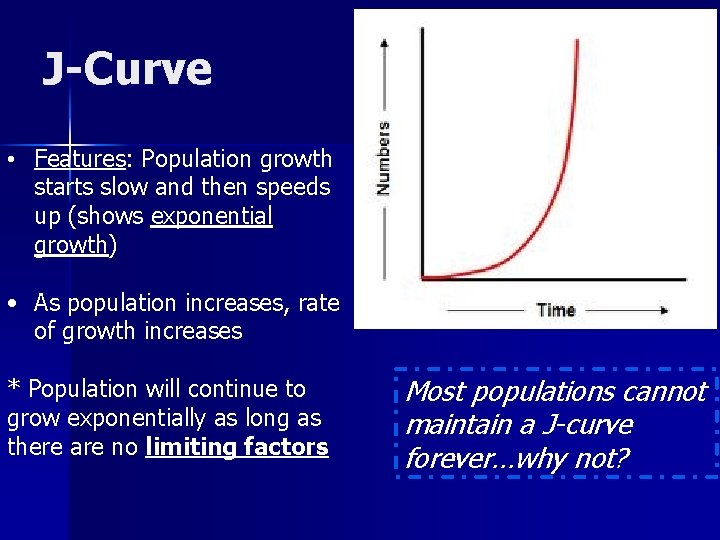
J-Curve • Features: Population growth starts slow and then speeds up (shows exponential growth) • As population increases, rate of growth increases * Population will continue to grow exponentially as long as there are no limiting factors Most populations cannot maintain a J-curve forever…why not?
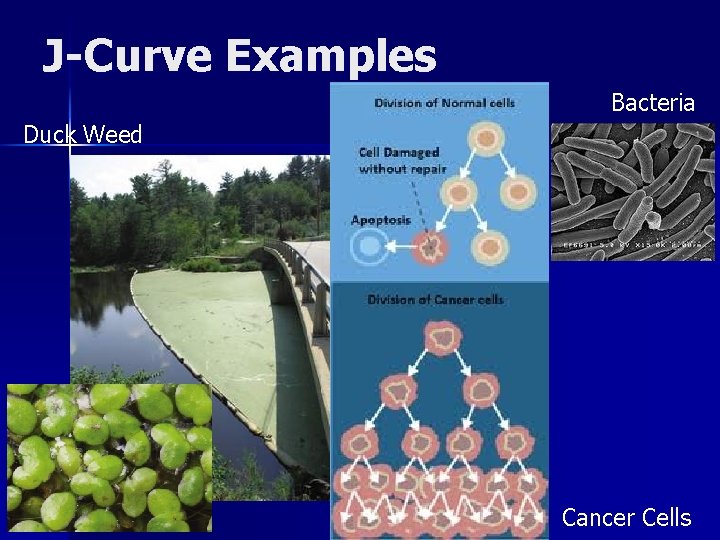
J-Curve Examples Bacteria Duck Weed Cancer Cells
S-Curve n n n Population growth starts slow, speeds up, but hits a limit (Carrying Capacity) and balances out. More realistic because, populations can’t grow forever due to limiting factors. Shows Logistic. Limiting factors slow or control the Growth population (Examples: predators, space, shelter, food, disease). Carrying Capacity: the number of individuals of a species an environment can support without becoming harmed.
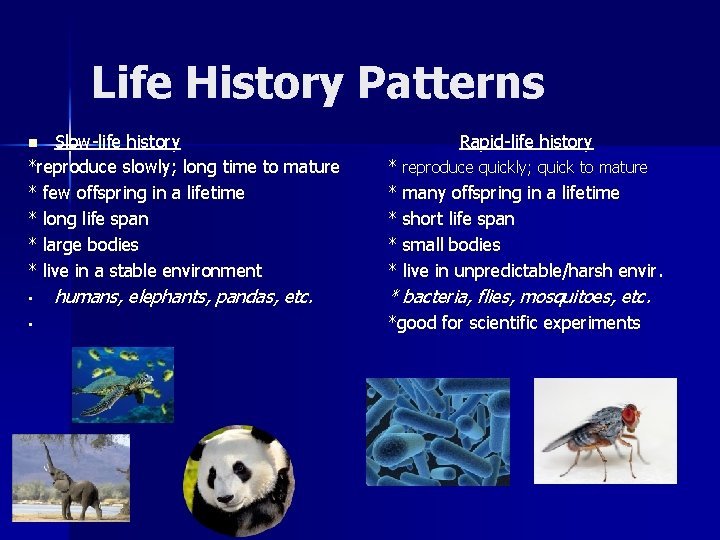
Life History Patterns Slow-life history *reproduce slowly; long time to mature * few offspring in a lifetime * long life span * large bodies * live in a stable environment n • • humans, elephants, pandas, etc. Rapid-life history * reproduce quickly; quick to mature * many offspring in a lifetime * short life span * small bodies * live in unpredictable/harsh envir. * bacteria, flies, mosquitoes, etc. *good for scientific experiments
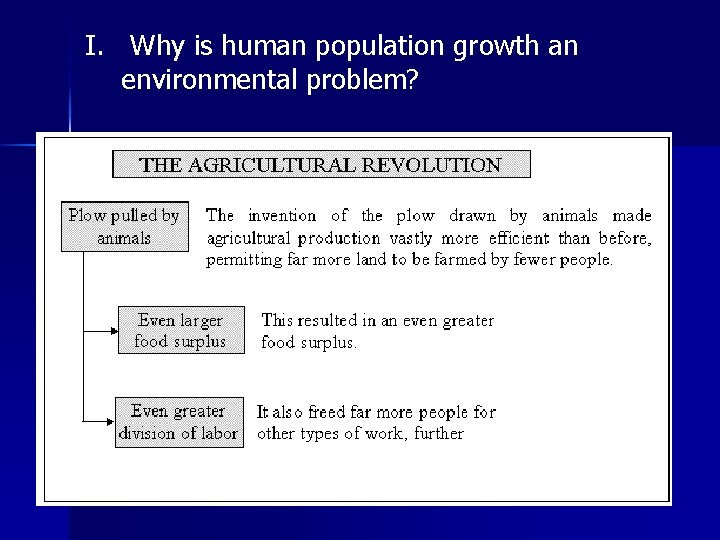
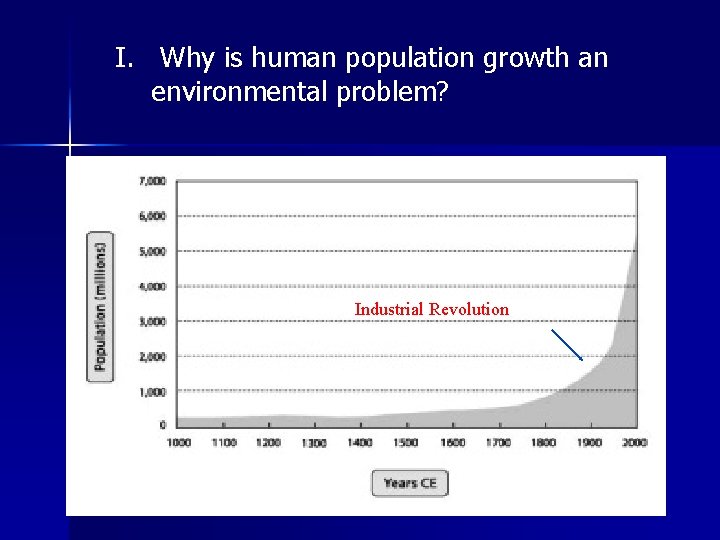
I. Why is human population growth an environmental problem? A. Causes of human population growth 1. Agricultural Revolution – people settle into communities and more people were needed for division of labor; more reliable food supply can support a larger population. 2. Industrial Revolution – In the early 20 th century technological advancements led to improvements in medicine and sanitation allowing for an increased birth rate and decreased death rate. 3. Urbanization (development of cities) leads to economic and social development which influences human population growth in an area.
I. Why is human population growth an environmental problem?
I. Why is human population growth an environmental problem? Industrial Revolution
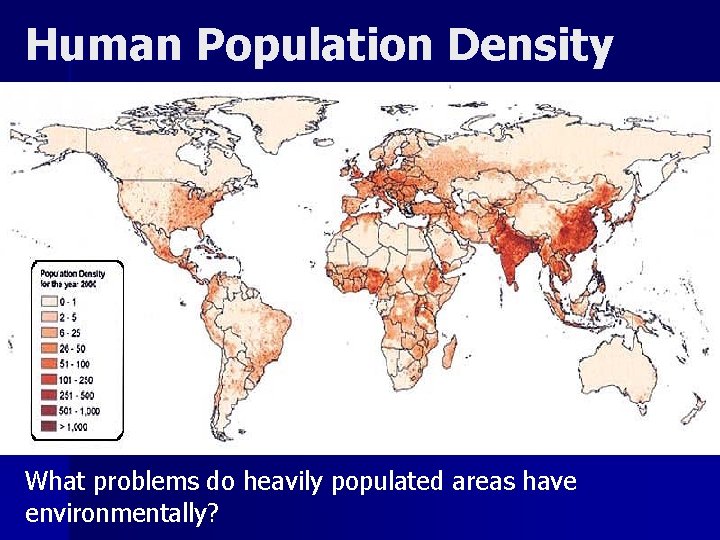
Human Population Density What problems do heavily populated areas have environmentally?
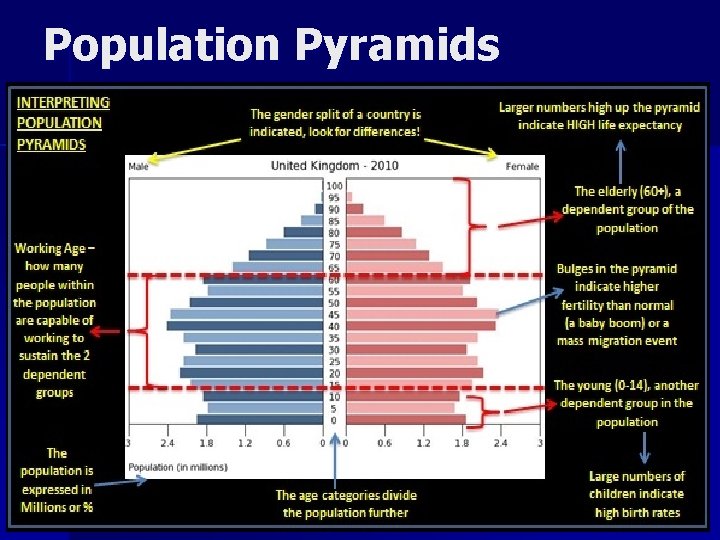
Population Pyramids
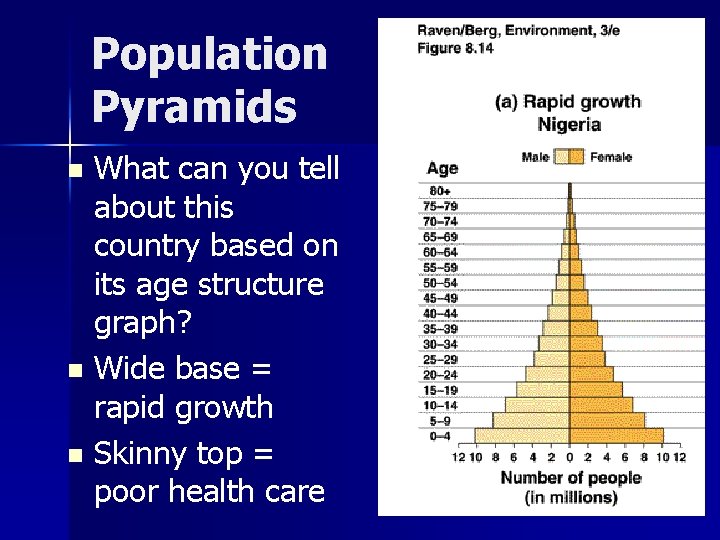
Population Pyramids What can you tell about this country based on its age structure graph? n Wide base = rapid growth n Skinny top = poor health care n
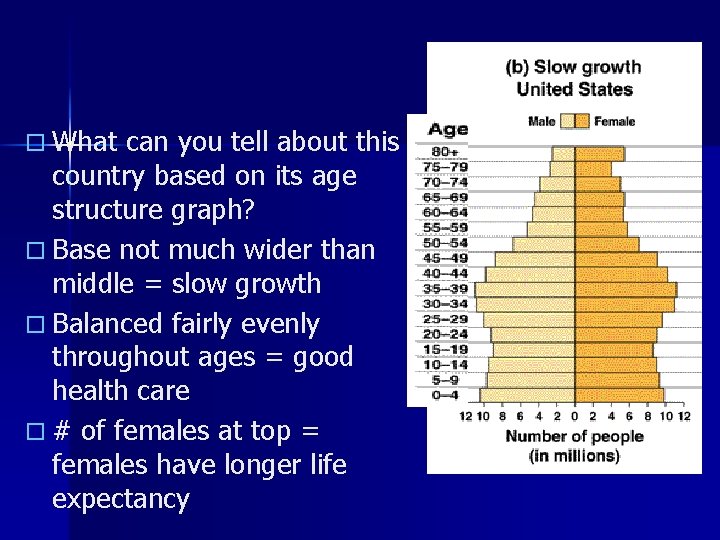
o What can you tell about this country based on its age structure graph? o Base not much wider than middle = slow growth o Balanced fairly evenly throughout ages = good health care o # of females at top = females have longer life expectancy
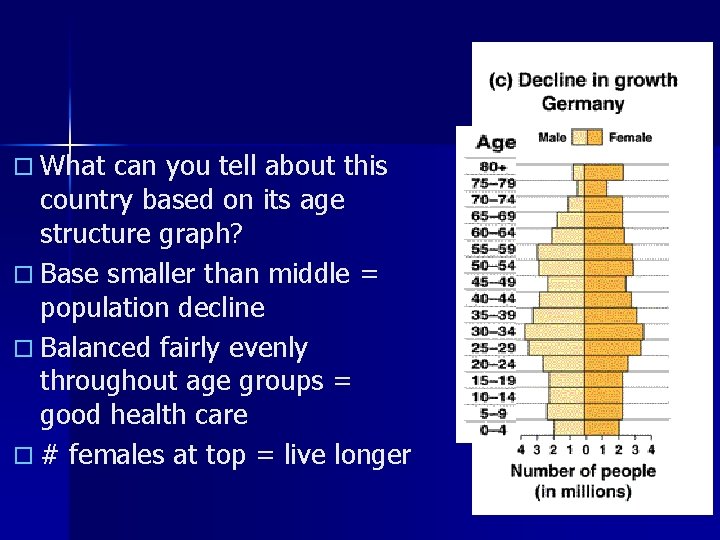
o What can you tell about this country based on its age structure graph? o Base smaller than middle = population decline o Balanced fairly evenly throughout age groups = good health care o # females at top = live longer
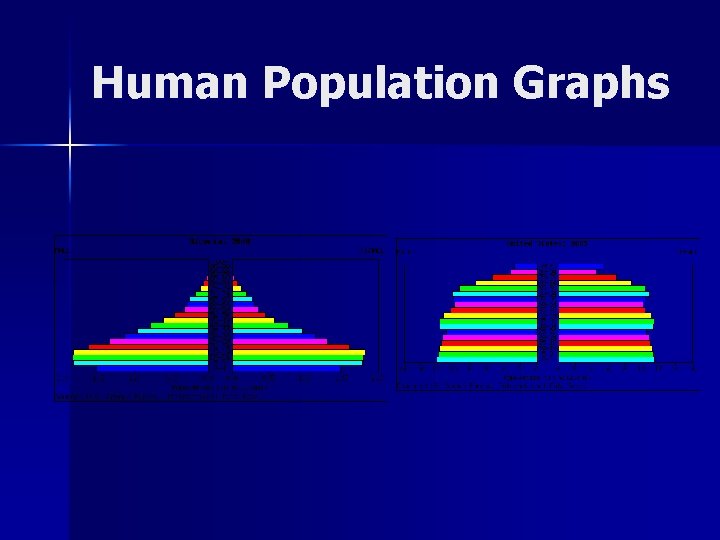
Human Population Graphs