
Population More people live in IN this circle

- Slides: 21
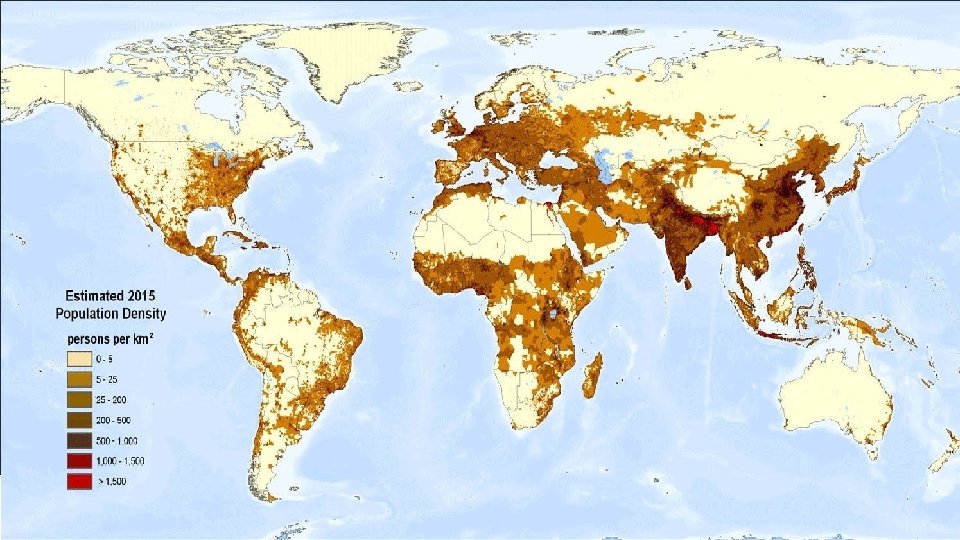
Population
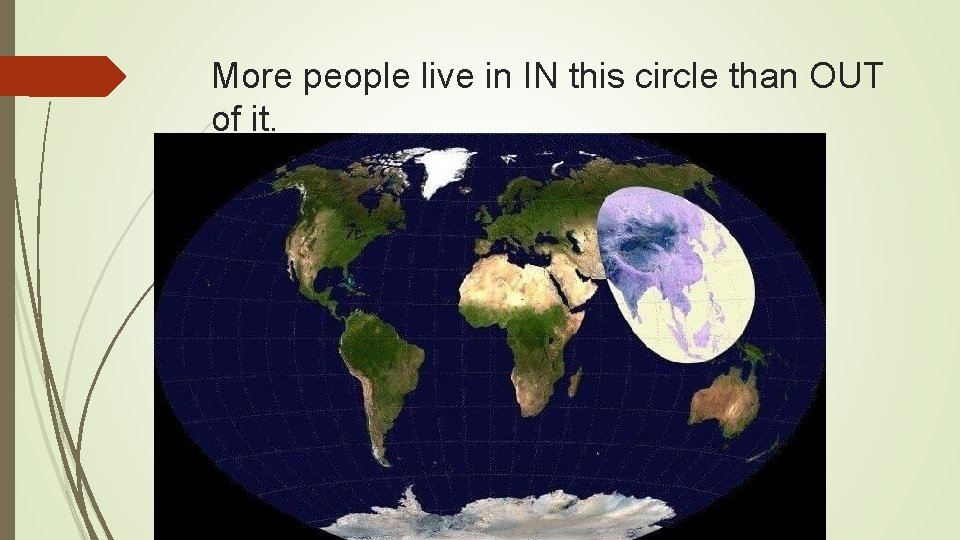
More people live in IN this circle than OUT of it.
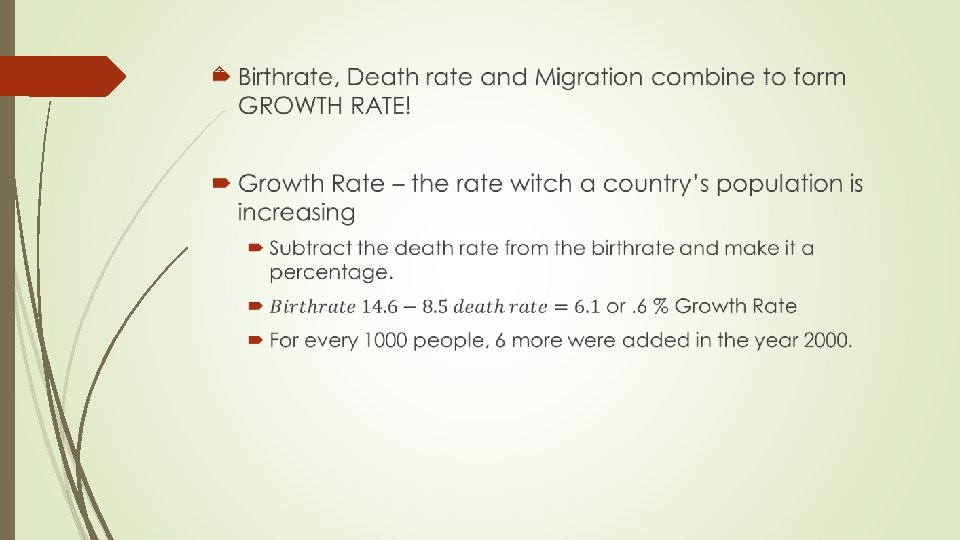
Some basic terms Population: the number of people living in an area at a particular time Demography: area of sociology devoted to the study of human populations Demographers are particularly interested in the study of population change 3 major factors to population change: birthrate, death rate, rate of migration
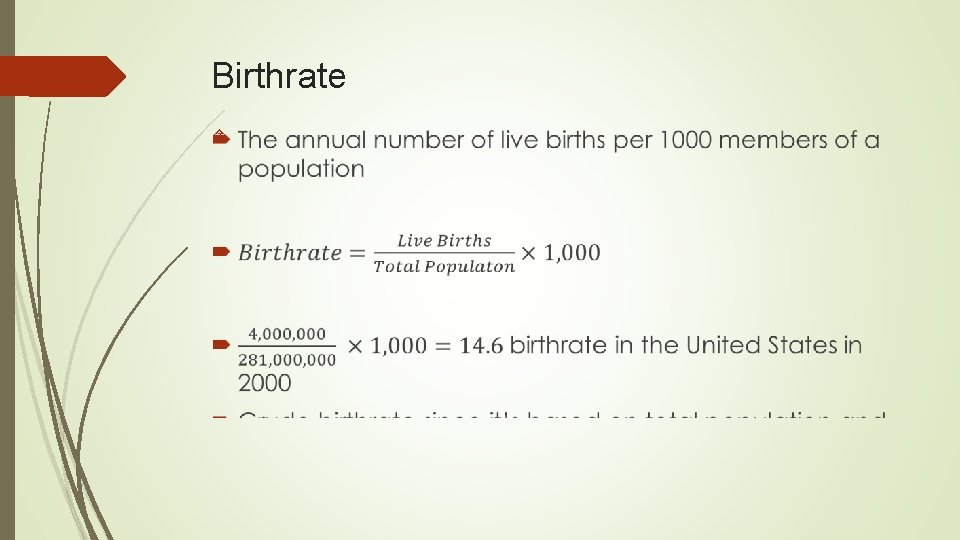
Birthrate
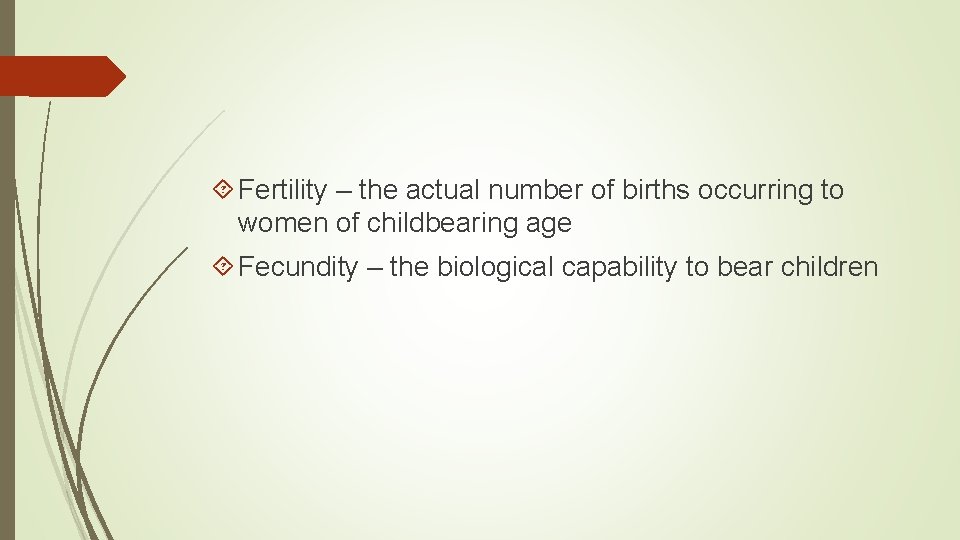
Fertility – the actual number of births occurring to women of childbearing age Fecundity – the biological capability to bear children
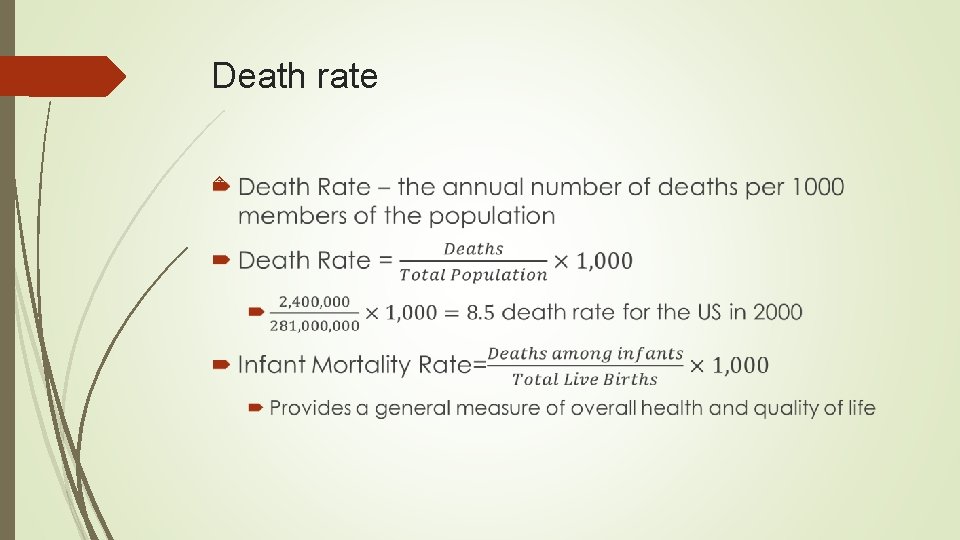
Death rate
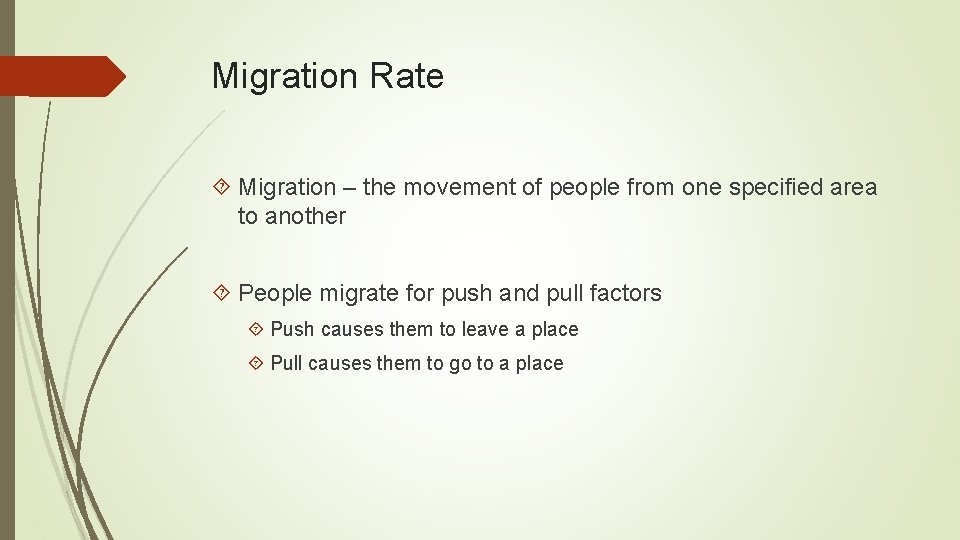
Migration Rate Migration – the movement of people from one specified area to another People migrate for push and pull factors Push causes them to leave a place Pull causes them to go to a place
Population Composition https: //www. youtube. com/watch? v=RLm. Kf. Xw. WQt. E
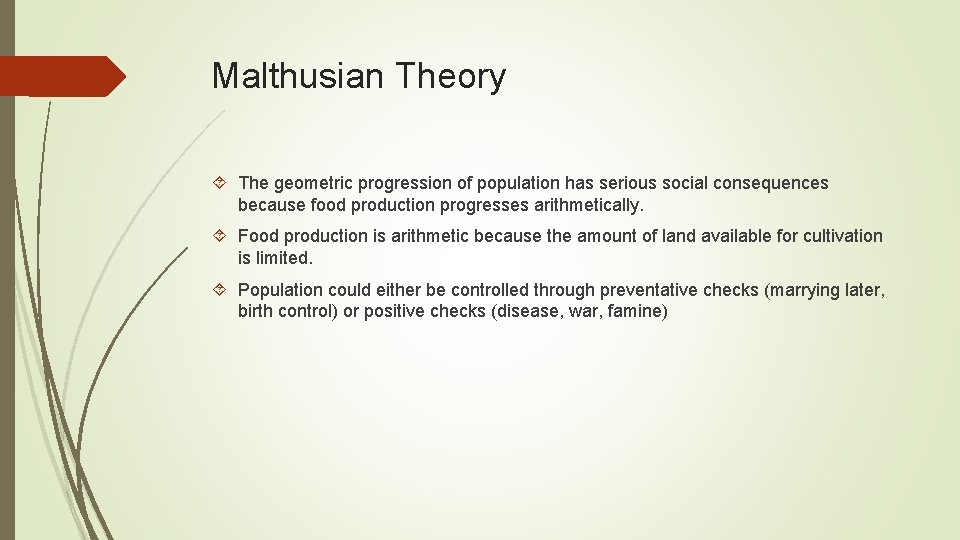
Malthusian Theory The geometric progression of population has serious social consequences because food production progresses arithmetically. Food production is arithmetic because the amount of land available for cultivation is limited. Population could either be controlled through preventative checks (marrying later, birth control) or positive checks (disease, war, famine)
Crash Course https: //www. youtube. com/watch? v=QAk. W_i 0 b. Dp. Q
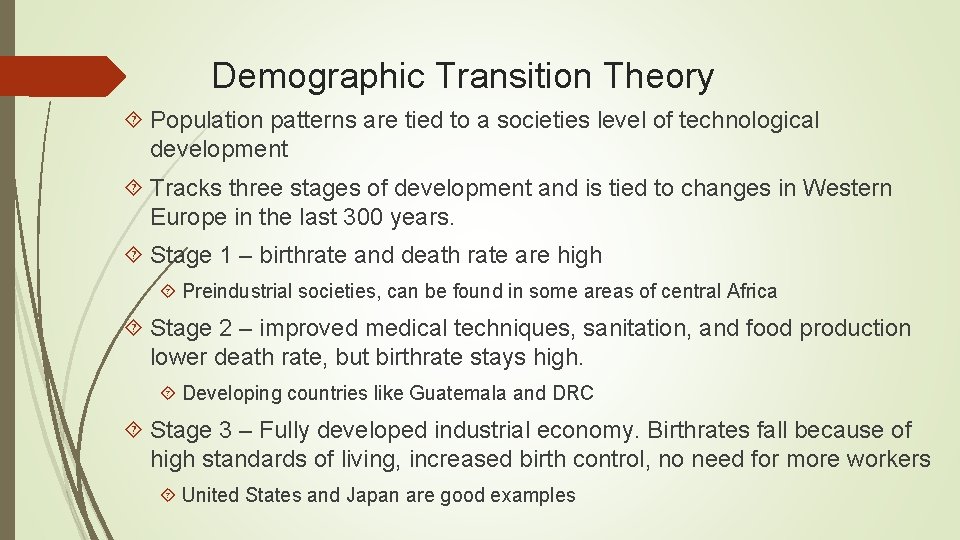
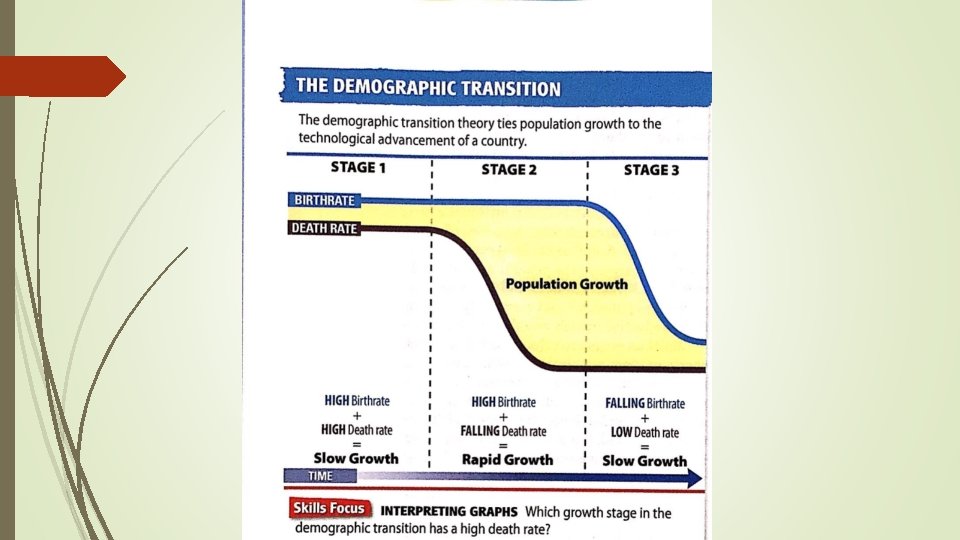
Demographic Transition Theory Population patterns are tied to a societies level of technological development Tracks three stages of development and is tied to changes in Western Europe in the last 300 years. Stage 1 – birthrate and death rate are high Preindustrial societies, can be found in some areas of central Africa Stage 2 – improved medical techniques, sanitation, and food production lower death rate, but birthrate stays high. Developing countries like Guatemala and DRC Stage 3 – Fully developed industrial economy. Birthrates fall because of high standards of living, increased birth control, no need for more workers United States and Japan are good examples
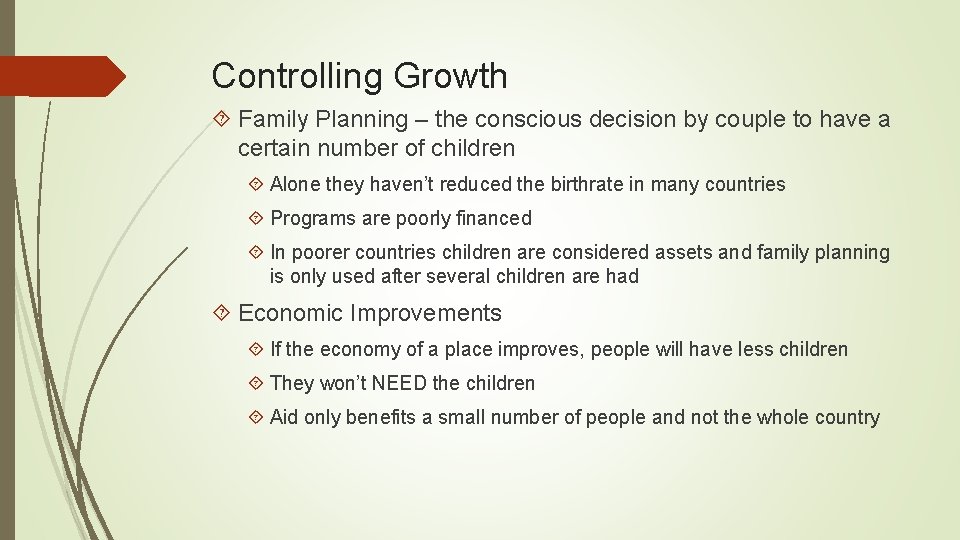
Controlling Growth Family Planning – the conscious decision by couple to have a certain number of children Alone they haven’t reduced the birthrate in many countries Programs are poorly financed In poorer countries children are considered assets and family planning is only used after several children are had Economic Improvements If the economy of a place improves, people will have less children They won’t NEED the children Aid only benefits a small number of people and not the whole country
Urban Living Urbanization – the concentration of population into cities City – a permanent concertation of a relatively large number of people who are engaged mainly in nonfarming activities
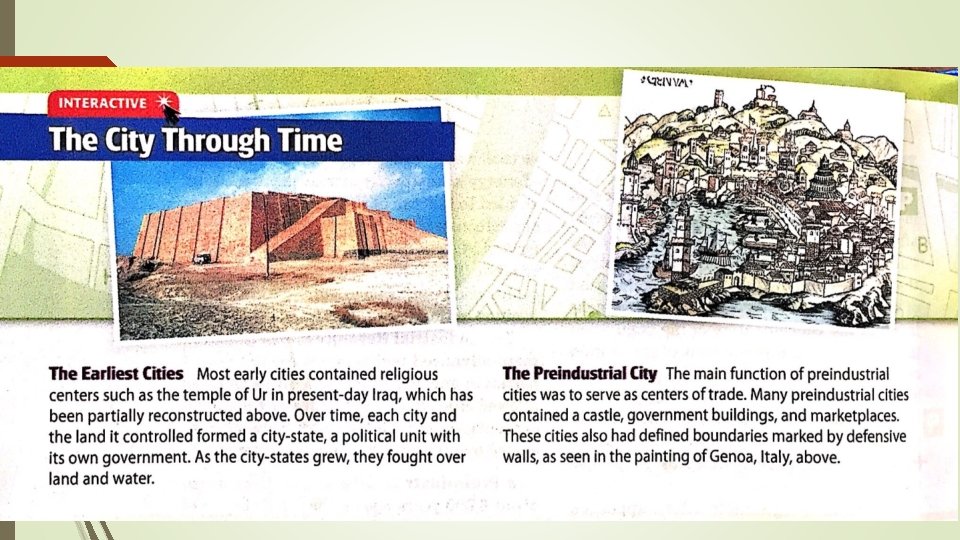
The Preindustrial City First arose around 6000 year ago in river valleys. The Nile, Tigris and Euphrates Small, a few thousand people Population size was limited by agricultural output Crowded and lacked sanitation High death rates, plagues, epidemics,
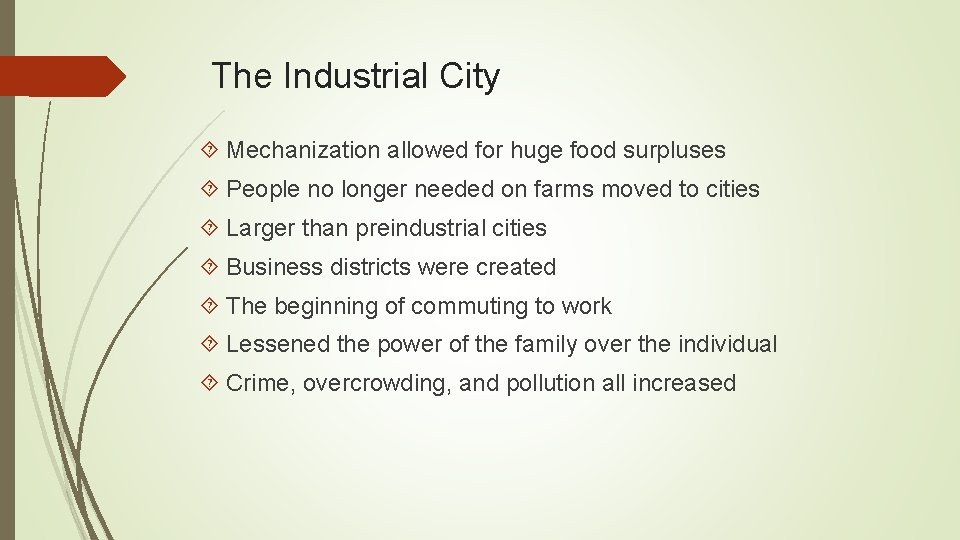
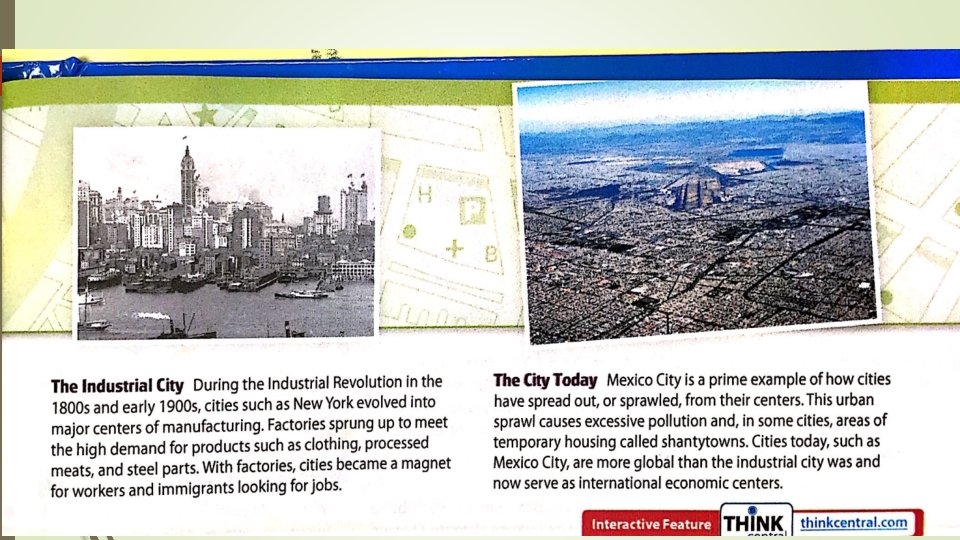
The Industrial City Mechanization allowed for huge food surpluses People no longer needed on farms moved to cities Larger than preindustrial cities Business districts were created The beginning of commuting to work Lessened the power of the family over the individual Crime, overcrowding, and pollution all increased
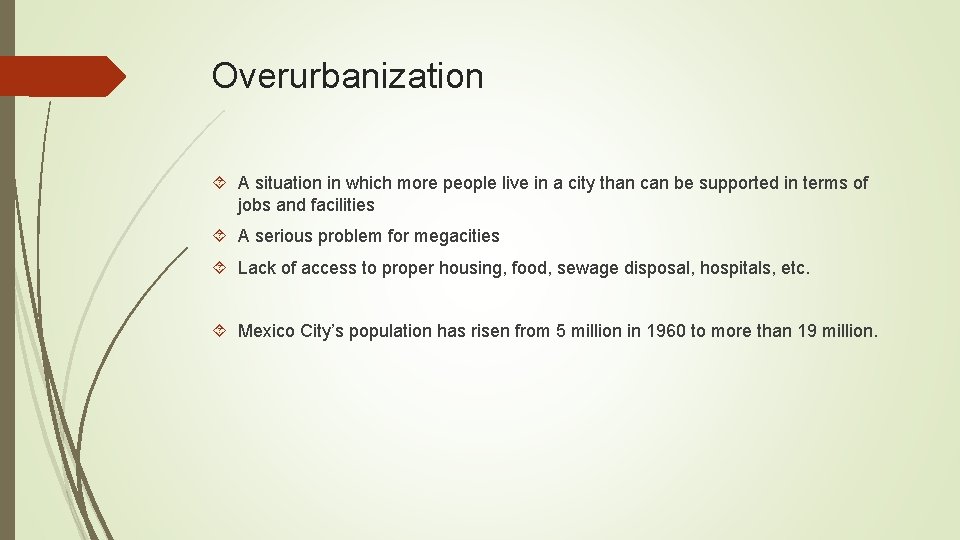
Overurbanization A situation in which more people live in a city than can be supported in terms of jobs and facilities A serious problem for megacities Lack of access to proper housing, food, sewage disposal, hospitals, etc. Mexico City’s population has risen from 5 million in 1960 to more than 19 million.