
Population health management instruction model using collaborative tools
Population health management instruction model using collaborative tools that promote critical thinking Presented by Rosemary M. Caron, Ph. D, MPH Professor Department of Health Management and Policy University of New Hampshire
UNH MPH Program - General MPH degree - Working professionals - New elective course; Population Health - Seminar format - CEPH Content Areas: 1. Identify the core functions of public health and the 10 Essential Services 2. Explain the role of quantitative and qualitative methods and sciences in describing and assessing a population’s health 3. Discuss the science of primary, secondary and tertiary prevention in population health, including health promotion, screening, etc. 4. Explain the critical importance of evidence in advancing public health knowledge 5. Explain the social, political and economic determinants of health and how they contribute to population health and health inequities
Population Health, Elective Course - CEPH Competencies Evidenced-based Approaches to Public Health - Interpret results of data analysis for public health research, policy or practice Planning & Management to Promote Health - Assess population needs, assets and capacities that affect communities’ health - Design a population-based policy, program, project or intervention Policy in Public Health - Propose strategies to identify stakeholders and build coalitions and partnerships for influencing public health outcomes Communication - Select communication strategies for different audiences and sectors - Communicate audience-appropriate public health content, both in writing and through oral presentation
“The traditional separation between primary health care providers and public health professionals is impeding greater success in meeting their shared goal of ensuring the health of populations. ” -Primary Care and Public Health: Exploring Integration to Improve Population Health, Institute of Medicine, 2012 System Integration
“the health outcomes of a group of individuals, including the distribution of such outcomes within the group. ” (Kindig, D. A. , and G. Stoddart. “What is Population Health? ” AJPH, 2003, 93, p. 3669. ) “…a potent opportunity for health care delivery systems, public health agencies, community-based organizations, and many other entities to work together to improve health outcomes in the communities they serve. ” (Stoto, M. Population Health in the Affordable Care Act, Academy. Health, 2013, p. 1. ) Population Health
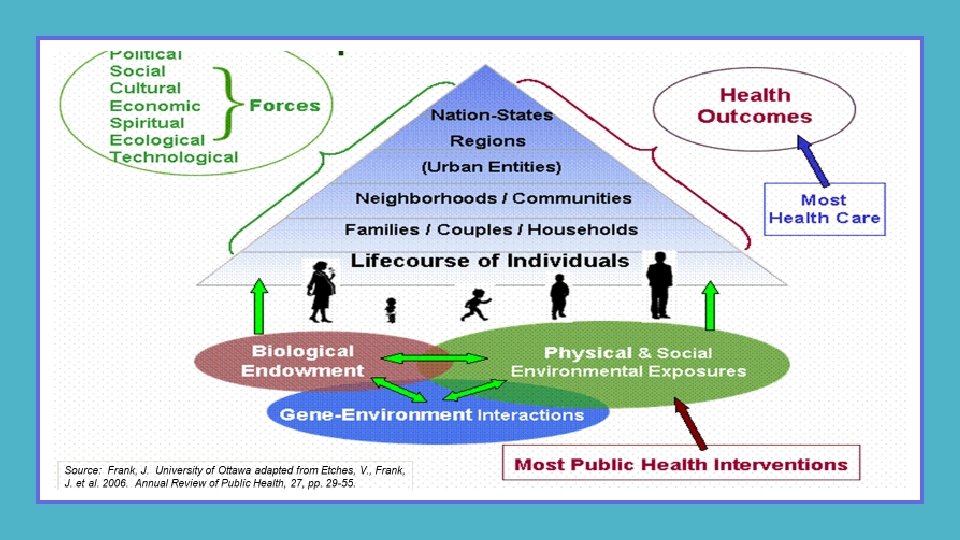
Goal = “…keep a patient population as healthy as possible, minimizing the need for expensive interventions…” (Institute for Health Technology Transformation Report, 2012, p. 7. ) “While PHM focuses partly on the high-risk patients who generate the majority of health costs, it systematically addresses the preventive and chronic care needs of every patient” (Institute for Health Technology Transformation Report, 2012, p. 7. ) Population Health Management (PHM)
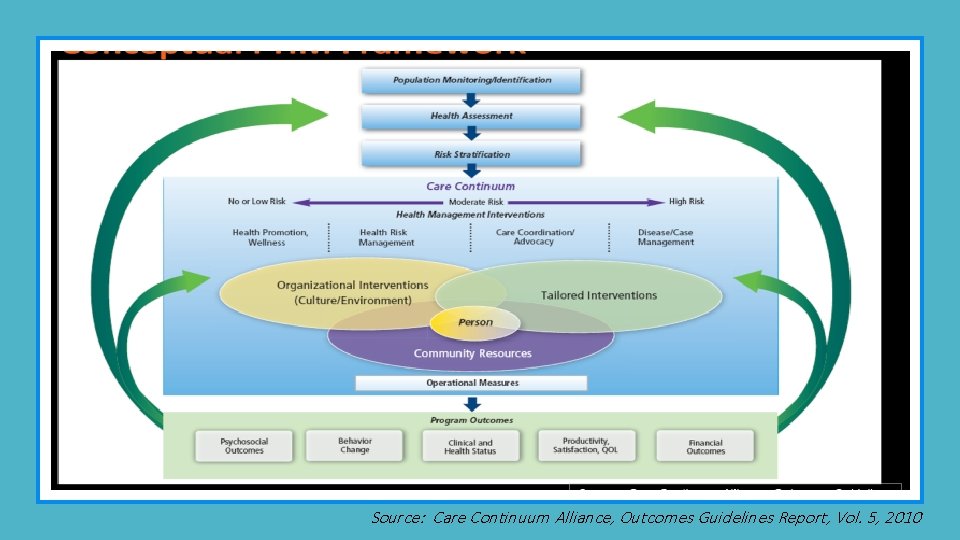
Source: Care Continuum Alliance, Outcomes Guidelines Report, Vol. 5, 2010
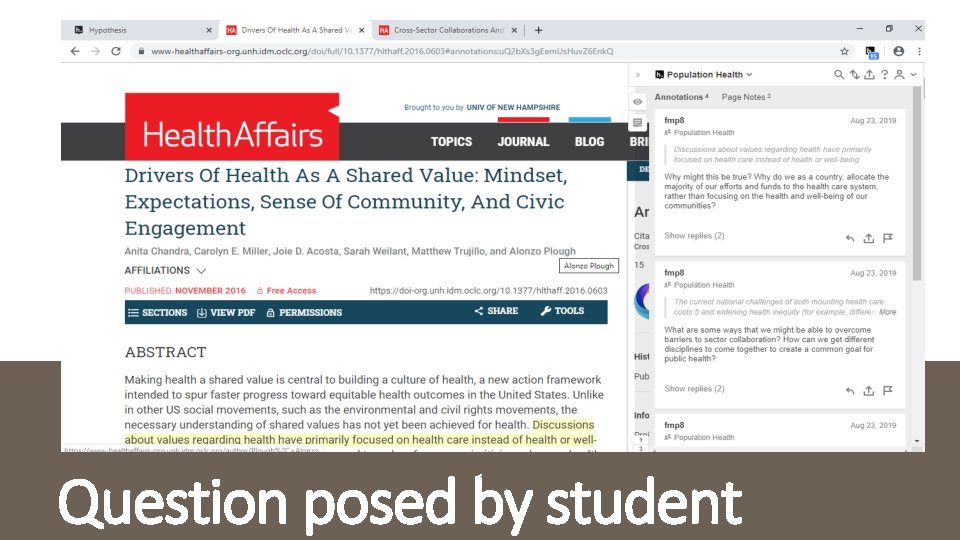
Hypothes. is - Journal Club - Why? The primary, peer-reviewed literature is the source for evidencebased practice and thus, today’s public health professional must be able to engage in critically analyzing this research to further progress the field by developing new questions to answer and to apply current research to challenging, complex population health issues. Hypothes. is
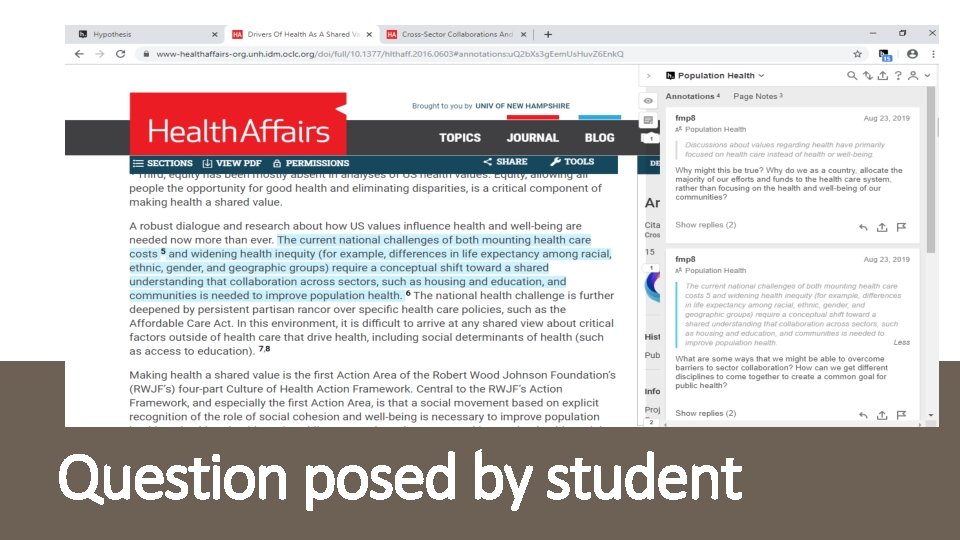
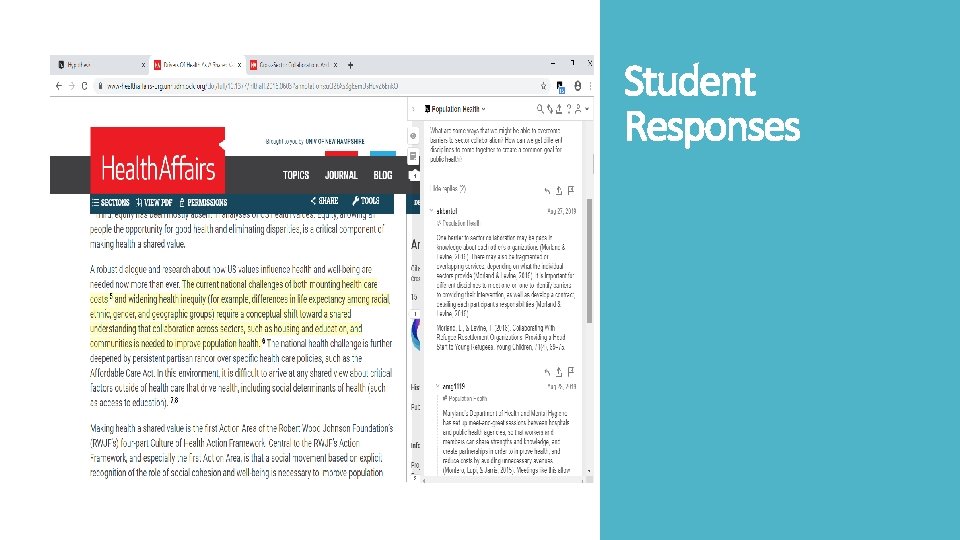
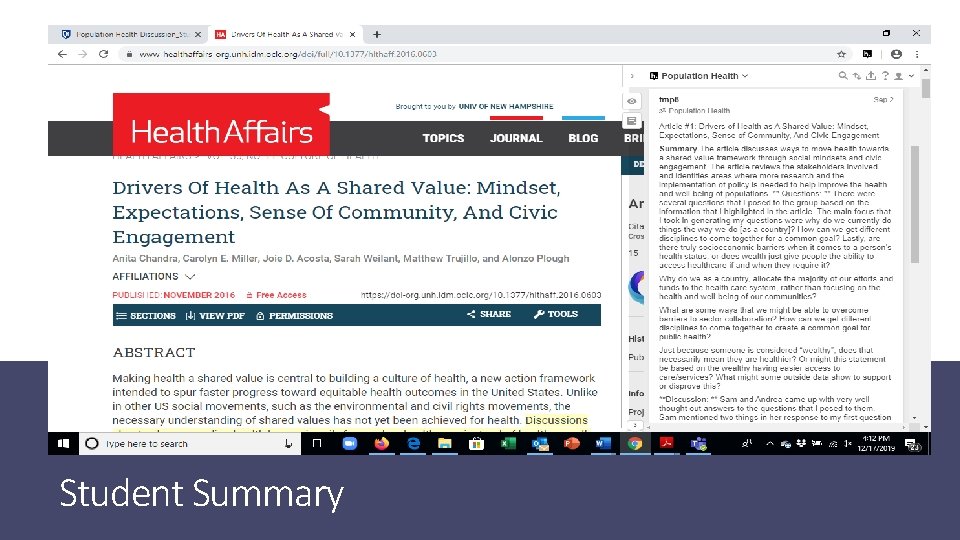
Hypothes. is - What? Each student/group was responsible for leading the discussion of significant population health topics. - The instructor-selected readings were posted in LMS. -For the online portion of the course, each student/group developed at least two (2) questions per reading for which the remaining groups responded. -The designated lead group responded to each group and summarized the week’s learning about this particular population health topic. Hypothes. is
Health Affairs • • • Culture of Health ROI on Health and Well-being Dynamic Collaborations CHNA Alignment Spread, Scale, Sustainability Community Rx Public Libraries as Partners Population Health Measures of Wellbeing Community Prevention Workplace Wellness Population Health Research in Practice
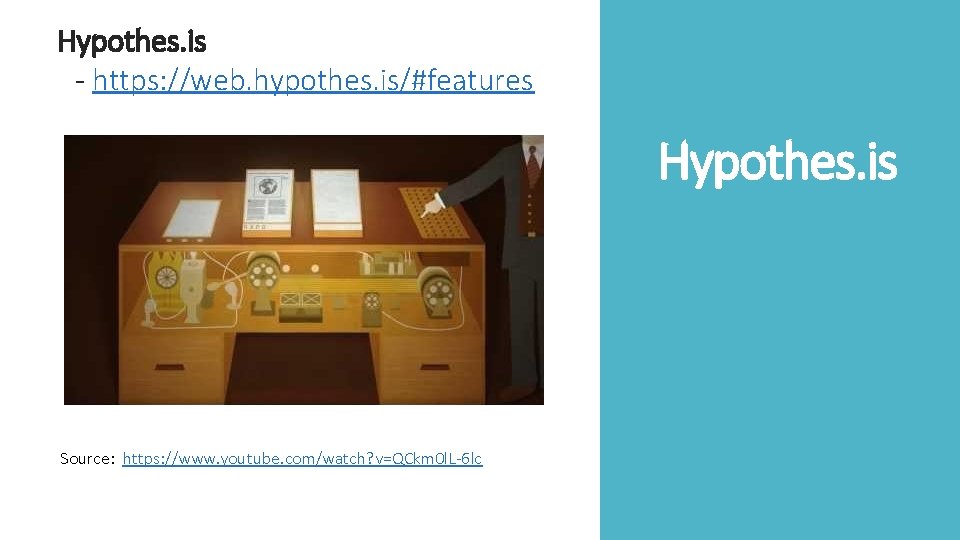
Hypothes. is - https: //web. hypothes. is/#features Hypothes. is Source: https: //www. youtube. com/watch? v=QCkm 0 l. L-6 lc
Question posed by student
Question posed by student
Student Responses
Student Summary
Padlet - Population health as a public service Why? Communicating information about the essential service of public health and the role for the health care system is an important endeavor by which to educate the public about health promotion and disease prevention efforts. The act of communicating effectively is a science and an art that stands at the center of our work as public health professionals. Padlet
Padlet What? Each group identified a population health issue about which to inform the public. - Padlet was used to collaborate and collect peer-reviewed research on the identified public health issue - Twitter served as the social media venue used to communicate to the public about important public health issues. Padlet
Padlet - https: //padlet. com/features Padlet Source: https: //www. youtube. com/watch? v=U 3 P 5 Qy. Sm. Le. U
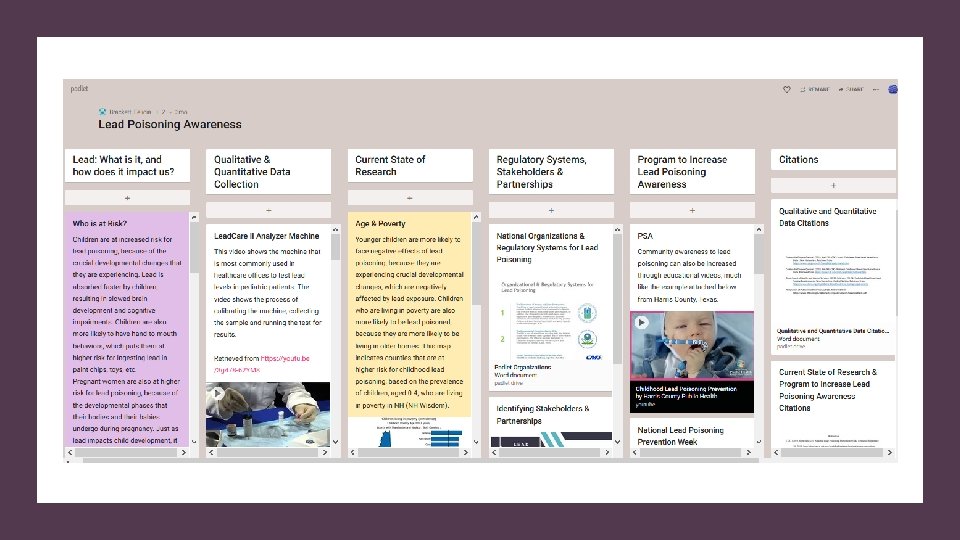
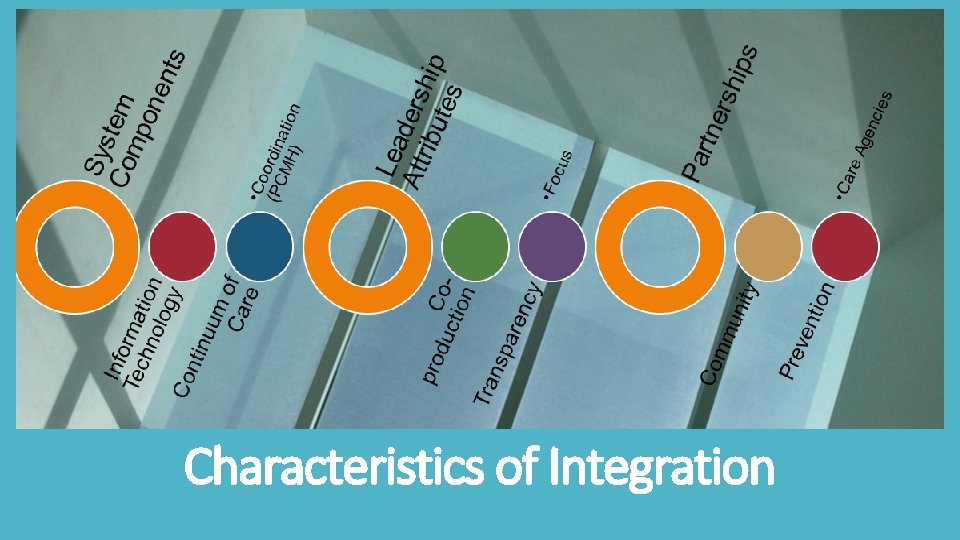
Characteristics of Integration
- Establish provider collaborations that span the continuum of care - Partner with providers for an expanded focus on quality and outcomes - Create hospital-payer collaborations to advance care coordination - Work directly with community employers to improve health outcomes - Look beyond clinical care partnerships to improve access to care and other necessary community services Looking Forward

Contact Information: Rosemary M. Caron, Ph. D, MPH Professor Department of Health Management and Policy College of Health and Human Services University of New Hampshire E-mail: Rosemary. Caron@unh. ed u
- Slides: 23