
Population Health Management Financing Approaches CPT Codes Billing
Population Health Management Financing: Approaches, CPT Codes, Billing and Reimbursement Dr. Lesley Manson, Psy. D
Dr. Lesley Manson, Psy. D. of this session has NOT had any relevant financial relationships or other disclosures to report during the past 12 months. Faculty Disclosure
Learning Objectives • Identify three essential features of successful population health management programs in integrated health care programs and settings for sustainability. • Identify coding which may be appropriate for reimbursement population health management approaches to achieve the healthcare Quadruple Aim of improved patient experience of care, improved health of populations, decreased cost of care, and reduced provider burnout. • Identify two methods to evaluate population health management programs, including clinical, operational and financial components as well as evaluation of program cost, projected cost savings and return on investment (ROI).
Agenda 1. 2. 3. 4. 5. PHM Target and Focus Stakeholders & Team Members Developing Capacity Coding, Billing & Reimbursement

Focus
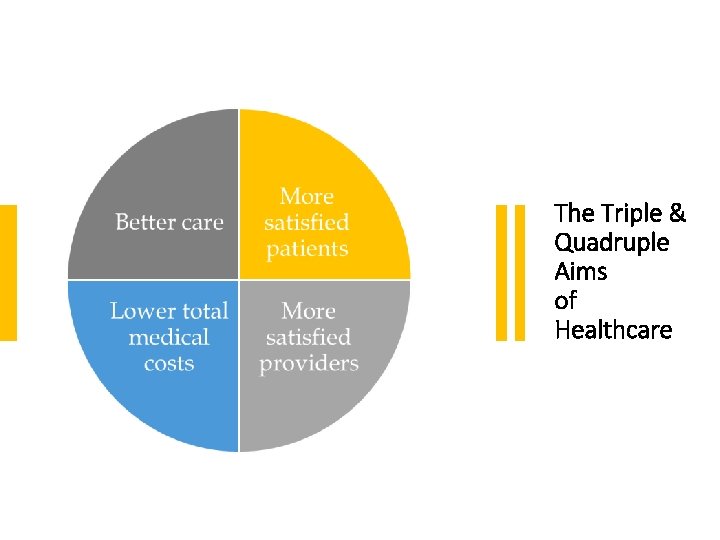
The Triple & Quadruple Aims of Healthcare
National Quality Strategy: What is your mission? How is it tied to the Aims? • Promote effective chronic care management • Make full care accessible • Make care safer • Promote community and population health • Promote effective care coordination • Integrated team-based care • Strengthen patient and family engagement
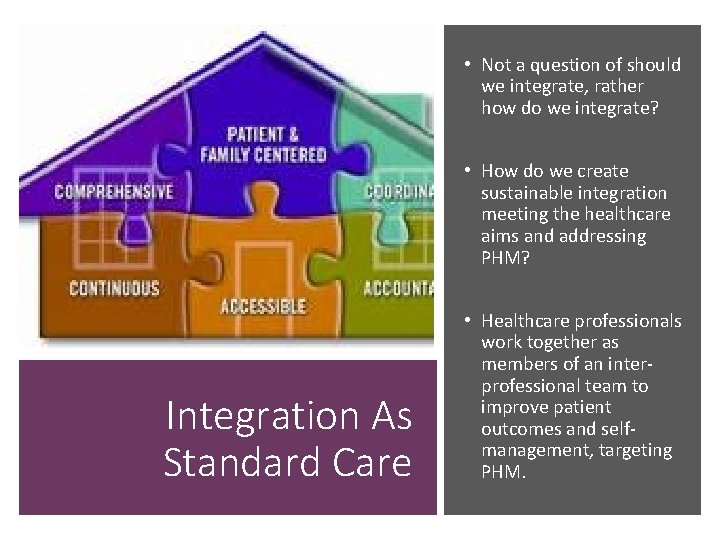
• Not a question of should we integrate, rather how do we integrate? • How do we create sustainable integration meeting the healthcare aims and addressing PHM? Integration As Standard Care • Healthcare professionals work together as members of an interprofessional team to improve patient outcomes and selfmanagement, targeting PHM.
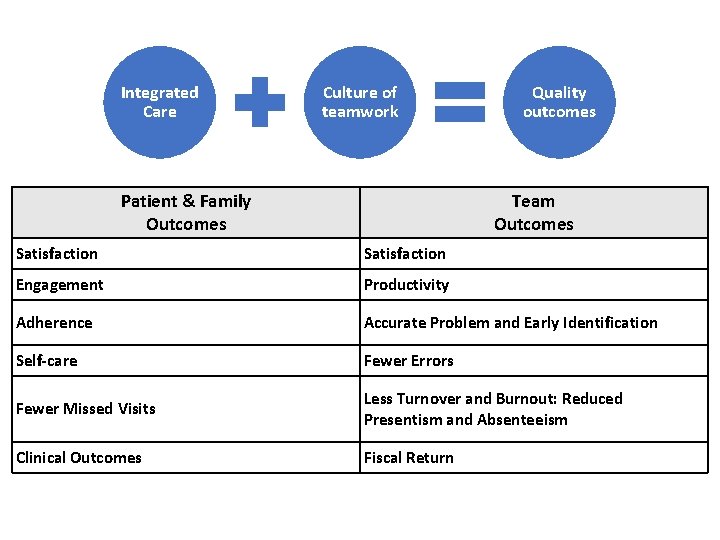
Integrated Care Culture of teamwork Patient & Family Outcomes Quality outcomes Team Outcomes Satisfaction Engagement Productivity Adherence Accurate Problem and Early Identification Self-care Fewer Errors Fewer Missed Visits Less Turnover and Burnout: Reduced Presentism and Absenteeism Clinical Outcomes Fiscal Return
Planning, Implementation, and Sustainability for PHM Core Elements: • Systematic and operationalized • Employs evidencebased practices • Promotes change across the system - from patient to policy • Flexible • Uses metrics and data for quality improvement and program development • Builds and refines return on investment analysis

Stakeholders & Team Members
Who Can Lead PHM? States Healthcare leaders (Providers, Administration, & Staff) Patients & Patient Advocates Professional Guilds Communities No Matter Who – You need the Right Team!

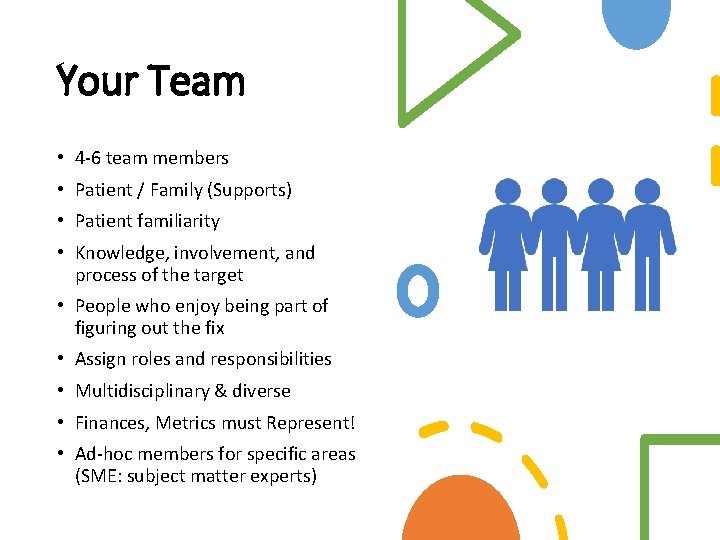
Your Team • 4 -6 team members • Patient / Family (Supports) • Patient familiarity • Knowledge, involvement, and process of the target • People who enjoy being part of figuring out the fix • Assign roles and responsibilities • Multidisciplinary & diverse • Finances, Metrics must Represent! • Ad-hoc members for specific areas (SME: subject matter experts)
Developing Capacity
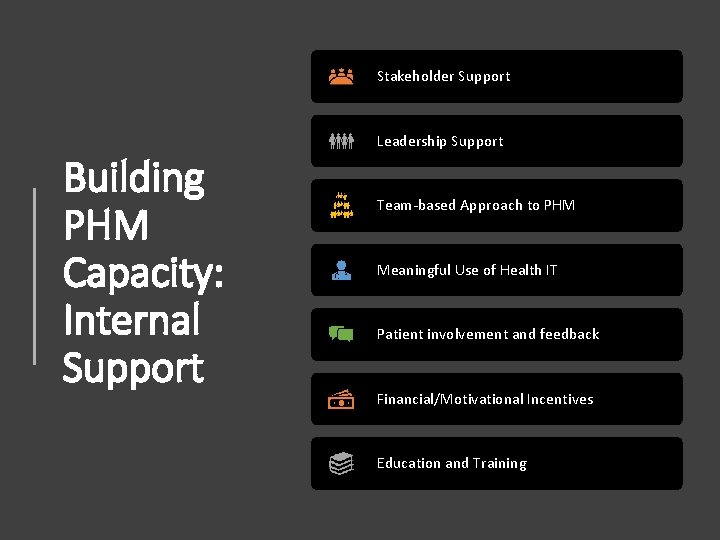
Stakeholder Support Building PHM Capacity: Internal Support Leadership Support Team-based Approach to PHM Meaningful Use of Health IT Patient involvement and feedback Financial/Motivational Incentives Education and Training
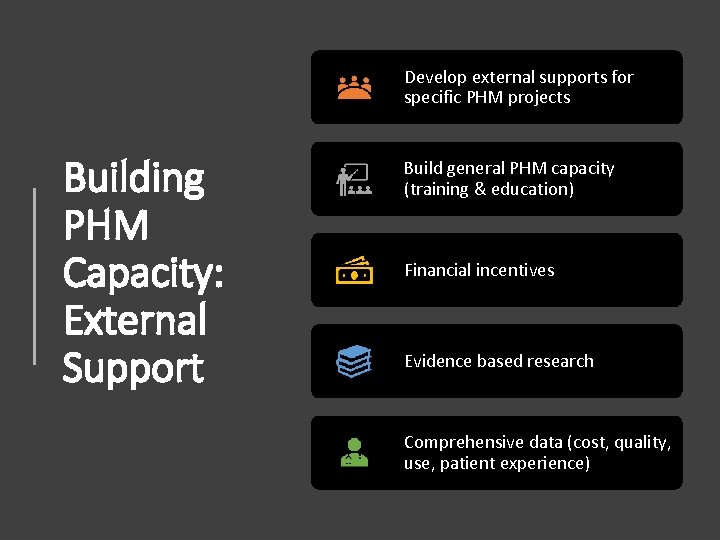
Develop external supports for specific PHM projects Building PHM Capacity: External Support Build general PHM capacity (training & education) Financial incentives Evidence based research Comprehensive data (cost, quality, use, patient experience)

Metrics & Measures
Target & Focus: Identifying Our Aim
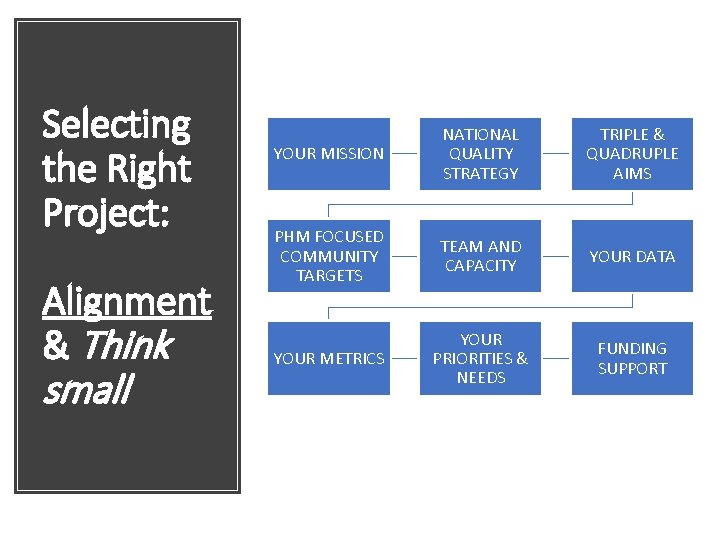
Selecting the Right Project: Alignment & Think small YOUR MISSION NATIONAL QUALITY STRATEGY TRIPLE & QUADRUPLE AIMS PHM FOCUSED COMMUNITY TARGETS TEAM AND CAPACITY YOUR DATA YOUR METRICS YOUR PRIORITIES & NEEDS FUNDING SUPPORT
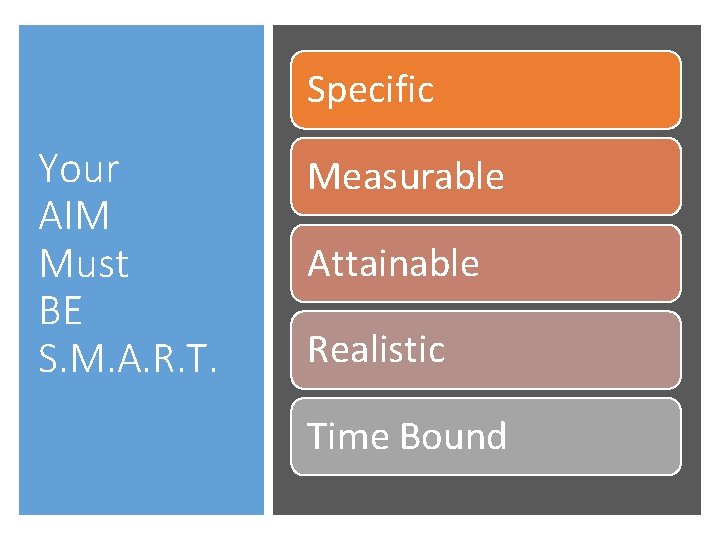
Specific Your AIM Must BE S. M. A. R. T. Measurable Attainable Realistic Time Bound
Which PHM quality measures are important to us? Helpful Questions for Your Practice How do we rate / compare our success on PHM outcomes? How do we stay aware of evolving PHM quality measures? How do we get involved in the development of PHM measures and financial returns/incentives?
How has PHM changed our patient care? Helpful Questions for Your Practice Who decides which PHM quality measures to adhere to and how to best implement them? How are guidelines and pathways impacting our decision-making? What are we doing to understand the needs of team members/providers, population/community/patients?
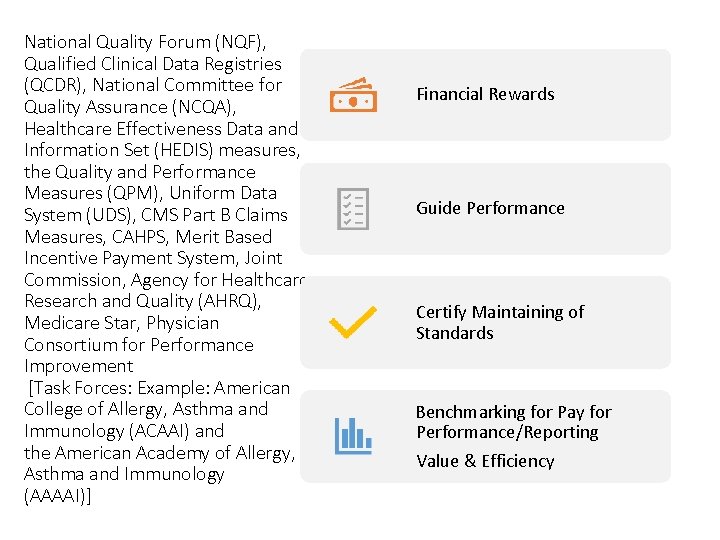
National Quality Forum (NQF), Qualified Clinical Data Registries (QCDR), National Committee for Quality Assurance (NCQA), Healthcare Effectiveness Data and Information Set (HEDIS) measures, the Quality and Performance Measures (QPM), Uniform Data System (UDS), CMS Part B Claims Measures, CAHPS, Merit Based Incentive Payment System, Joint Commission, Agency for Healthcare Research and Quality (AHRQ), Medicare Star, Physician Consortium for Performance Improvement [Task Forces: Example: American College of Allergy, Asthma and Immunology (ACAAI) and the American Academy of Allergy, Asthma and Immunology (AAAAI)] Financial Rewards Guide Performance Certify Maintaining of Standards Benchmarking for Pay for Performance/Reporting Value & Efficiency
BUILDING SUSTAINABILITY Identifying current and future revenue and expenditure trends / specifics that have an immediate or long-term influence on PHM policies, strategic goals, and/or services.
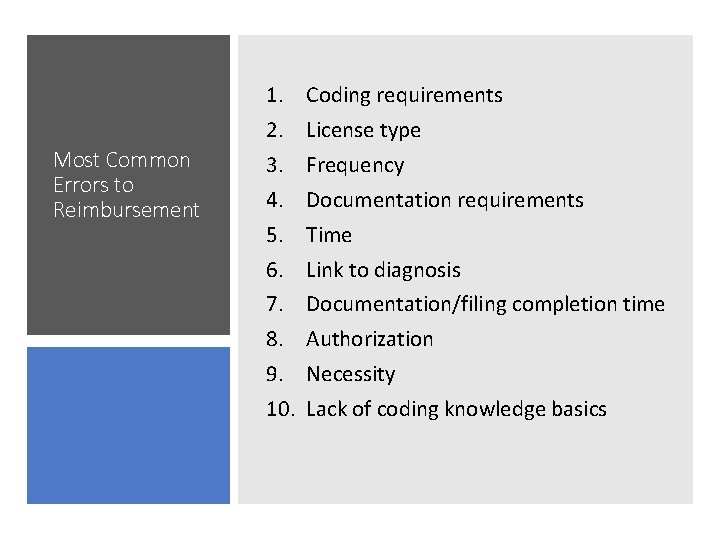
Most Common Errors to Reimbursement 1. 2. 3. 4. 5. 6. 7. 8. 9. 10. Coding requirements License type Frequency Documentation requirements Time Link to diagnosis Documentation/filing completion time Authorization Necessity Lack of coding knowledge basics
5 STEPS TO FISCAL SUSTAINABILITY
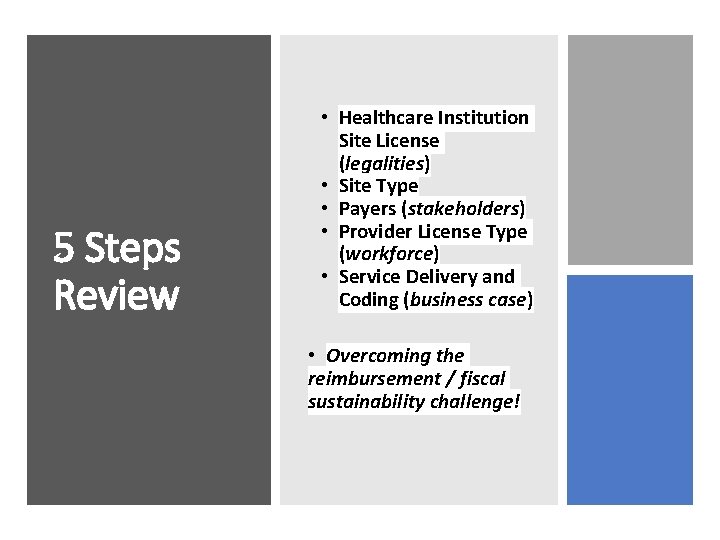
5 Steps Review • Healthcare Institution Site License (legalities) • Site Type • Payers (stakeholders) • Provider License Type (workforce) • Service Delivery and Coding (business case) • Overcoming the reimbursement / fiscal sustainability challenge!
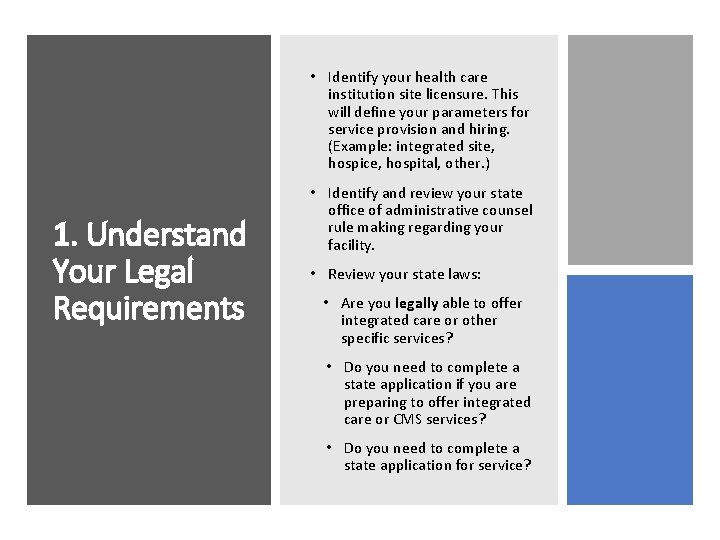
• Identify your health care institution site licensure. This will define your parameters for service provision and hiring. (Example: integrated site, hospice, hospital, other. ) 1. Understand Your Legal Requirements • Identify and review your state office of administrative counsel rule making regarding your facility. • Review your state laws: • Are you legally able to offer integrated care or other specific services? • Do you need to complete a state application if you are preparing to offer integrated care or CMS services? • Do you need to complete a state application for service?
2. Site Type • Identify your site type (identify how your site is classified? E. g. : ACO, FQHC, RHC, etc). This will assist with identifying state and federal payment models and eligibility for quality reimbursement initiatives. Further, it will provide information on which professionals are reimbursable for which services. • This helps to identify the way you can receive direct reimbursement, health savings, and outcome measurements. Fiscal direct pro forma as well as return on investment and cost savings are primarily dependent on site. Many sites have specific eligibility for quality reporting, funding, and reimbursement models. • Are there rules, regulations, and support for my specific entity for integration? • Do I have or wish to develop PCMH? • Do I report specific behavioral metrics already related to chronic health conditions and behavioral health (HEDIS, NCQA/PCMH, Joint Commission, PQRS, UDS, MACRA), which I can leverage for IBH development and quality health outcome improvements?
3. Stakeholder Communication • Develop patient advisory councils, patient questionnaires, and/or community stakeholder meetings to identify needs, interest, and further insight into program development. • Utilize IBH Screening tools and questionnaires to identify and address provider needs in developing IBH programming and services. Leverage data mining for common diagnoses, treatment considerations, screenings, CPT coding, registry use, and health maintenance and quality outcomes data for further program development. • Contact payers (insurance programs) to identify reimbursement (service types, program types, value contracts), health savings, bundling payments, and outcome measurements needed for sustainability. Payers identify the licensure, regulations, and documentation requirements of providers, services, and program. Identify specific state, federal, and private rules and regulations for integrated care services.
A. Provider license types identify the areas of specialty, education, training, and professional practice, which may be required or encouraged by payer systems, members, and providers. Action: In addition, review state, federal, and payer specific regulations related to licensure requirements for reimbursable and provided services. B. Create EHR and practice infrastructure to support the services and requirements identified for integrated care. 4. Workforce Development and License Needs
C. Consider workforce development and formal training opportunities in team based care, PHM/ population health, behavioral medicine, and creation of internships, and fellowships. Further, consider augmenting your workforce with training and leveraging community service professionals, allied health, and patient members to deliver specific evidenced based healthcare programs. D. Understand your institution, site, stakeholder, and workforce requirements related to service delivery, documentation, coding, interventions, and privacy/consent requirements. Ensure all verbiage and service delivery descriptions are aligned for integrated team based care and PHM. 4. Workforce Development and License Needs
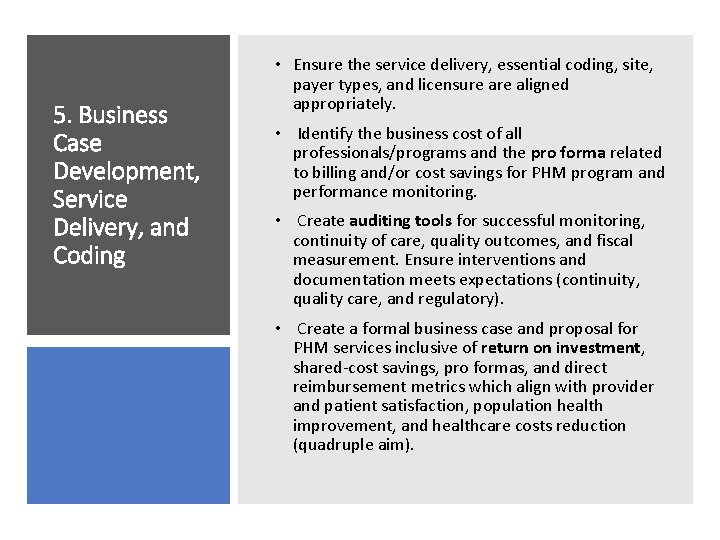
5. Business Case Development, Service Delivery, and Coding • Ensure the service delivery, essential coding, site, payer types, and licensure aligned appropriately. • Identify the business cost of all professionals/programs and the pro forma related to billing and/or cost savings for PHM program and performance monitoring. • Create auditing tools for successful monitoring, continuity of care, quality outcomes, and fiscal measurement. Ensure interventions and documentation meets expectations (continuity, quality care, and regulatory). • Create a formal business case and proposal for PHM services inclusive of return on investment, shared-cost savings, pro formas, and direct reimbursement metrics which align with provider and patient satisfaction, population health improvement, and healthcare costs reduction (quadruple aim).

BUILDING SUSTAINABILITY: Common Coding
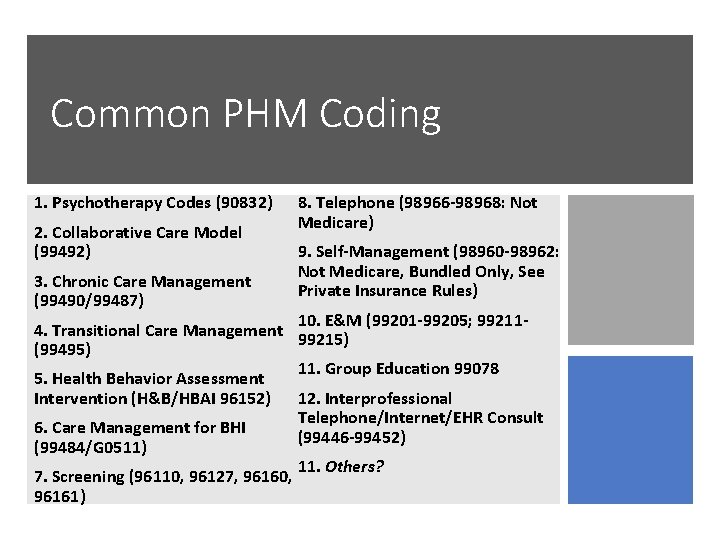
Common PHM Coding 1. Psychotherapy Codes (90832) 2. Collaborative Care Model (99492) 3. Chronic Care Management (99490/99487) 8. Telephone (98966 -98968: Not Medicare) 9. Self-Management (98960 -98962: Not Medicare, Bundled Only, See Private Insurance Rules) 10. E&M (99201 -99205; 992114. Transitional Care Management 99215) (99495) 11. Group Education 99078 5. Health Behavior Assessment Intervention (H&B/HBAI 96152) 12. Interprofessional Telephone/Internet/EHR Consult 6. Care Management for BHI (99446 -99452) (99484/G 0511) 11. Others? 7. Screening (96110, 96127, 96160, 96161)
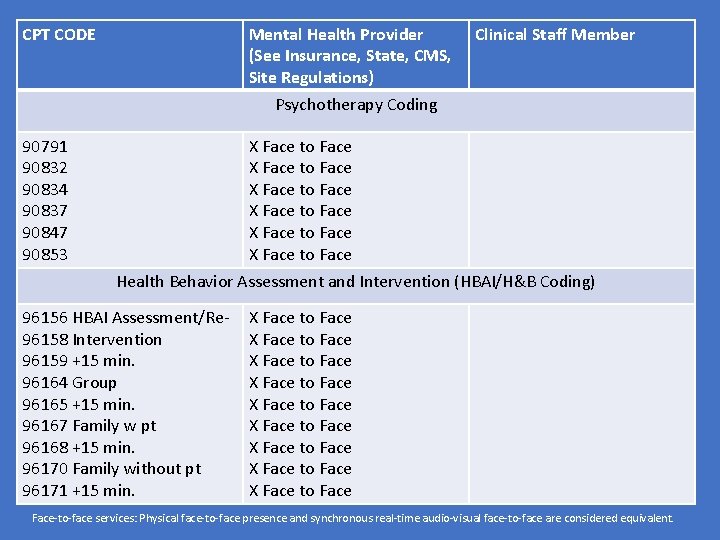
CPT CODE Mental Health Provider (See Insurance, State, CMS, Site Regulations) Psychotherapy Coding 90791 90832 90834 90837 90847 90853 X Face to Face X Face to Face Clinical Staff Member Health Behavior Assessment and Intervention (HBAI/H&B Coding) 96156 HBAI Assessment/Re 96158 Intervention 96159 +15 min. 96164 Group 96165 +15 min. 96167 Family w pt 96168 +15 min. 96170 Family without pt 96171 +15 min. X Face to Face X Face to Face X Face to Face-to-face services: Physical face-to-face presence and synchronous real-time audio-visual face-to-face are considered equivalent.

CPT CODE 99201 99202 99203 99204 99205 99211 99212 99213 99214 99215 99241 99242 99243 99244 99245 Physician or Other Qualified Clinical Staff Member Health Care Professional Office or Other outpatient Services, New Patient X Face to Face X Face to Face Office or Other Outpatient Services, Established Patient X Face to Face X Face to Face Office or Other Outpatient Consultations, New or Established Patients X Face to Face X Face to Face
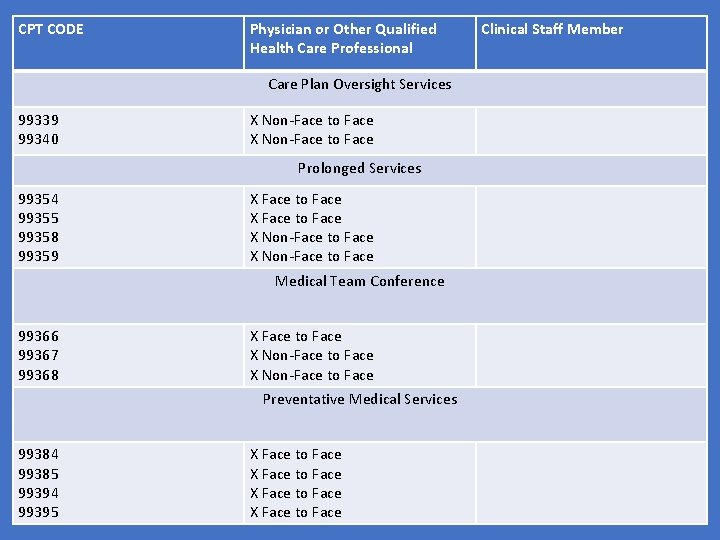
CPT CODE Physician or Other Qualified Health Care Professional Care Plan Oversight Services 99339 99340 X Non-Face to Face Prolonged Services 99354 99355 99358 99359 X Face to Face X Non-Face to Face Medical Team Conference 99366 99367 99368 X Face to Face X Non-Face to Face Preventative Medical Services 99384 99385 99394 99395 X Face to Face Clinical Staff Member

CPT CODE Physician or Other Qualified Health Care Professional Clinical Staff Member Health Risk Assessment 99610 X Face to Face X Non-Face to Face General Behavioral Health Integration Care Management 99484 X Face to Face X Non-Face to Face Care Management Services 99490 99491 99487 99489 X Non-Face to Face X Face to Face and X Non-Face to Face Preventative Medical Services 99384 99385 99394 99395 X Non-Face to Face X Face to Face & X Non-Face to Face
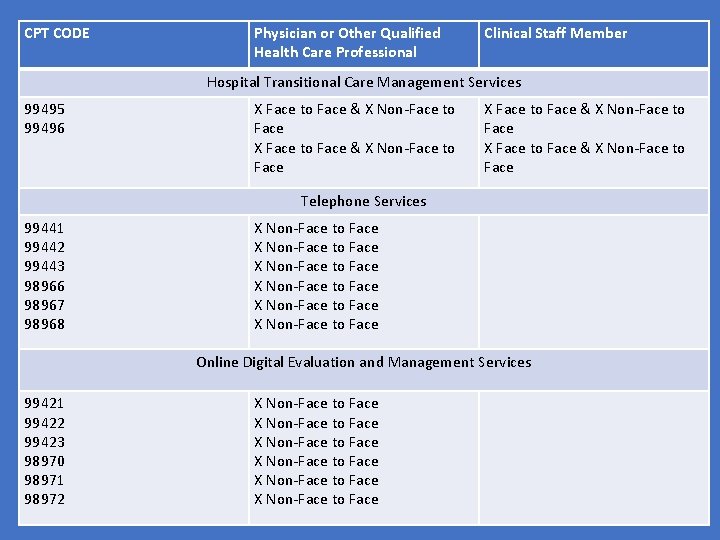
CPT CODE Physician or Other Qualified Health Care Professional Clinical Staff Member Hospital Transitional Care Management Services 99495 99496 X Face to Face & X Non-Face to Face Telephone Services 99441 99442 99443 98966 98967 98968 X Non-Face to Face X Non-Face to Face Online Digital Evaluation and Management Services 99421 99422 99423 98970 98971 98972 X Non-Face to Face X Non-Face to Face
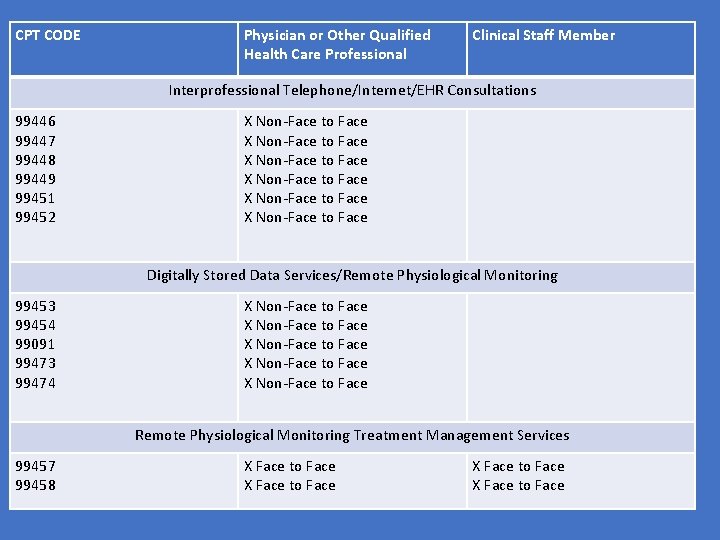
CPT CODE Physician or Other Qualified Health Care Professional Clinical Staff Member Interprofessional Telephone/Internet/EHR Consultations 99446 99447 99448 99449 99451 99452 X Non-Face to Face X Non-Face to Face Digitally Stored Data Services/Remote Physiological Monitoring 99453 99454 99091 99473 99474 X Non-Face to Face X Non-Face to Face Remote Physiological Monitoring Treatment Management Services 99457 99458 X Face to Face
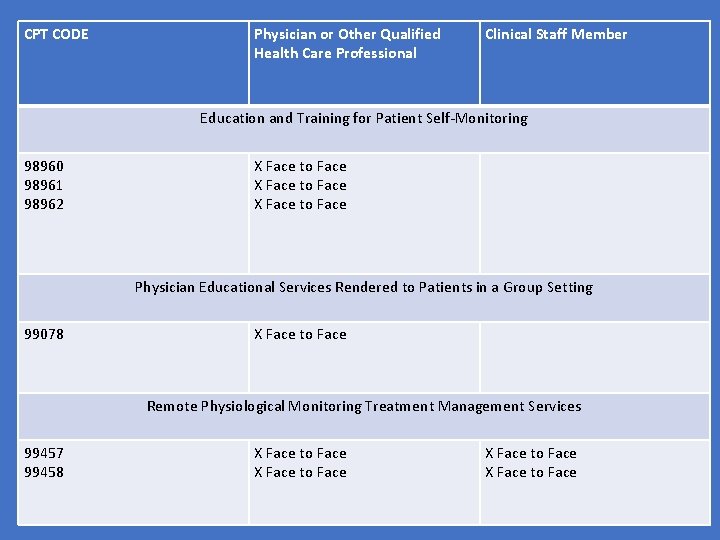
CPT CODE Physician or Other Qualified Health Care Professional Clinical Staff Member Education and Training for Patient Self-Monitoring 98960 98961 98962 X Face to Face Physician Educational Services Rendered to Patients in a Group Setting 99078 X Face to Face Remote Physiological Monitoring Treatment Management Services 99457 99458 X Face to Face
What tools do you have for coding? What codes are you using? • • Chart Audit Cycles Documentation Reviews Use of Smartphrases / EHR Use 5 Steps
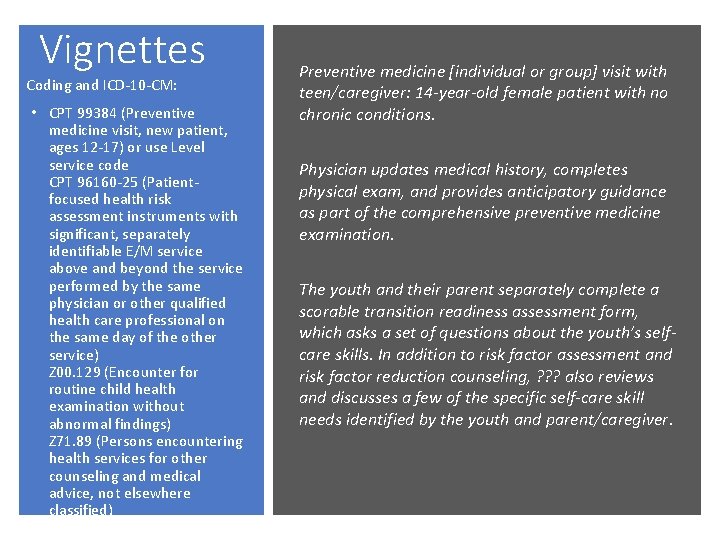
Vignettes Coding and ICD-10 -CM: • CPT 99384 (Preventive medicine visit, new patient, ages 12 -17) or use Level service code CPT 96160 -25 (Patientfocused health risk assessment instruments with significant, separately identifiable E/M service above and beyond the service performed by the same physician or other qualified health care professional on the same day of the other service) Z 00. 129 (Encounter for routine child health examination without abnormal findings) Z 71. 89 (Persons encountering health services for other counseling and medical advice, not elsewhere classified) Preventive medicine [individual or group] visit with teen/caregiver: 14 -year-old female patient with no chronic conditions. Physician updates medical history, completes physical exam, and provides anticipatory guidance as part of the comprehensive preventive medicine examination. The youth and their parent separately complete a scorable transition readiness assessment form, which asks a set of questions about the youth’s selfcare skills. In addition to risk factor assessment and risk factor reduction counseling, ? ? ? also reviews and discusses a few of the specific self-care skill needs identified by the youth and parent/caregiver.
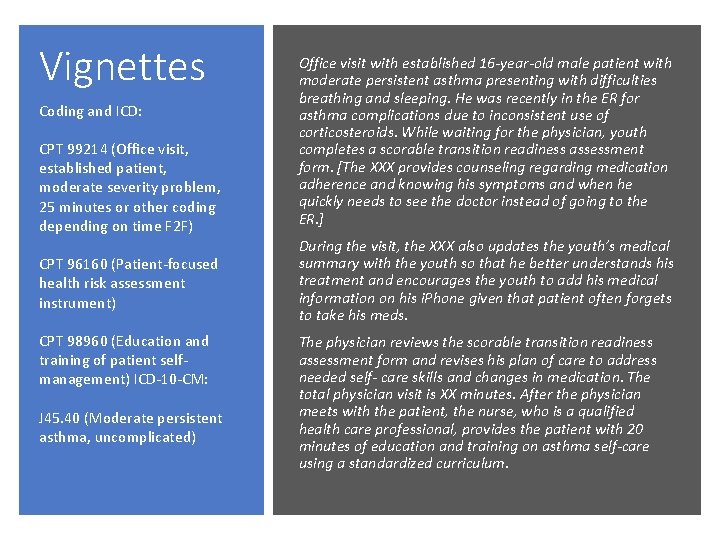
Vignettes Coding and ICD: CPT 99214 (Office visit, established patient, moderate severity problem, 25 minutes or other coding depending on time F 2 F) CPT 96160 (Patient-focused health risk assessment instrument) CPT 98960 (Education and training of patient selfmanagement) ICD-10 -CM: J 45. 40 (Moderate persistent asthma, uncomplicated) Office visit with established 16 -year-old male patient with moderate persistent asthma presenting with difficulties breathing and sleeping. He was recently in the ER for asthma complications due to inconsistent use of corticosteroids. While waiting for the physician, youth completes a scorable transition readiness assessment form. [The XXX provides counseling regarding medication adherence and knowing his symptoms and when he quickly needs to see the doctor instead of going to the ER. ] During the visit, the XXX also updates the youth’s medical summary with the youth so that he better understands his treatment and encourages the youth to add his medical information on his i. Phone given that patient often forgets to take his meds. The physician reviews the scorable transition readiness assessment form and revises his plan of care to address needed self- care skills and changes in medication. The total physician visit is XX minutes. After the physician meets with the patient, the nurse, who is a qualified health care professional, provides the patient with 20 minutes of education and training on asthma self-care using a standardized curriculum.

CPT 99203 (Office visit, new patient, moderate problem, 30 minutes) CPT 96160 (Patientfocused health risk assessment instrument) E 66. 3 (Overweight and obesity) Z 71. 89 (Persons encountering health services for other counselling and medical advice, not elsewhere classified) Added coding may be possible dependent on workflow New adult office visit with a 22 -year-old young adult male transitioning from his pediatric provider, who he saw for a preventive office visit 6 months earlier. Referred to group/individual due to stratification registry. The young adult male comes with no previous medical records from the pediatrician. The XXX completes a medical history. The patient fills out a scorable post-transfer selfcare assessment form, the XXX and young adult jointly fill out a medical summary, and the XXX assists the young adult to put his emergency contact information and key medical information into his phone. The team members/group complete counseling with the patient, reviewing and discussing needed for self-care skills, interfacing with the pediatric practice re paperwork, etc, and discussing nutrition, exercise, and weight reduction strategies. Hands to physician for a physical exam, noting his BMI is 27.
UNDERSTANDING VALUE AND INCENTIVES
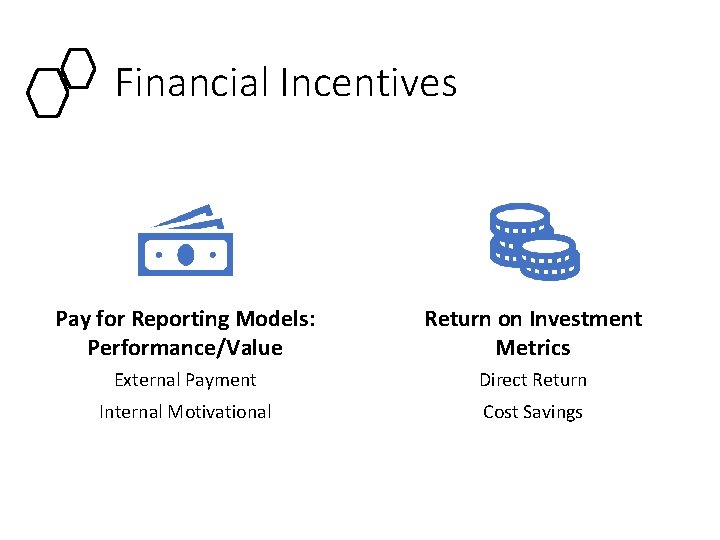
Financial Incentives Pay for Reporting Models: Performance/Value Return on Investment Metrics External Payment Direct Return Internal Motivational Cost Savings
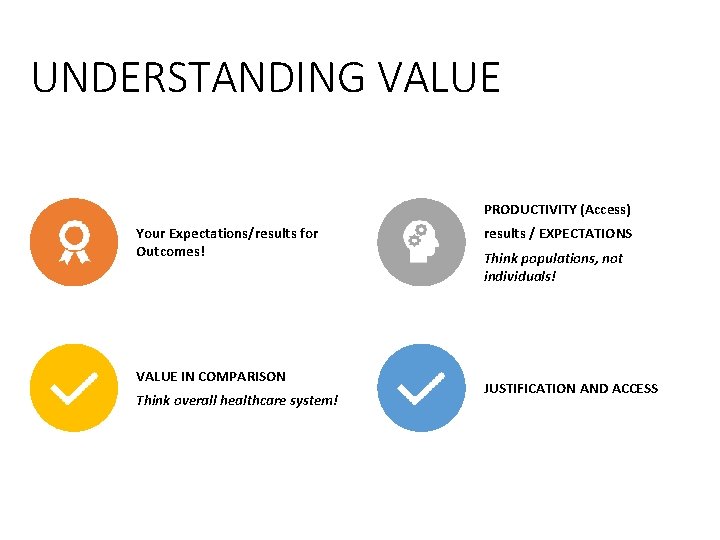
UNDERSTANDING VALUE PRODUCTIVITY (Access) Your Expectations/results for Outcomes! VALUE IN COMPARISON Think overall healthcare system! results / EXPECTATIONS Think populations, not individuals! JUSTIFICATION AND ACCESS
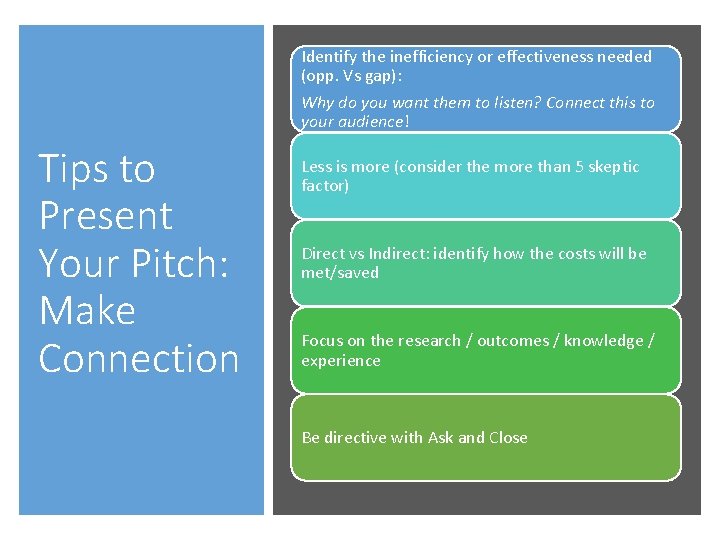
Identify the inefficiency or effectiveness needed (opp. Vs gap): Why do you want them to listen? Connect this to your audience! Tips to Present Your Pitch: Make Connection Less is more (consider the more than 5 skeptic factor) Direct vs Indirect: identify how the costs will be met/saved Focus on the research / outcomes / knowledge / experience Be directive with Ask and Close
BUILDING SUSTAINABILITY: Key Tools
Pro Forma • A method of calculating current or projective fiscal results; describes a presentation of data, in financial terms, where the data reflect the world on an “as-if” basis. • AKA: A process/method that allows you to calculate the value of current or anticipated roles or processes.
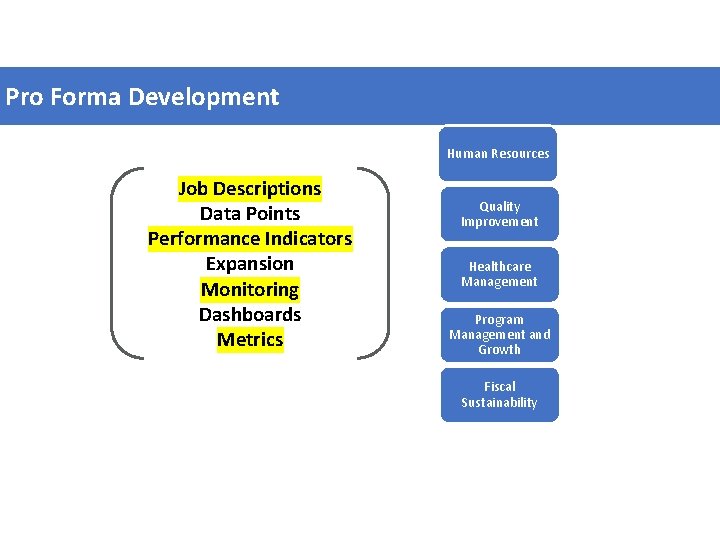
Pro Forma Development Human Resources Job Descriptions Data Points Performance Indicators Expansion Monitoring Dashboards Metrics Quality Improvement Healthcare Management Program Management and Growth Fiscal Sustainability
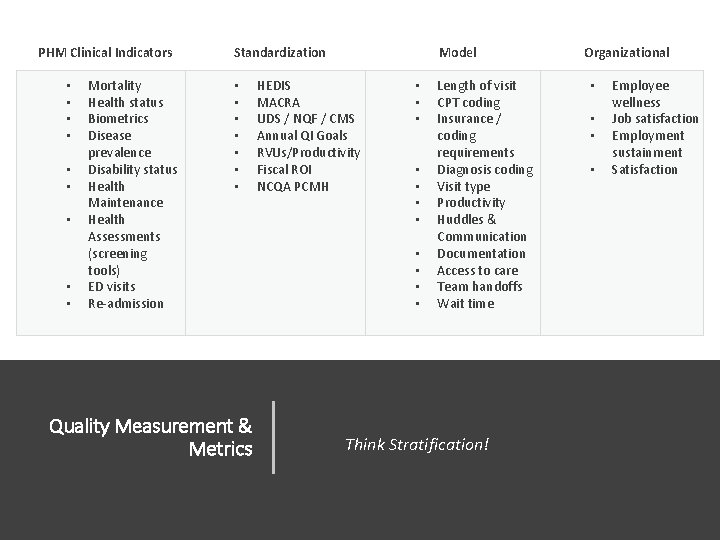
PHM Clinical Indicators • • • Mortality Health status Biometrics Disease prevalence Disability status Health Maintenance Health Assessments (screening tools) ED visits Re-admission Standardization • • Quality Measurement & Metrics Model HEDIS MACRA UDS / NQF / CMS Annual QI Goals RVUs/Productivity Fiscal ROI NCQA PCMH • • • Length of visit CPT coding Insurance / coding requirements Diagnosis coding Visit type Productivity Huddles & Communication Documentation Access to care Team handoffs Wait time Think Stratification! Organizational • • Employee wellness Job satisfaction Employment sustainment Satisfaction
BUILDING SUSTAINABILITY: Return on Investment Calculation
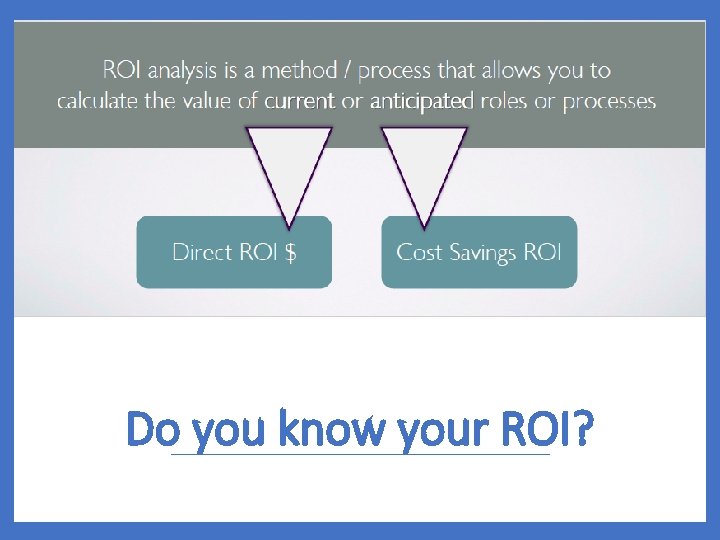
Do you know your ROI?
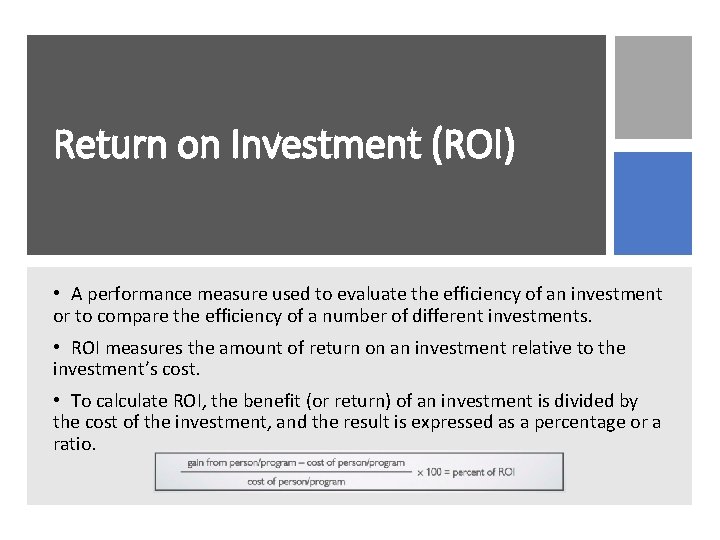
Return on Investment (ROI) • A performance measure used to evaluate the efficiency of an investment or to compare the efficiency of a number of different investments. • ROI measures the amount of return on an investment relative to the investment’s cost. • To calculate ROI, the benefit (or return) of an investment is divided by the cost of the investment, and the result is expressed as a percentage or a ratio.
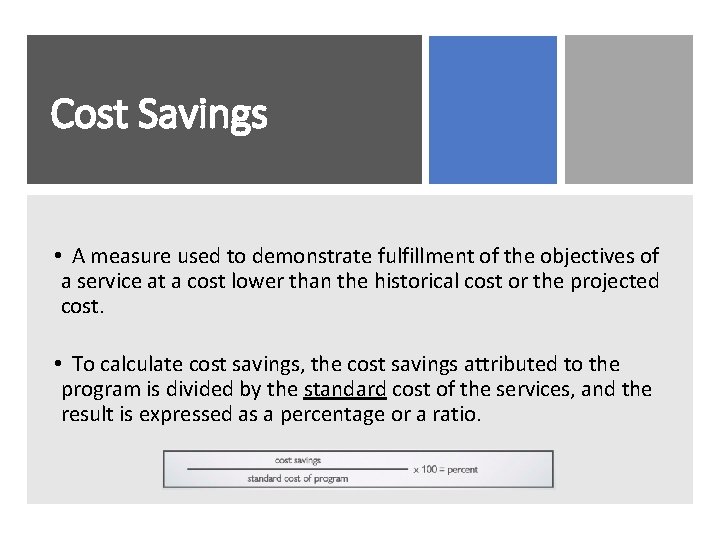
Cost Savings • A measure used to demonstrate fulfillment of the objectives of a service at a cost lower than the historical cost or the projected cost. • To calculate cost savings, the cost savings attributed to the program is divided by the standard cost of the services, and the result is expressed as a percentage or a ratio.
Ø Preparation is key Ø Building a business case is essential Ø Review your steps to ensure replication and sustainability Recap Ø Value • Understand • Measure • Demonstrate • Align
What are your metrics? How have you tied your metrics: • Job Descriptions • Pro Forma • PHM Targets
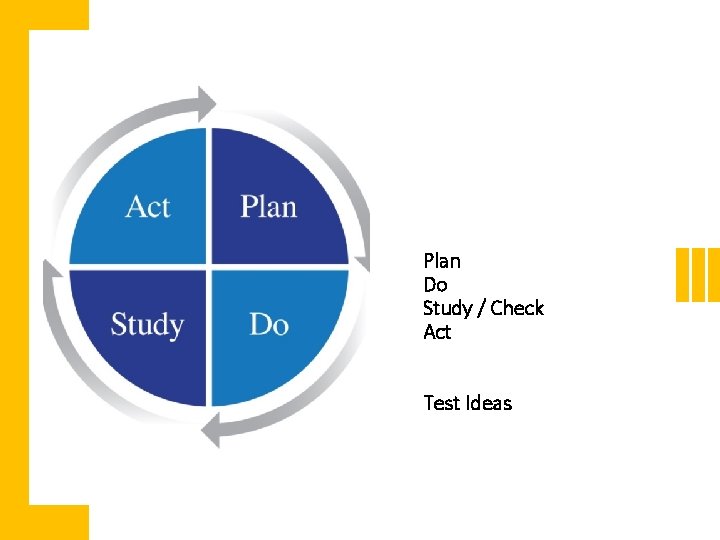
Plan Do Study / Check Act Test Ideas
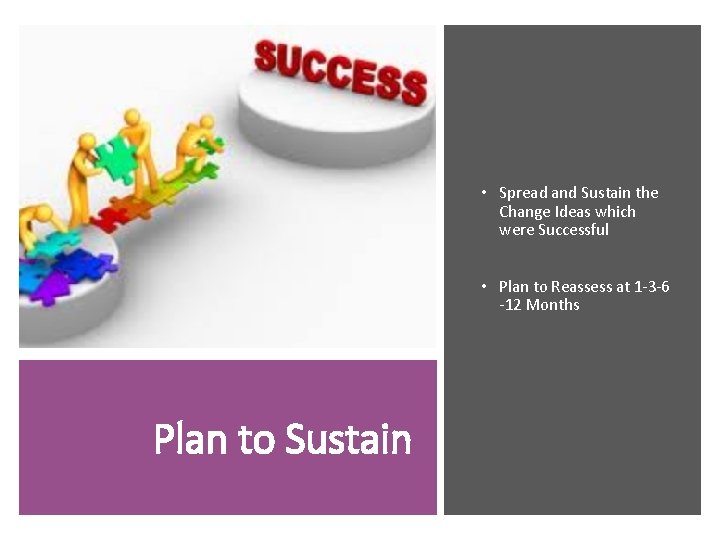
• Spread and Sustain the Change Ideas which were Successful • Plan to Reassess at 1 -3 -6 -12 Months Plan to Sustain
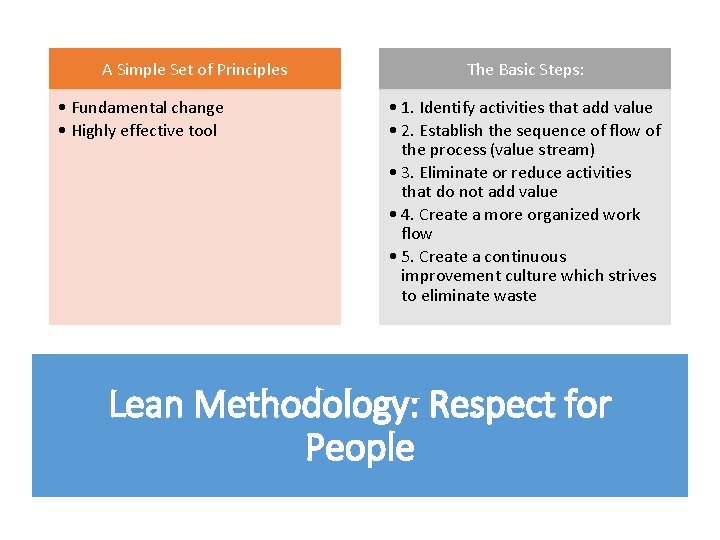
A Simple Set of Principles • Fundamental change • Highly effective tool The Basic Steps: • 1. Identify activities that add value • 2. Establish the sequence of flow of the process (value stream) • 3. Eliminate or reduce activities that do not add value • 4. Create a more organized work flow • 5. Create a continuous improvement culture which strives to eliminate waste Lean Methodology: Respect for People
Tools used in Lean to create and implement change Empowering and unleashing the creative power of people on the front-line Creating a more effective and efficient processes: Think stratification Kaizen Events Formalized, focused rapid improvement events Fixed duration (1 -4 days) Achieve dramatic improvements, progressive shifts Design, test, and implement solutions, monitor improvements, adjust High buy-in, improved employee moral Share excitement and accomplishments
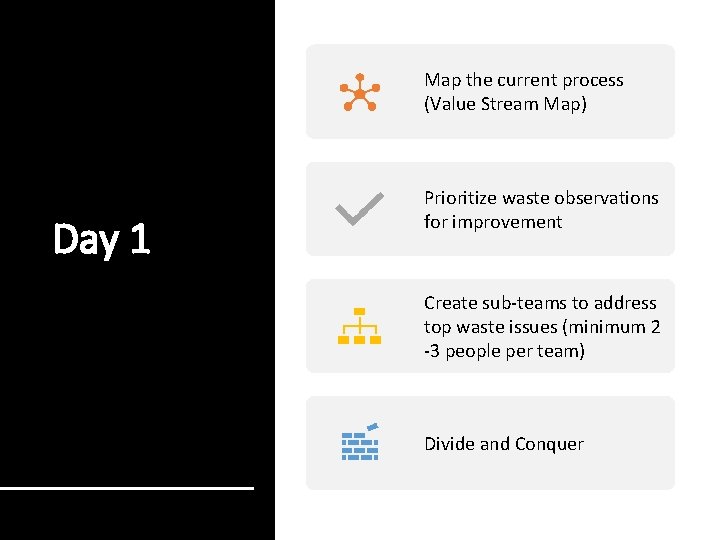
Map the current process (Value Stream Map) Day 1 Prioritize waste observations for improvement Create sub-teams to address top waste issues (minimum 2 -3 people per team) Divide and Conquer
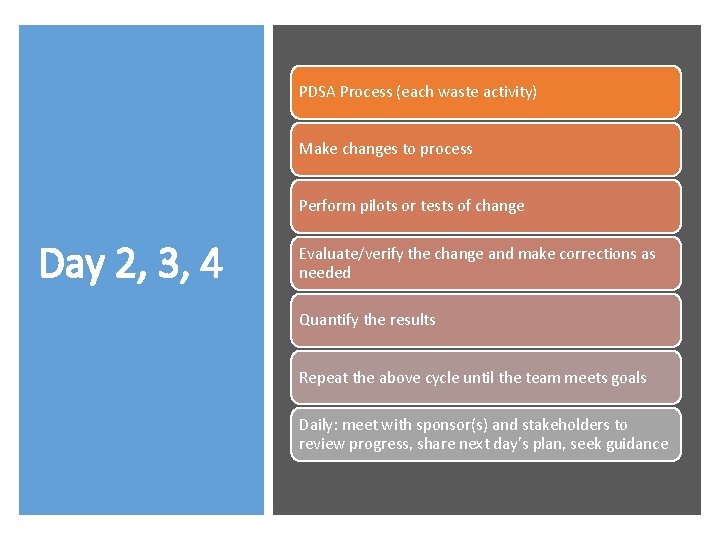
PDSA Process (each waste activity) Make changes to process Perform pilots or tests of change Day 2, 3, 4 Evaluate/verify the change and make corrections as needed Quantify the results Repeat the above cycle until the team meets goals Daily: meet with sponsor(s) and stakeholders to review progress, share next day’s plan, seek guidance
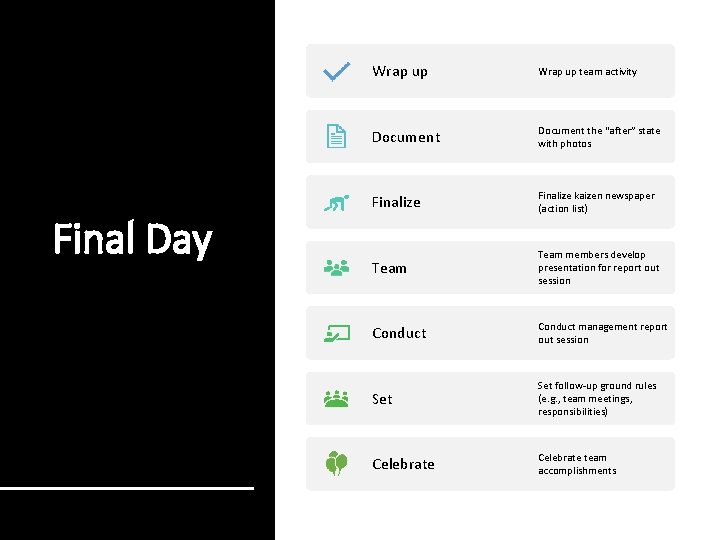
Final Day Wrap up team activity Document the “after” state with photos Finalize kaizen newspaper (action list) Team members develop presentation for report out session Conduct management report out session Set follow-up ground rules (e. g. , team meetings, responsibilities) Celebrate team accomplishments
• Create PHM Initiatives • Create Teams (consider friendly competition) • Celebrate Small Achievements Daily Celebrate & Create Teams/ Teamlets
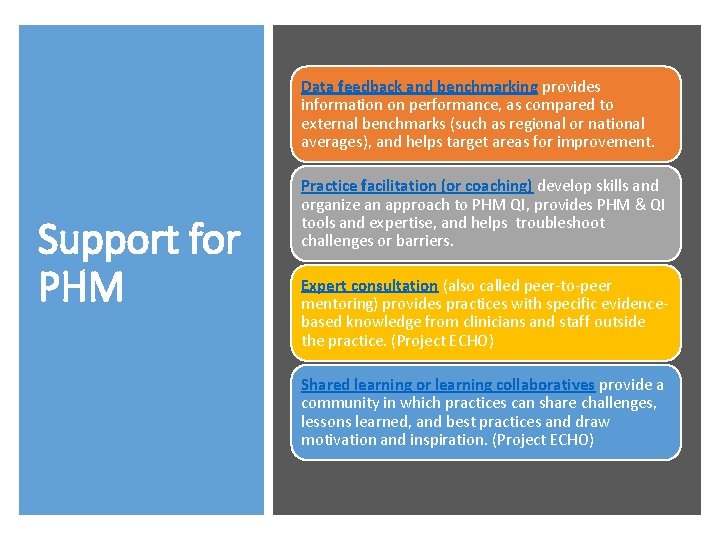
Data feedback and benchmarking provides information on performance, as compared to external benchmarks (such as regional or national averages), and helps target areas for improvement. Support for PHM Practice facilitation (or coaching) develop skills and organize an approach to PHM QI, provides PHM & QI tools and expertise, and helps troubleshoot challenges or barriers. Expert consultation (also called peer-to-peer mentoring) provides practices with specific evidencebased knowledge from clinicians and staff outside the practice. (Project ECHO) Shared learning or learning collaboratives provide a community in which practices can share challenges, lessons learned, and best practices and draw motivation and inspiration. (Project ECHO)
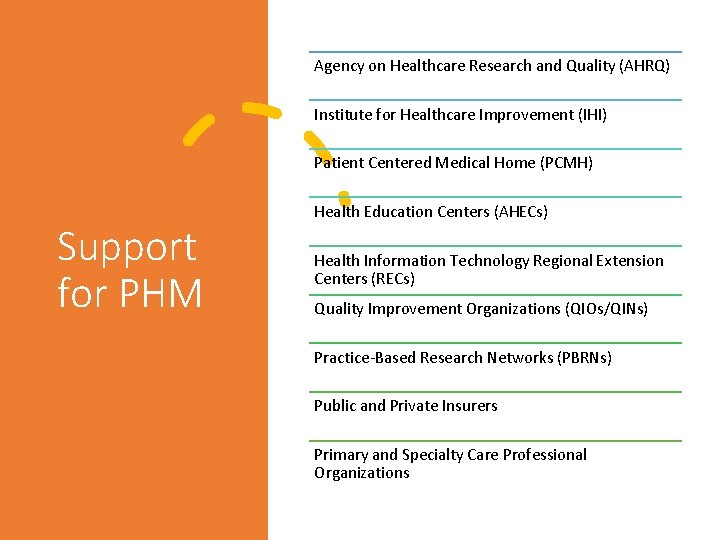
Agency on Healthcare Research and Quality (AHRQ) Institute for Healthcare Improvement (IHI) Patient Centered Medical Home (PCMH) Support for PHM Health Education Centers (AHECs) Health Information Technology Regional Extension Centers (RECs) Quality Improvement Organizations (QIOs/QINs) Practice-Based Research Networks (PBRNs) Public and Private Insurers Primary and Specialty Care Professional Organizations

Final Questions

76
Contact Lesley Manson, Psy. D Team Based-Education and Management Solutions Principle Consultant (T. E. A. M. S. ) Arizona State University, College of Health Solutions Associate Chair of Integrated Initiatives Clinical Associate Professor, Integrated Behavioral Health Phone: 602 -369 -3343 Email: Lesley. manson@asu. edu
Resources 1. Corso, Hunter, Dahl, Kallenberg, and Manson (2016). Integrating behavioral health into the medical home: A rapid implementation guide. Greenbranch: Phoenix, Maryland. 2. Robinson, P. & Reiter, J. (2015). Behavioral Consultation and Primary Care: A Guide to Integrating Services (2 nd Edition). Springer International Publishing: Geneva, Switzerland. 3. Savage, A. , Lauby, T. , & Burkard, J. F. (2014) Examining selected patient outcomes and staff satisfaction in a primary care clinic at a military treatment facility after implementation of the patient-centered medical home. Military Medicine, 178(2): 128 – 134. 4. Bendix, J. (2014) RVUs: A valuable tool for aiding practice management. Understanding the basics of the RVU can assist physicians and practice managers in a wide variety of finance and management-related tasks. Med Econ 91(4): 48 -51. 5. Kilbourne, A. M. , Keyser, D. , & Pincus, H. A. (2010). Challenges and opportunities in measuring the quality of mental health care. Canadian Journal of Psychiatry, 55(9), 549 -557. 6. Goldman, Spaeth-Rublee, Pincus (2015). Quality indicators for physical and behavioral health care indicators. Journal of the American Medical Association, 314(8): 769 -770.
- Slides: 78