
Population Growth Year 9 Humanities Starter Find out




- Slides: 10
Population Growth Year 9 Humanities
Starter Find out and record what the population of Australia is currently.
Lesson Objectives • Understand how and why there were so many changes to population in England during the Industrial Revolution.
Population before 1700 • Population figures for most of Great Britain before the nineteenth century are estimates only, as the first official census was not held until 1801. • From a high of close to 6 million people in 1300, the influence of the Black Death and years of famine had seen the population decreased to around 2 million by 1500. • Disease epidemics such as the Great Plague of the 1660 s had caused the population to level out during the second half of the seventeenth century and, by 1700, it remained at about 5 million.
1750 s (Start of Industrial Revolution) • Eradication of the plague and improvements in medical science saw a fall in the death rate. • By mid century the changes in agriculture had begun to have an impact, increasing the supply of good-quality food capable of feeding a larger population. • Dietary deficiency diseases such as scurvy and rickets declined as food quality improved, leading also to a decline in the infant mortality rate.
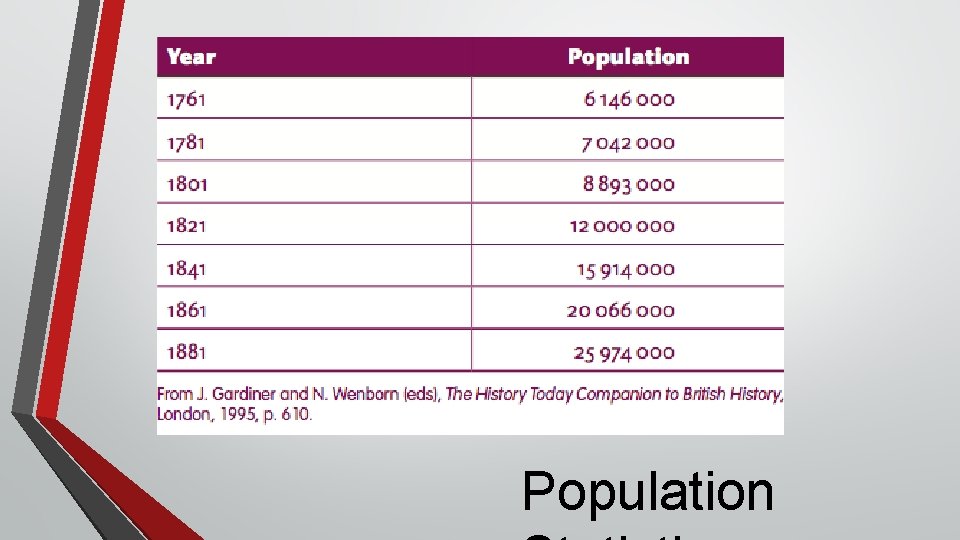
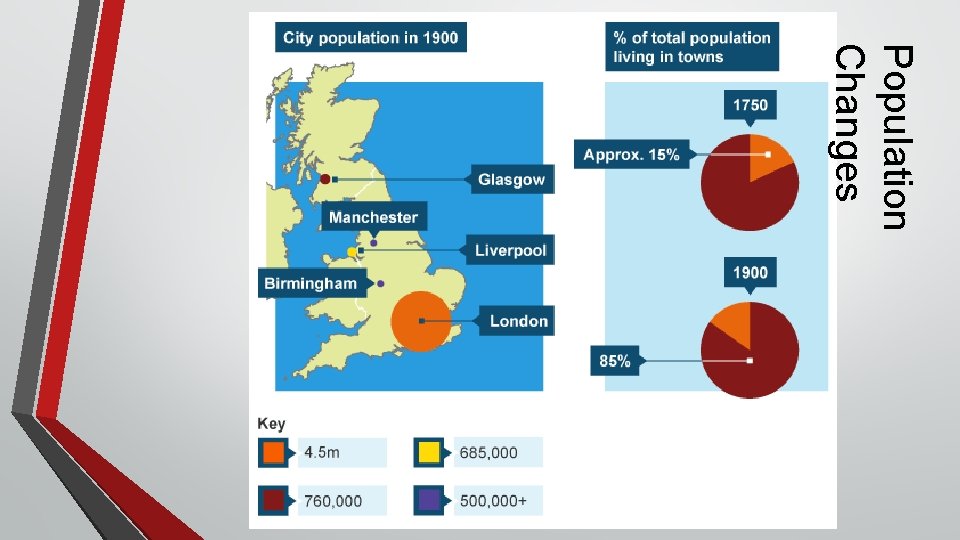
Population Explosion • The population really took off in Britain after 1760, doubling over the next sixty years, and doubling again in the following sixty years. • In the latter part of the eighteenth century vaccination against diseases such as smallpox began to reduce deaths from infectious diseases. • The widespread use of child labour in factories and mines in the late eighteenth and early nineteenth centuries appears to have encouraged many families to have more children as a means of increasing family income.
Population
Population Changes
Impact of Population Growth • 260% growth in population. • Rapid population growth provided a market for the products of the new factories. • More buyers = need more produce = need a way to produce more, faster. • Provided a workforce to operate the factories, but wages were still low.
Research Questions • Why did population levels in Britain fluctuate widely between 1300 and 1700? • Identify and explain three factors that caused the population to rise steadily after 1700. • Using the table on this Power. Point and other information, construct a graph depicting population growth in England between the years 1701 and 1881. You may use a bar graph or a line graph; make sure your graph is to scale.