
Population Growth Unit 8 Population Size number of
Population Growth Unit 8
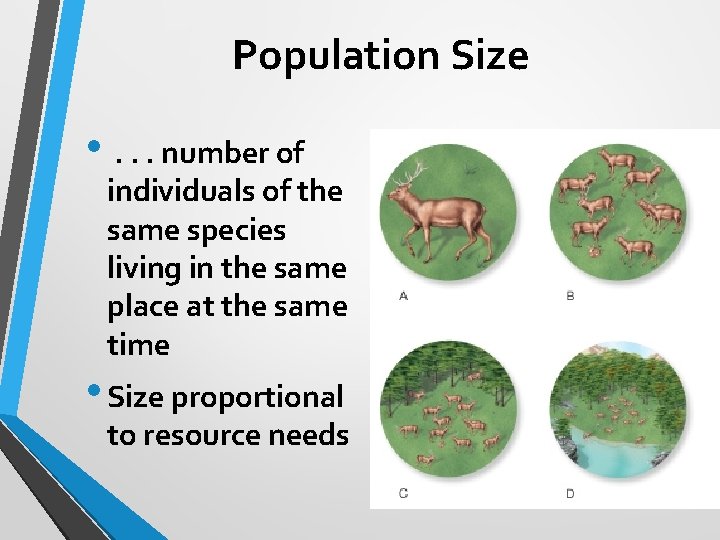
Population Size • . . . number of individuals of the same species living in the same place at the same time • Size proportional to resource needs
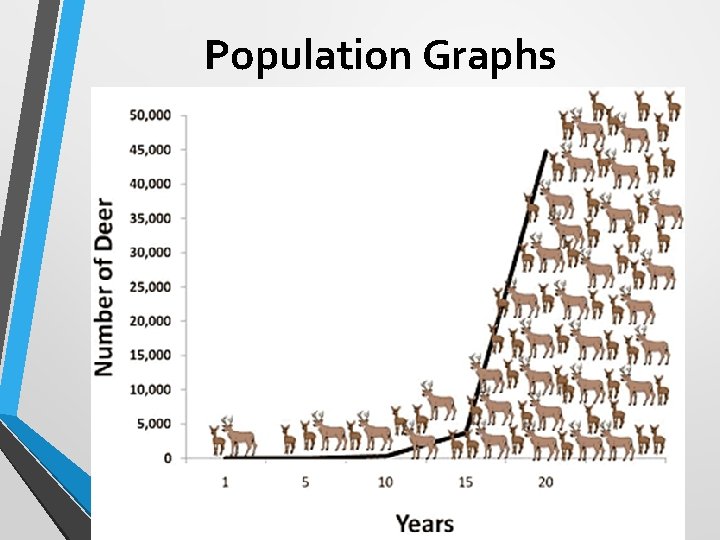
Population Graphs

Change in Population Size • Increases: births & immigration (individuals move into an area) • Decreases: death & emigration (individuals move out of an area)

Population Growth • More births/immigration than deaths/emigration • Positive slope • Need more resources
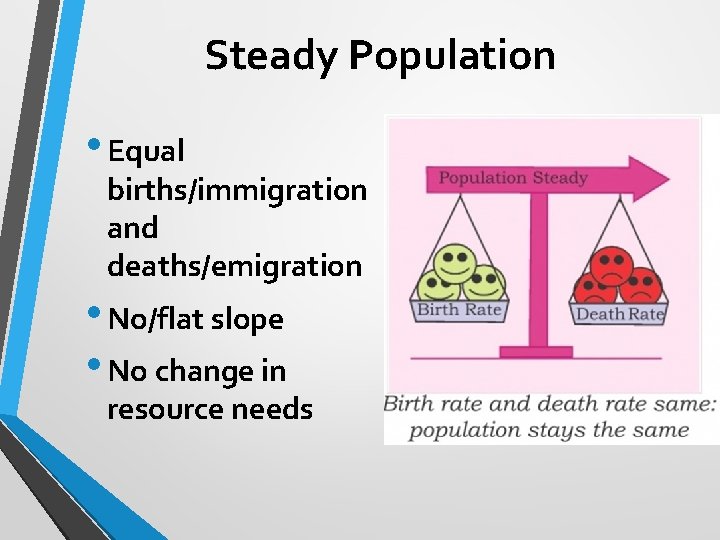
Steady Population • Equal births/immigration and deaths/emigration • No/flat slope • No change in resource needs
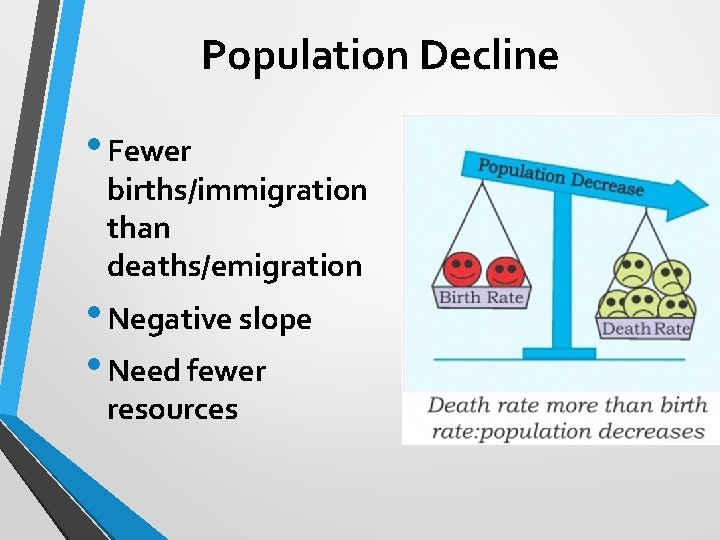
Population Decline • Fewer births/immigration than deaths/emigration • Negative slope • Need fewer resources
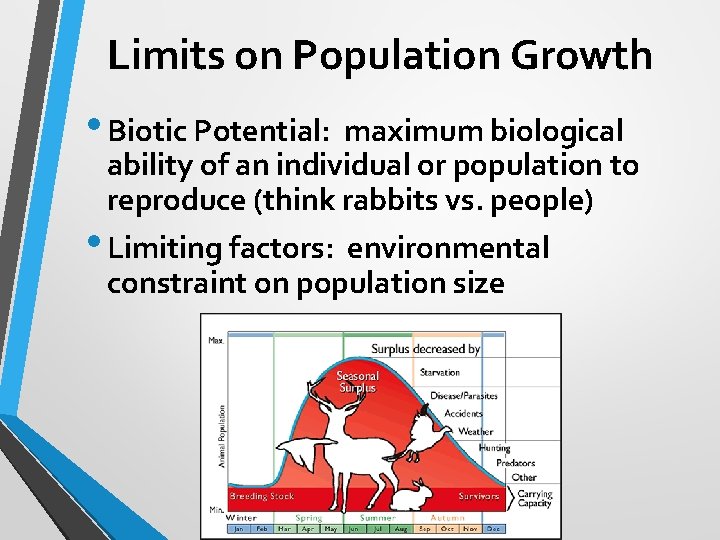
Limits on Population Growth • Biotic Potential: maximum biological ability of an individual or population to reproduce (think rabbits vs. people) • Limiting factors: environmental constraint on population size
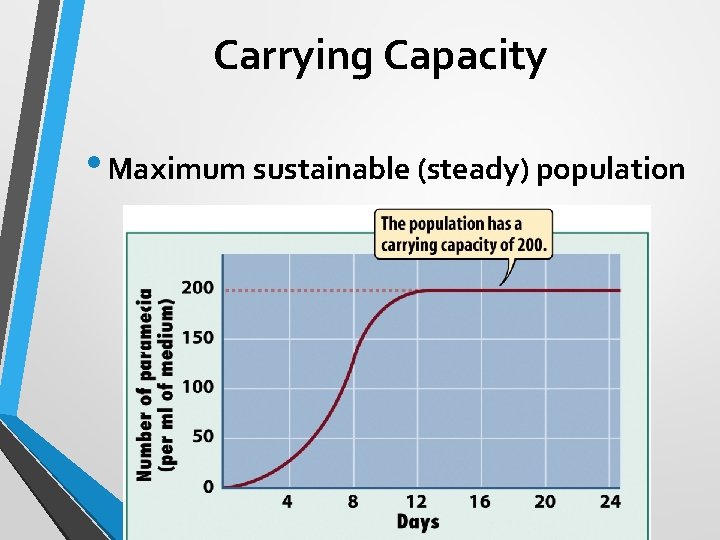
Carrying Capacity • Maximum sustainable (steady) population
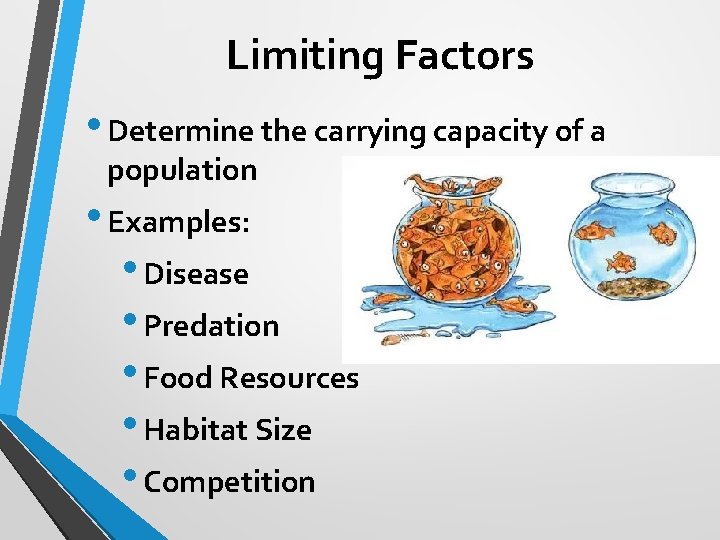
Limiting Factors • Determine the carrying capacity of a population • Examples: • Disease • Predation • Food Resources • Habitat Size • Competition
Limiting Factors: Density Dependent Using the reading/notes sheet provided. . . • Describe • Examples
Limiting Factors: Density Independent Using the reading/notes sheet provided. . . • Describe • Examples
Population Growth • Three population growth curves : • Linear Growth • Exponential Growth • S-Curve
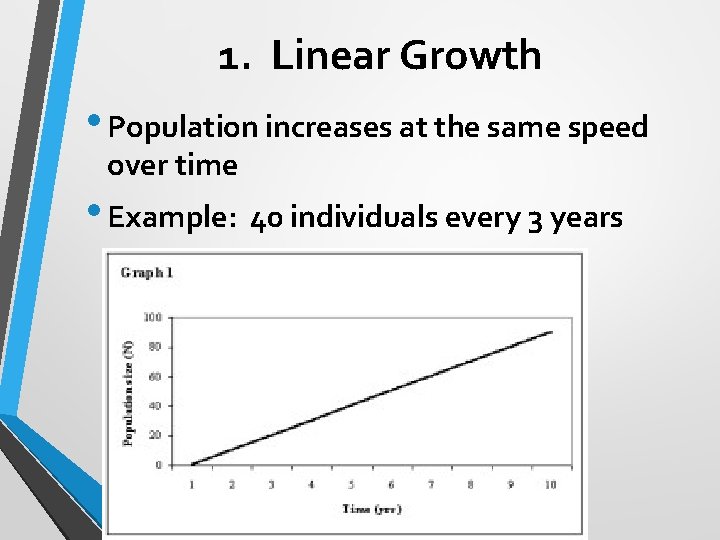
1. Linear Growth • Population increases at the same speed over time • Example: 40 individuals every 3 years

2. Exponential Growth • Population increases at an ever-faster pace • Example: • 250 yrs = 5, 000 • 60 yrs = +5, 000 • 40 yrs = +5, 000 • 30 yrs = +5, 000
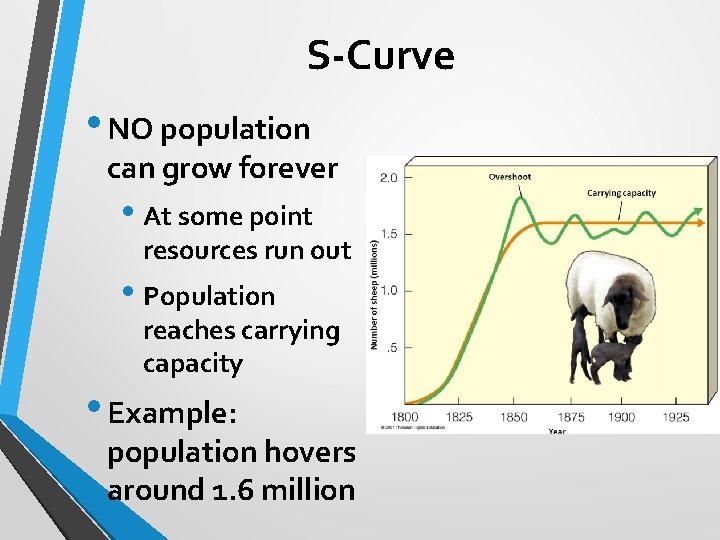
S-Curve • NO population can grow forever • At some point resources run out • Population reaches carrying capacity • Example: population hovers around 1. 6 million
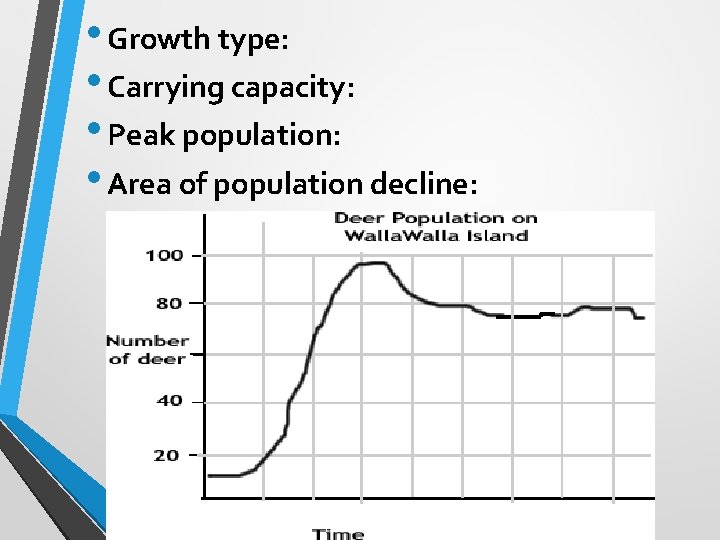
• Growth type: • Carrying capacity: • Peak population: • Area of population decline:
- Slides: 17