
Population Growth Limiting Factors Natural Resources KEY CONCEPT



- Slides: 19
Population Growth, Limiting Factors & Natural Resources
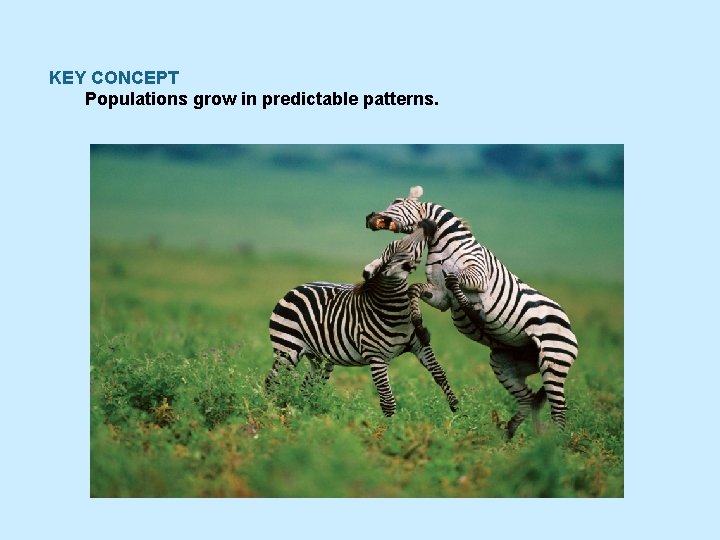
KEY CONCEPT Populations grow in predictable patterns.
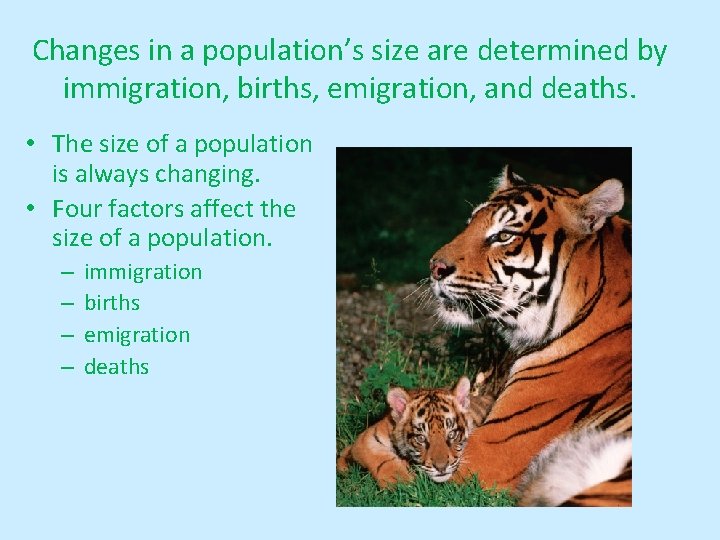
Changes in a population’s size are determined by immigration, births, emigration, and deaths. • The size of a population is always changing. • Four factors affect the size of a population. – – immigration births emigration deaths
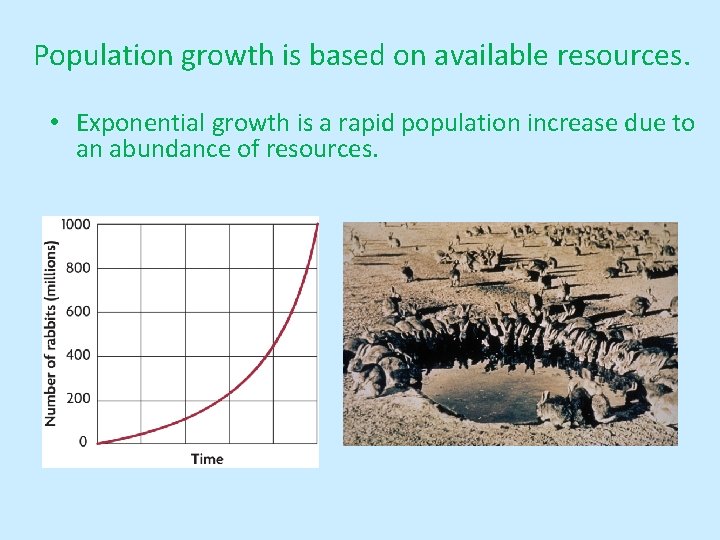
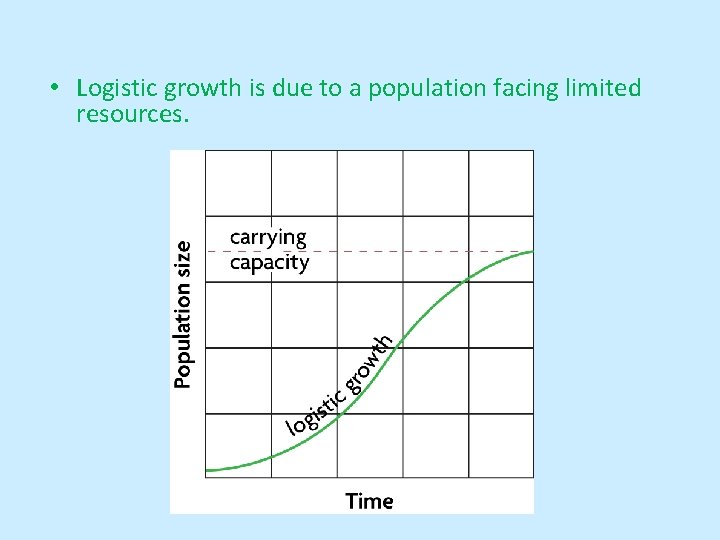
Population growth is based on available resources. • Exponential growth is a rapid population increase due to an abundance of resources.
• Logistic growth is due to a population facing limited resources.
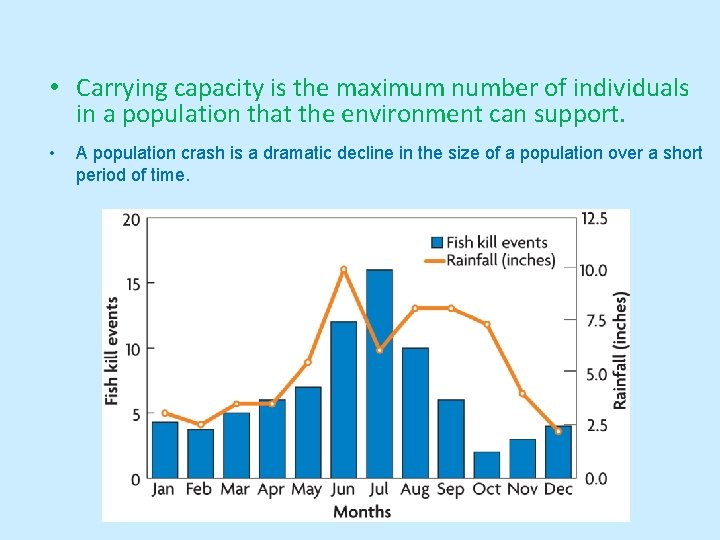
• Carrying capacity is the maximum number of individuals in a population that the environment can support. • A population crash is a dramatic decline in the size of a population over a short period of time.
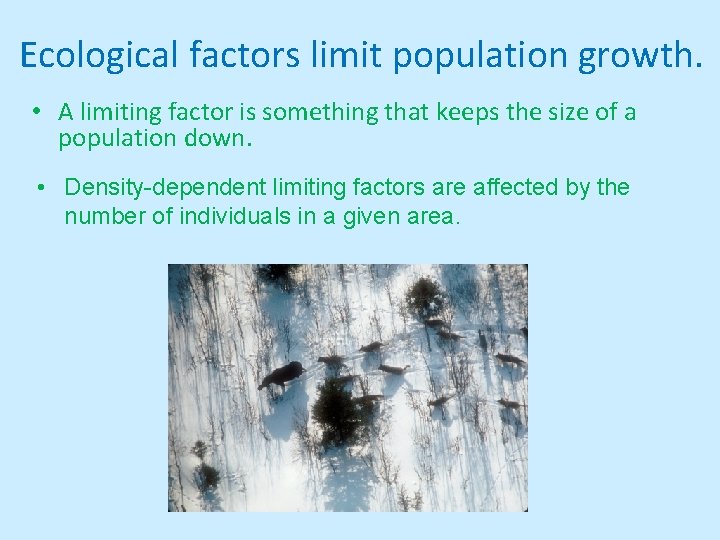
Ecological factors limit population growth. • A limiting factor is something that keeps the size of a population down. • Density-dependent limiting factors are affected by the number of individuals in a given area.
• Density-dependent limiting factors are affected by the number of individuals in a given area. – predation – competition – parasitism and disease – Usually biotic factors
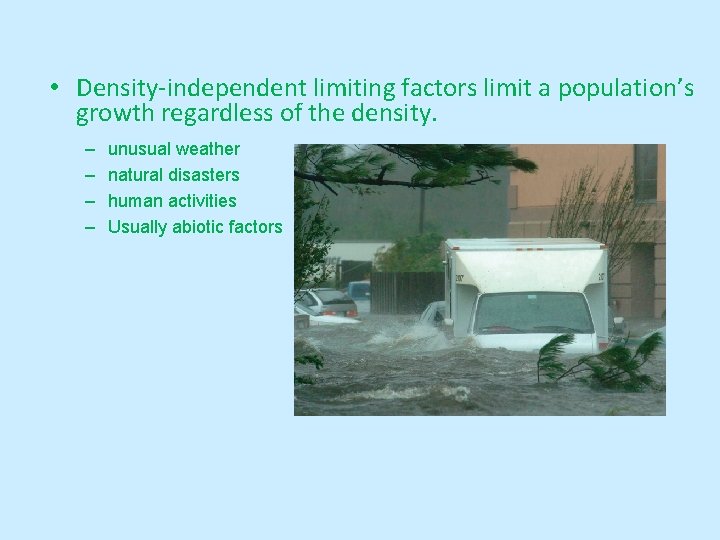
• Density-independent limiting factors limit a population’s growth regardless of the density. – – unusual weather natural disasters human activities Usually abiotic factors
Human Population Growth • Demography- the study of human population growth characteristics. Studies : Growth Rate – how fast the population is increasing (due to more births & immigration) – A population’s growth rate is the difference between the birth rate and death rate. – Birth rate higher than death rate = population growth – Death rate higher than birth rate = decrease/decline in population Age Structure-proportions of a population that are at different age levels. Geographic Distribution – location of population, density in areas Fatality Rate – death rate
Mobility and Populations • Immigration-movement into a population. Contributes to an INCREASE in the population (populations grow when: birth rate + immigration > death rate + emigration) • Emigration-movement out of a population. Contributes to a DECREASE in a population (populations decline when: birth rate + immigration < death rate + emigration)
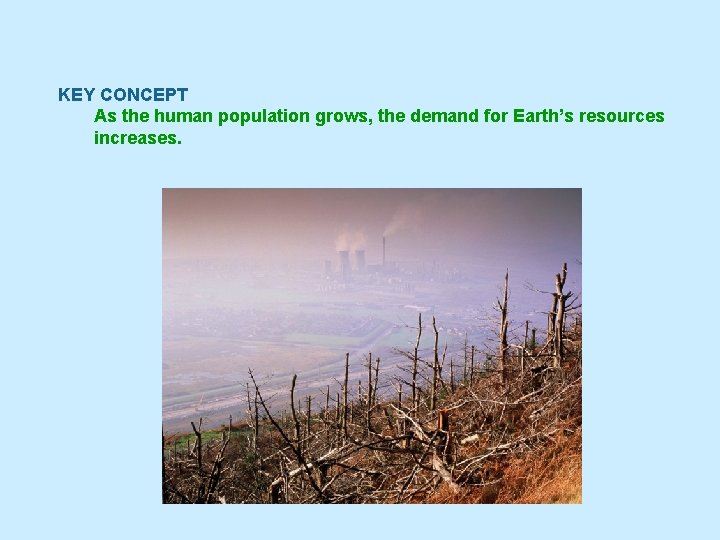
KEY CONCEPT As the human population grows, the demand for Earth’s resources increases.
Earth’s human population continues to grow. • Earth’s human carrying capacity is unknown.
• Technology has helped to increase Earth’s carrying capacity. – gas-powered farm equipment – medical advancements
The growing human population exerts pressure on Earth’s natural resources. • Nonrenewable resources are used faster than they form. – coal – oil
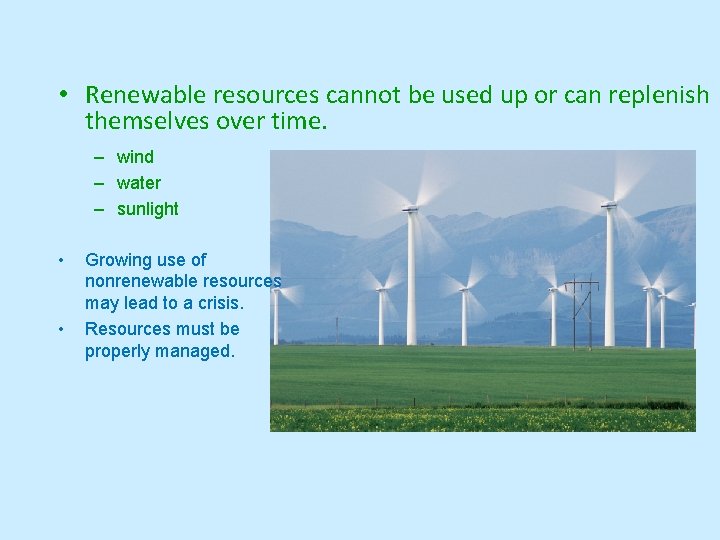
• Renewable resources cannot be used up or can replenish themselves over time. – wind – water – sunlight • • Growing use of nonrenewable resources may lead to a crisis. Resources must be properly managed.
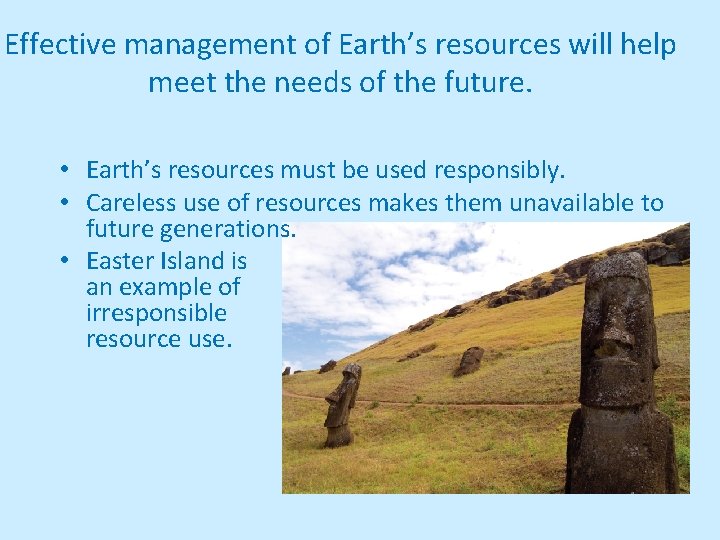
Effective management of Earth’s resources will help meet the needs of the future. • Earth’s resources must be used responsibly. • Careless use of resources makes them unavailable to future generations. • Easter Island is an example of irresponsible resource use.
• An ecological footprint is the amount of land needed to support a person. • The land must produce and maintain enough – food and water – shelter – energy – waste
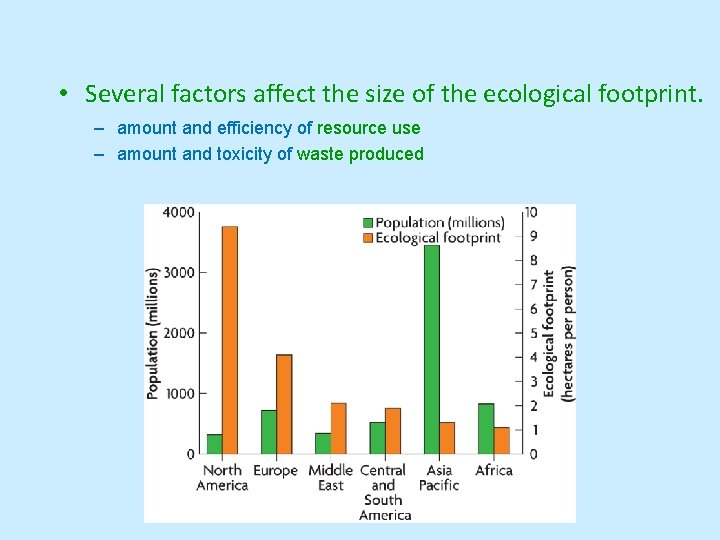
• Several factors affect the size of the ecological footprint. – amount and efficiency of resource use – amount and toxicity of waste produced