
Population Genetics DARWIN MEETS MENDEL Population Genetics Charles

- Slides: 17
Population Genetics DARWIN MEETS MENDEL
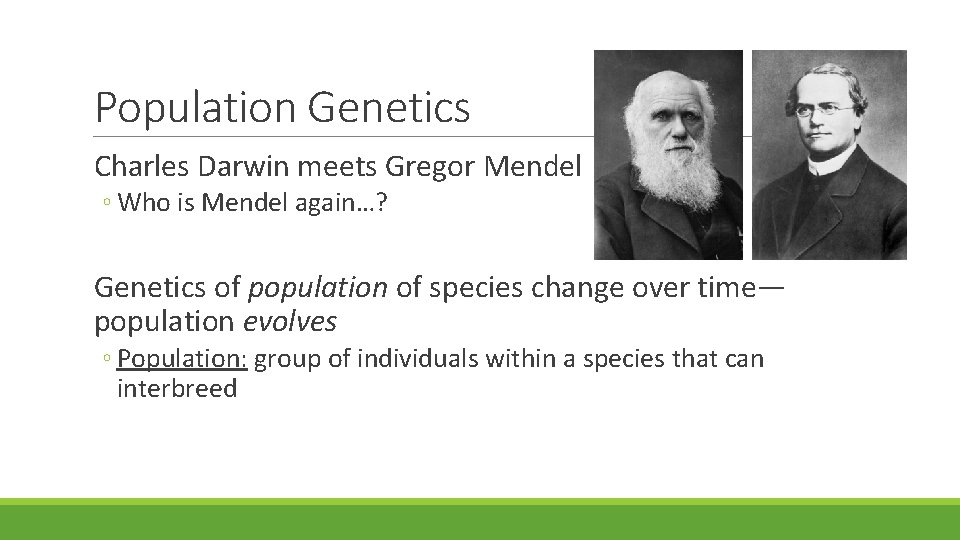
Population Genetics Charles Darwin meets Gregor Mendel ◦ Who is Mendel again…? Genetics of population of species change over time— population evolves ◦ Population: group of individuals within a species that can interbreed
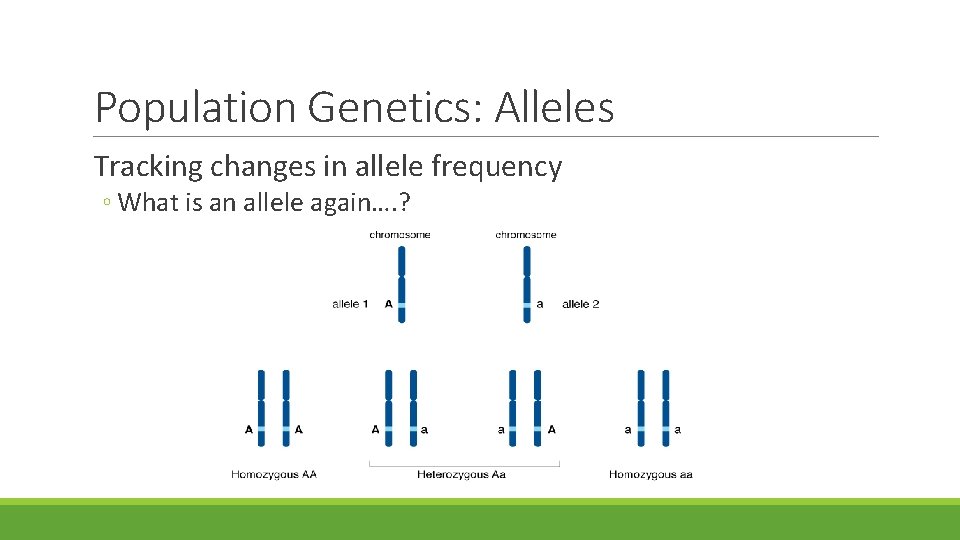
Population Genetics: Alleles Tracking changes in allele frequency ◦ What is an allele again…. ?
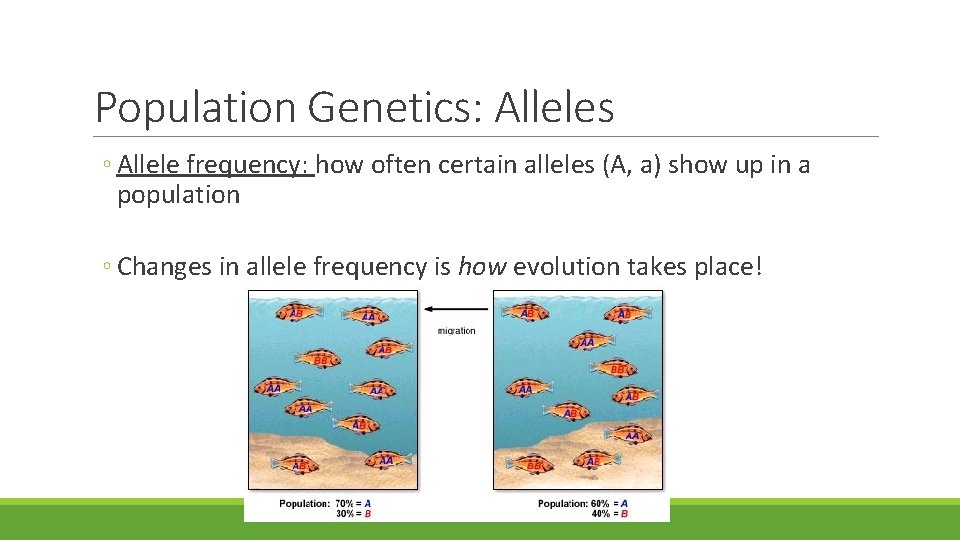
Population Genetics: Alleles ◦ Allele frequency: how often certain alleles (A, a) show up in a population ◦ Changes in allele frequency is how evolution takes place!
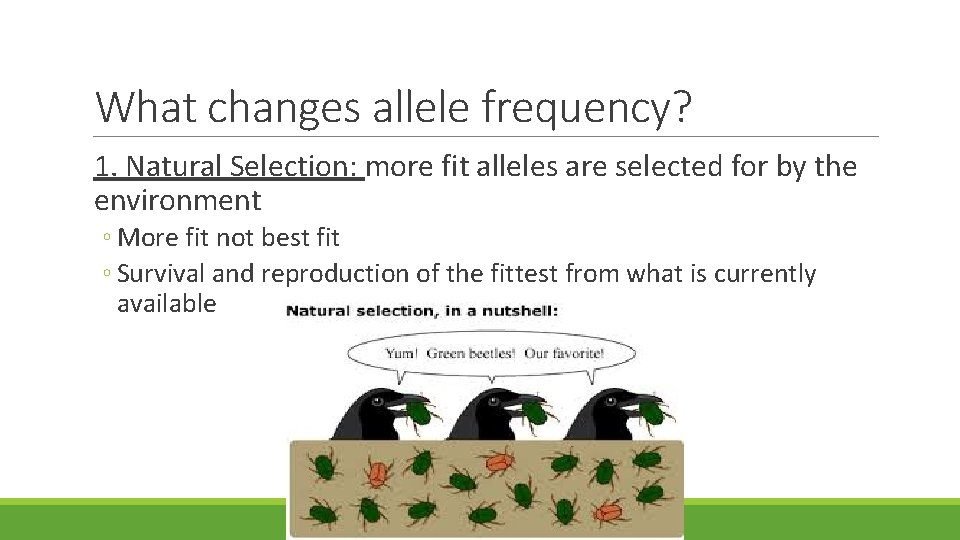
What changes allele frequency? 1. Natural Selection: more fit alleles are selected for by the environment ◦ More fit not best fit ◦ Survival and reproduction of the fittest from what is currently available
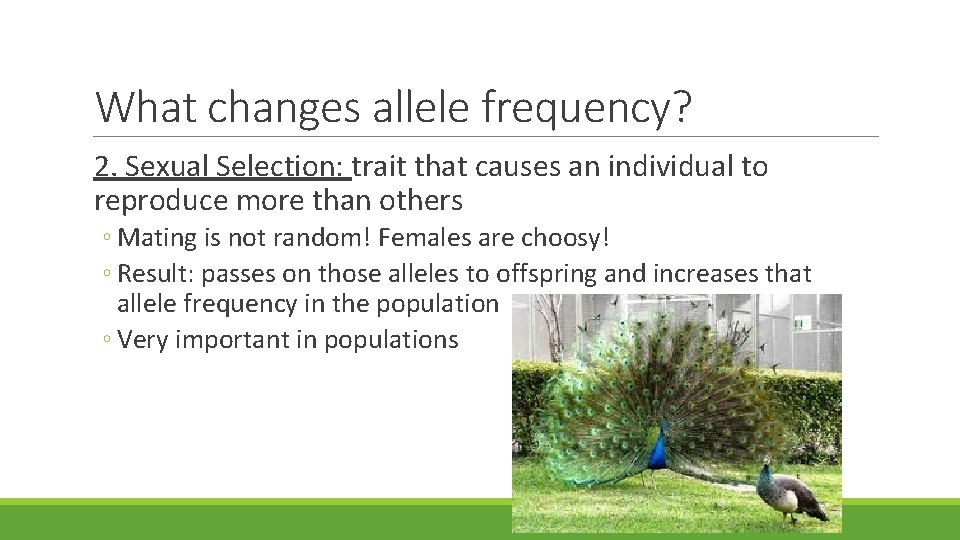
What changes allele frequency? 2. Sexual Selection: trait that causes an individual to reproduce more than others ◦ Mating is not random! Females are choosy! ◦ Result: passes on those alleles to offspring and increases that allele frequency in the population ◦ Very important in populations
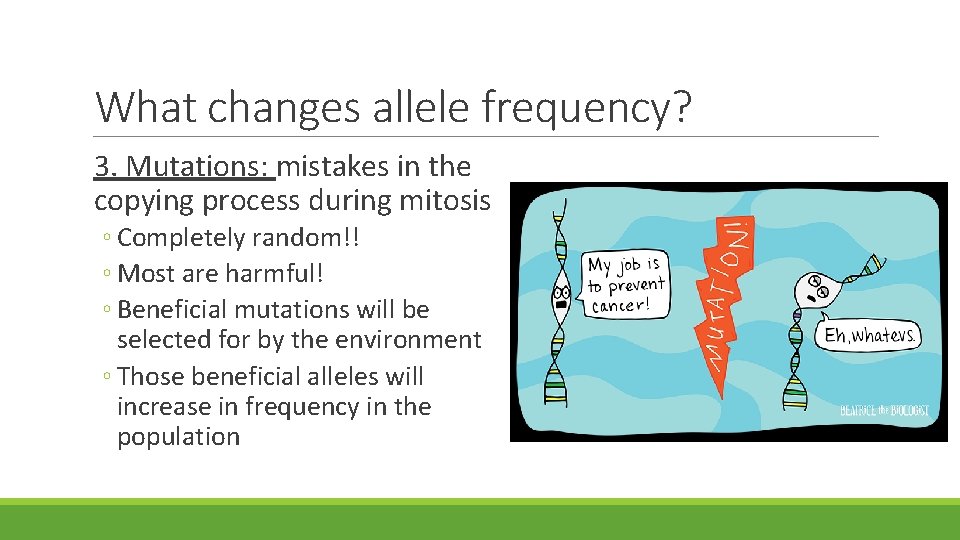
What changes allele frequency? 3. Mutations: mistakes in the copying process during mitosis ◦ Completely random!! ◦ Most are harmful! ◦ Beneficial mutations will be selected for by the environment ◦ Those beneficial alleles will increase in frequency in the population
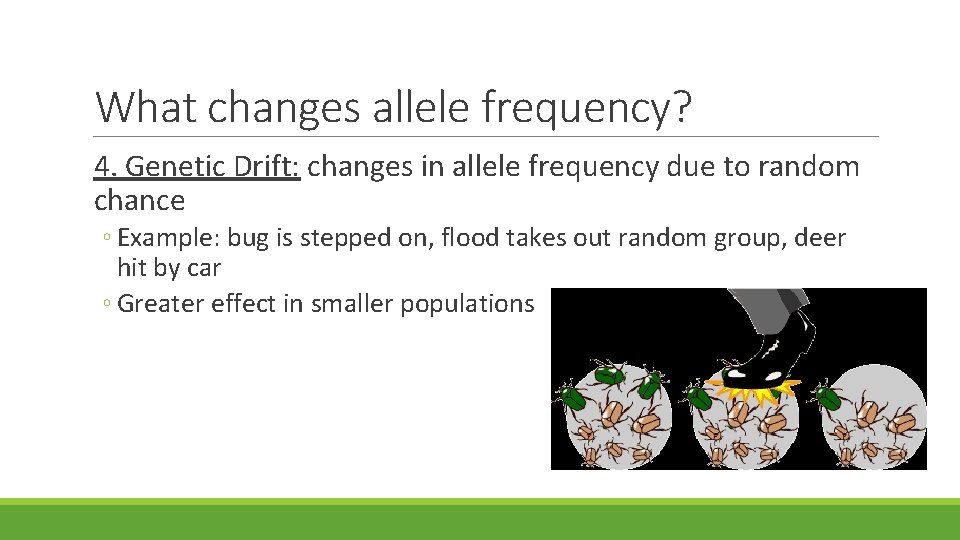
What changes allele frequency? 4. Genetic Drift: changes in allele frequency due to random chance ◦ Example: bug is stepped on, flood takes out random group, deer hit by car ◦ Greater effect in smaller populations
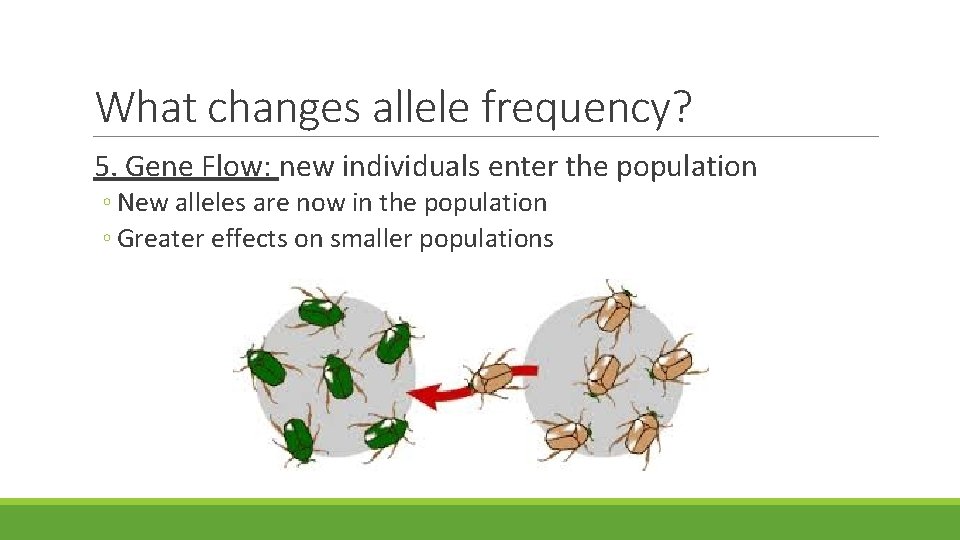
What changes allele frequency? 5. Gene Flow: new individuals enter the population ◦ New alleles are now in the population ◦ Greater effects on smaller populations
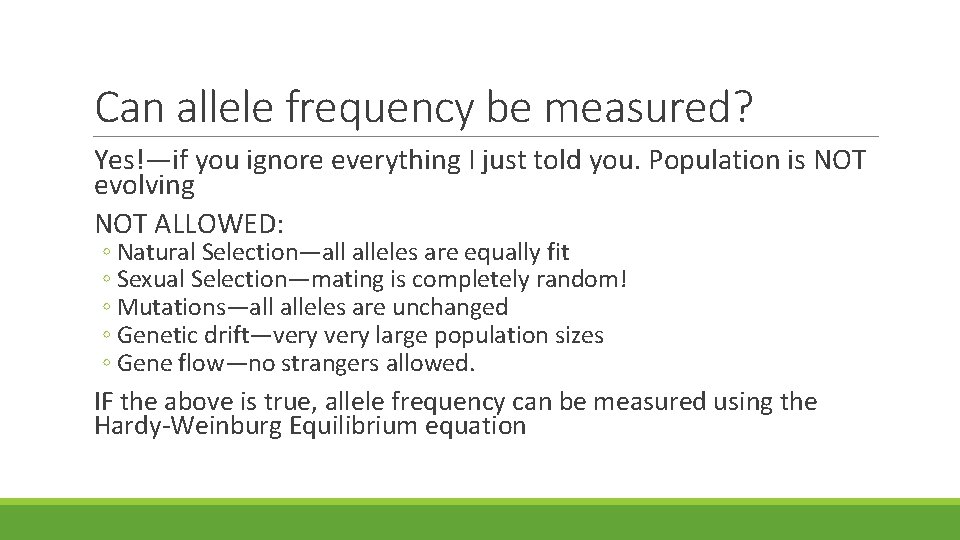
Can allele frequency be measured? Yes!—if you ignore everything I just told you. Population is NOT evolving NOT ALLOWED: ◦ Natural Selection—all alleles are equally fit ◦ Sexual Selection—mating is completely random! ◦ Mutations—all alleles are unchanged ◦ Genetic drift—very large population sizes ◦ Gene flow—no strangers allowed. IF the above is true, allele frequency can be measured using the Hardy-Weinburg Equilibrium equation
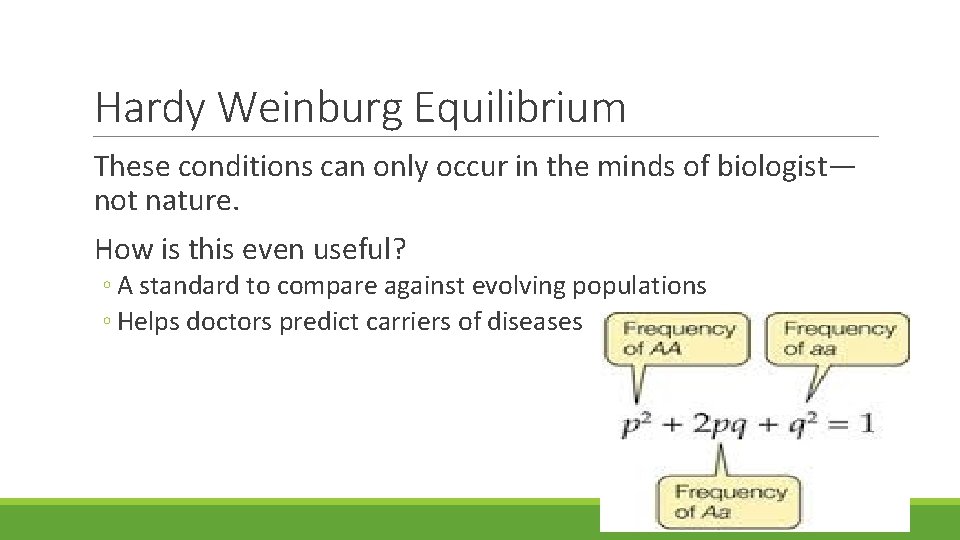
Hardy Weinburg Equilibrium These conditions can only occur in the minds of biologist— not nature. How is this even useful? ◦ A standard to compare against evolving populations ◦ Helps doctors predict carriers of diseases
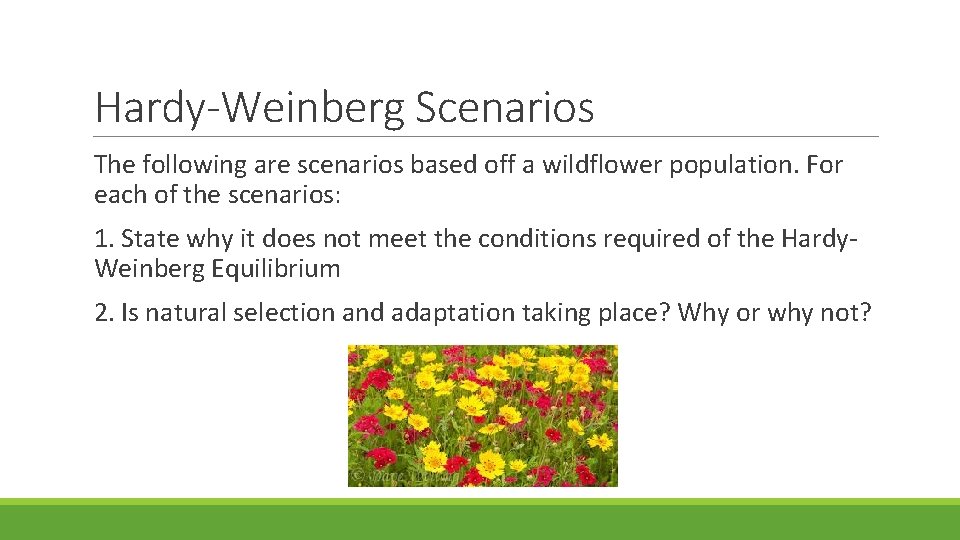
Hardy-Weinberg Scenarios The following are scenarios based off a wildflower population. For each of the scenarios: 1. State why it does not meet the conditions required of the Hardy. Weinberg Equilibrium 2. Is natural selection and adaptation taking place? Why or why not?
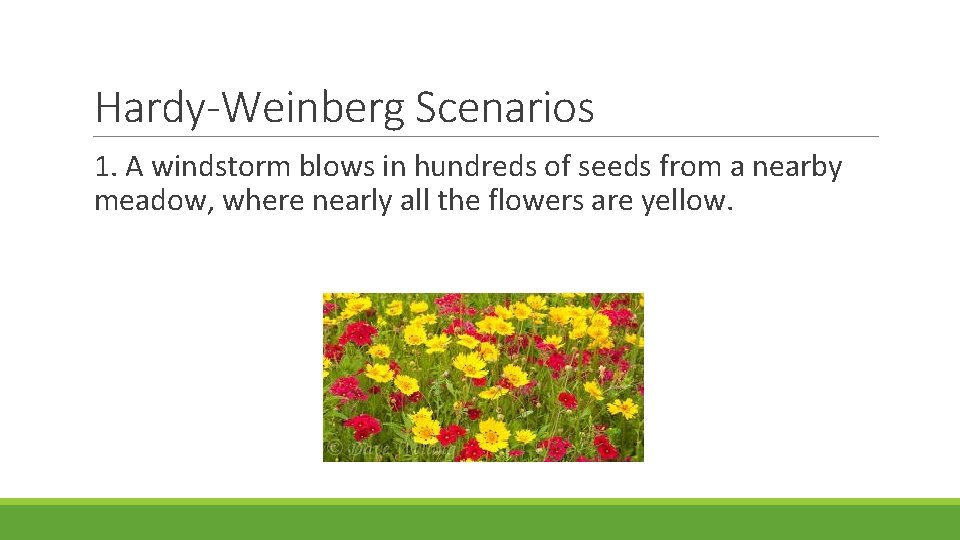
Hardy-Weinberg Scenarios 1. A windstorm blows in hundreds of seeds from a nearby meadow, where nearly all the flowers are yellow.
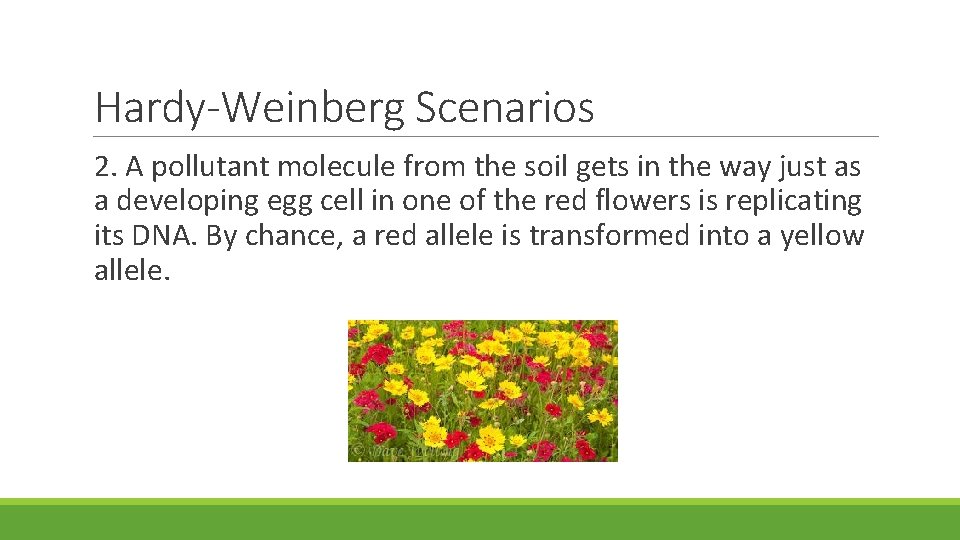
Hardy-Weinberg Scenarios 2. A pollutant molecule from the soil gets in the way just as a developing egg cell in one of the red flowers is replicating its DNA. By chance, a red allele is transformed into a yellow allele.
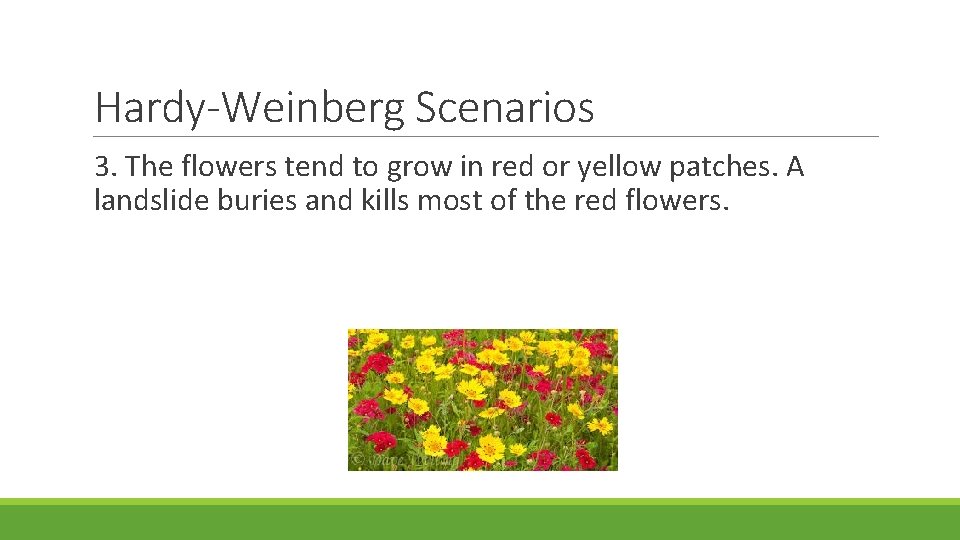
Hardy-Weinberg Scenarios 3. The flowers tend to grow in red or yellow patches. A landslide buries and kills most of the red flowers.
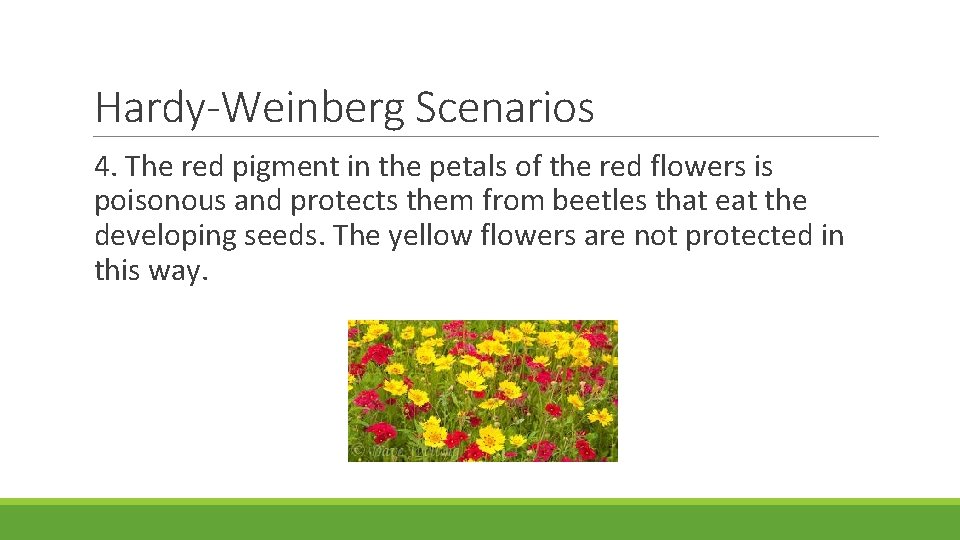
Hardy-Weinberg Scenarios 4. The red pigment in the petals of the red flowers is poisonous and protects them from beetles that eat the developing seeds. The yellow flowers are not protected in this way.
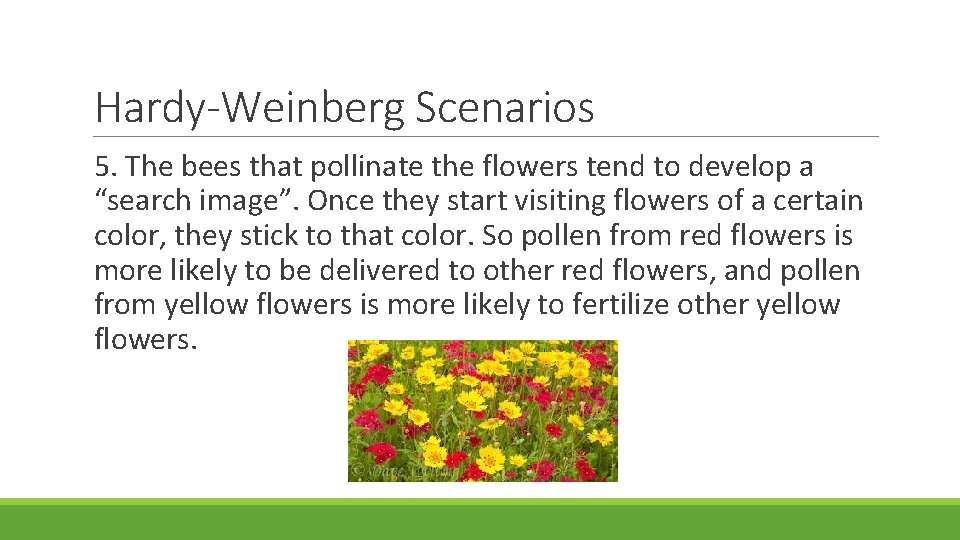
Hardy-Weinberg Scenarios 5. The bees that pollinate the flowers tend to develop a “search image”. Once they start visiting flowers of a certain color, they stick to that color. So pollen from red flowers is more likely to be delivered to other red flowers, and pollen from yellow flowers is more likely to fertilize other yellow flowers.