
Population Genetics Chapter 23 What is evolution Evolution
- Slides: 32
Population Genetics Chapter 23
What is evolution? ● Evolution is about changes in populations, species, or groups of species (NOT changes in individuals!!) ● On the genetic level, it is about a change in allele frequencies over time ● To study evolution, we study changes in POPULATION GENETICS to understand changes that occur within a species
Population Genetics ● To study evolution, we study changes in POPULATION GENETICS… the study of how populations change genetically over time
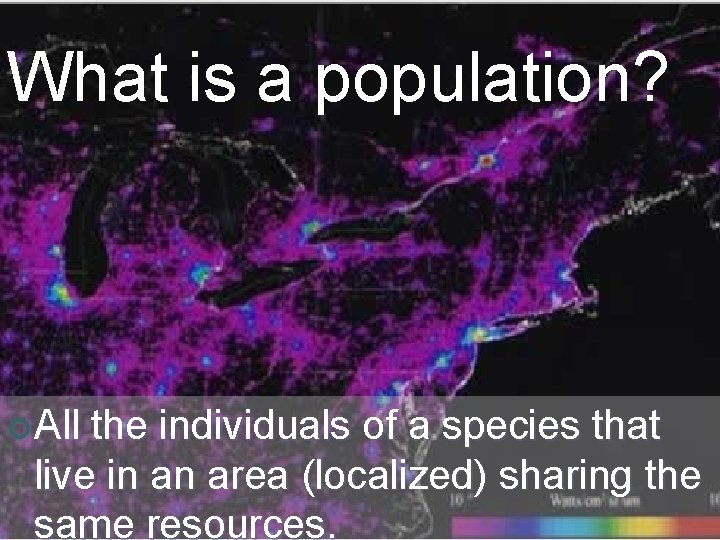
What is a population? ¢ All the individuals of a species that live in an area (localized) sharing the same resources.
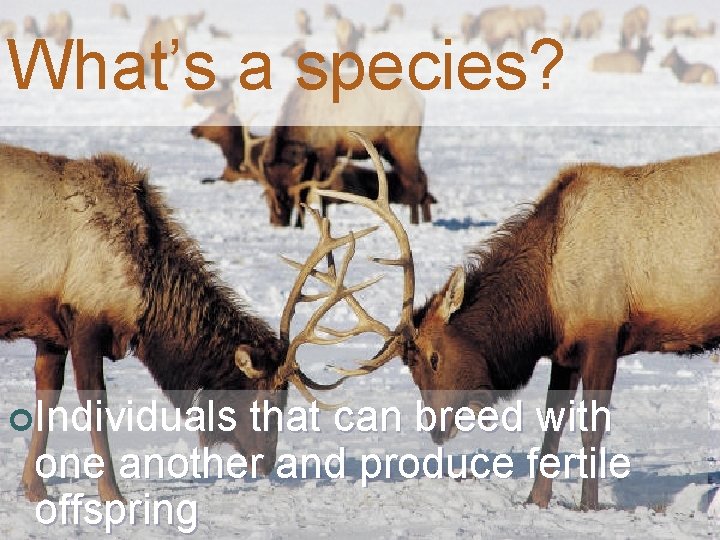
What’s a species? ¢Individuals that can breed with one another and produce fertile offspring
Gene Pool ● The collection of alleles at all gene loci in all individuals of a population ● Variety exists among organisms and among species
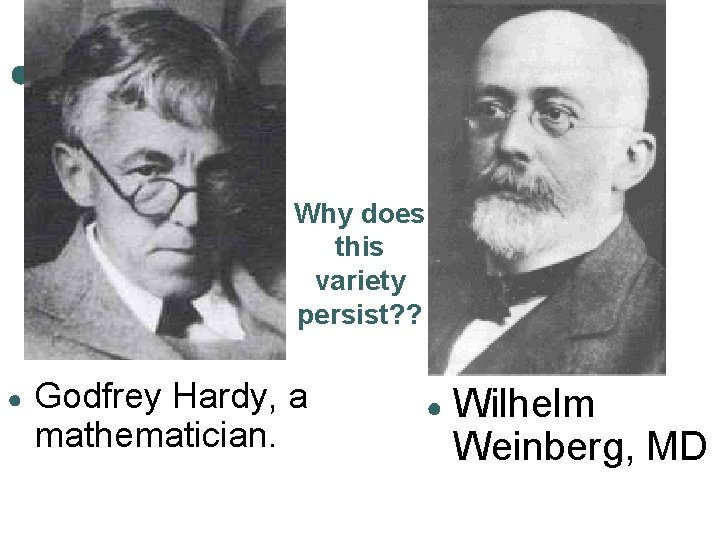
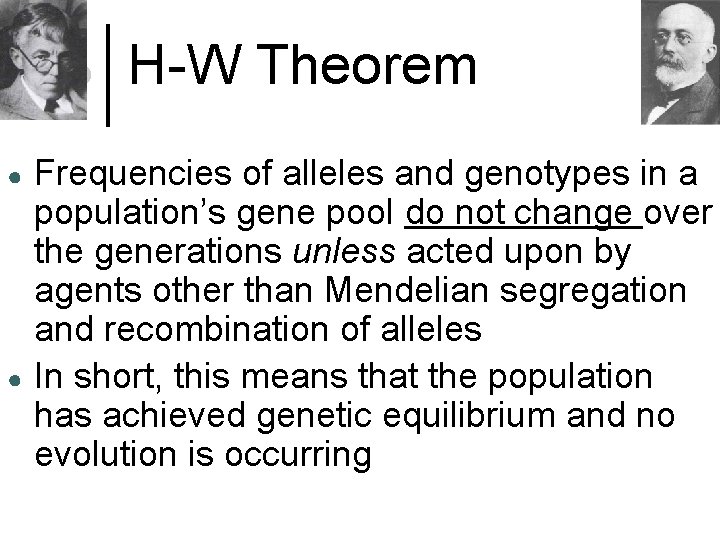
Why does this variety persist? ? ● Godfrey Hardy, a mathematician. ● Wilhelm Weinberg, MD
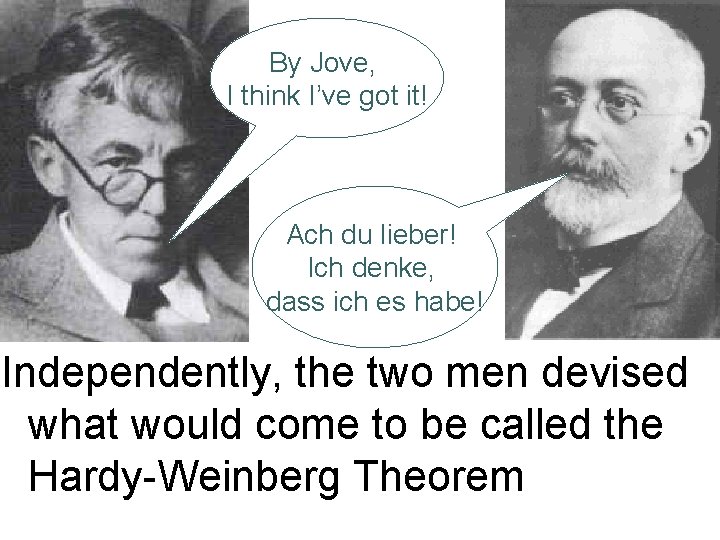
By Jove, I think I’ve got it! Ach du lieber! Ich denke, dass ich es habe! Independently, the two men devised what would come to be called the Hardy-Weinberg Theorem
H-W Theorem ● ● Frequencies of alleles and genotypes in a population’s gene pool do not change over the generations unless acted upon by agents other than Mendelian segregation and recombination of alleles In short, this means that the population has achieved genetic equilibrium and no evolution is occurring
H-W Equilibrium ●Allele frequencies and genotypes in a population’s gene pool stay the same generation to generation
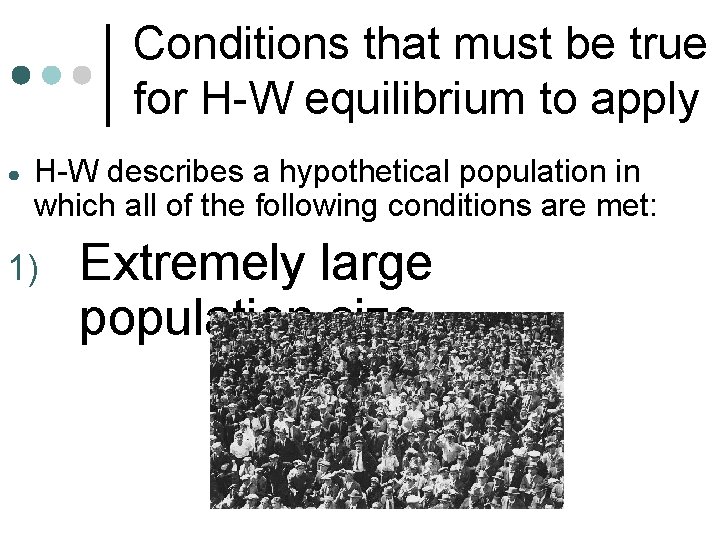
Conditions that must be true for H-W equilibrium to apply ● H-W describes a hypothetical population in which all of the following conditions are met: 1) Extremely large population size
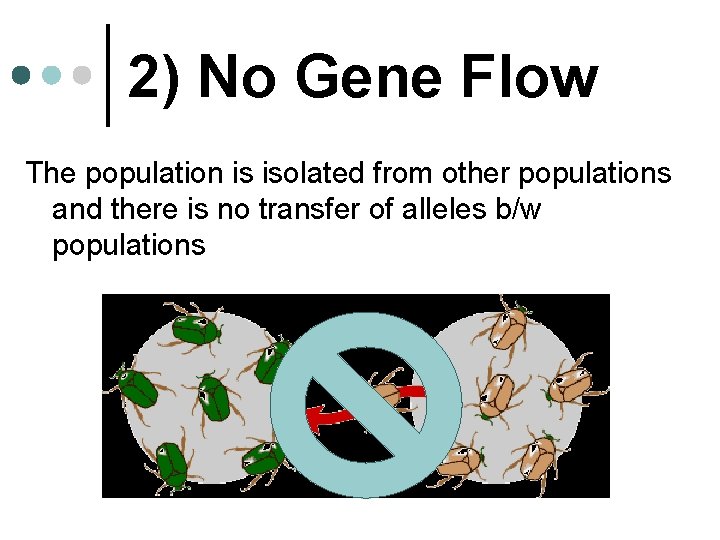
2) No Gene Flow The population is isolated from other populations and there is no transfer of alleles b/w populations
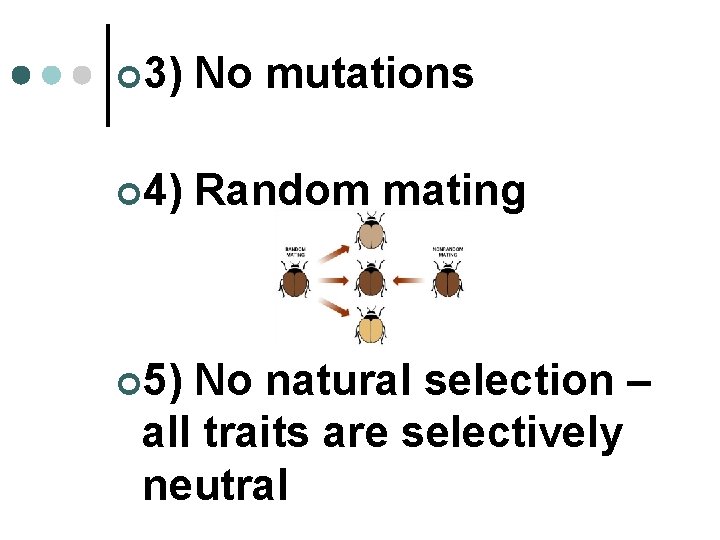
¢ 3) No mutations ¢ 4) Random mating ¢ 5) No natural selection – all traits are selectively neutral
Is this really possible? ? Why is this useful? ? ¢ Even though natural populations are rarely, if ever, in H-W equilibrium, it allows us to estimate allele and genotype frequencies in populations where the rate of evolutionary change is so slow that populations appear to be close to equilibrium
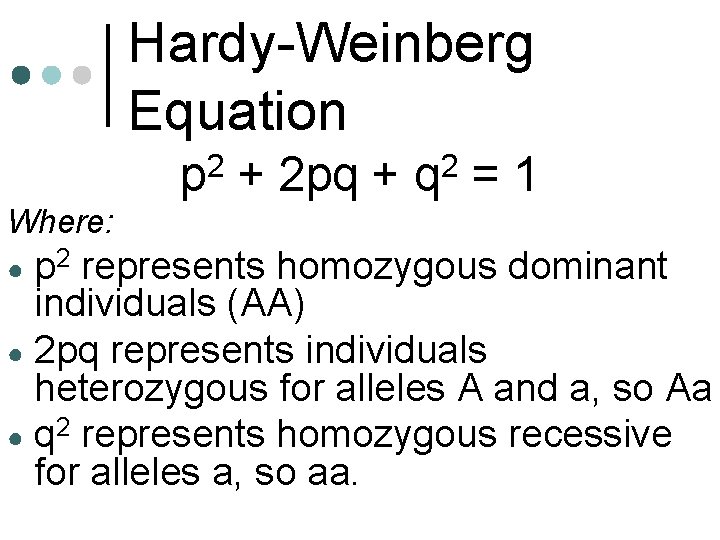
Hardy-Weinberg Equation p 2 + 2 pq + q 2 = 1 Where: p 2 represents homozygous dominant individuals (AA) ● 2 pq represents individuals heterozygous for alleles A and a, so Aa ● q 2 represents homozygous recessive for alleles a, so aa. ●
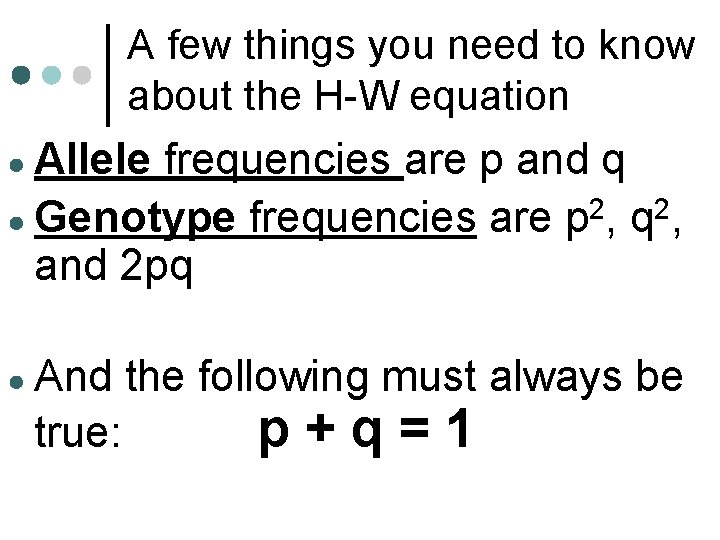
A few things you need to know about the H-W equation ● Allele frequencies are p and q 2 2 ● Genotype frequencies are p , q , and 2 pq ● And true: the following must always be p+q=1
¢Now, let’s work on some examples….
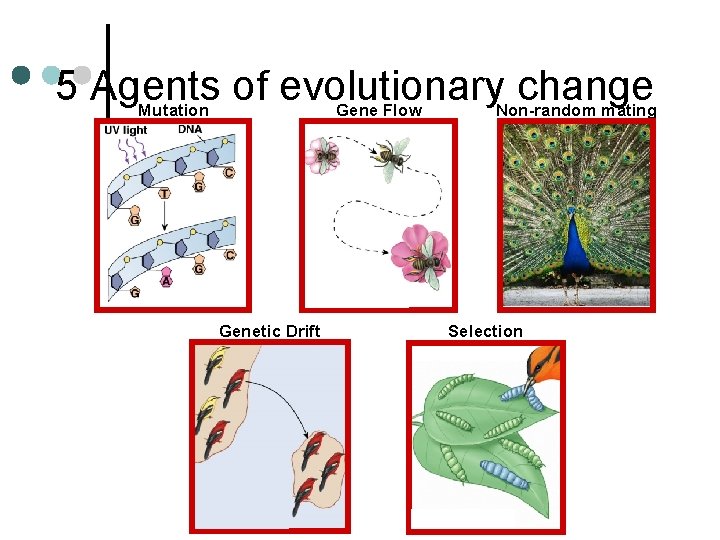
5 Agents of evolutionary change Mutation Gene Flow Non-random mating Genetic Drift Selection
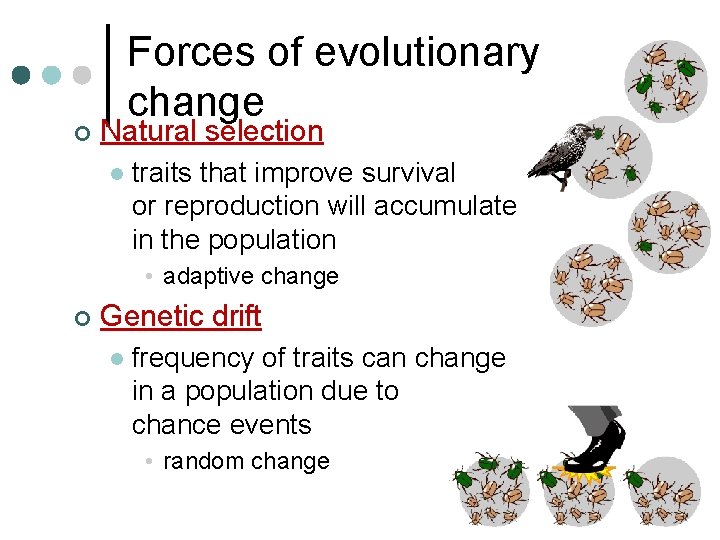
¢ Forces of evolutionary change Natural selection l traits that improve survival or reproduction will accumulate in the population • adaptive change ¢ Genetic drift l frequency of traits can change in a population due to chance events • random change
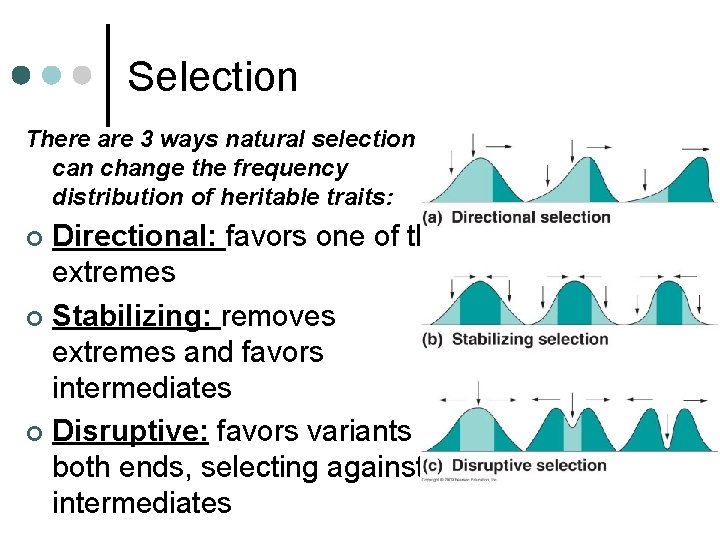
Selection There are 3 ways natural selection can change the frequency distribution of heritable traits: Directional: favors one of the extremes ¢ Stabilizing: removes extremes and favors intermediates ¢ Disruptive: favors variants at both ends, selecting against intermediates ¢
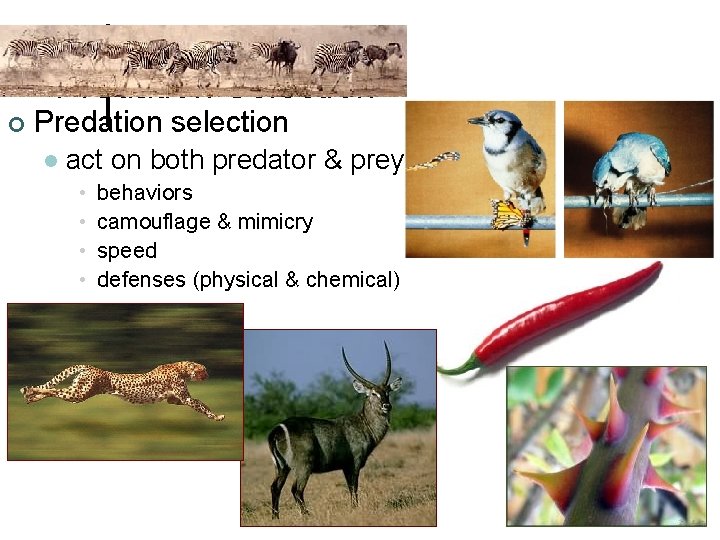
Predation Selection ¢ Predation selection l act on both predator & prey • • behaviors camouflage & mimicry speed defenses (physical & chemical)
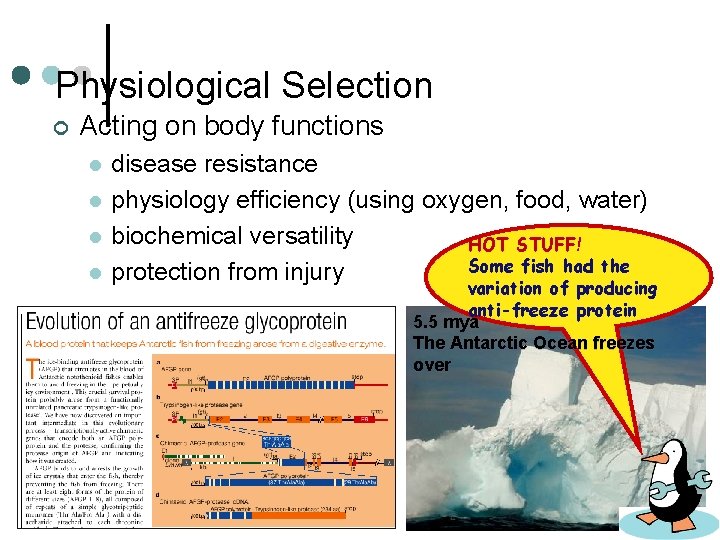
Physiological Selection ¢ Acting on body functions l l disease resistance physiology efficiency (using oxygen, food, water) biochemical versatility HOT STUFF! Some fish had the protection from injury variation of producing anti-freeze protein 5. 5 mya The Antarctic Ocean freezes over
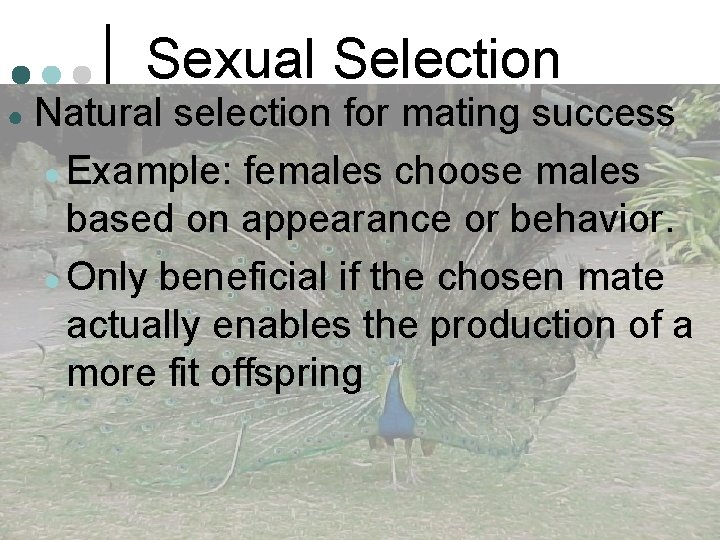
Sexual Selection ● Natural selection for mating success ● Example: females choose males based on appearance or behavior. ● Only beneficial if the chosen mate actually enables the production of a more fit offspring
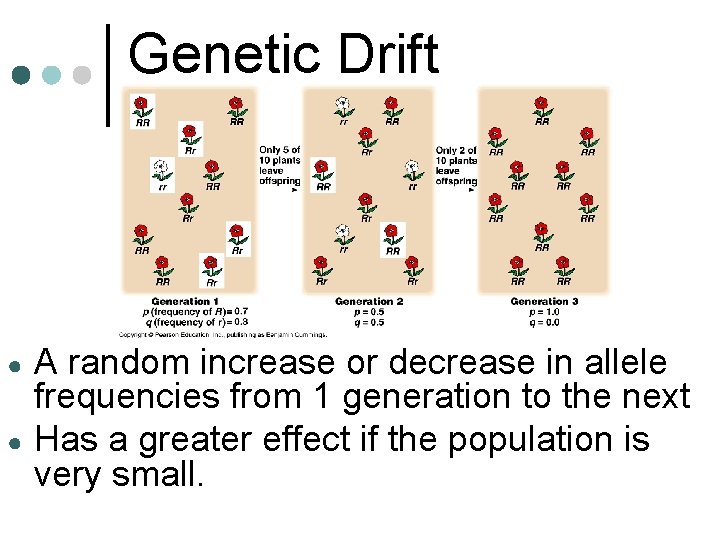
Genetic Drift ● ● A random increase or decrease in allele frequencies from 1 generation to the next Has a greater effect if the population is very small.
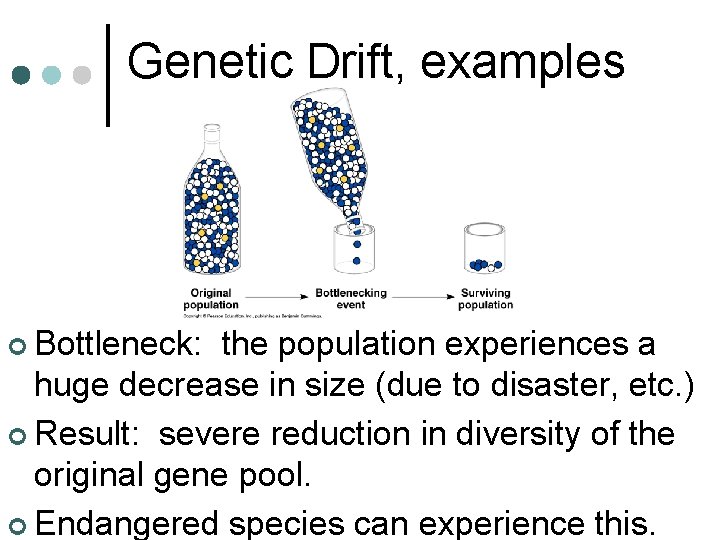
Genetic Drift, examples ¢ Bottleneck: the population experiences a huge decrease in size (due to disaster, etc. ) ¢ Result: severe reduction in diversity of the original gene pool. ¢ Endangered species can experience this.
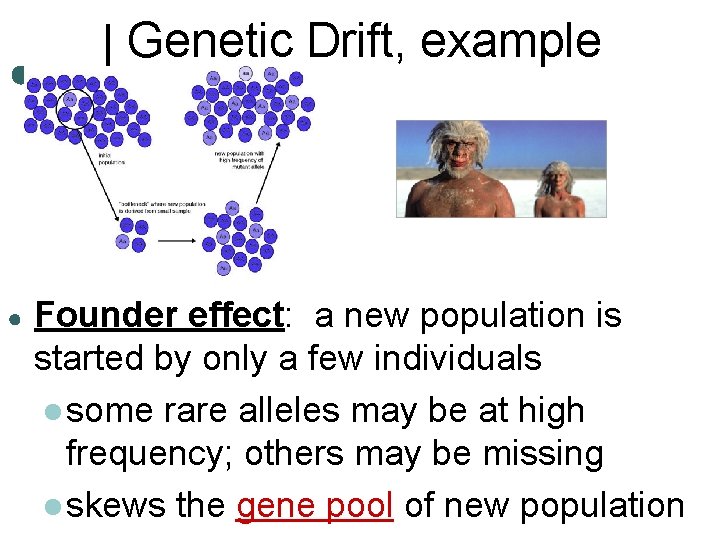
Genetic Drift, example ● Founder effect: a new population is started by only a few individuals l some rare alleles may be at high frequency; others may be missing l skews the gene pool of new population
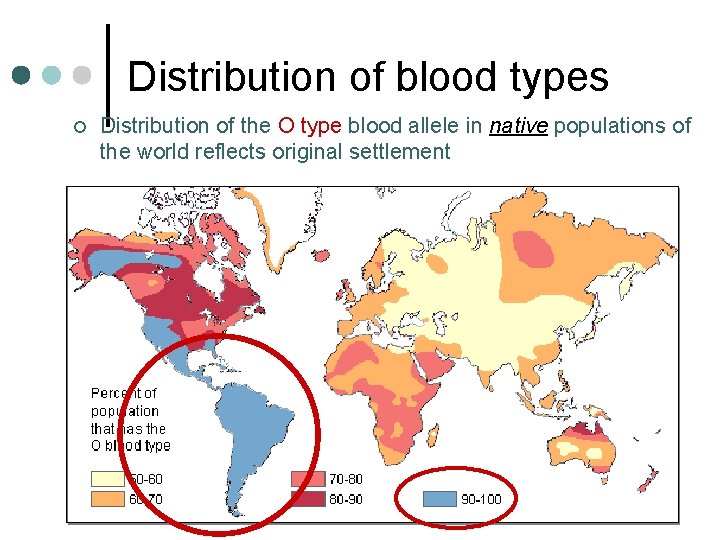
Distribution of blood types ¢ Distribution of the O type blood allele in native populations of the world reflects original settlement
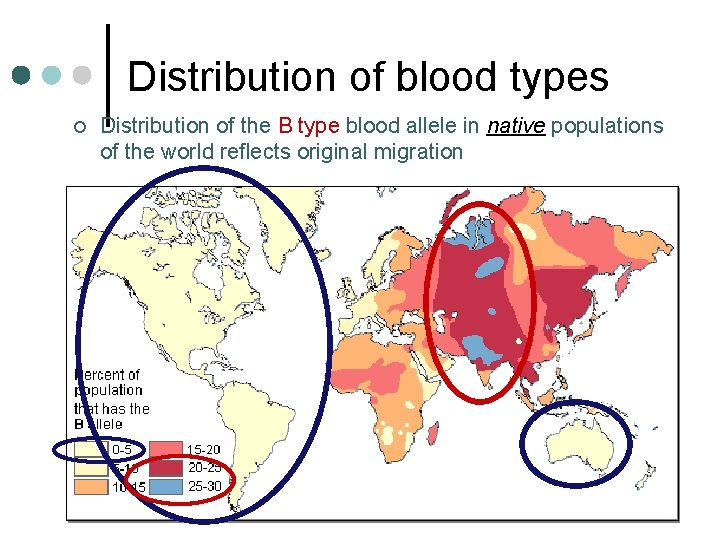
Distribution of blood types ¢ Distribution of the B type blood allele in native populations of the world reflects original migration
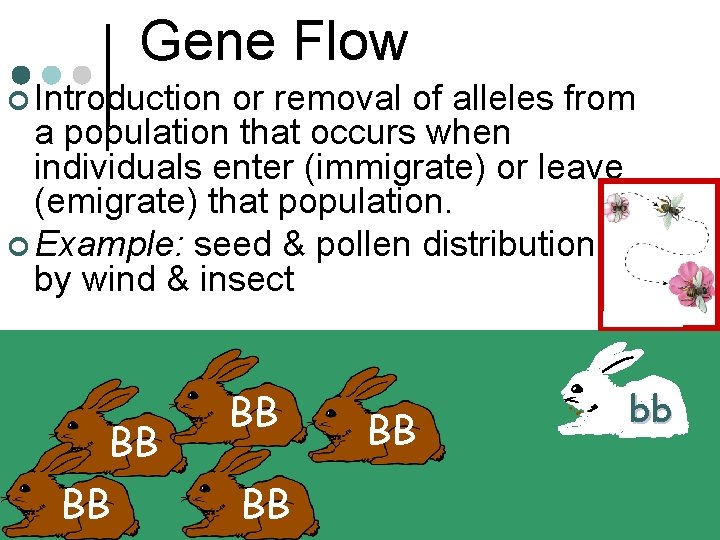
Gene Flow ¢ Introduction or removal of alleles from a population that occurs when individuals enter (immigrate) or leave (emigrate) that population. ¢ Example: seed & pollen distribution by wind & insect BB BB BB bb
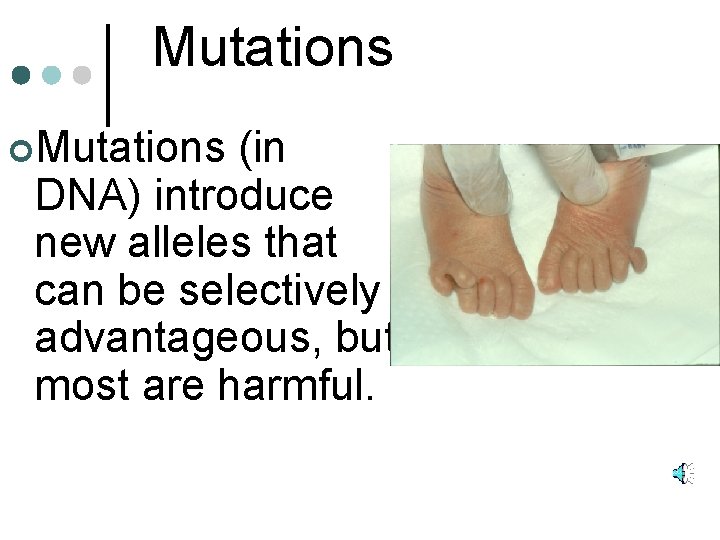
Mutations ¢Mutations (in DNA) introduce new alleles that can be selectively advantageous, but most are harmful. Polydactyly, or extra digits.
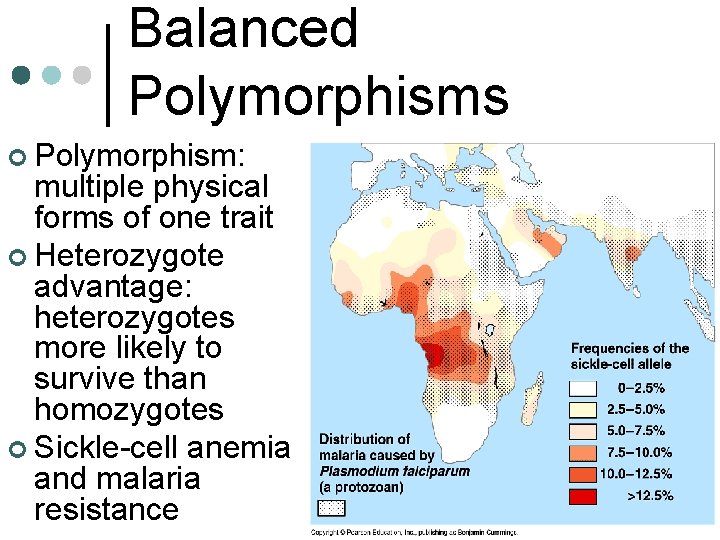
Balanced Polymorphisms ¢ Polymorphism: multiple physical forms of one trait ¢ Heterozygote advantage: heterozygotes more likely to survive than homozygotes ¢ Sickle-cell anemia and malaria resistance
What is Darwinian fitness? ¢An individual’s ability to contribute to the gene pool of the next generation in relation to others