
Population Ecology What is a Population An interbreeding
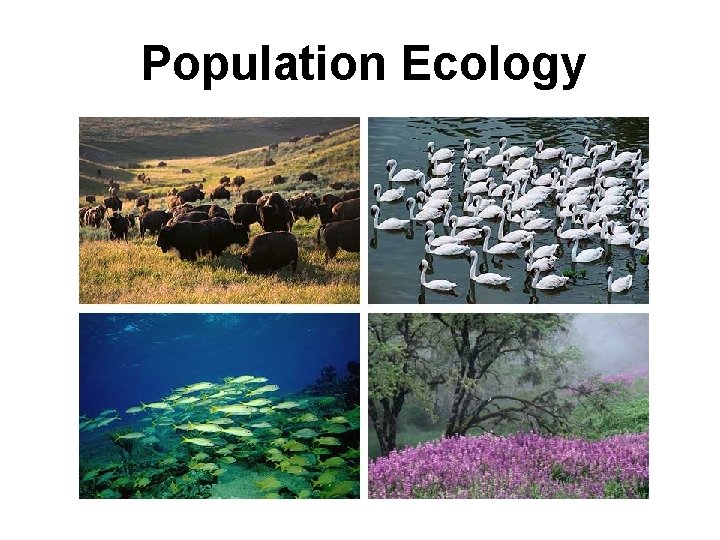
Population Ecology
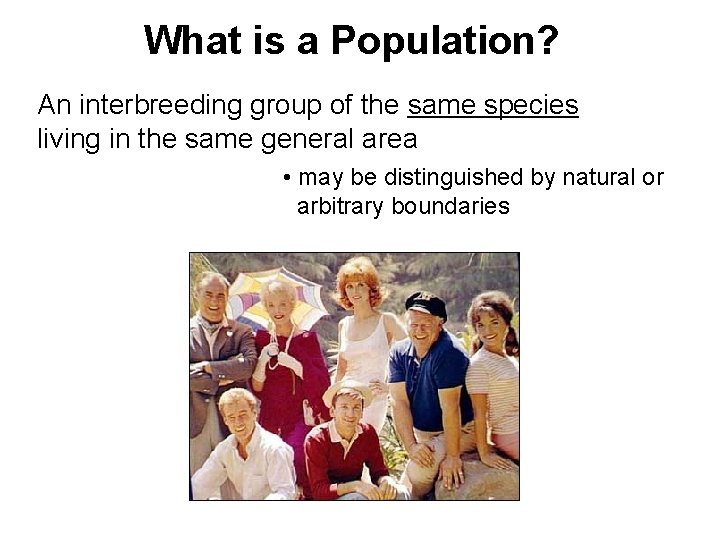
What is a Population? An interbreeding group of the same species living in the same general area • may be distinguished by natural or arbitrary boundaries
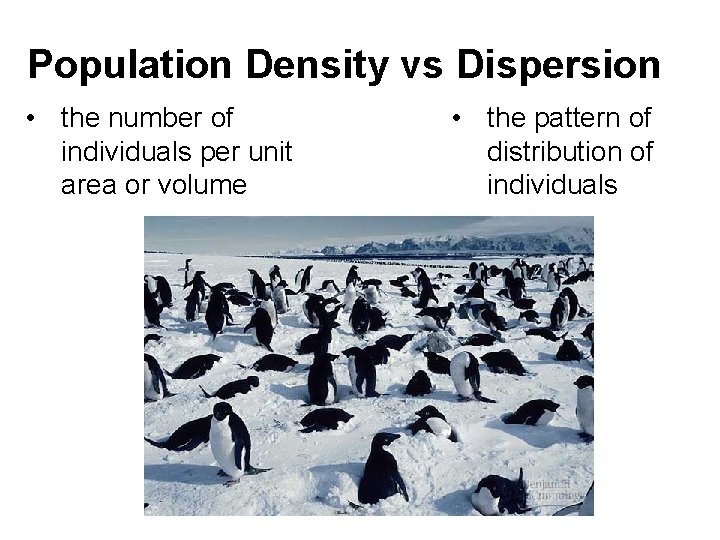
Population Density vs Dispersion • the number of individuals per unit area or volume • the pattern of distribution of individuals
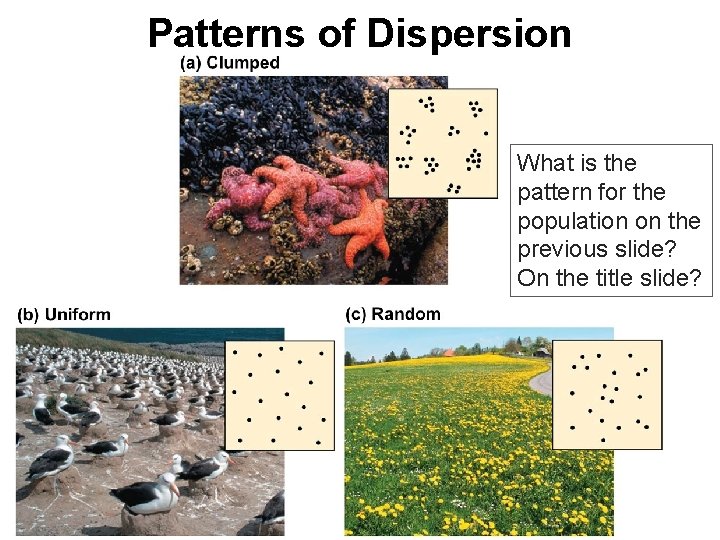
Patterns of Dispersion What is the pattern for the population on the previous slide? On the title slide?
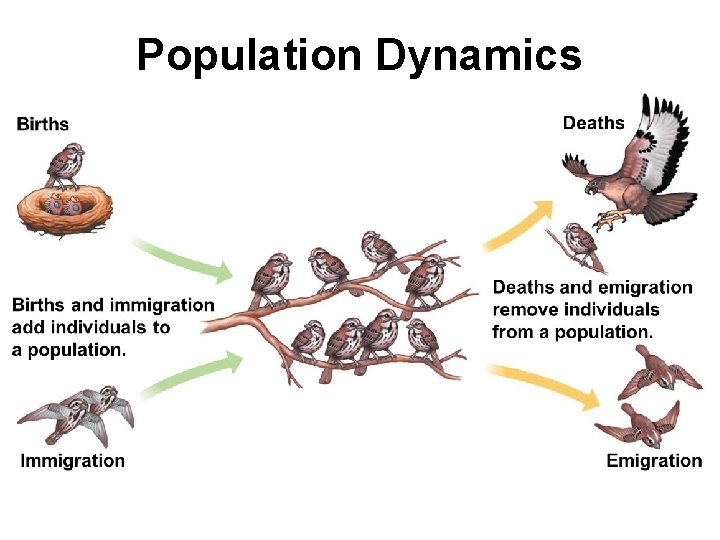
Population Dynamics
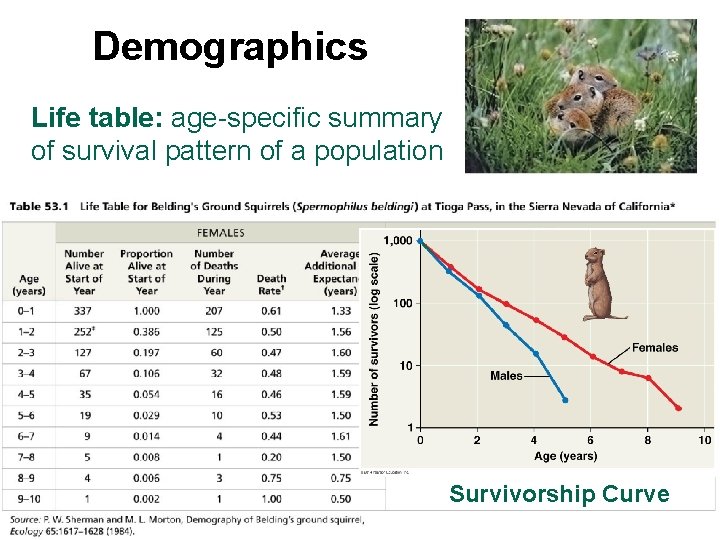
Demographics Life table: age-specific summary of survival pattern of a population Survivorship Curve
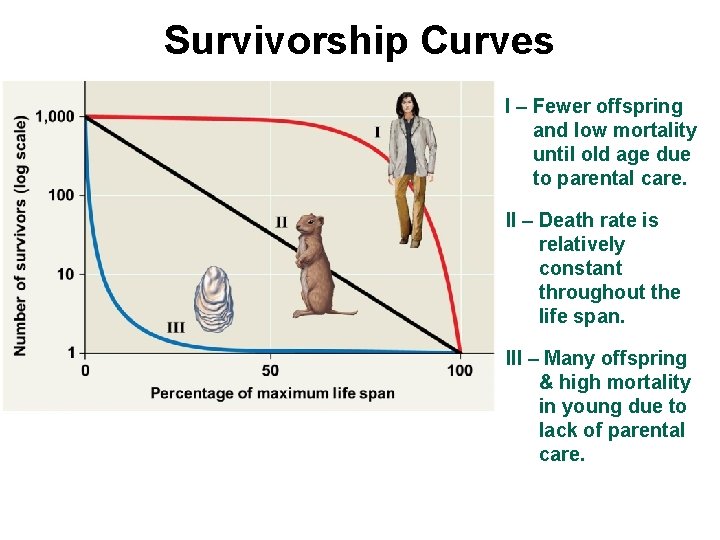
Survivorship Curves I – Fewer offspring and low mortality until old age due to parental care. II – Death rate is relatively constant throughout the life span. III – Many offspring & high mortality in young due to lack of parental care.
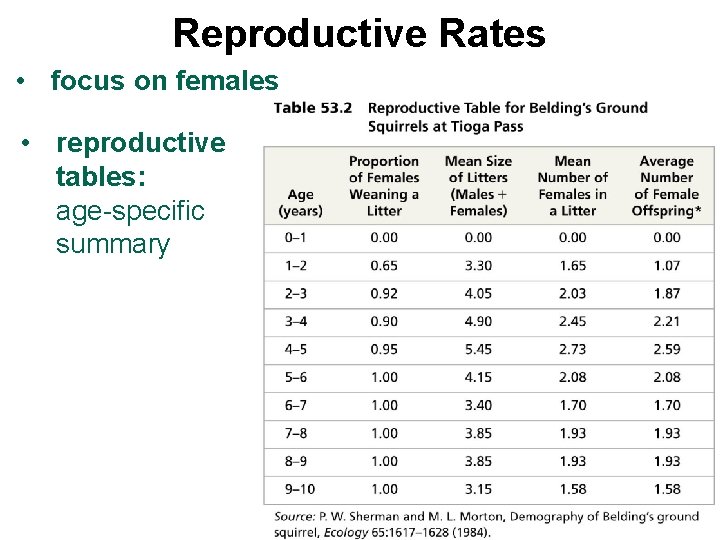
Reproductive Rates • focus on females • reproductive tables: age-specific summary
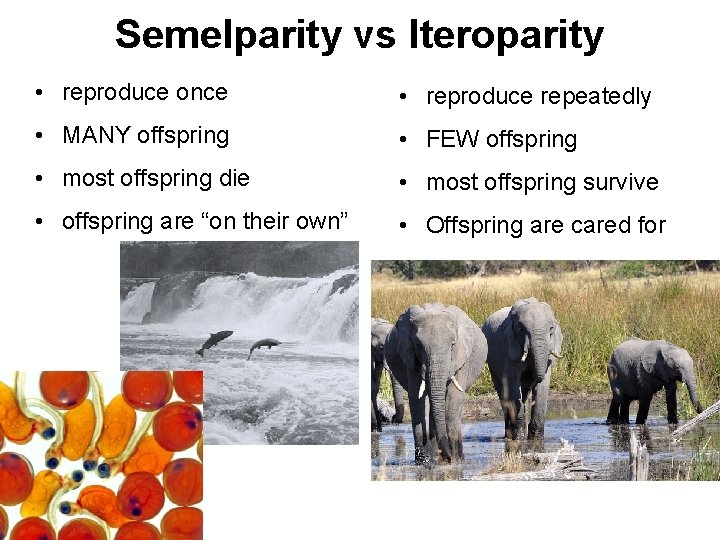
Semelparity vs Iteroparity • reproduce once • reproduce repeatedly • MANY offspring • FEW offspring • most offspring die • most offspring survive • offspring are “on their own” • Offspring are cared for
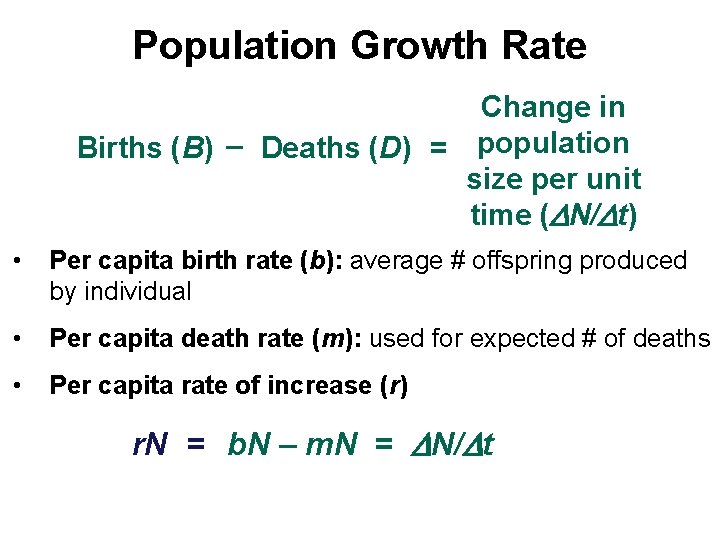
Population Growth Rate Change in Births (B) – Deaths (D) = population size per unit time (DN/Dt) • Per capita birth rate (b): average # offspring produced by individual • Per capita death rate (m): used for expected # of deaths • Per capita rate of increase (r) r. N = b. N – m. N = DN/Dt
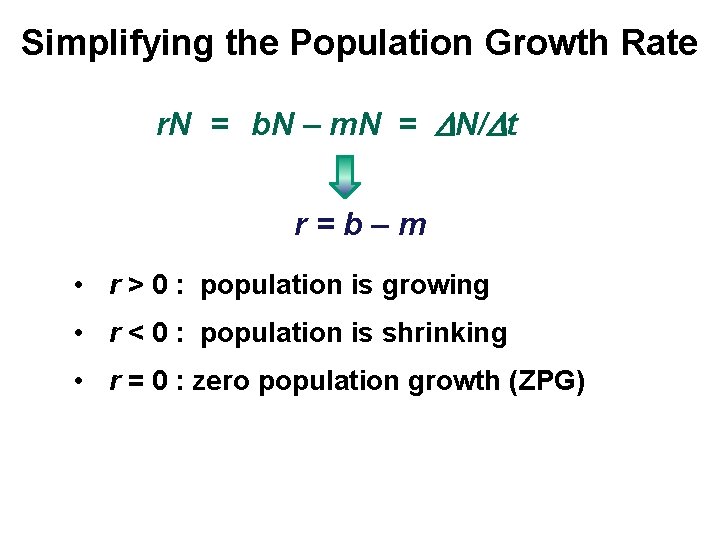
Simplifying the Population Growth Rate r. N = b. N – m. N = DN/Dt r=b–m • r > 0 : population is growing • r < 0 : population is shrinking • r = 0 : zero population growth (ZPG)
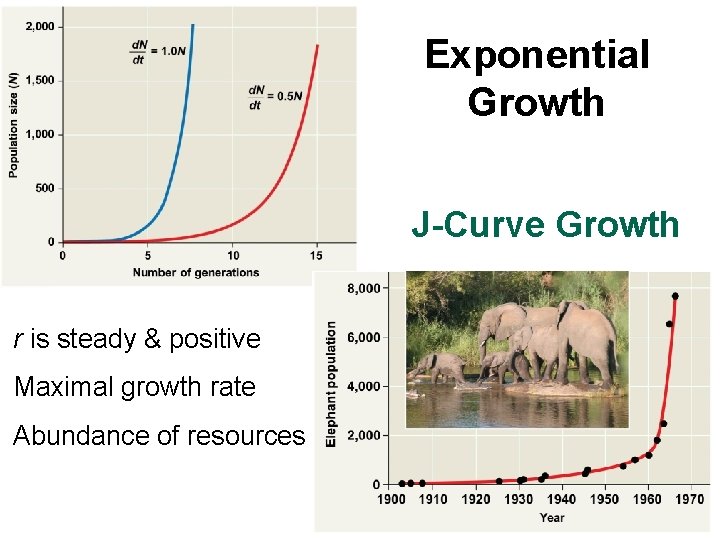
Exponential Growth J-Curve Growth r is steady & positive Maximal growth rate Abundance of resources

Logistic Growth Model carrying capacity (K): Max population size habitat can sustain
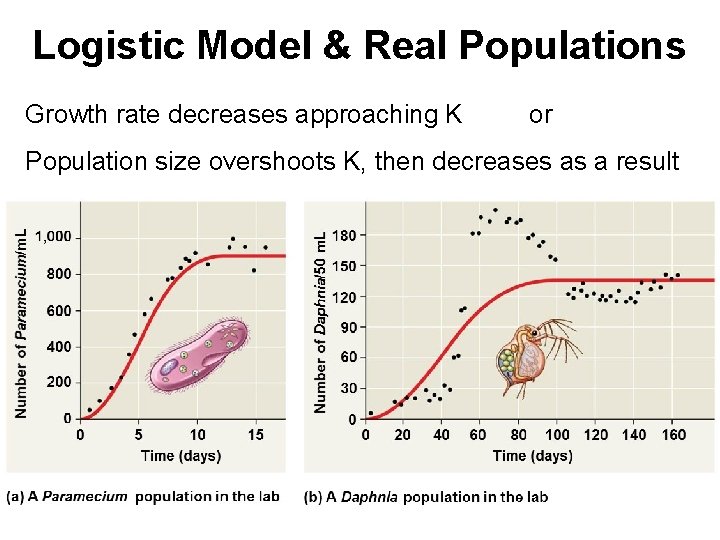
Logistic Model & Real Populations Growth rate decreases approaching K or Population size overshoots K, then decreases as a result
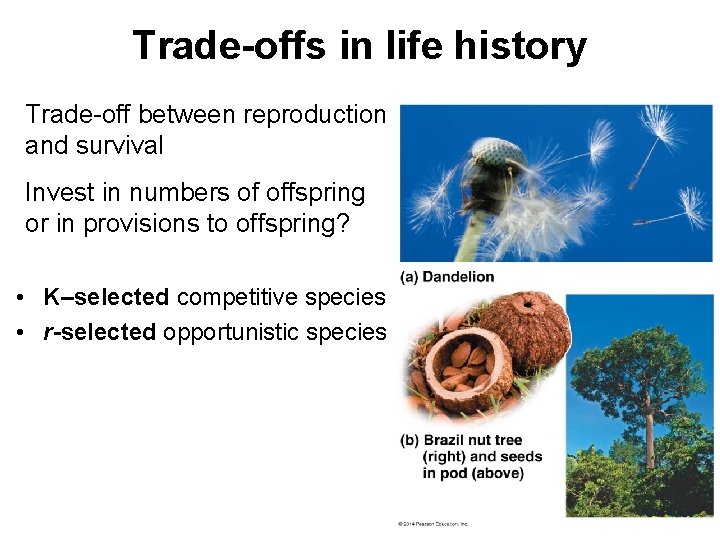
Trade-offs in life history Trade-off between reproduction and survival Invest in numbers of offspring or in provisions to offspring? • K–selected competitive species • r-selected opportunistic species

Regulation of Population Growth Density-independent factors: • unrelated to population density
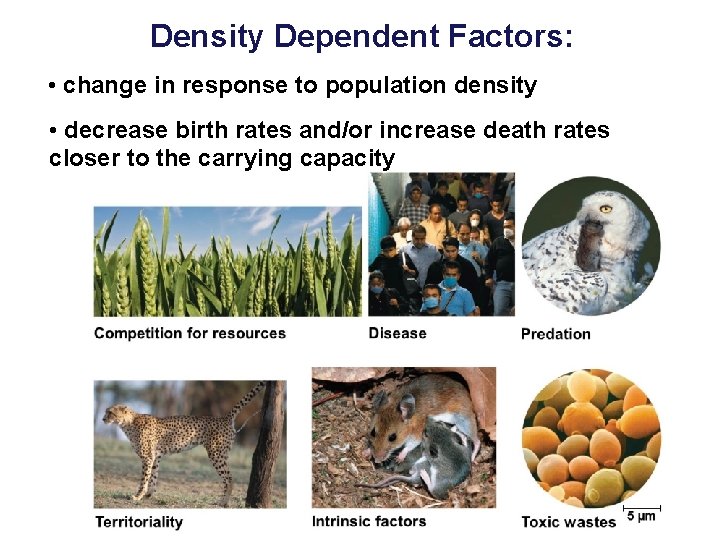
Density Dependent Factors: • change in response to population density • decrease birth rates and/or increase death rates closer to the carrying capacity
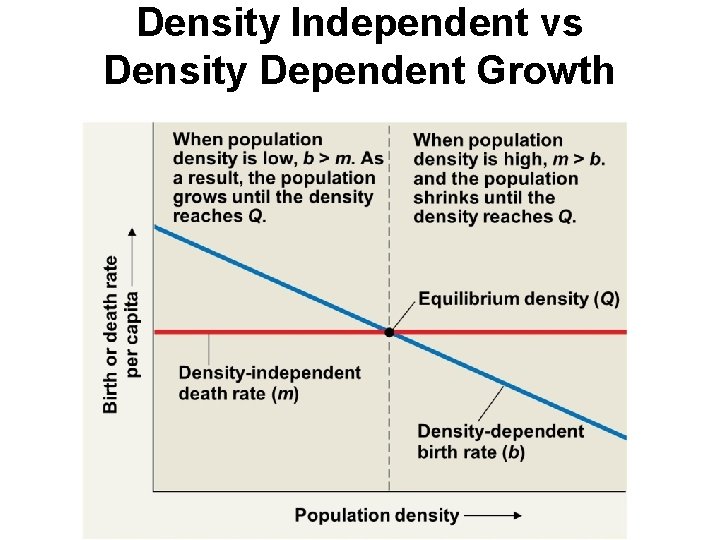
Density Independent vs Density Dependent Growth
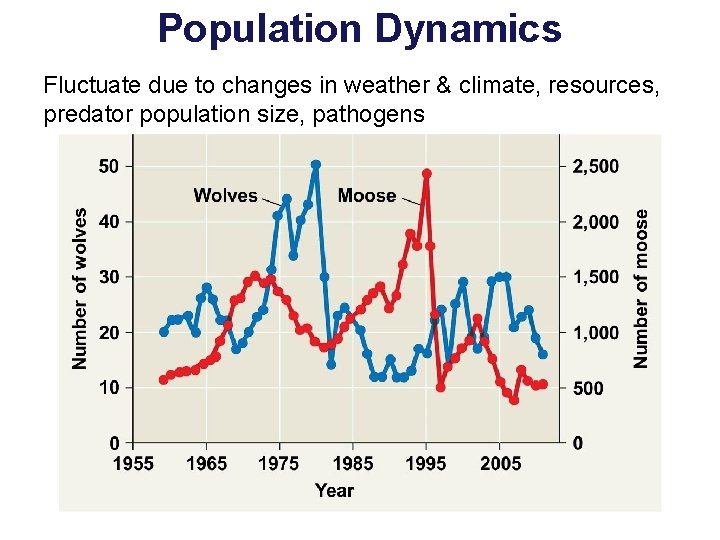
Population Dynamics Fluctuate due to changes in weather & climate, resources, predator population size, pathogens
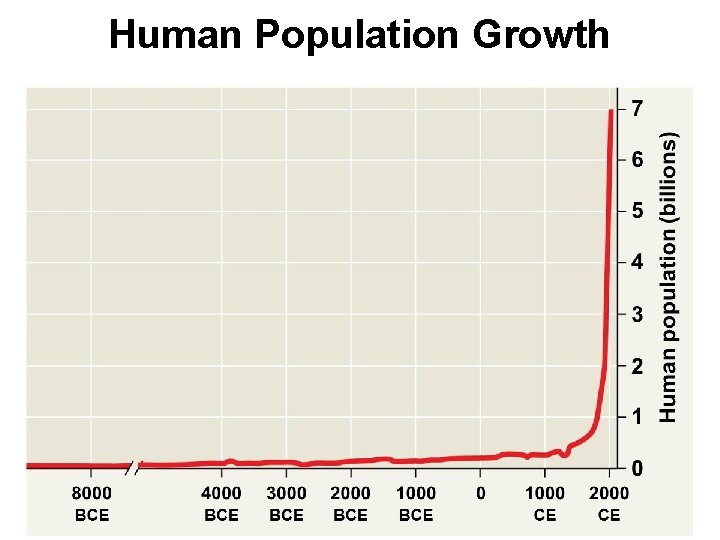
Human Population Growth
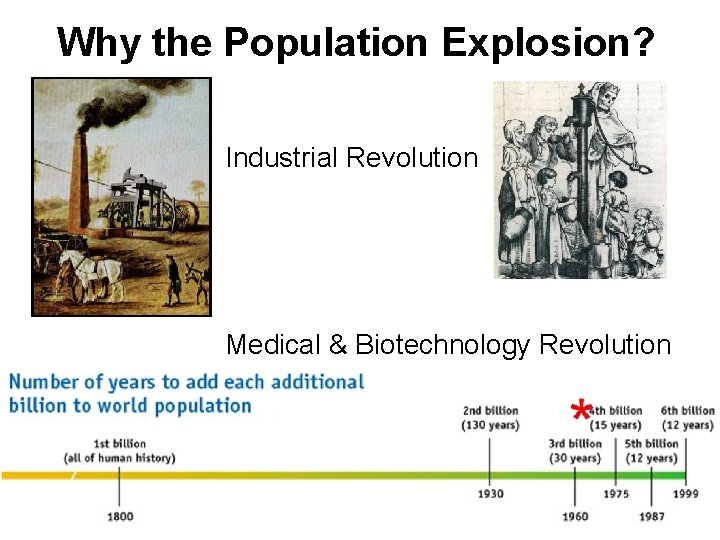
Why the Population Explosion? Industrial Revolution Medical & Biotechnology Revolution
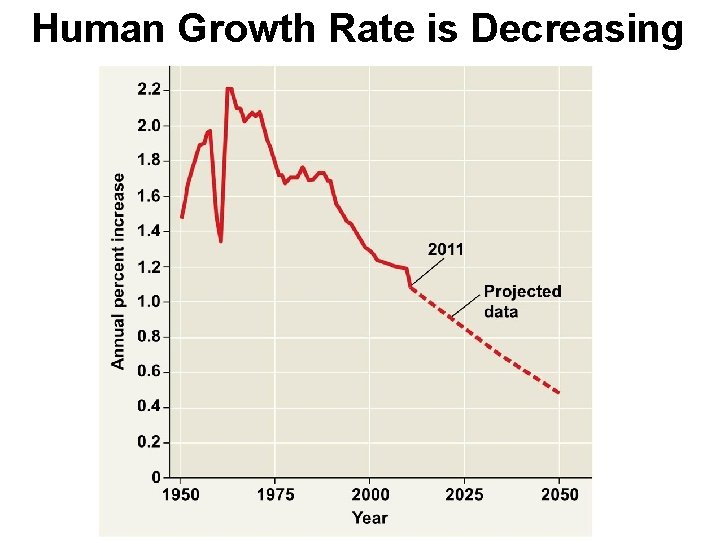
Human Growth Rate is Decreasing
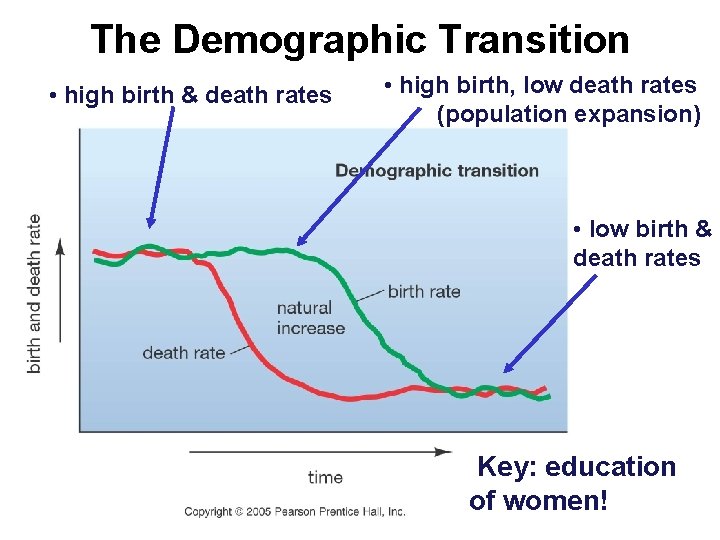
The Demographic Transition • high birth & death rates • high birth, low death rates (population expansion) • low birth & death rates Key: education of women!
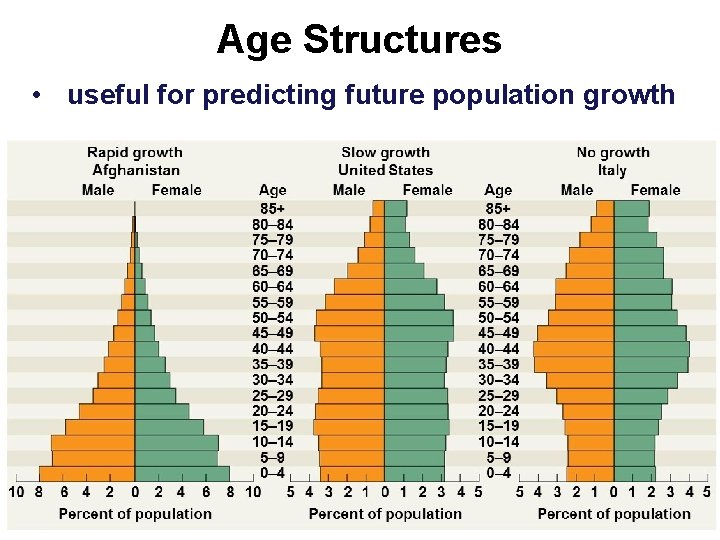
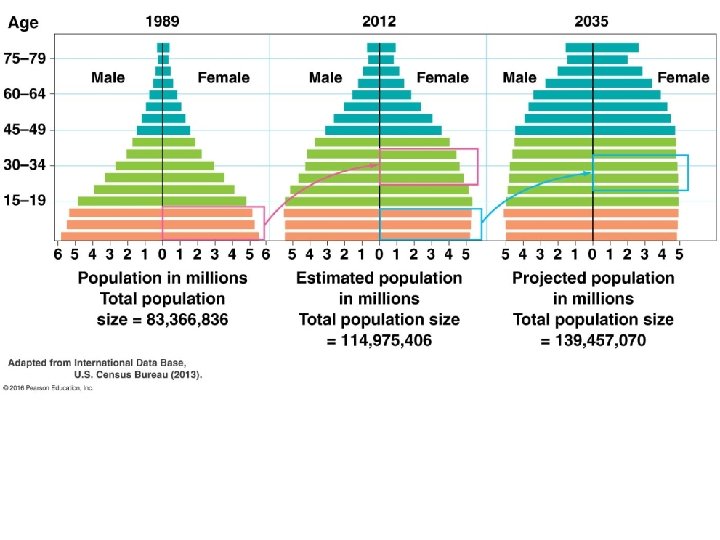
Age Structures • useful for predicting future population growth
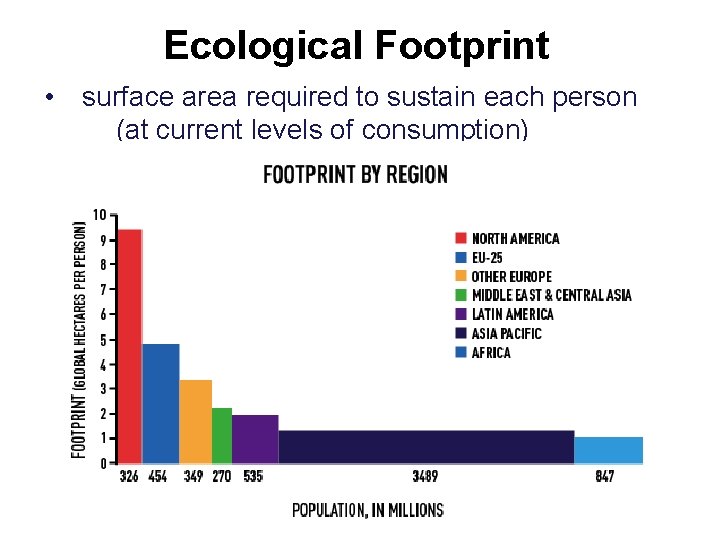
Ecological Footprint • surface area required to sustain each person (at current levels of consumption)
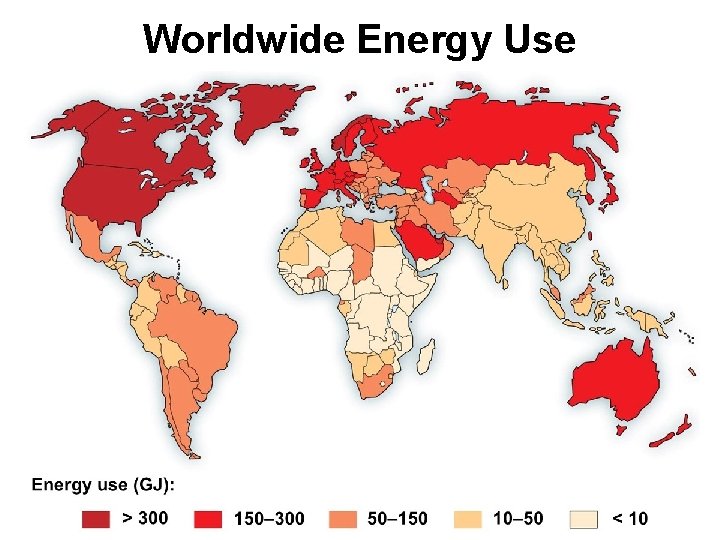
Worldwide Energy Use
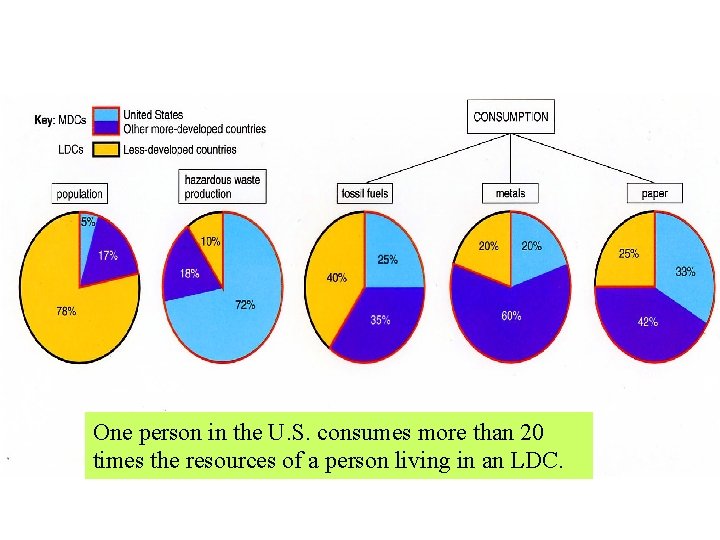
One person in the U. S. consumes more than 20 times the resources of a person living in an LDC.
- Slides: 28