
Population Ecology Population potentially interbreeding and interacting individuals

Population Ecology


Population potentially interbreeding and interacting individuals same species living in the same place living at the same time reproductively isolated from other such groups
What are the characteristics of a population? ?
1. Density Size of a population in relation to a definite unit of space (area, volume) 2 km e. g. # / km = crude density

Ecological density Number of individuals per unit of available living space e. g. # of ferns / cubic meter of timber
Abundance number of individuals in a given area ? ? Is density = to abundance? ?

Techniques for determining density direct count finite populations sampling infinite populations

Mark-and-Recapture Methods 1 2 Schnabel method closed populations multiple markings Jolly-Seber method closed populations multiple markings

1 Petersen method closed populations single marking N= CM R N = population size estimate C = total captured in 2 nd sampling M = # of marked at 1 st sampling
Assumptions of Petersen Model population is closed N is constant during sampling all animals have equal chance of being caught none are trap-shy or trap happy
marking individuals does not affect their catchability animals do not lose marks between sampling periods all marks are reported on nd discovery in the 2 sampling

CI for the Petersen model Poisson confidence interval if R/C < 0. 10 and R < 50 Normal approximation if R/C < 0. 10 and R > 50 Normal distribution if R/C > 0. 10
Density dependence Density dependent population parameter varies with population density
Density independent population parameter does not vary with population density
In the absence of immigration, a population will continue to increase in numbers unless either the per capita birthrate or death rate is density
Allee effect Maximal population growth may occur at moderate densities because at low densities, location of mates may be difficult, and any cooperation between individuals of a species will be curtailed

Equilibrium population density death rates exactly balances the birth rate such that density is neither increasing nor decreasing only reached if B and/or D are density dependent = carrying capacity (K)
Types of density dependence exactly compensating number of survivors will be constant regardless of the starting density-dependent processes exactly compensate for variation in starting number
undercompensating number of survivors rises as the starting density rises density-dependent processes are failing to match the population to the available resources
overcompensating number of survivors falls as the starting density rises
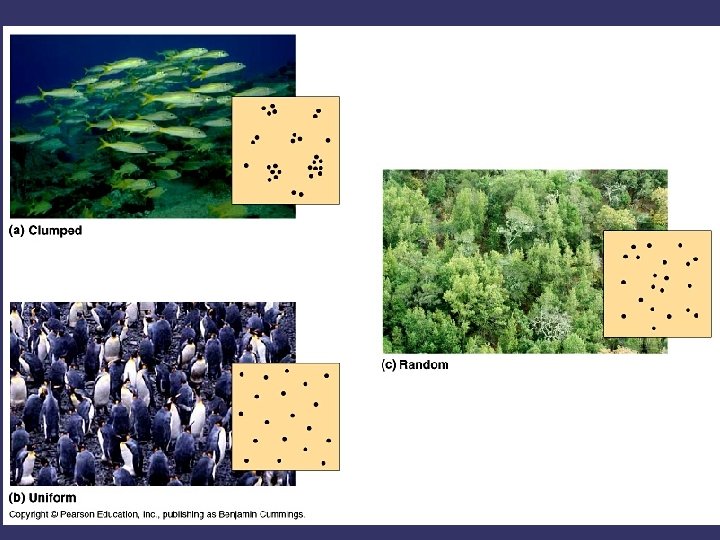
2. Dispersion distribution of organisms within a population over an area
Patterns of dispersion probability that another individual is nearby given the location of one individual
a. Uniform if individuals are evenly spaced results from some form of competition e. g. territoriality probability is reduced
b. Random if position of each individual is independent of the others probability is unaffected

c. Clumped if individuals are aggregated in scattered groups as a result of responses to habitat differences, availability of resources probability is increased
3. Age structure number or proportion of individuals in each age group or class within a population specific categories life history stages
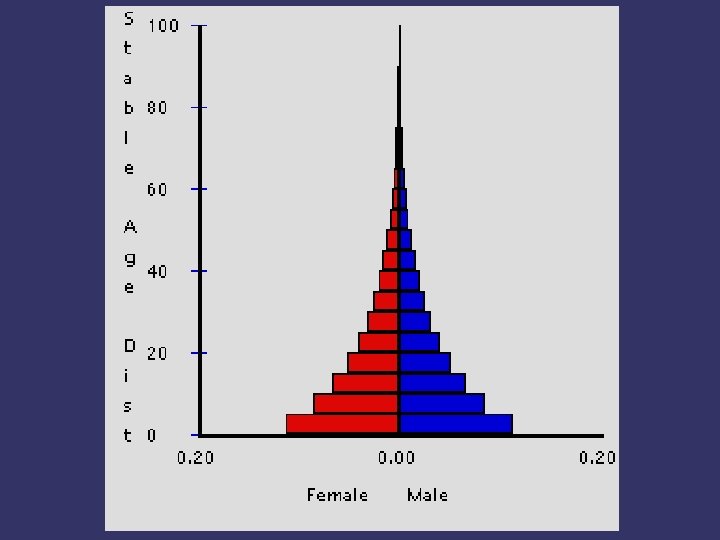
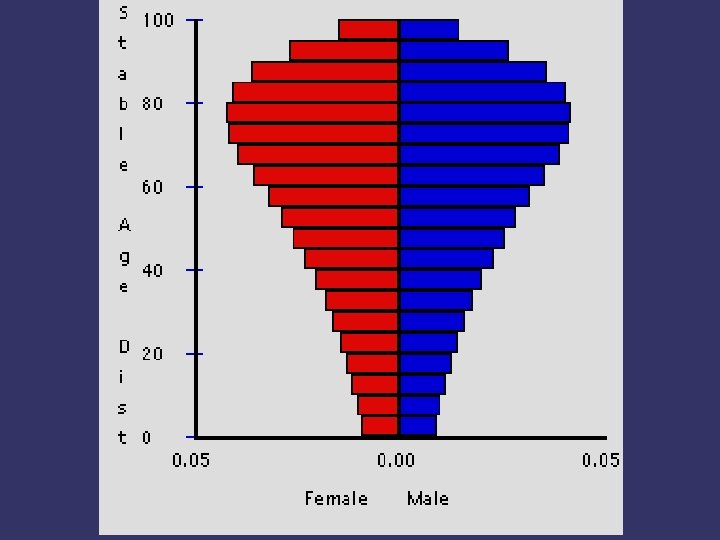
Population Age Pyramids compare the percentages of the population in different age groups
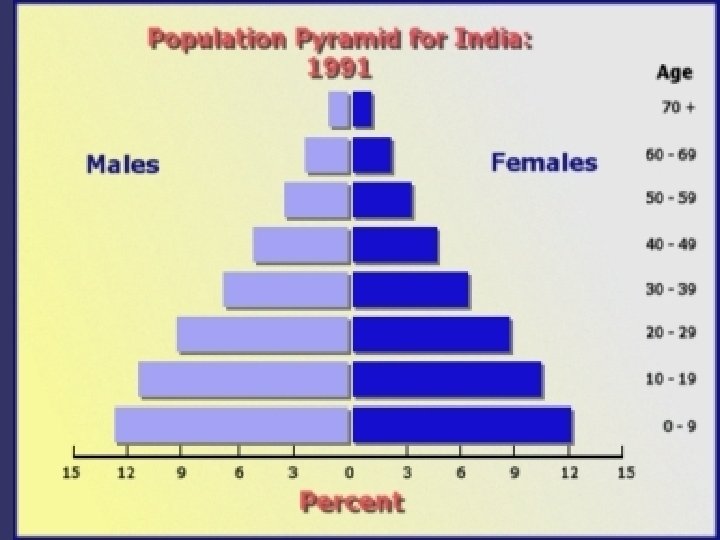
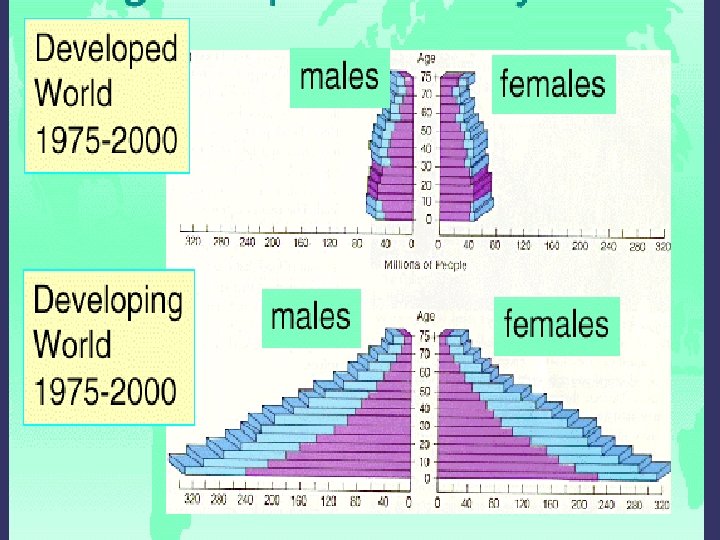
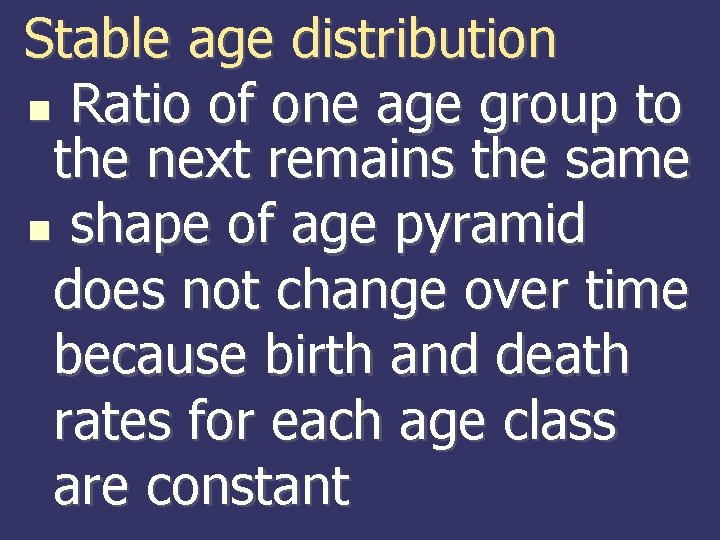
Stable age distribution Ratio of one age group to the next remains the same shape of age pyramid does not change over time because birth and death rates for each age class are constant
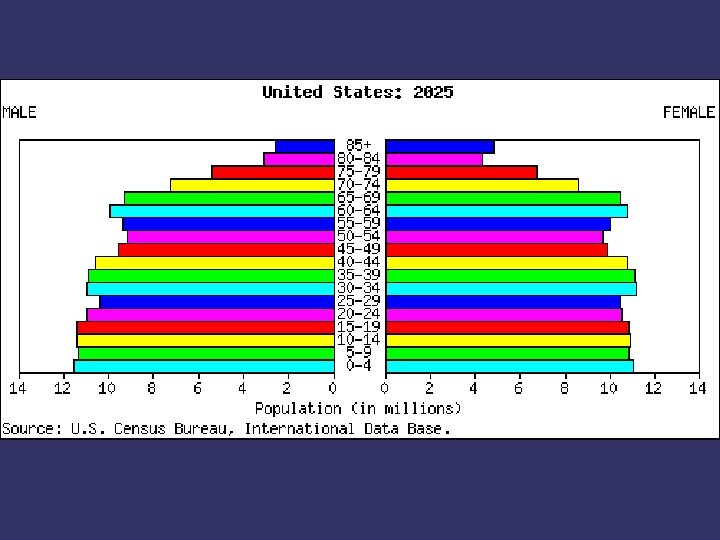
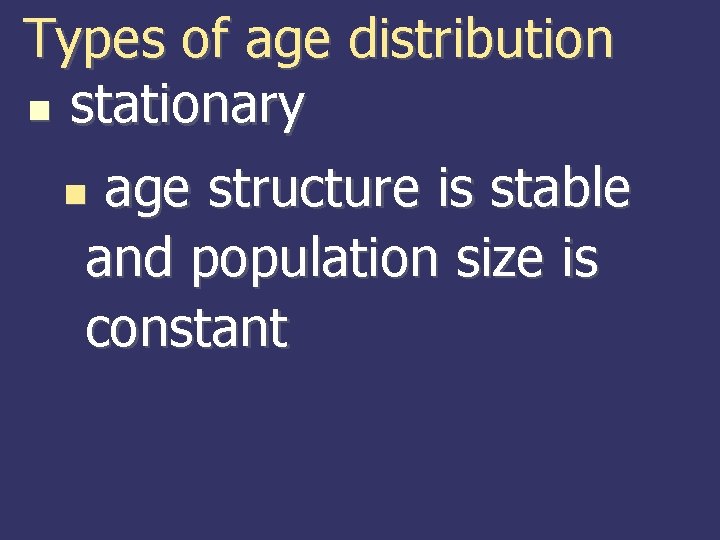
Types of age distribution stationary age structure is stable and population size is constant
growing proportion of young is larger than the older groups
declining high proportion of individuals in the older age groups low production of young
- Slides: 38