
Population Ecology 1 Biotic Potential Unrestrained biological reproduction
Population Ecology 1
Biotic Potential §Unrestrained biological reproduction §Constraints include: §Scarcity of resources §Competition §Predation §Disease §Accident 2
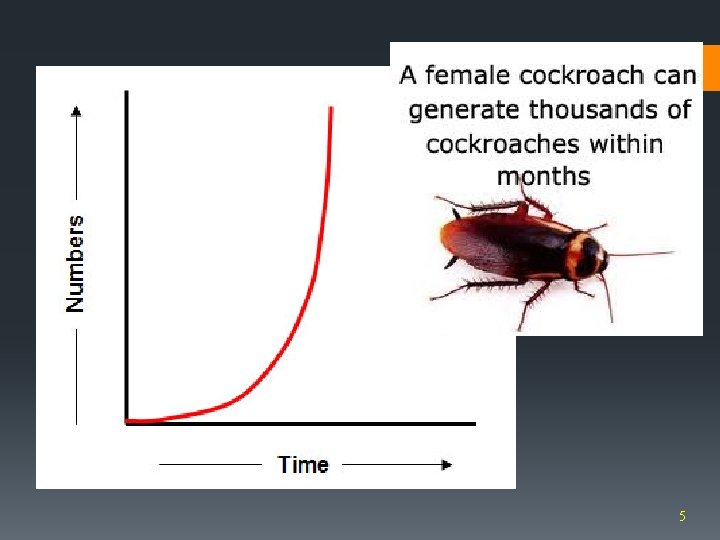
Population Growth Mathematically (N) Population – # of the members of a single species (r) Rate - # which can be produced per unit of time (t) Time – production time (N 0) - # reproducing individuals Exponential Growth - growth at a constant rate of increase per unit time; has no limit. 3
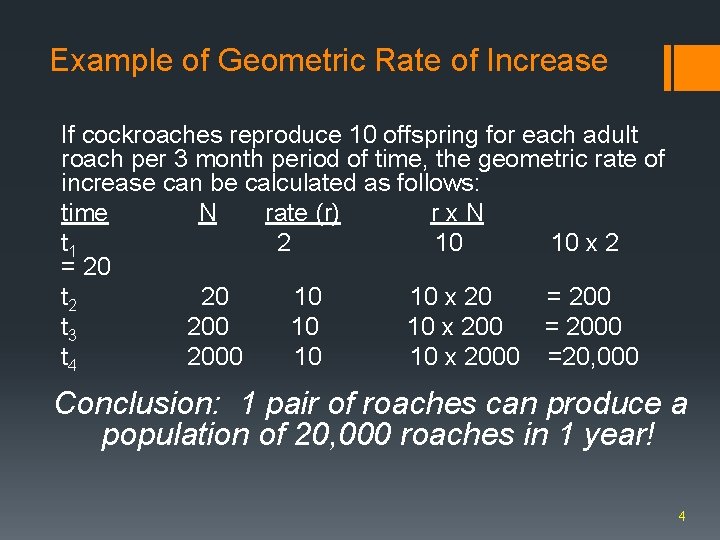
Example of Geometric Rate of Increase If cockroaches reproduce 10 offspring for each adult roach per 3 month period of time, the geometric rate of increase can be calculated as follows: time N rate (r) rx. N t 1 2 10 10 x 2 = 20 t 2 20 10 10 x 20 = 200 t 3 200 10 10 x 200 = 2000 t 4 2000 10 10 x 2000 =20, 000 Conclusion: 1 pair of roaches can produce a population of 20, 000 roaches in 1 year! 4
5
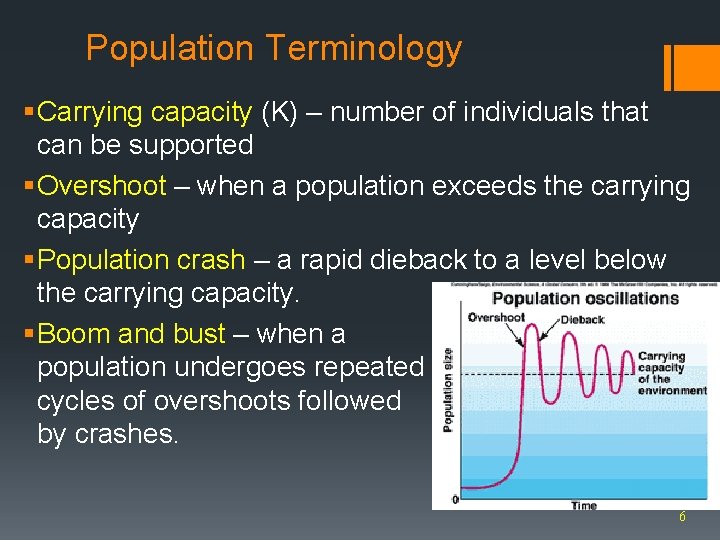
Population Terminology § Carrying capacity (K) – number of individuals that can be supported § Overshoot – when a population exceeds the carrying capacity § Population crash – a rapid dieback to a level below the carrying capacity. § Boom and bust – when a population undergoes repeated cycles of overshoots followed by crashes. 6
Limitations Slows Exponential Growth § As resources become scarce and a population nears its carrying capacity population growth slows down §“s-shaped” sigmoidal growth curve or logistic growth 7

8
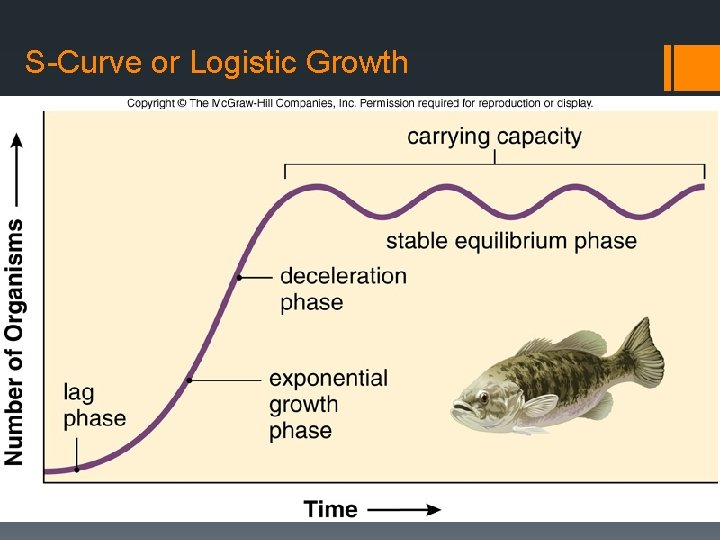
S-Curve or Logistic Growth 9
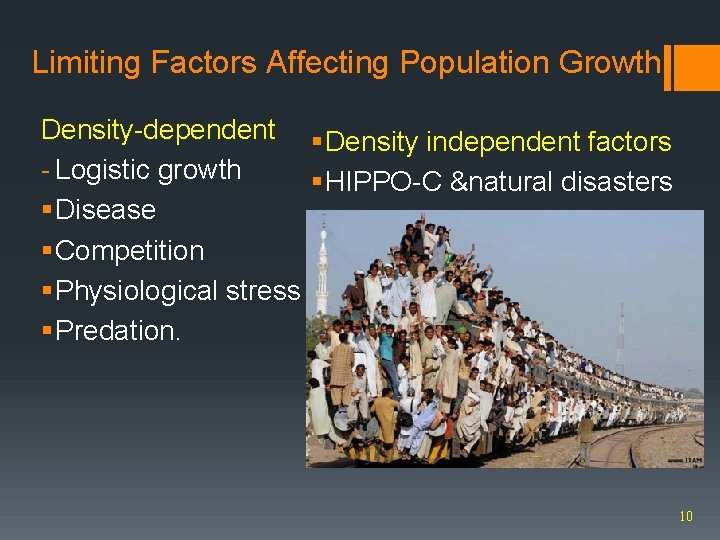
Limiting Factors Affecting Population Growth Density-dependent § Density independent factors - Logistic growth § HIPPO-C &natural disasters § Disease § Competition § Physiological stress § Predation. 10
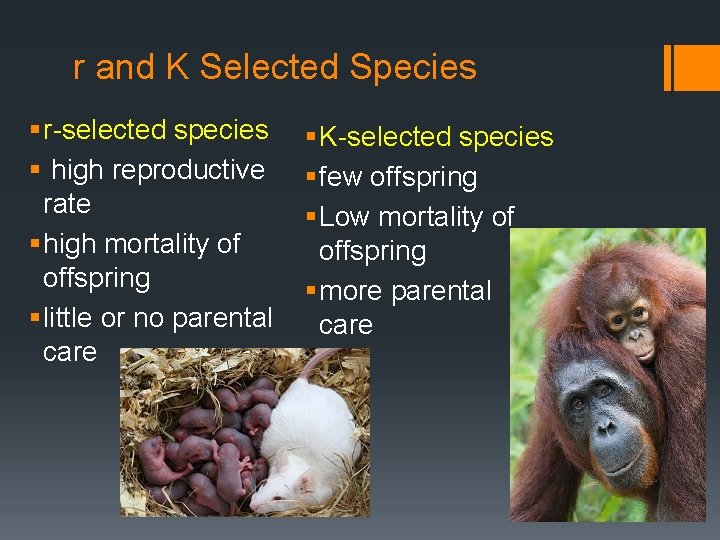
r and K Selected Species § r-selected species § high reproductive rate § high mortality of offspring § little or no parental care § K-selected species § few offspring § Low mortality of offspring § more parental care 11
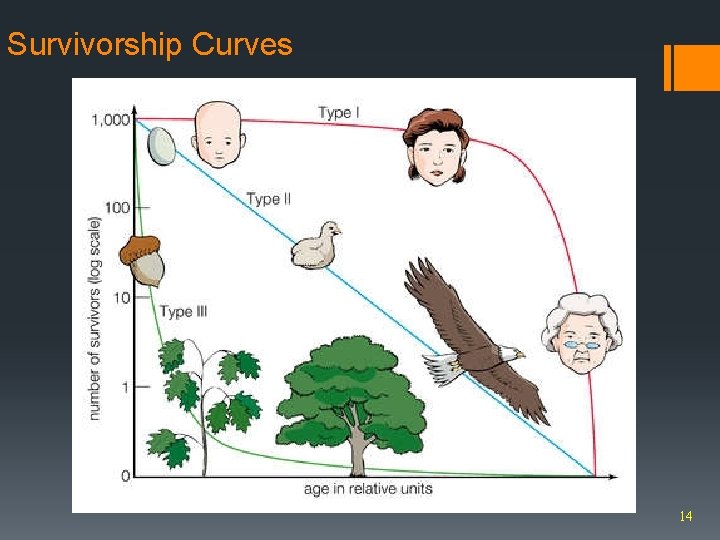
Life Span Vary by Species § Maximum Life span - the longest period of life reached by a given type of organism § Bristlecone pines can live up to 4, 600 years. § Humans may live up to 120 years. § Microbes may live only a few hours. § Differences in relative longevity among species are shown as survivorship curves. 12
Survivorship Curves Vary by Species There are three general patterns - types: 1. Full physiological life span if organism survives childhood – humans, elephants, and bears 2. Probability of death unrelated to age - squirrels, gulls, and mice 3. Mortality peaks early in life - trees and some reptiles 13
Survivorship Curves 14
THE END 15
- Slides: 15