
Population Dynamics Populations are shaped by interactions between

Population Dynamics Populations are shaped by interactions between organisms and the environment
3. 1 Populations have many characteristics. Populations go through three stages. • Population dynamics - study of why populations change and what causes them to change. • Populations go through stages of growth, stability, and decline and follow two patterns of growth: rapid growth and gradual growth. The maximum number of individuals an area can support is its carrying capacity.
Four characteristics define a population. 1. Population size is the number of individuals in a population at a given time. Population sizes vary from one habitat to another and within single habitats. – Examples: mosquitos, flowering plants
2. Population density is a measure of the number of individuals in a certain space at a particular time. Population densities may vary over a population range. – Low densities – few individuals in an area • Example – wolves or herons – High densities – many individuals in an area • Example – bees or mice
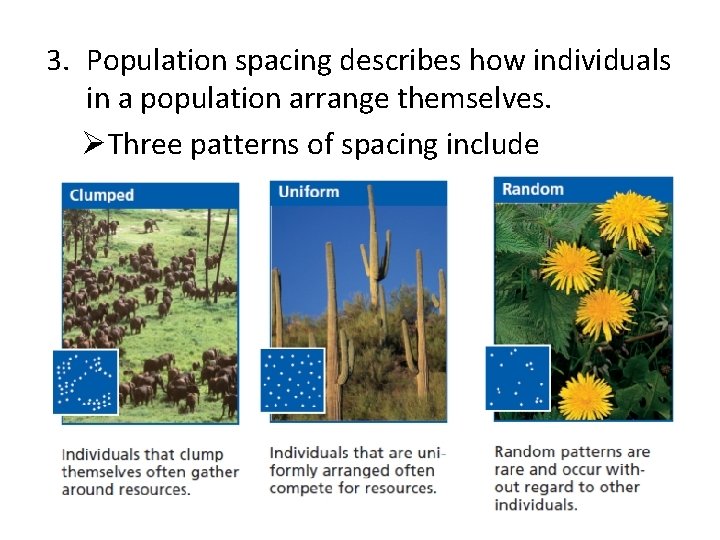
3. Population spacing describes how individuals in a population arrange themselves. ØThree patterns of spacing include
4. Age structure divide a population into groups based on age: – Pre-reproductive – not yet able to reproduce – Reproductive – capable of reproducing – post-reproductive – no longer reproduce
Scientists can predict population change. • Scientists use the four factors of a population to describe a population and predict how it may change. • May change in response to surroundings
3. 2 Populations respond to pressures Population growth is limited. • Birth and immigration lead to population growth. – Immigration – movement into a population • Death and emigration lead to population decline – Emigration – movement out of a population Population change = (birth + immigration)-(death + emigration)
• Limiting factors prevent the continued growth of a population in an ecosystem. – May be • Abiotic – air, light, and water • Biotic – other living organisms
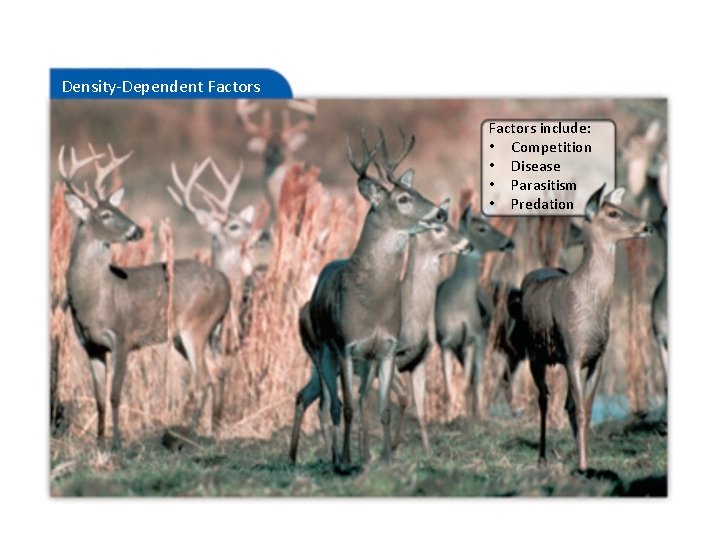
Density-Dependent Factors include: • Competition • Disease • Parasitism • Predation
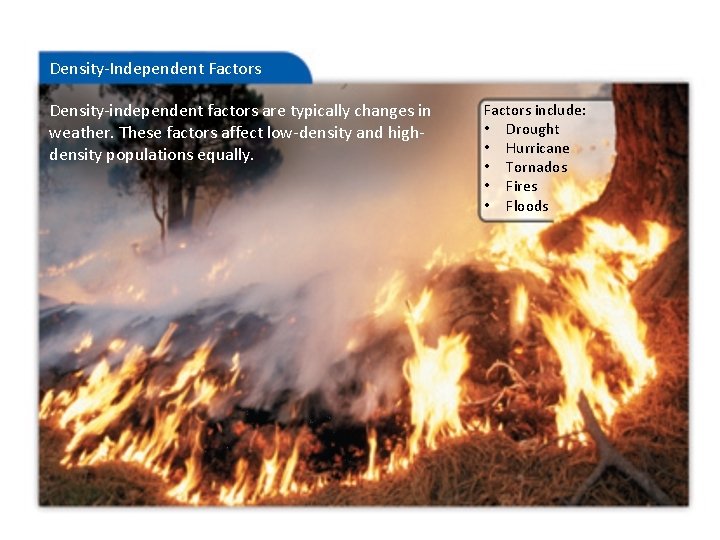
Density-Independent Factors Density-independent factors are typically changes in weather. These factors affect low-density and highdensity populations equally. Factors include: • Drought • Hurricane • Tornados • Fires • Floods
Populations have distinct reproductive strategies. • There are two main strategies but many species may fit somewhere in between • Opportunists have adaptations that allow them to reproduce rapidly if their populations fall below carrying capacity. – Characteristics are: • Short life span • Large quantity of offspring – Example: pine trees, or algae
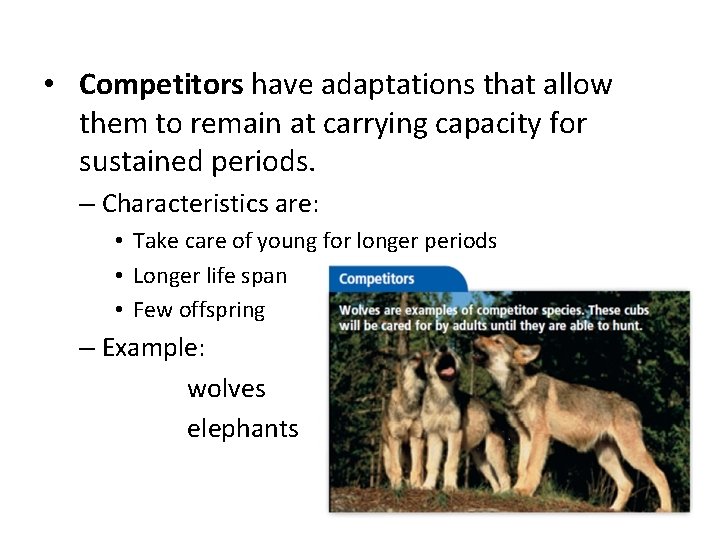
• Competitors have adaptations that allow them to remain at carrying capacity for sustained periods. – Characteristics are: • Take care of young for longer periods • Longer life span • Few offspring – Example: wolves elephants
3. 3 Human populations have unique responses to change Human populations differ from populations of other species. • Humans are able to shape their environment through habitat expansion and technology. • Two key factors that have increased Earth’s carrying capacity for humans are – Habitat expansion – technology
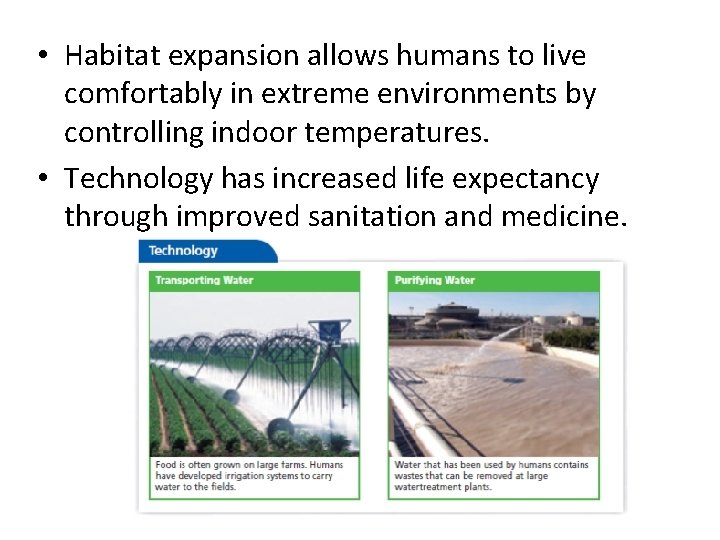
• Habitat expansion allows humans to live comfortably in extreme environments by controlling indoor temperatures. • Technology has increased life expectancy through improved sanitation and medicine.
Human populations are growing. • Human population has increased rapidly in the past 300 years due to – availability of resources – lack of predation – survival of offspring to reproductive age.

• Population projections forecast how a population will change based on present size and age structure. • Other factors, such as life expectancy, health, and the age of individuals that are having children also affect the growth of a population.
Human population growth affects the environment. • As the human population grows, it has contributed to the decline and extinction of other populations through – Introduction of new species • upset the balance of nature in that environment by competing with native species for food and space.
– Pollution • addition of harmful substances to the environment such as chemical dumping, pesticides, and animal wastes. – Overfishing • depletes fish populations and may prevent them from reproducing to maintain their numbers.
- Slides: 19