
Population Dynamics Notes 8 L 3 Understand how
- Slides: 20
Population Dynamics Notes
8. L. 3 Understand how organisms interact with and respond to the biotic and abiotic components of their environment 8. L. 3. 1 Explain how factors such as food, water, shelter, and space affect populations in an ecosystem. 8. L. 3. 2 Summarize the relationships between producers, consumers and decomposers including the positive and negative consequences of such interactions including – – Coexistence and cooperation Competition (predator/prey) Parasitism Mutualism 8. 3. 3 Explain how the flow of energy within food webs is interconnected with the cycling of matter (including water, nitrogen, carbon dioxide, and oxygen)
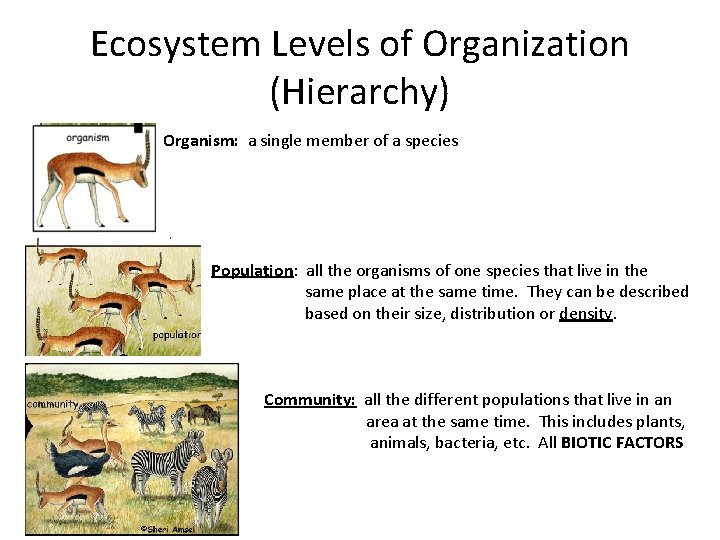
Ecosystem Levels of Organization (Hierarchy) Organism: a single member of a species Population: all the organisms of one species that live in the same place at the same time. They can be described based on their size, distribution or density. Community: all the different populations that live in an area at the same time. This includes plants, animals, bacteria, etc. All BIOTIC FACTORS
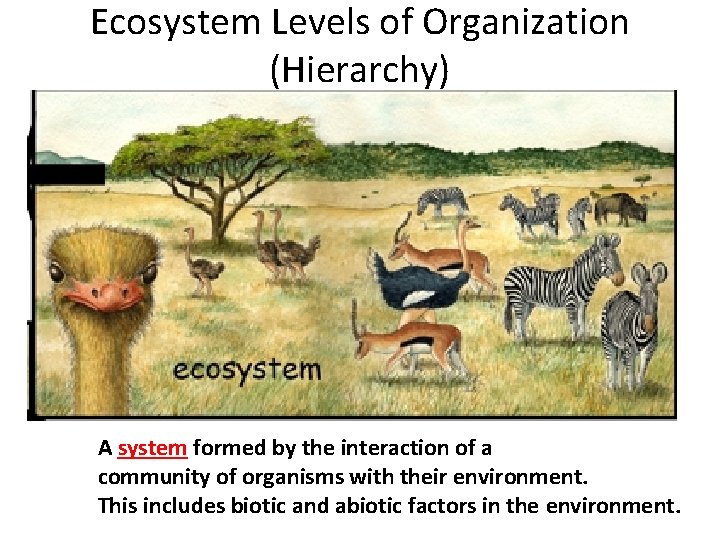
Ecosystem Levels of Organization (Hierarchy) A system formed by the interaction of a community of organisms with their environment. This includes biotic and abiotic factors in the environment.
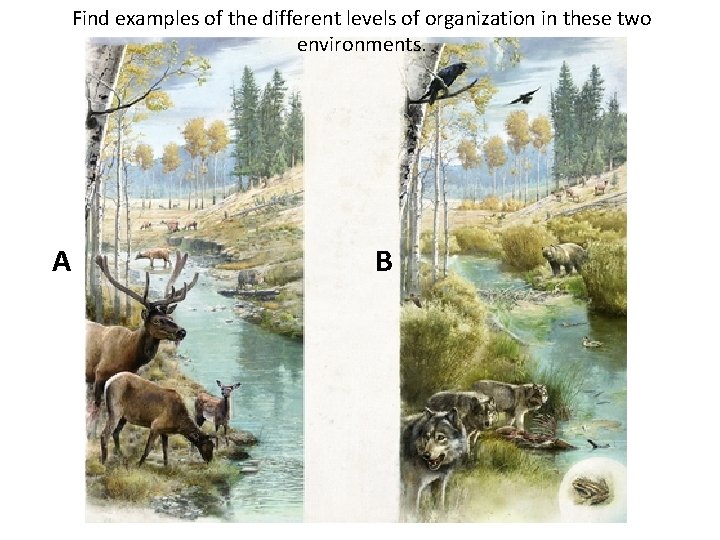
Find examples of the different levels of organization in these two environments. A B
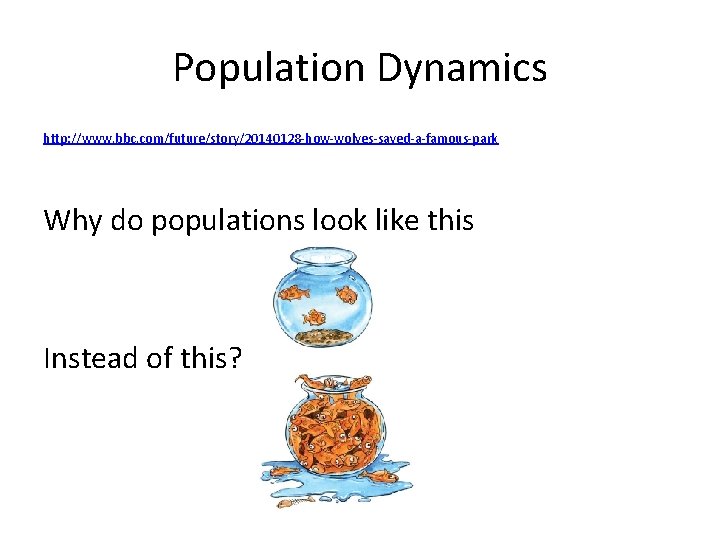
Population Dynamics http: //www. bbc. com/future/story/20140128 -how-wolves-saved-a-famous-park Why do populations look like this Instead of this?
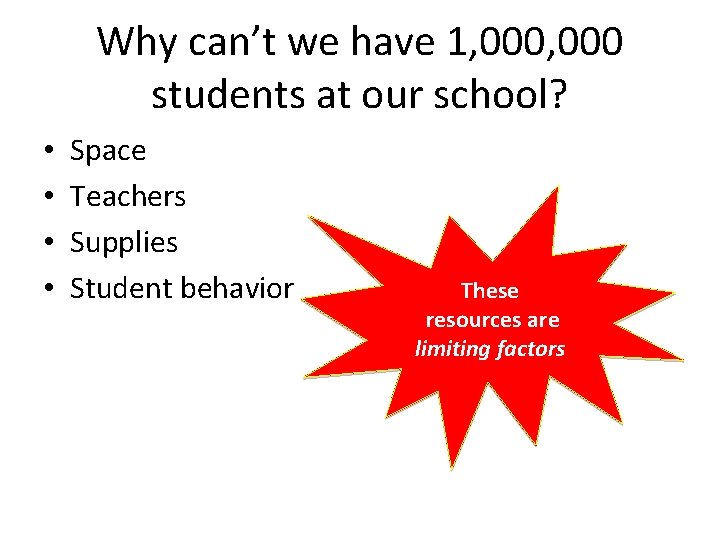
Why can’t we have 1, 000 students at our school? • • Space Teachers Supplies Student behavior These resources are limiting factors
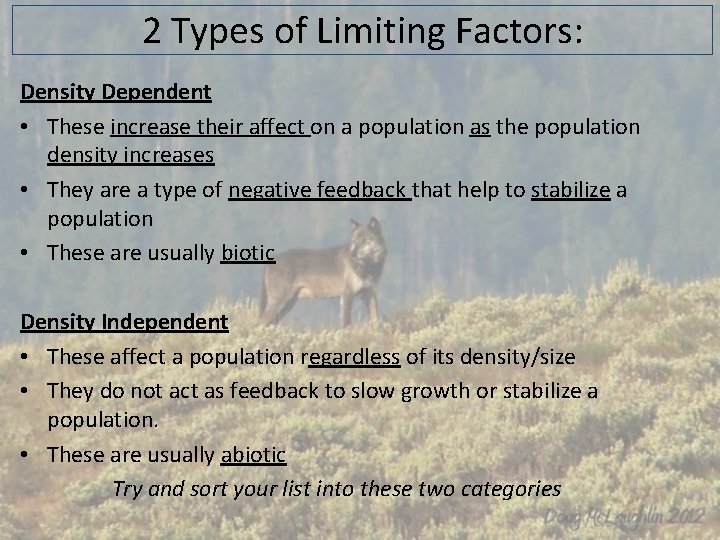
2 Types of Limiting Factors: Density Dependent • These increase their affect on a population as the population density increases • They are a type of negative feedback that help to stabilize a population • These are usually biotic Density Independent • These affect a population regardless of its density/size • They do not act as feedback to slow growth or stabilize a population. • These are usually abiotic Try and sort your list into these two categories
Make a list of some of the factors that limit populations in Yellowstone.
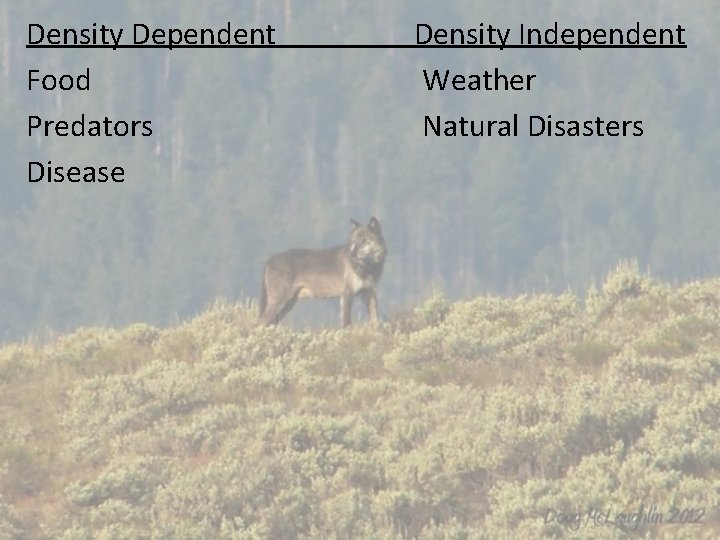
Density Dependent Food Predators Disease Density Independent Weather Natural Disasters
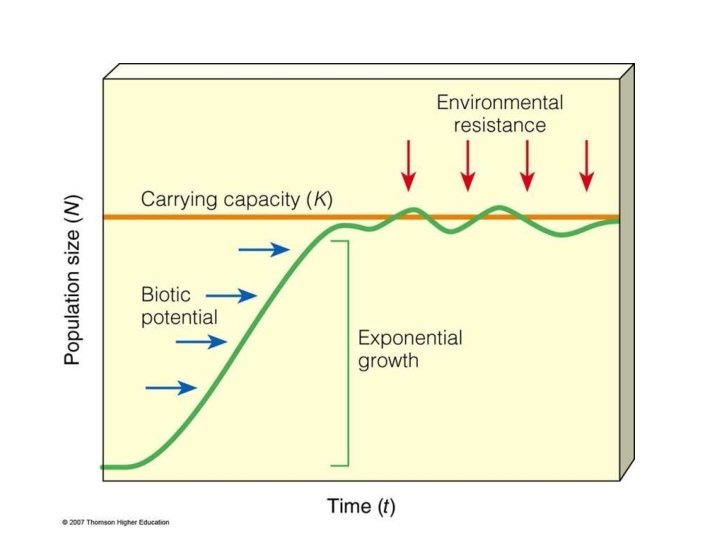
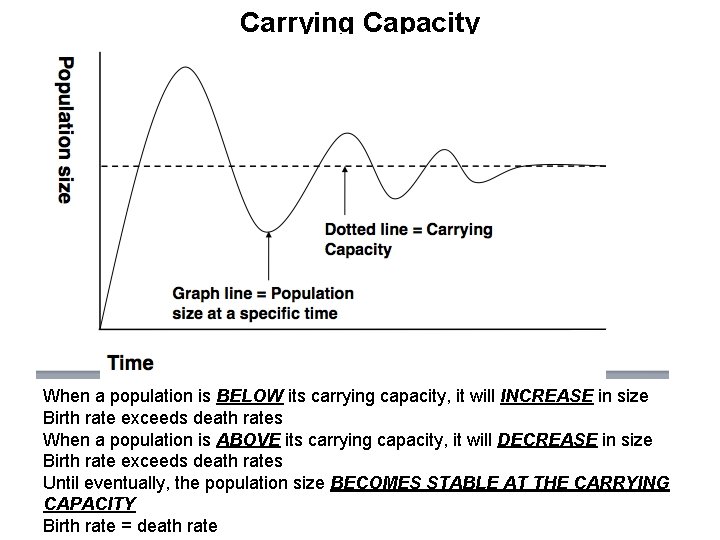
Carrying Capacity • An environment can only support as many organisms as there is available food, shelter, water and space. • Carrying capacity = maximum number of organisms that can live in an ecosystem • Limiting factors determine carrying capacity.
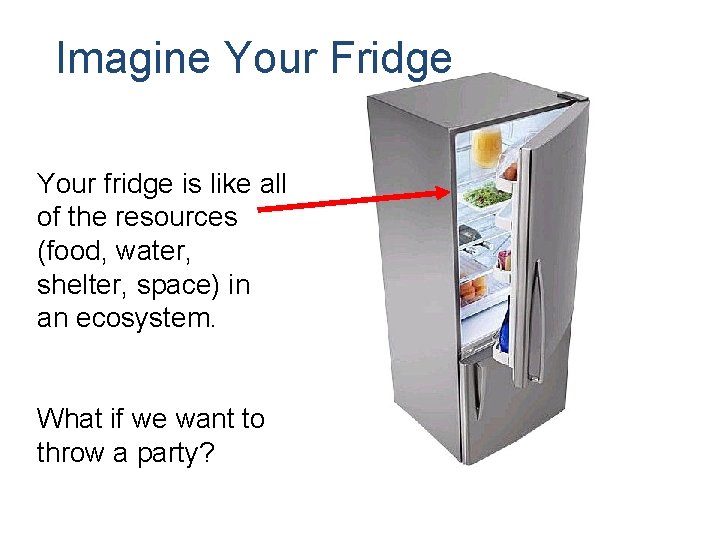
Imagine Your Fridge Your fridge is like all of the resources (food, water, shelter, space) in an ecosystem. What if we want to throw a party?
Imagine Your Fridge We can keep inviting people, as long as there’s enough food in the fridge. But with each new guest, there’s less to go around.
Imagine Your Fridge The fridge won’t replenish magically, and I don’t have the money to keep putting food in the fridge forever. So too many guests means that… So too many animals means that… Someone goes hungry… Not enough food/water/free space… And leaves the party. And organisms die.
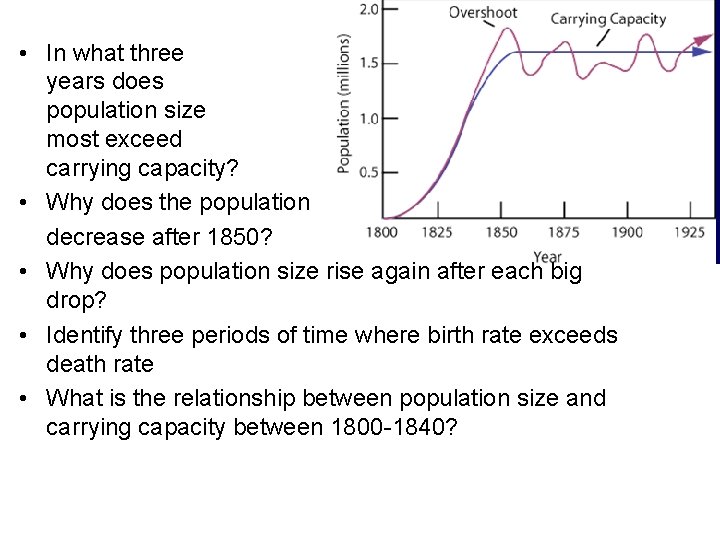
Carrying Capacity When a population is BELOW its carrying capacity, it will INCREASE in size Birth rate exceeds death rates When a population is ABOVE its carrying capacity, it will DECREASE in size Birth rate exceeds death rates Until eventually, the population size BECOMES STABLE AT THE CARRYING CAPACITY Birth rate = death rate
• In what three years does population size most exceed carrying capacity? • Why does the population decrease after 1850? • Why does population size rise again after each big drop? • Identify three periods of time where birth rate exceeds death rate • What is the relationship between population size and carrying capacity between 1800 -1840?
Within an ecosystem, each species has a… • Habitat: the place where an organism lives. It supplies all the biotic and abiotic factors the organism needs to survive. • Niche: an organism’s role/”job. ” what it eats, how it eats and what it eats… If the niche of one organism overlaps the niche of another organism, you have competition! • Habitat and Niche Video Starring Reginald: http: //www. youtube. com/watch? v=2 L 6 N 2 di. E 8 jc
• What is Reginald’s habitat? • What is Reginald’s niche?
Out CHOOSE ONE, Ticket PART CHOOSE ONE, PART A: B: • Describe the habitat and niche of the Yellowstone Park wolves. • Describe the habitat and niche of the Yellowstone Park Elk (remember, habitat is NOT A SPECIFIC PLACE) • Bears eat salmon. If a disease causes massive amounts of salmon to die, what will likely happen to the bears? Explain why. • If a population has exceeded its carrying capacity, what will happen to it? Explain why.