
POPULATION DYNAMICS LEVELS OF ORGANIZATION one smallest group
- Slides: 16
POPULATION DYNAMICS
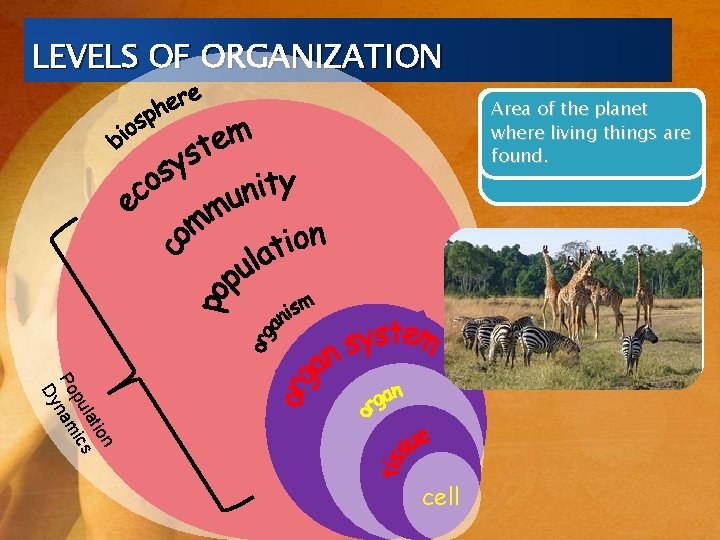
LEVELS OF ORGANIZATION one smallest group individual unit organs of living all Area organisms ofof similar different planet of cells the group ofthe living and nonliving all interacting things working thing together organized kinds same populations where of living tissues to living in things work anin are thingskind interacting together working one ecosystem found. area together within a certain area ion lat pu ics Po nam Dy cell
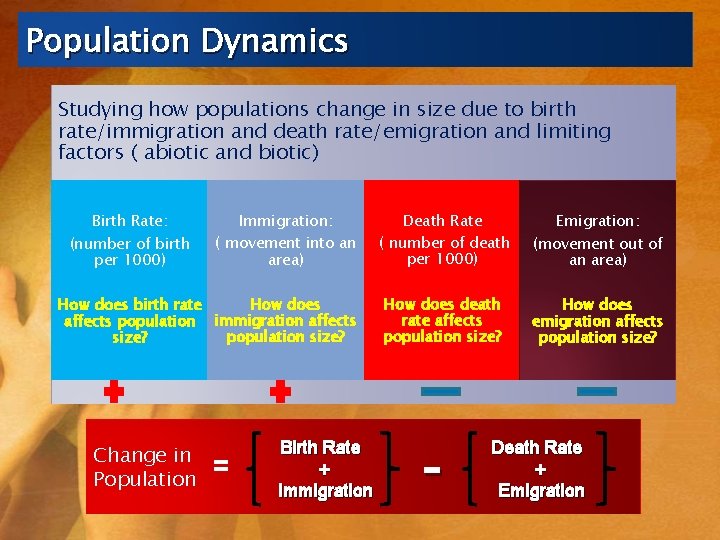
Population Dynamics Studying how populations change in size due to birth rate/immigration and death rate/emigration and limiting factors ( abiotic and biotic) Birth Rate: (number of birth per 1000) Immigration: ( movement into an area) How does birth rate affects population immigration affects population size? Change in Population = Birth Rate + Immigration Death Rate ( number of death per 1000) Emigration: (movement out of an area) How does death rate affects population size? How does emigration affects population size? - Death Rate + Emigration
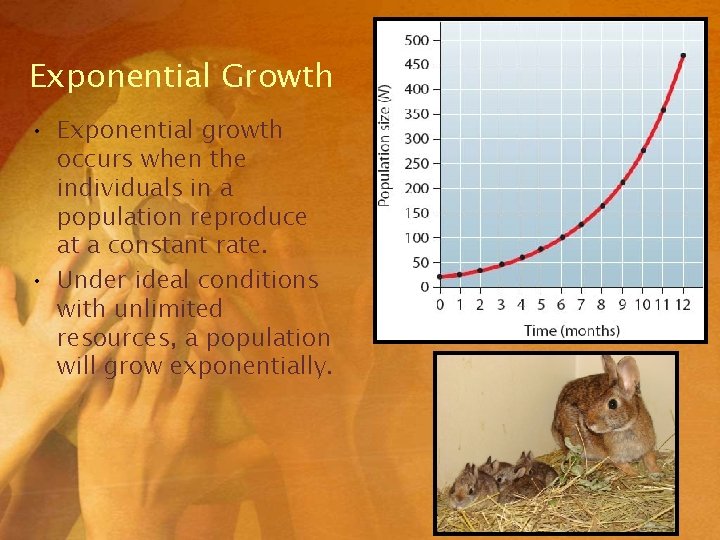
Exponential Growth • Exponential growth occurs when the individuals in a population reproduce at a constant rate. • Under ideal conditions with unlimited resources, a population will grow exponentially.
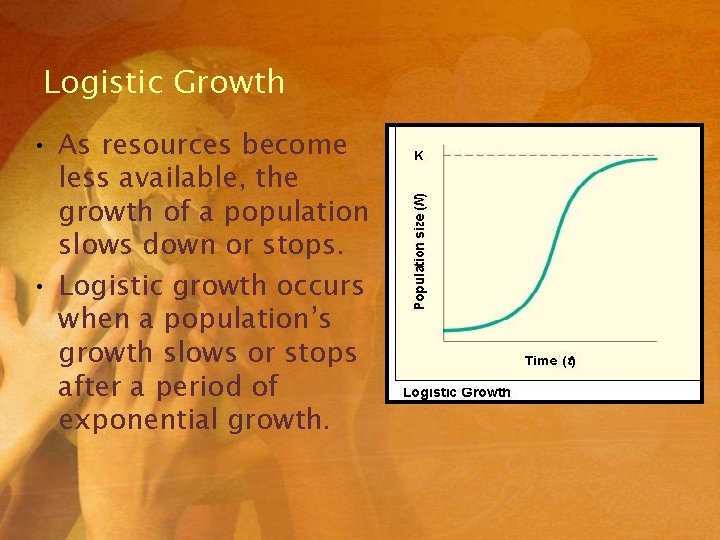
Logistic Growth • As resources become less available, the growth of a population slows down or stops. • Logistic growth occurs when a population’s growth slows or stops after a period of exponential growth.
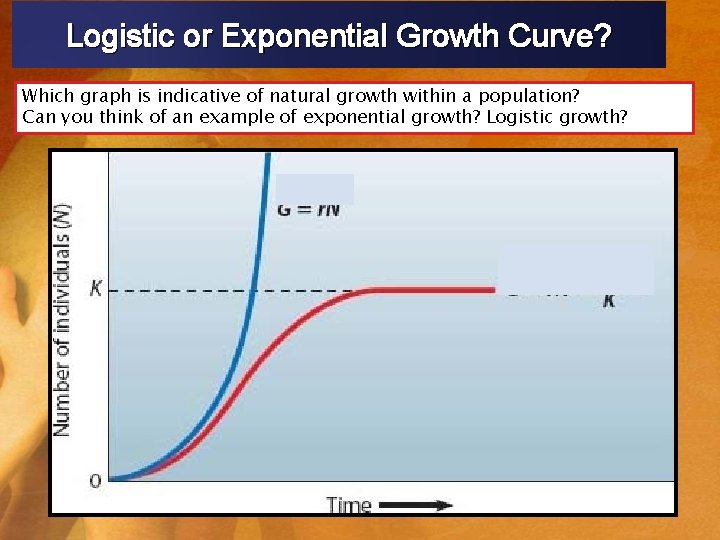
Logistic or Exponential Growth Curve? Which graph is indicative of natural growth within a population? Can you think of an example of exponential growth? Logistic growth?
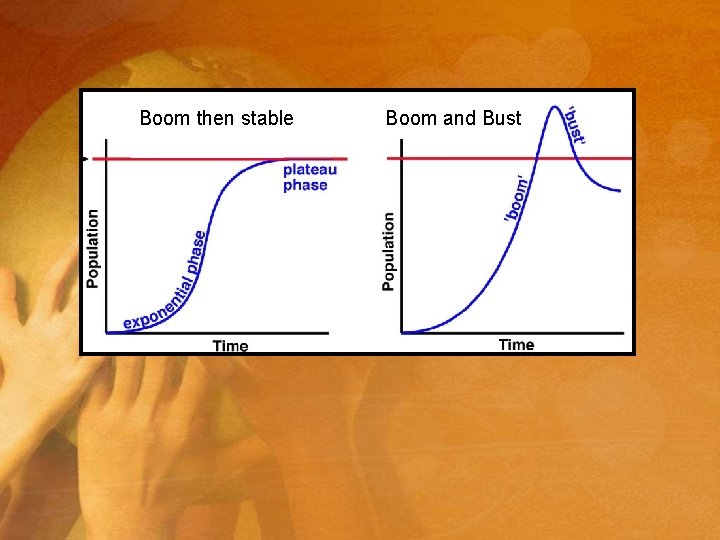
Boom then stable Boom and Bust
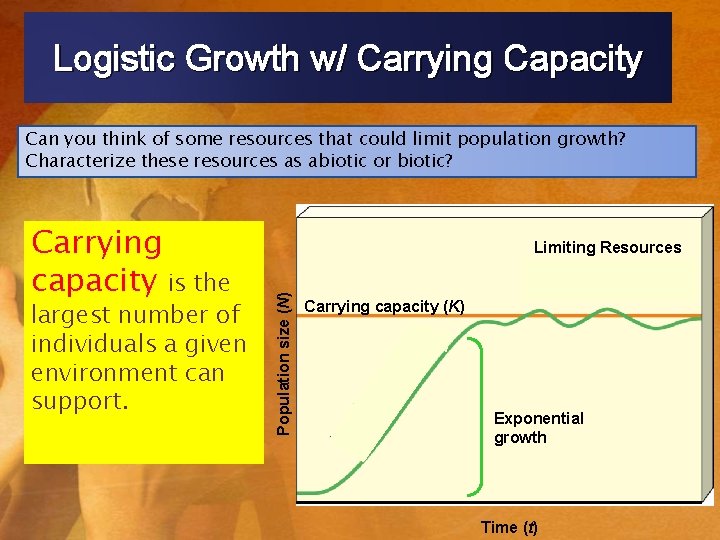
Logistic Growth w/ Carrying Capacity Can you think of some resources that could limit population growth? Characterize these resources as abiotic or biotic? largest number of individuals a given environment can support. Limiting Resources Population size (N) Carrying capacity is the Carrying capacity (K) Exponential growth Time (t)
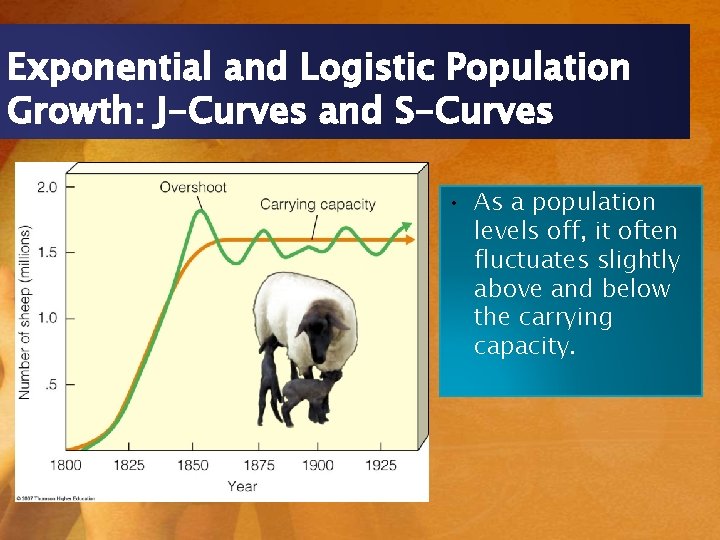
Exponential and Logistic Population Growth: J-Curves and S-Curves • As a population levels off, it often fluctuates slightly above and below the carrying capacity.
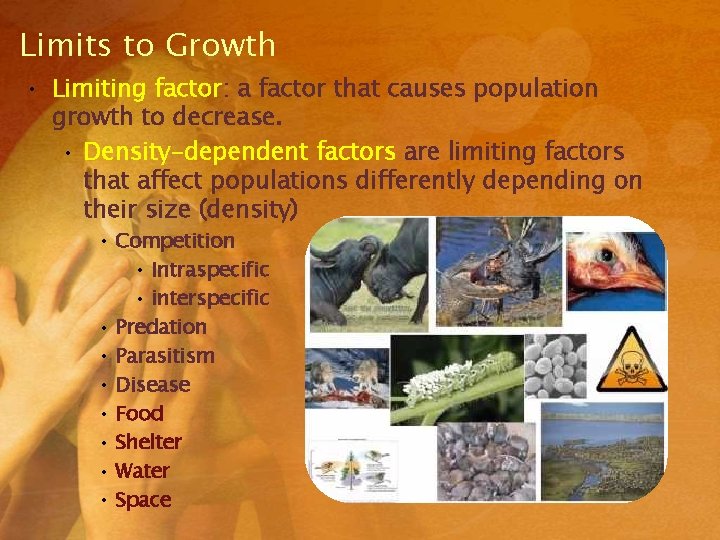
Limits to Growth • Limiting factor: a factor that causes population growth to decrease. • Density-dependent factors are limiting factors that affect populations differently depending on their size (density) • Competition • Intraspecific • interspecific • Predation • Parasitism • Disease • Food • Shelter • Water • Space
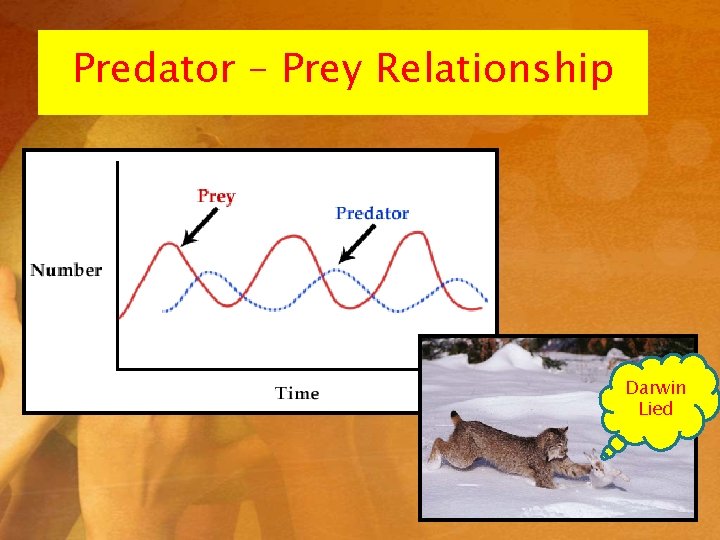
Predator – Prey Relationship Darwin Lied
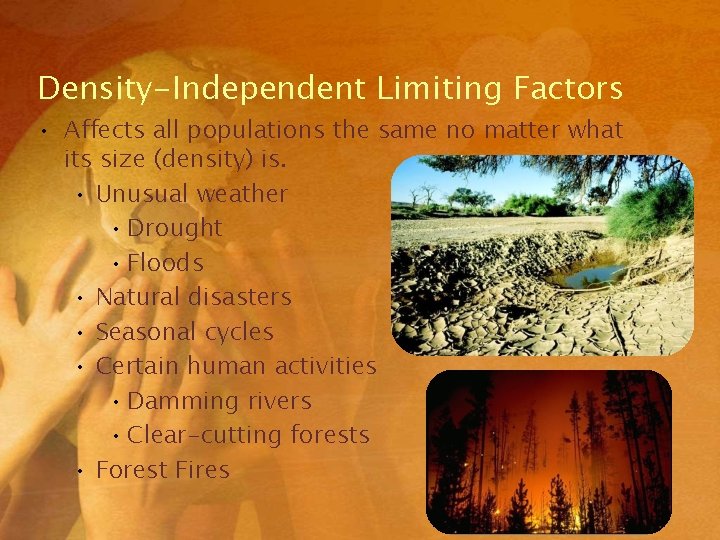
Density-Independent Limiting Factors • Affects all populations the same no matter what its size (density) is. • Unusual weather • Drought • Floods • Natural disasters • Seasonal cycles • Certain human activities • Damming rivers • Clear-cutting forests • Forest Fires
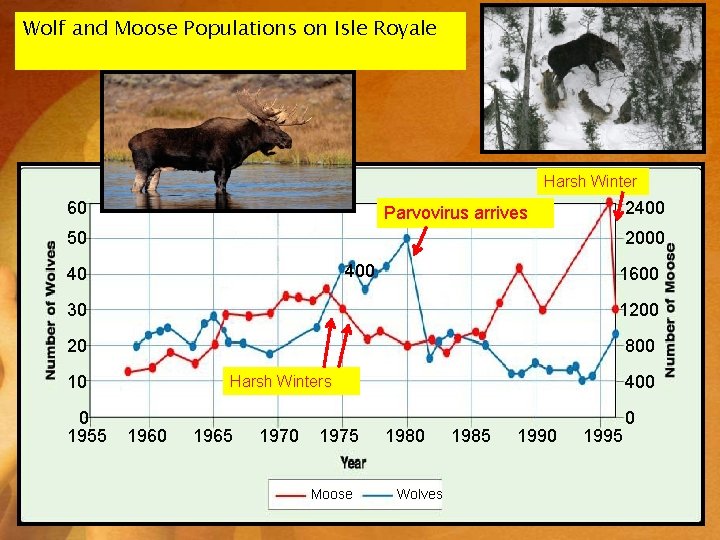
Wolf and Moose Populations on Isle Royale Harsh Winter 60 2400 Parvovirus arrives 50 2000 40 1600 30 1200 20 800 10 0 1955 400 Harsh Winters 1960 1965 1970 1975 Moose 1980 Wolves 1985 1990 1995 0
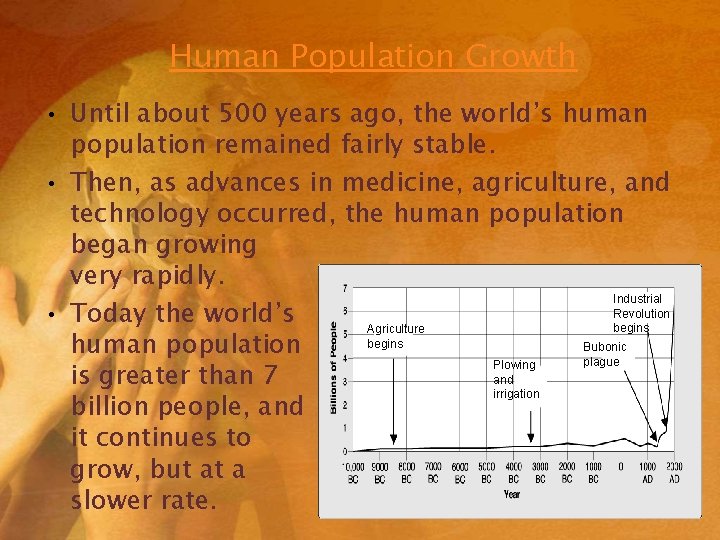
Human Population Growth • Until about 500 years ago, the world’s human population remained fairly stable. • Then, as advances in medicine, agriculture, and technology occurred, the human population began growing very rapidly. Industrial Revolution • Today the world’s Today, the begins Agriculture begins Bubonic human population plague Plowing and is greater than 7 irrigation billion people, and it continues to grow, but at a slower rate.
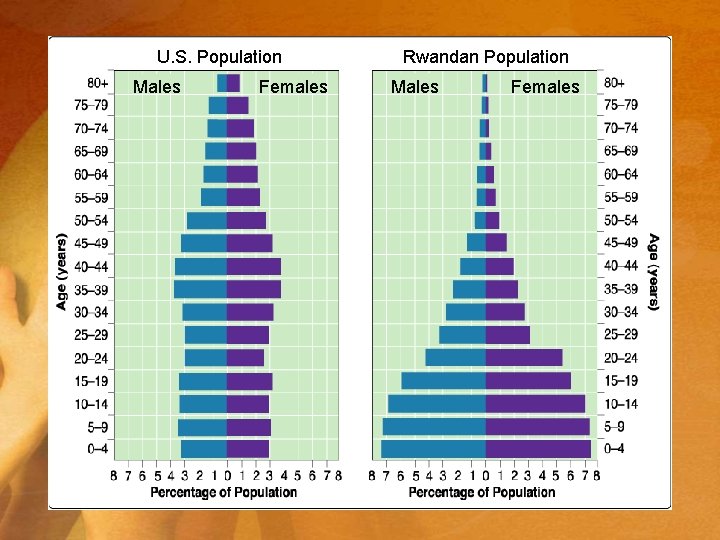
Age Structure • In part, population growth depends on how many people of different ages make up a given population. • Age-structure diagrams show the population of a country broken down by gender and age group. • Birth rates, death rates, and the age structure of a population help predict why some countries have high growth rates while other countries grow more slowly.
U. S. Population Males Females Rwandan Population Males Females