
Population Dynamics Chapter 35 Population Dynamics Key concepts































- Slides: 139
Population Dynamics Chapter 35
Population Dynamics Key concepts include: • interactions within and among populations including carrying capacities, limiting factors, and growth curves;
n Population: all the individuals of a species that live together in an area
Three Key Features of Populations n Size n Density n Dispersion n ¨ (clumped, even/uniform, random)
Three Key Features of Populations n 1. Size: number of individuals in an area
Estimating Population n Mark – Recapture – used to estimate animal population
Mark Recapture n Capture an initial sample, count and mark them n Release the marked individuals n Capture and count another sample n count marked individuals recaptured
Formula (1 st sample x 2 nd sample) Number recaptured
#22(tracking snakes), 23(mark recapture) n http: //www. youtube. com/watch? v=5 DR 50 I gv. E 7 g
Example: Mark - Recapture n 100 ants are captured, marked and released. 90 ants are captured in the 2 nd sample. 8 of the ants in the 2 nd sample were marked. n 100 x 90 = 9000= 1125 ants 8 8
Sample Plot – used to estimate plant populations
Sample Plot n. Randomly chosen plots are selected and populations counted and averaged. n. The average is used to estimate the total population
Example 8 8+4+6+3+2 = 23 23 = 4. 6 5 4. 6 x 100 = 460 4 6 2 3
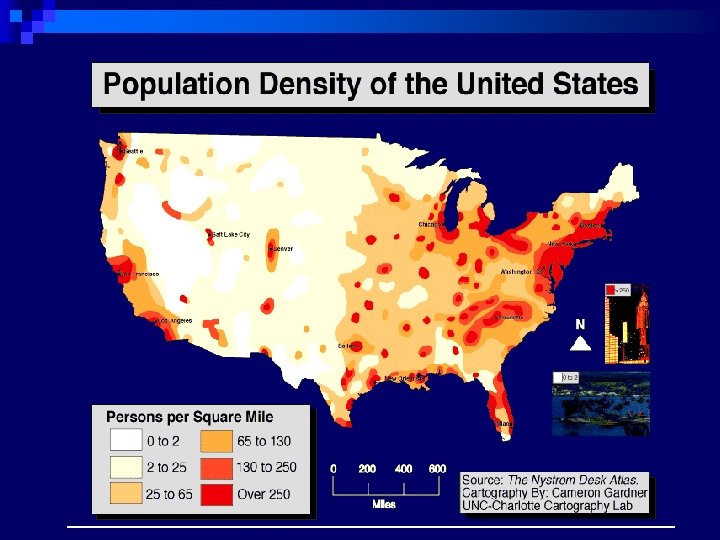
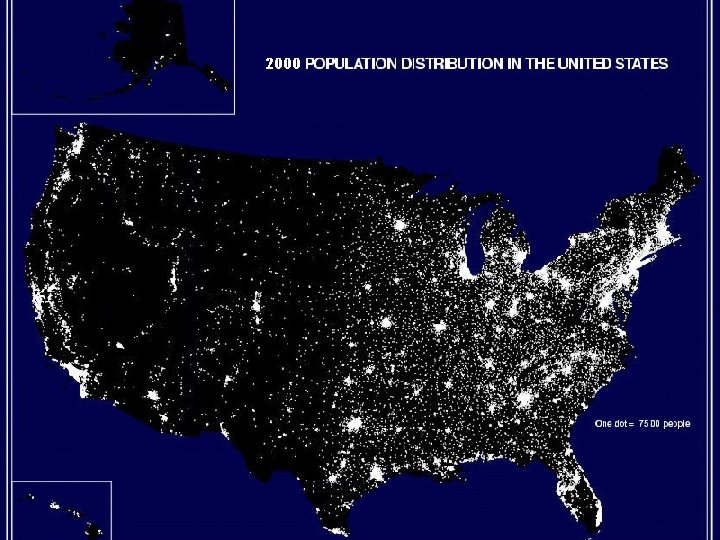
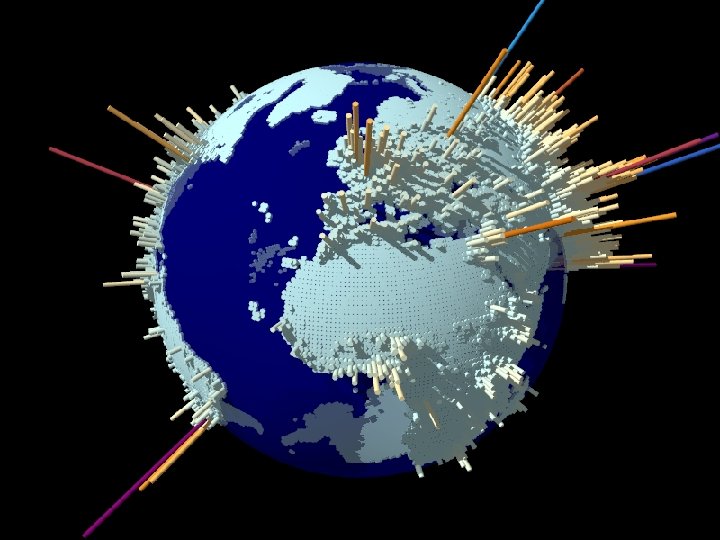
Three Key Features of Populations 2. Density: measurement of population per unit area or unit volume n Formula: Dp= N S n n Pop. Density = # of individuals ÷ unit of space
#24(human popul growth CC) n http: //www. youtube. com/watch? v=E 8 dk. W QVFAo. A
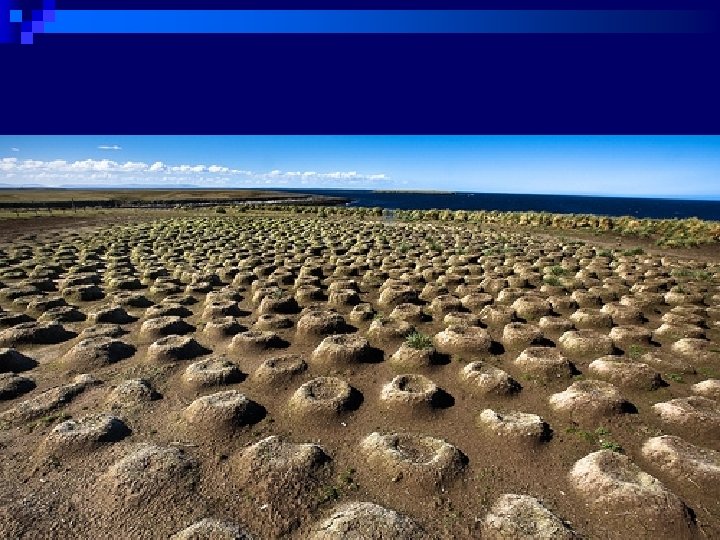
Three Key Features of Populations n 3. Dispersion: describes their spacing relative to each other clumped ¨ even or uniform ¨ random ¨
clumped even (uniform) random
Population Dispersion
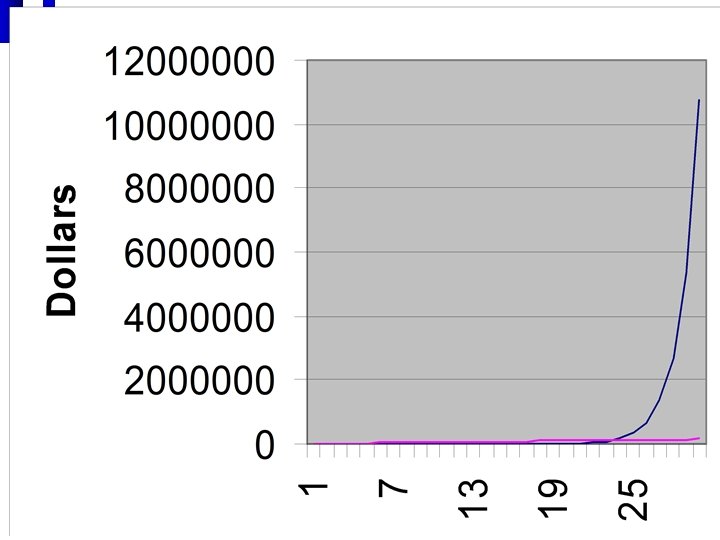
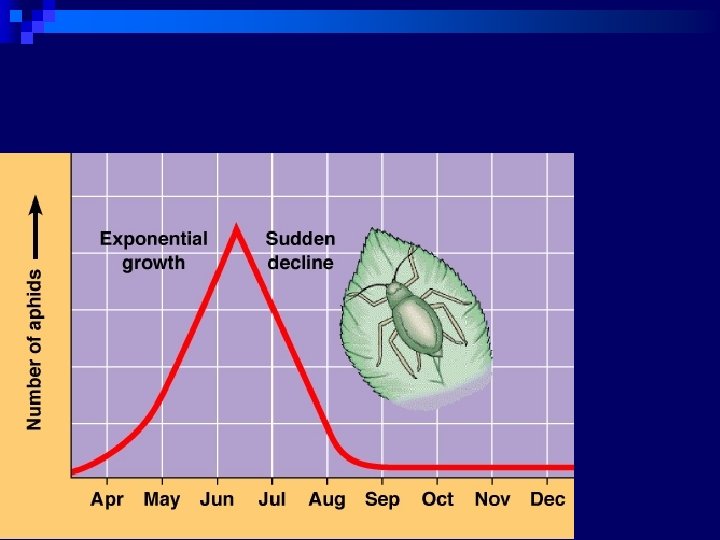
Exponential Growth ideal, unregulated population growth n Produces a J shaped curve n
#25(CC ch 3 exponential growth) n http: //www. youtube. com/watch? v=Cv. VFTJ MUEj 4
http: //usrarecurrency. com/Web. Pg. Fl/C 00015446 A/1934$1000 FRNSn. C 00015446 A. jpg
After 4 days, $ 0. 16 vs. $ 20, 000
After 8 days, $ 2. 55 vs. $ 40, 000
n 9 2. 56 5, 000 n 10 5. 12 5, 000 n 11 10. 24 5, 000 n 12 20. 48 5, 000 n Total $40. 95 $60, 000 n 13 40. 96 5, 000 n 14 81. 92 5, 000 n 15 163. 84 5, 000 n 16 327. 68 5, 000 n Total $655. 35$80, 000
n 17 655. 36 n 18 1310. 72 n 19 2621. 44 n 20 5242. 88 n Total $10, 485. 75 $100, 000 5, 000
n 21 10, 485. 76 n 22 20, 971. 52 n 23 41, 943. 04 n 24 83, 886. 08 n Total $167, 772. 15 5, 000 $120, 000
25 n 26 n 27 n 28 n 29 n 30 n Total n 167, 772. 16 335, 544. 32 671, 088. 64 1, 342, 177. 28 2, 684, 354. 56 5, 368, 709. 12 $10, 737, 418. 23 5, 000 5, 000 $150, 000
Factors that affect populations Limiting factor- any biotic or abiotic factor that restricts the existence of organisms in a specific environment. ¨EX. - Amount of water Amount of food Temperature
Factors that limit populations Density-dependent factors- Biotic factors in the environment that have an increasing effect as population size increases Ex. disease competition (food supply) parasites predators
Factors that affect density Density-independent factors. Abiotic factors in the environment that affect populations regardless of their density Ex. temperature fire habitat destruction drought
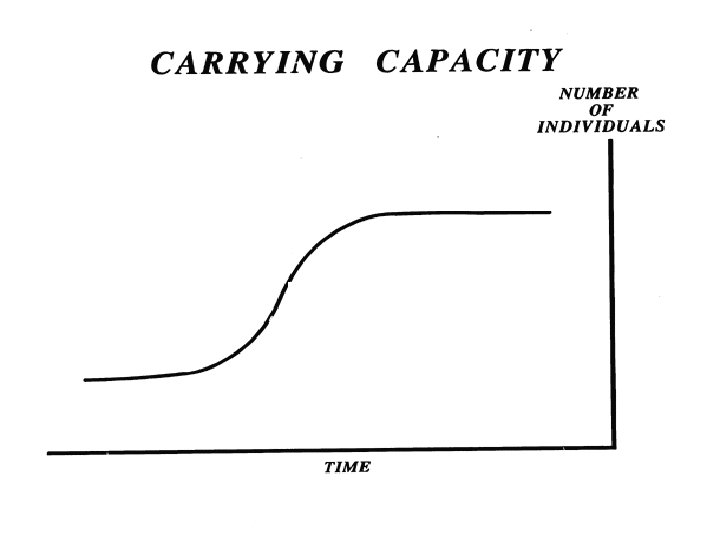
Carrying Capacitythe maximum population size that can be supported by the available resources n There can only be as many organisms as the environmental resources can support n
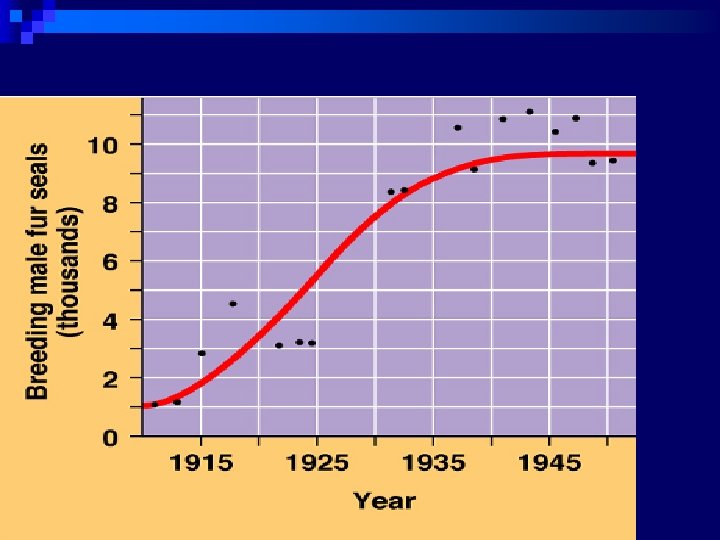
Logistic Growth Ideal growth that is slowed by limiting factors as the population increases n Produces an S shaped curve n
Carrying Capacity Nu m J-shaped curve (exponential growth) Carrying Capacity (k) b S-shaped curve (logistic growth) e r Time
Boom and Bust Cycles n Some populations fluctuate with regularity
Life History n The series of events from birth, through reproduction to death
2 Life History Patterns n 1. § § § R Strategists short life span small body size reproduce quickly have many offspring little parental care Ex: cockroaches, weeds, bacteria
R strategist These organisms produce as many offspring as possible. n Invest little in each offspring. n In good conditions, populations explode n Good strategy for unpredictable environments n
2 Life History Patterns 2. K Strategists ¨ long life span ¨ large body size ¨ reproduce slowly ¨ have few young ¨ provides parental care ¨ Ex: humans, elephants
K strategists These organisms produce few offspring and invest resources, time and their own safety to ensure survival of offspring n Good strategy for stability n K= carrying capacity n
Demography n the statistical study of populations, make predictions about how a population will change
Movement of Populations 1. Immigration- movement of individuals into a population 2. Emigration- movement of individuals out of a population
Factors That Affect Future Population Growth Immigration Natality + + Population Emigration - Mortality
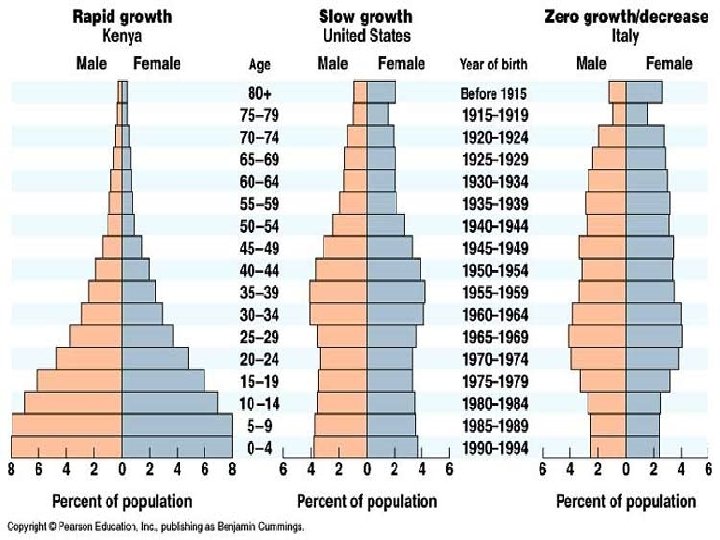
Key Features of Populations Growth Rate: Birth Rate (natality) Death Rate (mortality) n How many individuals are born vs. how many die n Birth rate (b) − death rate (d) = rate of natural increase (r). n
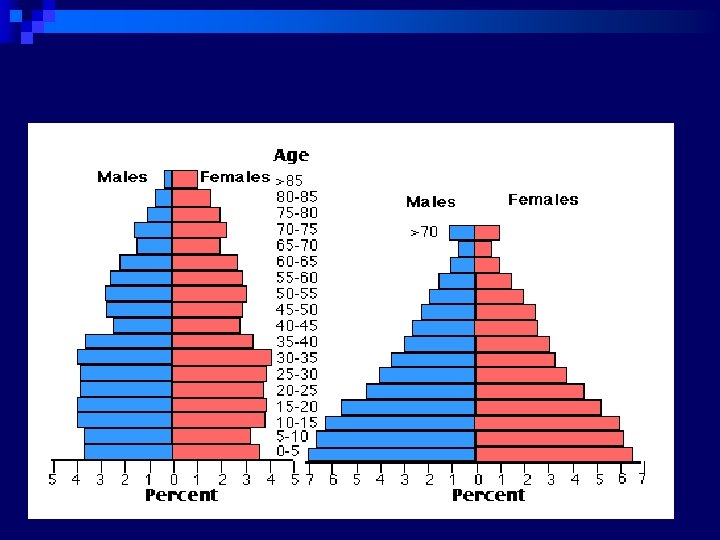
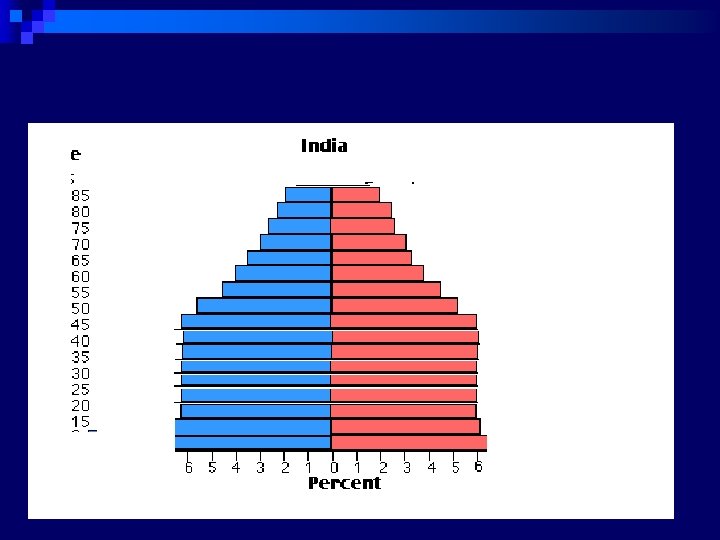
POSTREPRODUCTIVE PREREPRODUCTIVE
Population of a Stable Country
Demographic Transition n The movement from high birth and high death rate to low death rate then lower birth rate
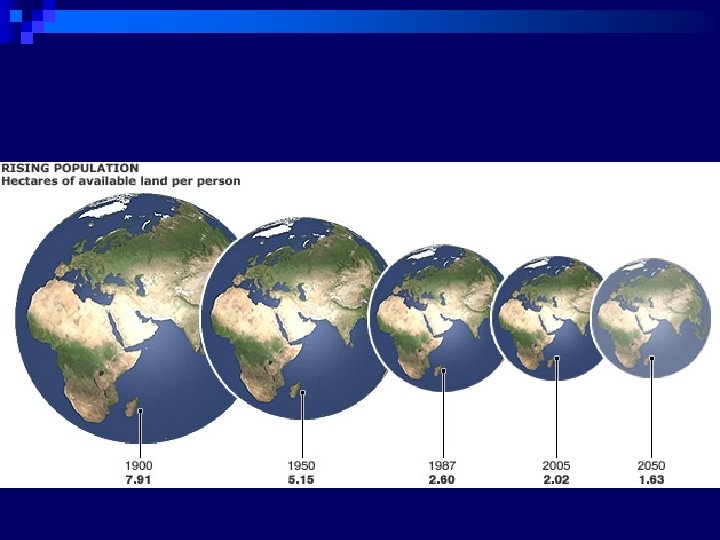
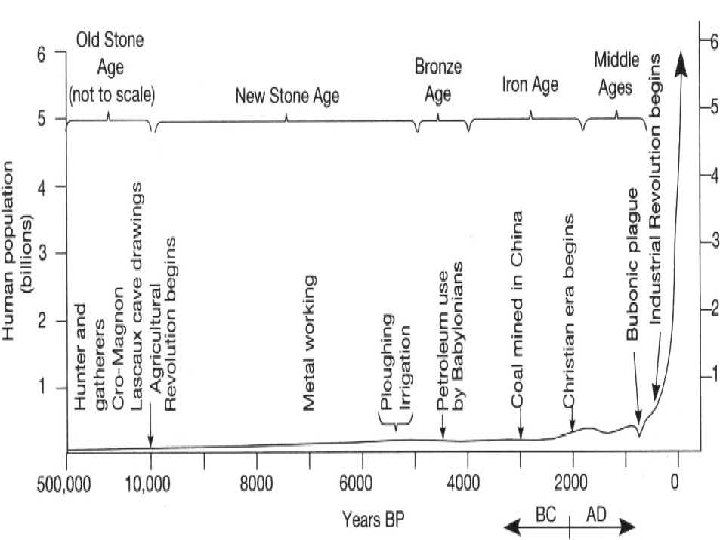
Human Population Growth
Human Population Growth
Video: #10(Secrets of the dead) – #13(Secrets of the dead 4 of 4)
Time unit Year Month Day Hour Births 130, 013, 274 10, 834, 440 Natural increase Deaths 73, 883, 03 56, 130, 242 4, 677, 520 2 6, 156, 919 356, 201 153, 781 202, 419 14, 842 6, 408 8, 434 Minute 247 107 141 Second 4. 1 2. 3 1. 8
Review Questions 1. Compare and Contrast R vs K Strategist
Review Questions 2. 3. 4. Tell the direction (clockwise/counter) of the global convection cells in the N. Hemi? Indicate prevailing winds caused by convection. Name the prevailing winds
Group 1
Group 2
Group 3
Group 4
Group 5
Chapter 36 Ecosystem Structure and Dynamics http: //www. youtube. com/watch? v=RBOsq m. BQBQk n #26 (Population ecology: texas mosquito CC) n
Biodiversity n The number of different species in a community
Competition n Interspecific competition – two species compete for the same resource
Niche n is how an organism makes its living, or how it uses resources ¨ What it eats ¨ Its habitat
Competitive Exclusion n When two species occupy the same niche, one is displaced
Resource partitioning n In order for two species to inhabit the same area, they divide resources
Symbiotic Relationships Symbiosis- two species living together 3 Types of 1. Commensalism 2. Parasitism 3. Mutualism
Symbiotic Relationships Commensalismone species benefits and the other is neither harmed nor helped Ex. orchids on a tree
Symbiotic Relationships Commensalismone species benefits and the other is neither harmed nor helped Ex. polar bears and cyanobacteria
Symbiotic Relationships Parasitismone species benefits (parasite) and the other is harmed (host) n Parasite-Host relationship
Symbiotic Relationships Parasitism. Ex. lampreys, leeches, fleas, ticks, tapeworm parasite-host
Symbiotic Relationships Mutualismbeneficial to both species Ex. cleaning birds and cleaner shrimp
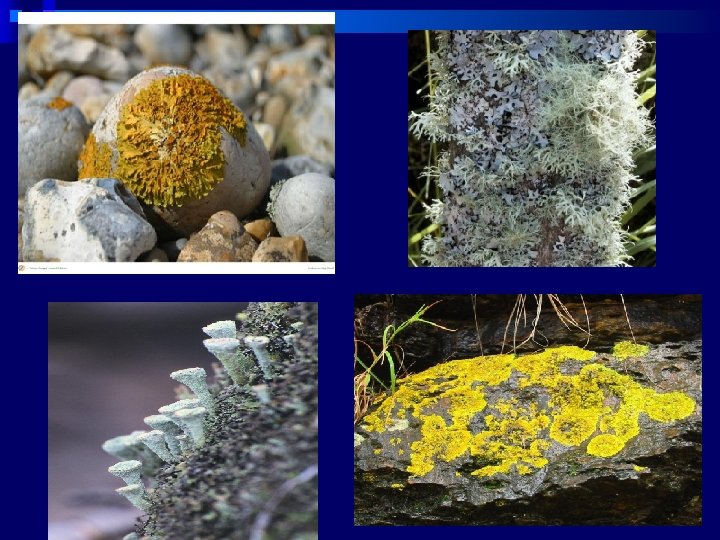
Symbiotic Relationships Mutualismbeneficial to both species Ex. lichen
Type of Species relationship harmed Commensalism Species benefits Parasitism Mutualism = 1 species Species neutral
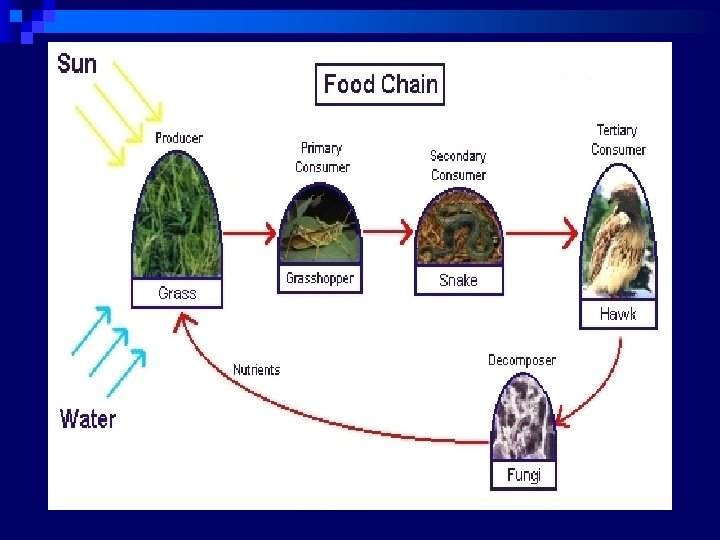
Trophic Levels n Each link in a food chain is known as a trophic level. n Trophic levels represent a feeding step in the transfer of energy and matter in an ecosystem.
Herbivores – eat only producers Cows, Deer, Horses, Grasshoppers Carnivores – eat only the flesh of other animals Wolves, Tigers, Bass, Orca
Detritovores – eat only dead organisms or wastes Vultures, Carrion Beetles Omnivores – eat both animals and plants Bears, Pigs, Humans
#27(amazing anim defense), #28(deadly animals FAK)
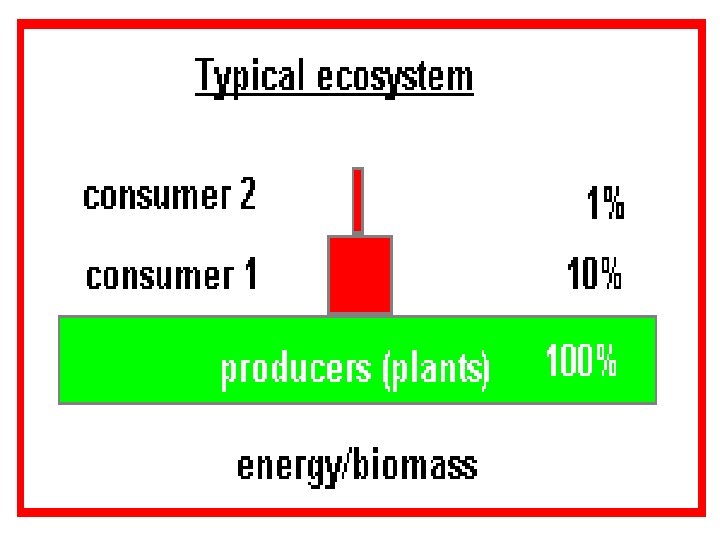
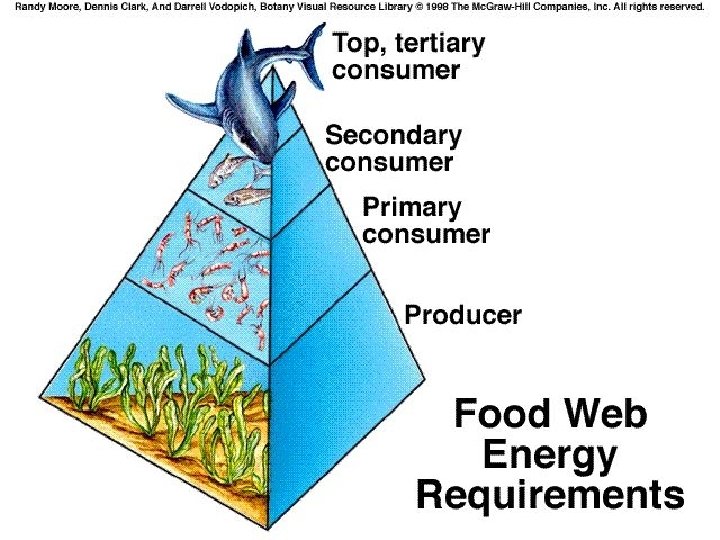
Trophic Levels Biomass- the amount of organic matter comprising a group of organisms in a habitat. n n As you move up a food chain, both available energy and biomass decrease. Energy is transferred upwards but is diminished with each transfer.
Energy Lost 90% is lost as heat 10% is passed on to the next level
Trophic Levels E N E R G Y Tertiary consumers- top carnivores E Secondary consumerssmall carnivores Primary consumers- Herbivores Producers- Autotrophs E E
Trophic Levels Food chain- simple model that shows how matter and energy move through an ecosystem
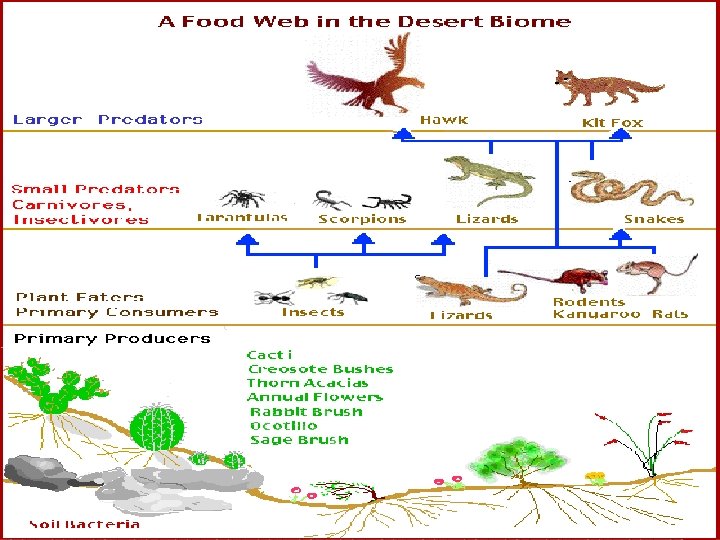
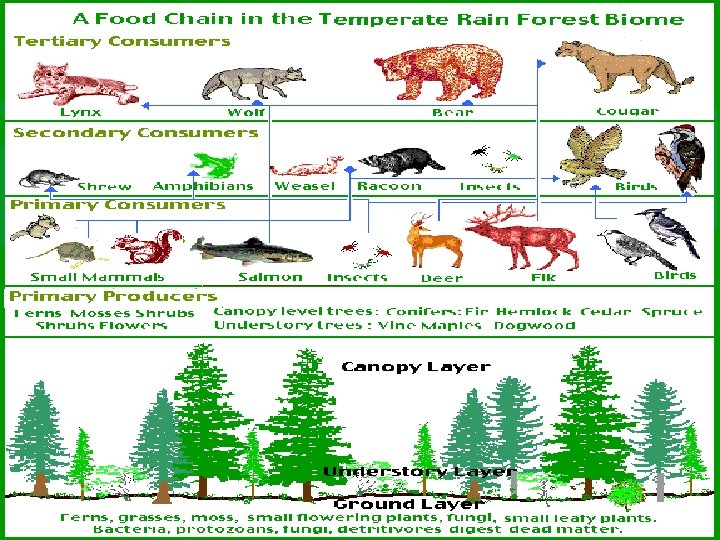
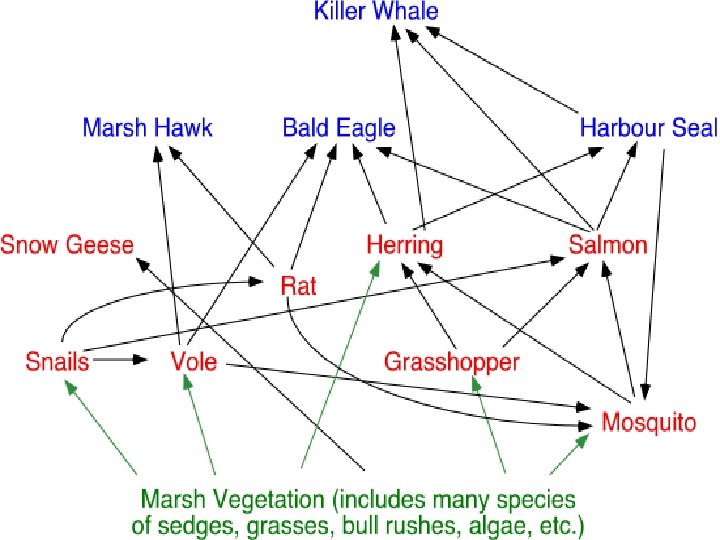
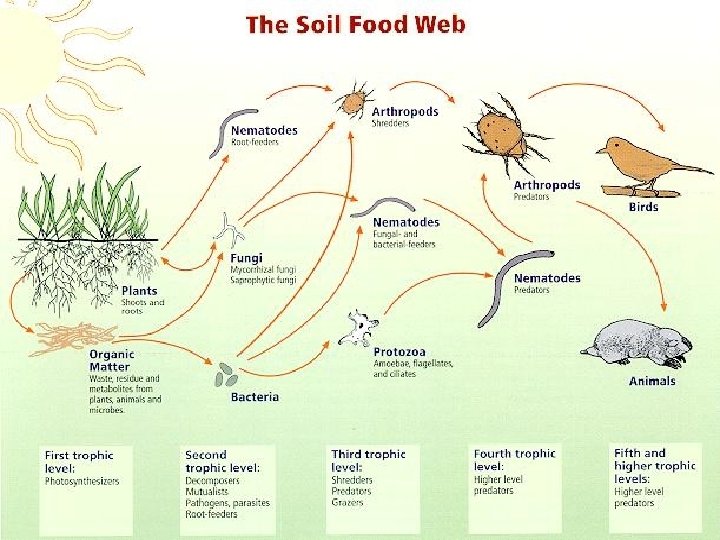
Trophic Levels Food web- shows all possible feeding relationships in a community at each trophic level n Represents a network of interconnected food chains
Food chain (just 1 path of energy) Food web (all possible energy paths)
Nutrient Cycles n Cycling maintains homeostasis (balance) in the environment. n 3 cycles to investigate: § 1. Water cycle § 2. Carbon cycle § 3. Nitrogen cycle
Water cycle- Evaporation – liquid to gas n Transpiration- evaporation through leaves of plants n Condensation- gas to liquid n Precipitation- snow, rain, etc. n
Water cycle-
Carbon cycle- n Photosynthesis and respiration cycle carbon and oxygen through the environment.
Carbon cycle-
n Photosynthesis Energy + CO 2 + H 2 O C 6 H 12 O 6 + O 2 n Cellular Respiration C 6 H 12 O 6 + O 2 Energy + CO 2 + H 2 O
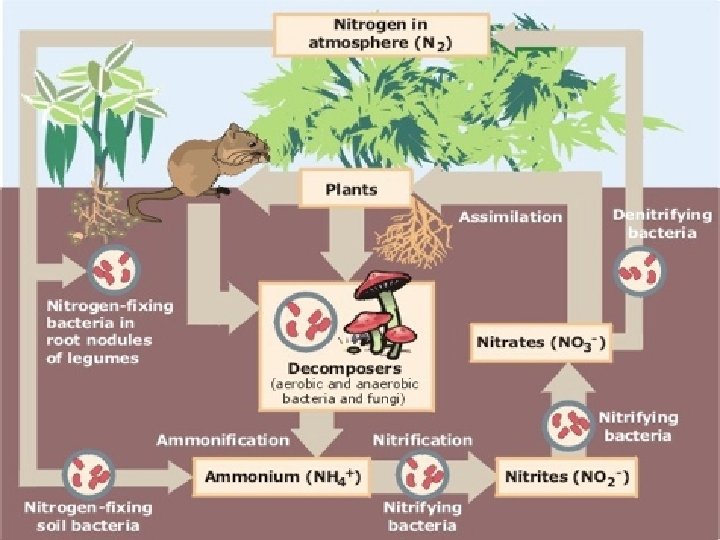
Nitrogen cycle. Atmospheric nitrogen (N 2) makes up nearly 78%-80% of air. n Organisms can not use it in that form. n Lightning and bacteria convert nitrogen into usable forms. n
Nitrogen cycle. Only in certain bacteria and industrial technologies can fix nitrogen. n Nitrogen fixation -convert atmospheric nitrogen (N 2) into ammonium (NH 4+) which can be used to make organic compounds like amino acids. n N 2 NH 4+ n
Nitrogen cycle. Nitrogen-fixing bacteria: n Some live in a symbiotic relationship with plants of the legume family (e. g. , soybeans, clover, peanuts). n
Some nitrogen-fixing bacteria live free in the soil. n Nitrogen-fixing cyanobacteria are essential to maintaining the fertility of semi-aquatic environments like rice paddies. n
Lightning Atmospheric nitrogen Nitrogen Cycle Denitrification by bacteria Animals Nitrogen fixing bacteria Decomposers Ammonium Nitrification by bacteria Plants Nitrites Nitrates
Toxins in food chains. While energy decreases as it moves up the food chain, toxins increase in potency. n This is called biological magnification n
Succession- n a series of changes in a community in which new populations of organisms gradually replace existing ones
Primary successionn colonization of new sites by communities of organisms – takes place on bare rock
Primary successionn New bare rock comes from 2 sources: ¨ 1. volcanic lava flow cools and forms rock
Primary successionn New bare rock comes from 2 sources: ¨ 2. Glaciers retreat and expose rock
Pioneer speciesn the first organisms to colonize a new site ¨ Ex: lichens are the first to colonize lava rocks
Primary Succession- Rock
Climax communityn a stable, mature community that undergoes little or no succession
Primary succession-
Secondary successionn sequence of community changes that takes place when a community is disrupted by natural disaster or human actions – takes place on existing soil
Secondary successionn Ex: ¨ fire
Secondary successionn Ex: ¨ farming
Secondary succession-
Secondary succession-
Review Questions 1. 2. Give an example of Mutualism, Commensalism, and Parasitism Give an example of 4 trophic levels and describe the amount of energy as it travels through the food chain.
Group 1
Group 2
Group 3
Group 4
Group 5