
Population Dynamics 4 1 SB 4 C Relate
Population Dynamics (4. 1) SB 4 C. Relate environmental conditions to successional changes in ecosystems.
HOMEWORK: Chapter 4 Population Ecology - 4. 1 textbook - read/notes Population Ecology CC Ecology #2 – watch/notes
Chapter 4 Population Ecology Population Characteristics (AKA Demographics) 3 Main ways to describe populations: 1. Population Density § The number of organisms per unit area 2. Spatial Distribution § Dispersion is the pattern of spacing of a population. 3. Growth Rate
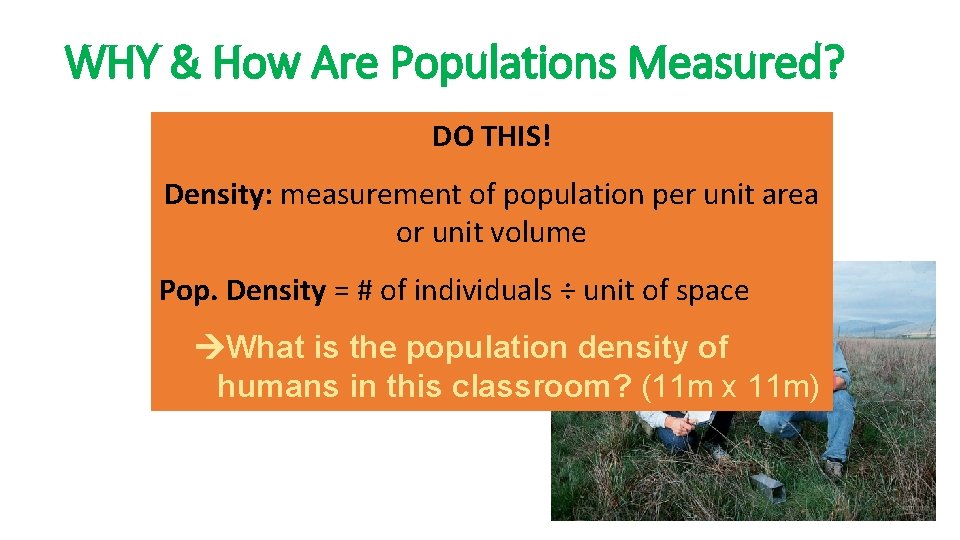
WHY & How Are Populations Measured? THIS! • Population density =DO number of individuals in a given area or volume Density: measurement of population per unit area • Count all the individuals a population or unitinvolume • Estimate by sampling Pop. Density = # of. Method individuals ÷ unit of space • Mark-Recapture What is the population density of humans in this classroom? (11 m x 11 m)
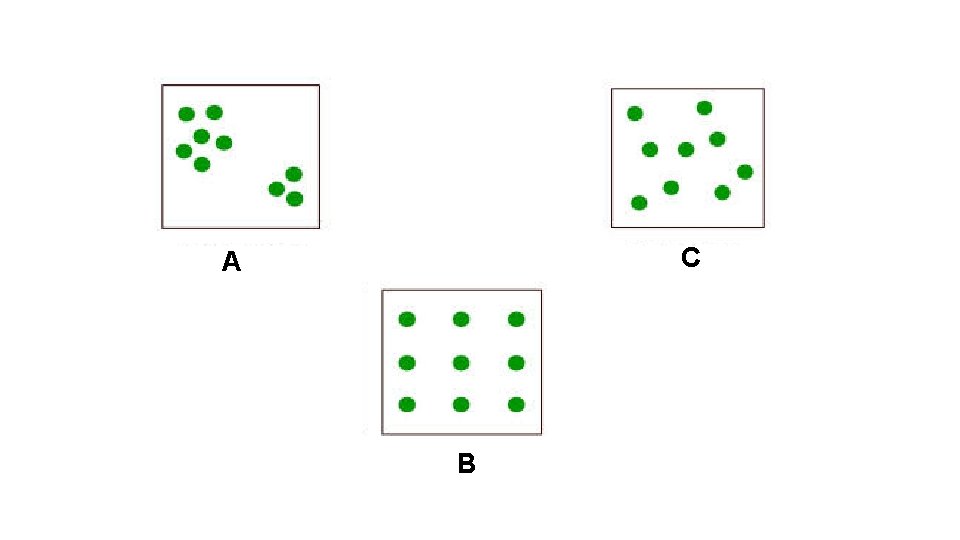
C A B

Population Ecology 2. Spatial Distribution § Dispersion is the pattern of spacing of a population. § Uniform – equally dispersed – territorial animals § Clumped – groups – herding animals § Random – no pattern – usually based on resources
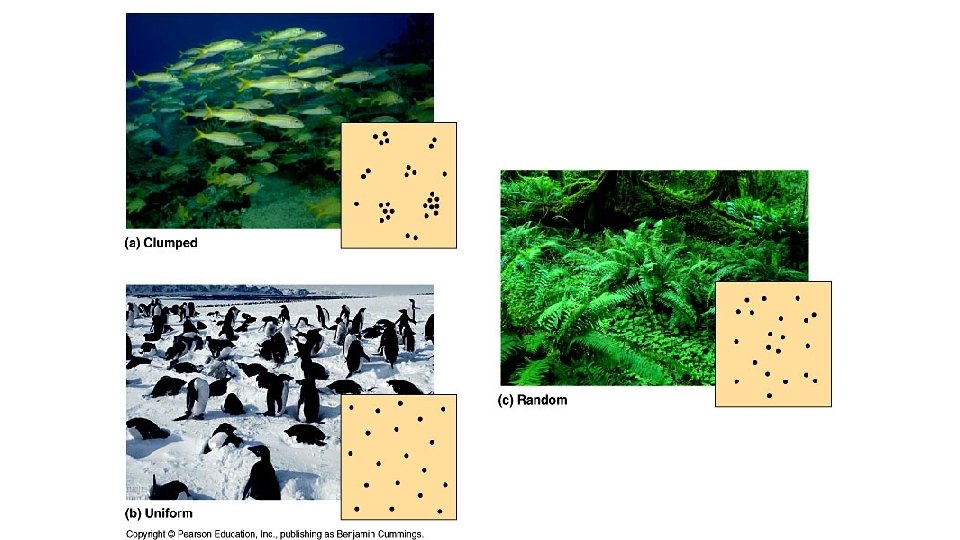
Population Dispersion
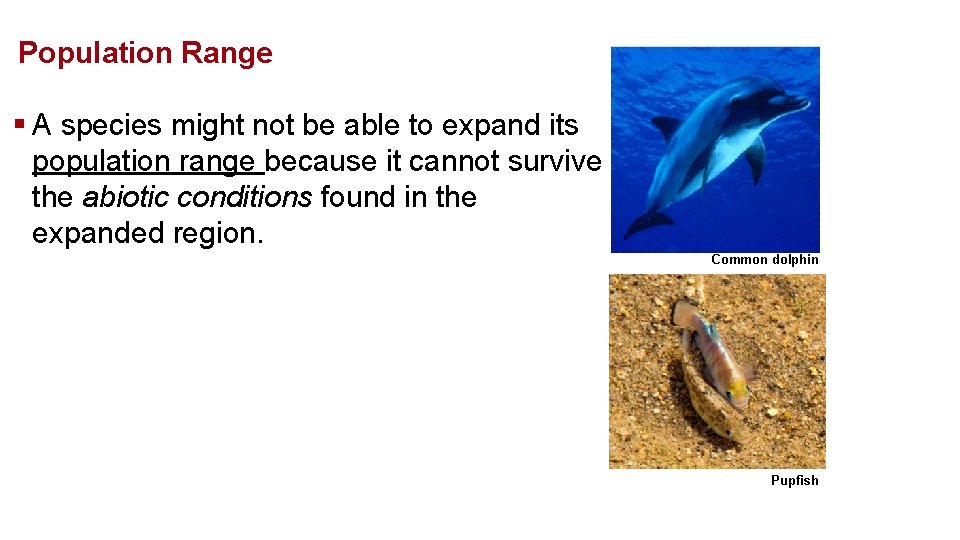
Population Range § A species might not be able to expand its population range because it cannot survive the abiotic conditions found in the expanded region. Common dolphin Pupfish
Population Ecology Population-Limiting Factors § There are two categories of limiting factors — § density-independent factors § density-dependent factors.
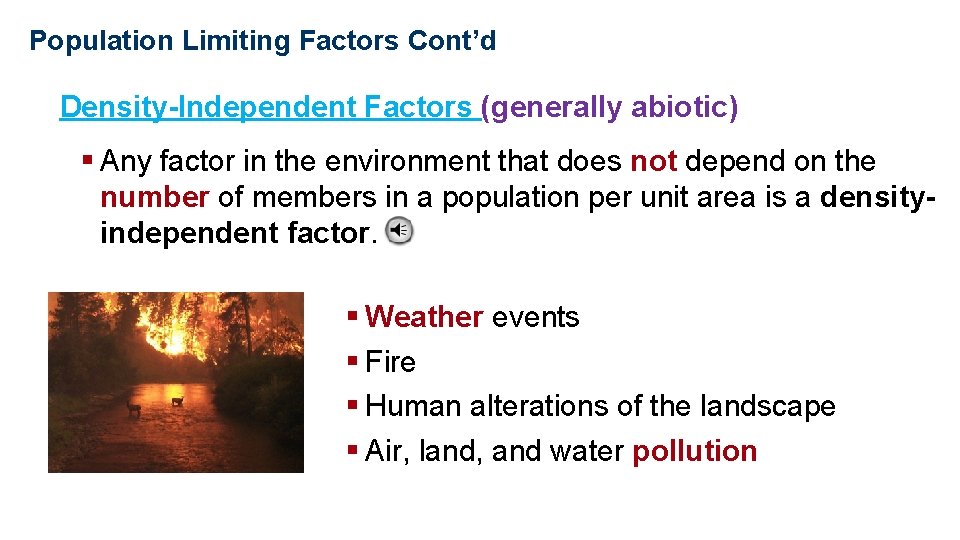
Population Ecology Population Limiting Factors Cont’d Density-Independent Factors (generally abiotic) § Any factor in the environment that does not depend on the number of members in a population per unit area is a densityindependent factor. § Weather events § Fire § Human alterations of the landscape § Air, land, and water pollution
Population Ecology Population Limiting Factors Cont’d Density-Dependent Factors § Any factor in the environment that depends on the number of members in a population per unit area is a density-dependent factor. § Biotic factors § Disease § Competition § Parasites
Population Ecology Population Growth Rate § The population growth rate (PGR) explains how fast a given population grows. § Growth Rate is affected by… § Limiting Factors §Natality (# of births) §Mortality (# of deaths) §Immigration (# of individuals entering) §Emigration (# of individuals exiting)
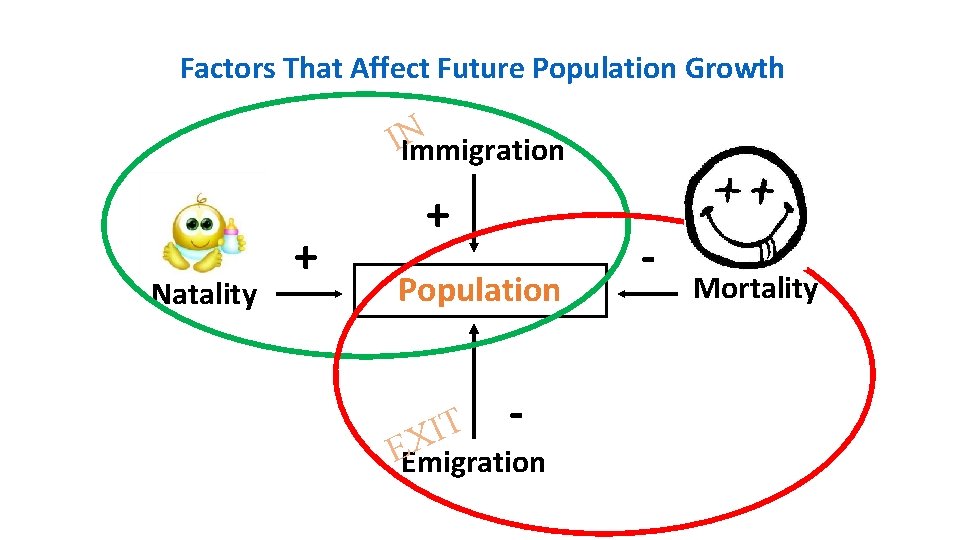
Factors That Affect Future Population Growth N IImmigration Natality + + Population T I X - EEmigration - Mortality
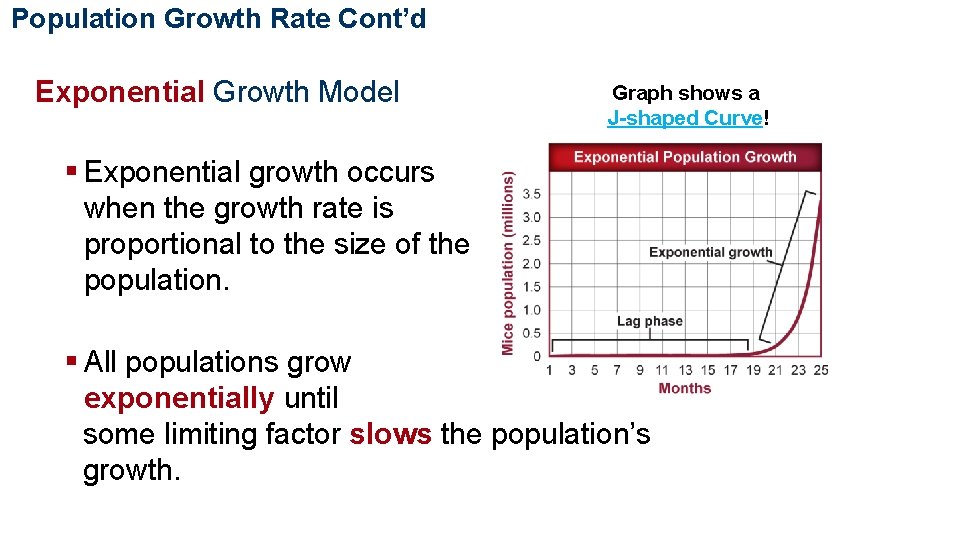
Population Ecology Population Growth Rate Cont’d Exponential Growth Model Graph shows a J-shaped Curve! § Exponential growth occurs when the growth rate is proportional to the size of the population. § All populations grow exponentially until some limiting factor slows the population’s growth.
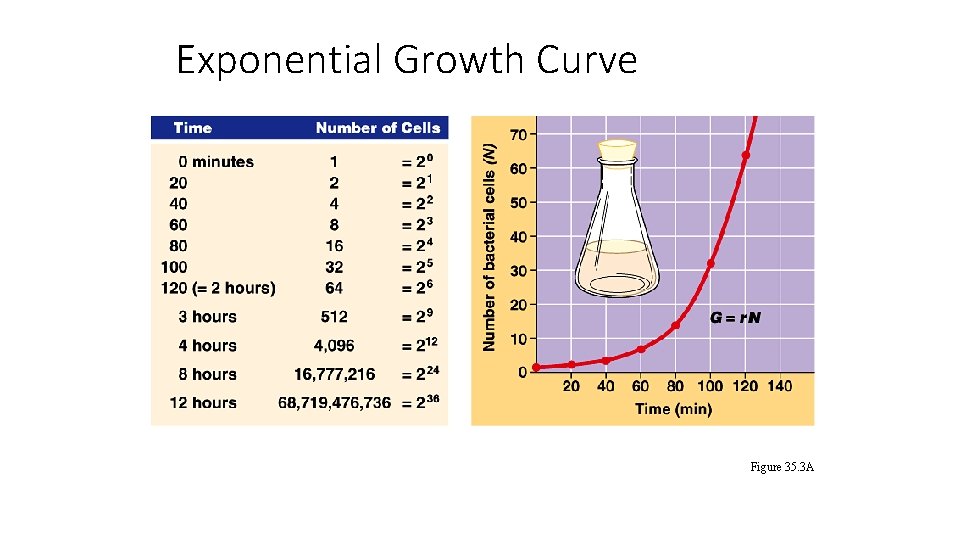
Exponential Growth Curve Figure 35. 3 A
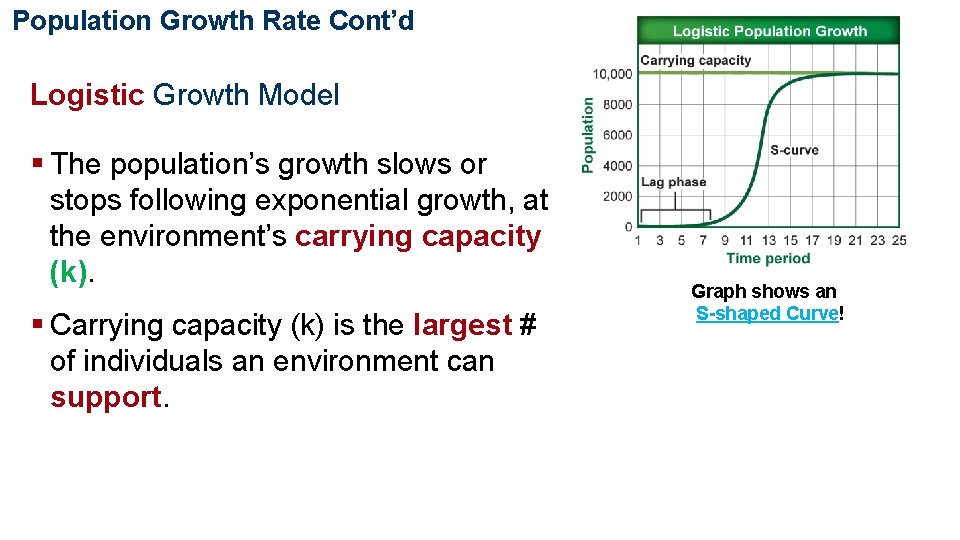
Population Growth Rate. Ecology Cont’d Logistic Growth Model § The population’s growth slows or stops following exponential growth, at the environment’s carrying capacity (k). § Carrying capacity (k) is the largest # of individuals an environment can support. Graph shows an S-shaped Curve!
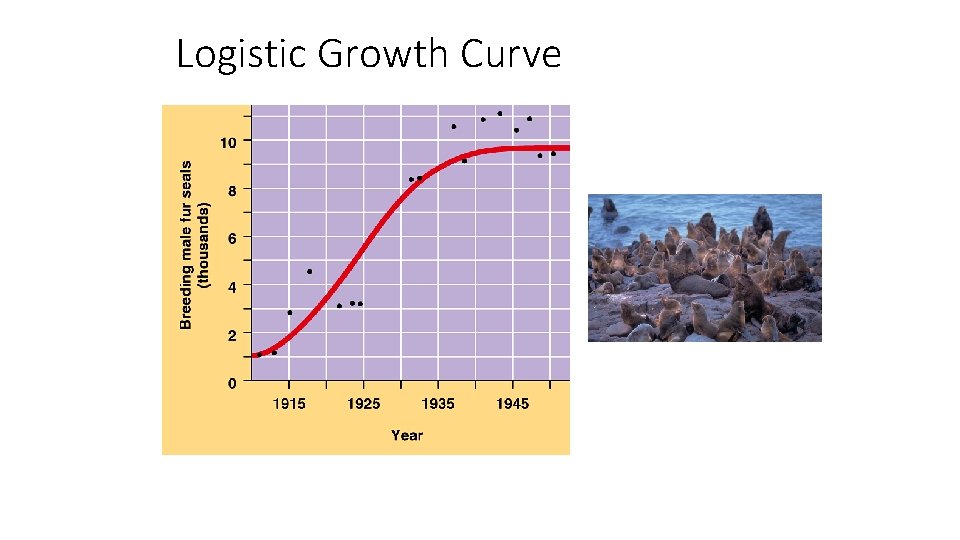
Logistic Growth Curve
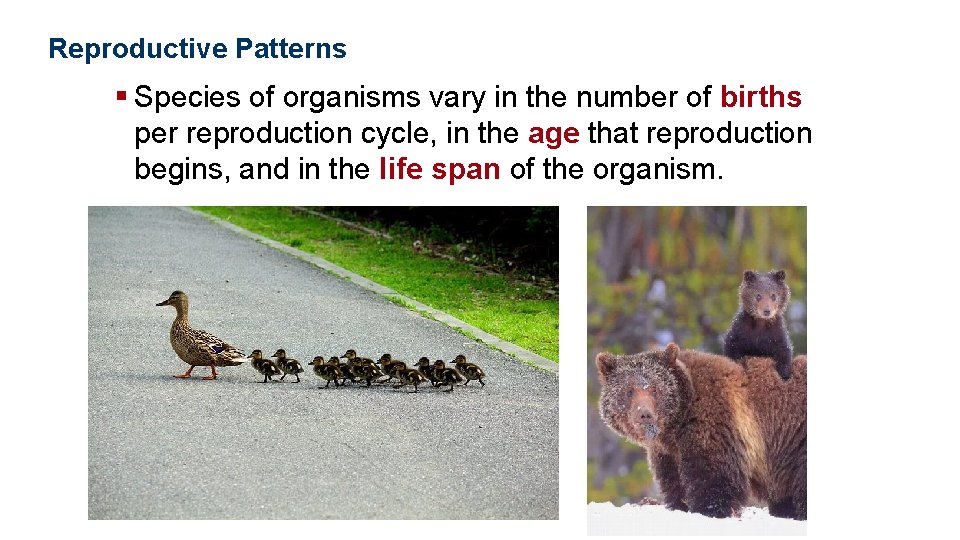
Population Ecology Reproductive Patterns § Species of organisms vary in the number of births per reproduction cycle, in the age that reproduction begins, and in the life span of the organism.
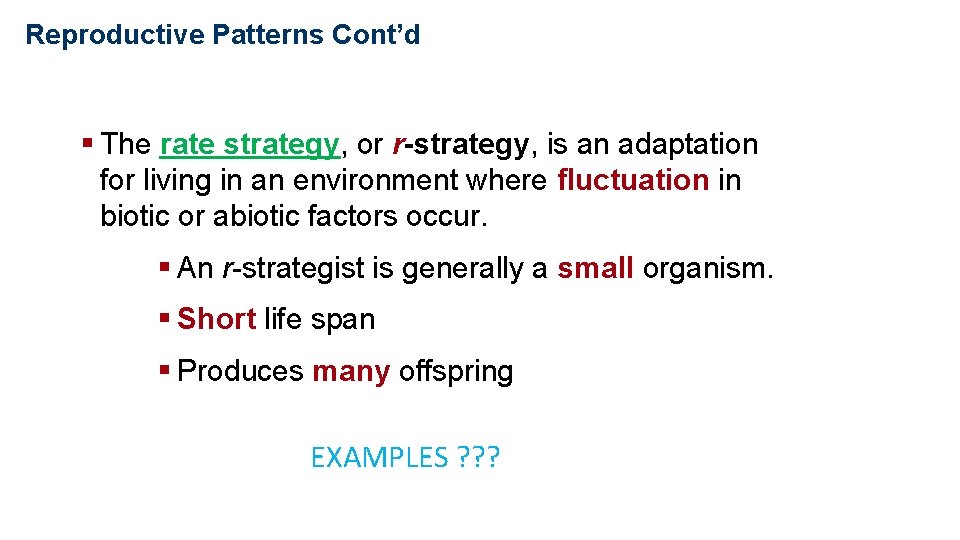
Population Ecology Reproductive Patterns Cont’d § The rate strategy, or r-strategy, is an adaptation for living in an environment where fluctuation in biotic or abiotic factors occur. § An r-strategist is generally a small organism. § Short life span § Produces many offspring EXAMPLES ? ? ?
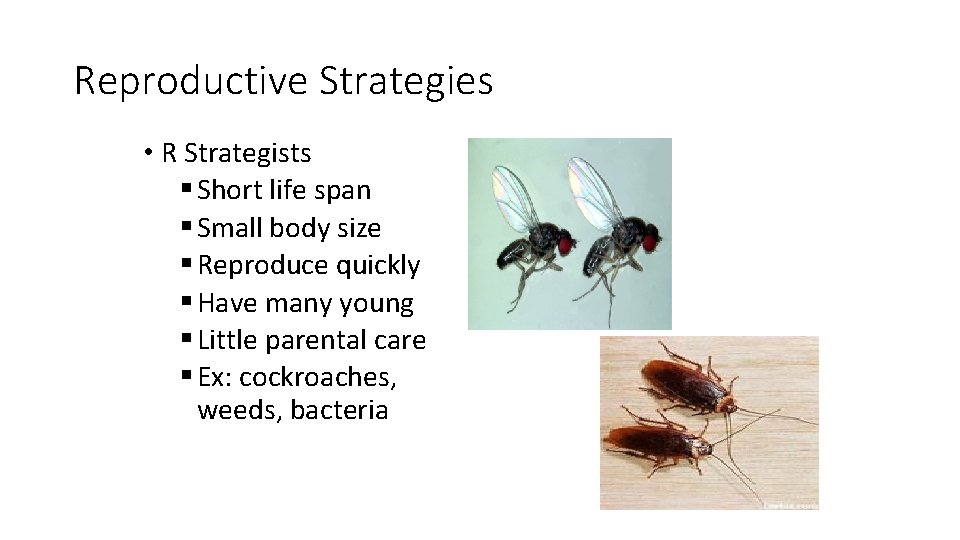
Reproductive Strategies • R Strategists § Short life span § Small body size § Reproduce quickly § Have many young § Little parental care § Ex: cockroaches, weeds, bacteria
Population Ecology Reproductive Patterns Cont’d § The carrying-capacity strategy, or k-strategy, is an adaptation for living in stable environments. § A k-strategist is generally a larger organism. § Long life span § Produces few offspring EXAMPLES ? ? ?
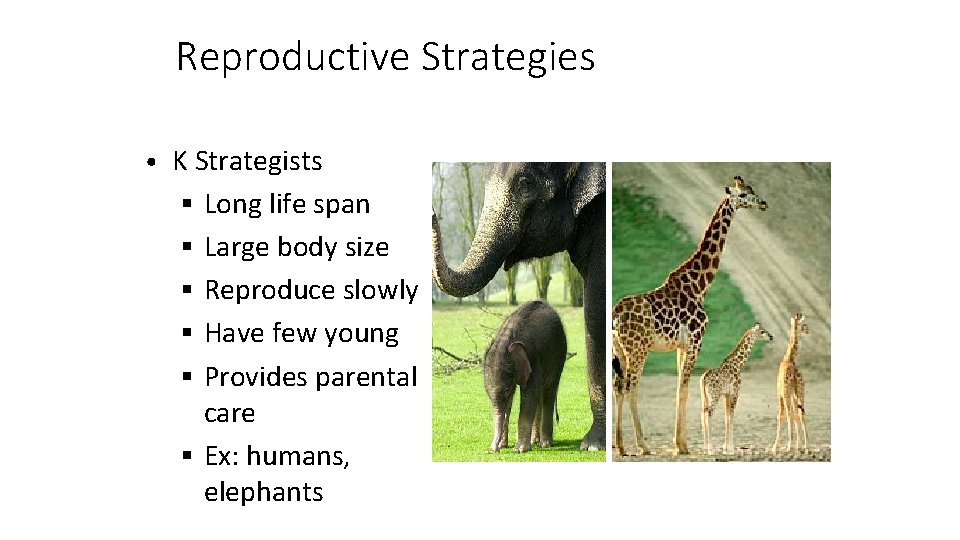
Reproductive Strategies • K Strategists § Long life span § Large body size § Reproduce slowly § Have few young § Provides parental care § Ex: humans, elephants
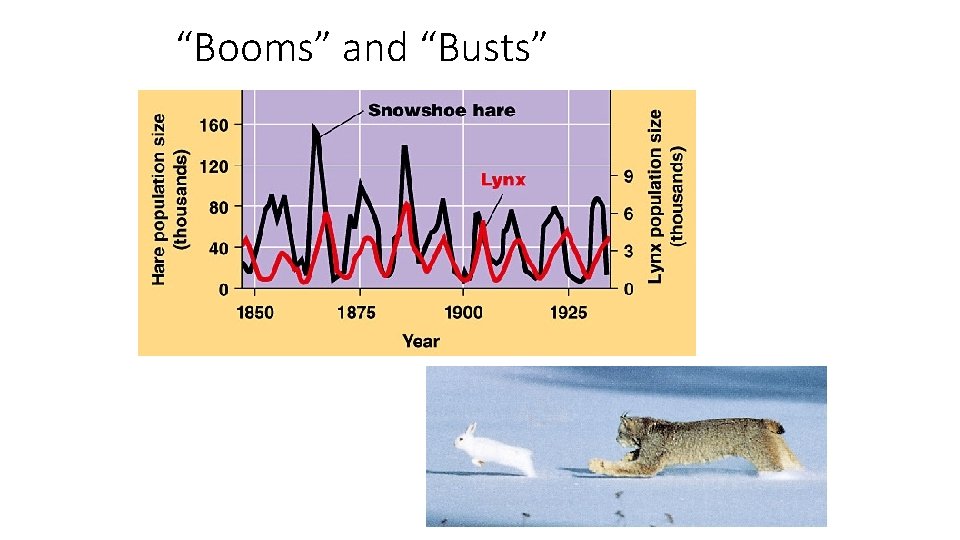
“Booms” and “Busts”
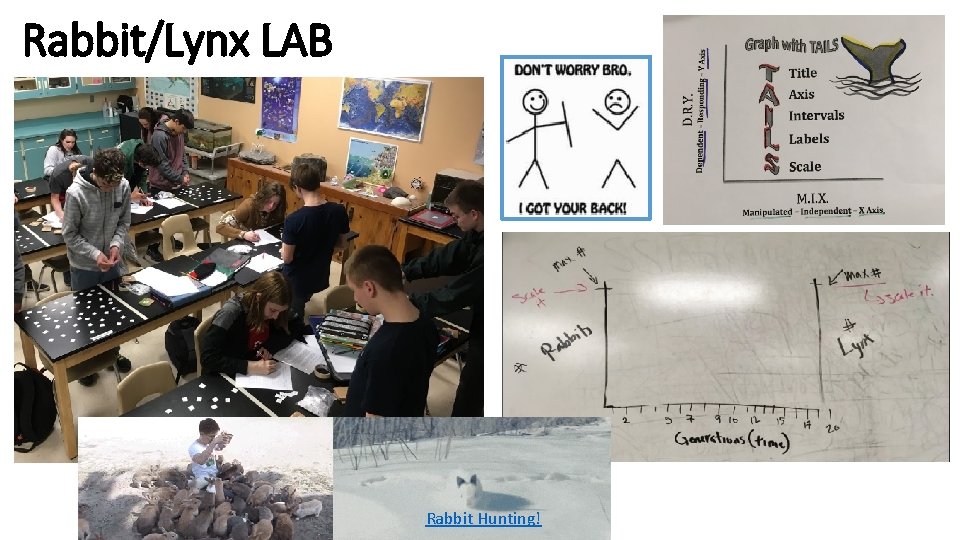
Rabbit/Lynx LAB Rabbit Hunting!

A&P Exam – Post Exam Review
If you want to get all people human focused… Demography – the study of human population size, density, distribution, movement, and birth/death rates. HUMAN POPULATION GROWTH
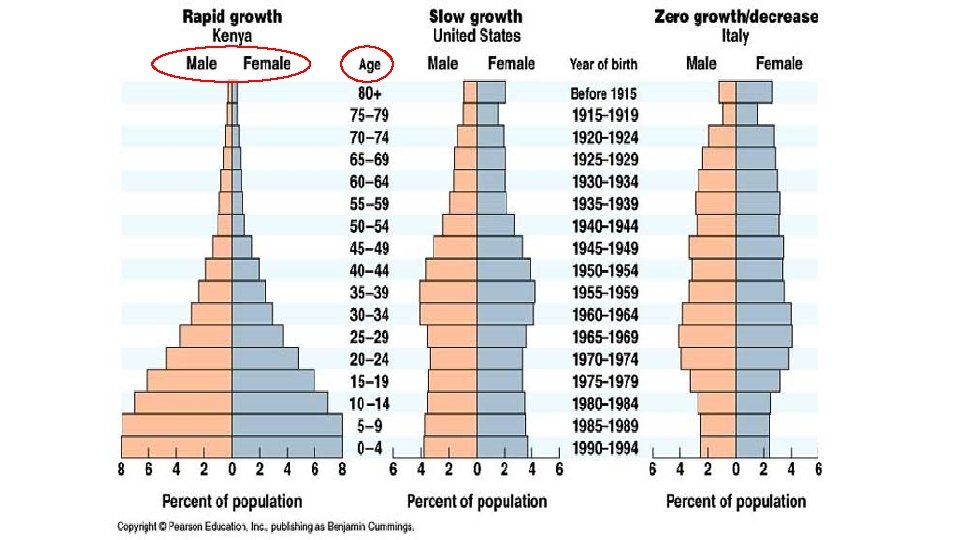
Human Population Growth • J curve growth • Grows at a rate of about 80 million yearly • r =1. 3% • Why doesn’t environmental resistance take effect? • Altering their environment • Technological advances • The cultural revolution • The agricultural revolution • The industrial-medical revolution
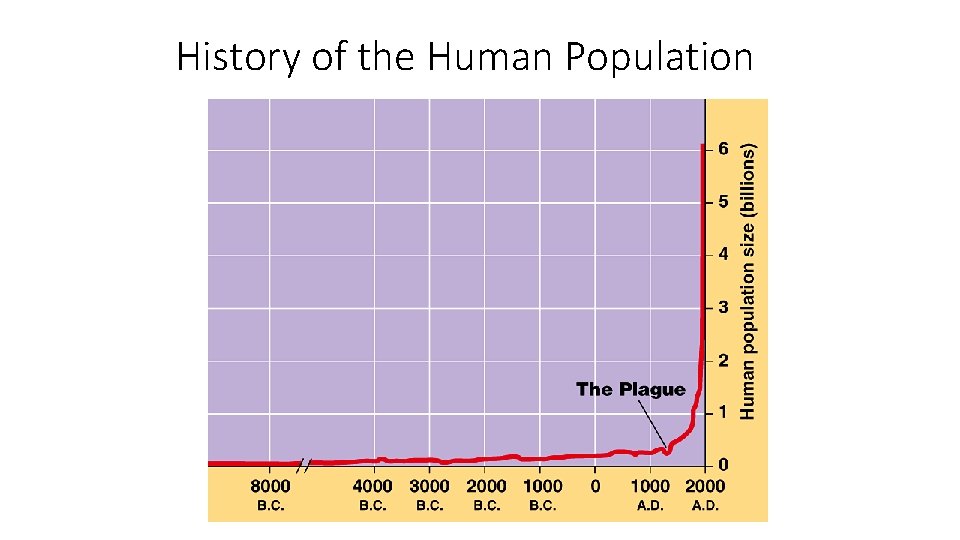
History of the Human Population
The Human Population • Doubled three times in the last three centuries • About 6. 1 billion and may reach 9. 3 billion by the year 2050 • Improved health and technology have lowered death rates
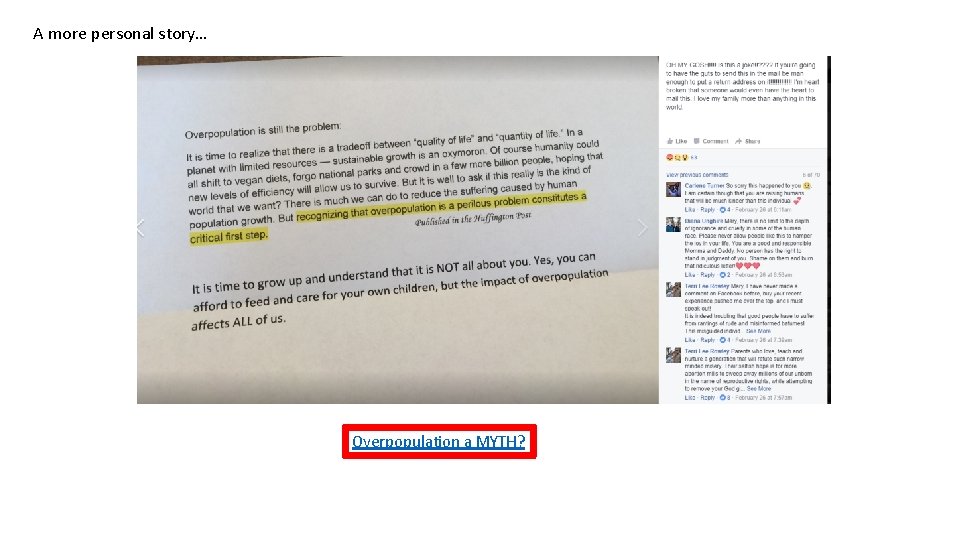
A more personal story… Overpopulation a MYTH?
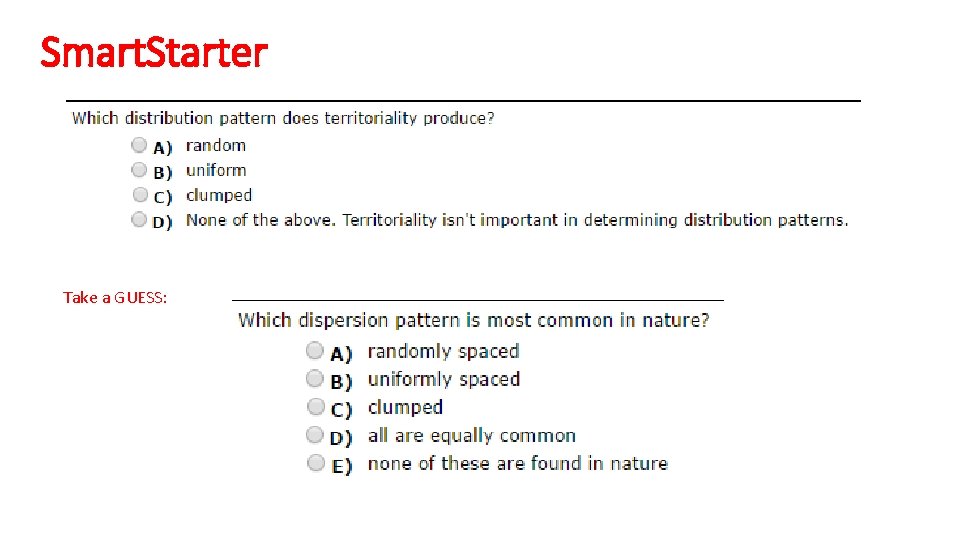
Smart. Starter Take a GUESS:
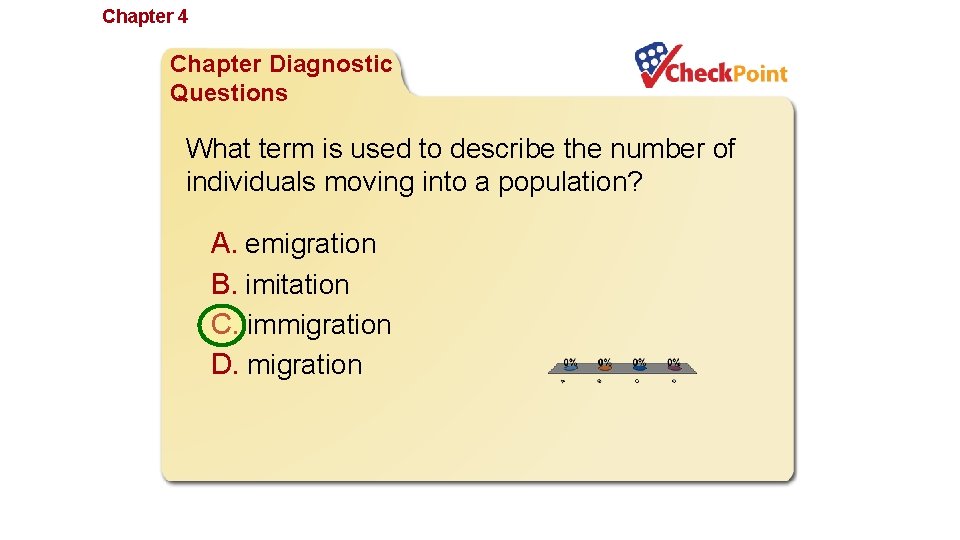
Chapter 4 Population Ecology Chapter Diagnostic Questions What term is used to describe the number of individuals moving into a population? A. emigration B. imitation C. immigration D. migration 1. A 2. B 3. C 4. D
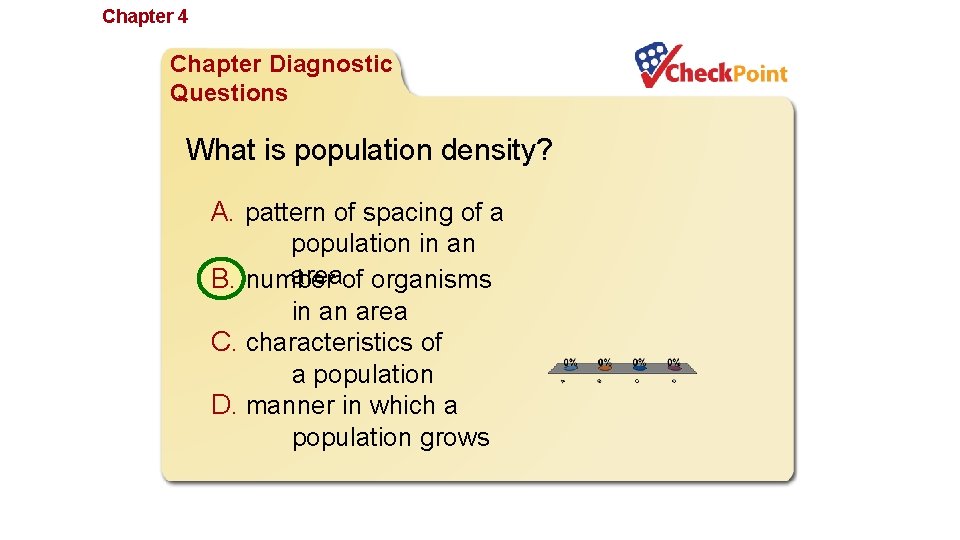
Chapter 4 Population Ecology Chapter Diagnostic Questions What is population density? A. pattern of spacing of a population in an areaof organisms B. number in an area C. characteristics of a population D. manner in which a population grows 1. A 2. B 3. C 4. D
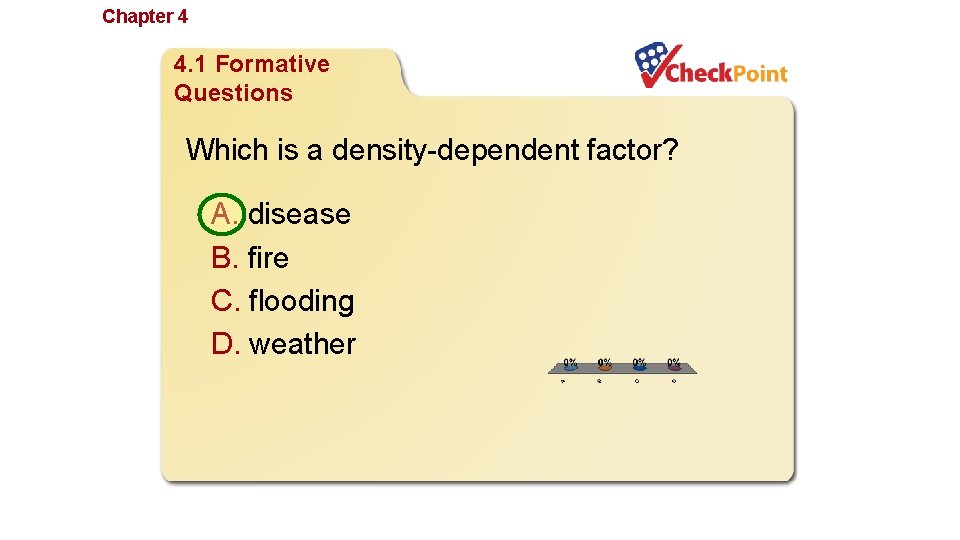
Chapter 4 Population Ecology 4. 1 Formative Questions Which is a density-dependent factor? A. disease B. fire C. flooding D. weather 1. A 2. B 3. C 4. D
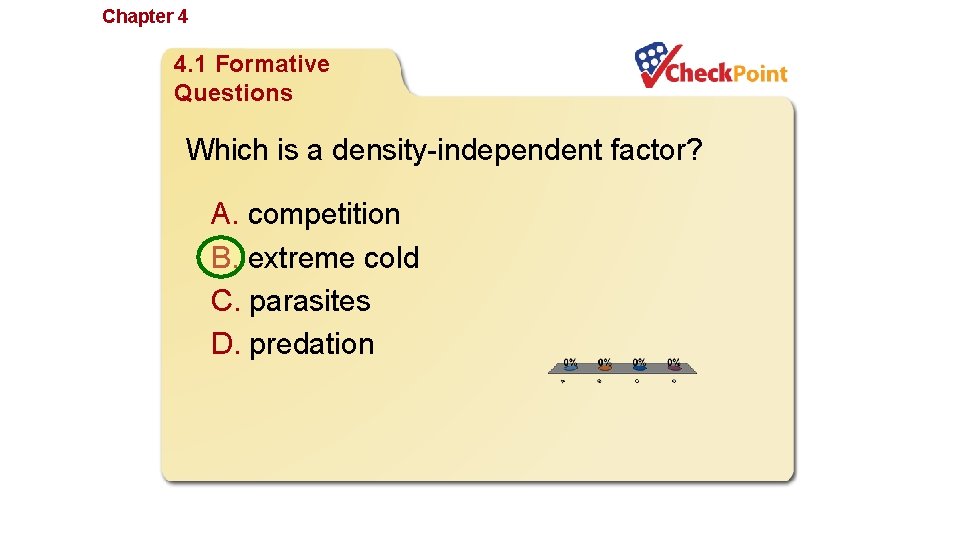
Chapter 4 Population Ecology 4. 1 Formative Questions Which is a density-independent factor? A. competition B. extreme cold C. parasites D. predation 1. A 2. B 3. C 4. D
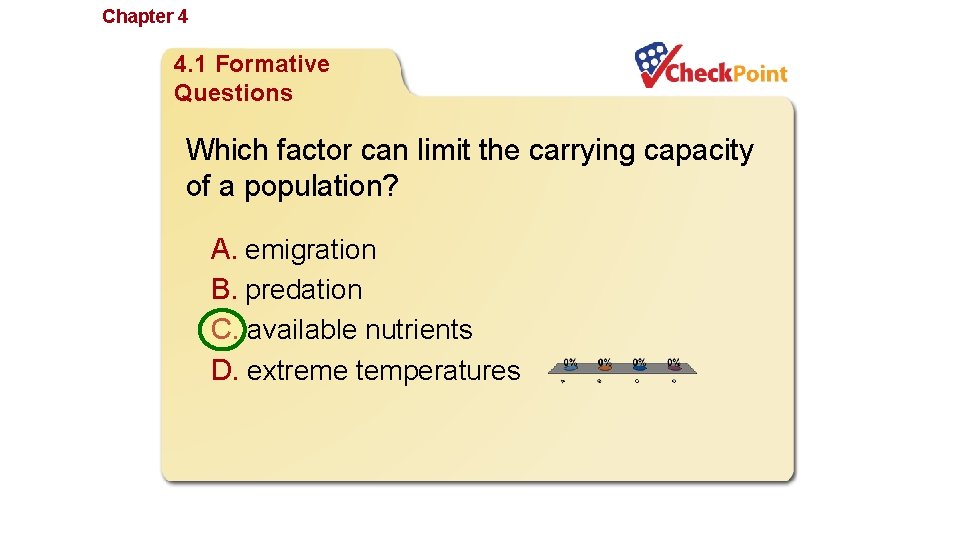
Chapter 4 Population Ecology 4. 1 Formative Questions Which factor can limit the carrying capacity of a population? A. emigration B. predation C. available nutrients D. extreme temperatures 1. A 2. B 3. C 4. D
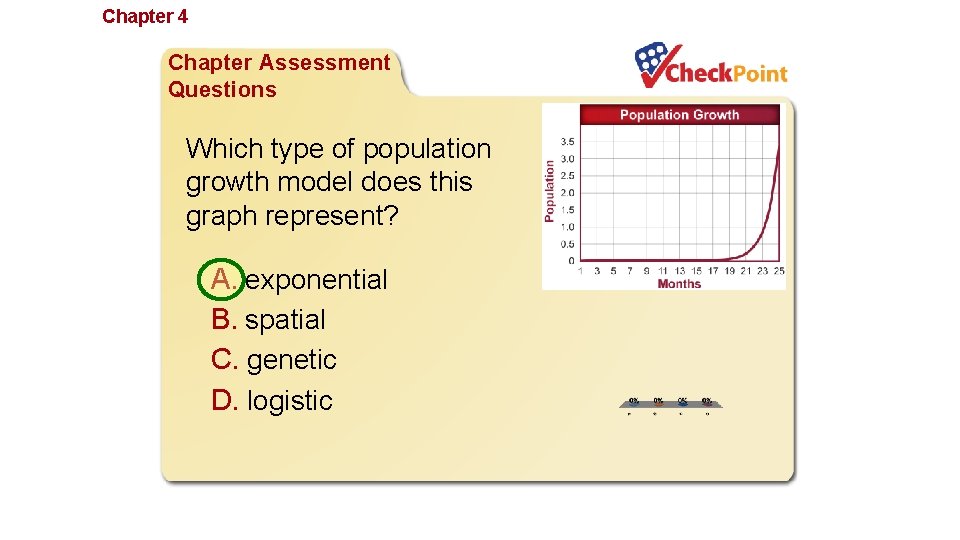
Chapter 4 Population Ecology Chapter Assessment Questions Which type of population growth model does this graph represent? A. exponential B. spatial C. genetic D. logistic 1. A 2. B 3. C 4. D
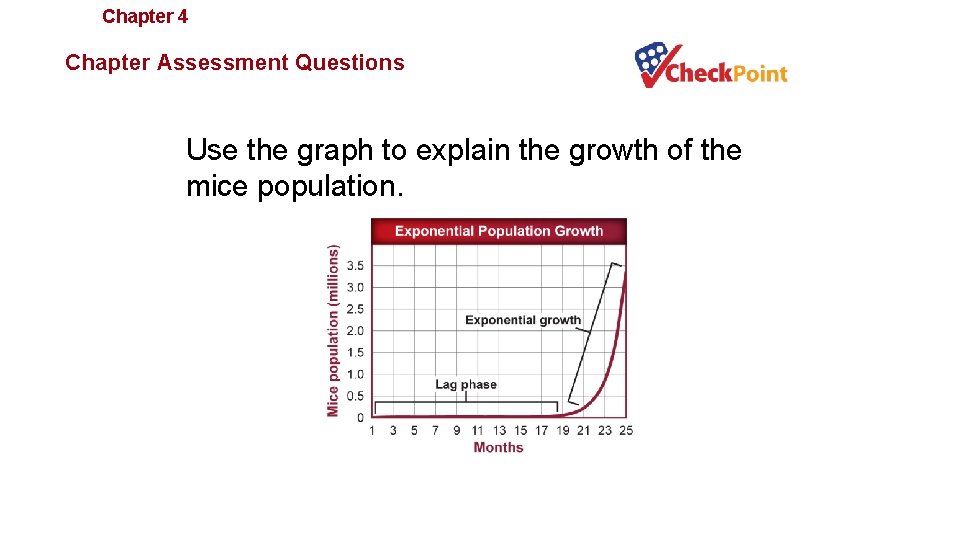
Chapter 4 Population Ecology Chapter Assessment Questions Use the graph to explain the growth of the mice population.
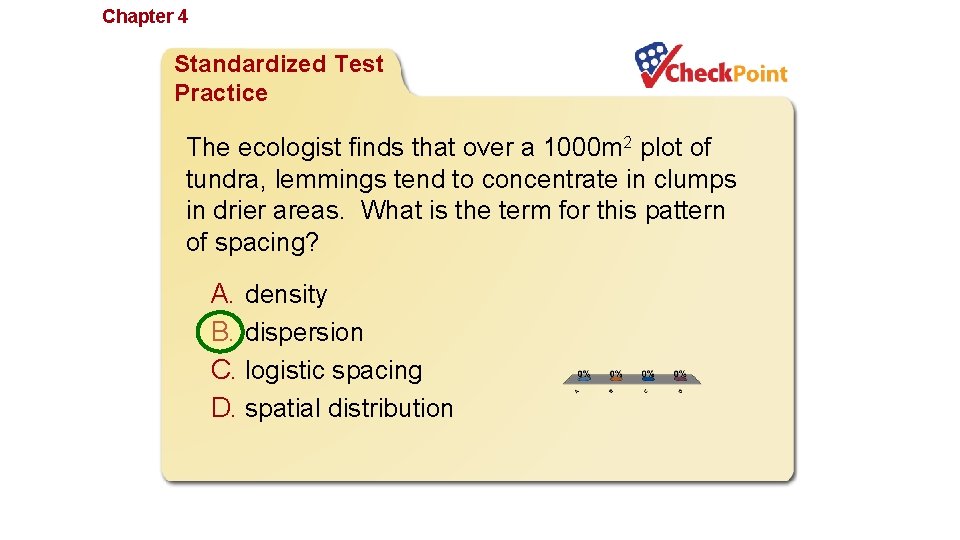
Chapter 4 Population Ecology Standardized Test Practice The ecologist finds that over a 1000 m 2 plot of tundra, lemmings tend to concentrate in clumps in drier areas. What is the term for this pattern of spacing? A. density B. dispersion C. logistic spacing D. spatial distribution 1. A 2. B 3. C 4. D
Chapter 4 Population Ecology Standardized Test Practice Brine shrimp are able to survive only in certain lakes that have a very high salt concentration. Which is the correct population characteristic of brine shrimp? A. It is density-dependent. B. It is limited by biotic factors. C. It has a limited spatial distribution. D. It is randomly dispersed in the environment. 1. A 2. B 3. C 4. D
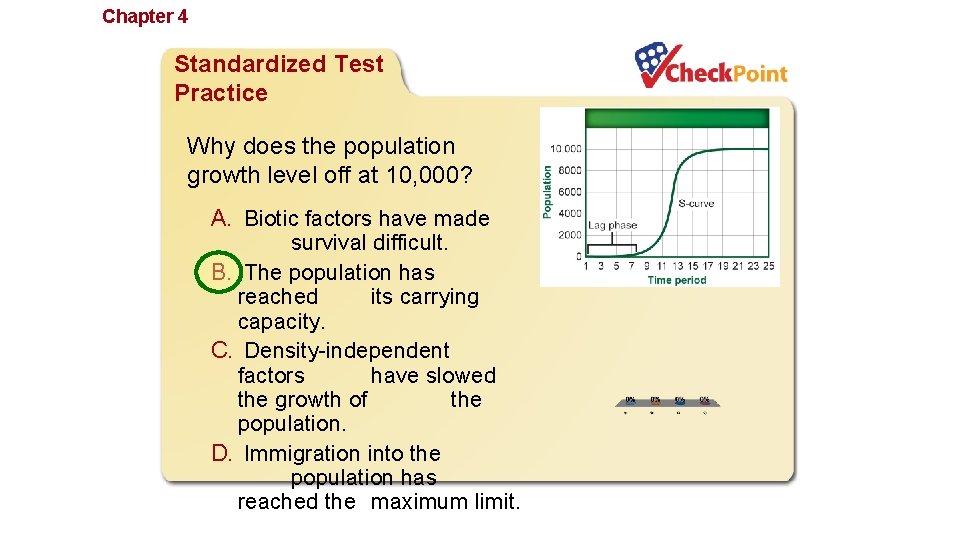
Chapter 4 Population Ecology Standardized Test Practice Why does the population growth level off at 10, 000? A. Biotic factors have made survival difficult. B. The population has reached its carrying capacity. C. Density-independent factors have slowed the growth of the population. D. Immigration into the population has reached the maximum limit. 1. A 2. B 3. C 4. D
Chapter 4 Population Ecology Standardized Test Practice Which organism is the best example of a k-strategist? A. wolf B. grasshopper C. rabbit D. whale 1. 2. 3. 4. A B C D
- Slides: 45