
Population Dynamic Revision Describe the different rates of

Population Dynamic Revision
Describe the different rates of population growth between 1500 and 2183 Page 147 • • It rose slowly to 1927 The rate of growth speeded up over time It rose rapidly after 1927 The period taken to increase by 1 billion has reduced in almost a decade
Explain how natural increase is affected by both birth rates and death rates (4) Birth rate must exceed death rate for natural increase to occur (1) Where births greatly exceed deaths then the population grows rapidly (1) Baby booms can cause a rapid increase (1)
What do the following terms mean? Birth rate Death rate Natural increase
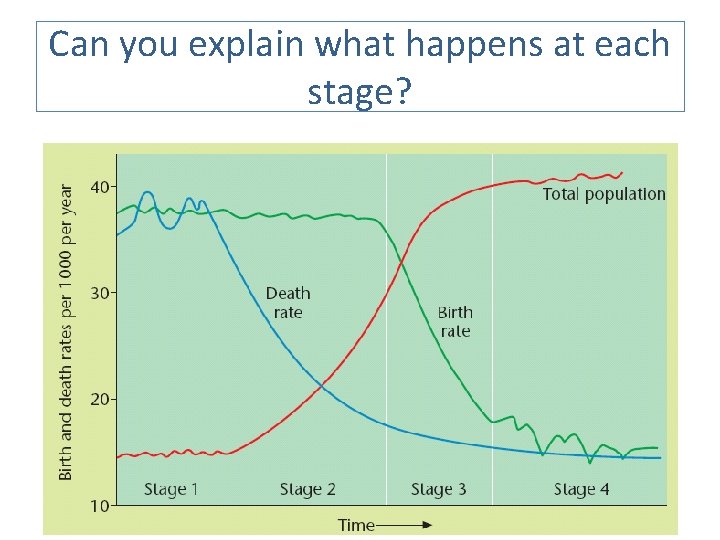
Can you explain what happens at each stage?
Using examples, describe how natural increase in population can change as a country’s level of development increases The decline in birth rate as GDP increases because women prefer to have fewer children and go out to work and earn money for their family The fall in death rate as a country develops, as well as infant mortality due to more money being invested in health care and people being seen quickly and cured when they are ill.
Page 153 Why is Russia’ s population decreasing? • Falling life expectancy due to alcoholism and industrial disease • Outward migration of young men and women Why is Yemen’s population increasing? • Early marriage of women • Low literacy rates • High fertility rates
Using named examples, explain the factors that lead to either a natural population increase, or, natural population decrease (4)

What do these population pyramids show? Where do they belong in the DTM? Task Time: 5 mins
Aging population What case study can you use? Japan or Devon UK
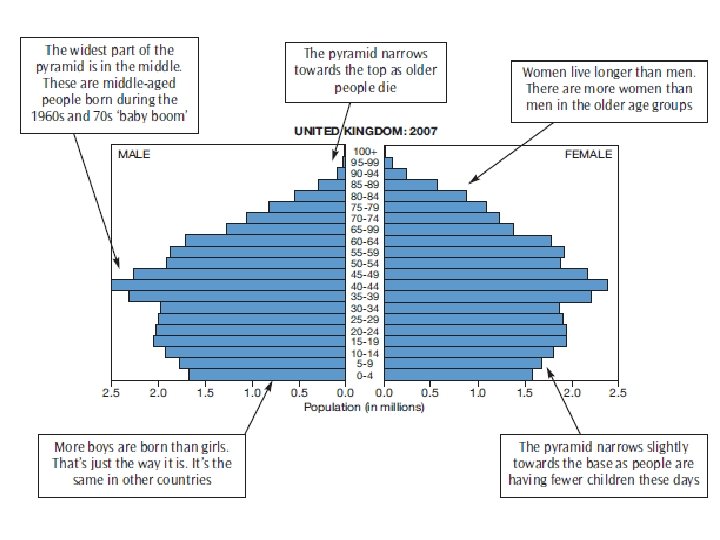
Working population
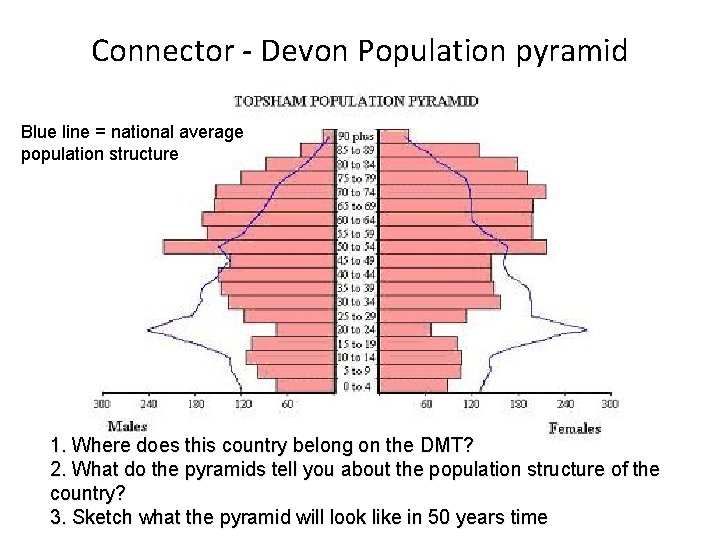
Connector - Devon Population pyramid Blue line = national average population structure 1. Where does this country belong on the DMT? 2. What do the pyramids tell you about the population structure of the country? 3. Sketch what the pyramid will look like in 50 years time
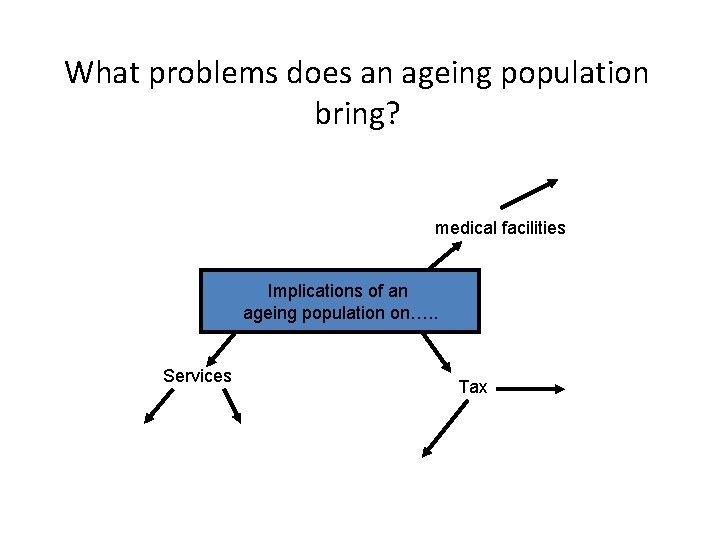
What problems does an ageing population bring? medical facilities Implications of an ageing population on…. . Services Tax
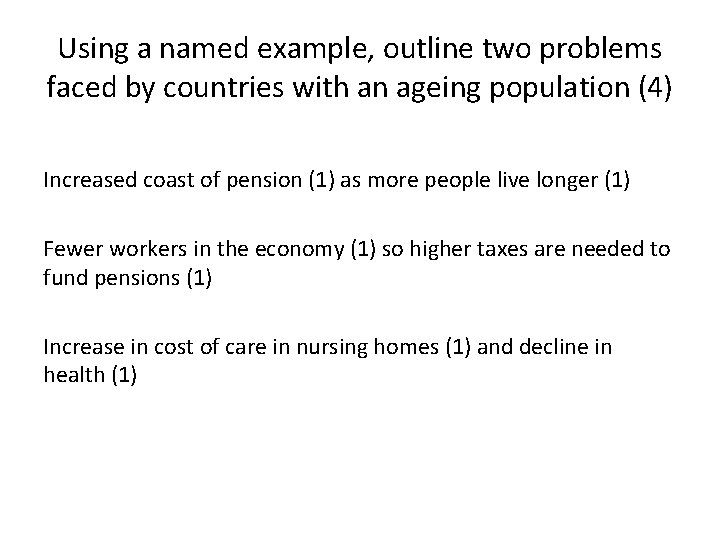
Using a named example, outline two problems faced by countries with an ageing population (4) Increased coast of pension (1) as more people live longer (1) Fewer workers in the economy (1) so higher taxes are needed to fund pensions (1) Increase in cost of care in nursing homes (1) and decline in health (1)
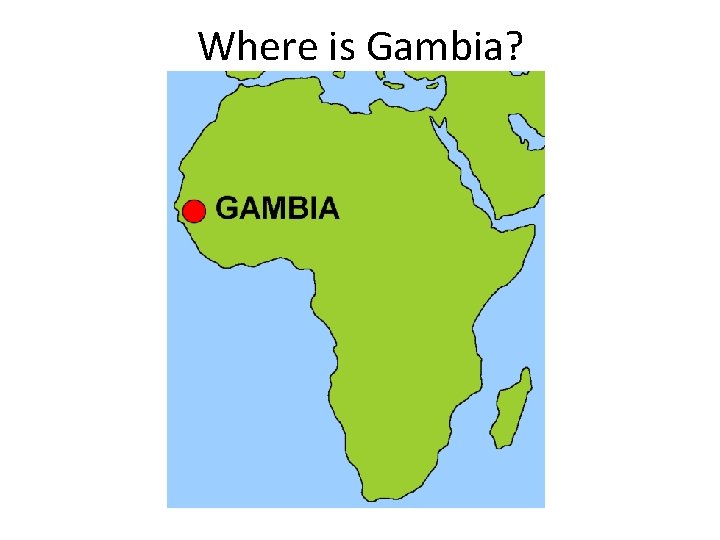
Where is Gambia?
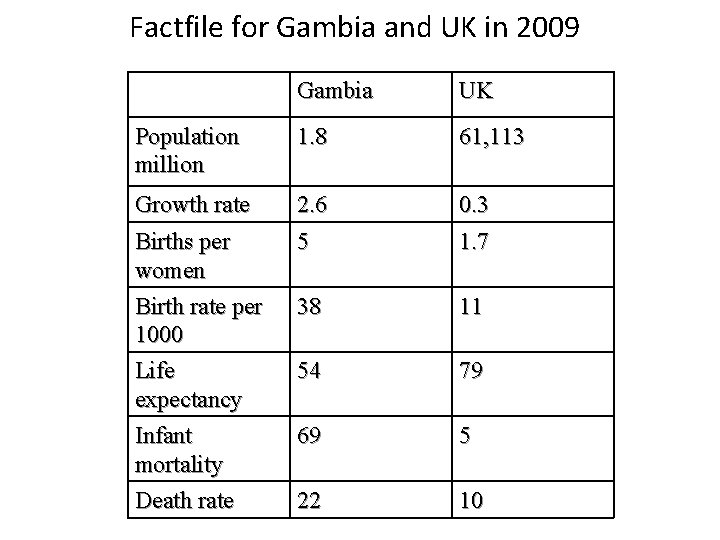
Factfile for Gambia and UK in 2009 Gambia UK Population million 1. 8 61, 113 Growth rate Births per women Birth rate per 1000 Life expectancy Infant mortality Death rate 2. 6 5 0. 3 1. 7 38 11 54 79 69 5 22 10
Problem 1 2 Solution How this will work Issues that may arise
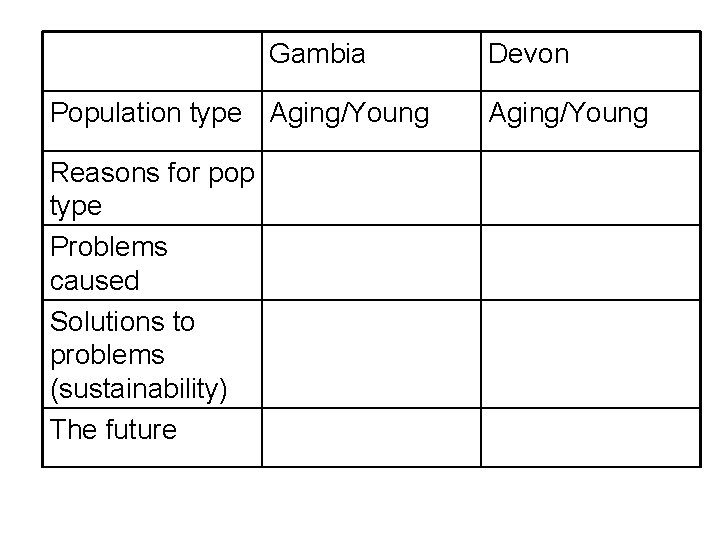
Gambia Population type Aging/Young Reasons for pop type Problems caused Solutions to problems (sustainability) The future Devon Aging/Young
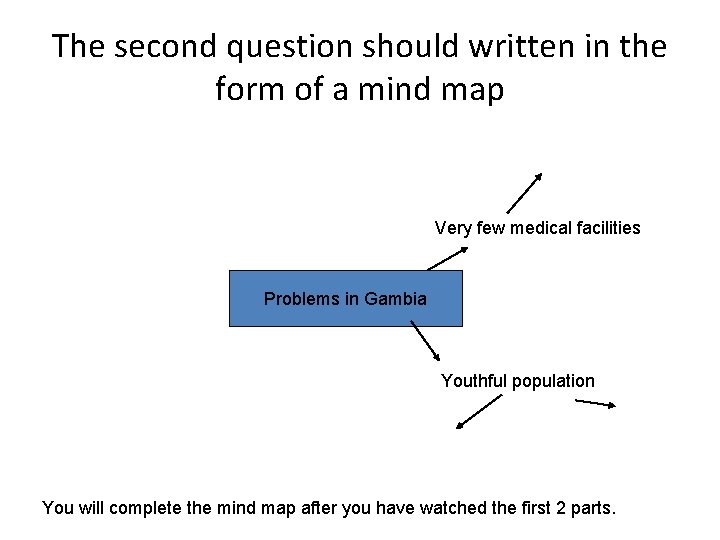
The second question should written in the form of a mind map Very few medical facilities Problems in Gambia Youthful population You will complete the mind map after you have watched the first 2 parts.
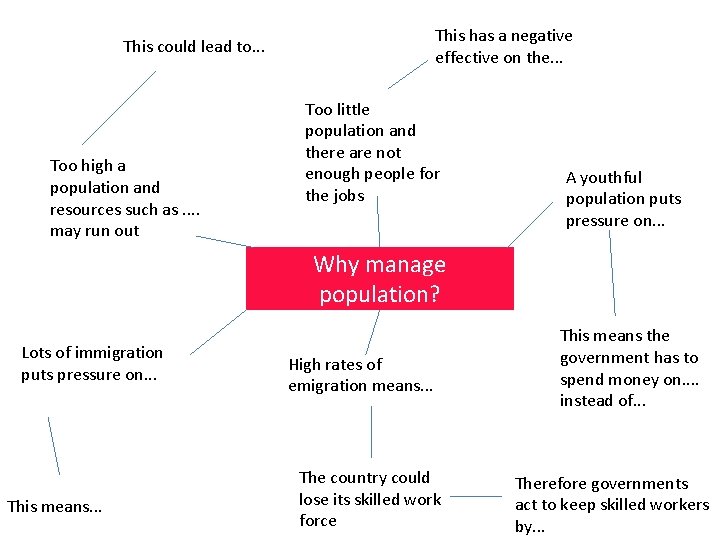
This has a negative effective on the. . . This could lead to. . . Too high a population and resources such as. . may run out Too little population and there are not enough people for the jobs A youthful population puts pressure on. . . Why manage population? Lots of immigration puts pressure on. . . This means. . . High rates of emigration means. . . The country could lose its skilled work force This means the government has to spend money on. . instead of. . . Therefore governments act to keep skilled workers by. . .
How can we manage populations? Pro-natalist policies include incentives to encourage people to have children eg. Financial payments (ie…) Anti-natalist policies encourage people to have fewer children eg. by providing free state education for only the first child in the family/1 child policy
Using examples, explain why some countries choose to increase their population, but others choose to reduce it. To increase working population (dev) to balance an ageing population (dev) so that there are more people working to support dependants e. g. Singapore To ensure there are enough workers for the future economic growth (dev) to balance outward migration (dev) so there are more people paying taxes e. g. Russia To reduce populaton pressure (dev) because of pressure on housing/health/services (dev) which affects quality of life e. g. India/China
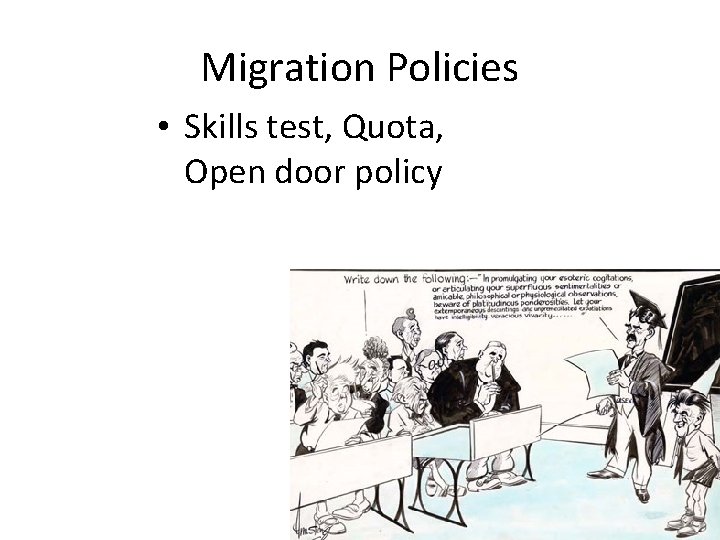
Migration Policies • Skills test, Quota, Open door policy
Migration policies Open door policy • Why would countries adopt an open door policy? • Can you think of any examples? • What are the advantages and disadvantages?
Explain how some countries use population policies to limit their population growth (6) Ante-natal e. g. China’s one child policy (dev) which limits the number of children families can have by law (dev) and which can be extended by offering tax or cash benefits. Migration controls e. g. strong limits on immigration/skills tests (dev) because of the pressure on housing if the population rises too rapidly (dev) and controlling immigration is one of the ways to prevent young people who might marry and have children from entering the country
Describe two potential advantages and disadvantages of having a large immigrant population (4) Advantages It can prevent labour shortages Cultural benefits e. g. greater variety of food/music Balances an aging population Economic boost to the country with more people in work Disadvantages Place a strain on the welfare/healthcare system Local people find it difficult to compete in the job market Immigrants often remain isolated and separate form the community
Using examples, explain how some countries try to increase immigration, whilst other countries try to reduce it (6) To expand skilled labour e. g. Australia (dev) in order to create economic growth (dev) which means a country can develop its industries and provide high-quality services e. g. education and health To combat an ageing population (dev) as there will be more people to work and pay taxes towards pensions (dev) and if they’re young, they’ll marry and have more children to balance the popualtion Reduce To reduce unemployment amongst a country’s population (dev) as immigrants could compete for jobs (dev) especially as they are often prepared to work for lower wages.
- Slides: 27