
Population Density and Distribution 14 3 Population Density
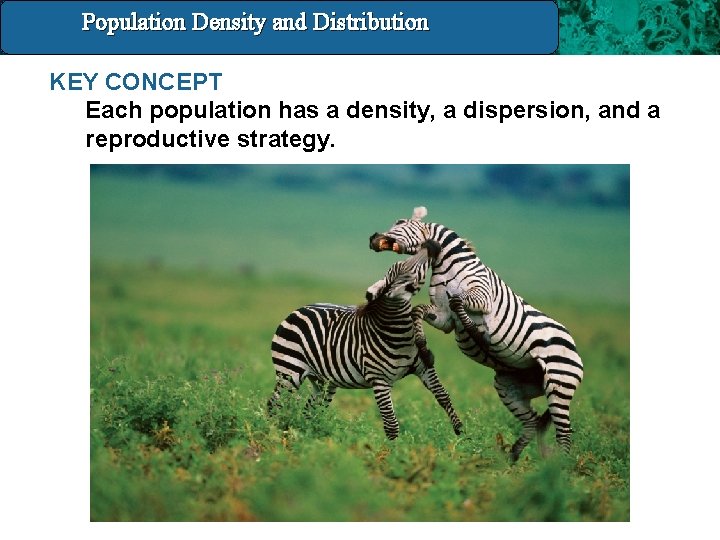
Population Density and Distribution 14. 3 Population Density And Distribution KEY CONCEPT Each population has a density, a dispersion, and a reproductive strategy.
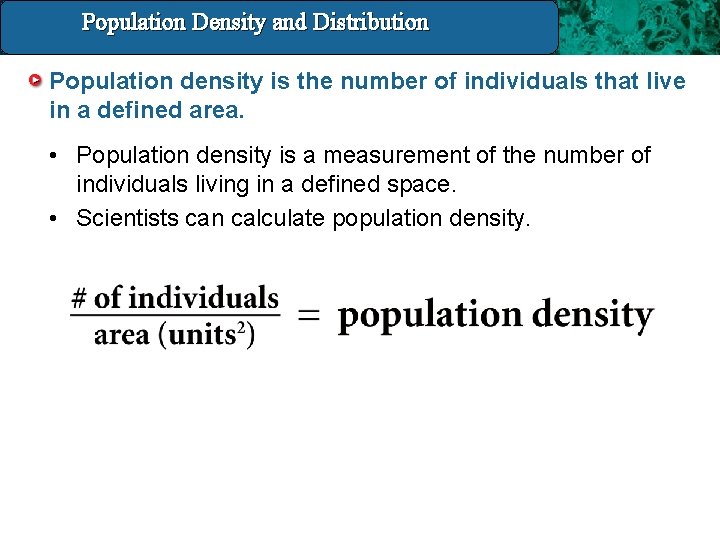
Population Density and Distribution 14. 3 Population Density And Distribution Population density is the number of individuals that live in a defined area. • Population density is a measurement of the number of individuals living in a defined space. • Scientists can calculate population density.
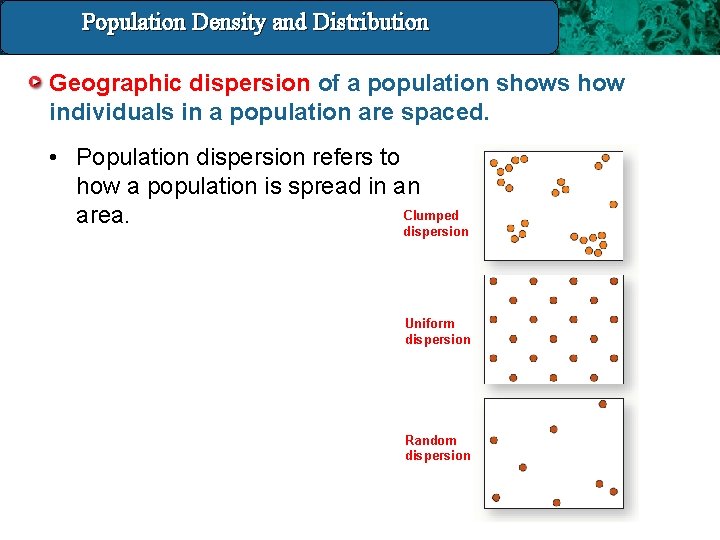
Population Density and Distribution 14. 3 Population Density And Distribution Geographic dispersion of a population shows how individuals in a population are spaced. • Population dispersion refers to how a population is spread in an Clumped area. dispersion Uniform dispersion Random dispersion
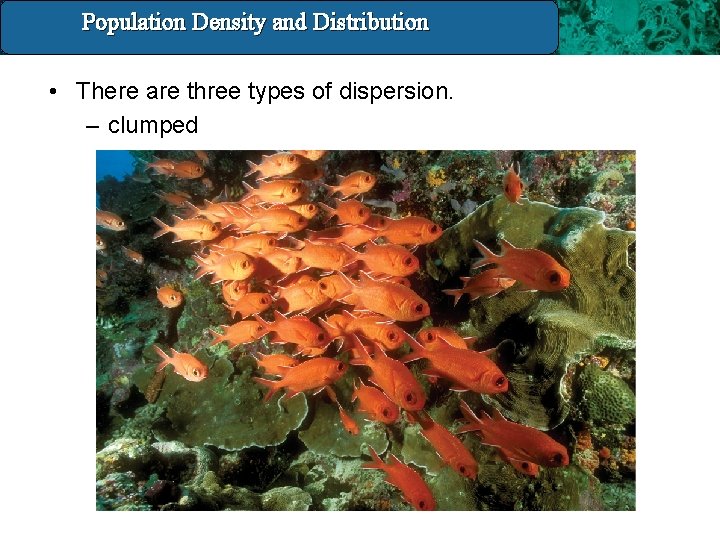
Population Density and Distribution 14. 3 Population Density And Distribution • There are three types of dispersion. – clumped
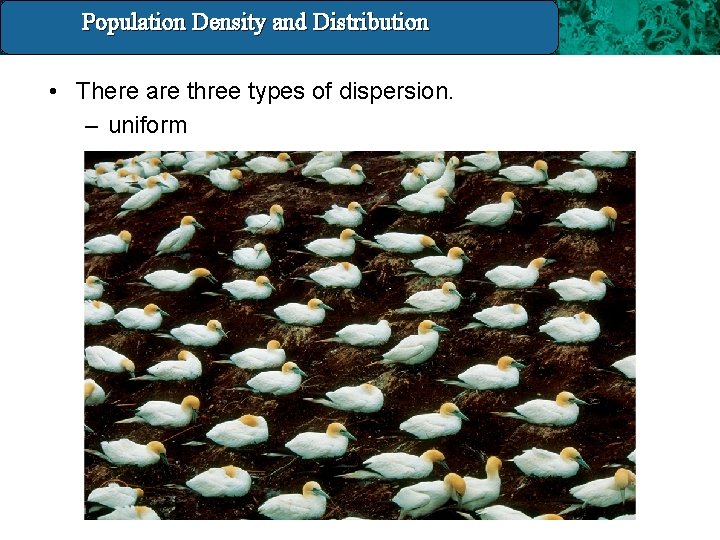
Population Density and Distribution 14. 3 Population Density And Distribution • There are three types of dispersion. – uniform
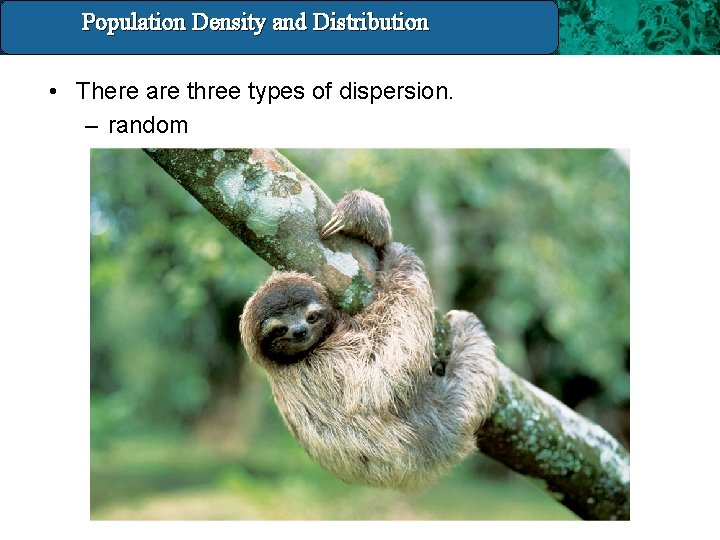
Population Density and Distribution 14. 3 Population Density And Distribution • There are three types of dispersion. – random
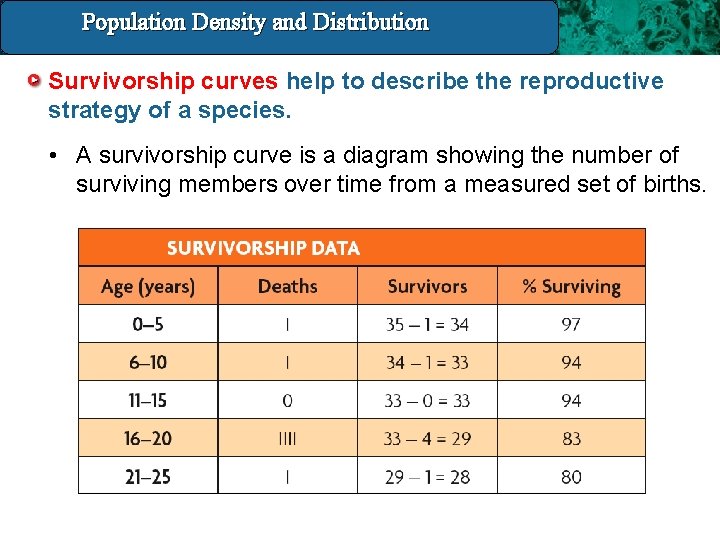
Population Density and Distribution 14. 3 Population Density And Distribution Survivorship curves help to describe the reproductive strategy of a species. • A survivorship curve is a diagram showing the number of surviving members over time from a measured set of births.
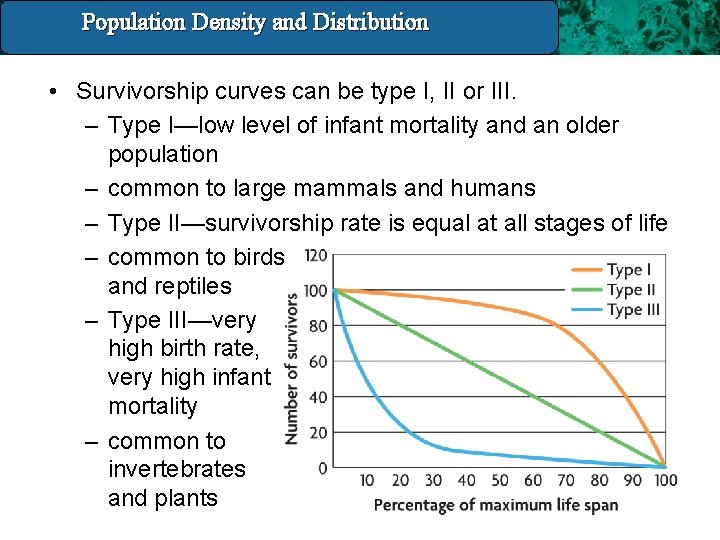
Population Density and Distribution 14. 3 Population Density And Distribution • Survivorship curves can be type I, II or III. – Type I—low level of infant mortality and an older population – common to large mammals and humans – Type II—survivorship rate is equal at all stages of life – common to birds and reptiles – Type III—very high birth rate, very high infant mortality – common to invertebrates and plants
- Slides: 8