
Population Ch 5 Characteristics of Populations 1 Geographic
- Slides: 16
Population Ch. 5
Characteristics of Populations 1. Geographic distribution 2. Population density 3. Growth rate
Population Size • Affected by: 1. Number of births 2. Number of deaths 3. Number of individuals that enter or leave a population. ( immigration vs. emmigration)
Affecting Other Populations • Factors that limit one population in a community may also have an indirect effect on another population. • Ex: lack of water affects the growth of grass, reducing the number of seeds produced. The mice population have less food, the hawks have less food, and so on.
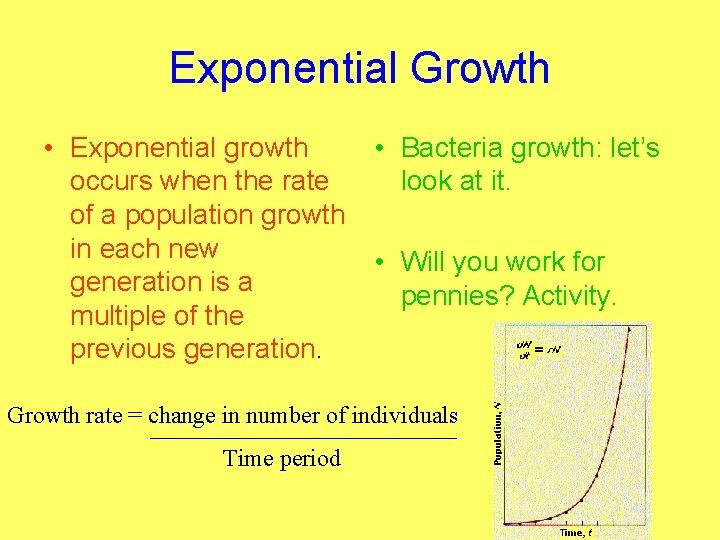
Exponential Growth • Exponential growth • Bacteria growth: let’s occurs when the rate look at it. of a population growth in each new • Will you work for generation is a pennies? Activity. multiple of the previous generation. Growth rate = change in number of individuals Time period
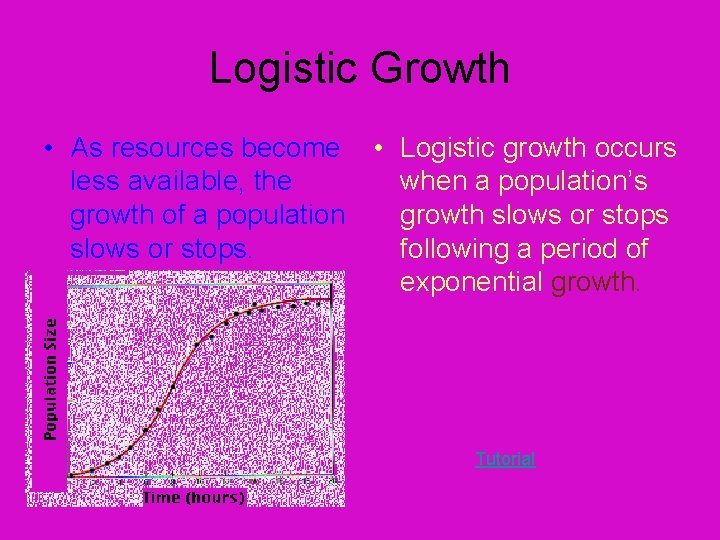
Logistic Growth • As resources become • Logistic growth occurs less available, the when a population’s growth of a population growth slows or stops. following a period of exponential growth. Tutorial
Exponential Growth Meets the Real World • Limiting factor is any • Carrying capacity is biotic or abiotic the number of resource in the individuals in a environment that population that an limits the size of a environment can population. support over a long period of time.
Limiting Factors • Environmental factors such as food availability and temperature that affect an organism’s ability to survive in its environment are limiting factors. • Limiting factors can be biotic or abiotic factor that restricts the existence, numbers, reproduction, or distribution of organisms.
Limits on Population Growth • Limiting factors either cause a decrease in birth rate or an increase in the death rate.
Density-Dependent limiting factors • Factors become limiting only when the population density (# of org. per unit space), reaches a certain level. • Ex: – Predation • Increase predatorsdecrease prey – Disease • More dense populationlimited growth – Competition • Gypsy moths and zebra mussels • Competing for resources
Density- Independent Limiting Factors • Factors that affect all populations in the same way, regardless of density. • Ex: – – Weather Seasonal Cycles Natural Disasters Human Activities
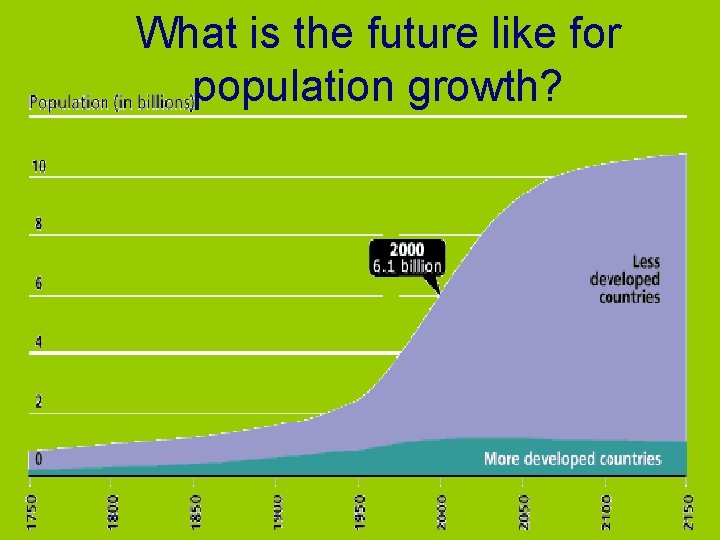
Human Population Growth • Human population was very slow for thousands of years. • Between 1650 and 1850 the population doubled, passing the 1 billion mark. • After 1850, it only took 80 years to double to 2 billion. • 4 billion 45 years later. • It is estimated that the human population in now increasing 90 million people a YEAR. • Far more people are born than are dying. 3 x as many.
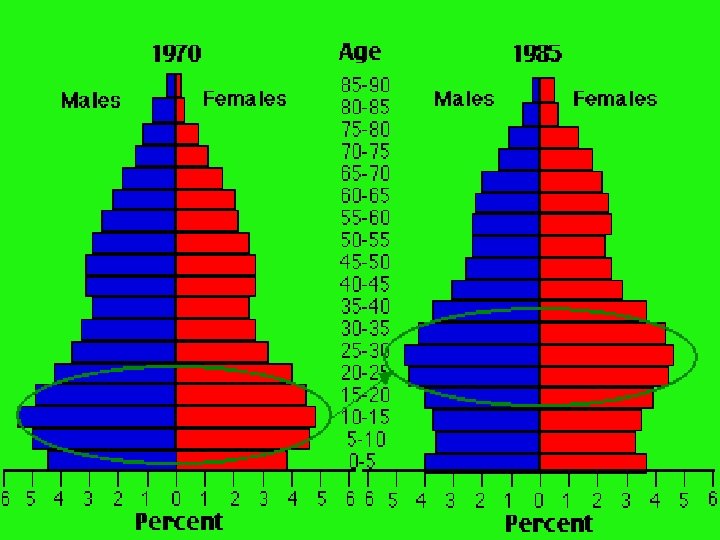
Patterns of Population Growth • Demographic Transition- dramatic change in birth and death rates. • What do you think the trend is now with birth and death rates? • Age-structure diagrams- graph number of people in different age groups in the population. • What event is shown in the next agestructure diagram?
What is the future like for population growth?
Population Growth Review • Click on the following link and choose your text book. Review the links and take the self-test. • Ch. 5 Review