
Population Biology Levels of Organization Ecological organization Species

Population Biology
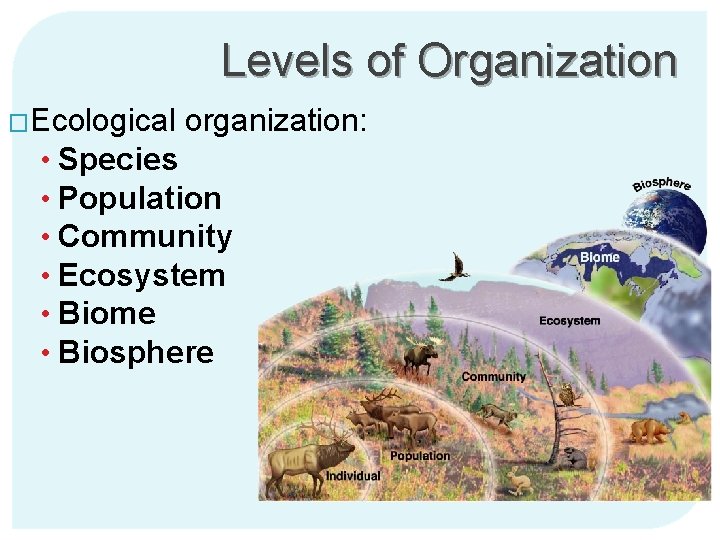
Levels of Organization �Ecological organization: • Species • Population • Community • Ecosystem • Biome • Biosphere

Species n Group of similar organisms that can breed and produce fertile offspring
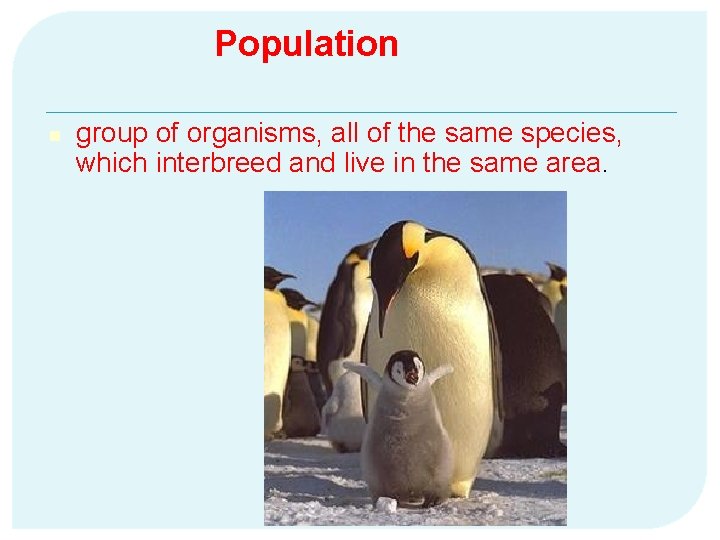
Population n group of organisms, all of the same species, which interbreed and live in the same area.
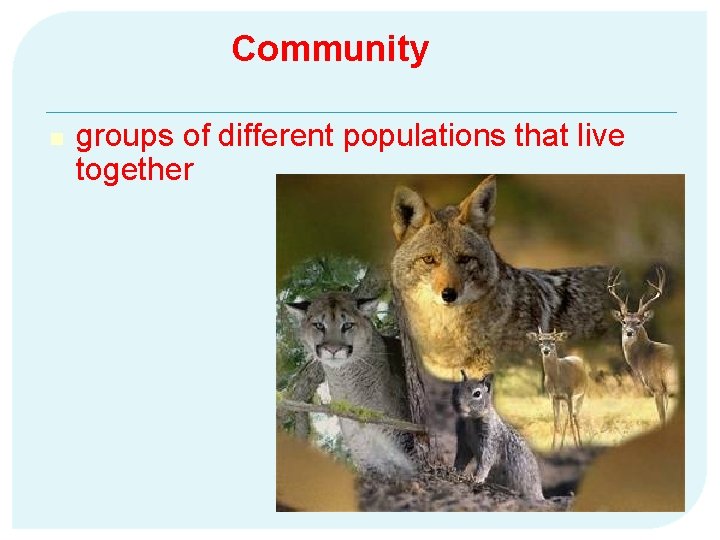
Community n groups of different populations that live together
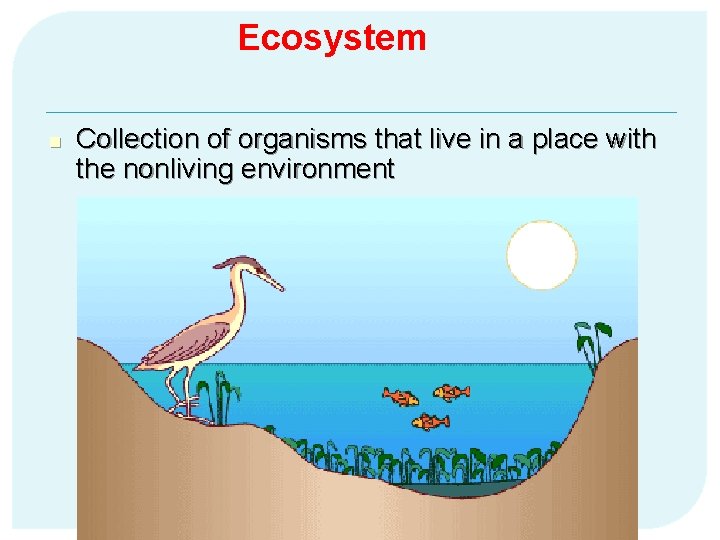
Ecosystem n Collection of organisms that live in a place with the nonliving environment
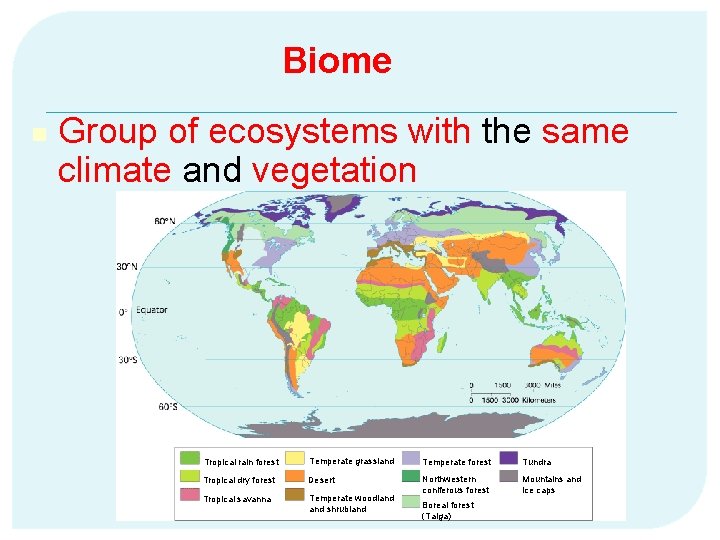
Biome n Group of ecosystems with the same climate and vegetation Tropical rain forest Temperate grassland Temperate forest Tundra Tropical dry forest Desert Tropical savanna Temperate woodland shrubland Northwestern coniferous forest Mountains and ice caps Boreal forest (Taiga)

Biosphere n The part of the earth where life exists including land, water, air, and atmosphere
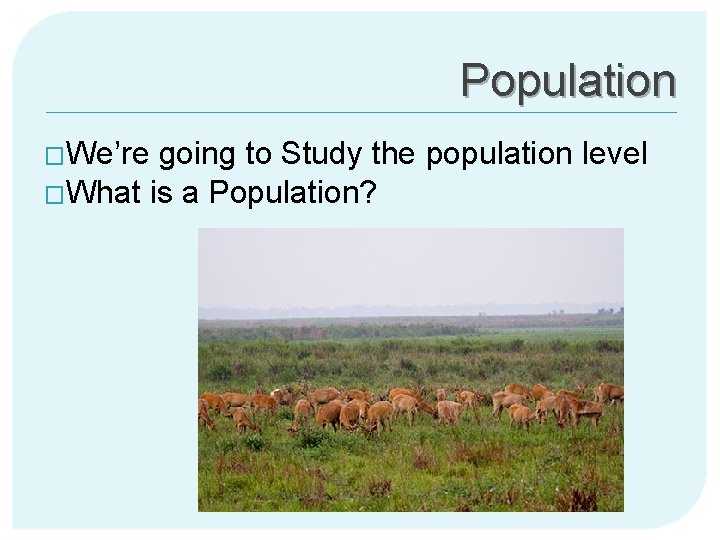
Population �We’re going to Study the population level �What is a Population?
Density and Distribution of Populations �Population Density - Number of individuals per unit area or volume. �Population Distribution - Pattern of dispersal of individuals within the area of interest.
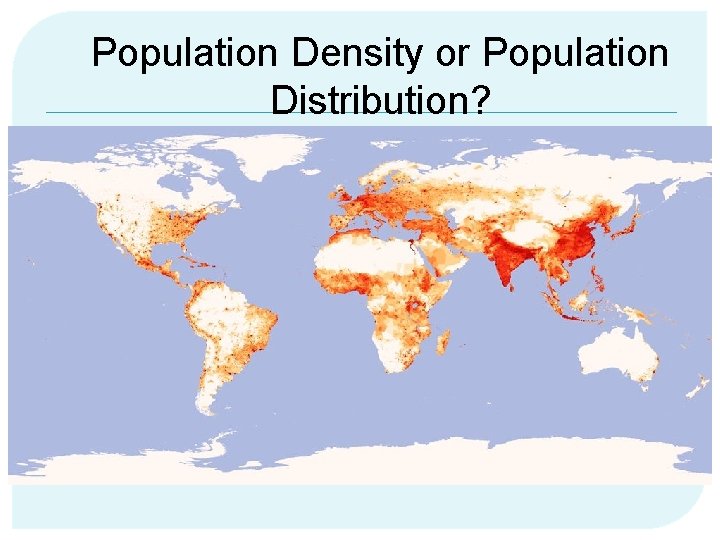
Population Density or Population Distribution?
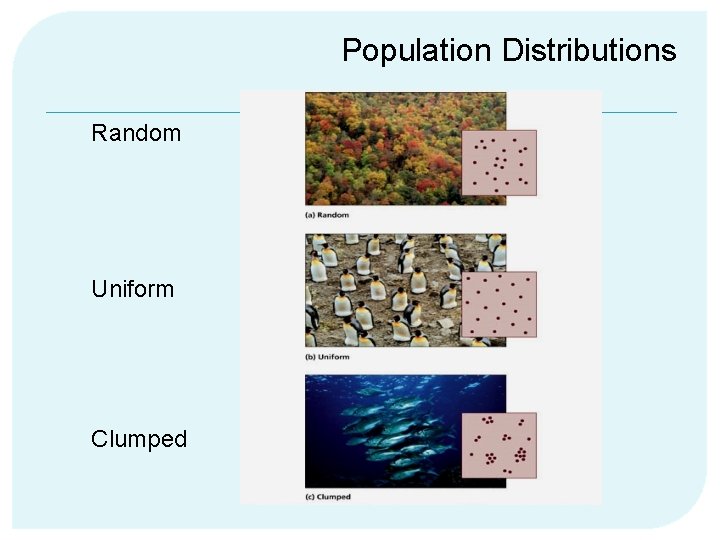
Population Distributions Random Uniform Clumped
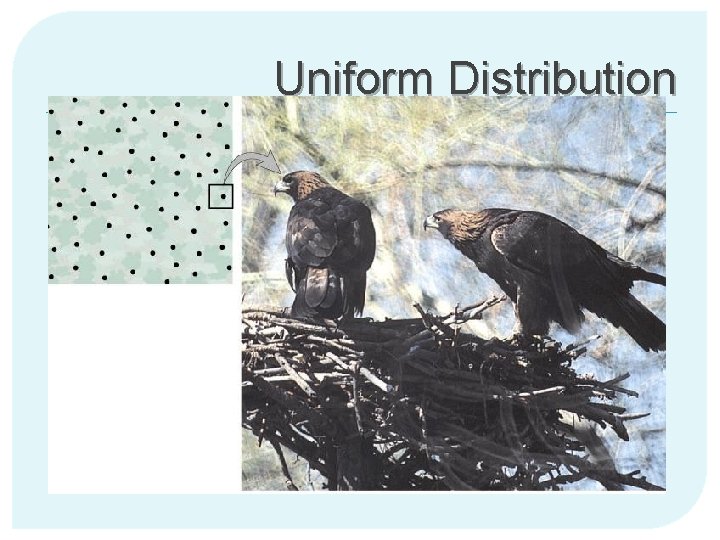
Uniform Distribution
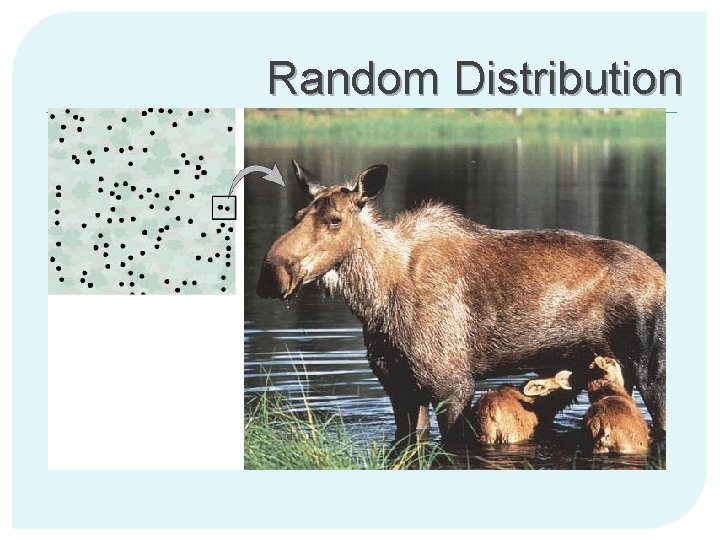
Random Distribution
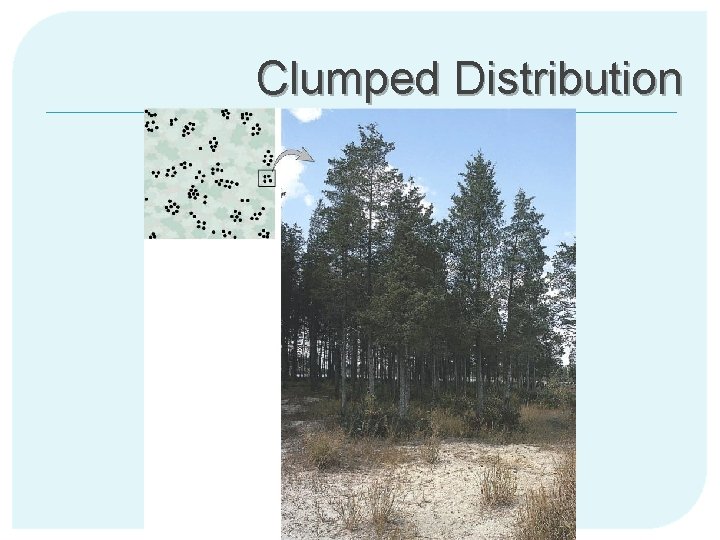
Clumped Distribution
What controls population?
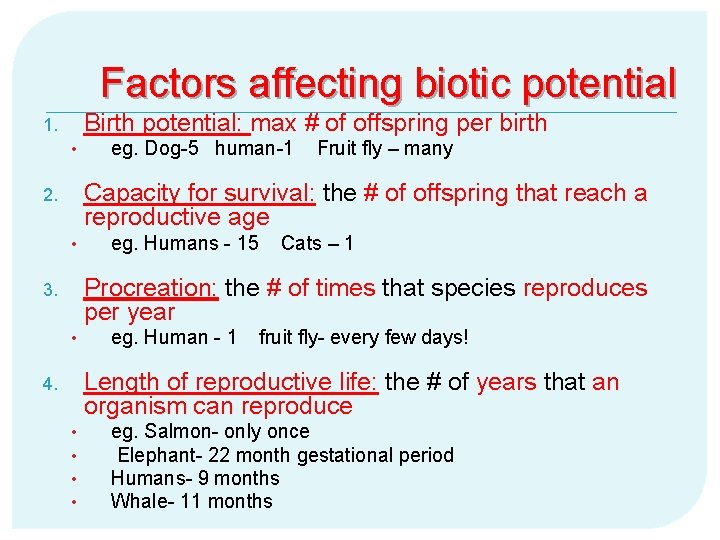
Factors affecting biotic potential Birth potential: max # of offspring per birth 1. • eg. Dog-5 human-1 Fruit fly – many Capacity for survival: the # of offspring that reach a reproductive age 2. • eg. Humans - 15 Cats – 1 Procreation: the # of times that species reproduces per year 3. • eg. Human - 1 fruit fly- every few days! Length of reproductive life: the # of years that an organism can reproduce 4. • • eg. Salmon- only once Elephant- 22 month gestational period Humans- 9 months Whale- 11 months
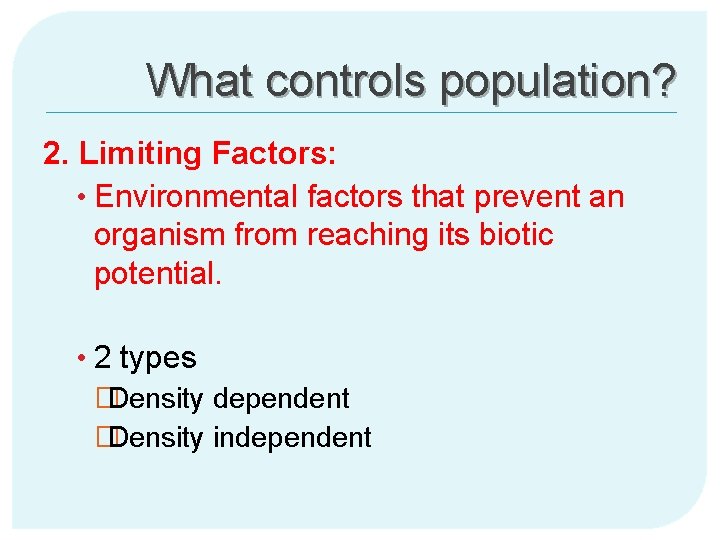
What controls population? 2. Limiting Factors: • Environmental factors that prevent an organism from reaching its biotic potential. • 2 types �Density dependent �Density independent

�There are 2 main categories of limiting factors: • 1. Density-dependent factors- factor that depend on the size of the population to act • Density-independent factors- affect all populations equally, regardless of population size
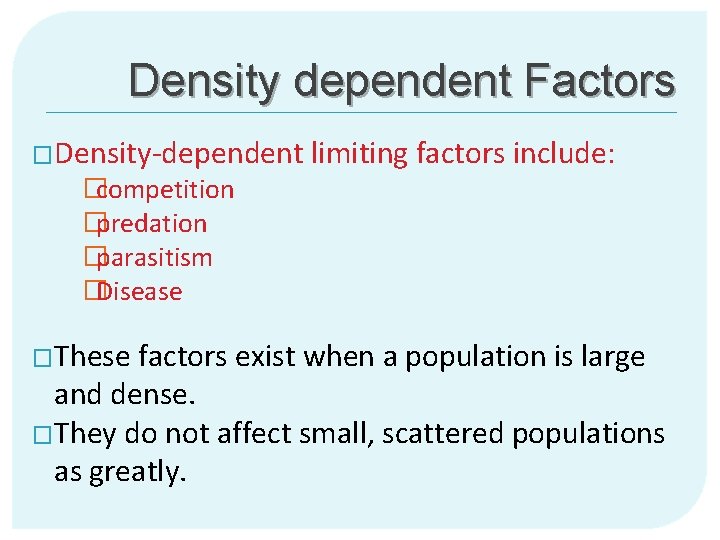
Density dependent Factors �Density-dependent �competition �predation �parasitism �Disease �These limiting factors include: factors exist when a population is large and dense. �They do not affect small, scattered populations as greatly.

Parasitism �Organisms that live and feed on other organisms �The host is the organism that the parasites live on. �parasites don’t kill the host but may weaken causing death
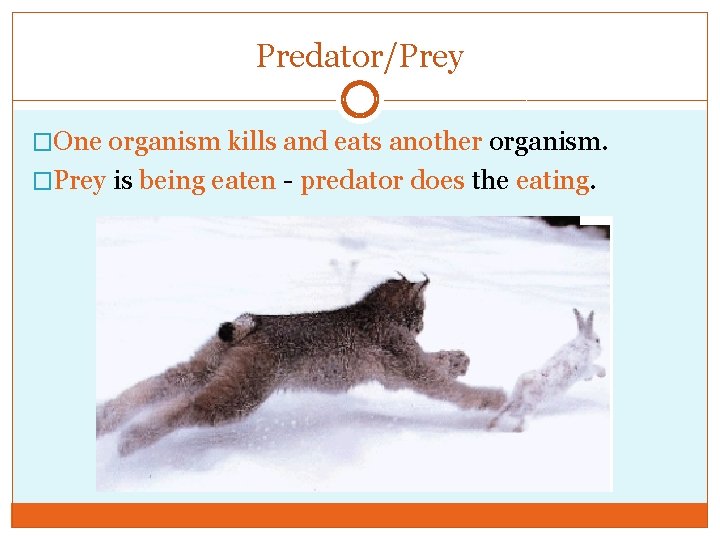
Predator/Prey �One organism kills and eats another organism. �Prey is being eaten - predator does the eating.
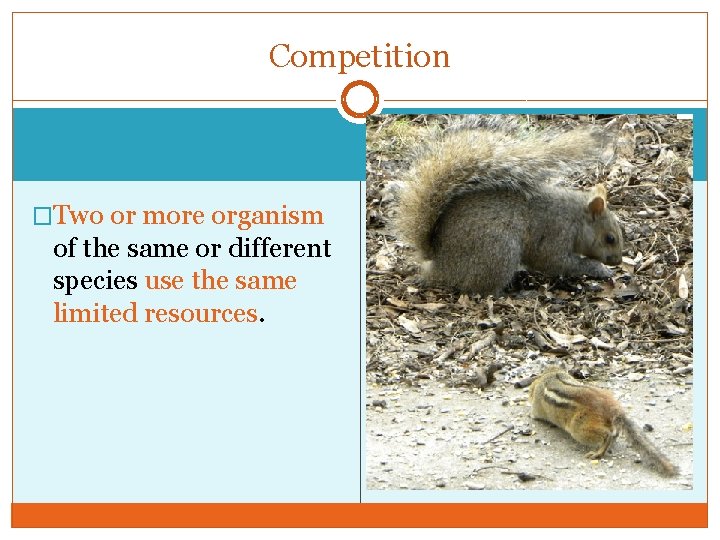
Competition �Two or more organism of the same or different species use the same limited resources.
Density Independent Factors �Density Independent Include natural phenomena, such as weather events �unusual weather �natural disasters �seasonal cycles �certain human activities—such as damming rivers and clear-cutting forests
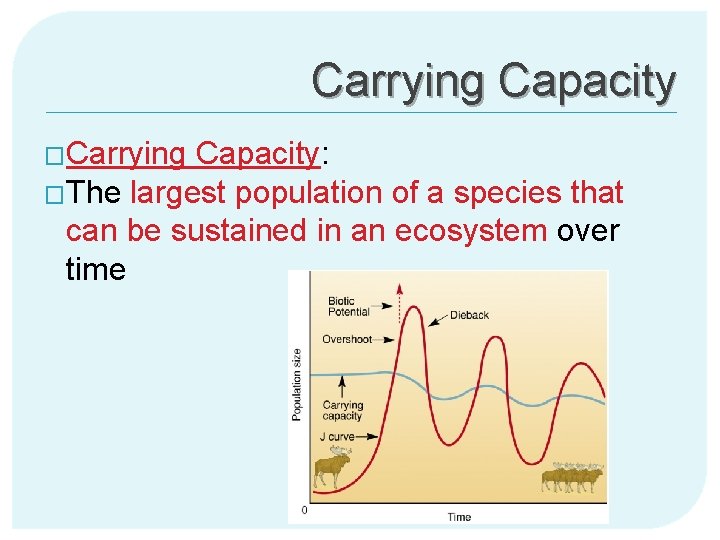
Carrying Capacity �Carrying Capacity: �The largest population of a species that can be sustained in an ecosystem over time

Our Future?
�Population Graphing Worksheet
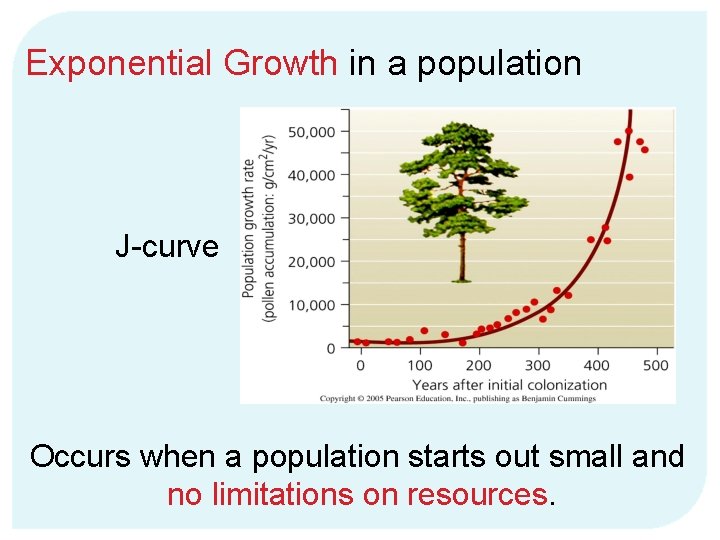
Exponential Growth in a population J-curve Occurs when a population starts out small and no limitations on resources.
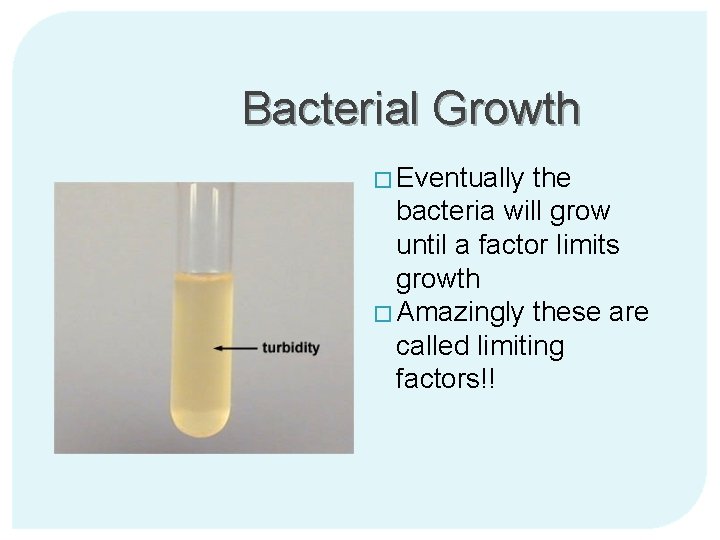
Bacterial Growth � Eventually the bacteria will grow until a factor limits growth � Amazingly these are called limiting factors!!
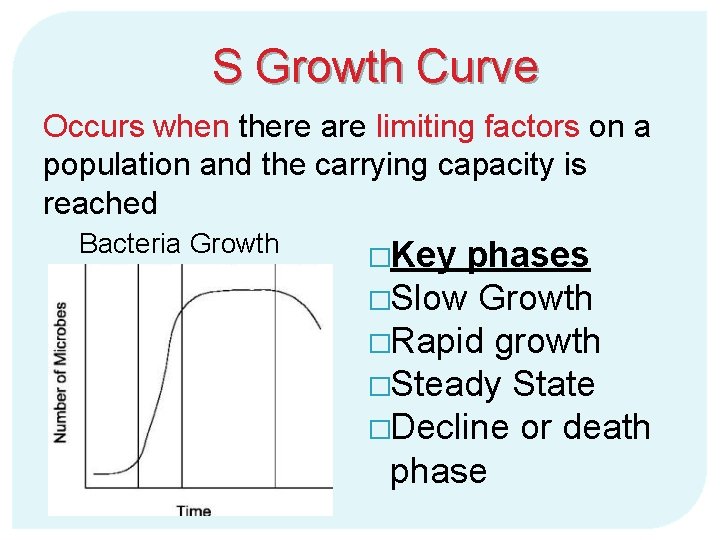
S Growth Curve Occurs when there are limiting factors on a population and the carrying capacity is reached Bacteria Growth �Key phases �Slow Growth �Rapid growth �Steady State �Decline or death phase


Exponential vs S Curve
- Slides: 33