
POORNIMA COLLEGE OF ENGINEERING A SEMINAR ON ZIGBEE

POORNIMA COLLEGE OF ENGINEERING A SEMINAR ON “ZIGBEE” GUIDED BY: MS. SHIKHA BHARDWAJ LECTURER, ECE BY: VISHWAS MEHTA VIII SEM, ECE-B www. powerpointpresentationon. bogspot. com
WHAT IS ZIGBEE? a. Technological Standard Created for Control and Sensor Networks b. Based on the IEEE 802. 15. 4 Standard c. Created by the Zig. Bee Alliance
SENSOR/CONTROL NETWORK REQUIREMENTS a. Large networks (large number of devices and large coverage area) that can form autonomously and that will operate very reliably for years without any operator intervention b. Very long battery life (years off of a AA cell), very low infrastructure cost (low device & setup costs) and very low complexity and small size c. Device data rate and Qo. S needs are low d. Standardized protocols are necessary to allow multiple vendors to interoperate 3
WHY ZIGBEE? a. Reliable b. Mesh networking c. Low data-rate applications d. Very long battery life e. Secure f. Scalable g. Low cost h. Global applicability 4
HOW DOES ZIGBEE WORK? a. Engineers feel Wi-Fi and Bluetooth may be unsuitable. This spawned the idea of digital radio networks via direct-sequence spread spectrum coding. b. Zig. Bee-compliant radios may operate on one of three different radio bands: the 800 MHz, 900 MHz, or 2. 4 GHz frequencies. c. Follows the internationally recognized radio standard for the MAC and PHY Layer.
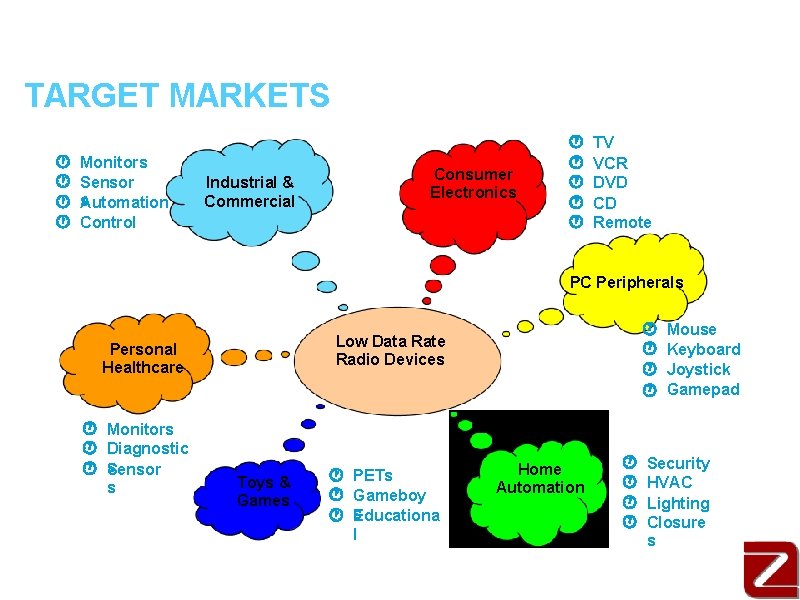
TARGET MARKETS Monitors Sensor s Automation Control Consumer Electronics Industrial & Commercial TV VCR DVD CD Remote PC Peripherals Personal Healthcare Monitors Diagnostic s Sensor s Low Data Rate Radio Devices Toys & Games PETs Gameboy s Educationa l Home Automation Mouse Keyboard Joystick Gamepad Security HVAC Lighting Closure s
PC And Peripherals a. Desktop PCs and Home Entertainment Systems (Home Theatre TV) a. Computer peripherals; b. HID devices b. Video conference equipment a. Remote control c. Video gaming equipment a. Multi-player PC & video games b. Remote controls for audio and video equipment 7 7
Human Input Devices (HID) a. Keyboard b. Mouse / Pointing Device c. Remote Controls (controls for audio & video equipment) d. Gaming device e. Double Joystick 88
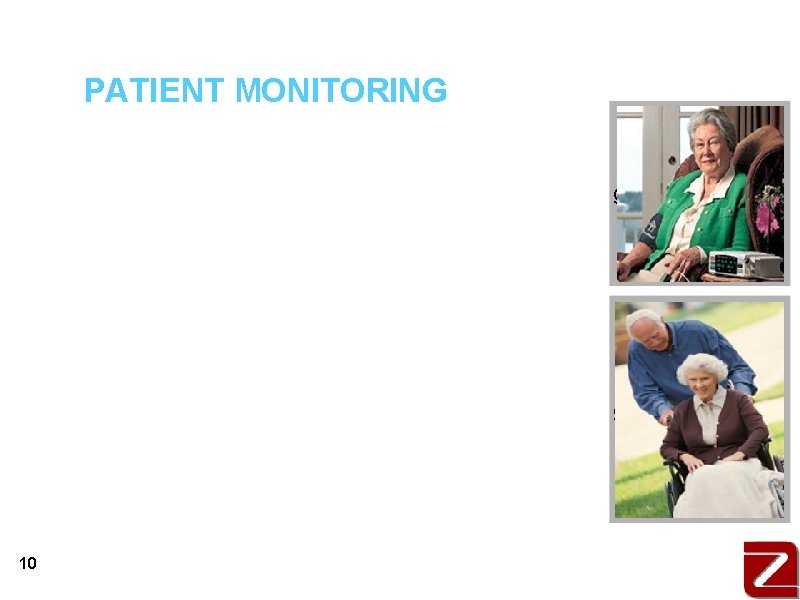
PATIENT MONITORING a. May allow more patient freedom a. Monitors vital statistics and sends via internet a. Patient can remain in their own home b. Lowers cost and improves comfort b. Can be used in hospice care a. Patients are allowed greater movement b. Reduced staff to patient ratio c. Light way to bathroom when they get out of bed a. Reduces patient confusion 1010 graphic
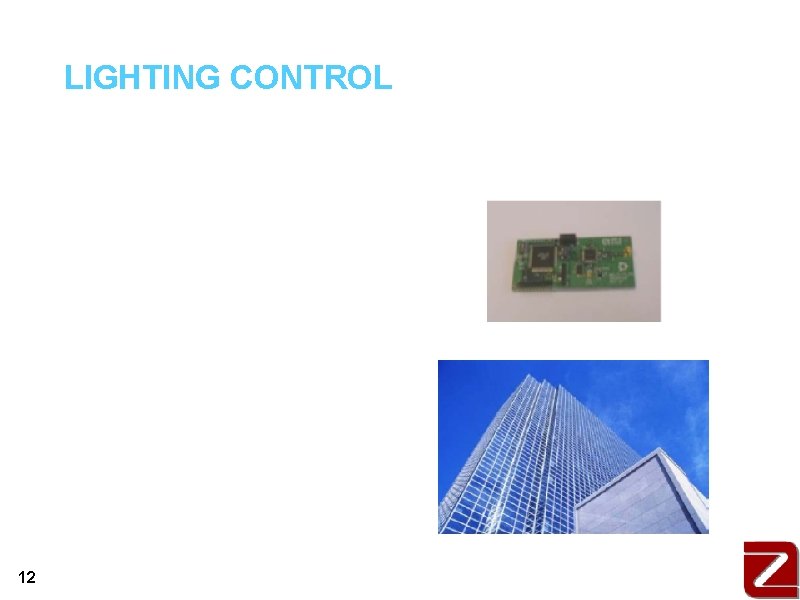
LIGHTING CONTROL a. Wireless Lighting Control a. Dimmable ballasts b. Light switches anywhere c. Customizable lighting schemes d. Energy Saving on bright days 12
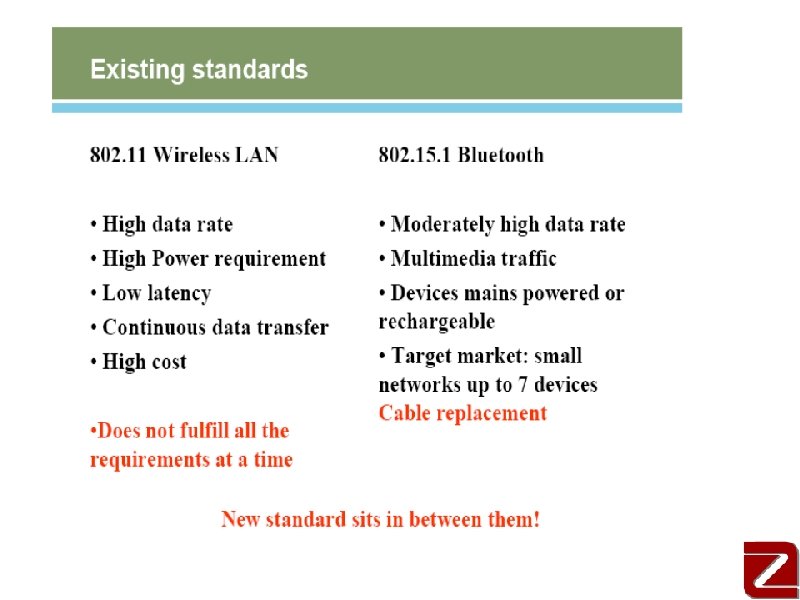
ZIGBEE VS BLUETOOTH
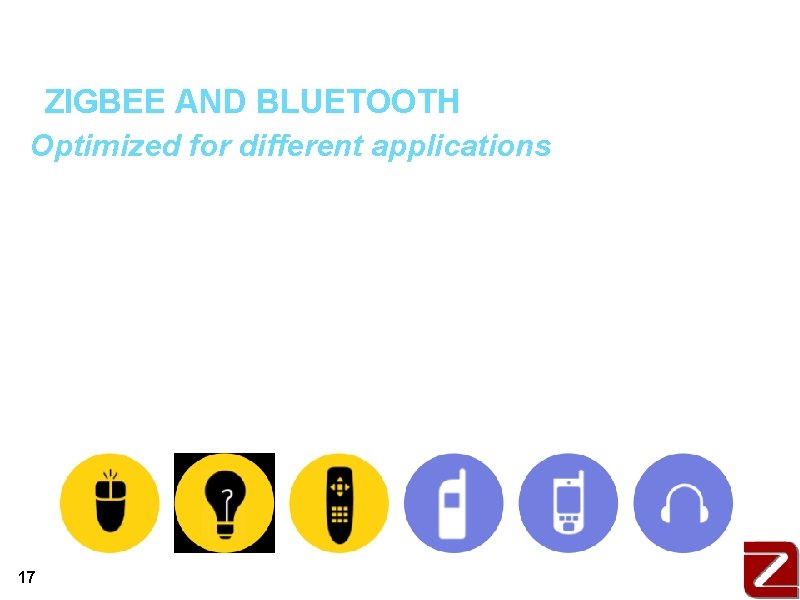
ZIGBEE AND BLUETOOTH Optimized for different applications a. a. Zig. Bee a. Smaller packets over large network b. Mostly Static networks with many, infrequently used devices c. Home automation, toys, remote controls, etc. 17 Bluetooth a. Larger packets over small network b. Ad-hoc networks c. File transfer d. Screen graphics, pictures, handsfree audio, Mobile phones, headsets, PDAs, etc.
WIRELESS TECHNOLOGY COMPARISON CHART
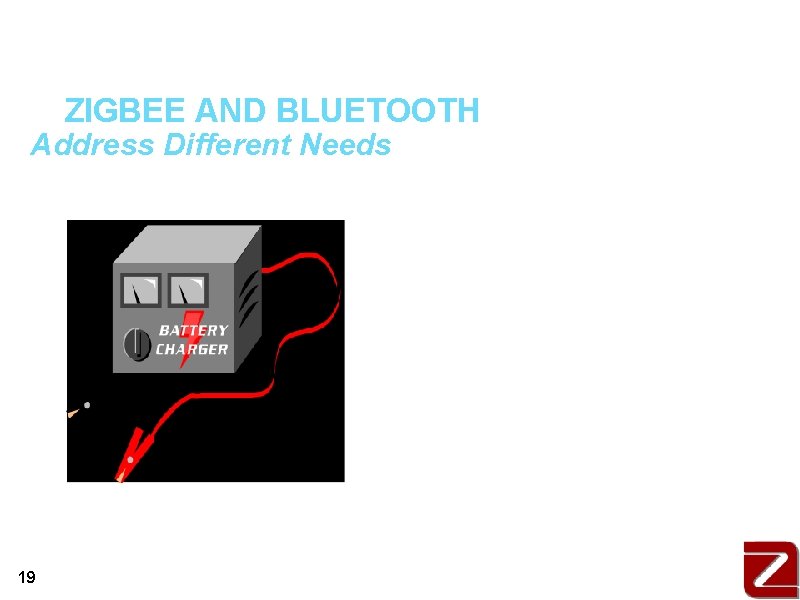
ZIGBEE AND BLUETOOTH Address Different Needs a. Bluetooth is a cable replacement for items like Phones, Laptop Computers, Headsets b. Bluetooth expects regular charging a. Target is to use <10% of host power 19
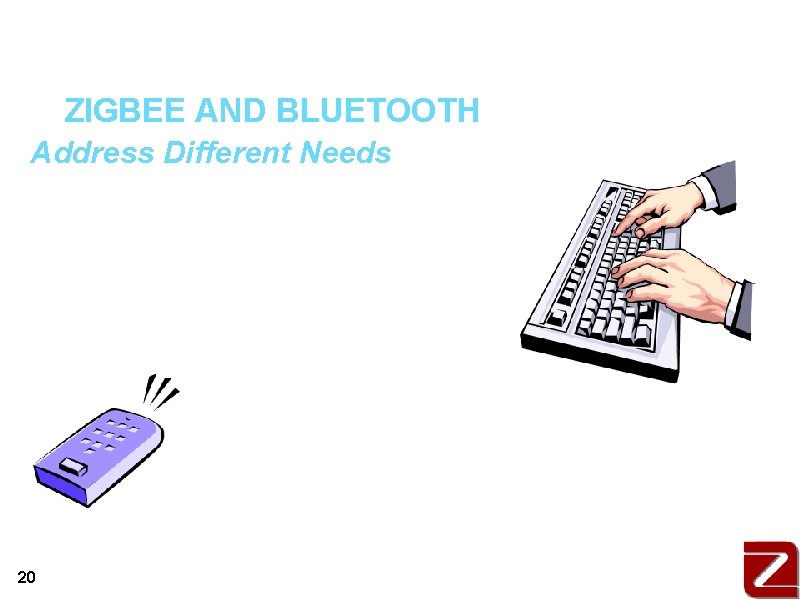
ZIGBEE AND BLUETOOTH Address Different Needs a. Zig. Bee is better for devices Where the battery is ‘rarely’ replaced a. Targets are : a. Tiny fraction of host power b. New opportunities where wireless not yet used 20
Zig. Bee and Bluetooth CONCLUSION a. Zig. Bee targets applications not addressable by Bluetooth or any other wireless standard • Zig. Bee and Bluetooth complement for a broader solution 21
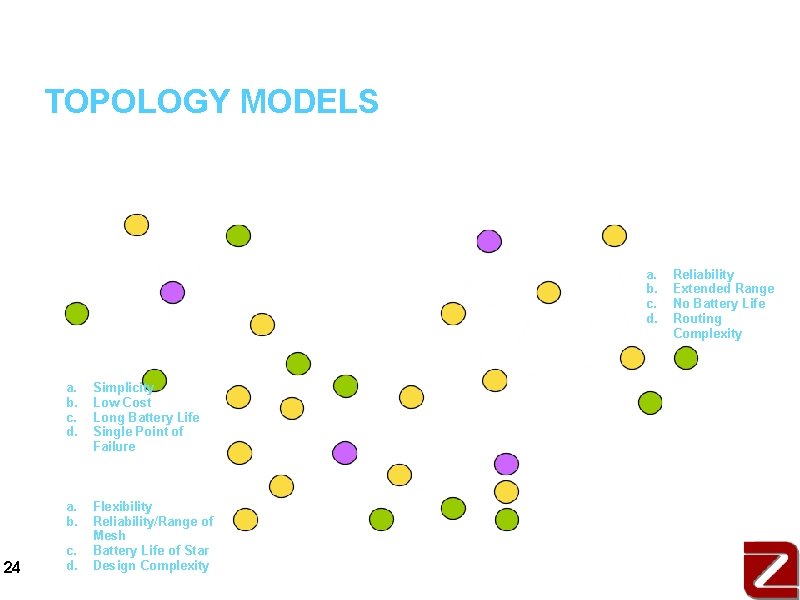
TOPOLOGY MODELS a. Allows users to balance system cost, reliability & battery life Mesh a. b. c. d. Reliability Extended Range No Battery Life Routing Complexity Star a. b. c. d. Simplicity Low Cost Long Battery Life Single Point of Failure Hybrid (Cluster Tree)a. Flexibility b. 24 c. d. Reliability/Range of Mesh Battery Life of Star Design Complexity PAN coordinator Full Function Device Reduced Function Device
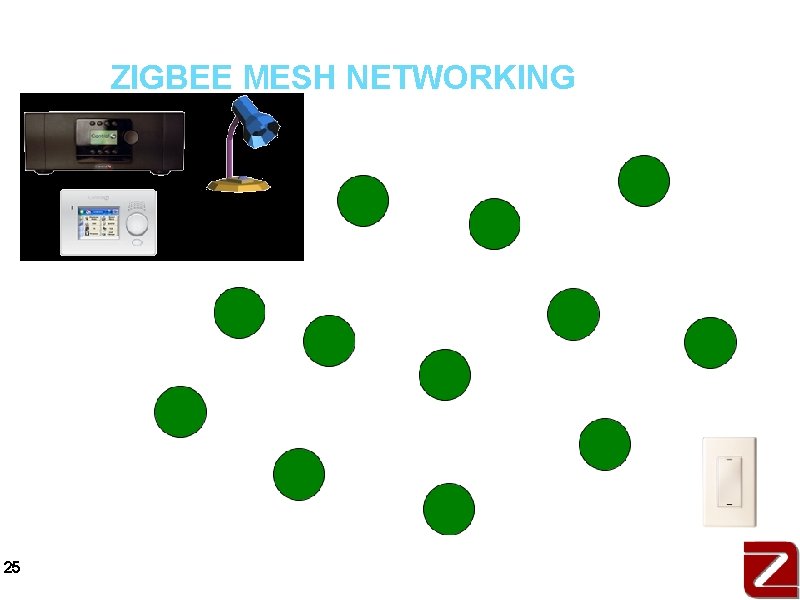
ZIGBEE MESH NETWORKING 25
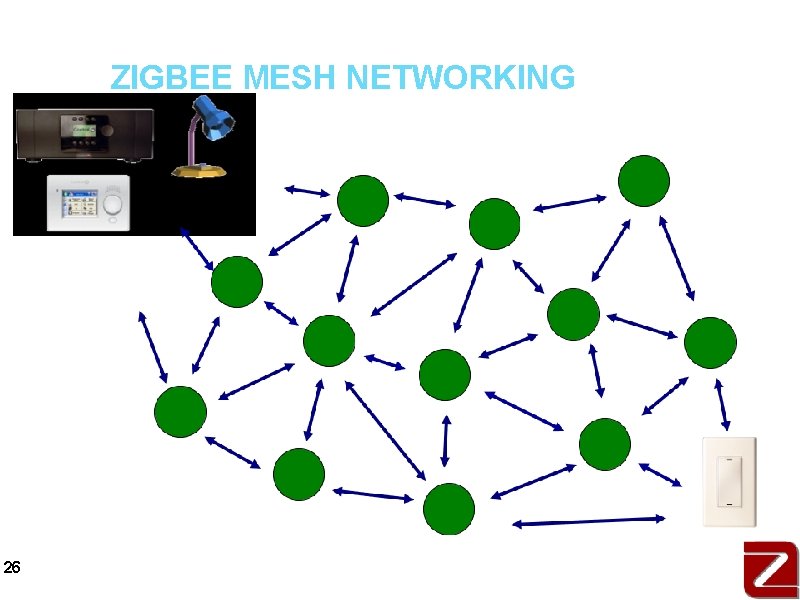
ZIGBEE MESH NETWORKING 26
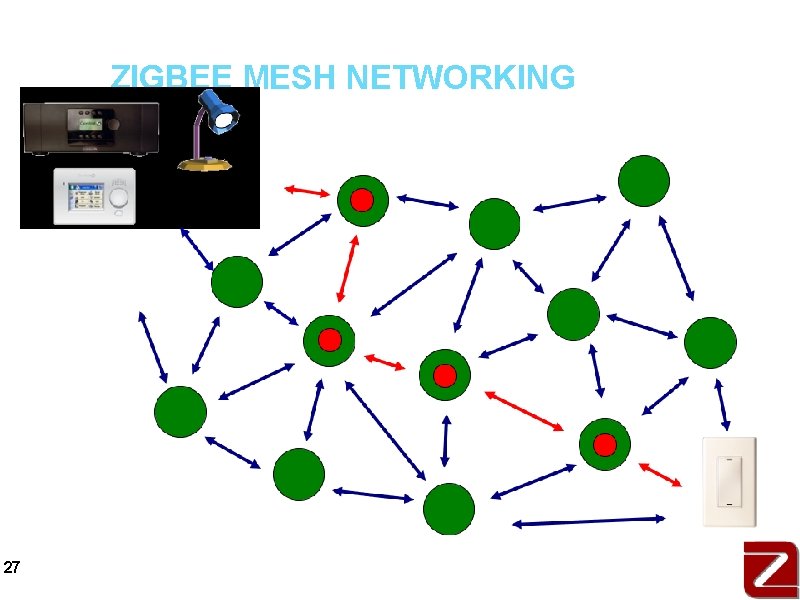
ZIGBEE MESH NETWORKING 27
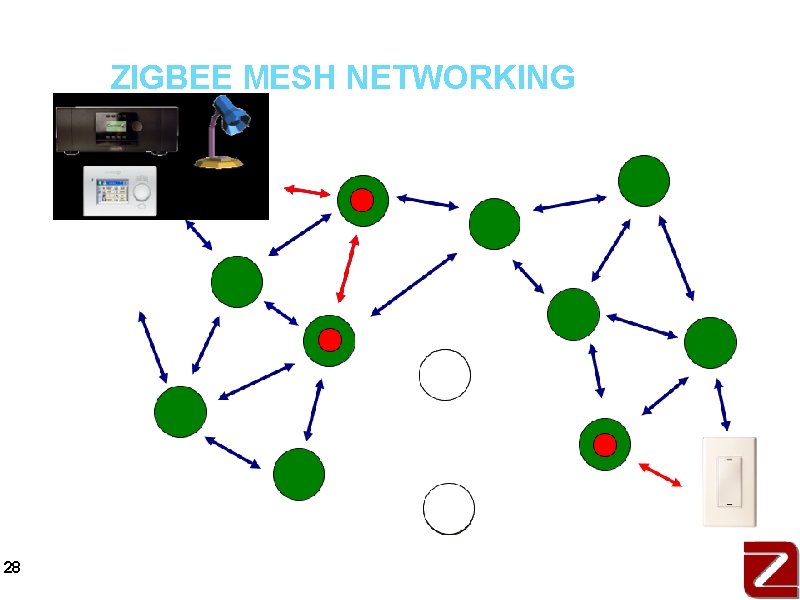
ZIGBEE MESH NETWORKING 28
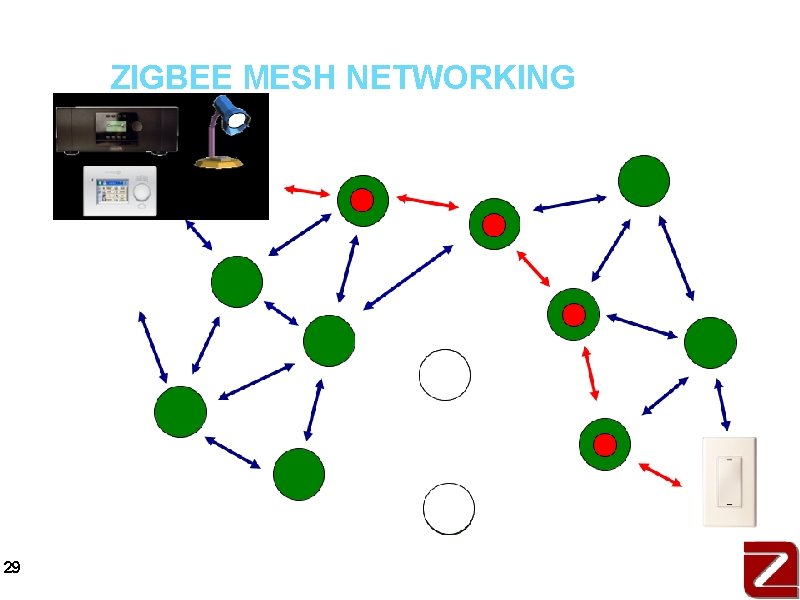
ZIGBEE MESH NETWORKING 29
IEEE 802. 15. 4 a. IEEE 802. 15. 4 is a standard defined by IEEE for low rate, wireless personal area network. b. The standard defines the Physical layer and Medium Access Layer 30
IEEE 802. 15. 4 CONTINUED a. PHY- It defines low power spread spectrum radio operating at 2. 4 GHz with a basic data rate of 250 kbps b. MAC -defines how multiple 802. 15. 4 radios operating in the same area will share the airwaves. The MAC supports several architectures, including a star topology, tree topologies and mesh topologies 31
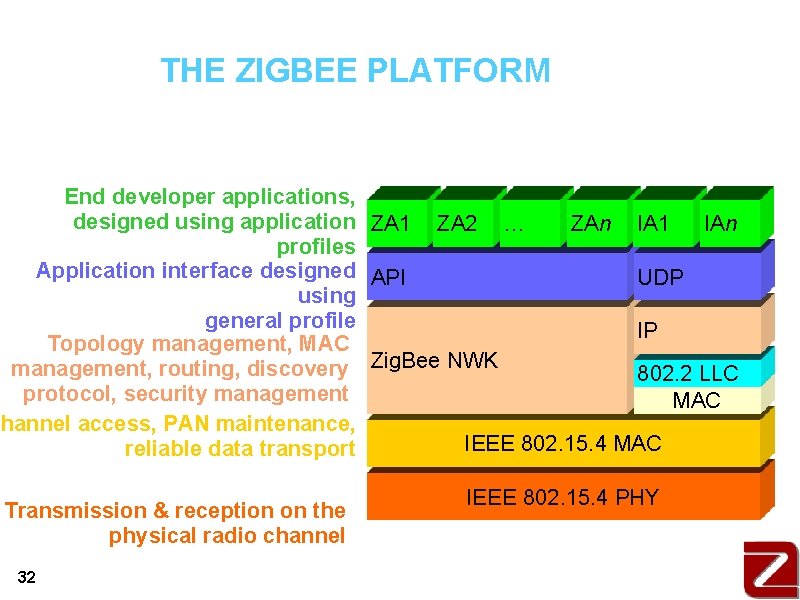
THE ZIGBEE PLATFORM End developer applications, designed using application ZA 1 ZA 2 … ZAn IA 1 IAn profiles Application interface designed API UDP using general profile IP Topology management, MAC management, routing, discovery Zig. Bee NWK 802. 2 LLC protocol, security management MAC Channel access, PAN maintenance, IEEE 802. 15. 4 MAC reliable data transport Transmission & reception on the physical radio channel 32 IEEE 802. 15. 4 PHY
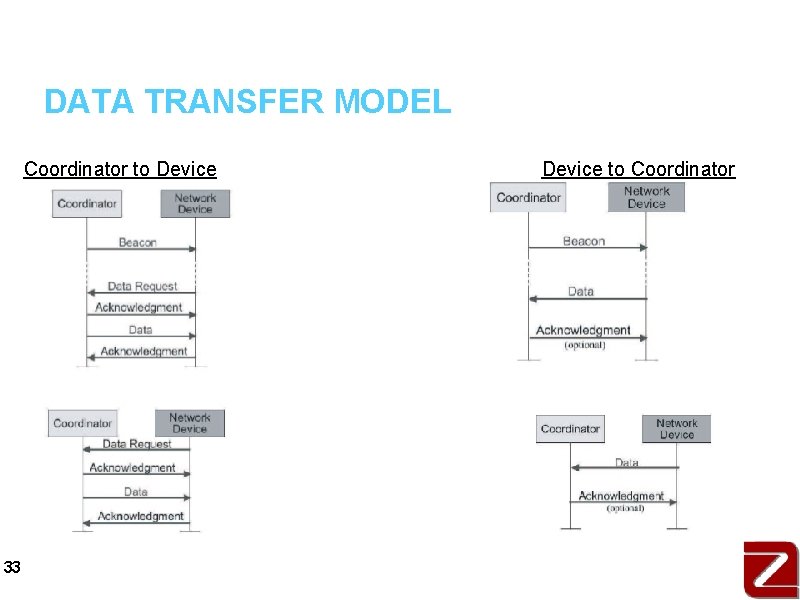
DATA TRANSFER MODEL Coordinator to Device to Coordinator Beacon Enabled Mode Non-Beacon Enabled Mode 33
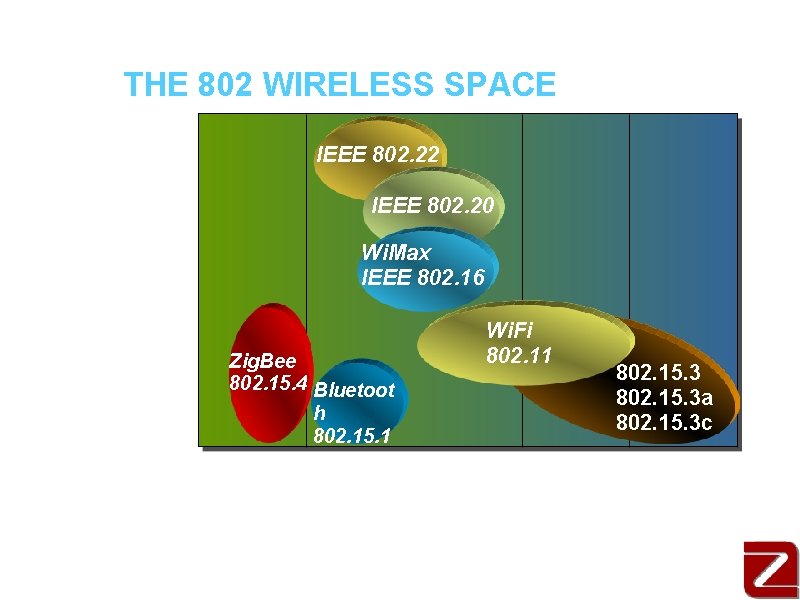
THE 802 WIRELESS SPACE WWAN IEEE 802. 22 IEEE 802. 20 WMAN Ra ng e Wi. Max IEEE 802. 16 WLAN Zig. Bee 802. 15. 4 Bluetoot h 802. 15. 1 WPAN 0. 01 0. 1 Wi. Fi 802. 11 1 10 Data Rate (Mbps) 802. 15. 3 a 802. 15. 3 c 1000

PROS AND CONS Pros a. good extension of existing standards • supported by many companies • low power consumption • low cost • easy implemented (Designer concentrates on end application) • flexible network structure Cons a. Not many end devices available yet • Single point of failure (centralized architecture)
SOME PARTICIPANTS Comp. Xs
ZIGBEE ALLIANCE - MEMBERS and many more. .

Parting Thought “Just as the personal computer was a symbol of the '80 s, and the symbol of the '90 s is the World Wide Web, the next nonlinear shift, is going to be the advent of cheap sensors. ” -Paul Saffo Institute for the Future


Thank you for your attention! 41
- Slides: 34