
Pond Problems Typical problems Aquatic weed identification and
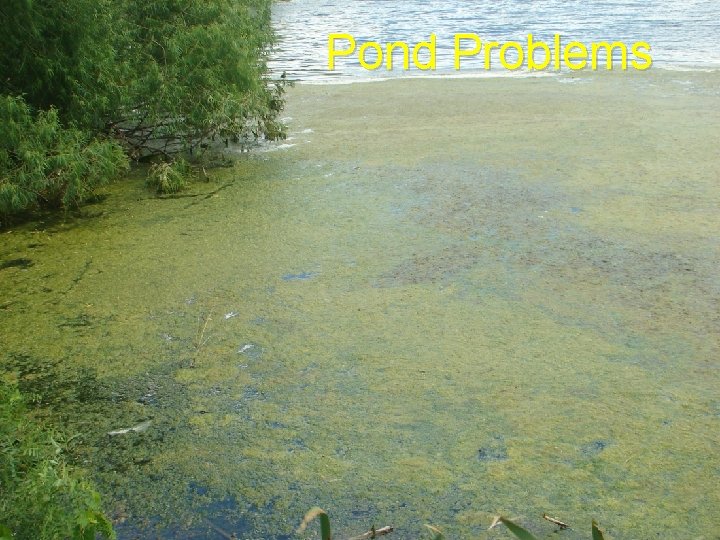
Pond Problems
Typical problems • Aquatic weed identification and control – http: //aquaplant. tamu. edu/plant-identification/ • • • Low (no) water Fish stocking or restocking Grubs in fish Geese Beaver and muskrats Turtles
Aquatic Weed Control • Treatment recommended when aquatic weeds cover more than 25 percent of the pond’s surface area. • Types of control – physical – chemical – biological
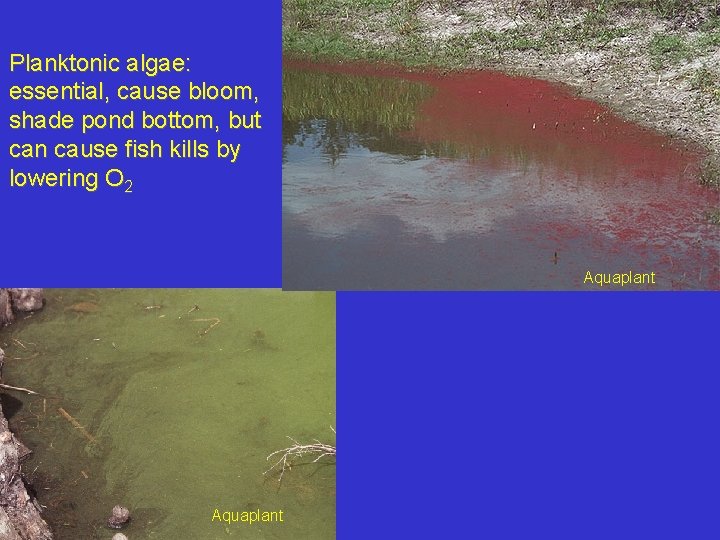
Planktonic algae: essential, cause bloom, shade pond bottom, but can cause fish kills by lowering O 2 Aquaplant

Filamentous algae: Single cells that form long chains and then float. No known direct food value except for invertebrates. Aquaplant

Chara: called muskgrass or skunkweed because of garlic-like odor, often confused with emerged flowering plants, crunchy texture Aquaplant
Floating Plants • • (free floating or rooted with floating leaves) Duckweed Watermeal Water lily American lotus
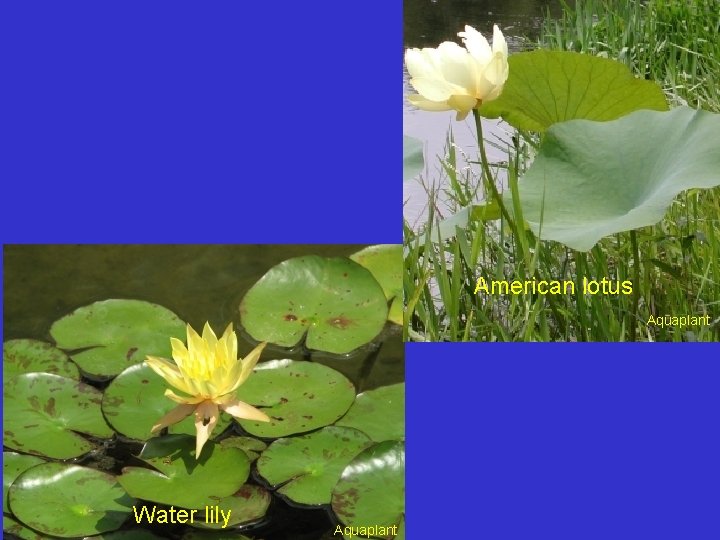
American lotus Aquaplant Water lily Aquaplant
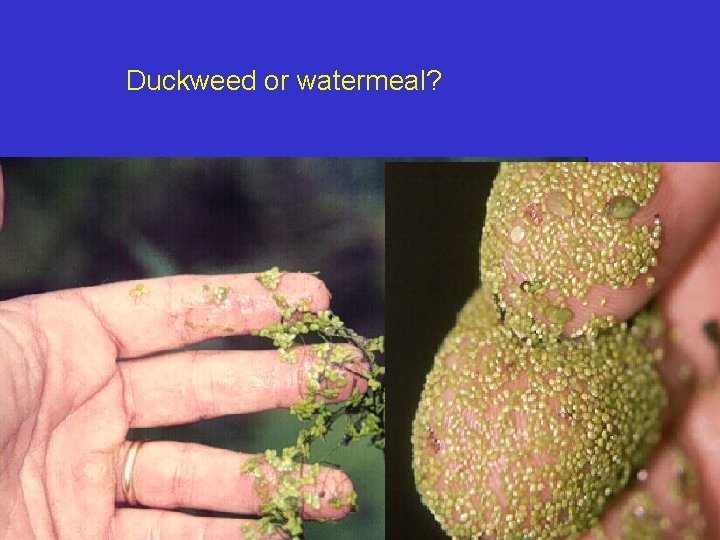
Duckweed or watermeal?
Submerged plants (grow mainly below surface and have very soft stems) • • • Pondweeds Elodea Watermilfoil Coontail Naiads Bladderwort
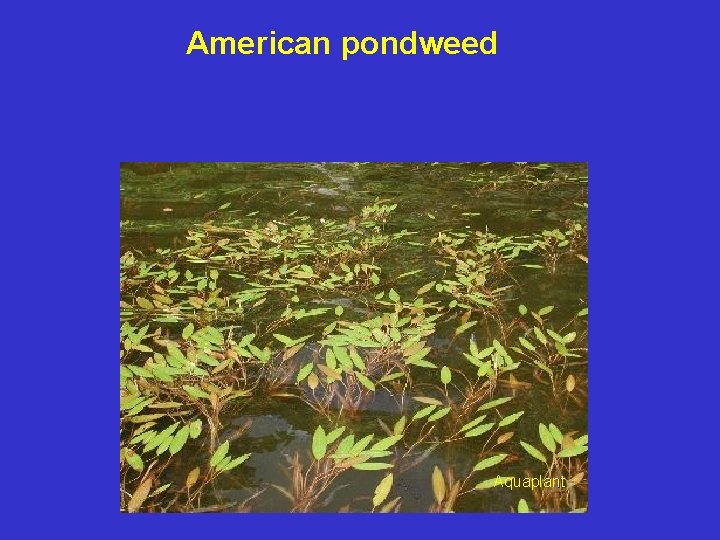
American pondweed Aquaplant
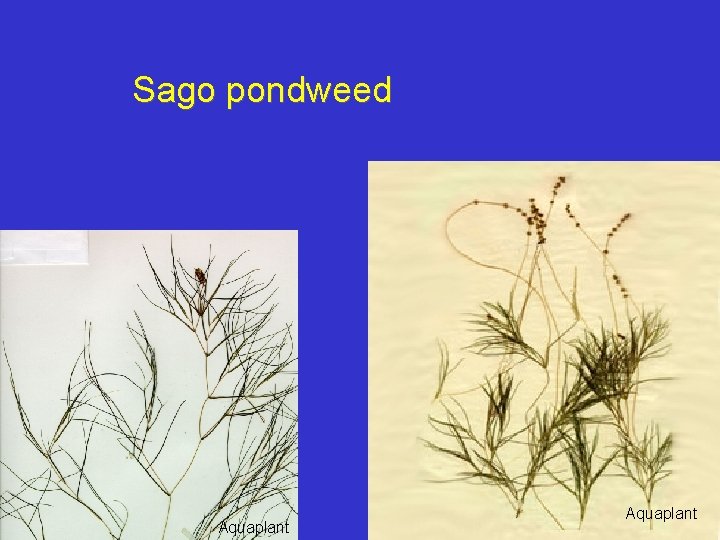
Sago pondweed Aquaplant
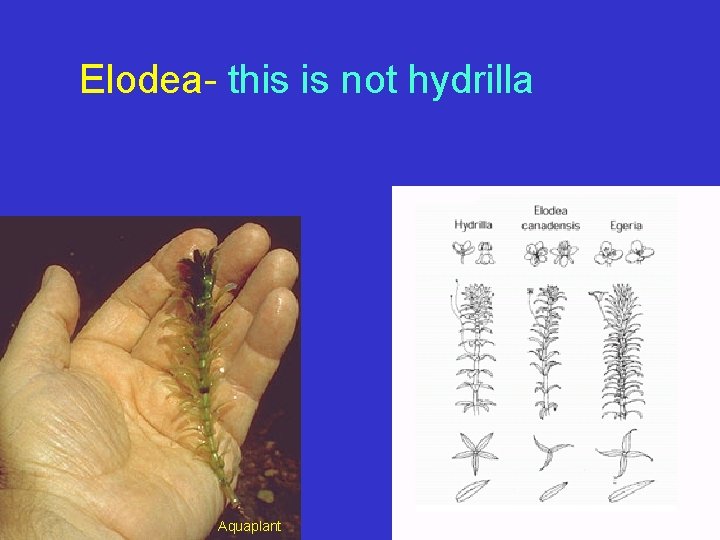
Elodea- this is not hydrilla Aquaplant
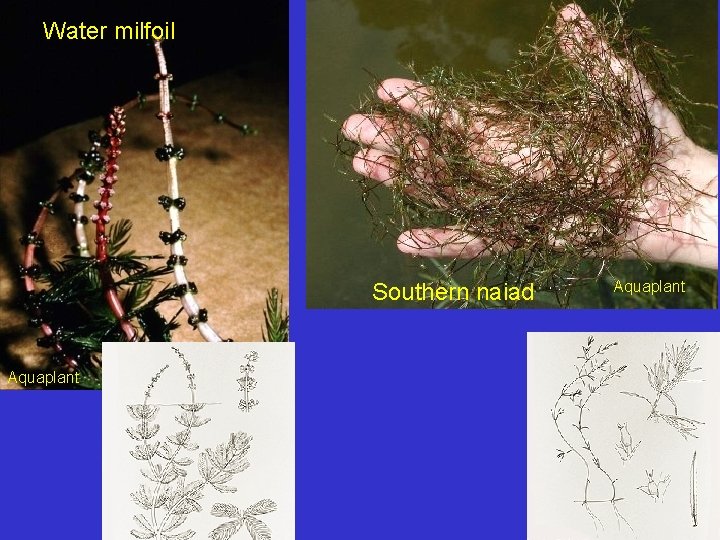
Water milfoil Southern naiad Aquaplant

Coontail Aquaplant
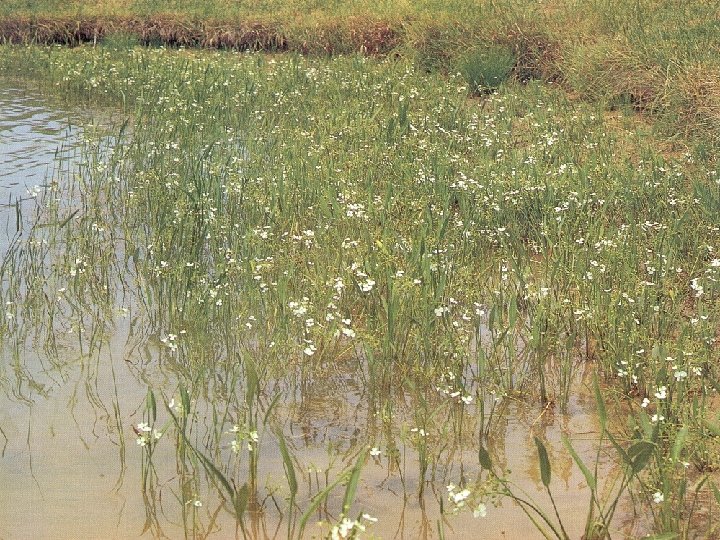
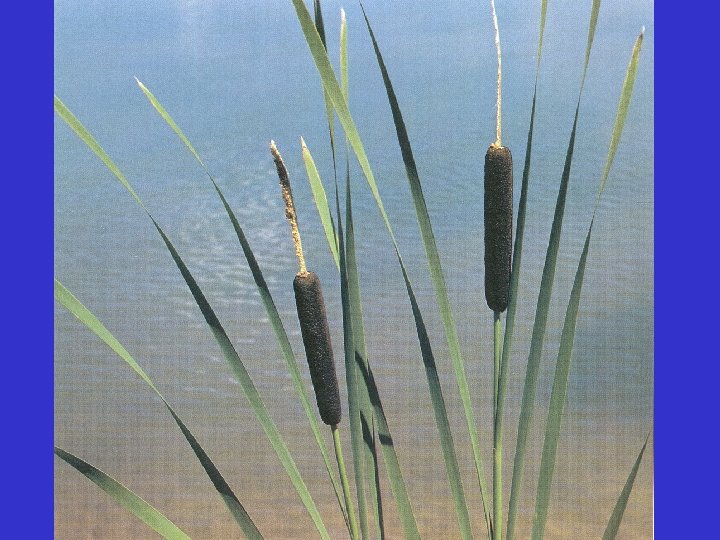
Emergent plants (rooted in water but most of foliage above water) • • • Arrowhead Cattail Water primrose
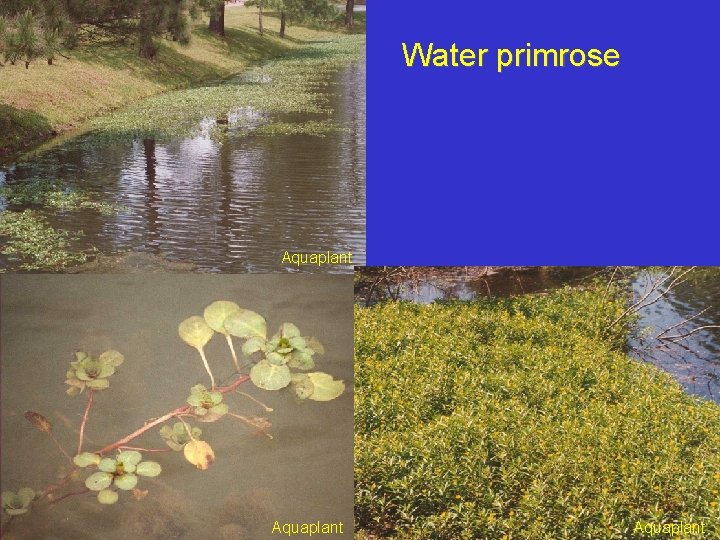
Water primrose Aquaplant
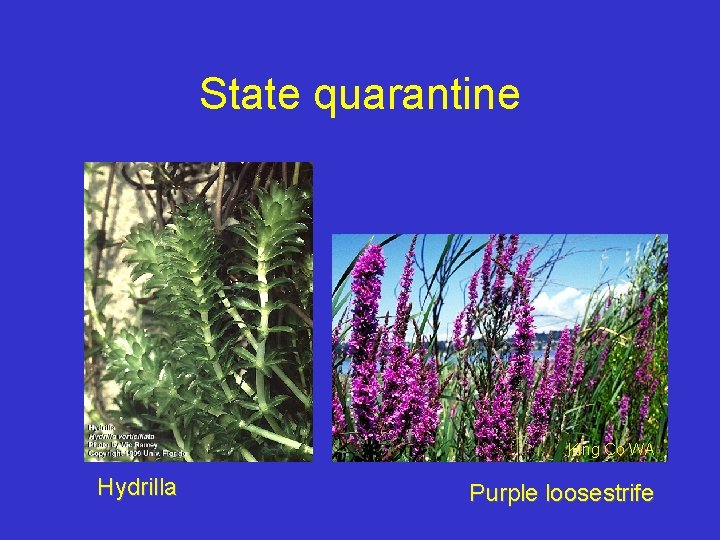
State quarantine King Co WA Hydrilla Purple loosestrife
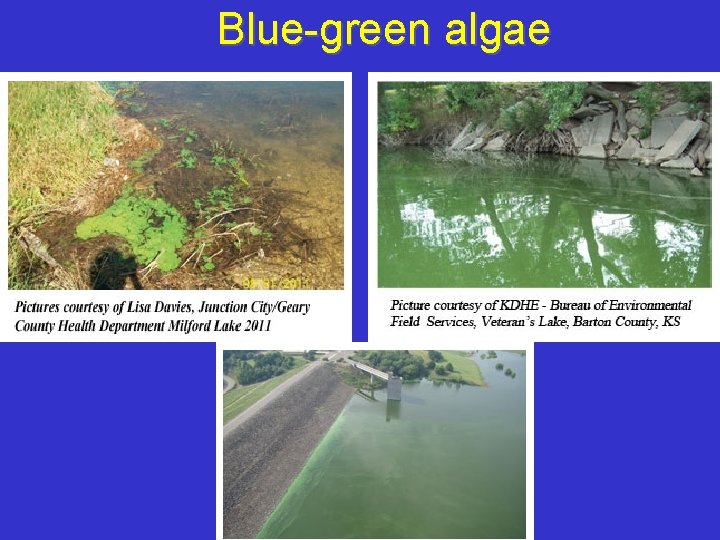
Blue-green algae
Biological control • Will fish control HABs? – Perhaps – Tilapia • Stocking rate 25 -50/ac adults • Digestion e�ciency ranged from 58. 6 to 78. 1% at water temperature of 77°F. • Ingestion rate increased with increasing fish weight and water temperature • Major problem is they die when water temperature is below 55°F – Grass carp?
Grass Carp as a Biological Control of Aquatic Weeds • Can be very effective but they are not a cure-all. • May result in turbid water. • Overstocking can seriously effect sport fish populations. • Cattails, spatterdock and filamentous algae are eaten last. • Results are not guaranteed. • Triploid only
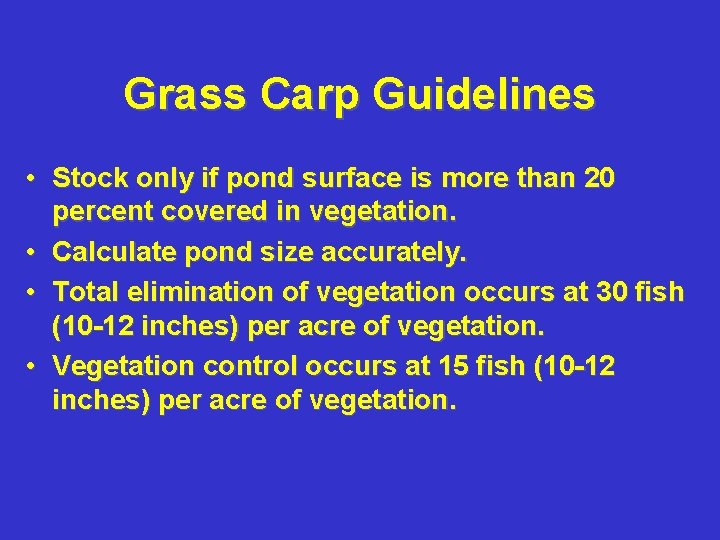
Grass Carp Guidelines • Stock only if pond surface is more than 20 percent covered in vegetation. • Calculate pond size accurately. • Total elimination of vegetation occurs at 30 fish (10 -12 inches) per acre of vegetation. • Vegetation control occurs at 15 fish (10 -12 inches) per acre of vegetation.
Chemical Control
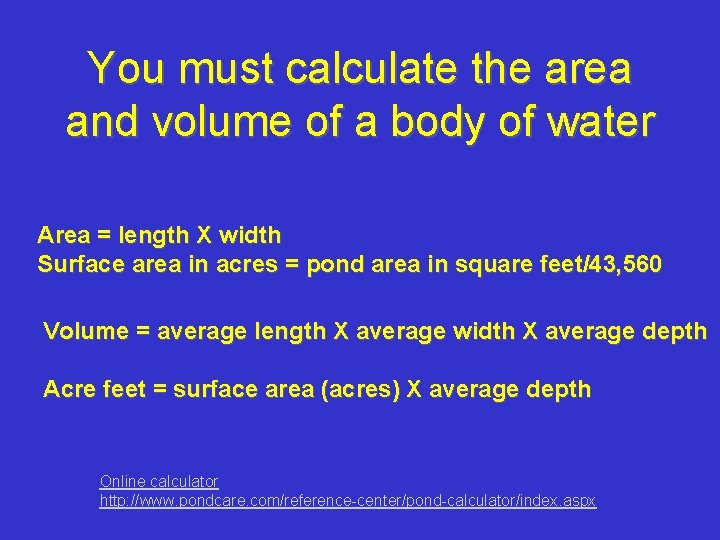
You must calculate the area and volume of a body of water Area = length X width Surface area in acres = pond area in square feet/43, 560 Volume = average length X average width X average depth Acre feet = surface area (acres) X average depth Online calculator http: //www. pondcare. com/reference-center/pond-calculator/index. aspx
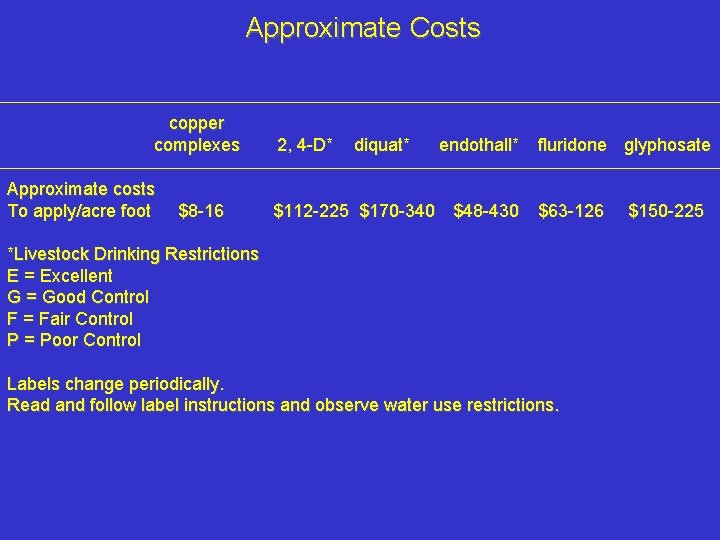
Approximate Costs copper complexes Approximate costs To apply/acre foot $8 -16 2, 4 -D* diquat* endothall* $112 -225 $170 -340 $48 -430 fluridone glyphosate $63 -126 *Livestock Drinking Restrictions E = Excellent G = Good Control F = Fair Control P = Poor Control Labels change periodically. Read and follow label instructions and observe water use restrictions. $150 -225
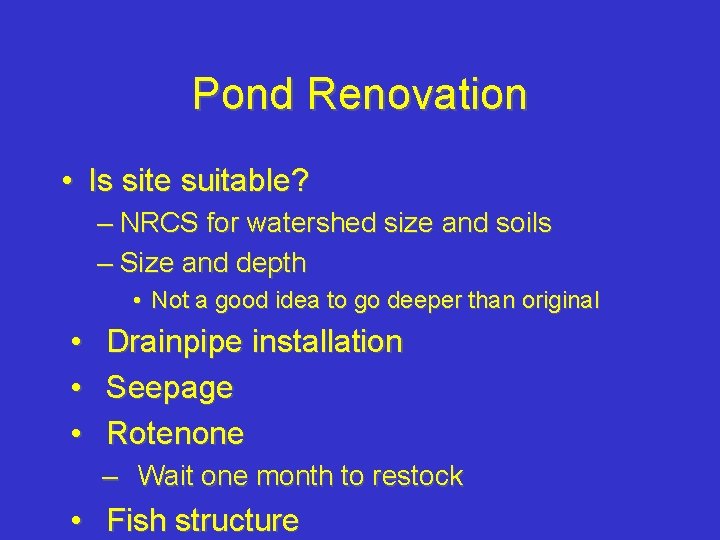
Pond Renovation • Is site suitable? – NRCS for watershed size and soils – Size and depth • Not a good idea to go deeper than original • • • Drainpipe installation Seepage Rotenone – Wait one month to restock • Fish structure
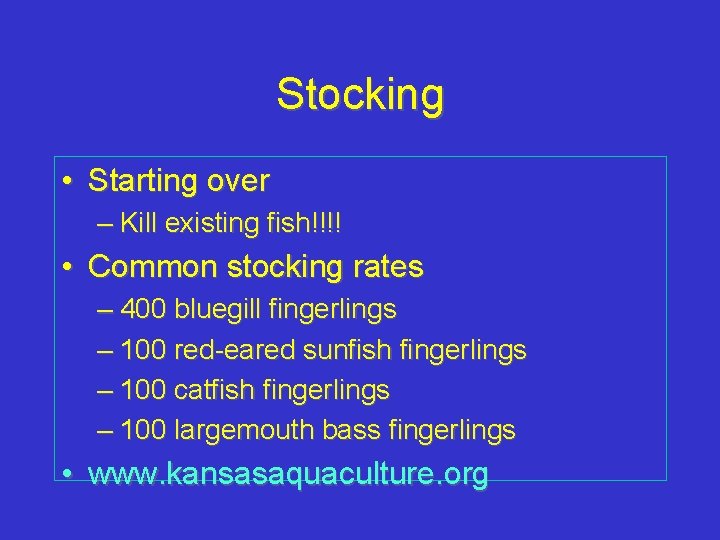
Stocking • Starting over – Kill existing fish!!!! • Common stocking rates – 400 bluegill fingerlings – 100 red-eared sunfish fingerlings – 100 catfish fingerlings – 100 largemouth bass fingerlings • www. kansasaquaculture. org
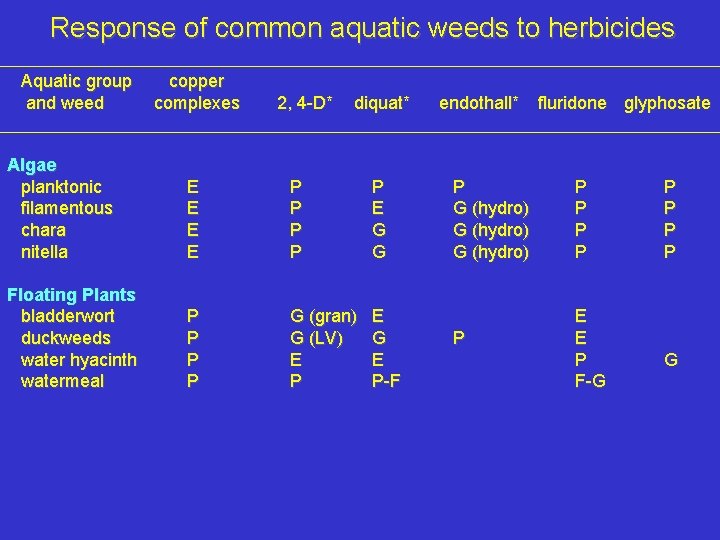
Response of common aquatic weeds to herbicides Aquatic group and weed copper complexes 2, 4 -D* diquat* Algae planktonic filamentous chara nitella E E P P P E G G Floating Plants bladderwort duckweeds water hyacinth watermeal P P G (gran) G (LV) E P E G E P-F endothall* P G (hydro) P fluridone glyphosate P P E E P F-G P P G
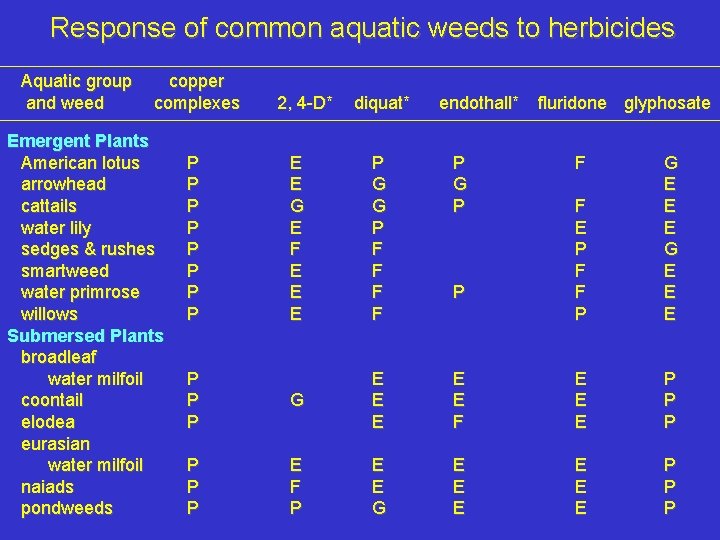
Response of common aquatic weeds to herbicides Aquatic group and weed copper complexes Emergent Plants American lotus arrowhead cattails water lily sedges & rushes smartweed water primrose willows Submersed Plants broadleaf water milfoil coontail elodea eurasian water milfoil naiads pondweeds P P P P 2, 4 -D* diquat* endothall* E E G E F E E E P G G P F F P G P P G E E E P P P E F P E E G fluridone glyphosate F E P F F P G E E E E E F E E E P P P E E E P P F
- Slides: 31